Sitka: Sea Otter & Wildlife Quest

Today we are cruising from Sitka, AK, to Victoria, British Columbia. This day at sea allows me time to tell you about the shore excursion we took yesterday in Sitka.

About 15 of us boarded a water jet catamaran ship, the Sea Otter Express, for a three-hour excursion entitled “Sea Otter & Wildlife Quest” in the area around Sitka. We weren’t gone too long before one of the two naturalists aboard directed our attention to the pointed noses of a couple of Steller sea lions. From then on we saw lots of local creatures.

You can click on any photo here to see a larger version. Although the ship captain took us in as close as possible to view the wildlife without scaring them, we still had to use a telephoto lens for most of these shots. With the boat idling on the sea waves, we never had a completely stable base. Most of these photos will therefore be somewhat out of focus when viewed at larger sizes.

Steller sea lions

Steller sea lions are named after naturalist Georg Wilhelm Steller, who first described them in 1741 while accompanying Vitus Bering on his explorations of the area around Alaska for the Russian government. These animals are big. An average female is eight feet (2.4 meters) long and weighs about 600 pounds (272 kg). An average male is 10 feet (3 meters) long and weighs in at 1,250 pounds (567 kg).

Sea lions can be distinguished from seals by their larger size, their ear flaps, and their rotating rear flippers. In the water, sea lions project pointed noses, while seals present a round head, like a bowling ball.

We originally saw Steller sea lions in the water. Later, this big guy on a buoy presented an irresistible photo opportunity:
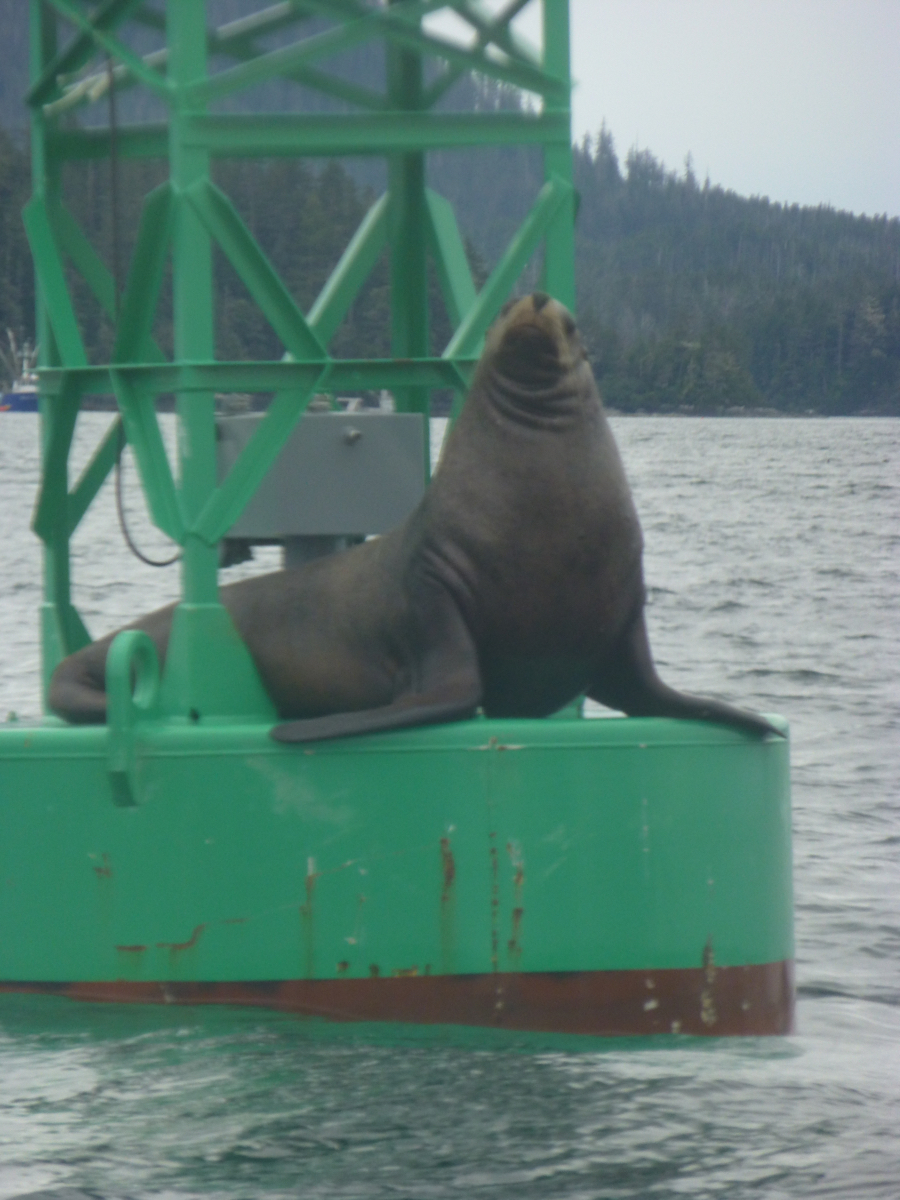
sea lion on buoy

According to our trip brochure, the sea lion population around northern and western Alaska has plummeted by about 80% in the last 20 years. The probable cause of this decline is the overfishing of pollock, sea lions’ main food source.

Harbor seals

These harbor seals are stretched out on rocks getting some sun.
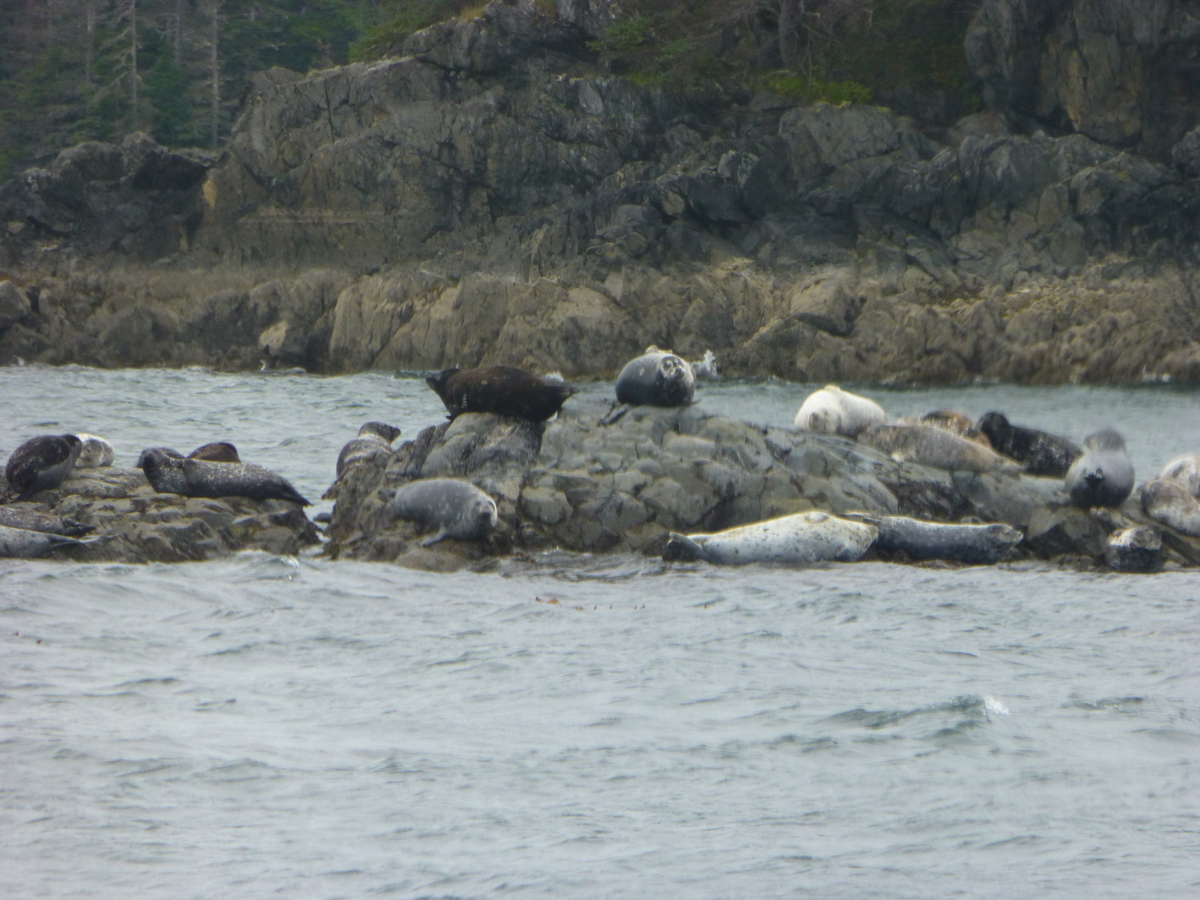
seals

Seals are smaller than sea lions. A typical harbor seal is about six feet (1.8 m) long and weighs about 180 pounds (81.6 kg). Seals flop around on rocks. They cannot use their flippers to pull themselves up and stand, as the sea lion on the buoy in the photo above is doing. In the water seals swim along with their round heads just breaking the surface.

Harbor seals have a thick layer of body fat to protect them from the cold water. Their coats consist of coarse, short hairs that can vary in color from blonde to nearly black. Many seals are spotted, streaked, or blotched. They can dive quite deep to catch the fish they depend on for food.

Sea Otters

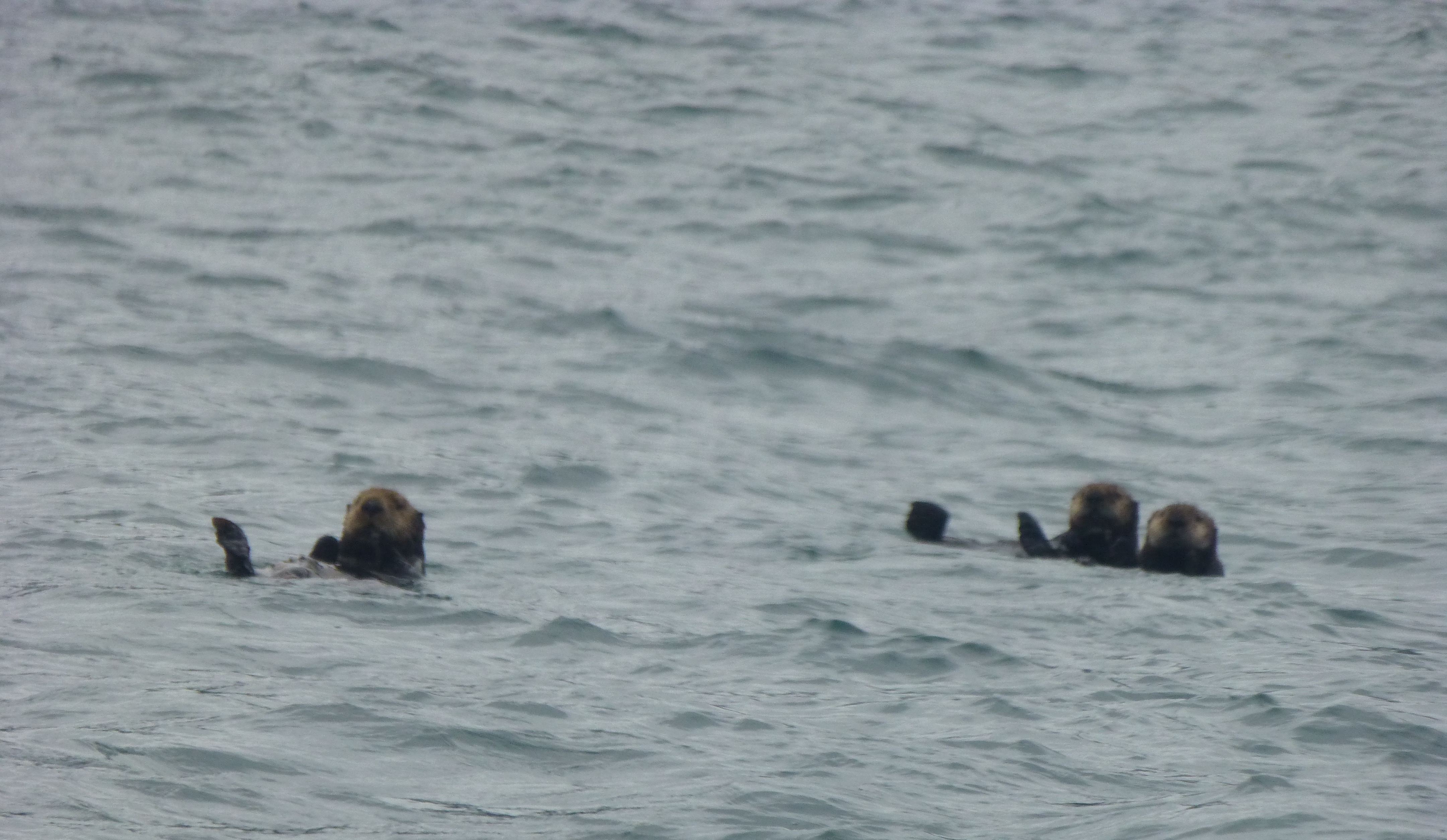
Unlike seals and sea lions, most sea otters spend all their time in the water. An average male is five feet (1.5 m) long and 70 pounds (31.8 kg), while an average female is four feet (1.2 m) long and 60 pounds (27.2 kg).
sea otters

Unlike other sea mammals, sea otters do not have a fat layer to protect them from the cold water. They depend entirely on their thick, rich fur to keep them warm. Sea otters have an average of 300,000 hairs per square inch, the densest fur of any animal in the world.

Because of their dense, soft fur, sea otters were hunted nearly to extinction in the late eighteenth and early nineteenth centuries. By 1911, only about 2,000 remained, widely scattered across the North Pacific. Restrictions on hunting and relocation programs have increased their number to about 150,000. In the 1970s a number of sea otters were brought to the area near Sitka from a distant point in the Aleutian Islands. This repopulation program has increased the number of sea otters in the region to about 12,000 today.

Sea otters are what is known as a keystone species—their presence or absence dramatically influences the environment. They eat invertebrates such as sea urchins, which can greatly reduce a region’s kelp supply, necessary for fish habitat, if left unchecked. Otters also eat abalone, clams, crabs, and octopuses. They can use rocks as tools to break open shells. They have a high metabolism and must consume about one-quarter of their body weight in food every day.

Sea otters are very social but segregate themselves by gender. They hang out in groups called rafts; each raft will contain either all males or all females and pups. The males have no part in caring for the pups.

Sitka black-tailed deer

We were lucky enough to see a female Sitka black-tailed deer grazing along the shore. The captain of the boat spotted her and slowly took us in close enough to see her. She was well camouflaged against the shore, and most of us couldn’t see her until we get in quite close.

Sitka black-tailed deer

These deer are quite small. An average male weighs about 120 pounds, an average female about 80 pounds. This one, though full grown, looked like a fawn to most of us.

The naturalist told us that Sitka black-tailed deer are a hallmark of the old-growth forests that cover Alaska. The deer feed on the plants that cover the ground beneath the tall trees. When an area is logged, the deer disappear from the edge areas (the logged areas) deeper into the old-growth forest.

These deer have also been known to swim from one island to another in search of food. Although they primarily eat vegetation, during the salmon run they may occasionally be seen eating fish, according to our naturalist.

Cormorants

We didn’t get any photos of these black birds, but we saw several of them both flying and sitting in the water. They have long, curved necks and can dive deeply in search of the small fish they feed on. They have large feet that they use to paddle, like ducks, when resting in the water.

Bald eagles

Again, we weren’t able to get photos of these, but we saw several flying along the shore and out over the water in search of food. Their white heads are easy to spot against the green forests of the islands.

Lots and lots of gulls

Yes, lots. According to one of our naturalists, there are several different species of gulls in the Sitka area, and they ofter interbreed, producing difficult-to-identify hybrids.

Salmon spawning area

Our visit to Alaska came at the very end of the salmon season, so we didn’t see the fish. But this waterfall flows from a fresh water lake above into the sea water below:

Sitka waterfall

At spawning time the salmon will run up this waterfall to get back into the lake to spawn.

Humpback whales

I’ve saved the best for last, and so did our tour’s captain. After we had seen all the animals above, he headed further out to where he hoped we might be able to see a whale or two. It wasn’t long before the naturalist said, “I’m seeing quite a few blows up ahead. It’s unusual to see so many.” The blows are the jets of water visible when the whale exhales.

That was the signal for us to head up top for a better view. And soon we were seeing the blows all over. We’d see three off to our right, then somebody would report two off to the left. I had planned to try to get some photos, but I was seeing so many exhalations that I just kept looking all around. My husband had his camera out and I could hear him shooting, so I just kept looking.

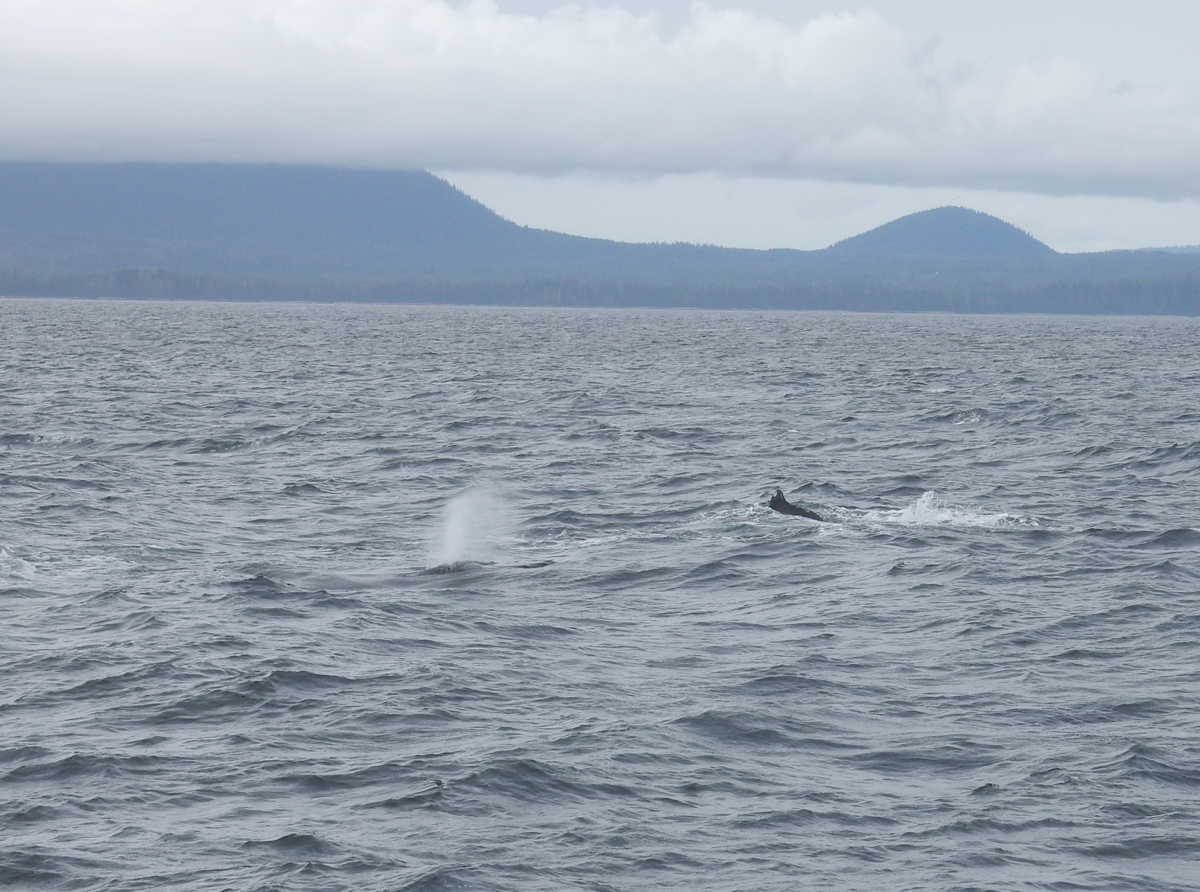
In the photo below, you can see an exhalation from a whale on the left and the back of another whale on the right:
whale blow

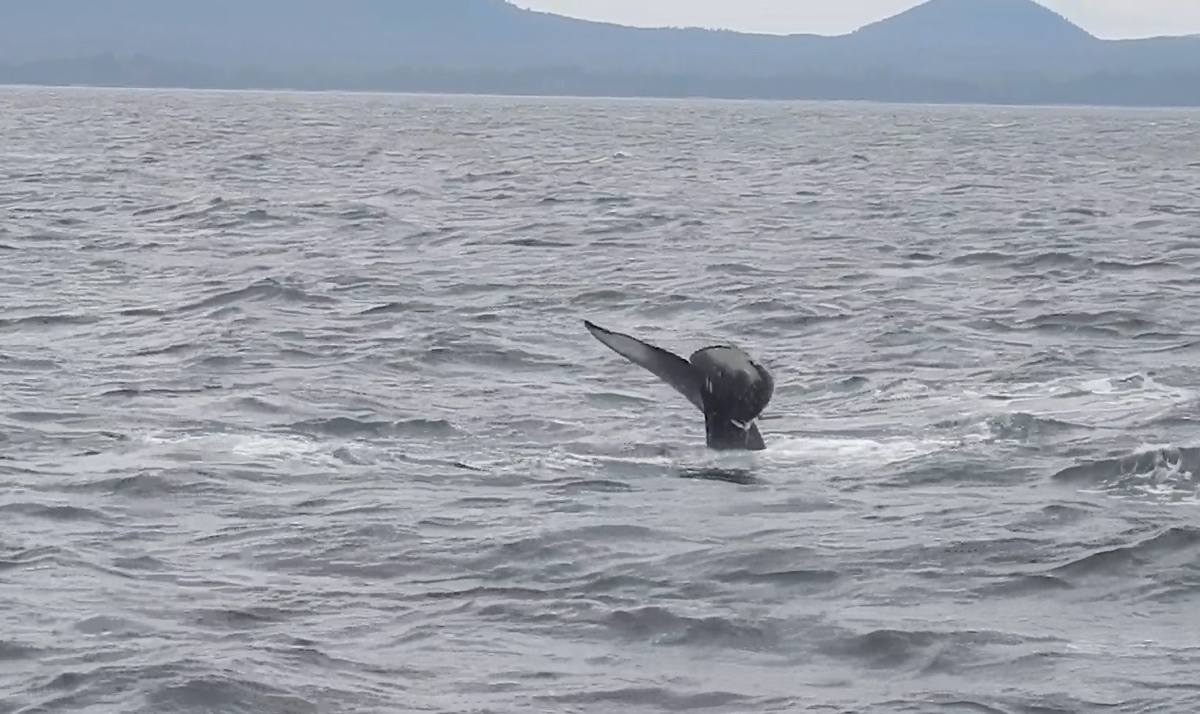
In the end, I saw 11 flukes, the usual signal that a whale is diving after spending time near the surface. We would see each group surface three or four times; then, one after the other, they’d rise up and show us their flukes. We had seen three humpback whales—two adults and a juvenile—on a whale-watching tour off the coast of Santa Barbara, CA, in late August of 2011. And back in about 1998 we had followed three or four orcas for a while on a small-ship cruise through the San Juan Islands off the coast of Washington State and Canada. But this was a truly magnificent display.

The markings on the underside of a whale’s flukes are as distinctive as a human fingerprint. Researchers track whales by these markings.
whale flukes

According to our trip brochure, scientists believe that more than 700 humpbacks inhabit the waters around southeastern Alaska. Our on-board naturalist explained that these whales were actively feeding. At the end of the summer they will migrate south, to the warmer waters around Hawaii or Mexico, to give birth. The whales must give birth in the warmer water because their calves are born without the layer of fat necessary for protection in colder waters. But the warm water doesn’t supply the kind of food the humpbacks need. They therefore eat heavily at the end of summer, and they may not eat at all again until they return north the next year.

Blog a Day Challenge: August Report

Once again, travel has intervened (which is a good thing) and affected my blogging (not such a good thing). Since this report falls right in the middle of a two-week cruise, I will once again have to publish posts after I arrive back home, where I have reliable internet access.

This travel also means that my personal blog, Retreading for Retirement, has the heaviest concentration of entries.

Here are my statistics for August:

Number of posts written: 31

Shortest post: 155

Longest post: 1,360

Total words written: 19,145

Average post length: 618

Distribution of posts across my three blogs:

The total of posts here may not equal the number of posts written last month because I occasionally publish the same post on more than one blog. However, I have included each post only once in my total word count.

Last month’s featured posts:

“Go Set a Watchman”: A Lesson in Writing & Reading Fiction

I haven’t had enough time to write substantive book reviews lately, but the publication of Harper Lee’s much-touted second novel gave me a lot to say.

Life Stories: What They Are and How They Work

This post allowed me to pull together a lot of related ideas that I’ve discussed separately before.

Anchorage: The Alaska Zoo

Anchorage is a shallow port. Cruise ships have to dock at high tide and cannot leave until high tide, ensuring visitors of almost 12 hours in which to enjoy the city. Anchorage is Alaska’s most populous city, containing about 40% of the state’s total population.

We visited Anchorage the same day as President Obama. There was some disruption of traffic in the downtown area because of his presence. Fortunately, we had chosen to take a trip to the Alaska Zoo, which is located on the outskirts of the city. This zoo is appropriately named, since it’s the only zoo in Alaska.

According to our tour guide, it all started with an elephant named Annabelle. In 1966 an Anchorage resident won a contest that offered as the prize $3,000 or a baby elephant. He chose the elephant, a female named Annabelle. Visiting Annabelle became such a popular activity that eventually a non-profit corporation was formed to build a place where the public could visit and learn about animals. The Alaska Children’s Zoo opened in 1969; the name was changed to the Alaska Zoo in June 1980.

Annabelle died in 1997, but the Alaska Zoo continues to thrive. Located on 25 acres of land, it attracts about 200,000 visitors per year. It houses a variety of animals native to the state and also participates in the Species Survival Program for tigers and snow leopards.

We saw so many animals that it’s tempting to include way more photos than you probably want to see, so I’ll focus on three animals: musk ox, snow leopard, and gray wolf. Click on any photo to see a larger version.

Our home town zoo in Tacoma, Point Defiance Zoo & Aquarium, features three musk oxen, and they have long been among my favorite animals. I was therefore thrilled to learn that the Alaska Zoo has several, including a baby:

musk ox mother and baby

They keep the baby’s father in a separate, adjacent enclosure:

musk ox male

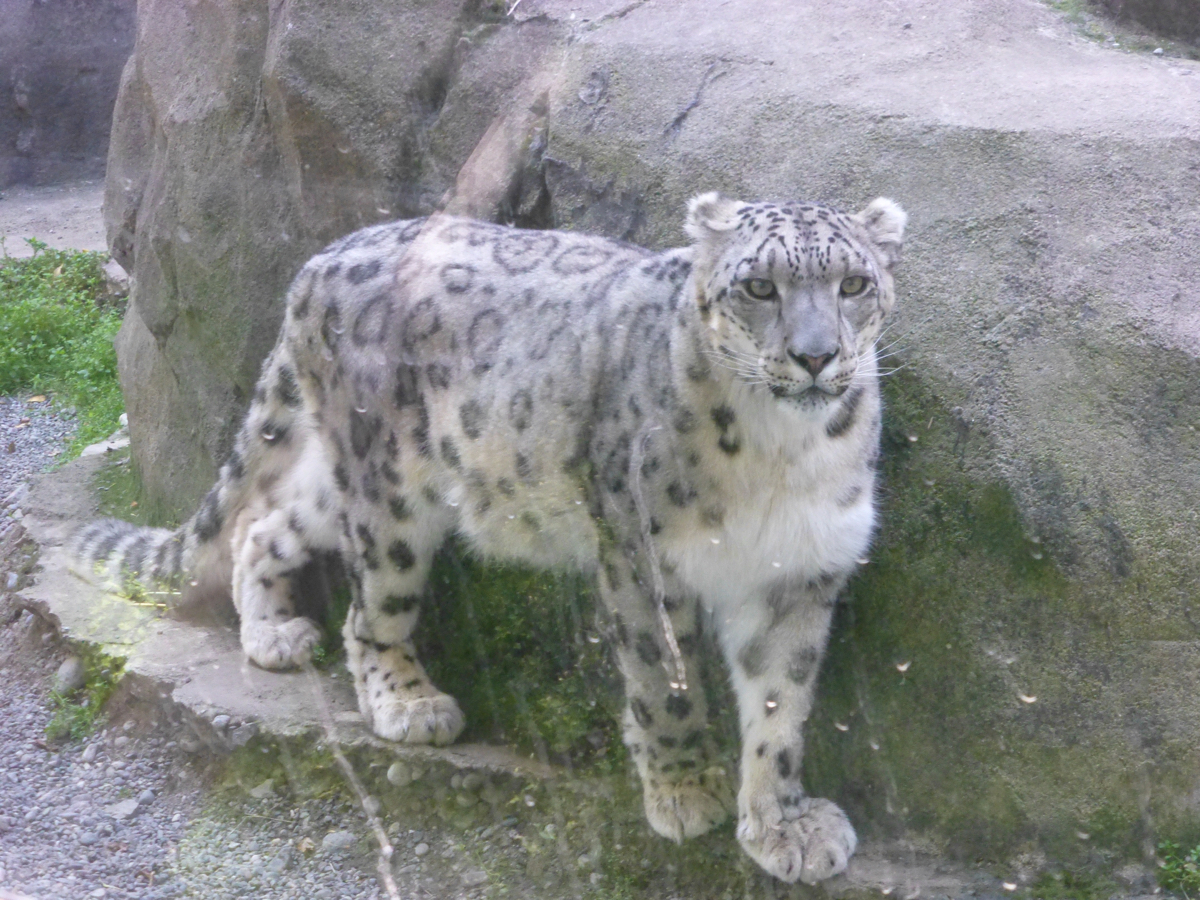
The snow leopard is an endangered species of cat native to the mountains of Central and South Asia. This one lives at the Alaska Zoo:

snow leopard

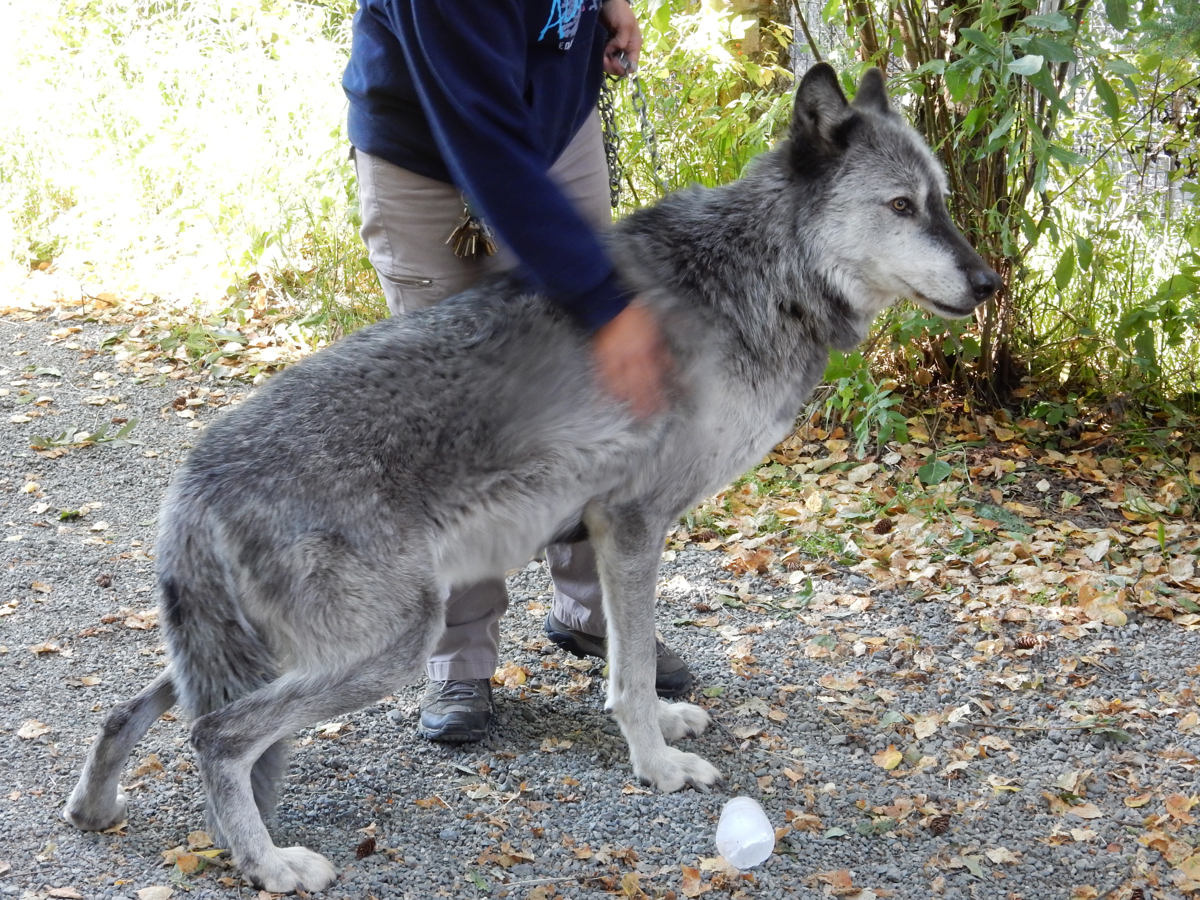
We also got to see one of the gray wolves kept at the zoo:

gray wolf

Someone asked if the zoo keeper approved of the interbreeding of wolves with dogs for domestic pets, and he replied adamantly that he does not. “These animals are not pets,” he said, stressing that the jaws of the wolf are twice as powerful as those of a dog and could inflict severe damage on a human. As beautiful as this wolf is, I did not want to get too close to him.

In addition to these three, we also saw the following animals:

  • alpaca
  • Tibetan yak
  • moose (adult male and calf)
  • brown bear and cubs
  • swans and cygnets
  • bald eagle
  • tiger
  • caribou
  • coyote

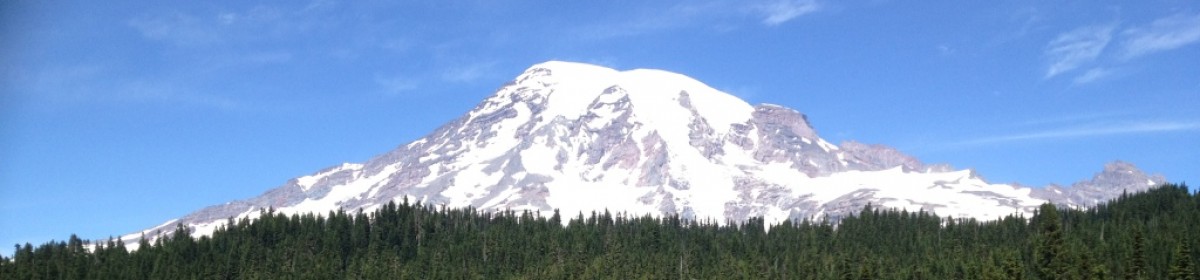
On the trip from the zoo back to our ship, the bus driver stopped where we could see Mount Denali (photo at the top of this post), formerly known as Mount McKinley. With a summit elevation of 20,310 feet (6,190.5 m) above sea level, it is the highest peak in North America. Shortly before President Obama’s visit to Anchorage, the U.S. Department of the Interior announced that the mountain would now officially be designated by its native name, Denali.

Juneau & Icy Strait Point

On Friday the Statendam spent the day docked at Juneau. This was our first day of inclement weather: It rained almost all day. We took a look outside early in the day and agreed we’d wait until the weather cleared up before heading out. But the weather never did clear up, and we spent the day on the ship, reading and relaxing.

Yesterday (Saturday) we visited Icy Strait Point, an island now owned by Alaskan Native people as a result of the Alaska Native Claims Settlement Act of 1971. The site includes the Hoonah Packing Company facility of the 1930s (shown in photo at the top of this post) that has been converted into a museum, restaurant, and shops.

Many of the inhabitants of the island are of the Tlingit people, a matriarchal people indigenous to the Pacific Northwest Coast. We attended a performance at which several people acted out some of the Tlingit origin myths. We were allowed to take photos before and after, but not during, the performance.

Tlingit young man

This young man spoke to us as the audience gathered. He’s 16 years old and attends the local high school. The bear skin on the wall behind him is from one of the largest bears caught on the island in recent years.

Tlingit blanket

The performers wore as robes these beautiful blankets.

Three Things Thursday

What a super experience today was for Three Things Thursday, the purpose of which is to “share three things from the previous week that made you smile or laugh or appreciate the awesome of your life.”

three-things-thursday-participant

Endicott Arm and Dawes Glacier

Our original itinerary called for us to cruise Tracy Arm today. However, we were awakened just before 9:00 AM by an announcement from our captain. He said that there were winds of 40 knots in Tracy Arm, which is a narrow passage. Because he deemed it unsafe to enter Tracy Arm in such windy conditions, we would be cruising Endicott Arm instead.

Tracy Arm and Endicott Arm are two deep fjords near Juneau in the Tracy Arm – Fords Terror Wilderness area of the Tongass National Forest. Both fjords are more than 30 miles (48 km) long, and about one-fifth of their area is covered with ice. Endicott Arm is shorter and wider than Tracy Arm.

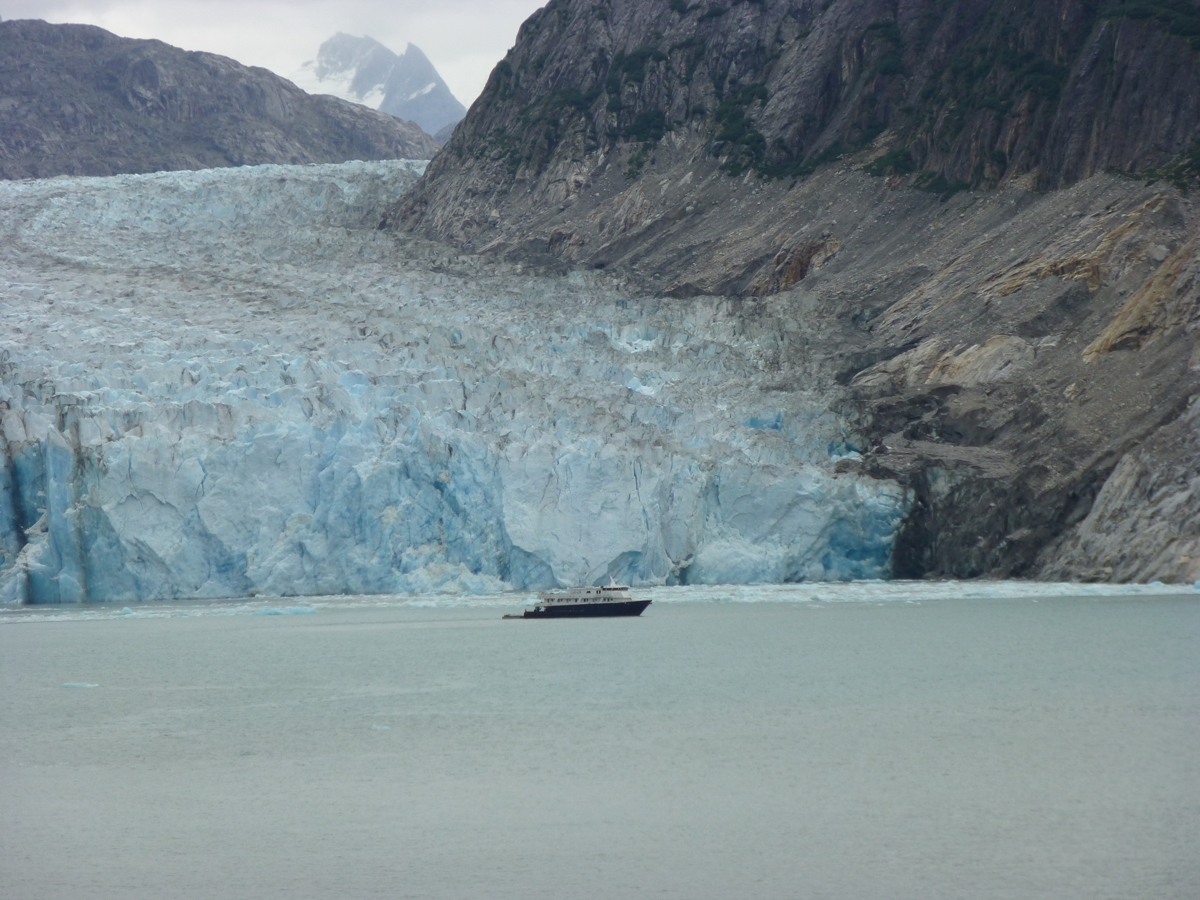
As the ship entered Endicott Arm, people flocked outside to watch our approach to Dawes Glacier, a wall of blue ice half a mile across. The captain even opened access to the ship’s bow so we could get a good look. The massive wall of blue was visible from a distance and became more and more spectacular the closer we got.

I was surprised at how close we were able to get in such a large cruise ship. There was a much smaller ship that got even closer, but we get a good look even though we were farther back.

Now I wish I had paid more attention to those earth science units we studied back in junior high. I always found them supremely boring. If I had taken them more seriously, I would probably have better understood how the glaciers carved out the terrain here during the last Ice Age and appreciated how several glaciers come together here today.

Eventually the captain pivoted the ship around and we headed back out into open water.

Here are three photos from our visit to Dawes Glacier. Click on photos to see larger versions.

Photo #1: Small Boat, Blue Ice

small boat, blue ice

Photo #2: Waterfall

small boat, waterfall

This is the same small boat cruising away from the glacier, past a waterfall fed by a melting glacier.

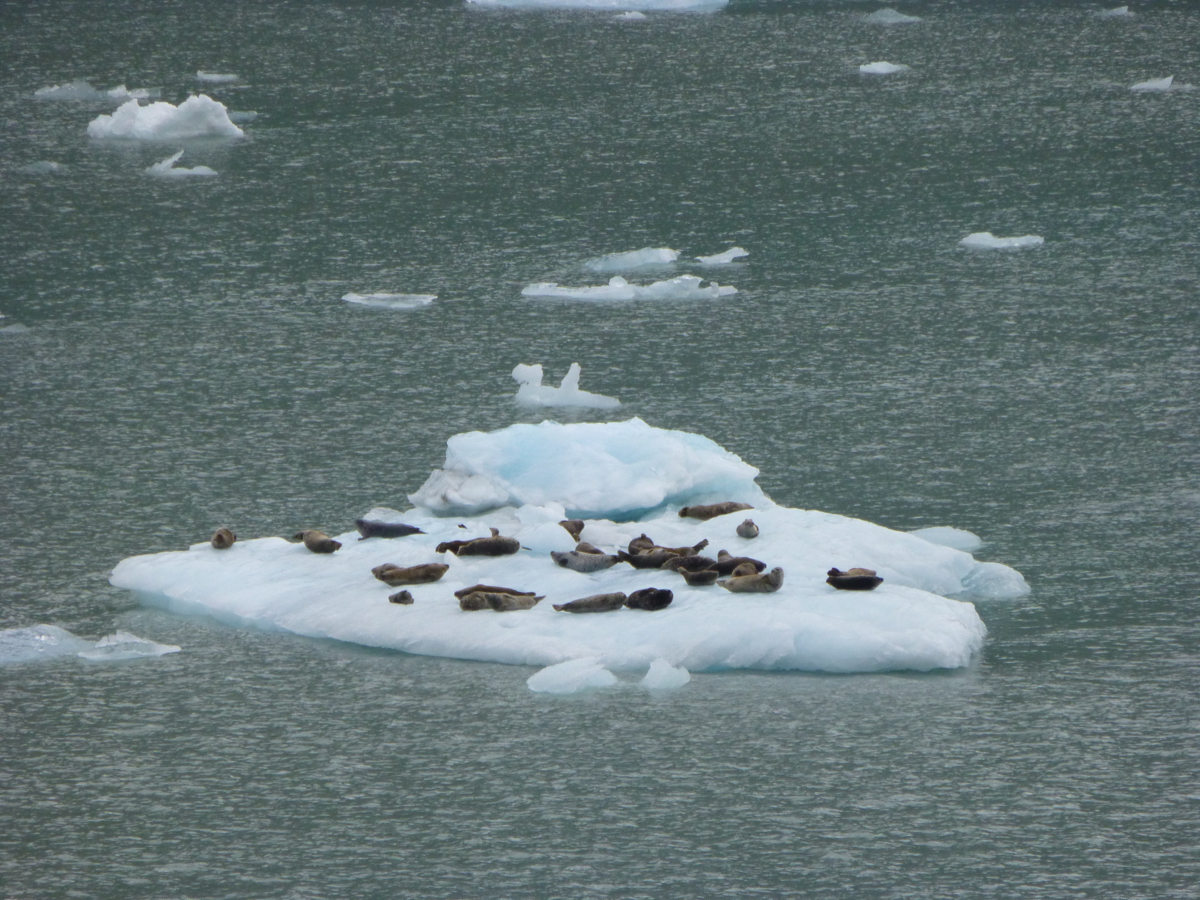
Photo #3: Seals Like Cruising, Too

Seals relaxed on several small ice floes that drifted past our ship and out to sea. This was the largest, most highly populated hunk of ice.

seals cruising on ice floe

Ketchikan, AK

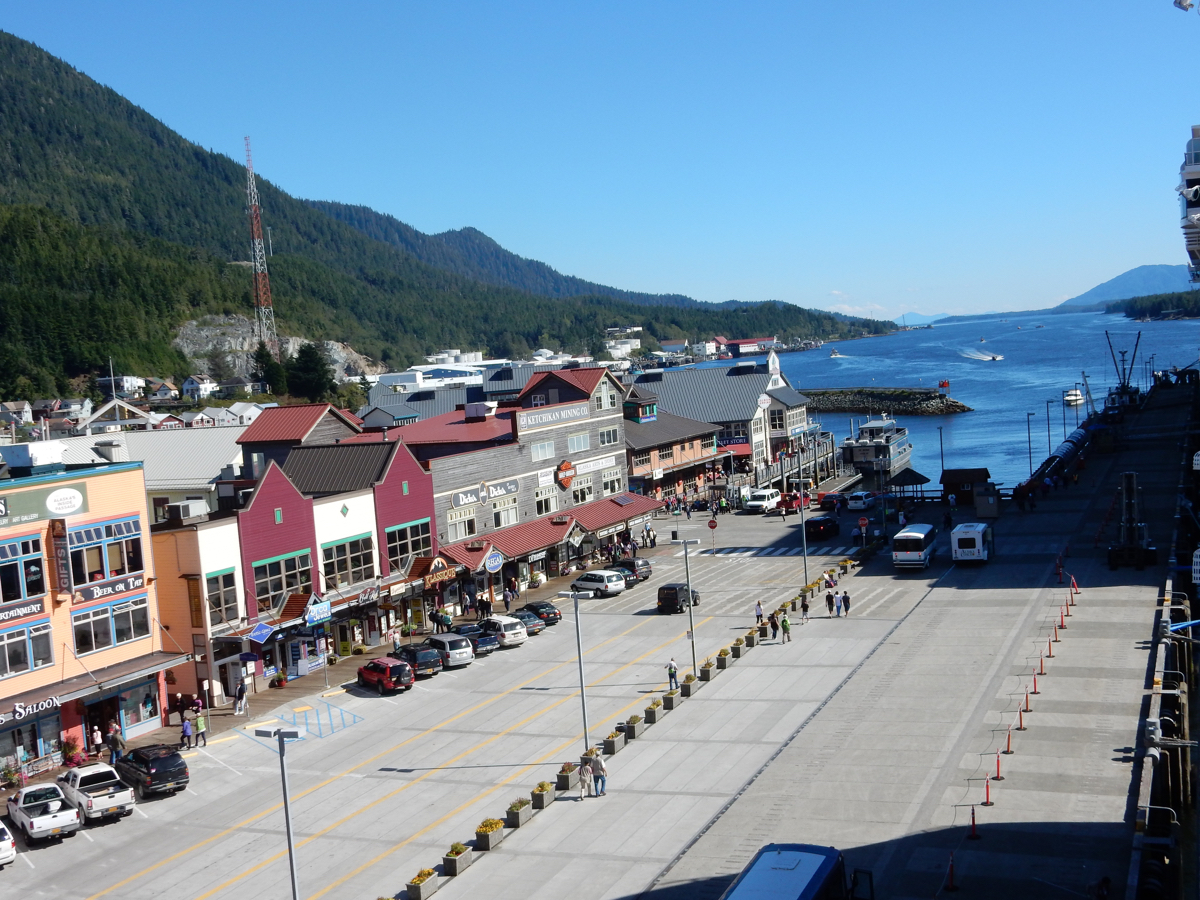
Early this morning we docked in Ketchikan, the most southeastern city in Alaska. It calls itself the first city in Alaska (incorporated on August 25, 1900). Named after Ketchikan Creek, the area was a fishing camp for the native Tlingit people before the town was established in 1885. Located on the shore of Tongass Narrows, Ketchikan features the Tongass Historical Museum and the headquarters of the Tongass National Forest.

A statue entitled The Rock, by Dave Rubin, greeted us in the plaza where we got off the ship. Unveiled on July 4, 2010, this statue portrays the people who have contributed to the region’s history.

Statue: The Rock
The Rock

Ketchikan promotes itself as the salmon capital of the world:

Salmon Capital of the World

In addition to commercial fishing, tourism is a big part of the local economy. We did what most people do when visiting Ketchikan: We shopped.

shopping
Shops line the streets of Ketchikan

All the shopkeepers pointed out that Lady Luck was with us, as we arrived in Ketchikan on one of its few sunny days. The area receives an average annual rainfall of 153 inches (3,900 mm), mostly in the autumn and winter.

Rain gauge

We were also lucky in that we arrived near the end of the cruise season. After our cruise the Statendam will make one more two-week cruise, and then the season will be over. One salesperson told us that he will then leave for the Caribbean to work in a store down there for the winter. This timing meant that every store was having a sale. We took advantage of the opportunity to get quite a few holiday gifts. I’ll be ready, provided that I can remember where I put them.

We’re Cruising North to Alaska

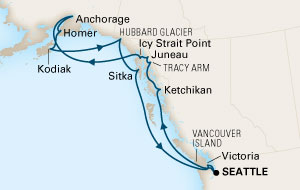
Today we leave for our first visit to Alaska, a two-week Holland America Line cruise on the ms Statendam. Here’s where this trip will take us:

Alaska cruise map

This cruise leaves from and returns to Seattle, so we don’t have to fly anywhere. This is a big bonus for us, since flying has become less and less fun as procedures have gotten more and more cumbersome.

Our instructions told us boarding would begin at 1:00 PM. Our cab dropped us off at Seattle’s Pier 91 at noon. When we entered the terminal to check in, there were nowhere near as many people as I expected. We got through the check-in process by about 12:30. I thought we’d have to wait in a big, crowded room until 1:00, but we were allowed to board the ship as soon as we had been processed through.

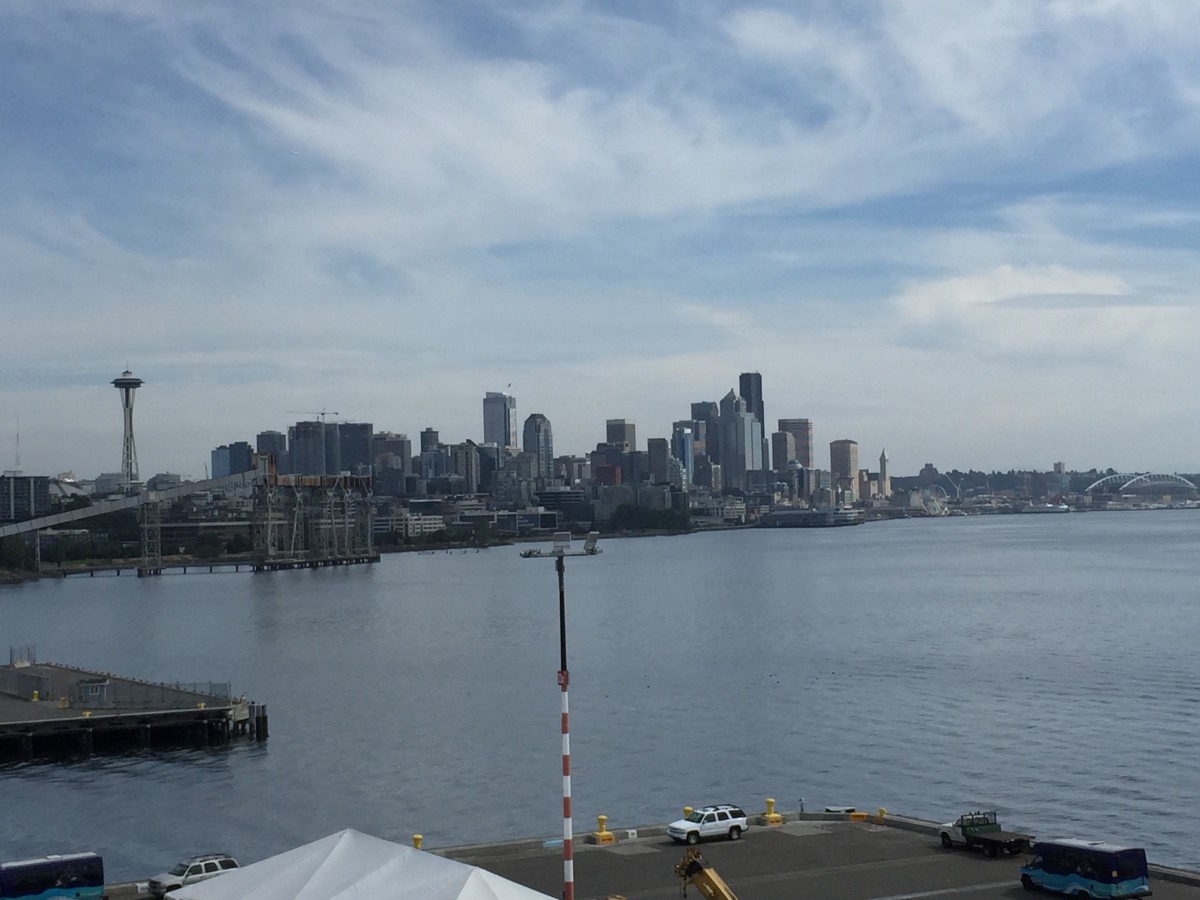
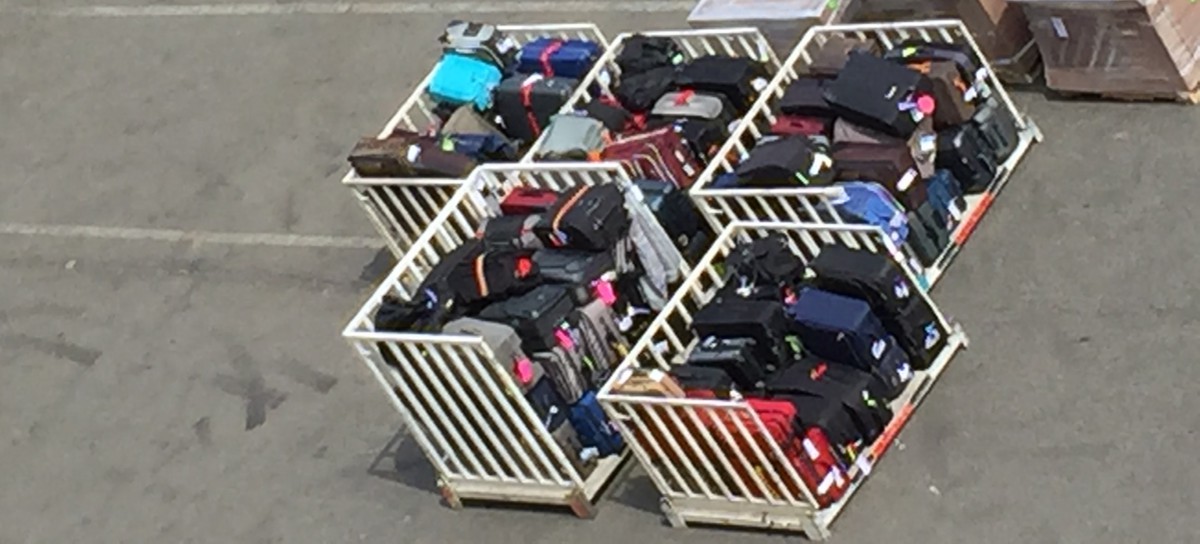
The only experience I have to compare with this one is the two-week European Viking River Cruise we took in June. That ship, the Viking Vidar, had three decks and held about 190 passengers. In comparison, the Statendam seemed huge to us—and a bit intimidating. We waited in our stateroom for about a half hour, marveling at the view of the Seattle skyline and at the amount of luggage that had to be loaded on board. Here’s a look at only a small portion:

Lots of luggage

We only had to wait about a half hour for our luggage to arrive. After unpacking, we got up our courage and ventured out of our stateroom. We made sure to locate the main dining room so we’d know where to go for dinner. We participated in the mandatory emergency safety drill at 3:15, then ventured up to the poolside sea view area on Deck 10 for some snacks and a Yukon Jack Margarita to sip on as the ship left Seattle at 4:00 PM.

After dinner, at which we ate way too much, we spent a lot of time just looking out the window in our stateroom and trying to imagine what it must have been like for crews on whaling ships, who often were out on the open sea for two or three years at a time.

Three Things Thursday

Another week, another Thursday: Three Things Thursday, the purpose of which is to “share three things from the previous week that made you smile or laugh or appreciate the awesome of your life.”

Rain, Much-Needed Rain

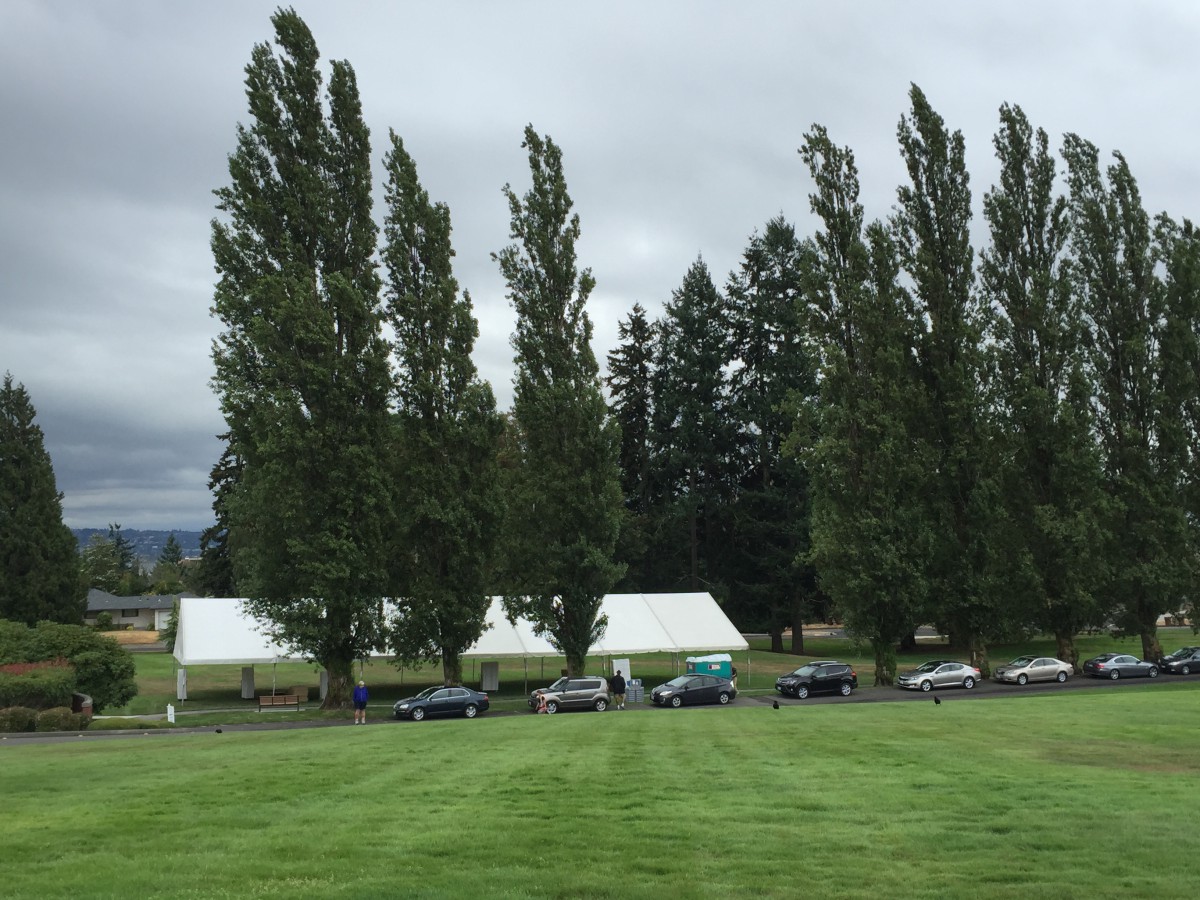
It hasn’t rained significantly here in our patch of the Pacific Northwest for something like five months. But of course the one day rain chose to come along was last Friday, the long-scheduled date for our annual picnic here at Franke Tobey Jones. The event was to have been held outdoors, under the big tent pictured above, but the rain and lightning, unusual here, forced its relocation to three separate indoor venues. Nonetheless, a good time was had by all, at least all of those where we partied.

I’m sure the staff had to scramble to relocate the festivities, and we appreciated their efforts. The chef had to set up the barbecue grill under a small tent right outside the building, so we had hamburgers and hotdogs authentically cooked outdoors, a necessary item for a picnic.

1. Hawaiian Table Decorations

The picnic has a Hawaiian theme. When we arrived we received paper leis and were seated at tables with theme-appropriate decorations.

Hawaiian table decorations

The menu featured Hawaiian foods: pork, sweet and sour chicken, baked beans, hotdogs and hamburgers—those necessary staples of American picnic fare—ambrosia, pineapple upside down cake, mango ice cream.

2. Hawaiian Dancers

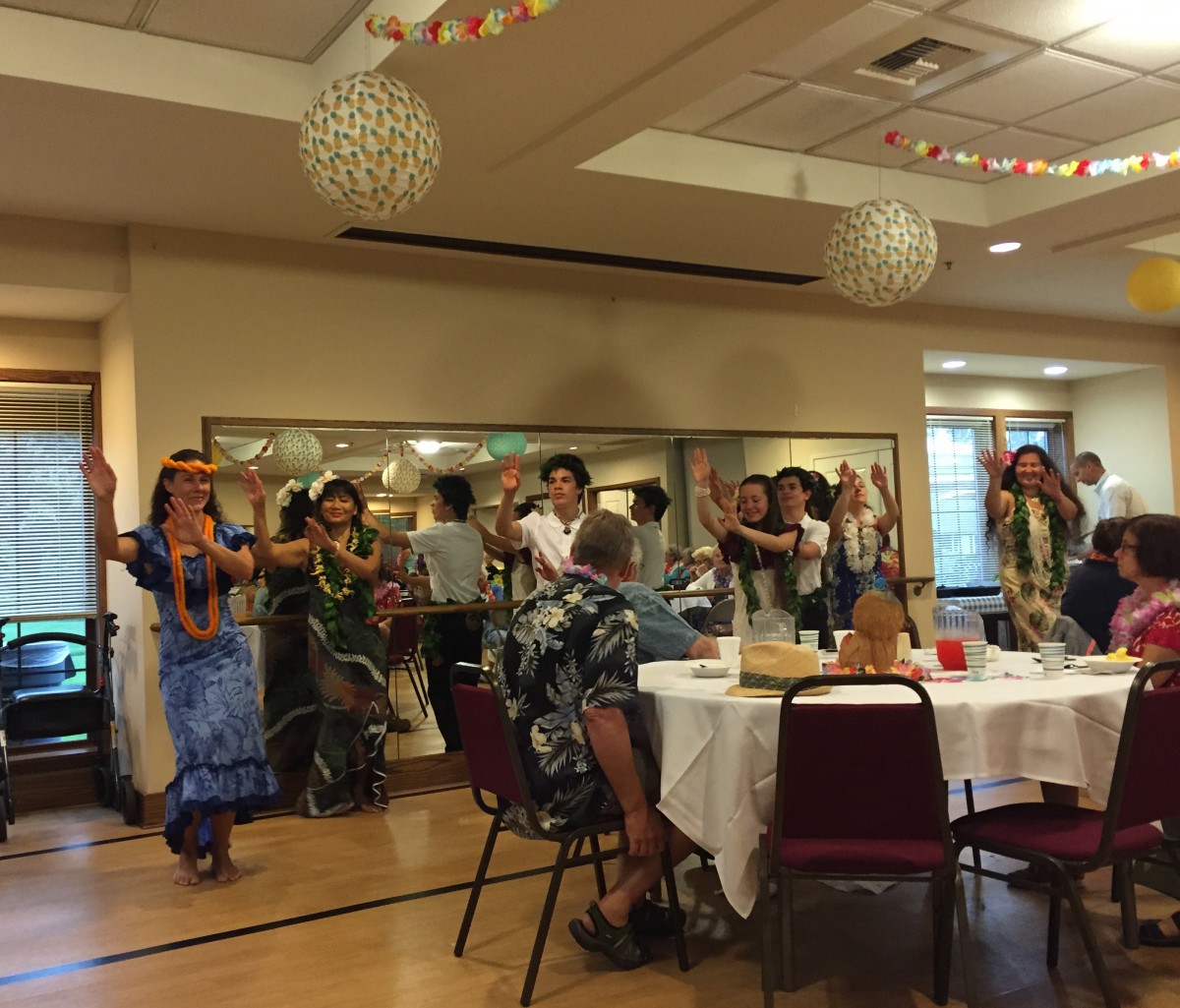
In keeping with the Hawaiian theme, a local group of Hawaiian dancers entertained us.

Hawaiian Dancers
Hawaiian Dancers

Had the picnic been held outdoors, as scheduled, they would have provided one long performance. Instead, they had to adapt by giving three shortened performances at the three indoor locations. Between numbers they conferred about which song/dance to perform next. We appreciated their willingness to cope with the changed circumstances.

3. Water-Conserving Efforts

It rained most of Friday afternoon and overnight Friday/Saturday. It was a gentle rain, not a deluge, and the grass gratefully drank it in. Our lawns are still amazingly green, even almost a week later.

But the lawns may not remain nicely green for much longer. Because our area is experiencing one of the driest, hottest summers on record, the City of Tacoma has moved to Stage 2 (voluntary reduction) of their Water Shortage Response Plan.

Our retirement community, Franke Tobey Jones, has agreed to cooperate in this effort, euphemistically known as “going golden.” That means we will not be watering lawns and will have reduced watering of plants and shrubs. Our two outdoor fountains have also been drained and shut off.

The aim is to reduce our water consumption by at least 10%. This voluntary water reduction is a joint effort of the Washington cities of Tacoma, Seattle, and Everett. A 10% reduction in water usage across the area could save 1 billion gallons of water by the end of the year.

One of the features that makes Franke Tobey Jones so visually appealing is its large swatches of beautiful green lawn. But no one is complaining about the lawns in light of the drought conditions. We are proud to pitch in.

Dear Community Members,

Thanks to WordPress Daily Prompt for this writing topic:

Community Service

Your entire community — however you define that; your hometown, your neighborhood, your family, your colleagues — is guaranteed to read your blog tomorrow. Write the post you’d like them all to see.

scroll divider

Dear Retirement Community Members,

I’m glad to have this opportunity to address all of you at once. I want to thank you for making me feel so welcome when I moved here a little more than three years ago.

As you know, there’s always a waiting list for available independent-living duplexes. Our name made it to the top of the list in late March 2013. My husband wasn’t planning to retire until the end of the year, but we were afraid that, if we passed up the opportunity and let our name go back to the bottom of the list, we’d have to wait three to five years for another opening.

I made a quick trip to Tacoma in late March to see the unit. I’d never seen the inside of a duplex, only a drawing of the interior floor plan. I immediately fell in love with it. Even though all the duplexes have identical floor plans, I loved the location of this one on the corner, near the road. Without another building right next to it, this one felt bigger and more open.

When I returned home, my husband and I decided we’d take this duplex instead of waiting. So I packed my little car to the gills, taking what I’d need to set up housekeeping, and drove the 2,100 miles to Tacoma. I arrived at my new home on April 10, 2013. My husband would join me after he retired at the end of December.

It was a bit scary making this move on my own, but several of you knocked on my door and welcomed me to the community. (A few of you even gave me plants as a welcoming gift, and I didn’t have the heart to tell you that house plants come to my house to die.) Your kindness helped me adjust, and I quickly came to love my new home.

Originally I didn’t have much to unpack, so I soon began learning my way around my new home town. We had been visiting our daughter in Tacoma for about 15 years, so I knew my way around a tiny bit, but I had a lot to learn. Once again, many of you came to my aid, telling me how to get to Metropolitan Market and Trader Joe’s as well as other places. When I said I was interested in learning about the city’s history, you suggested parks, monuments, and buildings I might want to visit. You explained to me how to sign up for events held at Franke Tobey Jones and for excursions to other places, such as the monthly Lunch Bunch outing.

By the time my husband arrived to stay in December, I already felt well settled in. Again, many of you went out of your way to come meet him and welcome him to the community.

Now, after more than two years, we both continue to marvel at how friendly everyone here is. We knew we were going to retire to Tacoma because our daughter lives here, but we’re so glad that we chose Franke Tobey Jones. I think that the sign out front should be changed from “Retirement Estates” to “Retirement Community,” because community is what we’ve truly found here.

Sincerely yours,
Mary Brown

Three Things Thursday

It’s Thursday again! Here’s my weekly contribution to Three Things Thursday, the purpose of which is to “share three things from the previous week that made you smile or laugh or appreciate the awesome of your life.”

Tacoma Waterfront

My husband and I enjoy learning about the history of Tacoma. A few weeks ago we ate lunch at a restaurant on the waterfront and took advantage of the opportunity to observe how Tacoma has changed.

1. Horizontal Drawbridge

Horizontal Drawbridge

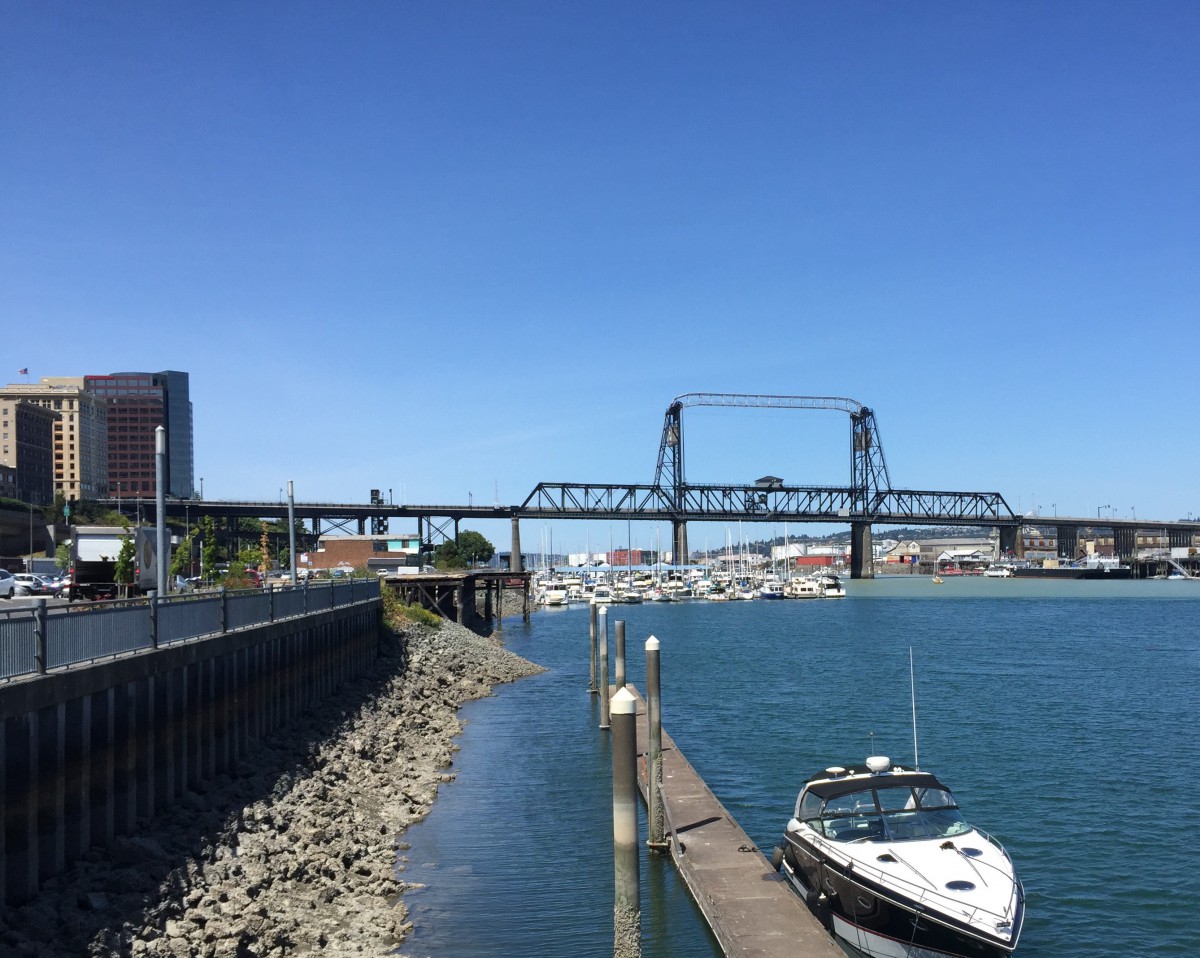
This is a horizontal drawbridge with “Port of Tacoma” stenciled on the end facing the street (not visible in this photo). The center of the bridge rises horizontally to let large boats pass underneath.

I had never seen this type of drawbridge until we took a cruise on the Columbia River that began in Portland, OR, almost 20 years ago. I thought all drawbridges split in the middle, with a section on each side that levered back to rise up. But we see quite a few of these horizontal bridges here in the Pacific Northwest.

I’ve heard that this drawbridge isn’t used any more. I’ve never see it raised.

2. Former Boat Building Company

Tacoma used to build many of the commercial fishing boats used on the West Coast. These two buildings are the remnants of a ship building company that has been closed for many years now.

Ship Building Co.
Ship Building Co.

Sending the boats built here off to their destinations probably required the raising of that horizontal drawbridge, which is located a bit off the left side of this photo.

3. Marina

Waterfront Marina
Waterfront Marina

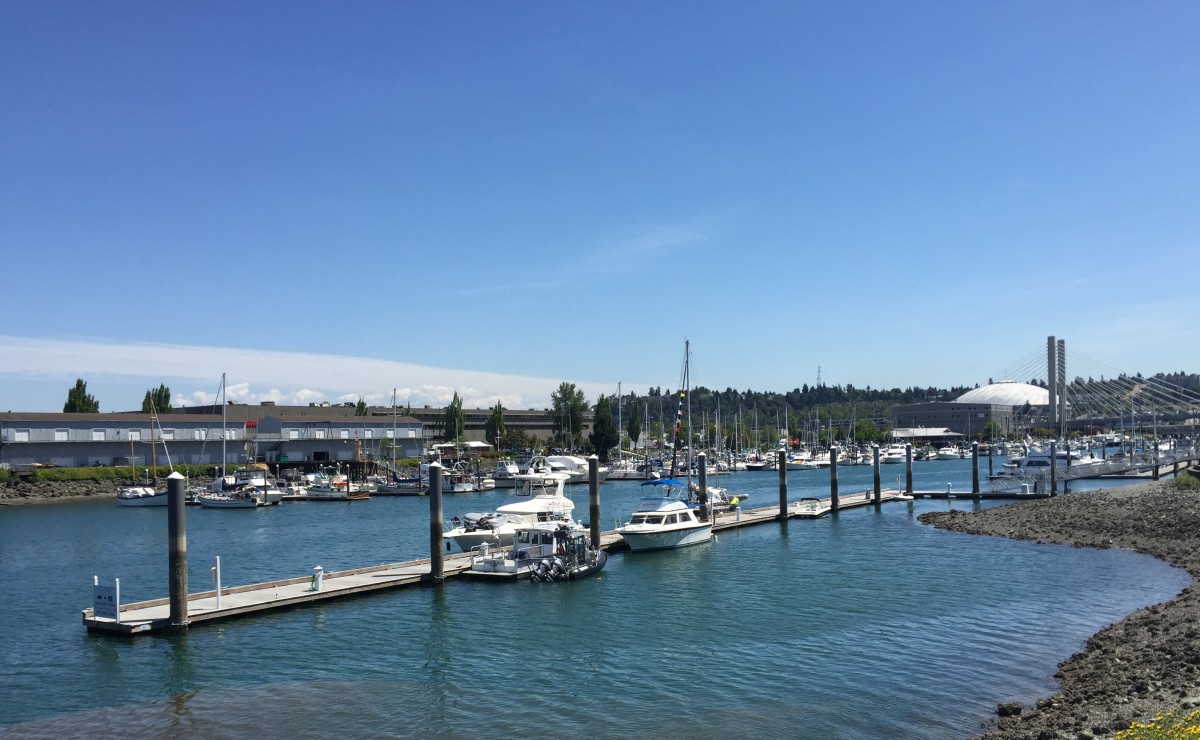
People here in the Puget Sound area really love their boats, and this marina on the waterfront is therefore still active. This is the view just to the right of the boat building company in photo #2.

On the right side of this photo you see the famous Tacoma Dome, which I’ve written about here.

See you again next week!