3 Things Thursday: Christmas Tree Edition

In honor of Christmas Eve, here’s a Christmas Tree Edition of Three Things Thursday, the purpose of which is to “share three things from the previous week that made you smile or laugh or appreciate the awesome of your life.”

(Click on any image to see a larger version.)

(1) Teacup Tree

Teacup Tree

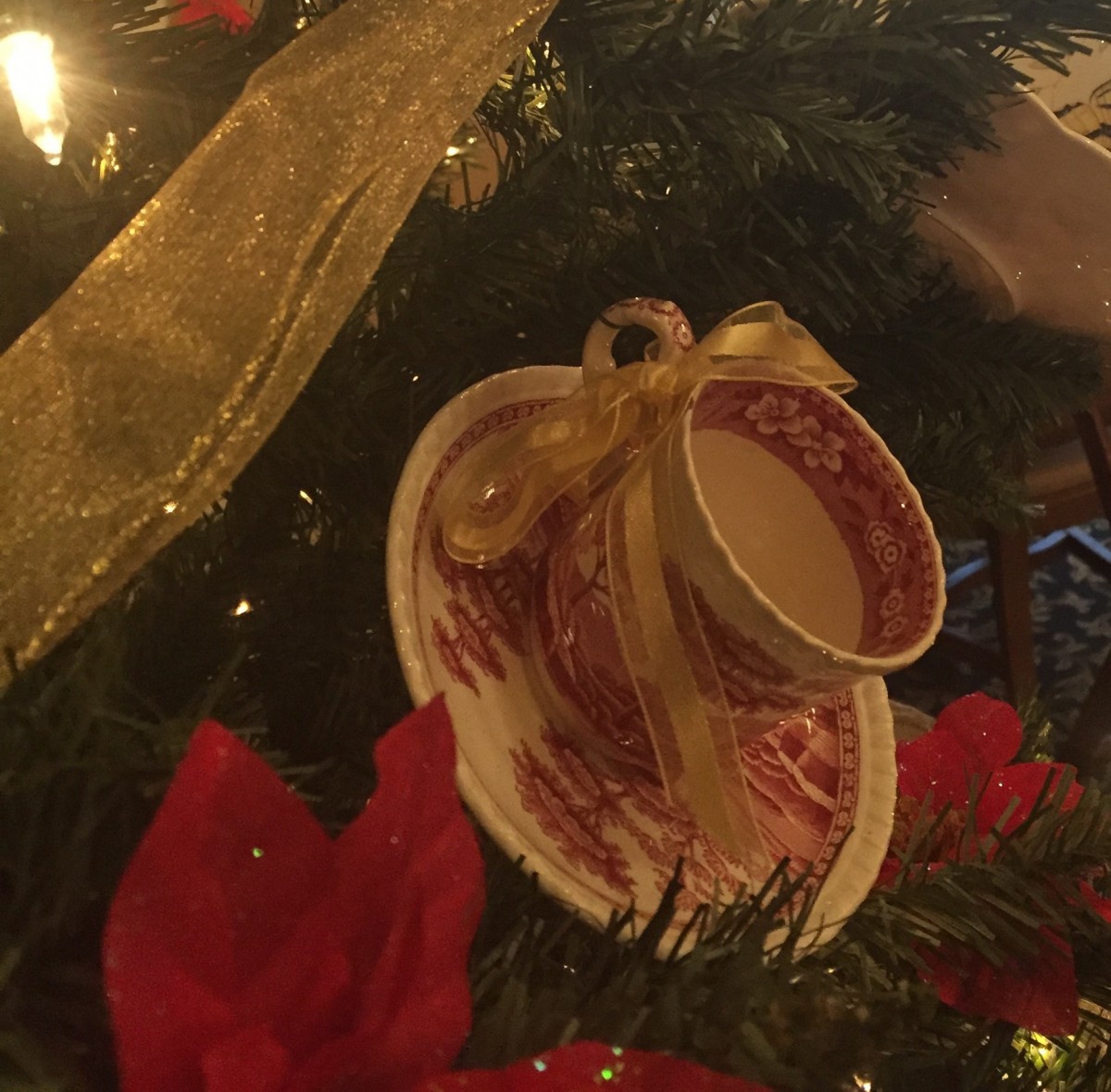
One of the dining rooms here at Franke Tobey Jones features this Teacup Tree, adorned with old-fashioned teacups glued to their saucers.

Here’s a close-up of a cup:

Close-up: Teacup

(2) Seahawks Tree

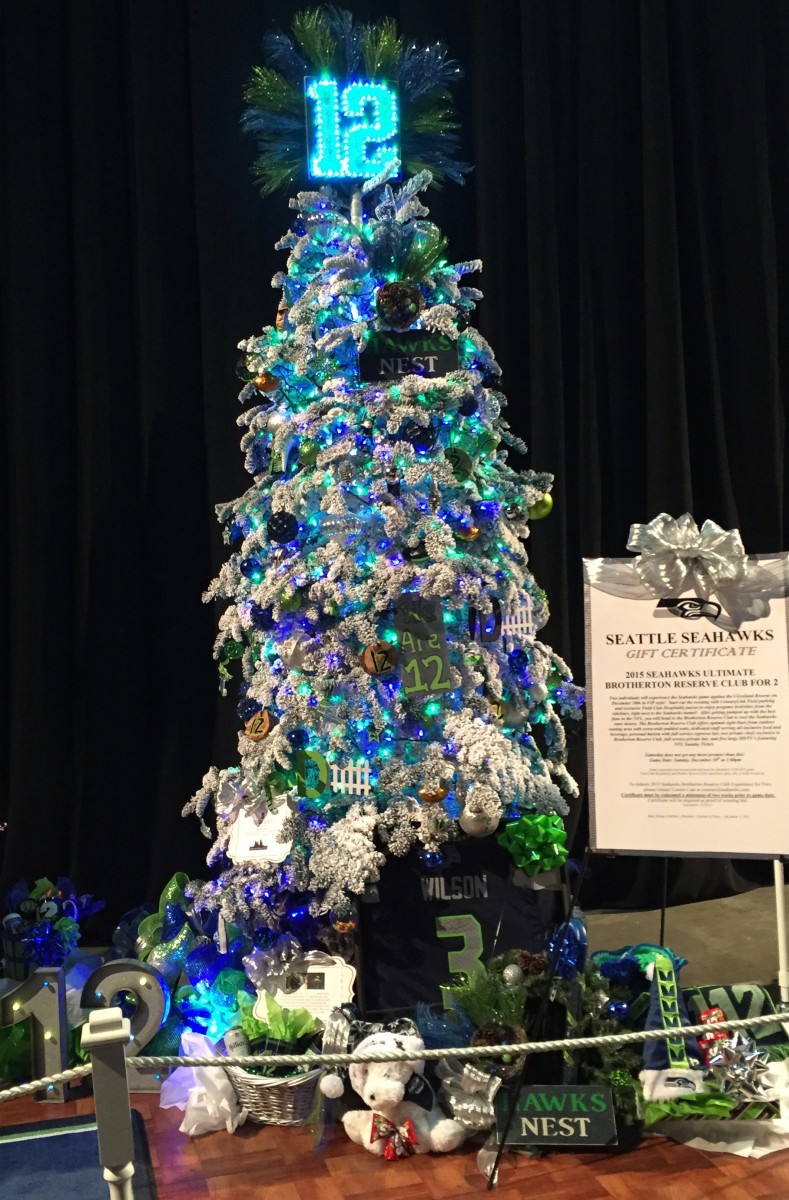
This one is from the Festival of Trees:

Seahawks Tree

We take our Seahawks football very seriously here. The 12 flag is in honor of … Well, it used to be in honor of the 12th man, but apparently some university has that phrase trademarked and the loudest fans in the NFL can no longer be called that. So now we are just The 12. But we’re still the loudest and proudest.

(3) Gingerbread Tree

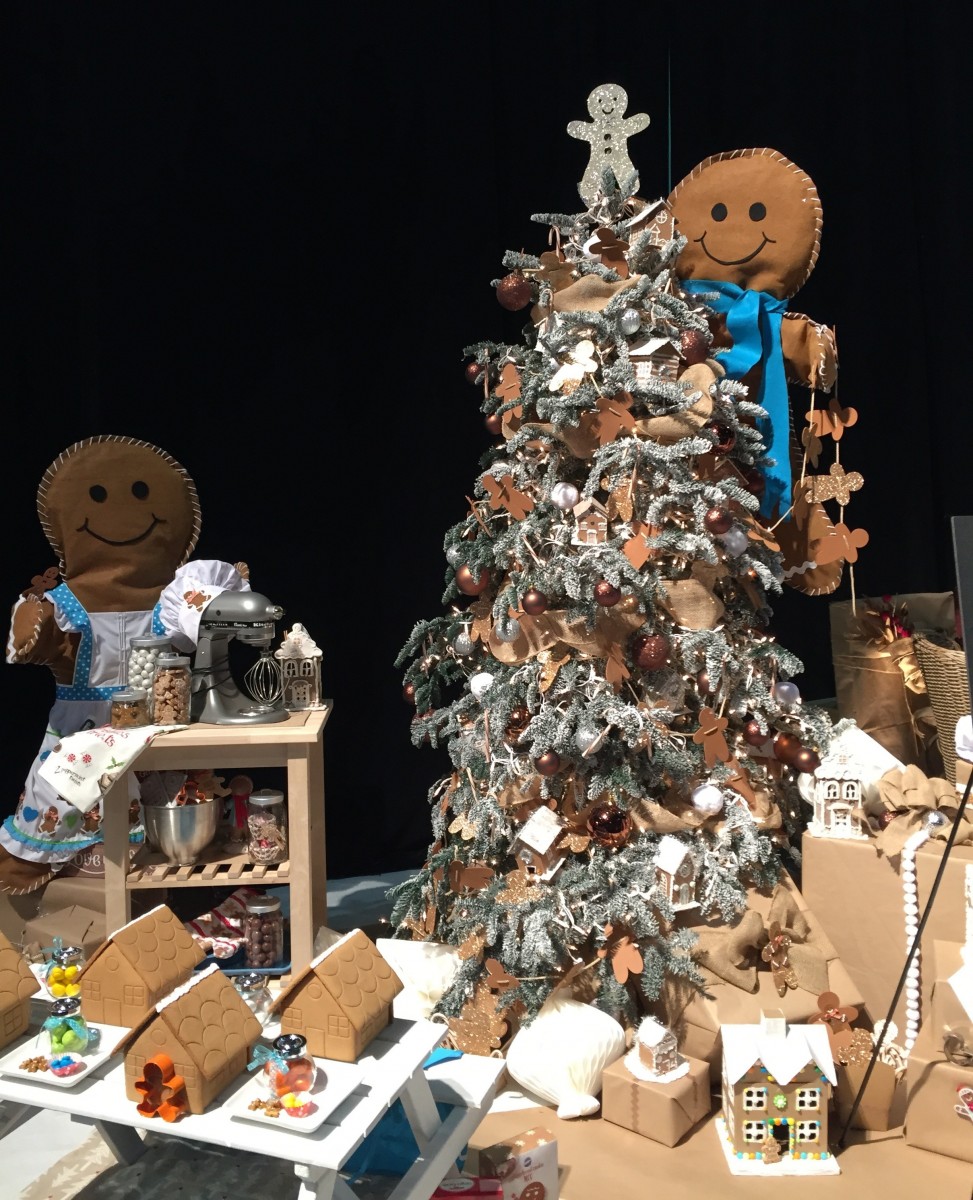
I love gingerbread men:

Gingerbread Tree

This one is also from the Festival of Trees.

There were so many beautiful and clever trees at the Festival of Trees that I wish I could include all of them here. But I’m limited to three, and I always follow directions.

For all who celebrate Christmas, I wish you a very cheery Christmas Eve.

Three Things Thursday

Here’s this week’s entry for Three Things Thursday, the purpose of which is to “share three things from the previous week that made you smile or laugh or appreciate the awesome of your life.”

three-things-thursday-participant

(1) My Husband’s Newest Toy

This is Roomba learning its way around our house:

I very much thought that this gadget would be just a toy, but I was amazed to discover how good a vacuum cleaner it is. It works on both wood floors and carpets; it senses what kind of surface it’s on and adjusts modes accordingly. The biggest drawback is that it has a small dust bin and therefore must be emptied frequently.

And there’s an app for this, which you download to your smartphone and use to program the unit. Our Roomba begins its appointed rounds of our main living area—foyer, hallway, guest bathroom, kitchen, and living room—at 1:00 AM. If the battery runs out before the vacuuming is done, Roomba returns to its home base, docks to recharge, then resumes cleaning where it left off.

I’ve seen the videos on Facebook of cats riding around the house on a Roomba, but we’re content to let it do its thing unencumbered while we’re sleeping.

Oh, and this thing is not cheap. Consequently, it is my husband’s and my Christmas gift to each other.

(2) Steller’s Jay

Back in St. Louis, where we lived for 42 years, we had a lot of Eastern Blue Jays, which feature a blue body with areas of white on shoulder and head areas. On one of our first trips out to the Pacific Northwest to visit our daughter while she was in college, we drove out to Mount Rainier National Park. Just outside the entrance to the park we stopped for lunch, where we saw several birds that looked like Blue Jays but with charcoal gray instead of white patches.

Steller's Jay

The waitress told us that the bird is a Steller’s Jay. Since moving to Tacoma, we haven’t seen many Steller’s Jays because they hang out in forests, not in cities. But on our Thanksgiving trip to the coast of Washington’s Olympic Peninsula, my husband caught this photo of one while out on a walk.

Don’t tell the Eastern Blue Jays, but I think the Steller’s Jay, with its contrasting blue and dark gray feathers, is just a bit prettier.

(3) Red-Breasted Sapsucker

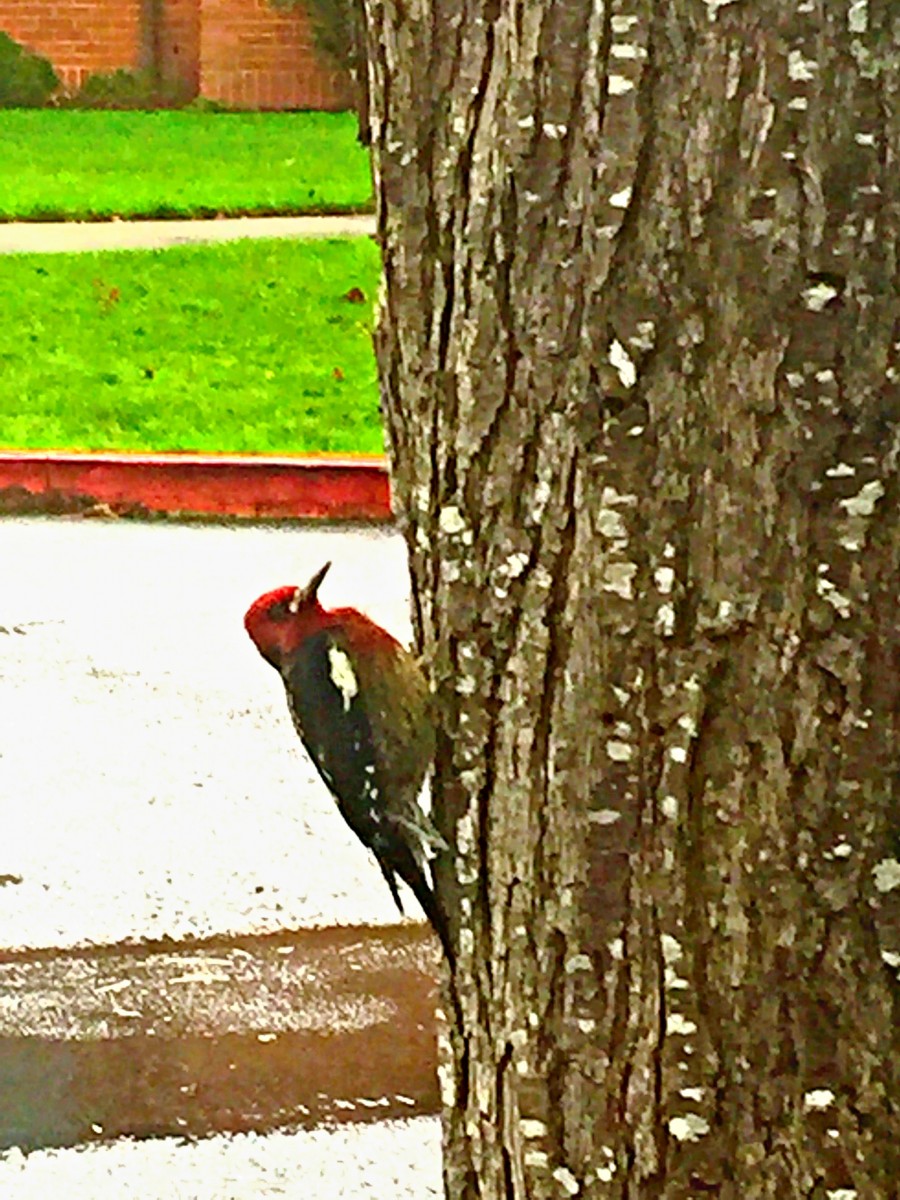
A couple of times over the last week I’ve noticed another bird I’m unfamiliar with in our front yard. I was only able to get photos the second time, and that was a rainy and dreary day, so I apologize for the low quality of this photo:

Red-Breasted Sapsucker

According to Birds of the Pacific Northwest Coast by Nancy Baron and John Acorn, sapsuckers drill small holes in the bark of a tree. These holes fill with sap, which attracts insects. The birds then have a two-course meal: They both eat the insects and drink the sap. Hummingbirds often associate with sapsuckers so that they can share the sap.

After I had photographed the bird and looked it up in the book, I went back and looked at the trunk of the tree where I’d seen him. Sure enough, the trunk is covered with tiny holes. When I was photographing the bird, I was surprised that he hung around as long as he did while I gradually moved in closer. Now I see that he was concentrating so hard on drilling all those holes that he probably didn’t even notice me.

Lunch Bunch: Black Diamond Bakery And Restaurant

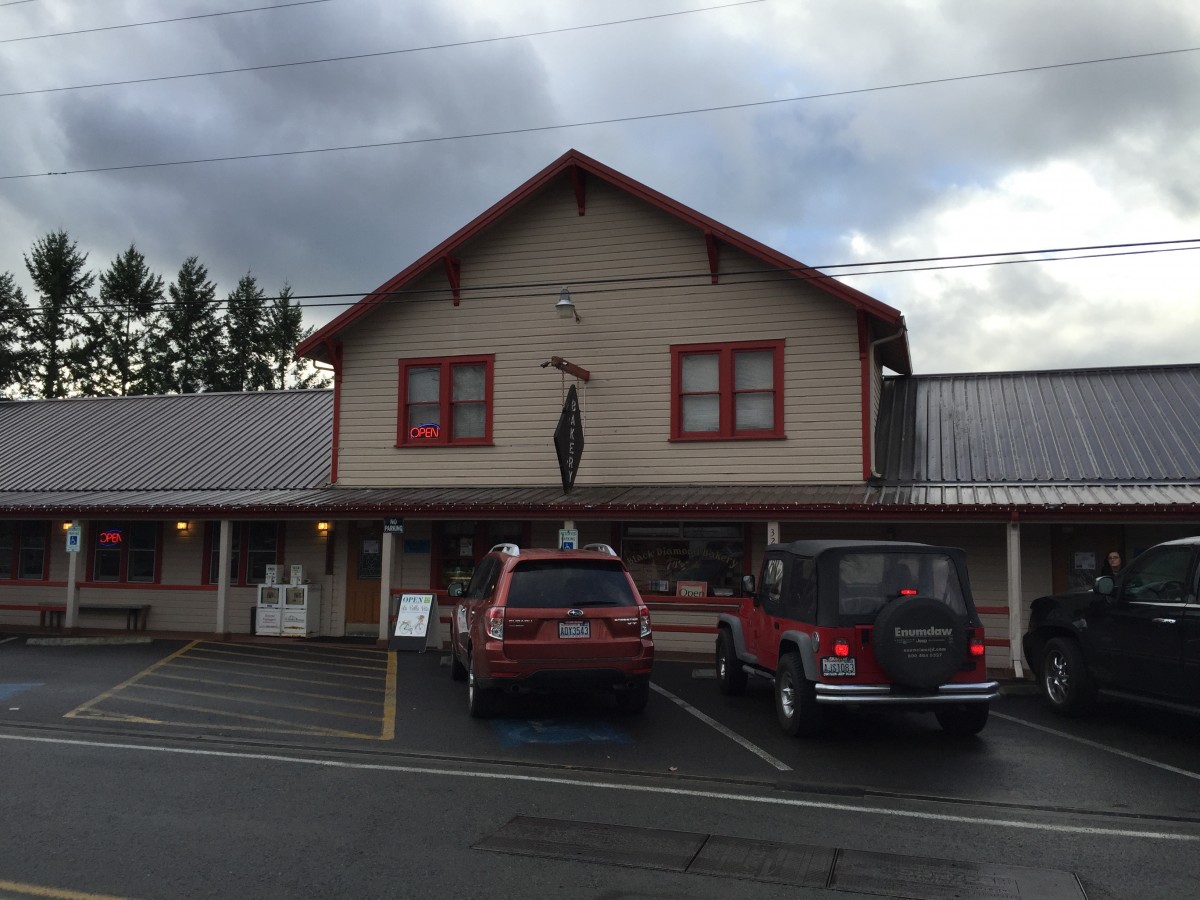
Today we took about a 45-minute bus trip to eat at a restaurant recommended by several long-time area residents:

Black Diamond Bakery And Restaurant

32805 Railroad Ave, Black Diamond, WA 98010
Phone:(360) 886–2741

Black Diamond Bakery opened in 1902 to supply bread baked in a brick oven for the families of miners working in the Black Diamond coal mine. Since that time, the business has expanded to include a restaurant, a deli, a juice bar, an ice cream shop, a coffee shop, and a gift shop. The bakery offerings have also expanded to include all kinds of breads, cakes, pies, and pastries.

I decided to eat light so that I’d have room for dessert. I had a half a club sandwich with a cup of the soup of the day, clam chowder. All the sandwiches are made from bread baked fresh daily. I had mine on wheat, and it was delicious. My husband had chili, which he pronounced excellent. One of our tablemates had a breakfast item of eggs benedict served over turkey and avocado, with a huge serving of hash browns alongside. He said it was very good, even though he was too full to eat the potatoes. One woman had the curried chicken salad served with a thick slice of banana bread. The salad was so generous that she took some home. The pastrami and meatloaf sandwiches also received high praise.

And the desserts! I had marionberry pie, with a delicious, flaky crust. The servings here were also generous. Two people at our table shared a piece of coconut cream pie and both declared it delicious. (I did NOT share my pie!) Many people said they couldn’t eat dessert because their lunch items filled them up too much, but everyone who did order dessert said it was well worth the calories.

In the Best of Everything of Western Washington annual contest run by King 5, Seattle’s local NBC affiliate television station, Black Diamond Bakery and Restaurant won the category of best bakery in 2008 and was a finalist in 2010 and 2012.

Black Diamond Bakery and Restaurant get the following ratings on social media:

  • 3.8 out of 5 stars on Google Reviews
  • 3.5 out of 5 stars on Yelp
  • 3.5 out of 5 stars on TripAdvisor
  • 3.8 out of 5 stars on Zomato
  • 7.2 out of 10 stars on Foursquare

I did not hear one complaint on the bus ride home. Everyone seemed well satisfied, especially since our activities director did all the driving.

Notes on the Olympic Peninsula

Mother Nature is making up for last year by providing us with yet another sunny day. Today I had some time to read through the booklet in our cabin about Mount Rainier, Olympic, and North Cascades national and state parks. Here are some of the nuggets of knowledge I picked up.

The western side of the Olympic Mountains receives an average of 140 inches of rain every year. There are three reasons why the area is so wet:

  • Cool ocean currents
  • Prevailing westerly winds
  • The Olympic Mountains

On the Olympic coast, the greatest rainfall occurs during December and January, with daytime temperatures averaging in the 40s.

The top of Mount Olympus receives 200 inches of rain annually, while the town of Sequim (pronouced squim), located on the northeast side of the mountains, receives 16 inches or fewer in a year.

Almost the entire Olympic Peninsula is protected land as part of either Olympic National Park or Olympic National Forest. Highway 101 follows the edges of the peninsula, but there are no roads that cut across the full width of the peninsula. Spur roads off of 101 provide access at several points to interior areas, but the only way to get from one side of the peninsula to the other is by following 101 around. Some areas are closed in winter.

Several tribes have traditional ties to this land: Lower Elwha Klallam, Hoh, Jamestown S’Klallam, Makah, Port Gamble S’Klallam, Quileutae, Quinault, and Skokomish. They originally lived in communal homes called longhouses. They fished and gathered most of their food during the spring and summer. During the winters, which are mild near the coast, the women wove baskets and clothing from red cedar bark. The men carved dugout canoes and made ceremonial items from wood.

In 1788, John Meares, an English sea captain, named Mount Olympus after the mythological home of the Greek gods. Four years later Capt. George Vancouver made the name official when he entered it on his map and referred to the whole mountain range as the Olympic Mountains. Mount Olympus is 7,980 feet high. By comparison, Mount Rainier, in the Cascade Mountain range, is 14,410 feet high.

Throughout the late 19th century pioneers moved into the Olympic peninsula to fish, farm, and cut lumber. In 1885 and 1890, the U.S. Army came through the area to survey and scientifically document the interior. In 1909 President Theodore Roosevelt created Mount Olympus National Monument. In 1938 President Franklin D. Roosevelt signed a bill designating 624,000 acres as Olympic National Park. In 1953 most of the coastal wilderness was added to the park. The 1988 designation of Olympic National Park as a World Heritage Site protects the area by forbidding road building, mining, lumber cutting, hunting, use of off-road motorized vehicles, and other types of development within the designated wilderness area.

Beach Day

Once again, we awoke to beautiful sunshine. There was frost on the cars and on the sides of the driveways where the sun hadn’t yet reached, but the cabin’s heater and the comforter on the bed kept us warm throughout the night.

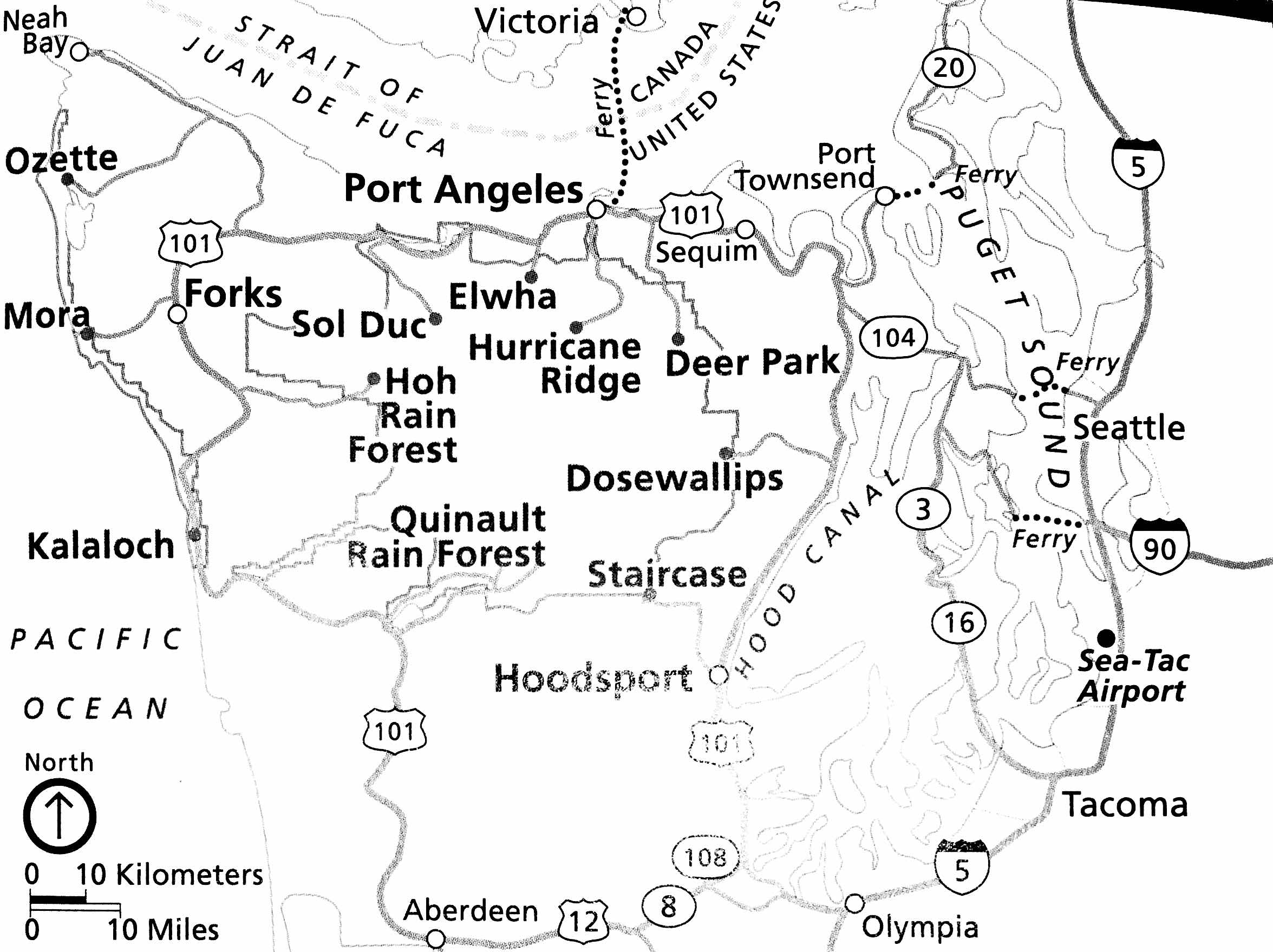
We drove the short distance north on U.S. Highway 101, toward Forks, to Ruby Beach (see map ). After we left Ruby Beach to drive back to the lodge, we stopped at Beach 4, also on Highway 101. I had been to Ruby Beach before but never to Beach 4. I’m glad we stopped at Beach 4 on the way home because the two beaches are quite different and I learned a bit about the Washington coast.

(Click on any photo to see a larger version.)

Ruby Beach

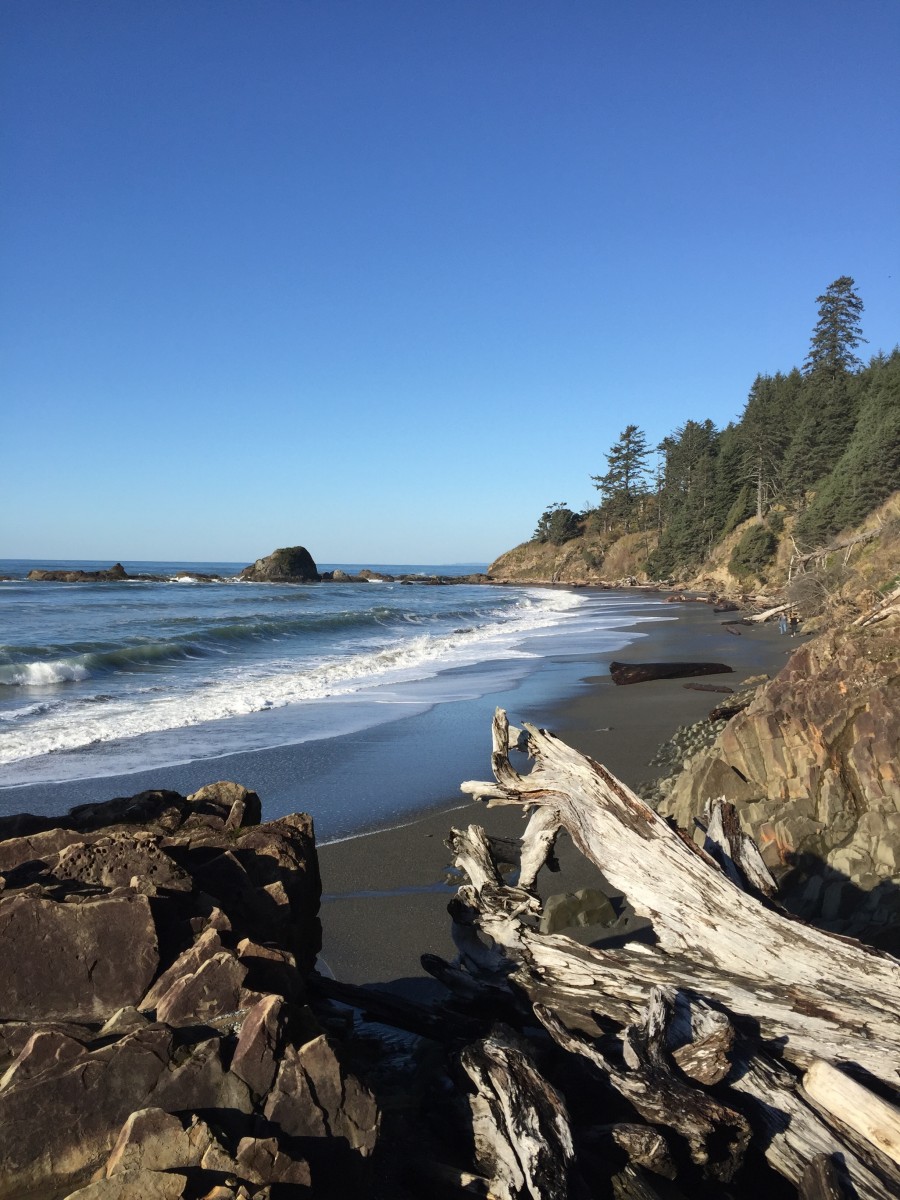
I had been here twice before. It’s beautiful because of the rocks, called sea stacks, that jut out of the water not too far out from shore. The stacks, remnants of eroded coastal cliffs, provide a place for birds, including cormorants, murres, pigeon guillemots, and petrels, to breed and raise their young.

sea stacks

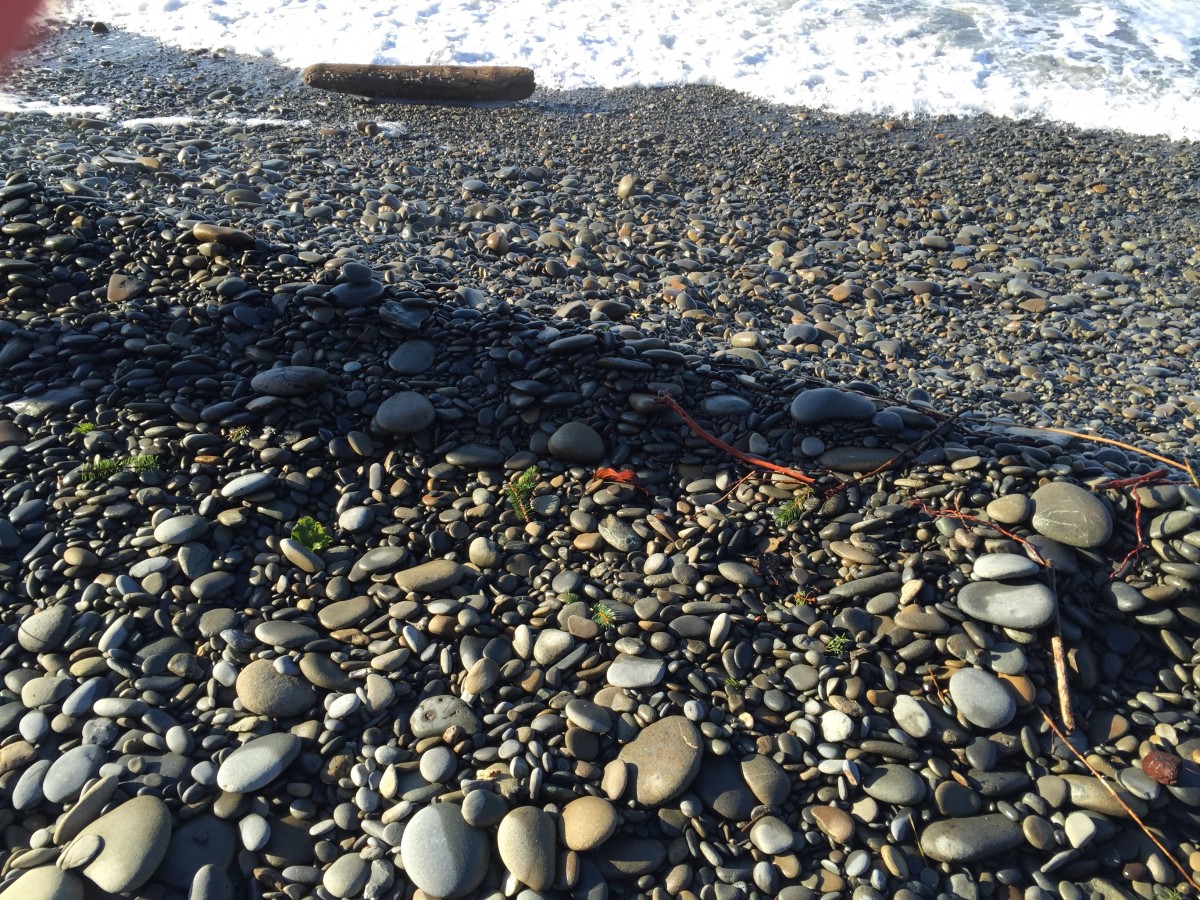
Because we arrived just a few minutes before high tide, the sandy part of the beach was hidden by the waves. The area open for walking was covered by stones. Looking at the stones reveals that some have been in the water longer than others. Most of them have been tumbled into smooth discs or ovoids by being in the water so long, but occasionally one appears that still has an irregular shape with some jagged edges. Walking across the beach on the stones is a challenge because the stones give way and shift underfoot.

rocky beach

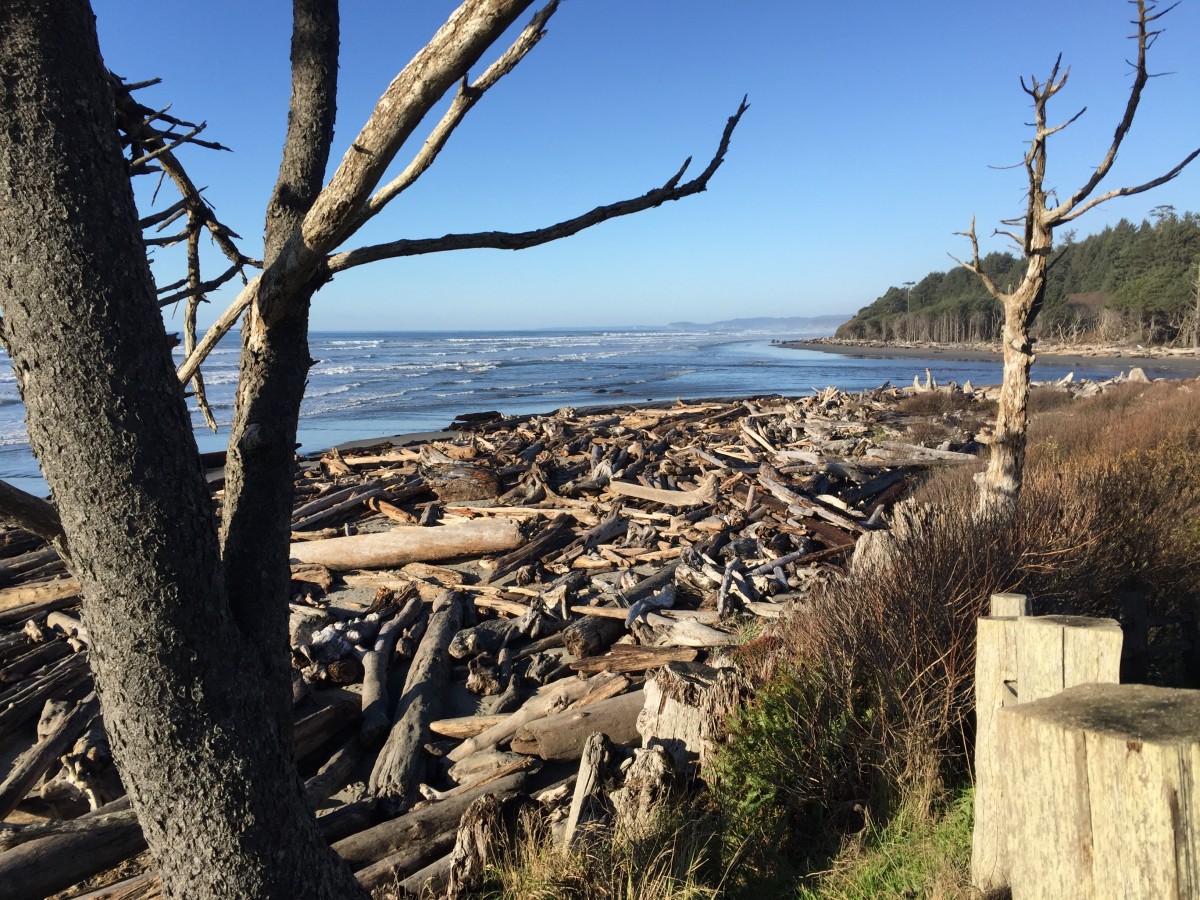
Ruby Beach, like the beach here at Kalaloch Lodge, is also covered with logs that have been tumbled around by the water and have eventually washed ashore.

logs on beach

Together, Olympic National Park and Olympic National Forest protect a huge old-growth forest with trees between 200 and 1,000 years old. Nearly one million acres on the Olympic Peninsula are protected as wilderness—95% of Olympic National Park, five areas in Olympic National Forest, and more than 600 islands in national wildlife refuges. The logs on the beaches serve as a reminder that most of the area is covered with trees.

Beach 4

About 73 miles of coastline along Highway 101 are protected as wildlife refuge. Many of the beaches are accessible only on foot or by boat, but Beach 4 offers a parking lot and a walking trail..

The path from the parking lot down to the beach terminates in this wooden walkway:

boardwalk at Beach 4

From here you can venture out onto the rocks, if you’re brave enough. We weren’t brave enough, but there were some younger people there who were.

guys on rocks

When we arrived, the tide had recently begun to ebb. There are not as many logs on this beach as there are at Ruby Beach and at Kalaloch Lodge.

Beach 4 has few logs

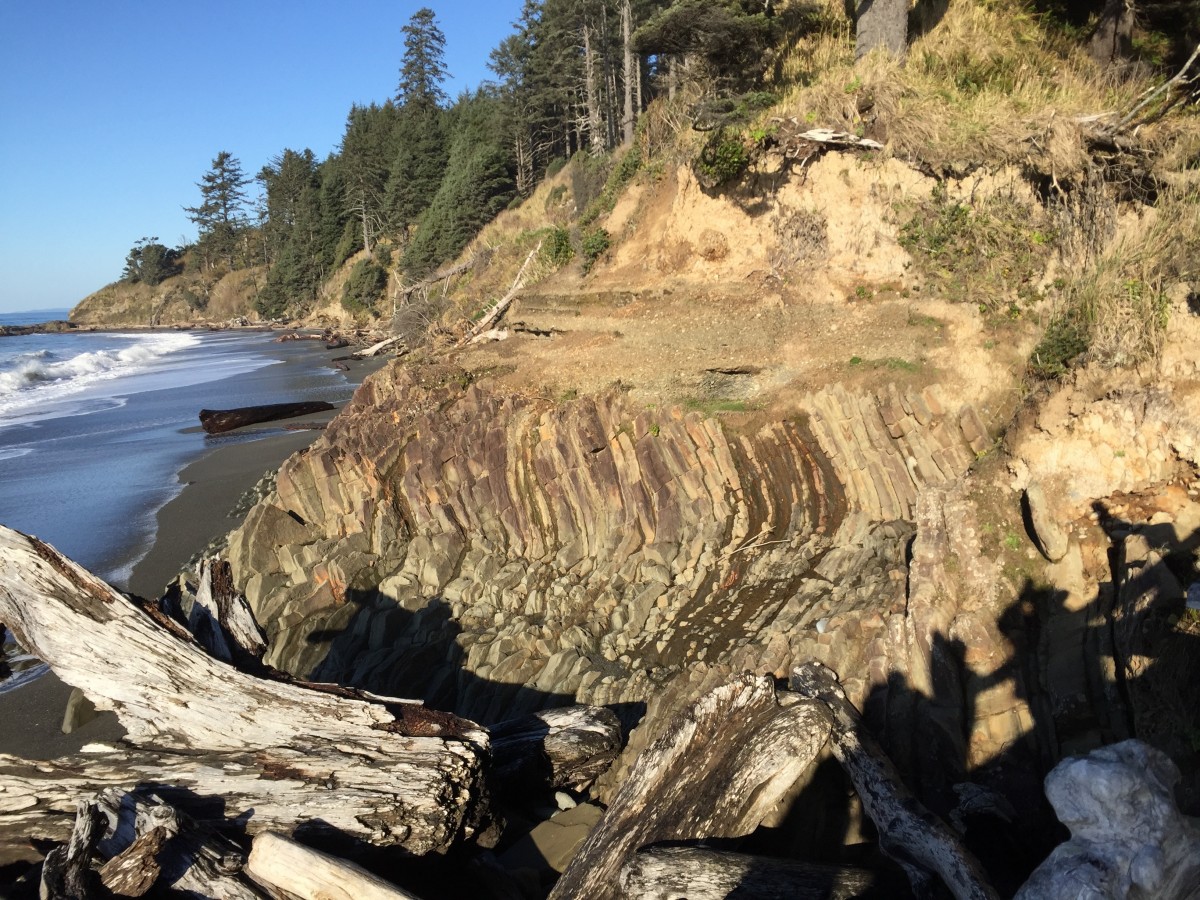
Here the rocks take center stage and demonstrate how the coastline formed over the last 15 million years:

rocky coast at Beach 4

Earth’s outer crust consists of vast mobile plates carried along by convection currents. As the ocean floor collided and dipped beneath the land plate, the rocks which form the Olympic peninsula were skimmed off and added to the continent.

Thanksgiving Week on the Coast

Last year we started a new tradition by spending Thanksgiving week with our daughter at Kalaloch Lodge at Olympic National Park. The lodge is right on the coast of Washington’s Olympic Peninsula, near the town of Forks. There’s very little around except for acres and acres of national forest.

Kalaloch map

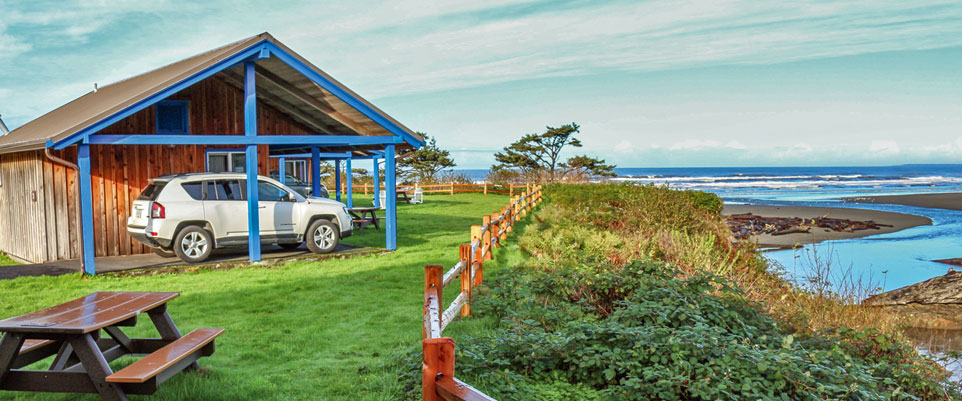
We rent two cabins, one for our daughter and one for us. The cabins have a small kitchen, so we can make most of our meals. On Thanksgiving day we hit the lodge restaurant for a buffet of turkey, ham, and all the other traditional Thanksgiving fixins’.

Each cabin also contains a wood-burning stove. We receive a new bundle of fire wood each day and enjoy watching the fire each evening.

Last year it was rainy and overcast almost the whole time we were there, but that didn’t stop us from exploring the beach, which is covered with logs that have washed ashore. Kalaloch Lodge’s promotional materials bill this as storm-watch season, and watching a coastal storm is a magnificent experience. From the cabins we can both see and hear the waves rolling in, so bad weather doesn’t diminish the experience of being there at all.

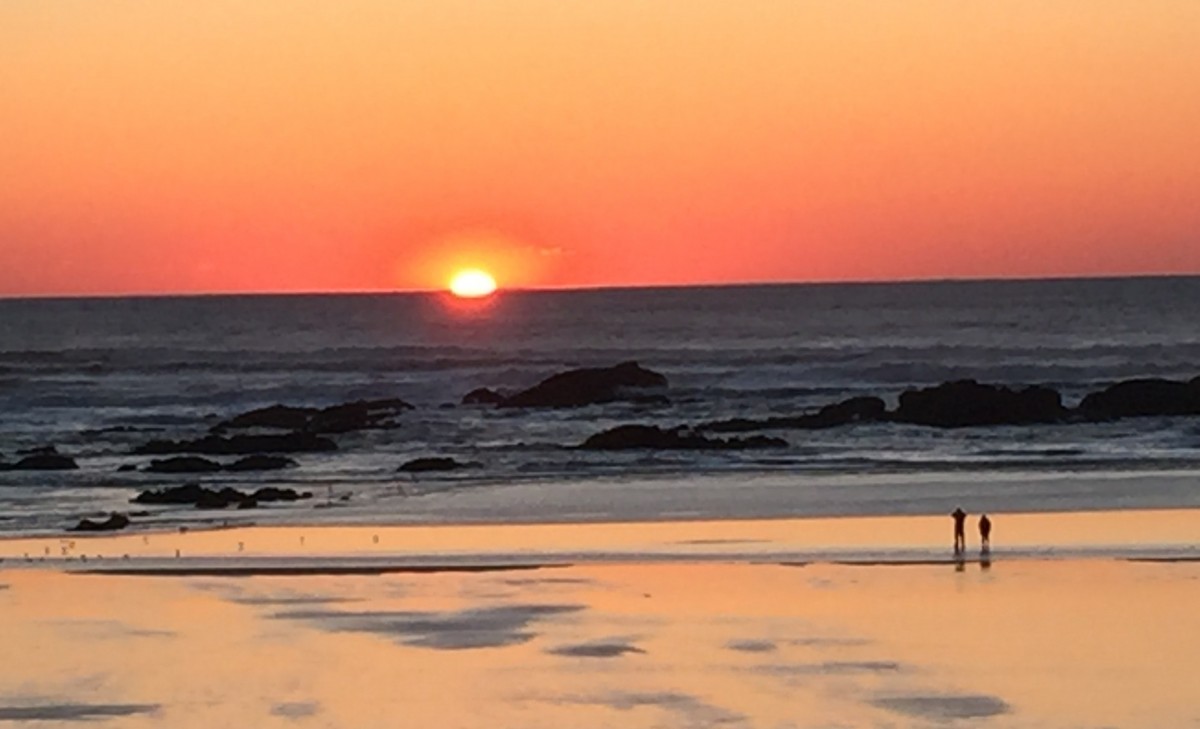
We’re hoping to have at least a day or two of passable weather so that we can visit the nearby Hoh Rain Forest, which we weren’t able to do last year. And because we did get some sun on the final morning last year as we were preparing to leave, we did get some photos of sun over the waves. But even if we don’t get any good weather, I will still love being on the coast, where I can see and hear the surf hitting the shore. I’m packing my books and my laptop in the hope of getting some serious reading and writing done.

Since there’s no cell phone service or internet access out on the Olympic peninsula, I won’t be able to publish any more posts until we get back home. Therefore, let me take this opportunity to wish everyone here in the U.S. a happy Thanksgiving. I’ll take some photos for you.


SHARE YOUR WORLD – 2015 WEEK #46

Time again for SHARE YOUR WORLD – 2015 WEEK #46.

What type of popular candy you do not like to get?

Cotton candy. It’s good for a bite or two, but after that the sweetness becomes too much. I always resent that you have to buy the whole big thing to get just those two bites, so I haven’t bought any for a very long time.

Now dark chocolate, on the other hand, I never pass up the opportunity for.

What do you feel is the most enjoyable way to spend $500?

I am very fortunate. Especially at this time of year, I’d like to donate my $500 to the local food bank to provide Thanksgiving baskets to those in need.

Where do you eat breakfast?

I usually don’t eat breakfast until lunch time. Most often I eat at the computer while checking email and Facebook, and reading news.

Would you rather ride one of the worlds longest zip lines or bungee jump one of the highest in the world? This will come with a 5-day all expense vacation.

Neither of the above. Instead, I’d like a ride in a hot-air balloon. I’ve been hinting about this for years, but so far no one has picked up on that hint. Either that, or they’ve ignored it. But I keep hoping.

Bonus question: What are you grateful for from last week, and what are you looking forward to in the week coming up?

Yesterday I had the three-week follow-up visit after cataract surgery on my second eye, and my eyes are all healed up. I now have a prescription for new reading glasses, which require a much less severe correction than my pre-surgery reading glasses. We are now having some sunny weather after a rainy week, and I’m grateful for being able to see colors more vibrantly now.

I hope everyone has a good week. Happy Thanksgiving to those here in the U.S.!

Universal Children’s Day

Today is Universal Children’s Day. November 20 marks the day on which the United Nations Assembly adopted the Declaration of the Rights of the Child in 1959 and the Convention on the Rights of the Child in 1989. The Convention specifies a number of children’s rights, including the right to life, to health, to education, to play, to family life, to protection from violence, and to protection from discrimination.

United Nations Secretary-General Ban Ki-moon issued a message for this year’s observance:

This year, I wish to emphasize the importance of ensuring that the commitments made by the international community to the world’s children are extended to a group of children who are often forgotten or overlooked: those deprived of their liberty.

Far too many children languish in jail, mental health facilities or through other forms of detention. Some children are vulnerable because they are migrants, asylum seekers, homeless or preyed on by organized criminals.

Ban Ki-moon’s statement continues:

This year’s observance falls at a time when 60 million people have been forcibly displaced from their homes – more than at any time since the Second World War. Almost half of them are children fleeing oppression, terrorism, violence and other violations of their human rights.

It is particularly important for those of us who live in relative plenty to keep in mind the plight of children and their families as nations debate whether to grant asylum to the thousands of people fleeing oppression, terrorism, and violence in their former homes.

Three Things Thursday

Back again with a new edition of Three Things Thursday, the purpose of which is to “share three things from the previous week that made you smile or laugh or appreciate the awesome of your life.”

(Click on any photo to see a larger version.)

1. “10,000 B.C.”

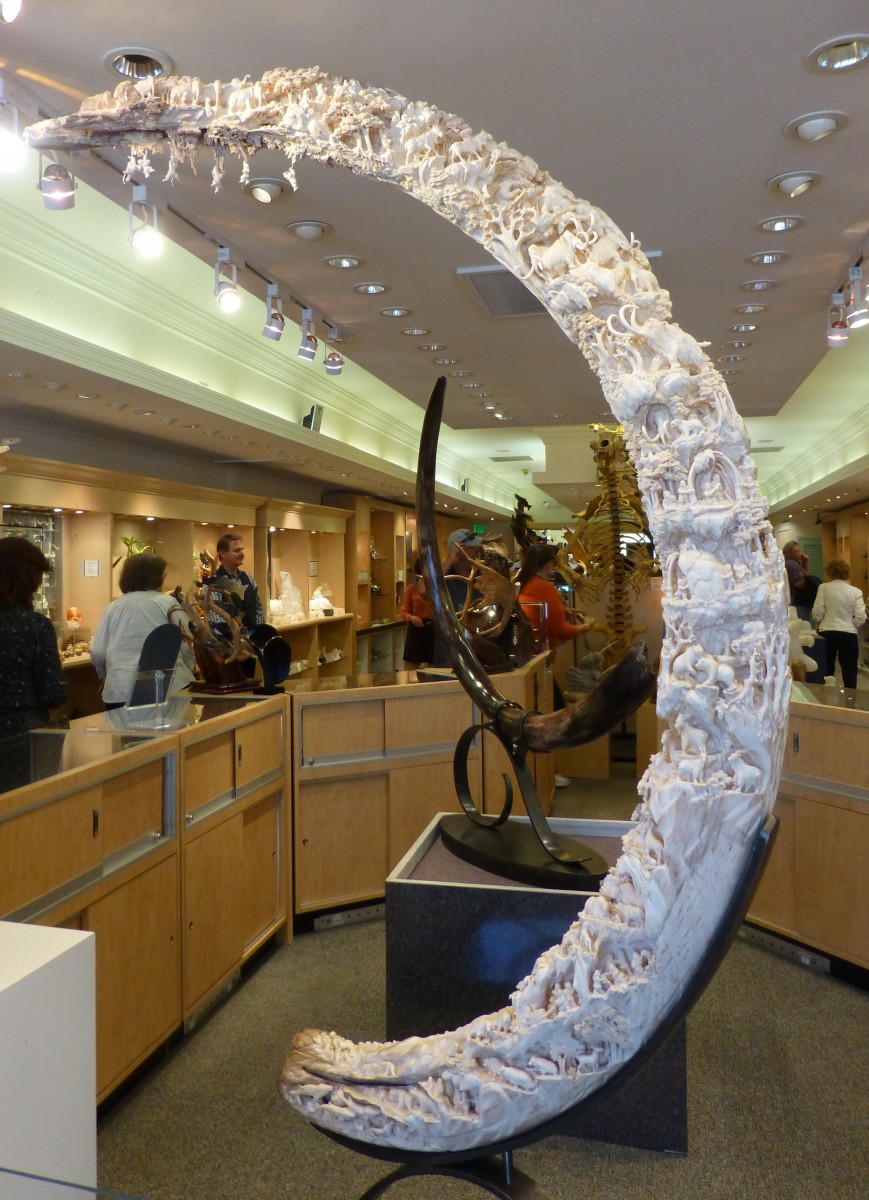
When we stopped at Ketchikan, AK on our Alaska cruise back in August, we visited a shop that sells work by Eddie Lee. Lee is a native of Vietnam who left that country with his family in 1978. He arrived in the U. S. and then settled in Seattle, WA. He has traveled extensively along the Northwest coast and Alaska, where he found a spiritual home.

At the gallery in Ketchikan we saw this amazing piece of artwork, titled 10,000 B.C.:

10,000 B.C.

10,000 B.C.Carved on a woolly mammoth tusk from Alaska that is more than 10,000 years old, it depicts the cycle of life of the area we now know as Alaska.

We were allowed to photograph this piece because Lee plans to donate it to the Smithsonian for public display. No photos can do justice to its fine detail and exquisite craftsmanship.

2. My Most Recent Fungus Photo

My family likes to tease me because, whenever I see a toadstool, I feel compelled to photograph it. Here’s my latest, a shot (and it was hard choosing just one!) of a toadstool my husband and I came upon while walking home from a meeting on Tuesday, the day we had a large rainstorm with high winds:

fungus

Wikipedia defines toadstool as “the fleshy, spore-bearing fruiting body of a fungus, typically produced above ground on soil or on its food source.” Wikipedia also uses the terms toadstool and mushroom interchangeably, a practice that I do not share. I prefer to save the term mushroom for the edible things I buy in the produce section of my local grocery stores.

The toadstool pictured here may be an Amanita muscaria, commonly known as the fly agaric or fly amanita, although I’m not sure. Someday I may undertake a study of such fungal growths, but for now I’m content just to photograph them.

3. What I’ve Been Reading

Frequently I come across interesting articles on the internet that I don’t have time to read just then. I leave them open in a browser tab until eventually I have so many tabs open that I have to decide whether to stop and read the articles or simply close the tabs and start a new collection.

Here is one of those articles that doesn’t quite fit as material for my other two blogs. When I started writing this post, I realized I needed a third item and decided that it would fit nicely here.

Stop Googling. Let’s Talk. by Sherry Turkle, a professor in the Science, Technology, and Society program at M.I.T., who writes:

I’ve been studying the psychology of online connectivity for more than 30 years. For the past five, I’ve had a special focus: What has happened to face-to-face conversation in a world where so many people say they would rather text than talk? I’ve looked at families, friendships and romance. I’ve studied schools, universities and workplaces. When college students explain to me how dividing their attention plays out in the dining hall, some refer to a “rule of three.” In a conversation among five or six people at dinner, you have to check that three people are paying attention — heads up — before you give yourself permission to look down at your phone. So conversation proceeds, but with different people having their heads up at different times. The effect is what you would expect: Conversation is kept relatively light, on topics where people feel they can drop in and out.

I was surprised to read that Turkle discovered a sense of loss among young people she talked with who have grown up with the “rule of three.” These teenagers and college students seem to understand that they lose the close personal connection created in face-to-face conversations uninterrupted by technology. But, Turkle writes, it’s not too late for us to fix things. “We face a significant choice. It is not about giving up our phones but about using them with greater intention. Conversation is there for us to reclaim.”

National Adoption Awareness Month

November is National Adoption Awareness Month. The event is funded every November by The Children’s Bureau, a division of the U. S. Department of Health and Human Services, in partnership with AdoptUSKids and Child Welfare Information Gateway.

The event originated in 1976, when Governor Michael Dukakis of Massachusetts designated a week in November as Adoption Week in his state. President Ronald Reagan proclaimed the first National Adoption Week in 1984. In 1995 President Bill Clinton expanded the event to the entire month of November.

This year (2015) National Adoption Awareness Month focuses on the adoption of children currently in foster care. According to The Children’s Bureau, “Youth ages 15 to 18 make up 5 percent of the foster care population – 84,778 youth.” Statistics demonstrate that “youth in foster care face higher rates of poor outcomes, such as dropping out of high school, unemployment, and homelessness” than other children. Yet statistics also demonstrate that youth in foster care can overcome traumatic past experiences if they gain a sense of belonging by being adopted into a family that will “provide a sense of stability, but also help them navigate the complicated landscape of their emerging independence.”

International Business Times recently featured an article about President Obama’s proclamation for National Adoption Awareness Month 2015:

“All young people deserve a safe place to live, and with each passing year, more children know the warmth and comfort of a loving family, thanks to adoptive parents,” President Barack Obama said in a proclamation released last week. The awareness month is a time to “recognize the selflessness of adoptive families” and “thank them for opening their hearts and their doors to young people in need of a safe, stable place to call home,” Obama said.

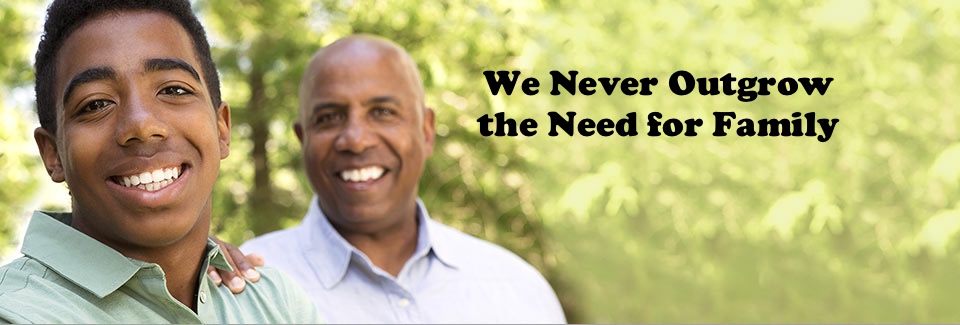
The tag line for this year’s focus is “We Never Outgrow the Need for Family.”

For More Information

The National Adoption Awareness Month web site has lots of helpful information, including FAQs for three specific groups: (1) professionals, (2) prospective adoptive parents, and (3) youth.

National Adoption Day is a collective event sponsored by several national partners in the United States to raise awareness of the more than 100,000 children in foster care who are waiting to find permanent homes. It is celebrated on the Saturday before Thanksgiving, when the adoptions of children are finalized across the country.

National Adoption Month, a web site by adoption.com . It looks as if this page was last updated in 2012, but much of the information here is timeless. You’ll find suggestions on how to celebrate National Adoption Awareness Month and links to resources such as how to talk with young children about adoption.

NATIONAL ADOPTION AWARENESS MONTH, presented by the Dave Thomas Foundation for Adoption. Dave Thomas was the founder of Wendy’s restaurants.

The Huffington Post has several articles about National Adoption Awareness Month. This list also includes posts that appeared before November 1st.

The National Adoption Awareness Community has a Facebook page.

Lifetime Adoption Foundation features National Adoption Awareness Month.