Saint Nicholas stands just inside the entrance to the main building here at our retirement community, Franke Tobey Jones, to greet visitors.
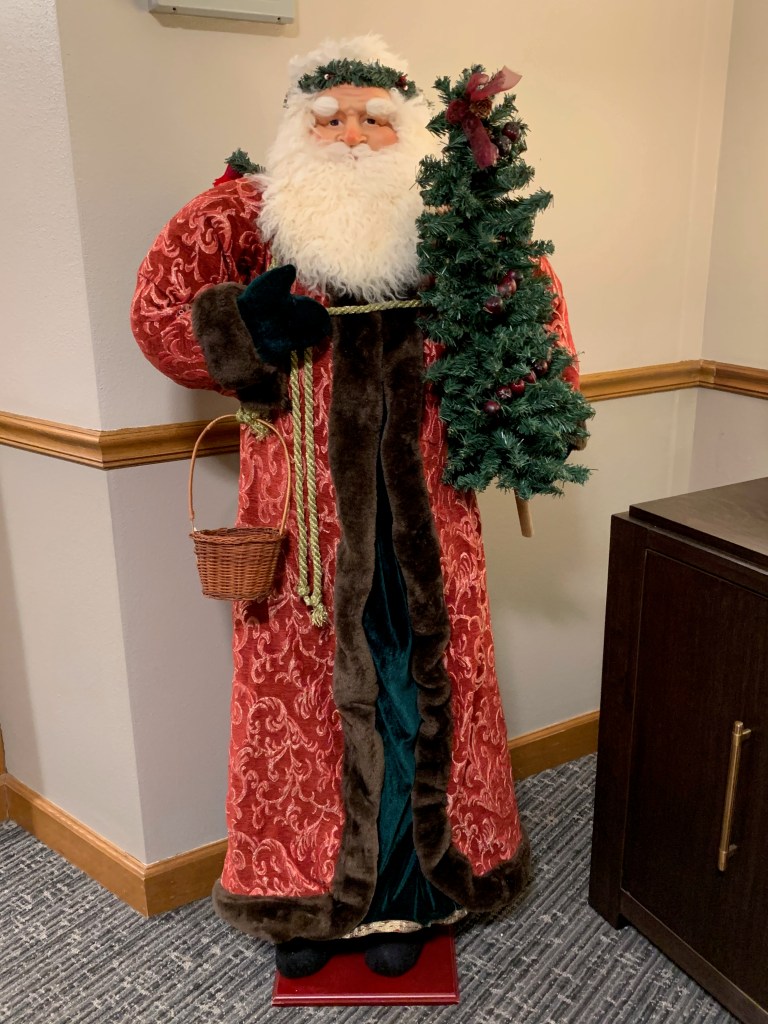
Saint Nicholas stands just inside the entrance to the main building here at our retirement community, Franke Tobey Jones, to greet visitors.
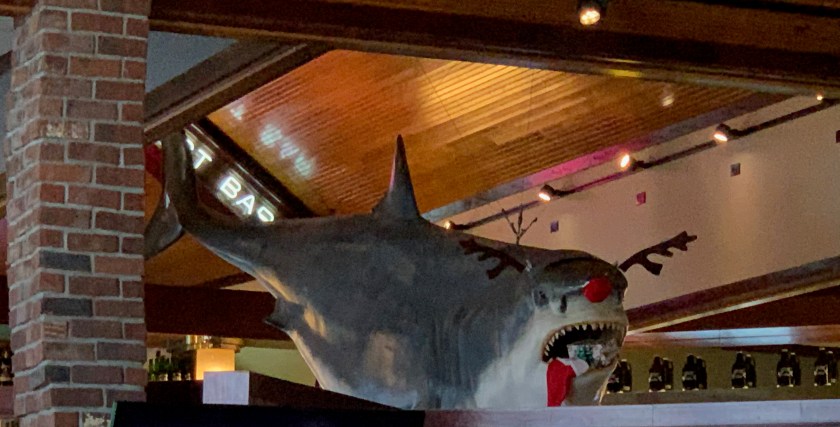
. . . for holiday decorations. Yesterday we had lunch with Rudolph the Shark at a restaurant along the waterfront here in Tacoma, WA USA.
We saw this beauty in a parking lot over the weekend. We are not car buffs at all, but this one has been so beautifully and lovingly restored that it was impossible not to admire it.
According to the hood ornament, it’s a Packard 8. The front end is long because it houses all eight cylinders in a line, called a straight eight. According to Wikipedia, Packard produced the Packard 8 between 1930 and 1938.
If you can add any more information, I’d love to hear from you in the comments. And thanks.
© 2019 by Mary Daniels Brown
Another fun edition of Three Things Thursday, the purpose of which is to “share three things from the previous week that made you smile or laugh or appreciate the awesome of your life.”

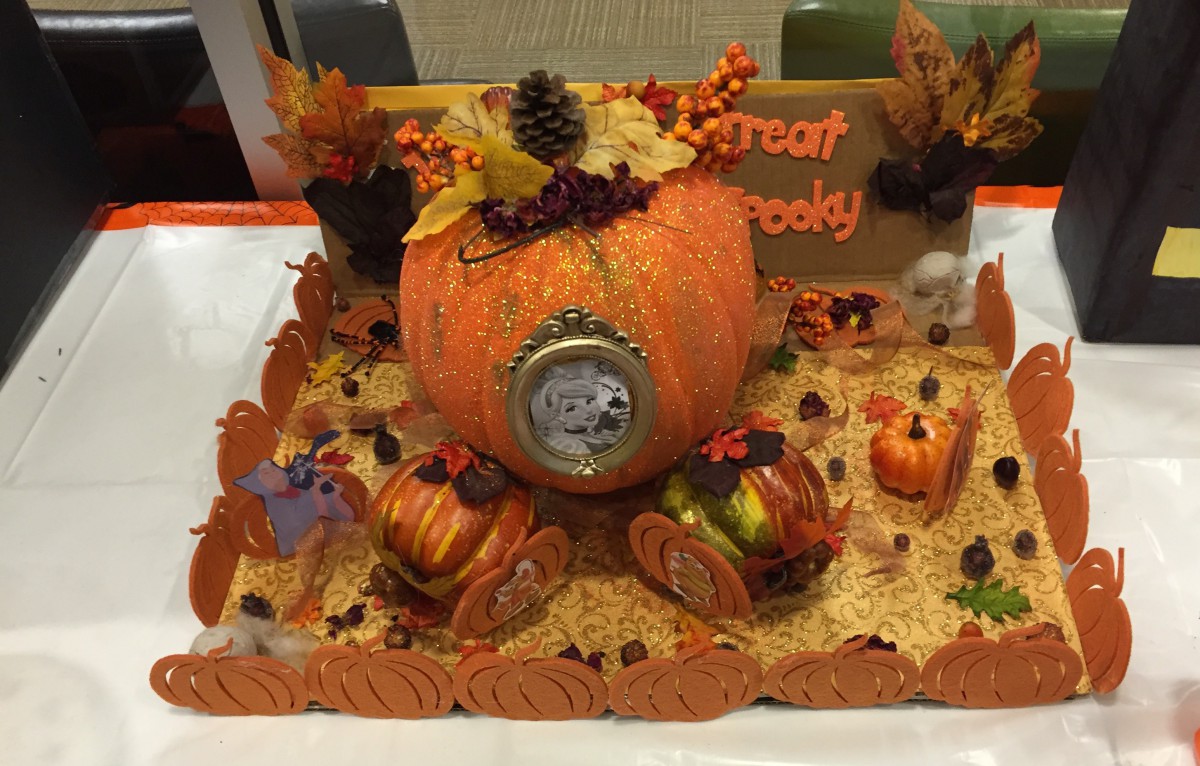
Yesterday I had cataract surgery on my right eye. The folks at the eye surgery center had set up a contest that allowed people to vote for their favorite pumpkin creation.
Cinderella’s coach is at the top of this post. Here are three more:
1. Snoopy
I fell in love with this Snoopy, the first of the entries that I saw. The body is a large pumpkin, the paws are two small pumpkins, and the head is a large butternut squash (a pumpkin is technically a squash, so this qualifies) with the stem as the nose.

I never would have thought of using a butternut squash for the head, but once it saw it here, I realized that it is, of course, perfect.
2. Scary Eyeball
I’m not sure if this is supposed to be anything in particular. But it’s definitely an eyeball, and that’s certainly appropriate for an eye clinic.

3. The Stay Puff Marshmallow Man
Do you remember the scene in Ghostbusters when the Dan Ackroyd character can’t control his thoughts and the evil force uses them to create a giant, threatening Stay Puff Marshmallow man? Here he is, in all his evil glory:

I couldn’t decide whether to vote for Snoopy or the Stay Puff Marshmallow man. So my husband and I worked together: I voted for Stay Puff and he voted for Snoopy.
I won’t be going back to the surgery center to see which pumpkin creation won. Actually, I don’t even want to know which one won. I just enjoyed seeing them all.
Happy Halloween, everybody!
(Click on photos for a larger version.)
The main feature of this city is the Gothic style Cologne Cathedral. Its construction was begun in 1248 but was stopped in 1473, before completion. Work began again in the 19th century, and the cathedral’s original plan was completed in 1880. Although badly damaged during World War II, it remained standing. Repairs were completed in 1956.
Rain fell steadily during our Cologne tour and we therefore have no outdoor photos of this massive cathedral, which is 474 feet long by 283 feet wide, with towers approximately 515 feet tall. It’s the largest Gothic church in Northern Europe.
However, you can get a sense of the cathedral’s size from this interior shot:


I’ll have to go back to Cologne some time to visit the Roman Germanic Museum, located near the cathedral. The Romans established a major settlement here around 50 CE. In 1941 workers building an air raid shelter discovered what is now known as the Dionysus Mosaic, a well preserved art work created around 220 CE. The Roman Germanic Museum was later built around the mosaic to preserve its integrity.
Kinderkijk, a UNESCO World Heritage Site since 1997, comprises 19 windmills dating from 1738:

The purpose of the windmills was to pump water from the river into a reservoir to keep the land dry. When the river level fell low enough, the water in the reservoir could be pumped back into the river.
These historic mills are built from brick and have large sails that come within one foot of the ground.
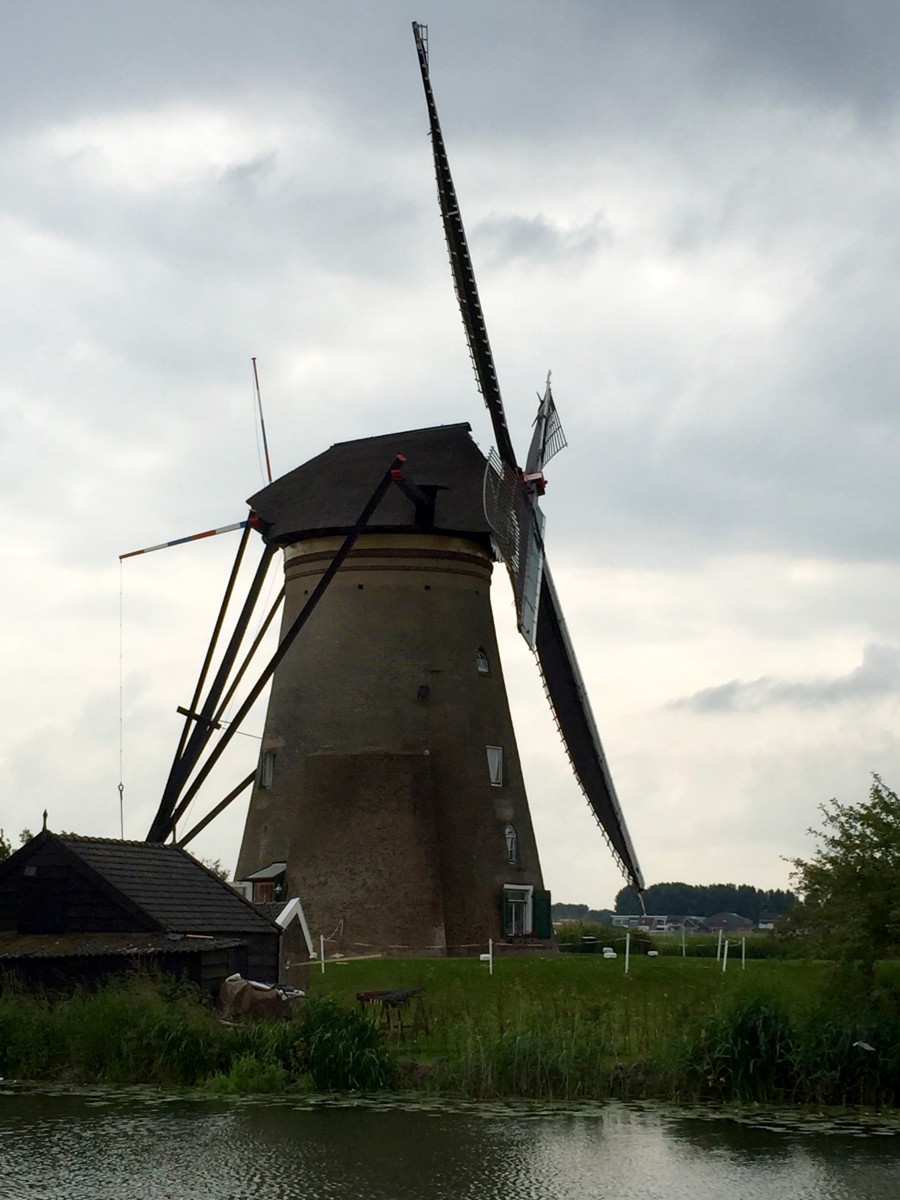
Two diesel pumping stations now move most of the water when necessary. But the windmills of Kinderdijk remain one of the best known Dutch tourist sites.
(Click on photos for a larger version.)
This morning there was a one-hour walking tour of Wertheim before the ship left for Koblenz, Germany. Because my husband and I were still feeling poorly, we skipped the Wertheim tour.
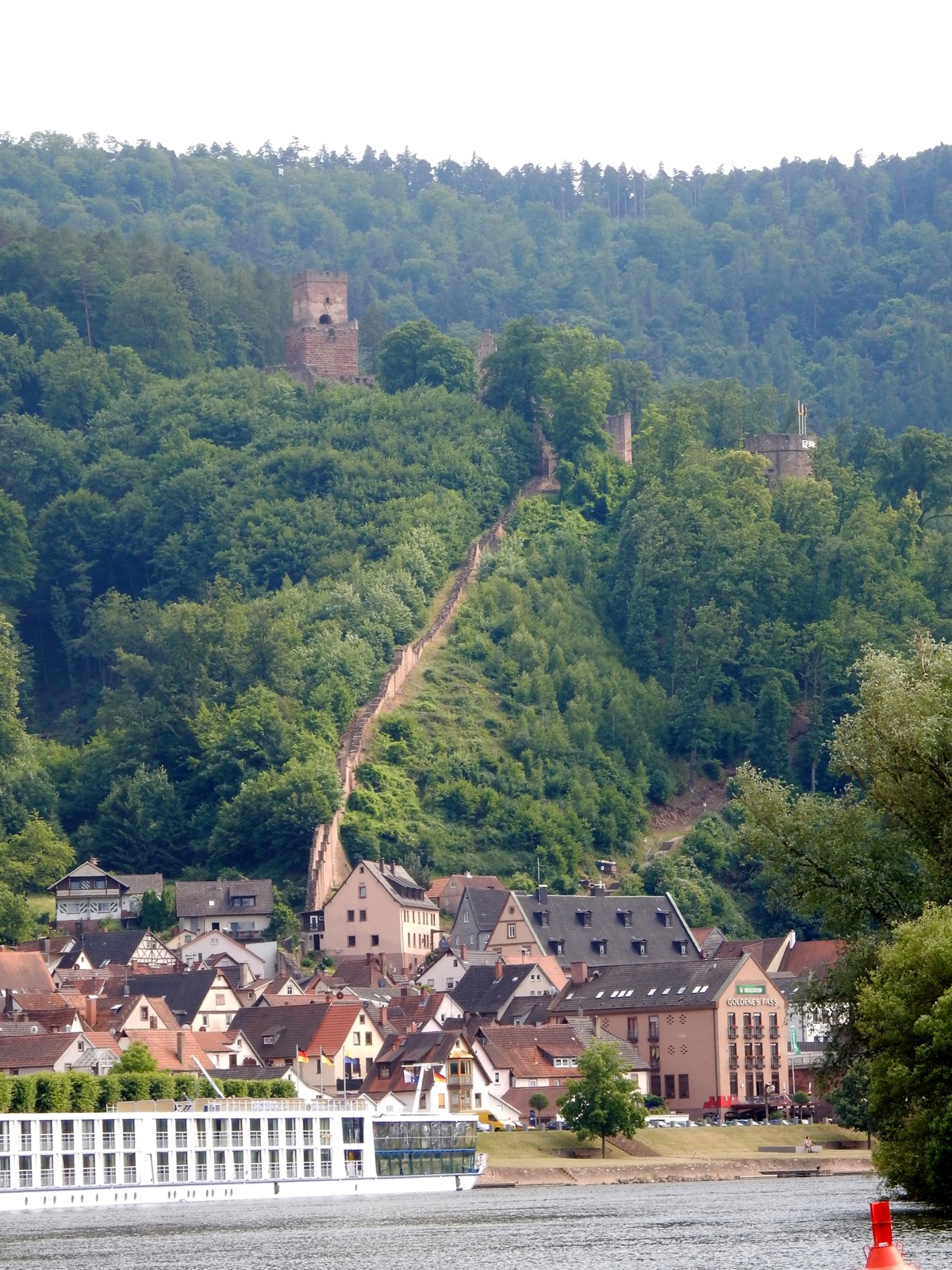
The ship spent the afternoon cruising along the Main (pronounced mine) River and then the Rhine River. My husband took both of these two photos on the Main River:

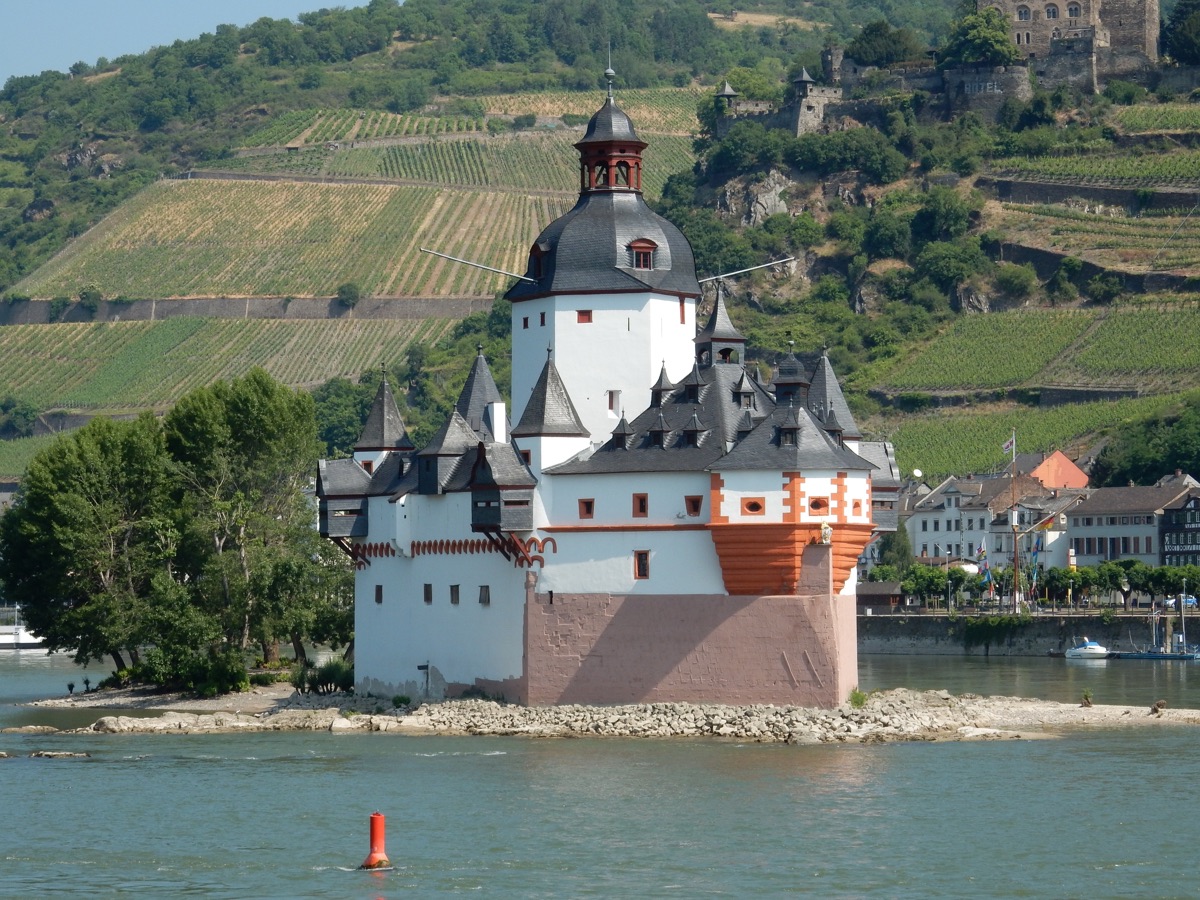
On the morning of June 12 we continued cruising. My husband took this photo of Pfalzgrafenstein Castle, a toll castle on tiny Pfalz Island in the middle of the Rhine River near Kaub, Germany.
After lunch we arrived in Koblenz, at the confluence of the Rhine and Moselle rivers. We took the Moselle excursion, on which we learned about the history of wine making along this river and visited a winery in the town of Winninger. Wine making is the main occupation of this town, which features grape vines as street decorations:

Vineyards line the Moselle River:

Notice that the rows are vertical rather than horizontal, despite the steep slope of the hills. Vintners originally adopted this arrangement to take advantage of having rain water travel downhill. Some vintners now use irrigation systems but continue this arrangement because it’s cheaper to install long vertical pipes than it would be to install many more shorter, horizontal pipes.
Notice, also, that just about every available bit of space on the hills is cultivated.
Our tour guide told us that the annual grape harvest requires a lot of people. All the wine makers help each other out, and family and friends also come to help. Our guide herself takes time off from her job to help with the harvest because it’s such an important part of her town’s identity.
(Click on photos for larger version.)
The trip itinerary lists today’s stop as Wurzburg, but we took the optional excursion bus to nearby Rothenburg, the best preserved medieval town in Germany. A 1.5-mile wall surrounds the city. Just in case the wall wasn’t enough to keep enemies away, the wall builders employed scary faces as well:

The wall connects five medieval gates with guard towers dating from the 13th to 16th centuries.
Here’s another indication of the town’s medieval origin:
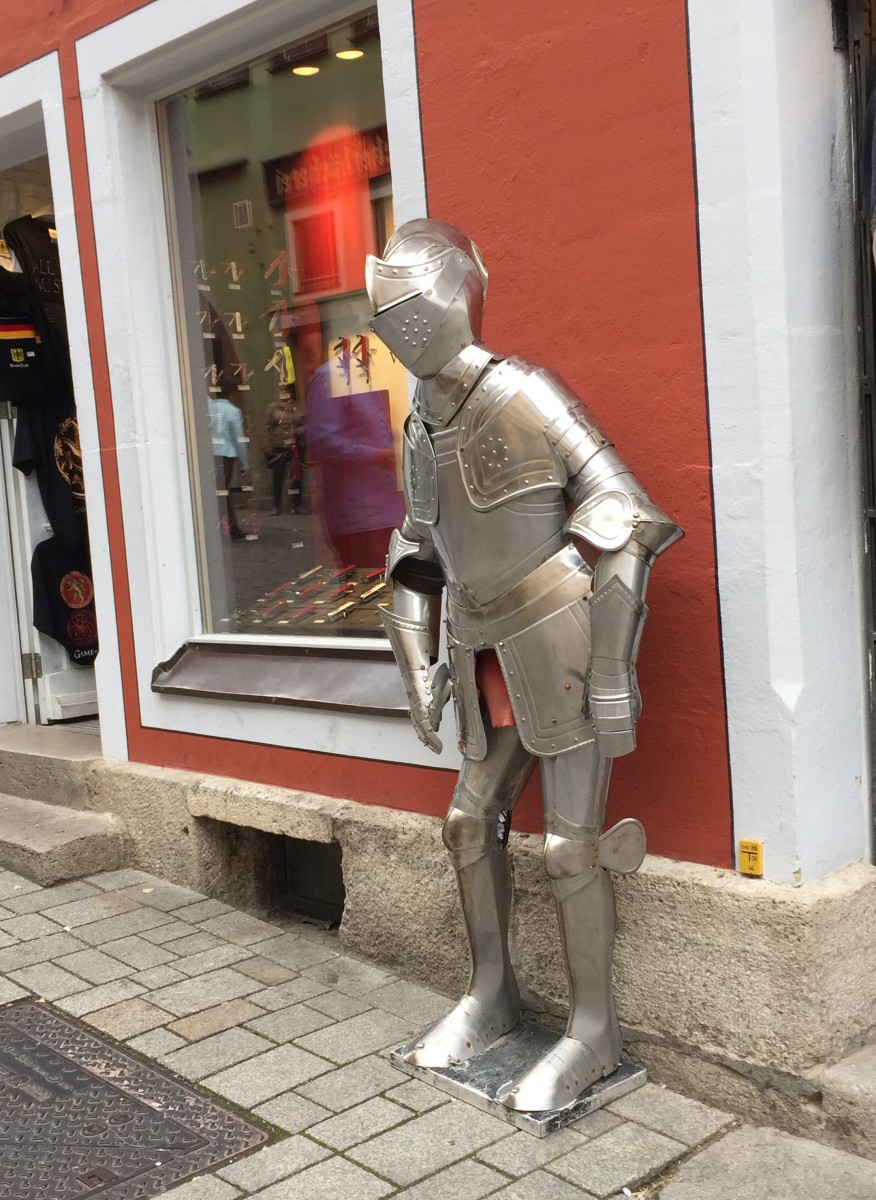
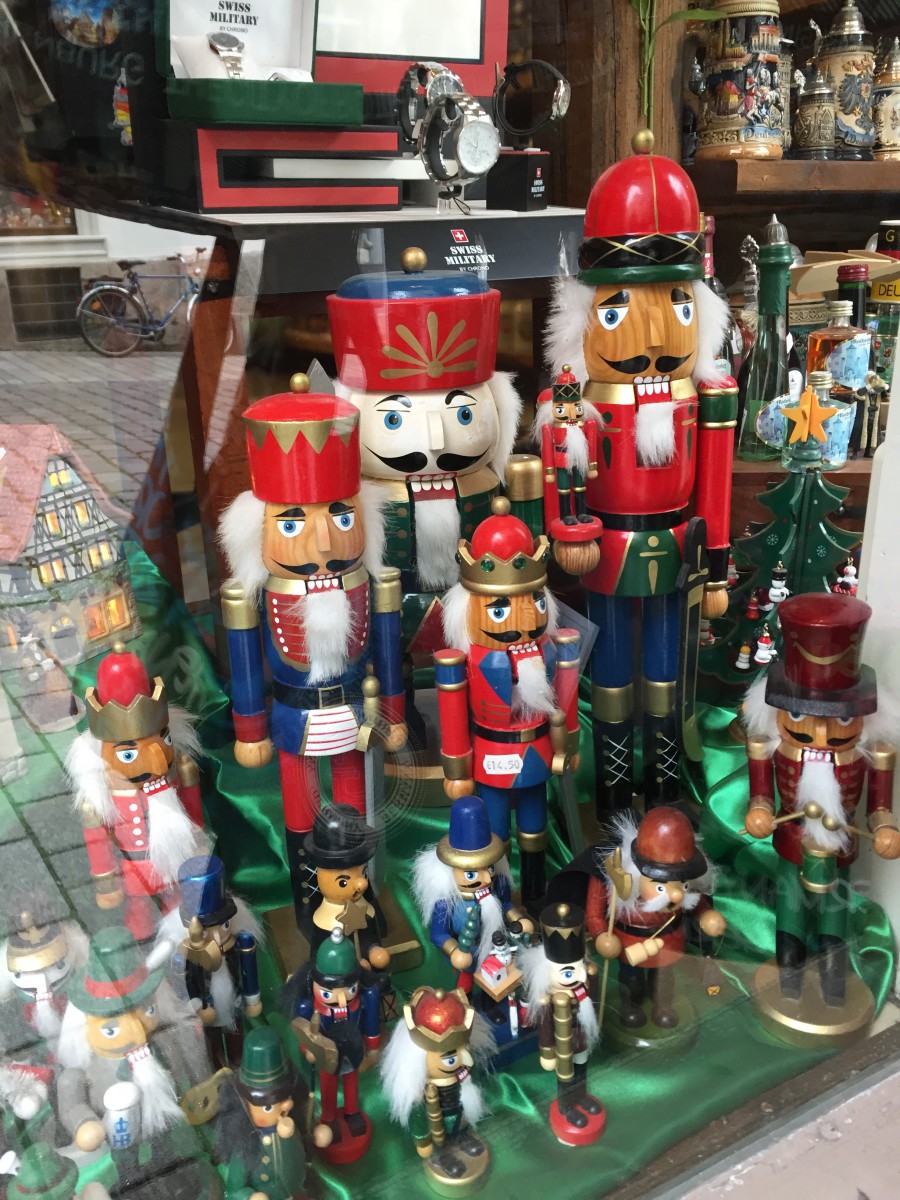
Typical German souvenirs were on display in the city’s shops:
And the local delicacy is the snowball, which was described as a dense, hard pastry:
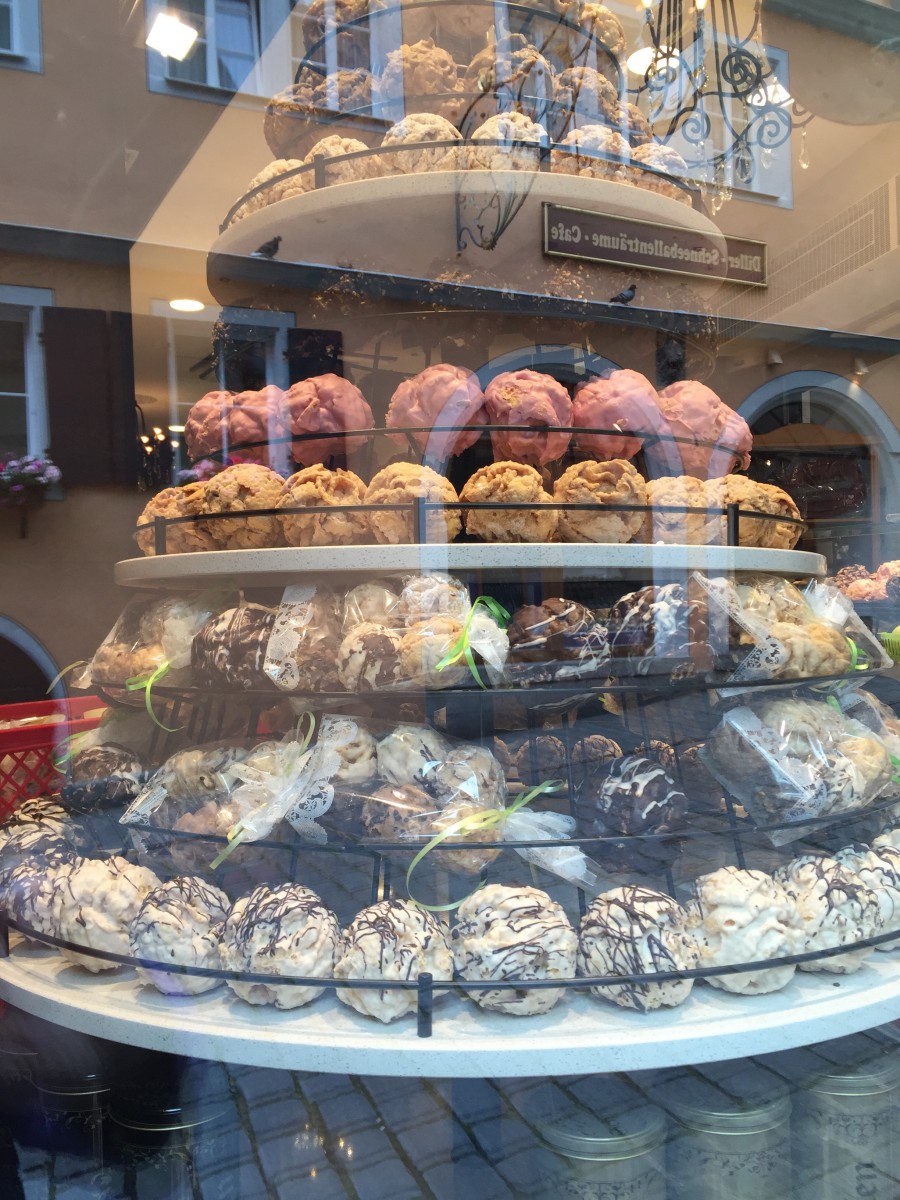
We stopped at a little shop for Italian gelato but passed on the snowballs, which some of our fellow travelers said weren’t very good.
(Click on photos for a larger version.)
Instead of the walking tour of the city of Bamberg, we opted for the optional bus tour of the Franconian countryside. This area is geographically within Bavaria, but Franconians still think of themselves as ethnically different from Bavarians. The two groups speak distinctly different dialects of German.
This tour made three stops.
1. Seehof Palace
Located not far outside of Bamberg, the Seehof Palace, begun in 1686, was built as a summer residence for the Bamberg Prince-Bishops. After the fall of religious rule, the palace and grounds fell into disrepair under private ownership and, by the end of the 20th century, required extensive renovation.
The palace is now owned by the Bavarian State Conservation Office, which has renovated the gardens and restored the original fountain with their waterworks, which work by gravity:

Central to the garden is the cascade created in 1772, which dilapidated increasingly after secularisation and was put back into operation in 1995. Its programme heralds the glory of Hercules, in allegory of the Prince Bishop’s glory.
The nine rooms of the Prince-Bishop’s apartment have been restored and are open to the pubic, including the White Hall with its ceiling painting by Guiseppe Appiani:

Several other rooms are available for rent for events such as marriages, receptions, banquets, and concerts.
2. Drei Kronen (Three Crowns) Brewery
According to our tour guide, all Franconia is divided into two parts: the beer-making part and the wine-making part. We rode through the beer-making part and stopped at a brewery to try the region’s specialty, “smoke beer” or rauchbier.
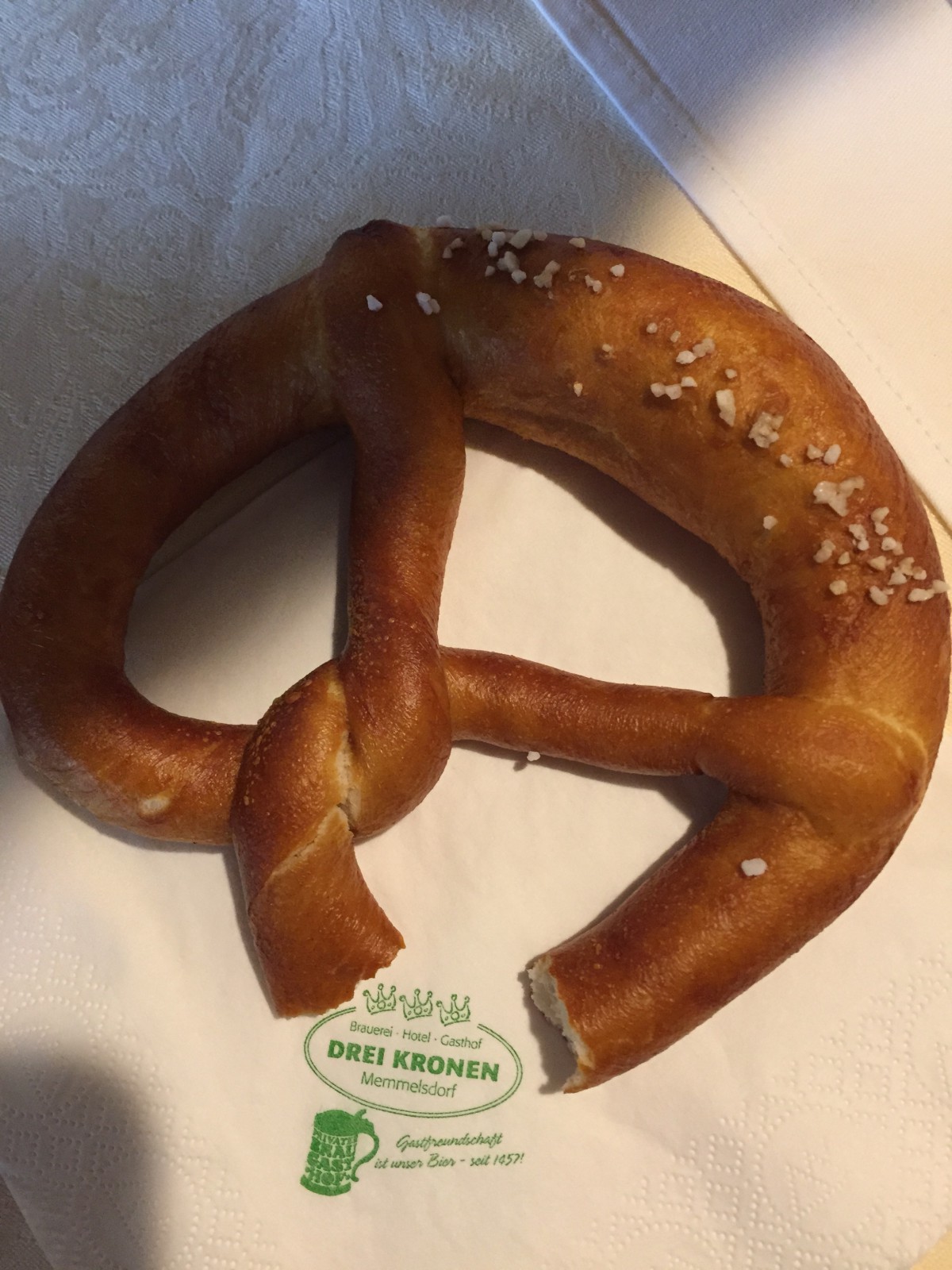
Smoke beer gets its name and its distinctive taste from malt that has been dried over open fires. All beers were originally smoke beers because of this drying method, but modern brewing procedures no longer dry malt this way. As a result, smoke beers are becoming rare.
The brewery’s name translates as “three crowns,” and groupings of three crowns surrounded the tasting room:
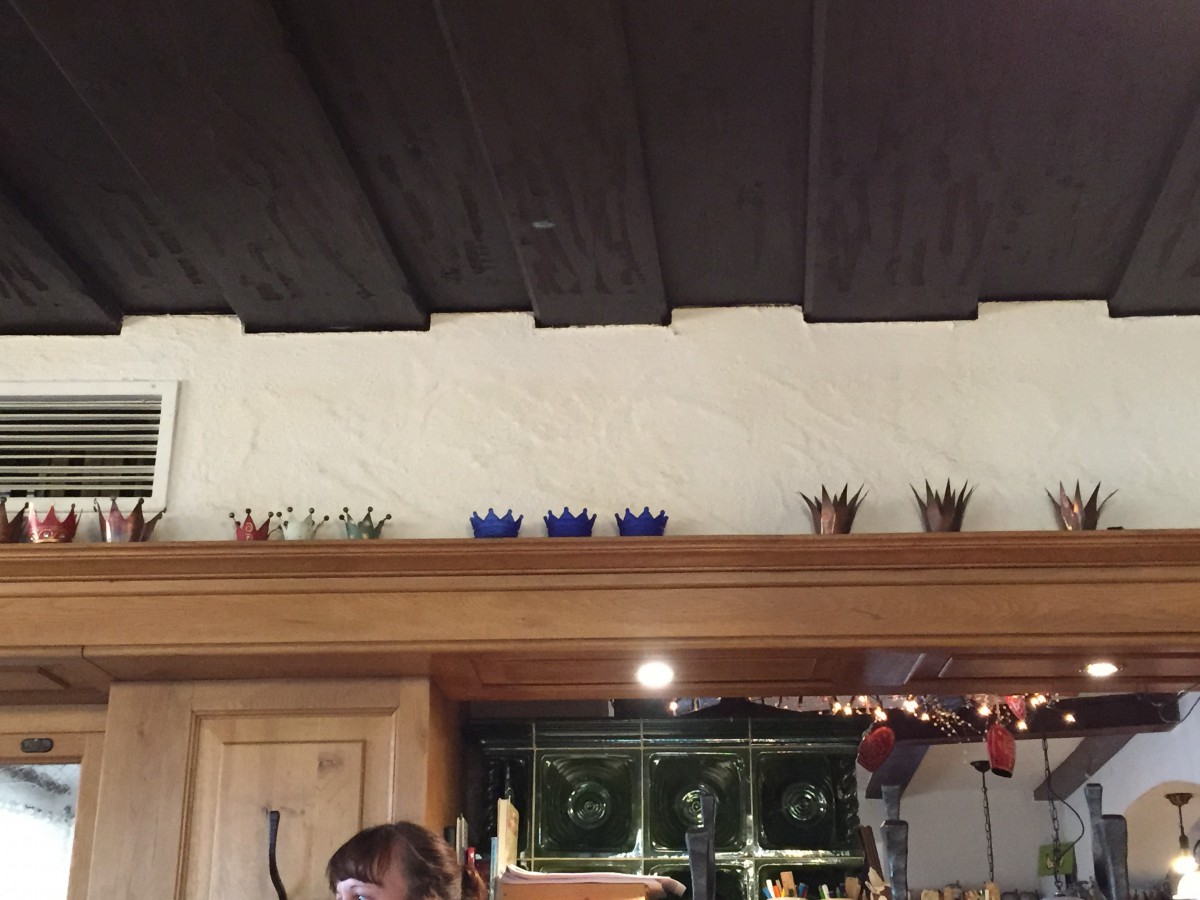
My husband and I both enjoyed the smoky taste, although he’s much more of a beer aficionado than I.
3. Pilgrimage Church
This church must have a real name, but all I remember is that it has been a pilgrimage church since the 18th century, when a peasant girl with an eye disease went there to pray and was, according to tradition, cured. Many groups still make pilgrimages to the church every year.
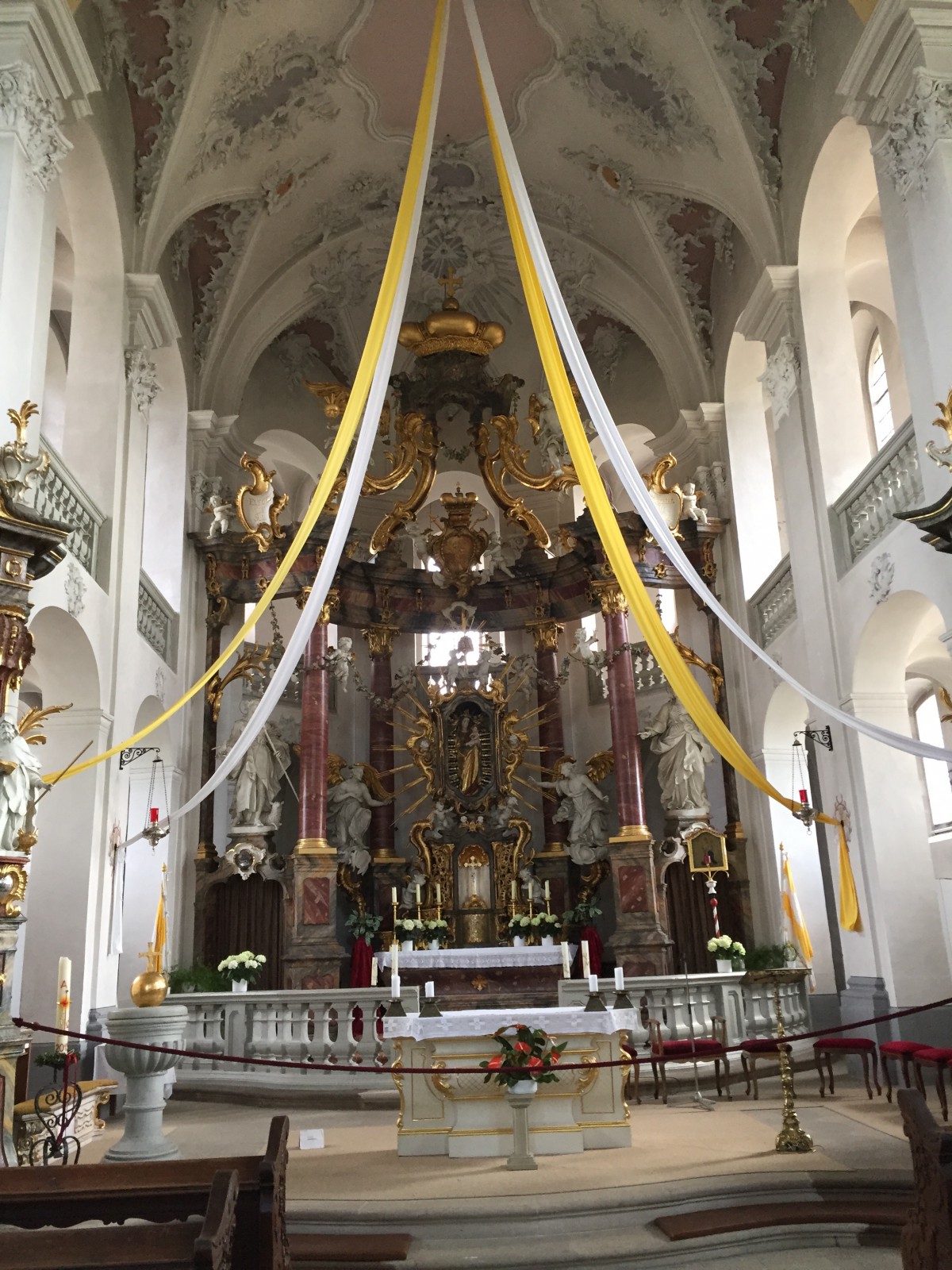
The interior was still decorated with streamers because of the recent celebration of Corpus Christi.
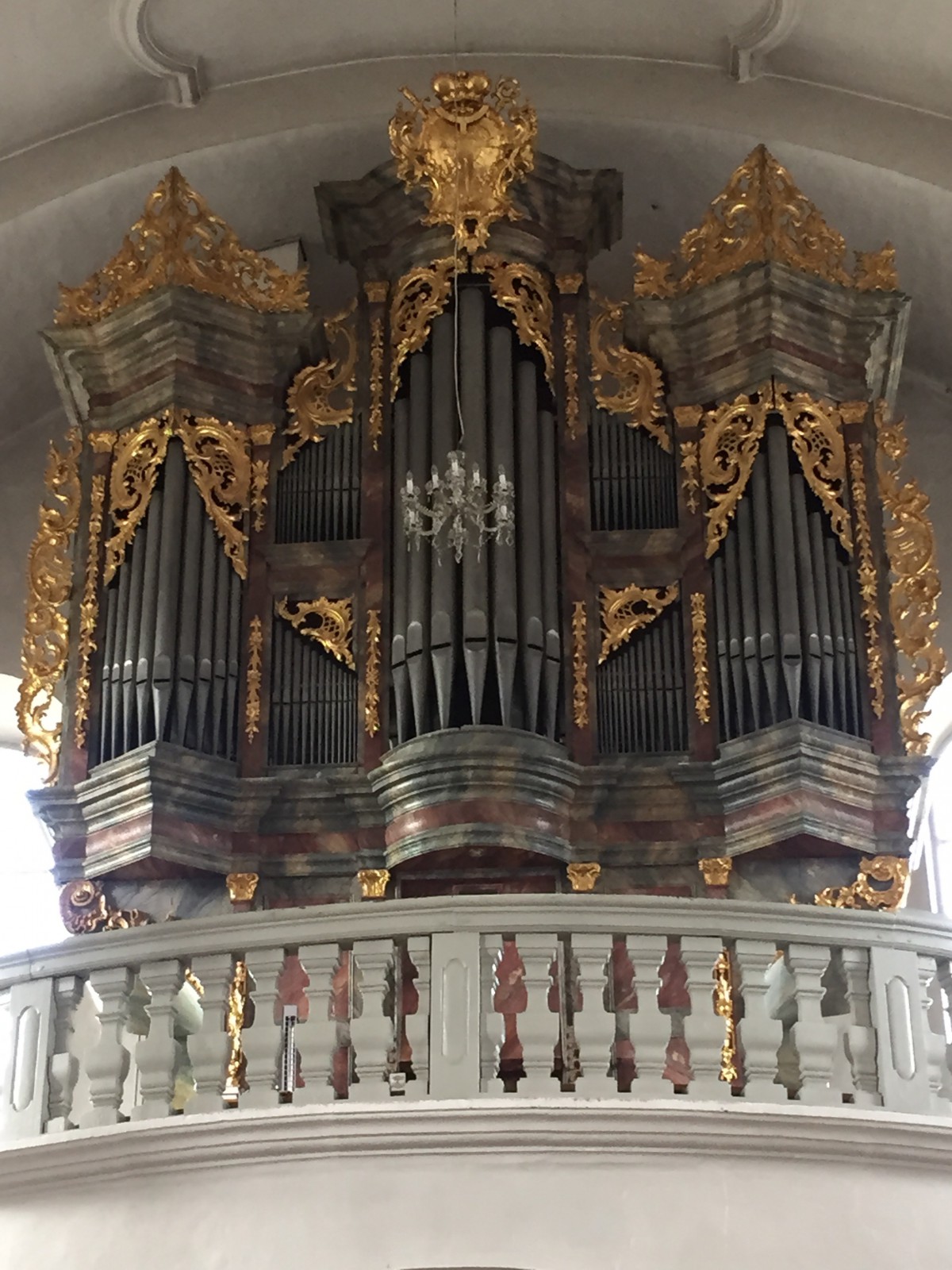
The church contains a large organ, although we did not get to hear it.
(Click on photos for larger version.)
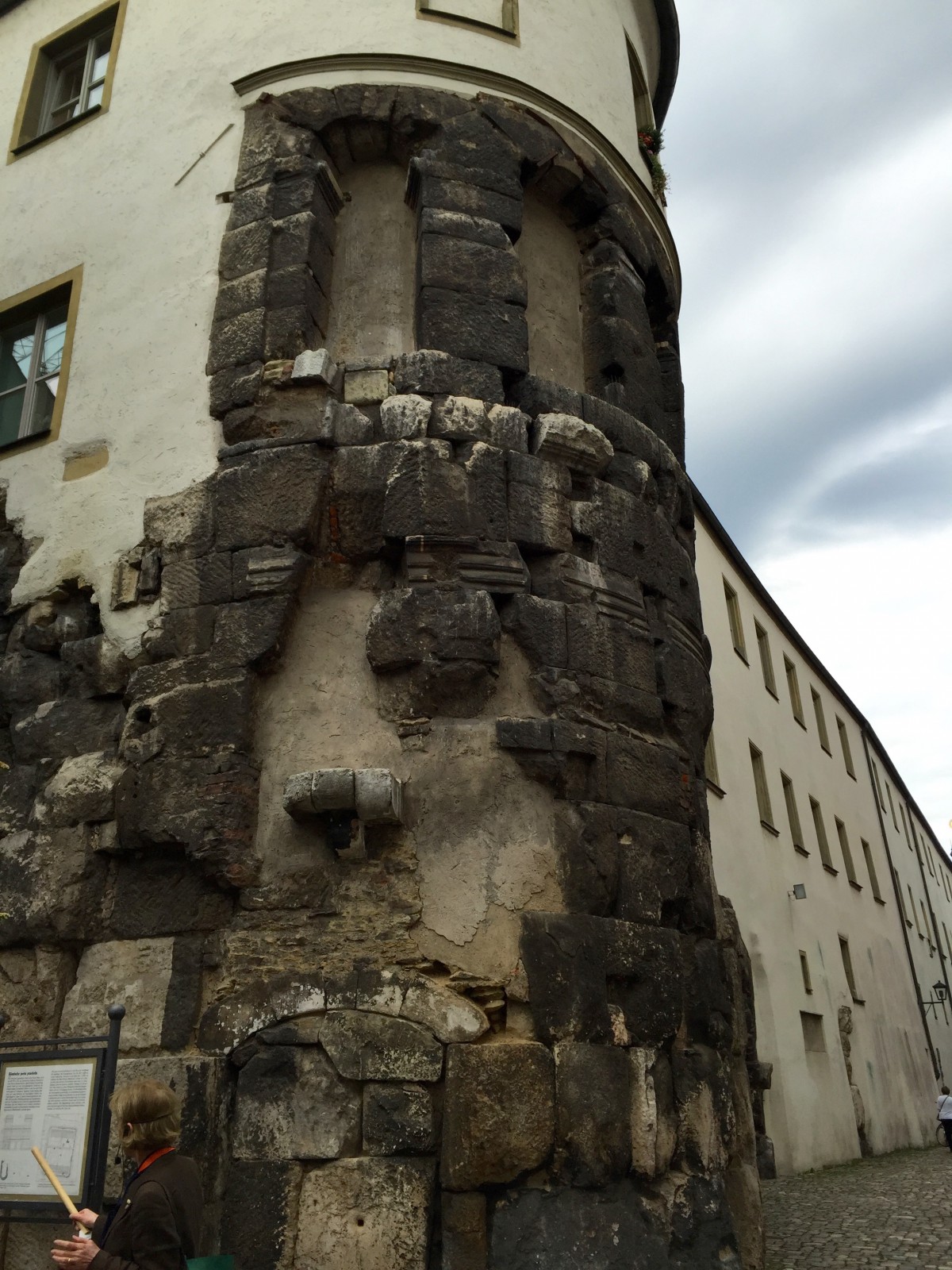
Regensburg, on the Danube River, marks the northernmost point of Roman expansion. As a classics major, I was interested in the remnants of the Roman settlement, which dates to the year 79 CE.

I love how the arch is tastefully incorporated into the modern building.
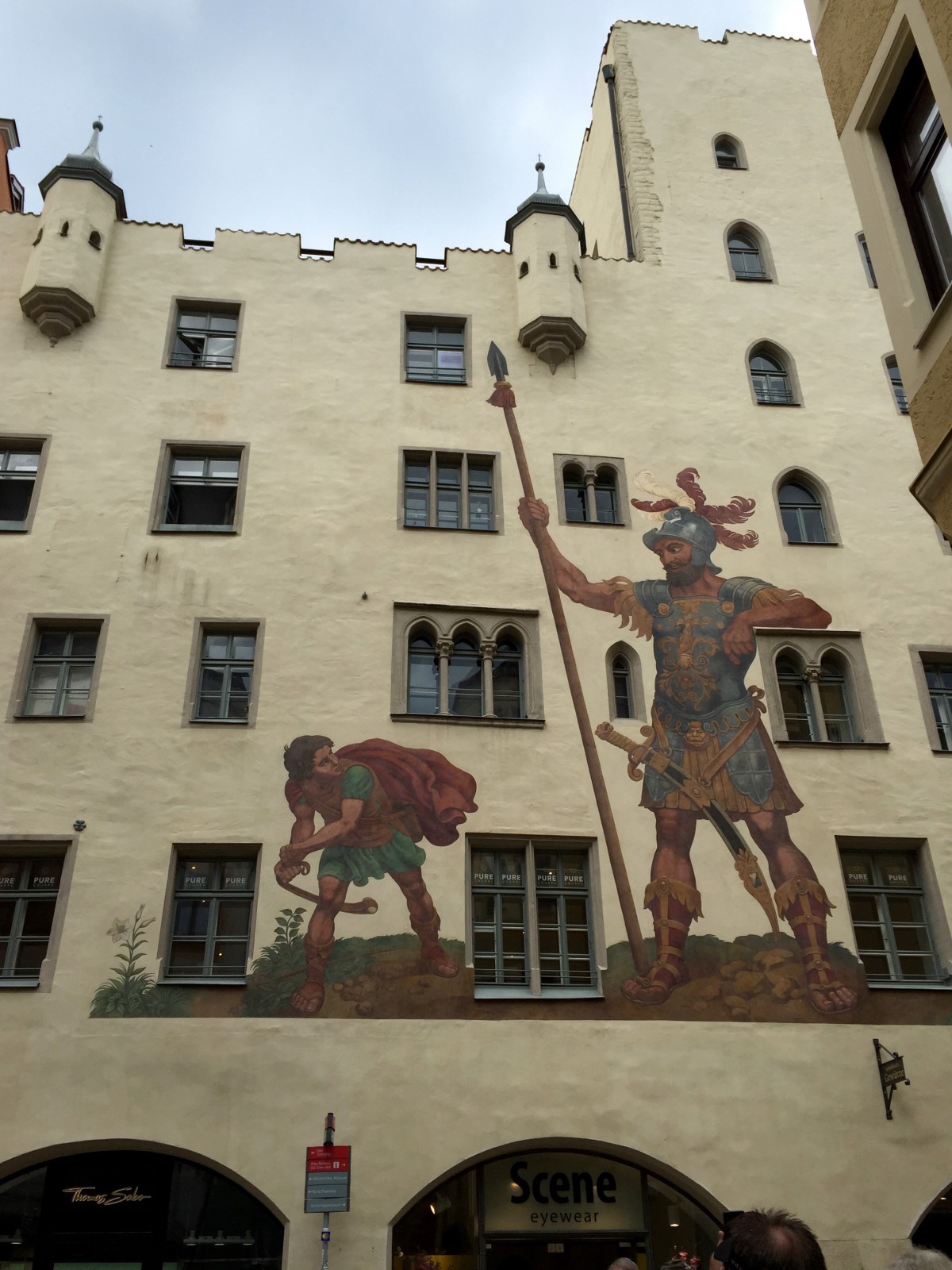
The local people considered themselves a David challenging the Goliath of Roman takeover, a motif that survives today in this mural:
St. Peter’s Cathedral, also known as Dom St. Peter or Regensburg Cathedral, has existed since about 700 CE. However, after several fires the church was rebuilt, and the present high-Gothic style building was completed in 1320. The cathedral is 279 feet long and 115 feet wide, and the two towers are almost 350 feet high. Most of the stained glass windows were installed in the 14th century and depict apostles, saints, the life of the Virgin Mary, and the legend of Saint Catherine.


(Click on photos for larger version.)
June 3, Bratislava
In the 16th century Slovakia became part of the Hapsburg Monarchy and benefited from the enlightened reforms of Maria Theresa (1740–1780) and her son, Joseph II (1780–1790). In 1919 Slovakia joined with Czechia to form Czecho-Slovakia, a nation whose independence was limited by its strong economic, military, and political dependence on Germany.

It was later conquered by the Soviets, who turned Czechoslovakia into a pro-Soviet Communist country, which lasted until the fall of Communist in the Velvet Revolution of 1989. In 1993 the Slovaks and Czechs into separate countries, a peaceful agreement known as the Velvet Divorce. Bratislava is the capital of Slovakia.

June 4, Vienna
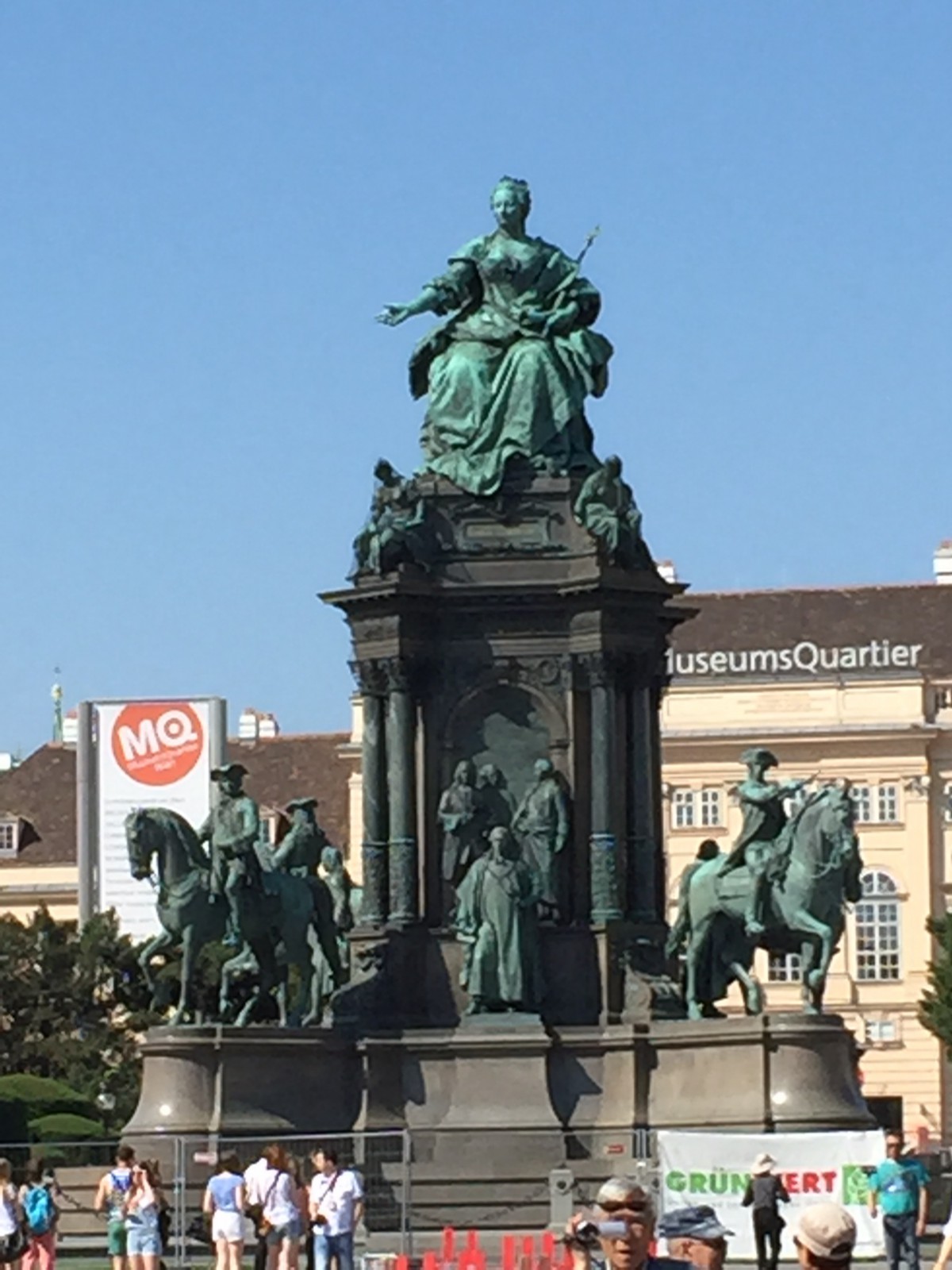
Austria continues to honor Maria Theresa, the last Austrian Hapsburg, who died in 1780. Although the family no longer rules, several family members are active in both politics and business in Europe.
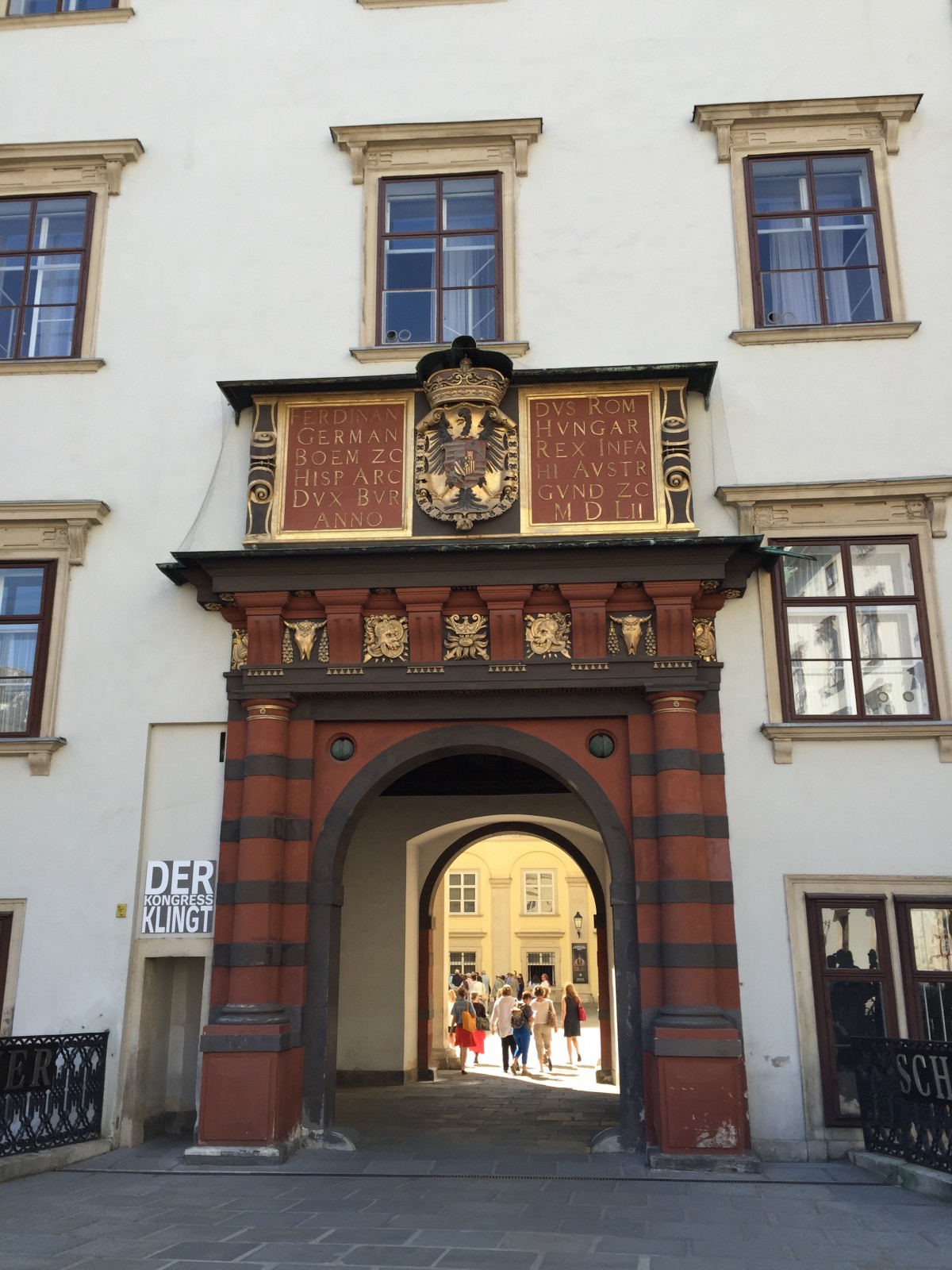
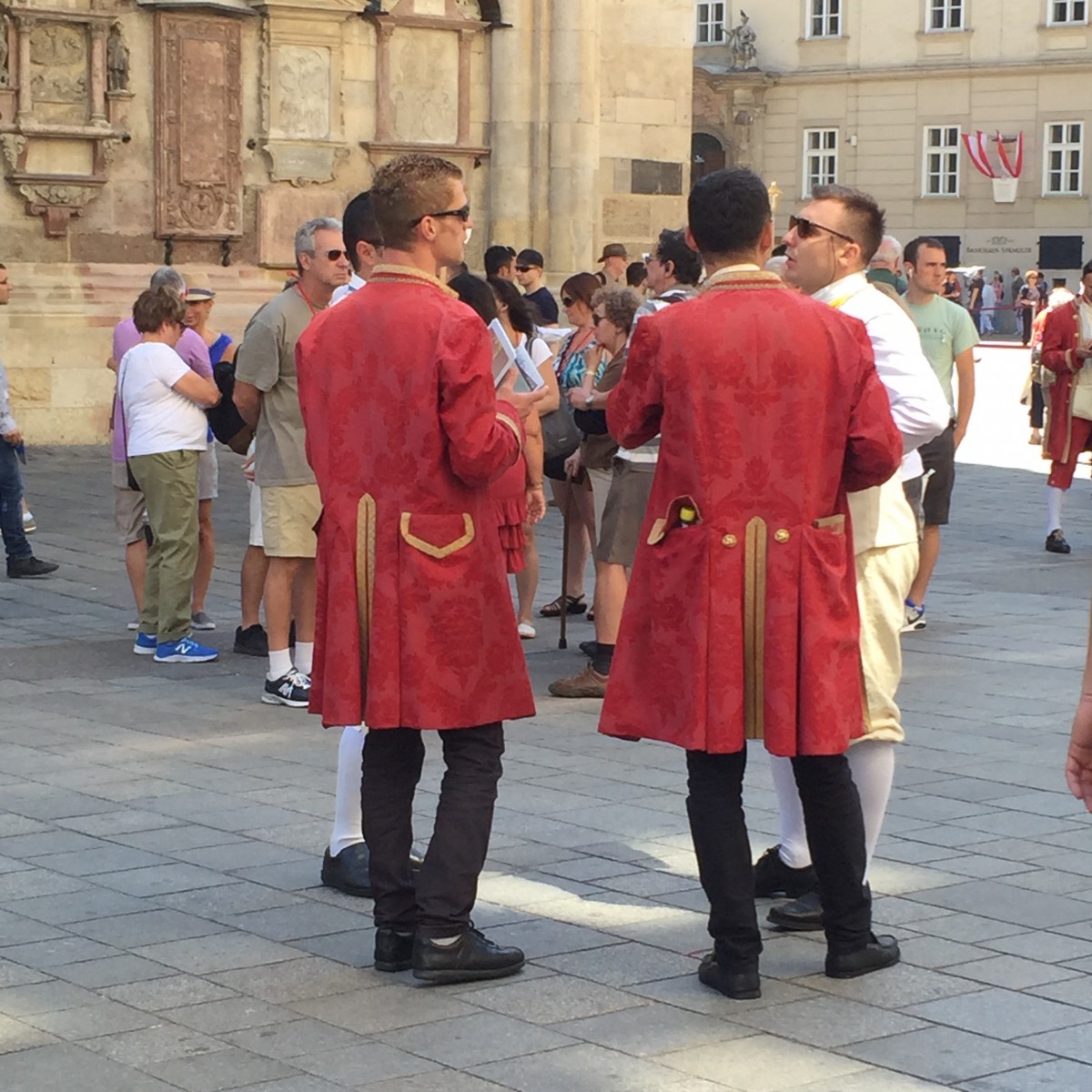
Vienna prides itself as a city of music. On the evening of June 4th we attended a chamber music performance featuring music of Mozart and Strauss. For me, the highlight was the Queen of the Night’s aria from Mozart’s opera The Magic Flute.

June 5, Melk, Austria
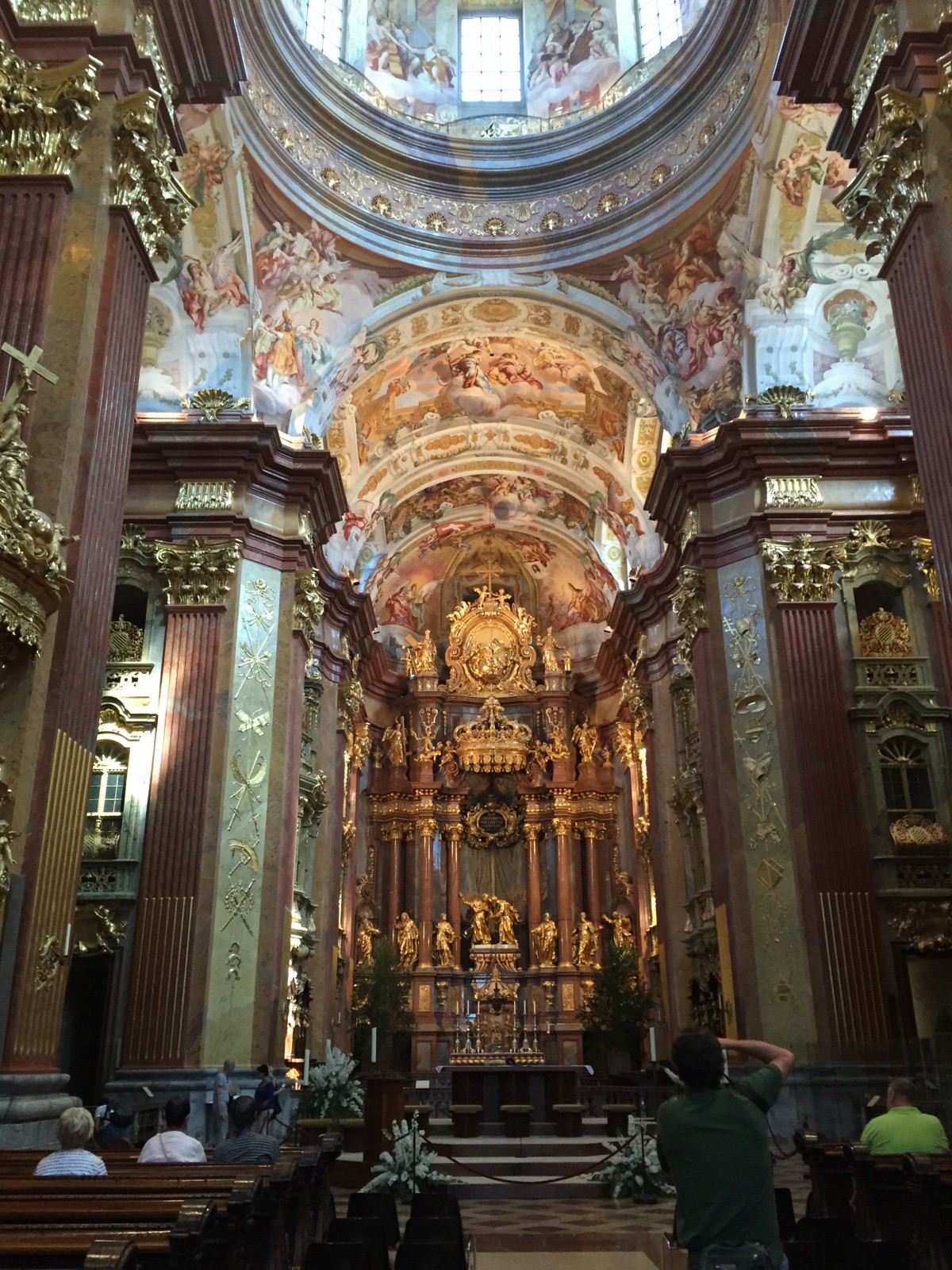
The Benedictine Abbey at Melk, built between 1702 and 1736, sits on a hill high above the Danube River. It originally contained a royal wing, kept ready for the possibility of a royal visit. Monks lived in other parts of the abbey. The monastic community of Melk is more than 900 years old. Today about 30 monks live there and run a monastery school with more than 700 students.

The monastery’s library contains more than 80,000 medieval manuscripts on a variety of subjects. The interior of Abbey Church is an amazing display of Baroque art.


 Retreading for Retirement