Three Things Thursday

It’s Thursday again! Here’s my weekly contribution to Three Things Thursday, the purpose of which is to “share three things from the previous week that made you smile or laugh or appreciate the awesome of your life.”

Tacoma Waterfront

My husband and I enjoy learning about the history of Tacoma. A few weeks ago we ate lunch at a restaurant on the waterfront and took advantage of the opportunity to observe how Tacoma has changed.

1. Horizontal Drawbridge
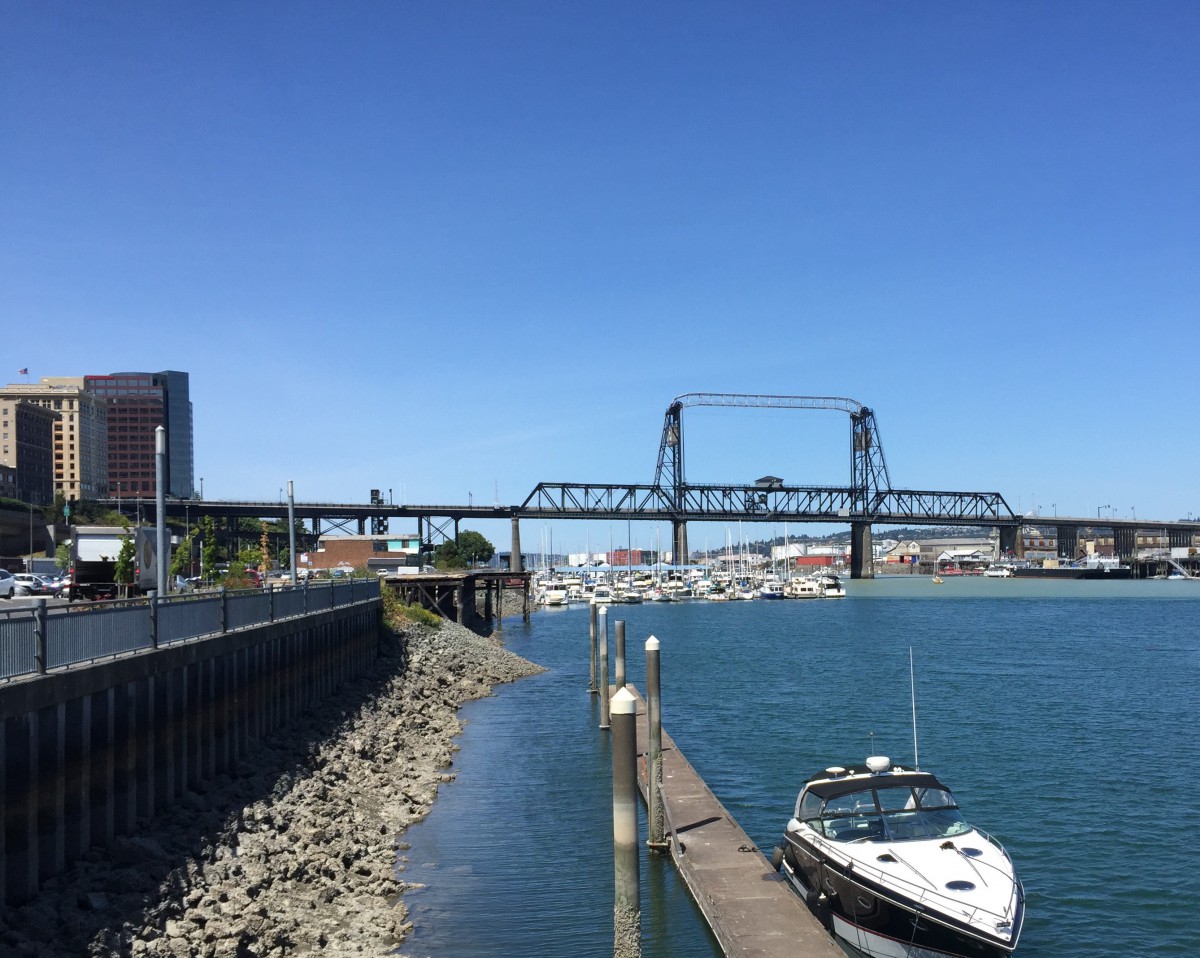
Horizontal Drawbridge

This is a horizontal drawbridge with “Port of Tacoma” stenciled on the end facing the street (not visible in this photo). The center of the bridge rises horizontally to let large boats pass underneath.

I had never seen this type of drawbridge until we took a cruise on the Columbia River that began in Portland, OR, almost 20 years ago. I thought all drawbridges split in the middle, with a section on each side that levered back to rise up. But we see quite a few of these horizontal bridges here in the Pacific Northwest.

I’ve heard that this drawbridge isn’t used any more. I’ve never see it raised.

2. Former Boat Building Company

Tacoma used to build many of the commercial fishing boats used on the West Coast. These two buildings are the remnants of a ship building company that has been closed for many years now.

Ship Building Co.
Ship Building Co.

Sending the boats built here off to their destinations probably required the raising of that horizontal drawbridge, which is located a bit off the left side of this photo.

3. Marina
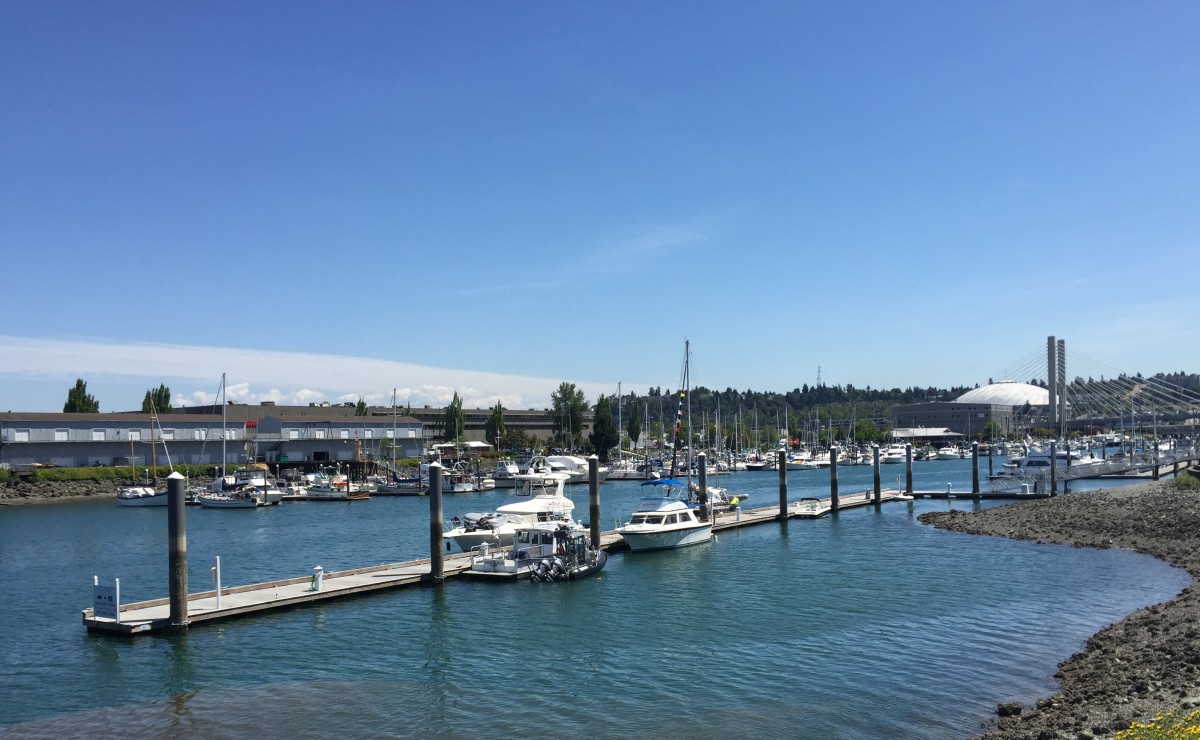
Waterfront Marina
Waterfront Marina

People here in the Puget Sound area really love their boats, and this marina on the waterfront is therefore still active. This is the view just to the right of the boat building company in photo #2.

On the right side of this photo you see the famous Tacoma Dome, which I’ve written about here.

See you again next week!

Three Things Thursday: Vashon Island

It’s Thursday again, time for another Three Things Thursday, the purpose of which is to “share three things from the previous week that made you smile or laugh or appreciate the awesome of your life.”

three-things-thursday-participant

Trip to Vashon Island

Just a 10-minute ferry ride (15 minutes if you count time for unloading vehicles) from Tacoma lies Vashon (emphasis on the first syllable) Island. Since the ferry leaves from Point Defiance Park, right near our house, we’d been meaning to make the trip some time. Yesterday “some time” finally arrived.

Vashon Island is about 13 miles long and eight miles across its widest point (about the size of New York City’s Manhattan, many descriptions say). It’s predominantly rural, with a resident population of about 11,000. It’s accessible only by ferry, from either Tacoma, West Seattle, or Port Orchard. There are two major towns on the island, Vashon and the much smaller Burton.

Many small local farms on the island offer produce and eggs for sale. Vashon Island also features a thriving arts community, with its own community theater and several shops and galleries that feature the work of artists from the Puget Sound area.

Tourists from the Greater Seattle area come to here for biking on the island’s many wooded trails or for kayaking. Both ferries and public buses operated by Seattle Metro Transit and Pierce County Transit offer transport of bikes. Kayaks can be rented through the Vashon Park District.

We’ll have to go back again, probably several times, because there’s a lot we didn’t see on yesterday’s visit.

(Click on any photo to see a larger version.)

1. Logs on the Beach

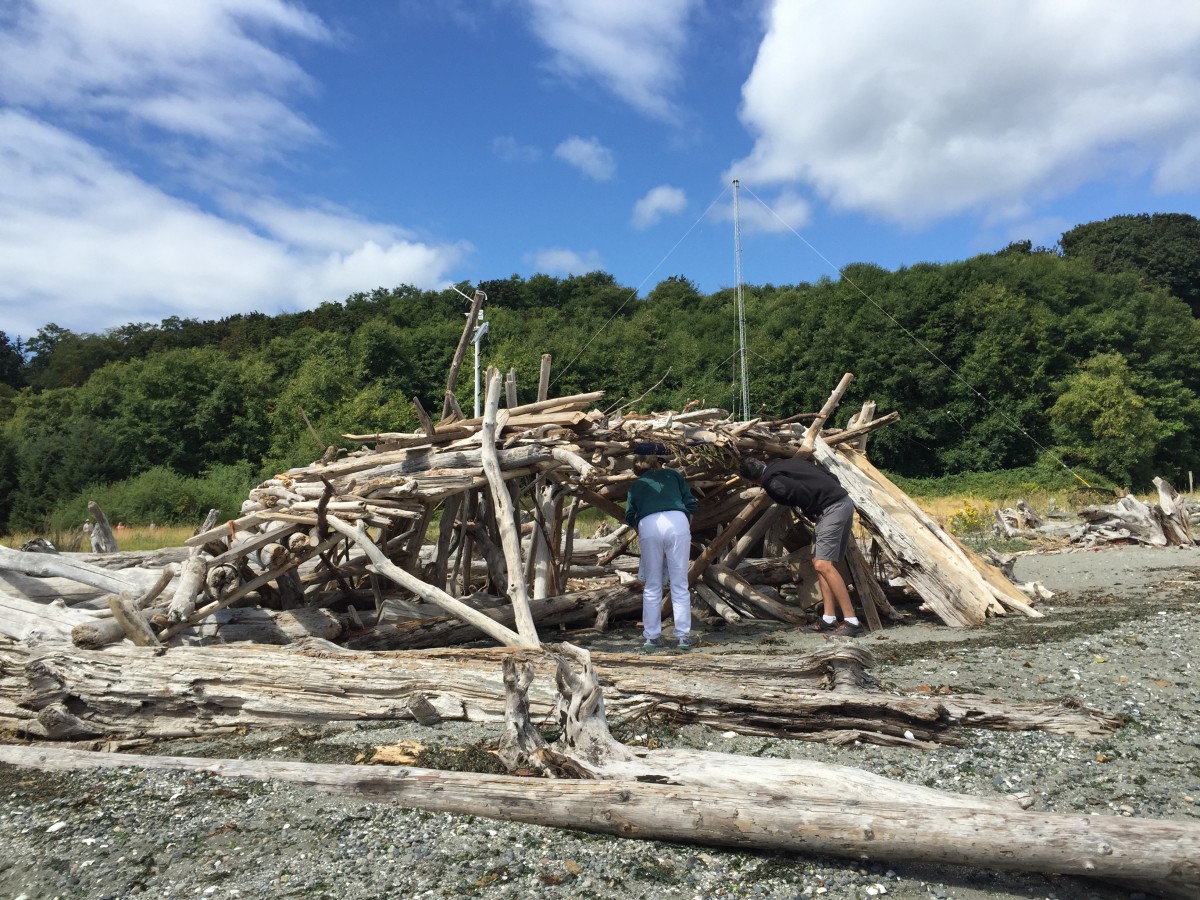
Log structure on beach

Vashon Island features 45 miles of shoreline. On a walk along the beach at Point Robinson Park we discovered that somebody enjoys using the driftwood like Lincoln Logs. (I told you this is an artsy community.)

2. Ivy

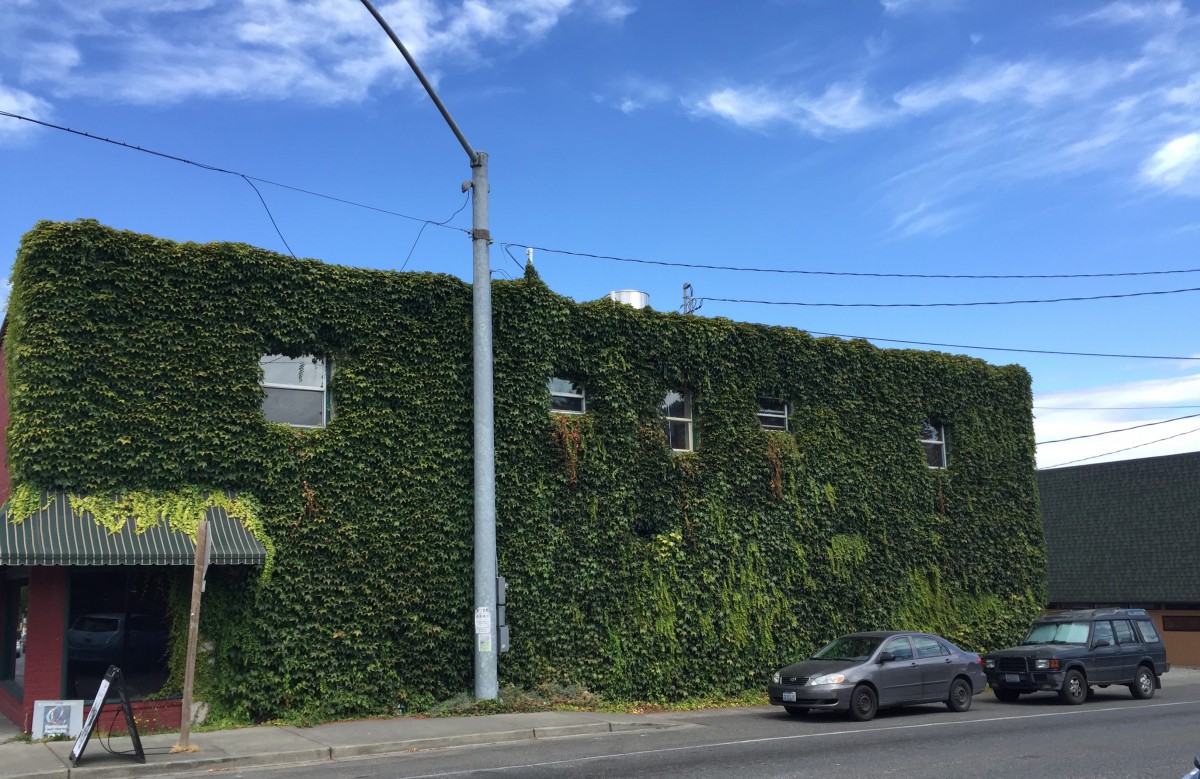
Ivy-covered wall

I have never seen a wall completely covered with ivy, like this side of a building in Vashon.

3. Heritage Museum

The Vashon-Maury Island Heritage Association sponsors The Vashon-Maury Island Heritage Museum, located at 10105 Bank Road in the town of Vashon. The building that now houses the museum was originally a Lutheran Church built in 1907. Museum hours are 1:00 to 4:00 Wednesday through Sunday.

Heritage Museum

Though small, the museum is well laid out. After entering, visitors learn about the history of the island by moving counter-clockwise around the central room. The exhibit begins with information about the island’s first inhabitants, the Puyallup Tribe. When European-American settlers came to the area in the mid nineteenth century, the Native Americans were relocated to the mainland. The Puyallup Tribal Center remains in Tacoma. Artifacts and reproductions of photos, newspaper articles, and other documents present the area’s history as a center of logging, lumber milling, boat building, and farming.

Three Things Thursday

It’s Thursday again!

Time for Three Things Thursday, the purpose of which is to “share three things from the previous week that made you smile or laugh or appreciate the awesome of your life.”

three-things-thursday-participant

Trip to Leavenworth, WA

Since moving to Tacoma we’ve traveled along the West Coast between Seattle and San Francisco, but we haven’t yet gone inland from here into eastern Washington State. One of our new neighbors, a life-long Tacoma resident, suggested that Leavenworth would be a good place to visit. So when Franke Tobey Jones offered a three-day, two-night trip to Leavenworth, we jumped on the opportunity.

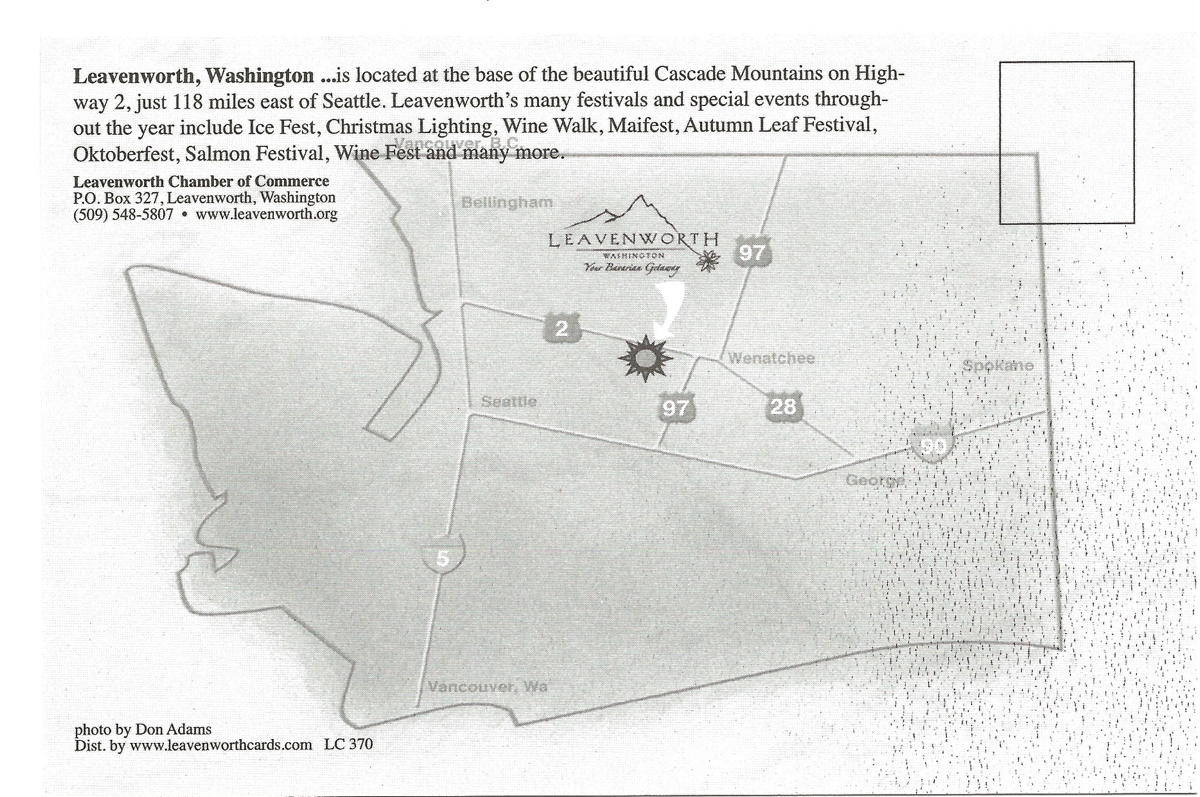
Leavenworth is located in the foothills of the Cascade Mountains, about 120 miles east of Seattle. It’s Washington’s Bavarian Village, with most buildings in town decorated with ornate woodwork and murals of Bavarian motifs. In summer the buildings and grounds in the city are ablaze with full-color flower displays.

(Click on any photo to see a larger version.)

1. Bavarian Lodge

Bavarian Lodge
Bavarian Lodge

We stayed at the Bavarian Lodge, which epitomizes the city’s identity with its painted decorations and flower boxes. Our room was large, the bed was comfortable, and the free breakfast was delicious.

2. Decorated Building

Decorated Building, Leavenworth

Imagine a town full of buildings similar to this one and you’ll visualize Leavenworth. The paintings on the buildings were fascinating. The many stores carry a variety of items, from typical tourist souvenirs to hand-crafted cuckoo clocks and music boxes, nutcrackers, Dresden china, and artwork by local artists. There’s even a nutcracker museum, although we did not get a chance to visit it. Behind the building you can see the steep, rocky Cascade foothills.

With its Bavarian village setting, Leavenworth obviously caters to tourists. For outdoors folks there are nearby centers for hiking, climbing, biking, skiing, snowmobiling, kayaking, and horseback riding. Leavenworth is beautiful in summer, but it also offers lots of festivals and events during other seasons, including the following: Ice Fest, Christmas Lighting, Wine Walk, Maifest, Autumn Leaf Festival, Oktoberfest, Salmon Festival.

The highway to Leavenworth passes through Stevens Pass, elevation 4,061 feet, the site of a winter downhill and cross-country ski resort. Stevens Pass is often closed in winter when there’s snow in the Cascade Mountains, so plan accordingly if you decide to go in winter.

3. Eagle Creek Winery

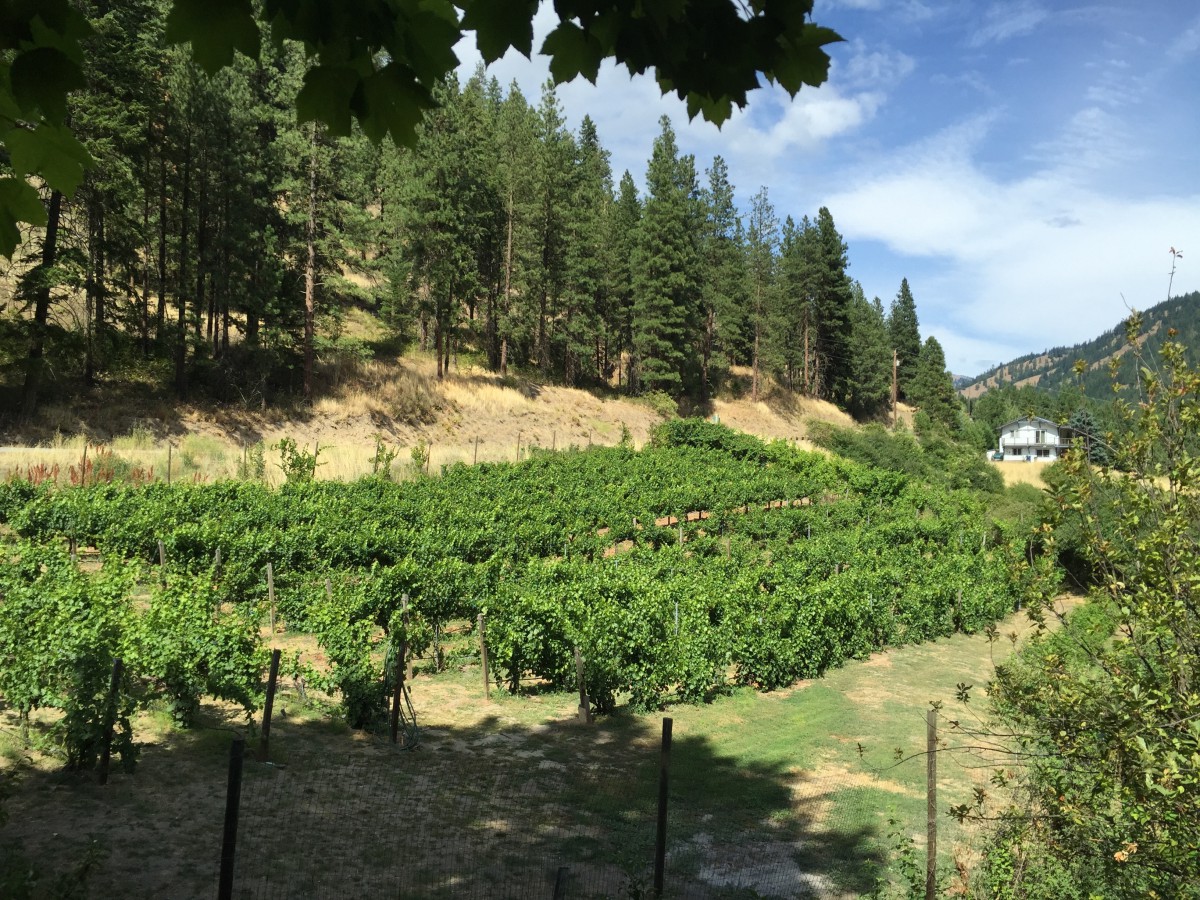
Vineyards, Eagle Creek Winery

We also had a wine tasting and tour at Eagle Creek Winery just outside the center of town. The heat and soil make the region a perfect place for growing grapes. We liked several of their wines and came away with six bottles.

scroll divider

We also attended a production of the play Into the Woods by the Leavenworth Summer Theater at their outdoor venue, Ski Hill Amphitheater. (No photography allowed there—sorry.)

Overall, the trip to Leavenworth was delightful. We hope to return on our own sometime. And now that we’re retired, it won’t even matter if we get snowed in.

Three Things Thursday

Another Thursday brings another episode of Three Things Thursday, the purpose of which is to “share three things from the previous week that made you smile or laugh or appreciate the awesome of your life.”

Vintage Cars

(Click on any photo for a larger version.)

Recently we had a few vintage cars on display here at Franke Tobey Jones during the ice cream social on a beautiful Friday afternoon.

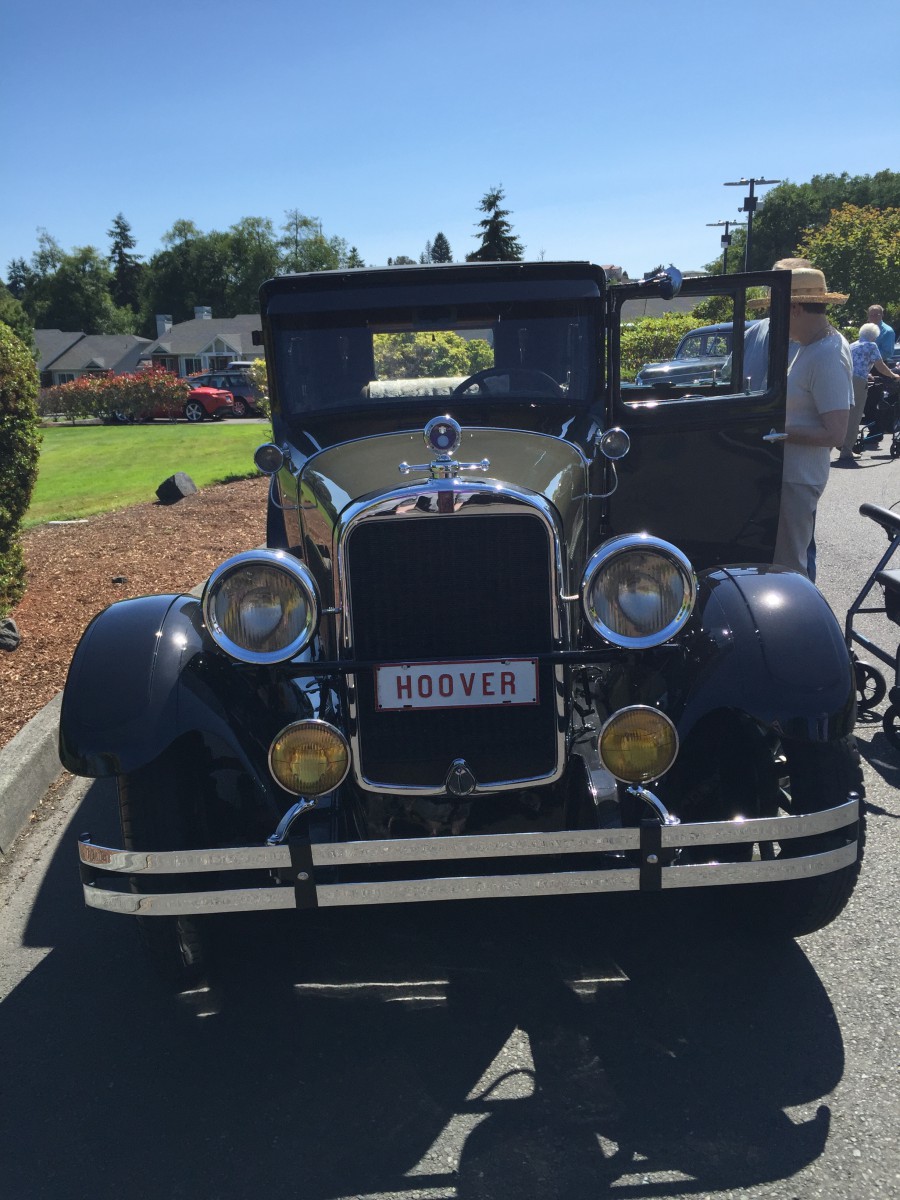
1. Dodge Brothers 1928

Dodge Brothers: 1928

The Dodge Brothers Company was founded by brothers Horace Elgin Dodge and John Francis Dodge in 1900 as a supplier of parts for automobile makers in Detroit. The company began manufacturing complete cars in 1915. Both brothers died in 1920, and the company was sold to Chrysler Corporation in 1928.

Dodge Brothers: 1928

The wheels on this car are made of wood. The owner told us that he has gotten the car up to 50 miles per hour, but it cruises along best at about 40 mph.

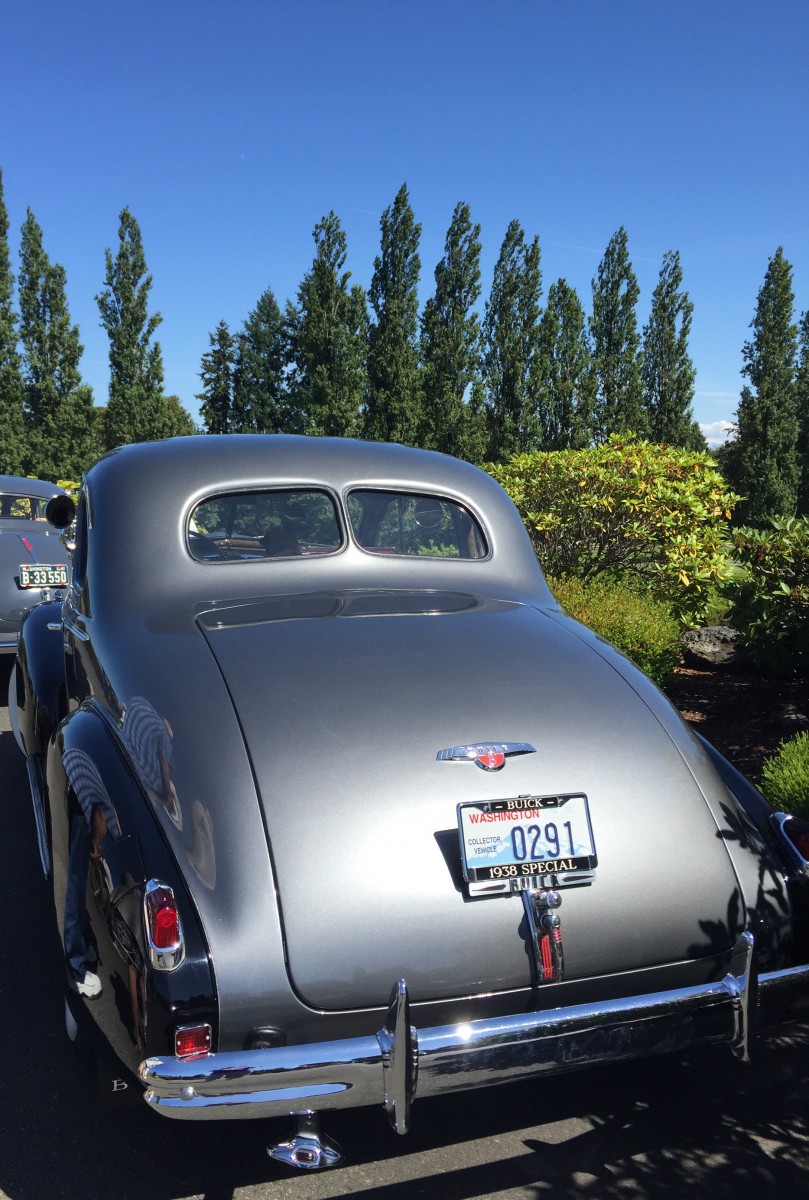
2. Buick Special 1938

Buick Special: 1938
Buick Special: 1938

The Buick Special was the company’s entry-level full-size auto from 1936 to 1958.

Buick Special: 1938
Buick Special: 1938

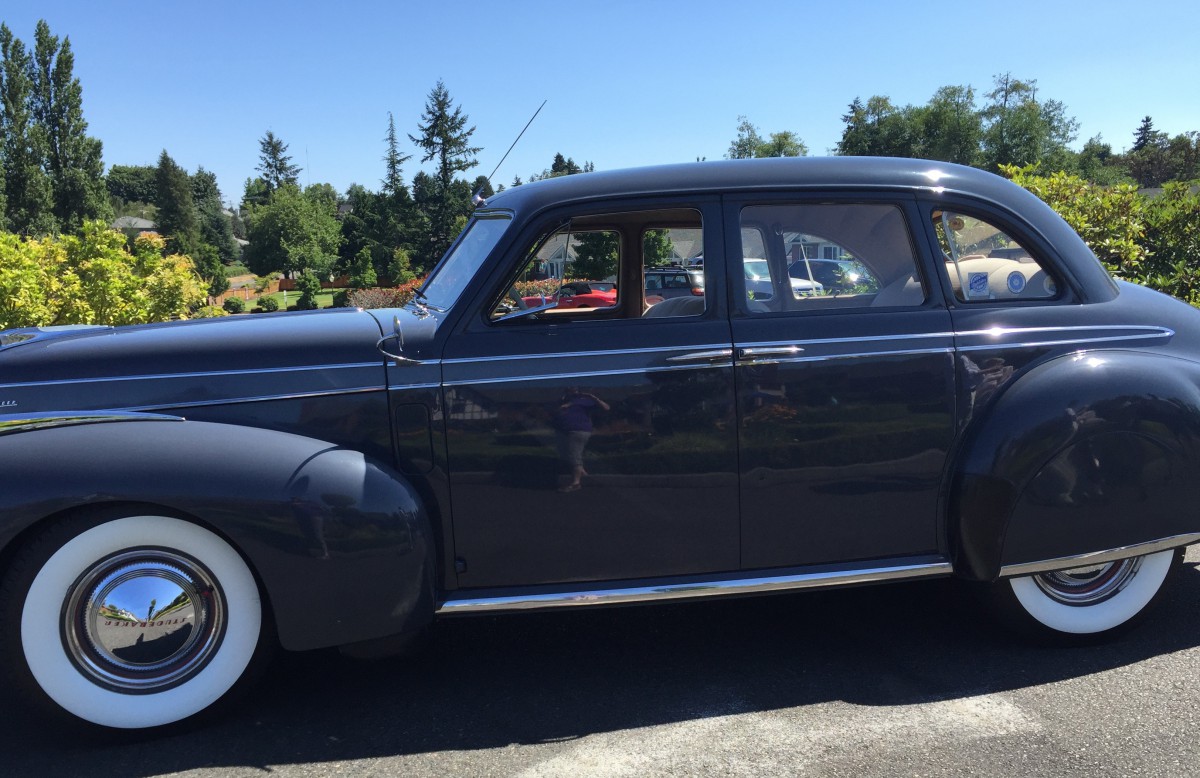
3. Studebaker Commander 1941

Studebaker Commander: 1941

Studebaker Corporation used the model name Commander between 1927 and 1964, except for 1936 and 1959–1963.

Three Things Thursday

It’s yet another good week for Three Things Thursday, the purpose of which is to “share three things from the previous week that made you smile or laugh or appreciate the awesome of your life.”

Olympic Music Festival

Last Saturday a group of us from Franke Tobey Jones drove an hour and a half out onto Washington State’s Olympic Peninsula for a performance at the Olympic Music Festival. The venue of the festival is snuggled into the grandeur of a forested, sparsely populated area.

Alan Iglitzin, a member of the Philadelphia String Quartet, founded the Olympic Music Festival in 1984. He originally intended the festival to be a summer retreat for the Philadelphia String Quartet, which had been the quartet-in-residence at the University of Washington in Seattle from 1966 to 1982. But the summer festival drew such large audiences that the festival quickly expanded from the three weekends of its opening season to the current twelve.

The Olympic Music Festival takes place in the refurbished barn of an old farm that Iglitzin purchased near Quilcene, WA. An extensive picnic area surrounds the barn, and many patrons arrive early and enjoy a picnic before the performance. Two listening options are available: seating on benches and bales of hay inside the barn, and outdoor listening (on your own chairs or blanket) on the grassy hillside adjacent to the barn. The outdoor seating allows families to bring children who may not be quite ready to sit still quietly indoors for an extended period. The atmosphere reminds me of Tanglewood in Lenox, MA, the summer home of the Boston Symphony Orchestra.

True Confession:

Last Saturday was a windy, overcast day with occasional sprinkles of much-needed rain. We did manage to eat our picnic lunches outdoors before the performance, but it was not a good day for photography. Therefore, the photos below are from our 2014 visit to the Olympic Music Festival.

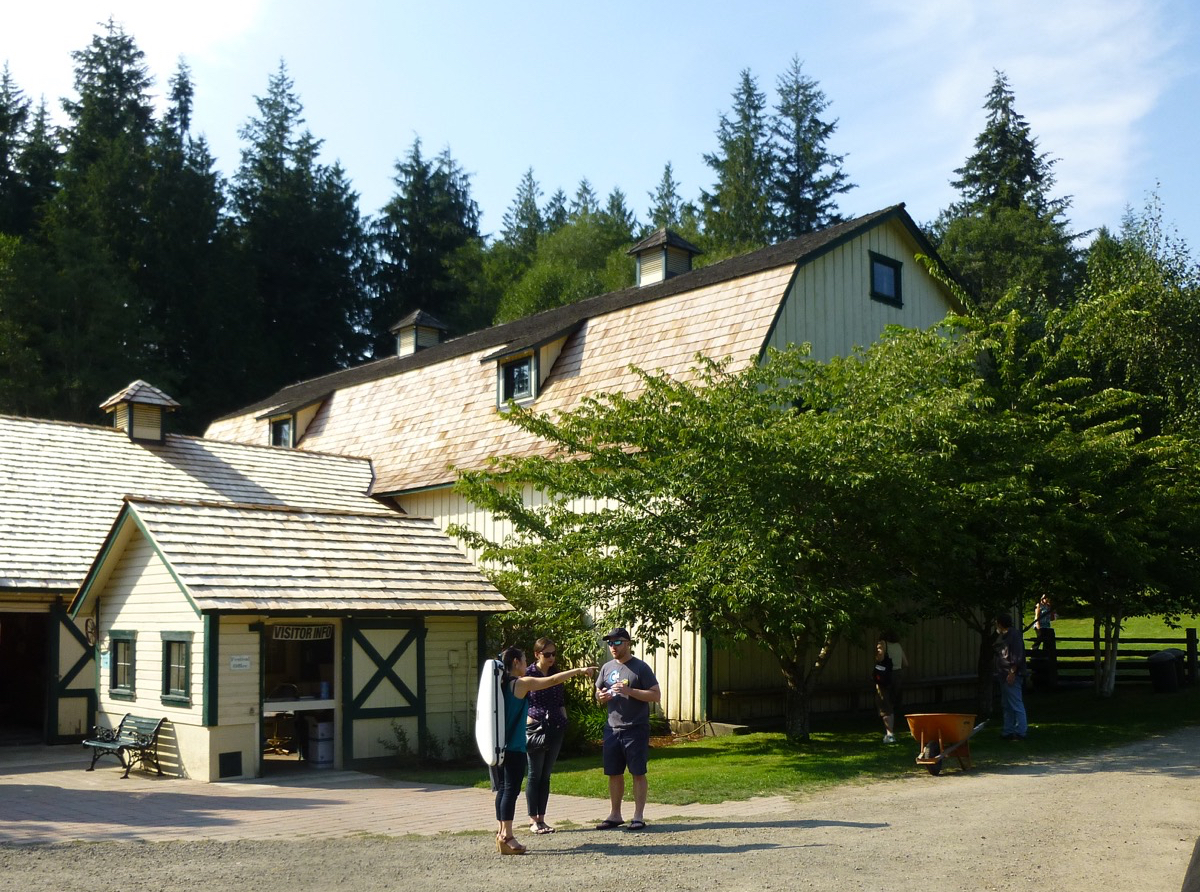
1. The Barn

Barn at Olympic Music Festival

When Alan Iglitzin bought the farm near Quilcene, it had fallen into disrepair. He knew nothing about the farm’s history. But over the years he learned that the farm’s original owners were a Japanese American family who had built the farmhouse and barn to accommodate themselves and a herd of dairy cows. They also grew berries and other seasonal produce and for many years provided dairy items and produce to local residents.

When the U.S. entered World War II, the family was sent to an interment camp. After the war they were unable to regain the property, which passed through multiple owners but never again became a thriving, working farm.

In the 1990s Isamu “Sam” Iseri, the son of the family that had built the barn called Iglitzin and asked if he could visit his boyhood home. He and Iglitzin became friends. Sam died in 2004, but members of the Iseri family continue to visit their ancestral farm periodically.

2. Musician

For some, the festival provides the opportunity to speak to the young musicians.

Musician at Olympic Music Festival

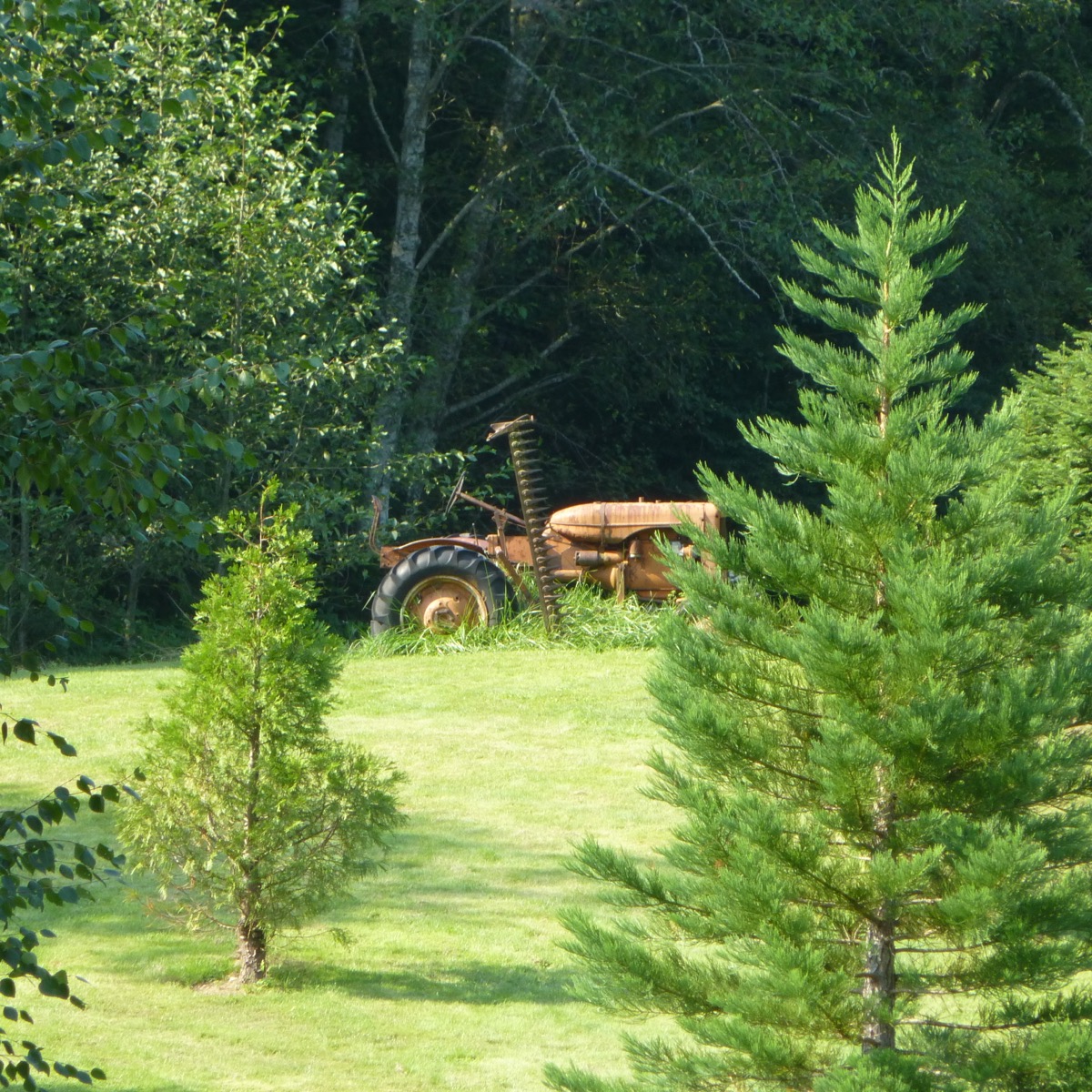
3. Tractor

There are several reminders of the venue’s history as a working farm.

Tractor at Olympic Music Festival

Three Things Thursday

Here’s this week’s installment of Three Things Thursday, the purpose of which is to “share three things from the previous week that made you smile or laugh or appreciate the awesome of your life.”

three-things-thursday-participant

Seattle Mariners Game!

(Click on photos for a larger version.)

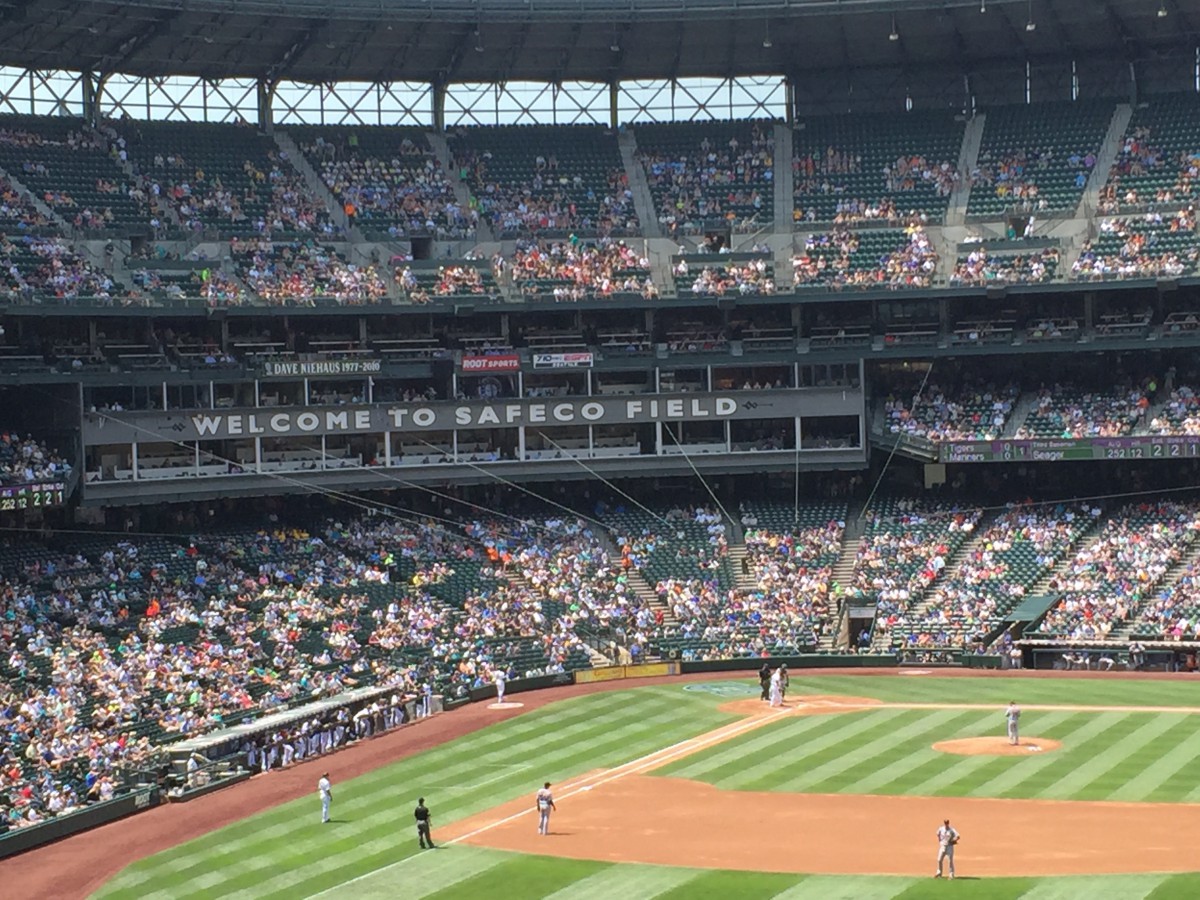
And awesome my life was yesterday, when a group of us from Franke Tobey Jones went up to Safeco Field for a day game between the Seattle Mariners and the Detroit Tigers. We sat in the Hit It Here Cafe, which is a covered area just above the right field wall.

1. Safeco Sign

Safeco Field is a beautiful stadium that officially opened on July 15, 1999. I especially like this sign along the third base side of the field:

Safeco Sign

2. Runners on 1st and 2nd

The Mariners had runners on 1st and 2nd in the opening inning but didn’t manage to score:

Runners on 1st and 2nd

3. Cleaning up the Infield

The grounds crew rushes out for a quick clean-up job on the base paths just before the start of the 7th inning:

7th inning: Cleaning up the infield

scroll divider

It was just about a perfect day for baseball. We were all glad that we had chosen the seats in the covered cafe, as people on the lower levels were in direct sun. The temperature was in the low 80s, but as always up here, it felt much cooler than that as long as you were in the shade.

We even had a bit of added excitement during the game: a fan ran onto the field. He was quickly tackled by security personnel and escorted off the field. He spent at least a few hours in jail and will pay a hefty fine. This guy wasn’t a streaker because he had pants on. I don’t know if you get fined extra for running naked onto the field.

The only thing that kept the day from being perfect was the Mariners’ 5–4 loss to the Tigers.

Three Things Thursday

It’s time once again for Three Things Thursday, the purpose of which is to “share three things from the previous week that made you smile or laugh or appreciate the awesome of your life.”

1. Farmers’ Market

We hadn’t been to the farmers’ market in three or four weeks because of our European trip. And, because spring arrived about a month early this year, when we went to the farmers’ market last weekend it was much different than the last time we were there.

I’m kicking myself for not thinking to snap any photos. You’ll have to use your imagination to picture all the festive colors of the produce:

  • vine-ripened tomatoes
  • snow peas
  • red and golden raspberries
  • green beans
  • carrots
  • green and yellow zucchini
  • Rainier and Bing cherries
  • blueberries
  • red and golden beets

And, of course, flowers galore. It was certainly a feast for the eyes.

2. Paprika

Before we left for our trip, our daughter surprised me by saying, “If you visit Hungary, you’ll have to try goulash.”

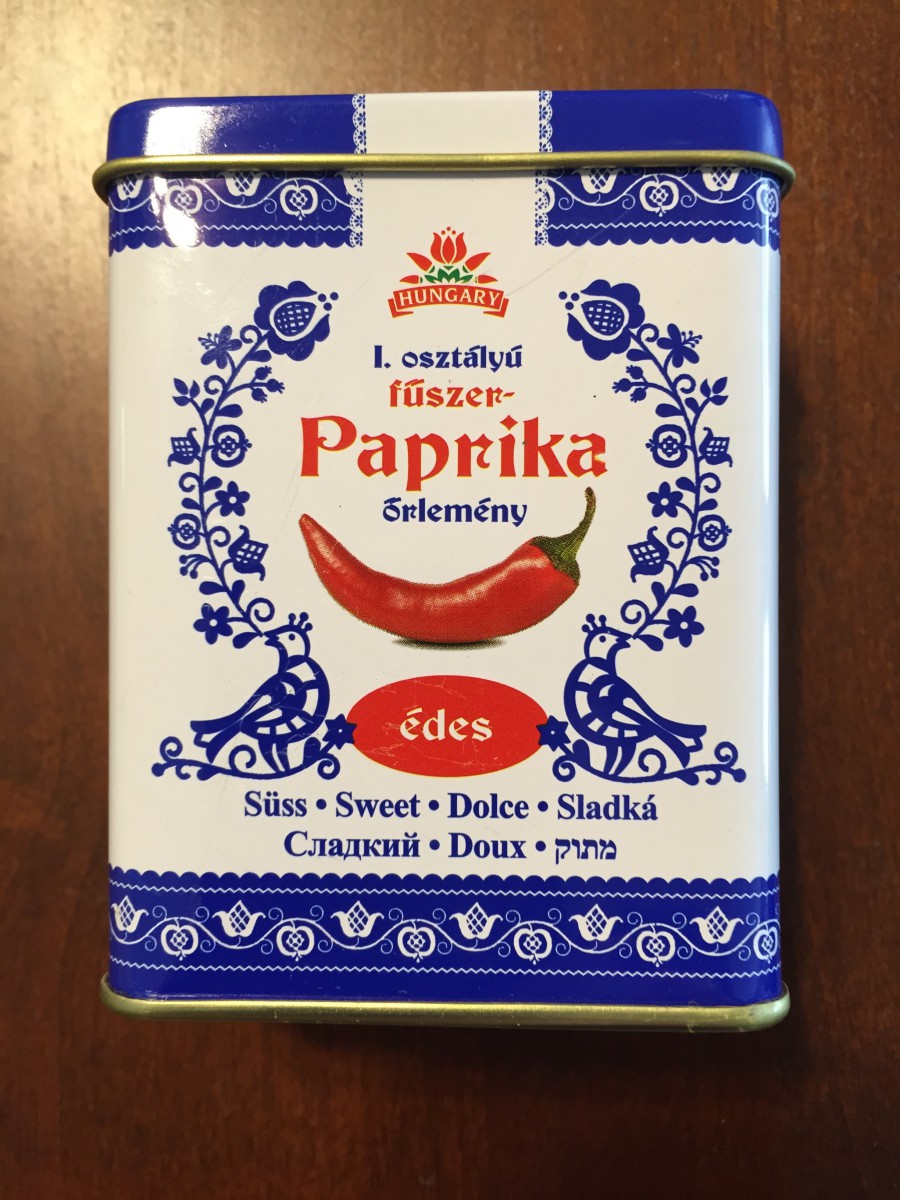
Now I’m sure I made goulash a few times while she was growing up, but I was still surprised that she took such an interest in it. We didn’t buy many souvenirs, but we did buy her a tin of paprika in Budapest:

Hungarian paprika, sweet

Paprika can range from mild to wickedly hot. We were careful to get her a container labeled sweet. Now we’ll just have to get her to make us a big batch of goulash.

3. Miska Jug

The only other souvenir we brought back is this wine pitcher from Budapest. The shop was full of variations of these, but we finally settled on this one.

Hungarian Miska Jug
Hungarian Miska Jug

It’s a Miska (which I think is pronounced mishka) Jug:

Description of Miska Jug

Click on any photo for a larger version.

Three Things Thursday

I’m really excited about today’s Three Things Thursday, the purpose of which is to “share three things from the previous week that made you smile or laugh or appreciate the awesome of your life.”

Tacoma Rainiers Game!

Our new activities director took a group of us from Franke Tobey Jones to a Tacoma Rainiers baseball game this week.

The Rainiers, of the Pacific Coast League, is the AAA team of MLB’s Seattle Mariners. That means that players stop here just before being called up to the Major League Baseball team. In fact, we watched Franklin Gutierrez play in Tacoma on Tuesday, then saw him on television with the Mariners on Wednesday, just after being called up. Fortunately, it’s a short trip from Tacoma to Seattle.

Tuesday nigh was a beautiful night to be at a baseball game. It was a sunny day, but our seats were in the shade of the high stadium wall up the third base line. The temperature was just right. Here are some photos. (Thanks to my husband for photo #3).

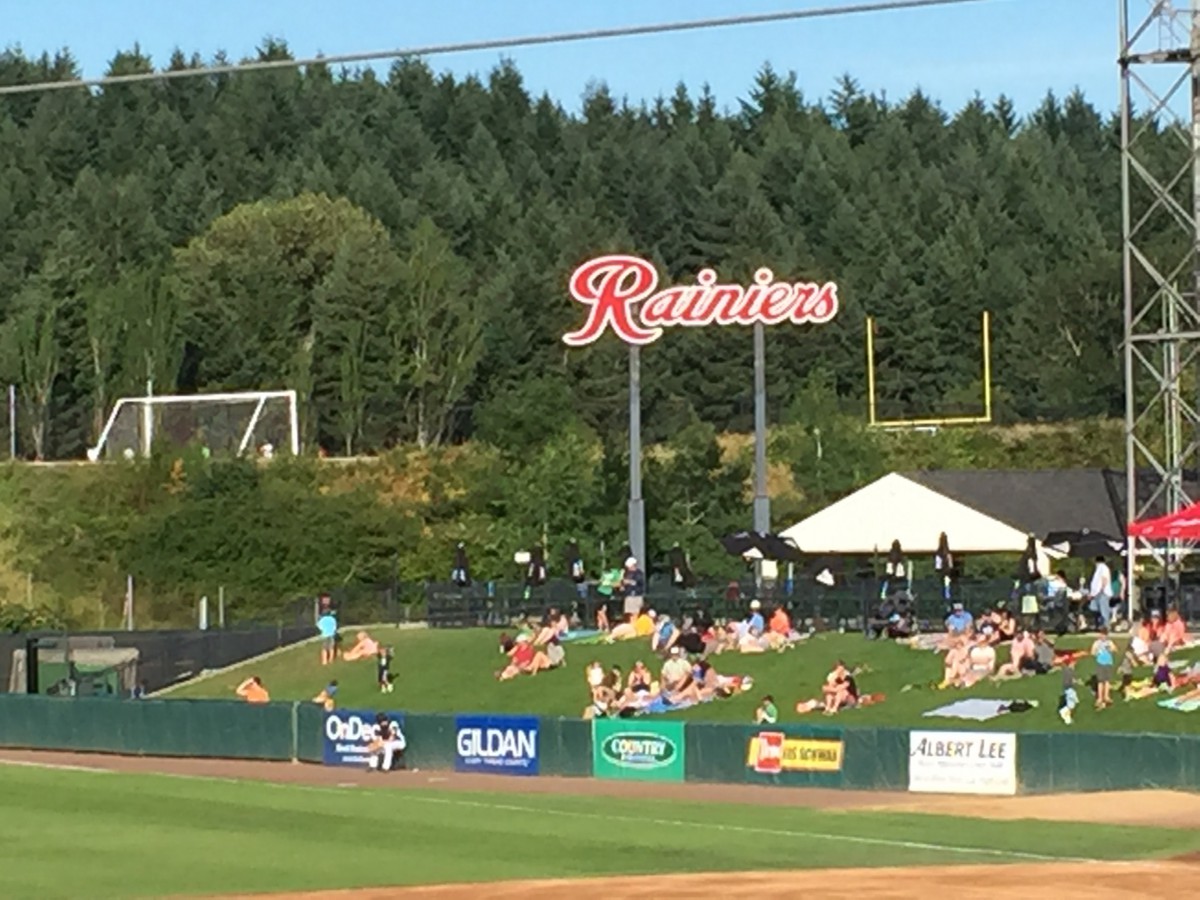
1. Stadium Hill

Hill along first base side of Cheney Stadium

The grassy hill next to right field, up along the first base line, is a popular destination for families with young children. Both young and older fans can spread out and relax while watching the game. A lot of foul balls end up there, so if you go, you should bring your glove.

2. Rainiers’ Mascot: Rhubarb

The Seattle Mariners’ mascot is a moose, and I used to think that Rhubarb, the Rainiers’ mascot, is also a moose. But this week I discovered that Rhubarb is in fact a reindeer. It has a nice alliterative ring to it: Rhubarb, the Rainier Reindeer.

Rhubarb, Rainiers' mascot
Rhubarb, Rainiers’ mascot

But be honest here. Could you really tell from those antlers that Rhubarb is a reindeer and not a moose?

Cheney (pronounced chee-nee) Stadium, home of the Rainiers, is a very family-friendly place, and Rhubarb plays a big part in creating that atmosphere. He dances on top of the dugouts, and mingles and schmoozes with fans up in the stands. And after every Sunday game at the stadium, Rhubarb brings kids down onto the field and leads them in running around the bases.

3. Tribute to Ben Cheney

Statue of Ben Cheney

Ben Cheney was one of the community leaders responsible for getting a stadium built in just three months and 14 days, in time to open as the home of the San Francisco Giants’ AAA club in 1960. Since that time Tacoma has been the home of a number of minor league teams. The Rainiers have played at Cheney Stadium since 1995.

Cheney Stadium underwent a massive remodeling between the end of the 2010 season on September 2 and opening day of the 2011 season on April 1.

The spirit of Ben Cheney attends every home game at the stadium named in his honor.

Three Things Thursday

It’s time once again for Three Things Thursday, the purpose of which is to “share three things from the previous week that made you smile or laugh or appreciate the awesome of your life.”

Trip Summary

We arrived back home from our European Viking River Cruise on Monday and are recuperating from the cold we both brought back and the jet lag.

Here are three memorable icons from the trip.

1. Ice Cream

The preferred form of ice cream on our travels was Italian gelato. We saw these sidewalk enticements everywhere we went.

ice cream

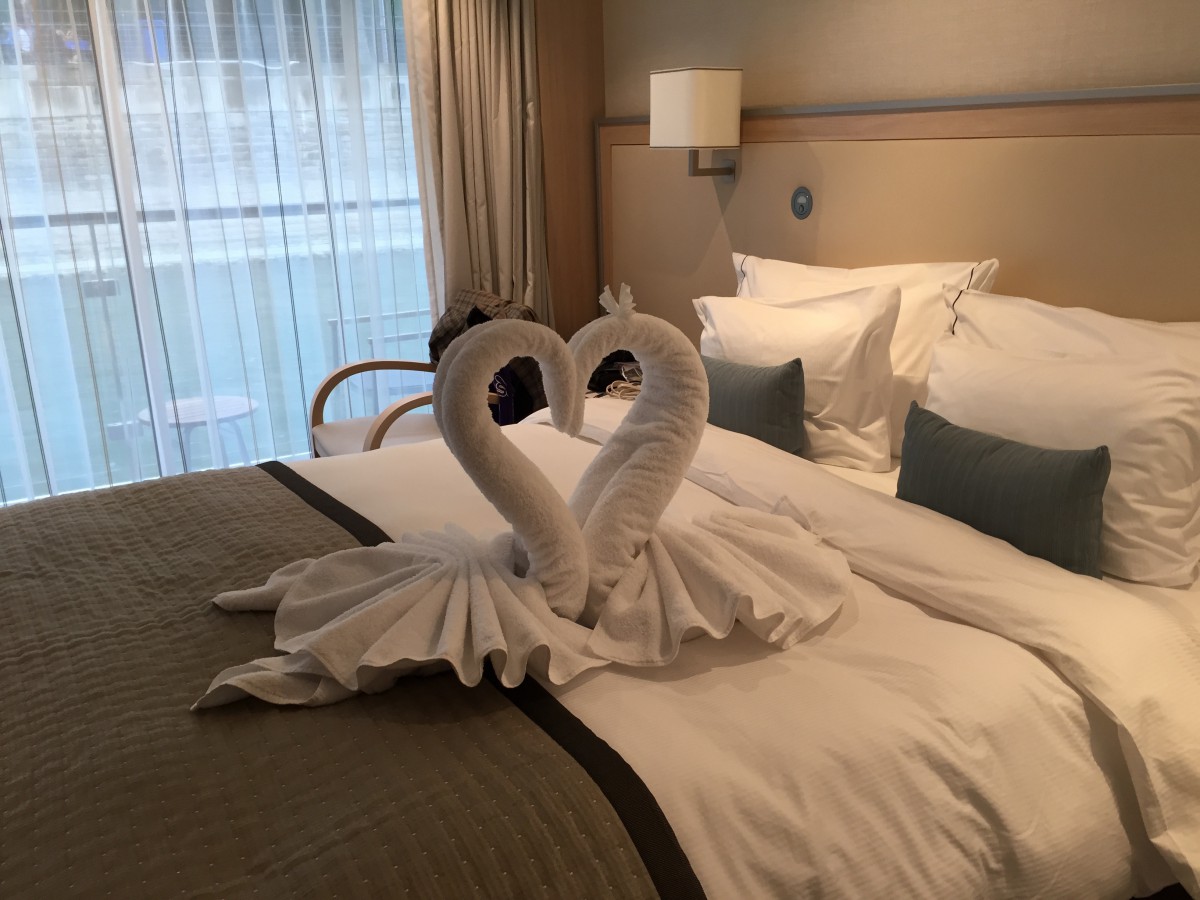
2. Towel Art

We found this in our stateroom one afternoon near the end of the voyage.

towel art

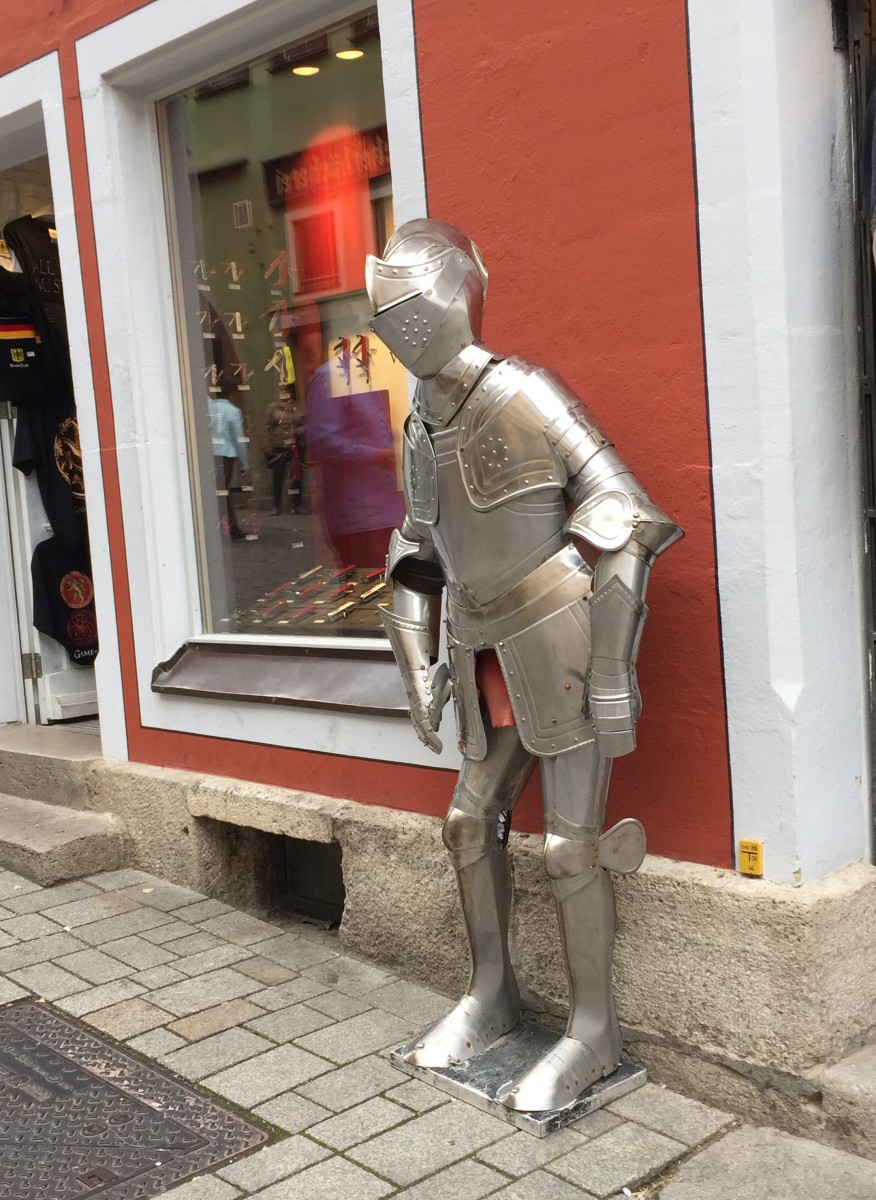
3. Getting Off the Plane

This is what we felt like after the 10-hour flight home.

armor

Three Things Thursday

It’s time again for Three Things Thursday, the purpose of which is to “share three things from the previous week that made you smile or laugh or appreciate the awesome of your life.”

Psychology of Baroque Art and Architecture

I never took an art appreciation course in college. Over the years I picked up on the fact that Baroque art and architecture are heavily ornate and complex, but on this trip through the heart of Europe I learned why.

The lovely Baroque churches of Europe were created to demonstrate visually for a mostly illiterate populace the grandeur of God and His heaven.

(Click on images to see a larger version.)

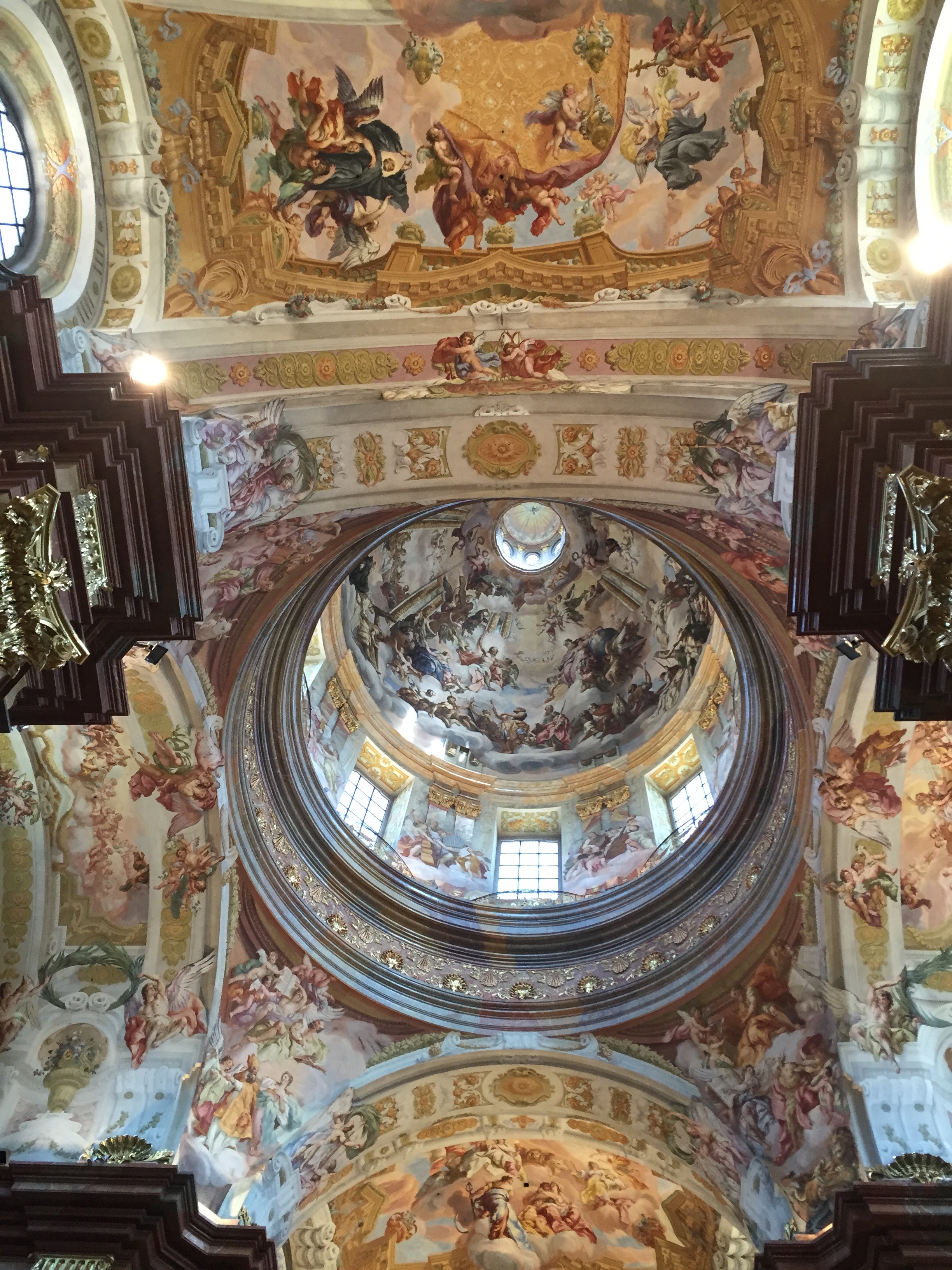
1. Ceiling of Benedictine Abbey Church, Melk, Austria

Our tour guide at Melk’s Benedictine Abbey explained that the church was built as an audience for God. The ceiling presents a portrait of the beauty of God’s Heaven.

Ceiling, Benedictine Abbey, Melk, Austria

2. The Pillars in St. Stephen’s Cathedral, Passau, Germany

The bottoms of the church’s pillars are ordinary, unadorned, to demonstrate the plainness of everyday existence on earth.

St. Stephan's Cathedral, Passau, Germany
St. Stephan’s Cathedral, Passau, Germany

3. Top of Pillars and Ceiling, St. Stephen’s Cathedral

The bottoms of the pillars suggest the drabness of human existence on earth, but as congregants look upward, they see the beauty and grandeur of Heaven in the gilt and ornamentation higher up. This use of decoration served to remind people that Heaven is better than earth and that they should follow the church’s teachings if they wanted to end up in Heaven.

Ceiling, St. Stephan's Cathedral, Passau, Germany
Ceiling, St. Stephan’s Cathedral, Passau, Germany