Nuremberg, Germany

At the end of the first week of the cruise my husband and I both caught a cold that went the rounds of the ship. In addition to a runny nose, the main feature of this germ was a deep cough. Within just a few days we heard people hacking all over the ship.

As a result, we chose to stay on board and sleep during this afternoon’s tour of Nuremberg. It was an easy decision, really:

  1. We both felt lousy.
  2. It was rainy and chilly.
  3. We didn’t want to see and hear a lot of depressing stuff about World War II.

So sorry, no photos.

Regensburg, Germany

(Click on photos for larger version.)

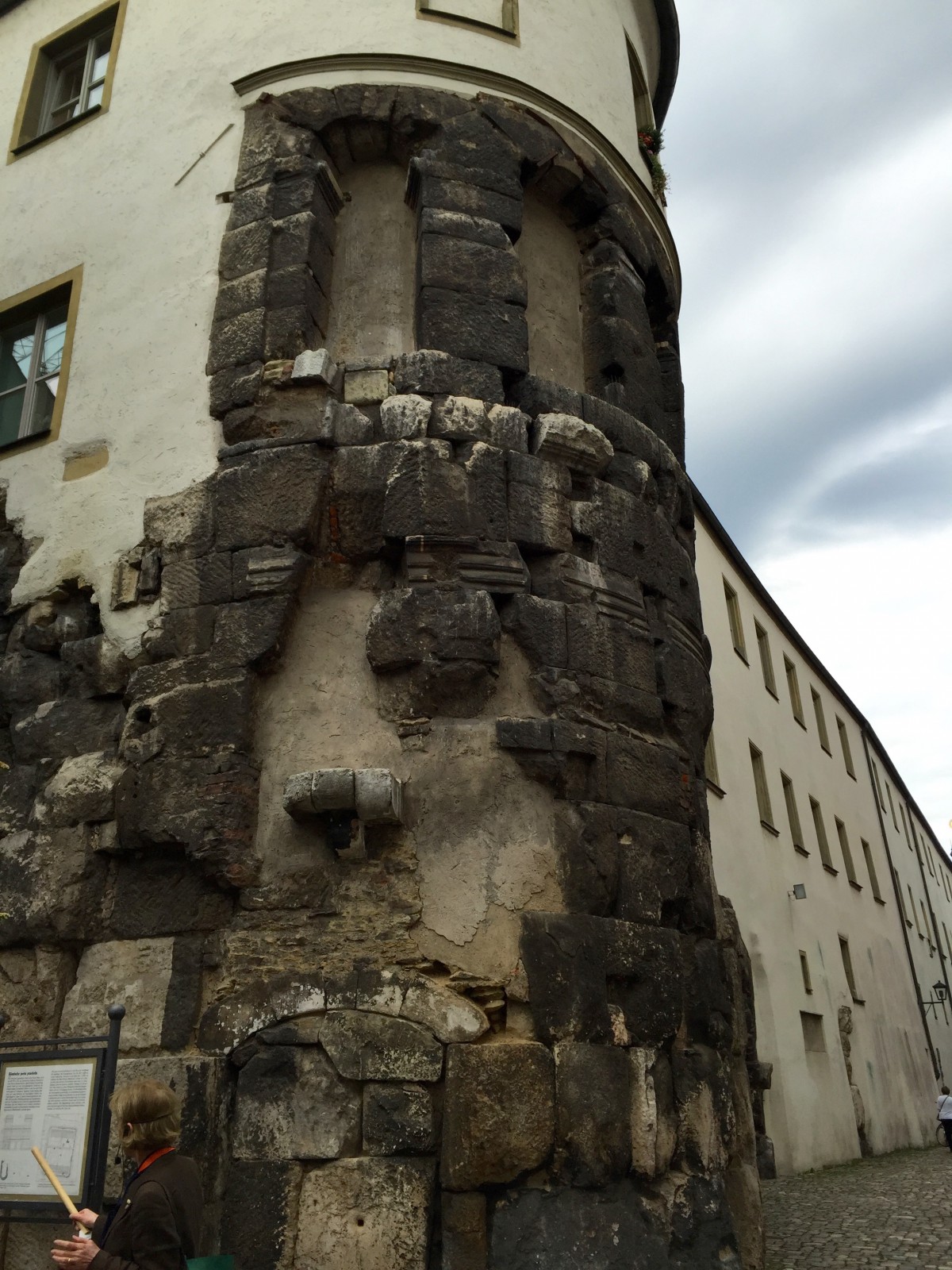
Regensburg, on the Danube River, marks the northernmost point of Roman expansion. As a classics major, I was interested in the remnants of the Roman settlement, which dates to the year 79 CE.

Roman arch, Regensburger
Roman arch, Regensburg

I love how the arch is tastefully incorporated into the modern building.

Roman tower, Regensburg

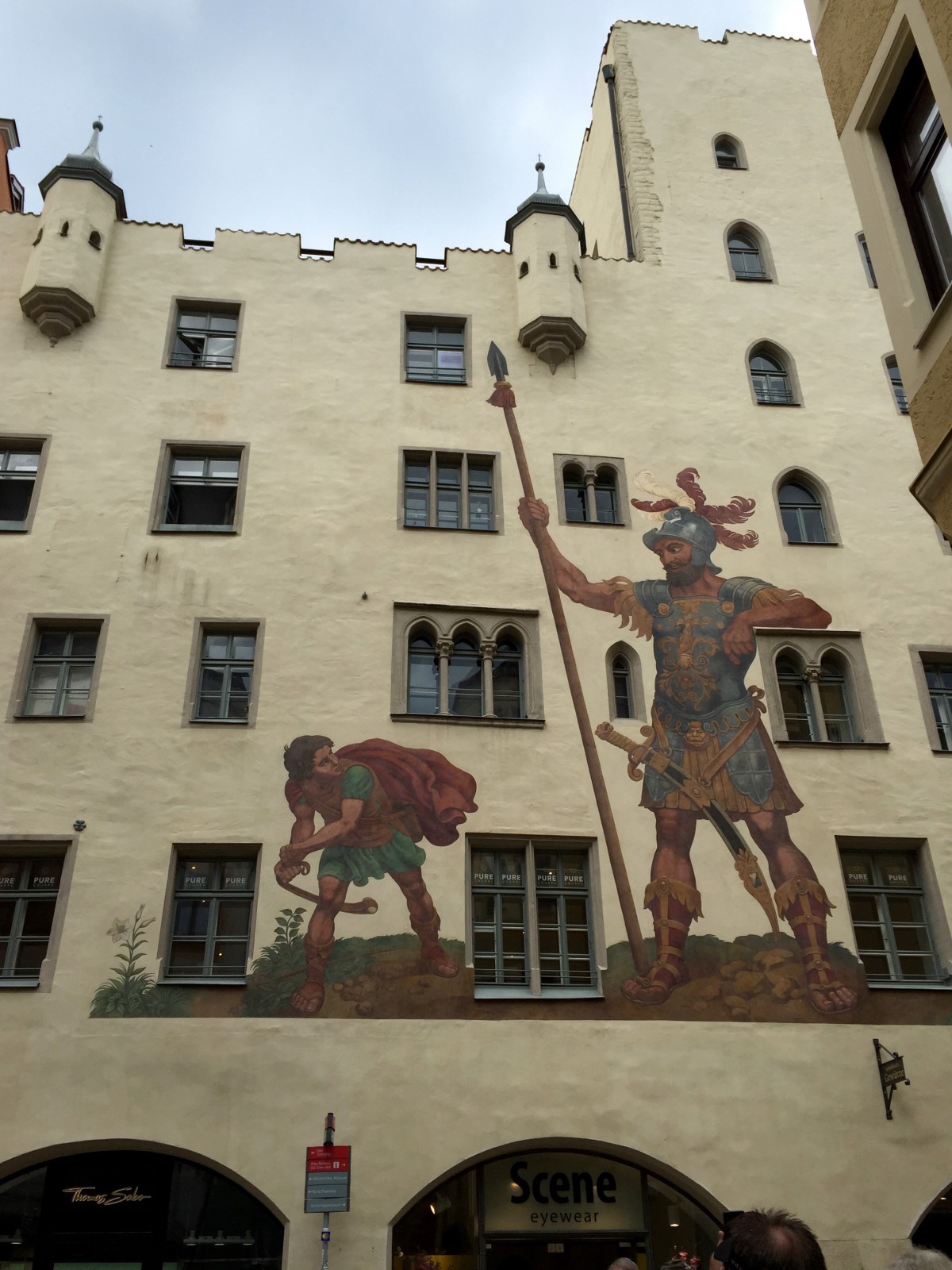
The local people considered themselves a David challenging the Goliath of Roman takeover, a motif that survives today in this mural:

David & Goliath mural, Regensburg

St. Peter’s Cathedral, also known as Dom St. Peter or Regensburg Cathedral, has existed since about 700 CE. However, after several fires the church was rebuilt, and the present high-Gothic style building was completed in 1320. The cathedral is 279 feet long and 115 feet wide, and the two towers are almost 350 feet high. Most of the stained glass windows were installed in the 14th century and depict apostles, saints, the life of the Virgin Mary, and the legend of Saint Catherine.

St. Peter's Cathedral, Regensburg
St. Peter’s Cathedral, Regensburg
Tourists in Bavarian lederhosen, Regensburg

Bratislava, Vienna, Melk

(Click on photos for larger version.)

June 3, Bratislava

In the 16th century Slovakia became part of the Hapsburg Monarchy and benefited from the enlightened reforms of Maria Theresa (1740–1780) and her son, Joseph II (1780–1790). In 1919 Slovakia joined with Czechia to form Czecho-Slovakia, a nation whose independence was limited by its strong economic, military, and political dependence on Germany.

Castle, Bratislava
Castle, Bratislava

It was later conquered by the Soviets, who turned Czechoslovakia into a pro-Soviet Communist country, which lasted until the fall of Communist in the Velvet Revolution of 1989. In 1993 the Slovaks and Czechs into separate countries, a peaceful agreement known as the Velvet Divorce. Bratislava is the capital of Slovakia.

Statue of Napoleon, Bratislava

June 4, Vienna

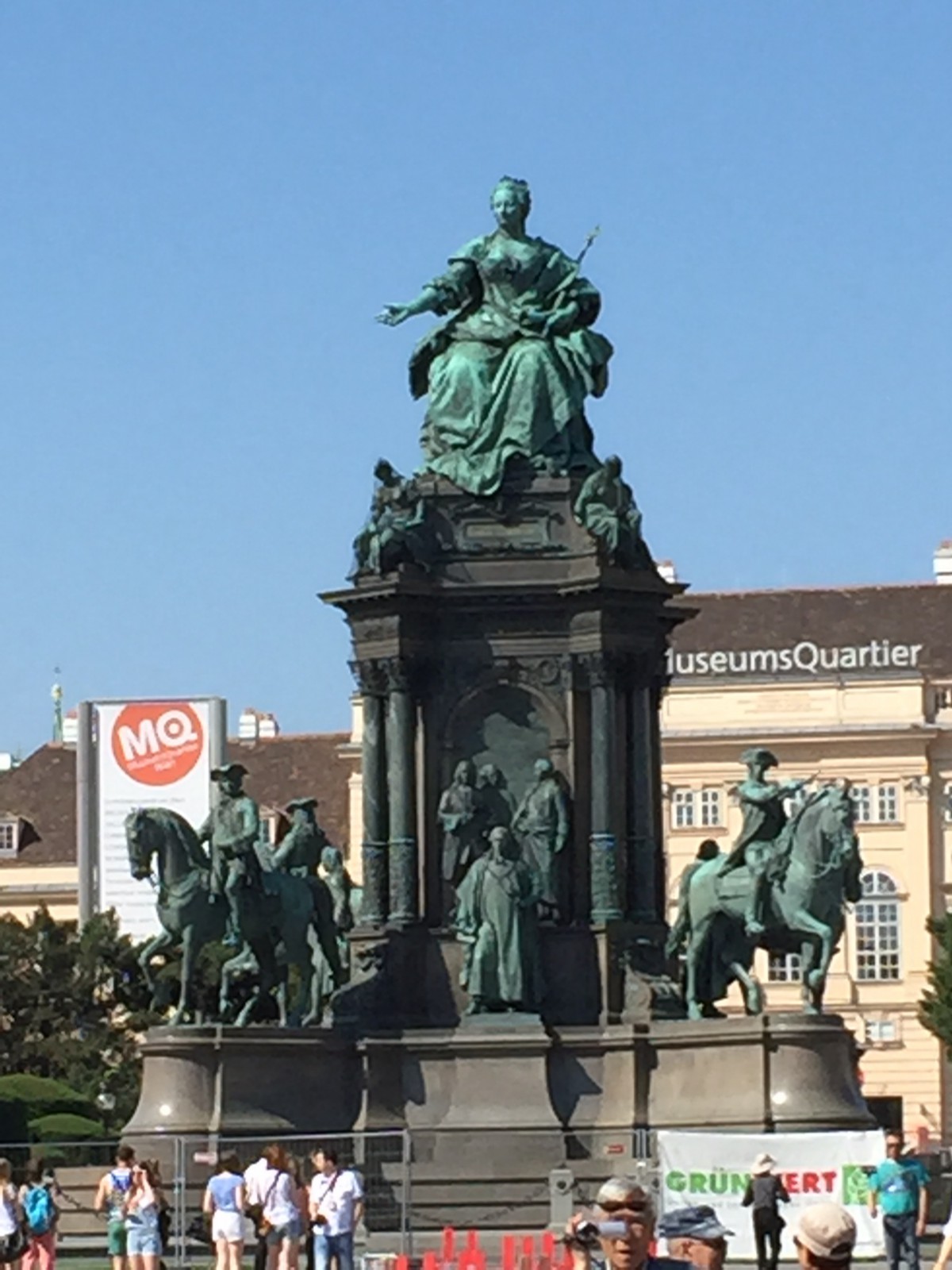
Austria continues to honor Maria Theresa, the last Austrian Hapsburg, who died in 1780. Although the family no longer rules, several family members are active in both politics and business in Europe.

Statue of Maria Theresa, Vienna
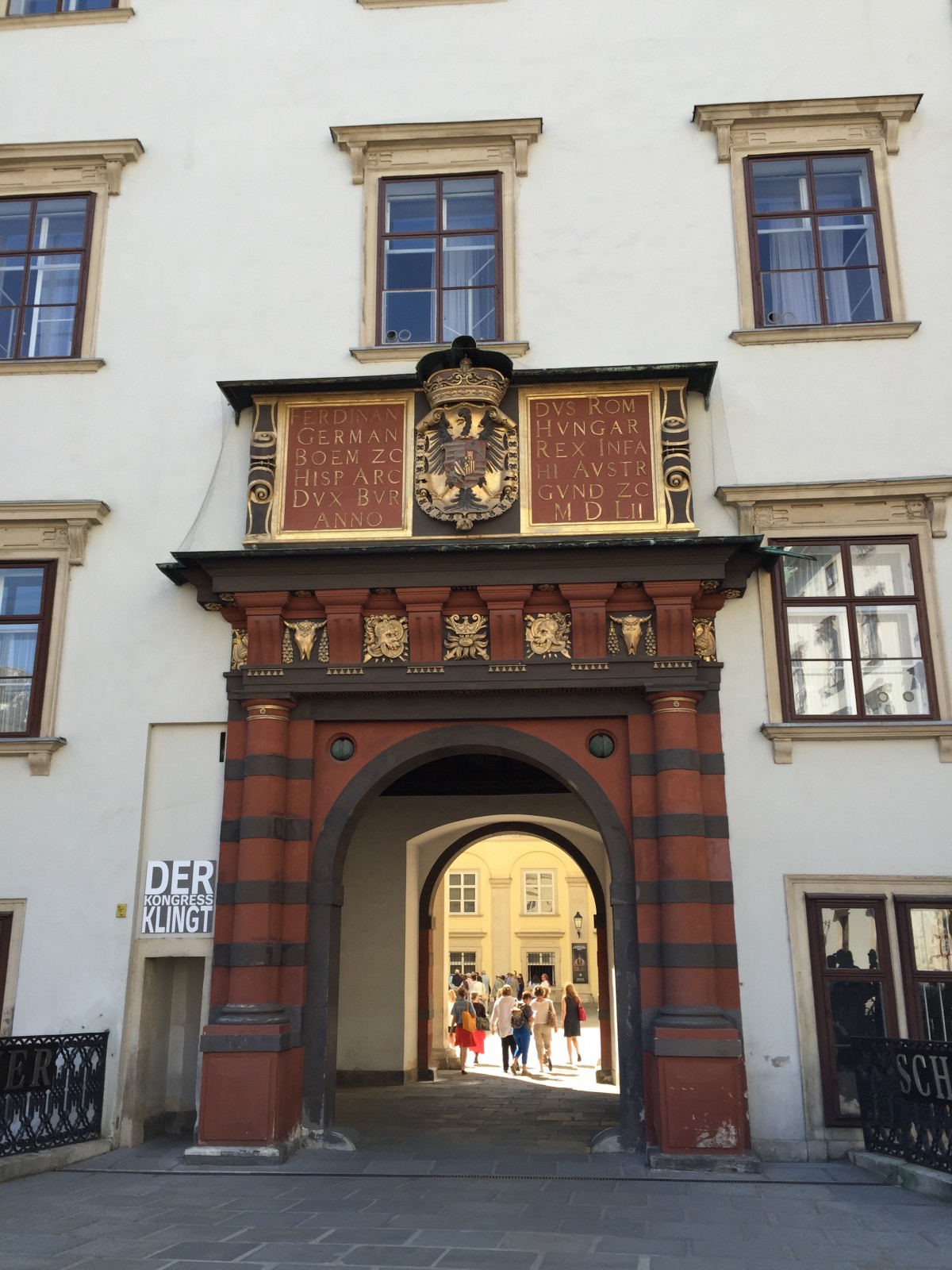
Early Gate, Vienna
Early Gate, Vienna

Vienna prides itself as a city of music. On the evening of June 4th we attended a chamber music performance featuring music of Mozart and Strauss. For me, the highlight was the Queen of the Night’s aria from Mozart’s opera The Magic Flute.

Chopin plaque, Vienna
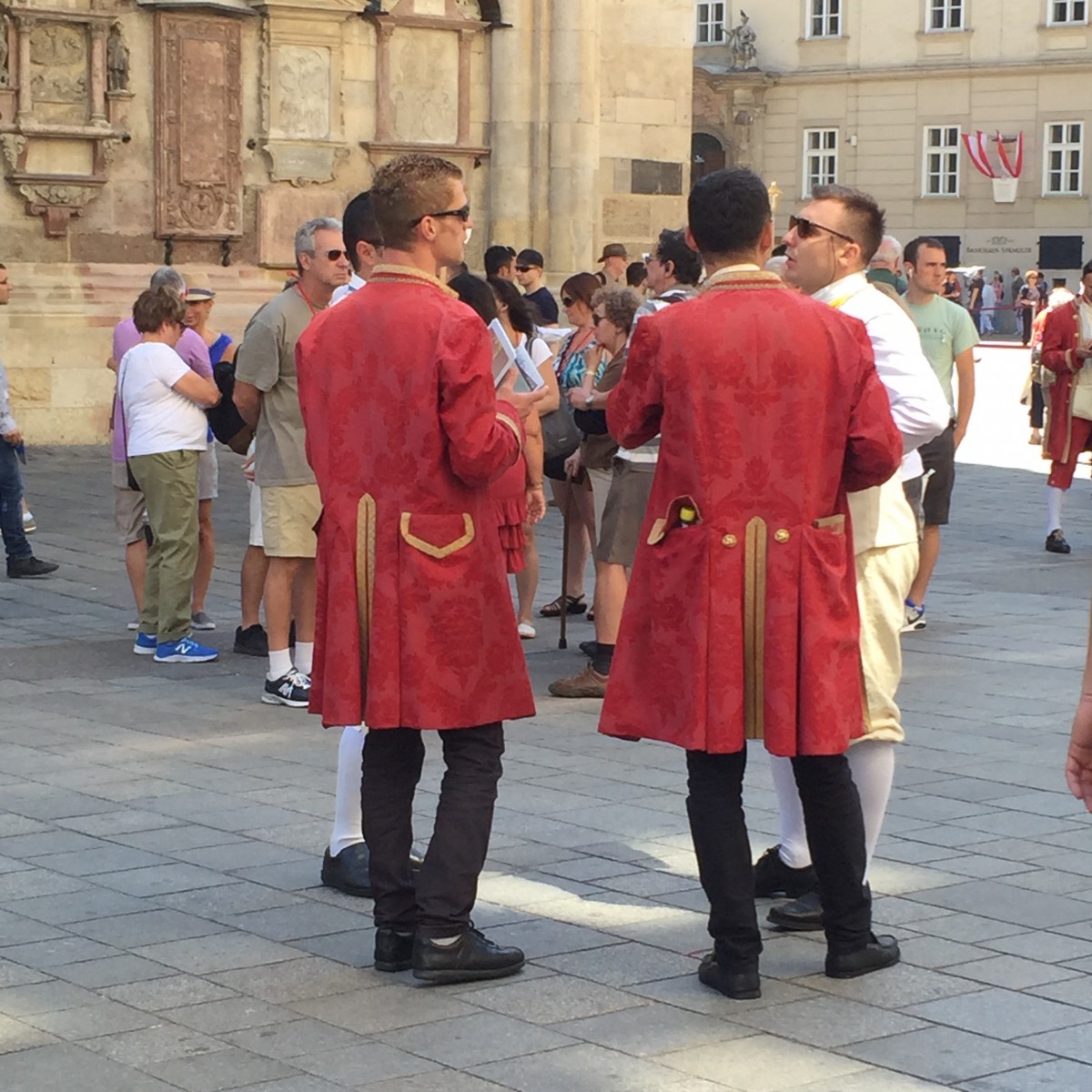
Ticket sellers in Mozart dress, Vienna

June 5, Melk, Austria

The Benedictine Abbey at Melk, built between 1702 and 1736, sits on a hill high above the Danube River. It originally contained a royal wing, kept ready for the possibility of a royal visit. Monks lived in other parts of the abbey. The monastic community of Melk is more than 900 years old. Today about 30 monks live there and run a monastery school with more than 700 students.

Royal Wing, Benedictine Abbey, Melk, Austria

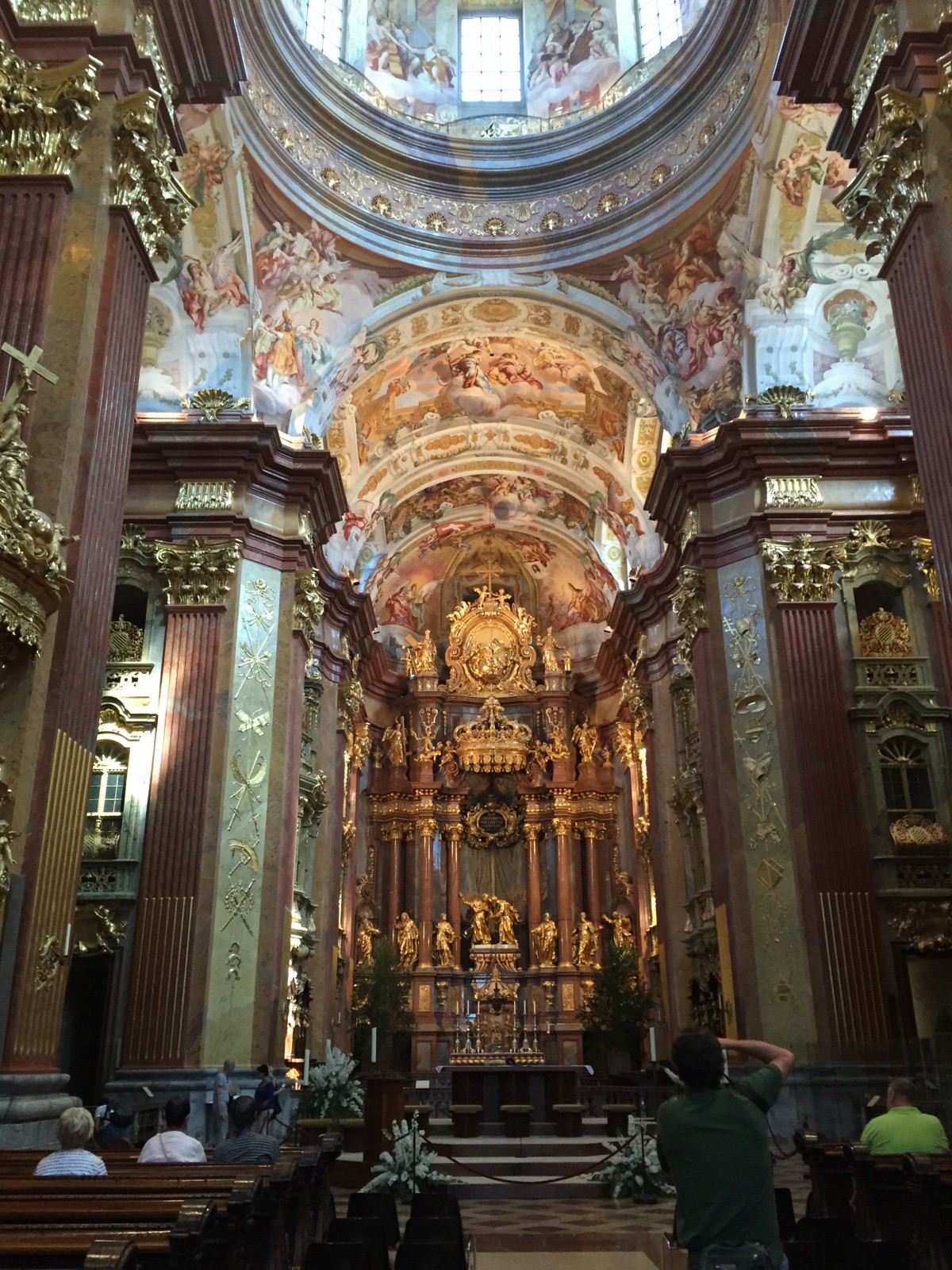
The monastery’s library contains more than 80,000 medieval manuscripts on a variety of subjects. The interior of Abbey Church is an amazing display of Baroque art.

Interior, Abbey Church, Melk, Austria

Three Things Thursday

Another week, another entry for Three Things Thursday, the purpose of which is to “share three things from the previous week that made you smile or laugh or appreciate the awesome of your life.”

Three Approaches to Travel

My husband and I have just begun a two-week Viking River Cruise through Europe. Since coming on board we have encountered people who exhibit three different approaches to travel.

1. Travel as Conspicuous Consumption

We met one woman, B., who said this is their fourth cruise this year. And when we disembark in Amsterdam, she and her husband will be staying there for four days before flying to some other city to pick up their next cruise. (I wonder how, where, and when she does laundry.)

When I asked if she had any advice for us less experienced travelers, she answered without any hesitation, “Get a suite.”

2. Travel as Opportunity for Self-Aggrandizement

There’s at least one couple like this in every crowd. The second night at dinner a woman came over to me at the dinner table, leaned down and put her face right next to mine, stuck out her hand, and said, “Hi, I’m S.” She then pointed out her husband, B. They both immediately began talking quite loudly about what they do and where they’re from. They overwhelmed everyone else at the table. These are the people who always have to have the last word: the best story, the funniest joke.

And of course they know everything about everything. After we had toured a Benedictine Abbey in Melk, Austria, that was built in the 16th century, B. sat across the aisle from me on the return bus ride. Here’s what he said to the person sitting next to him:

That was really something. Five-hundred years ago, when they were building this abbey, American Indians were still digging arrowheads out of the dirt. And in Africa they didn’t even have language yet. But look at what these Europeans were doing.

I swear I am not making this up.

3. Travel as Learning Opportunity

Fortunately we met many more of this variety of traveler than of the previous two. There was D., whose mother was an immigrant to the United States. He talked about how traveling in Europe was giving him insight into how his mother thought and why she was such a staunch supporter of the U.S. There was B. and another B., who both talked of how the 60 pairs of iron shoes along the riverwalk in Budapest, a tribute to the 60 Jews who were shot into the Danube River near the end of World War II, had moved them to tears.

The boat’s dining room was open seating, and these were the people we sought out during meals. I learned a lot on this trip, not only by seeing things for myself but also by talking with other people who were eager to discuss what they were learning as well.

Viking River Cruise: Grand European Tour

If you’ve watched Downton Abbey or any other Masterpiece! presentation, you’ve seen the commercials showing Viking’s longships cruising the world’s rivers.

My husband F. and I are setting out on the Viking River Cruises Grand European Tour. We had a 10-hour direct Delta flight from Sea-Tac (Seattle-Tacoma) International Airport to Amsterdam. After a layover of just under two hours in Amsterdam, we caught a one hour and 40 minute flight to Budapest, where we were met by representatives from Viking and taken to our ship, Vidar. We left Sea-Tac in the early afternoon of May 31 and arrived in Europe in the early afternoon of June 1.

Map of Viking River Cruises: Grand European Tour
Viking River Cruises: Grand European Tour

Neither F. nor I was able to sleep at all on the plane, so we were pretty exhausted by the time we arrived on board. Fortunately, our stateroom was ready as soon as we arrived. The ship’s personnel urged us to use our free time until dinner to walk around Budapest on our own, but we opted to take a nap instead. At dinner we discovered that just about everyone we talked to had done the same. We had no trouble falling right back to sleep after dinner.

This morning we had a tour of Budapest. We had a local Hungarian guide, who told us that the Hungarian pronunciation is Budapesht. The city comprises two formerly separate cities, Buda and Pest, separated by the Danube River. Buda is the older city, high on a hill, while the newer Pest is on lower ground across the river.

Fisherman's Bastion, Budapest
Fisherman’s Bastion, Budapest
Ceramic tile roof on Matthias Church, Budapest
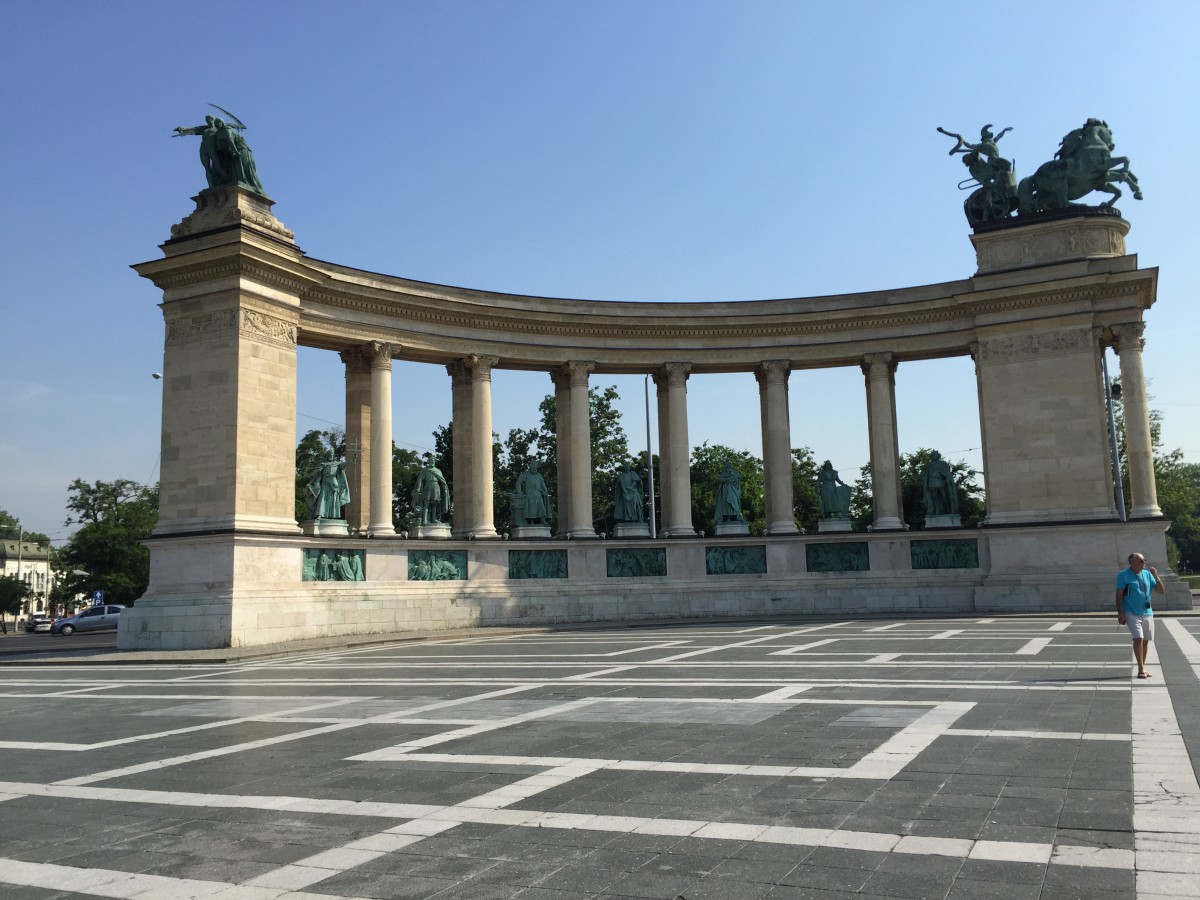
Portion of Heroes' Square, Budapest
Portion of Heroes’ Square, Budapest

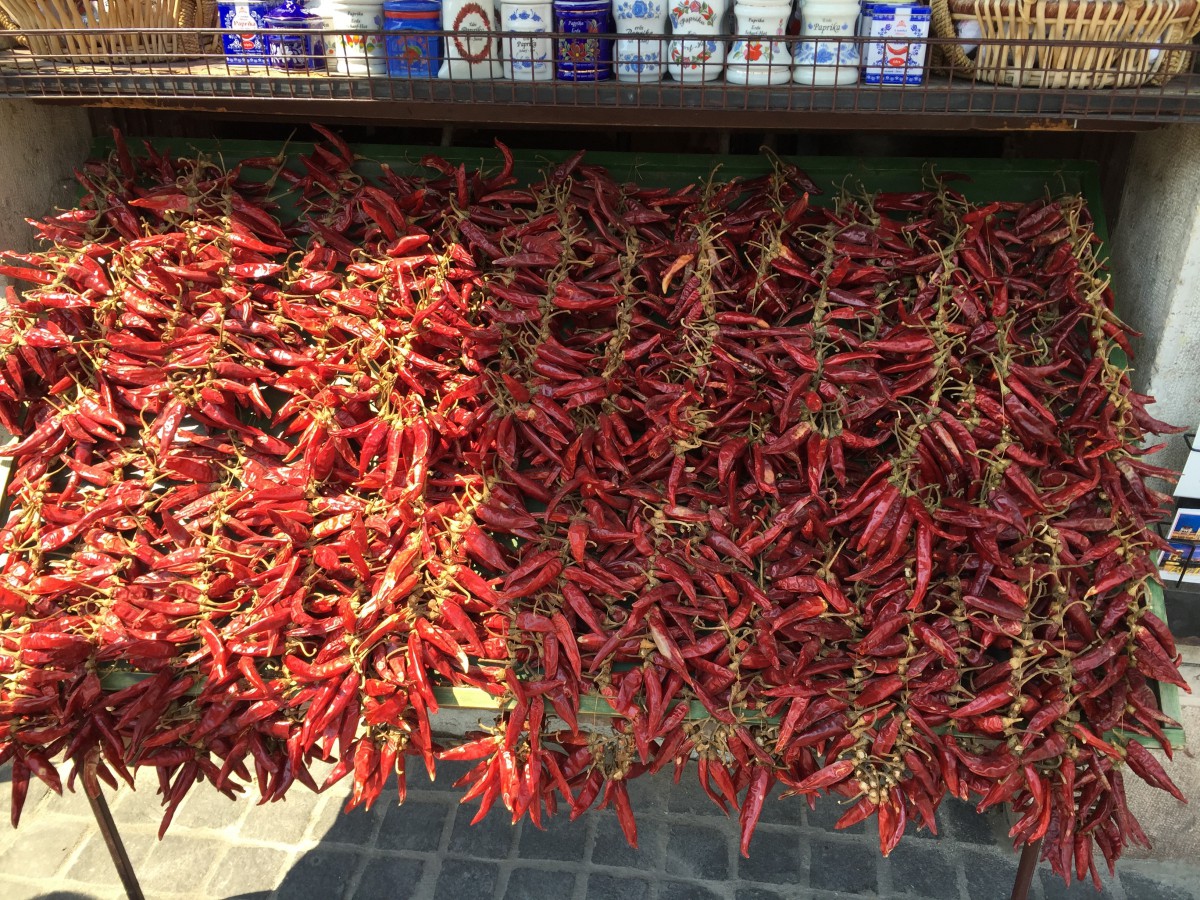
Hungary is famous for its paprika. The capsicum pepper plant used to make this popular seasoning was introduced to Hungary by the Turks in the 16th century. The spice’s pungency ranges from sweet to very hot. The brighter red the paprika, the hotter the spice. We made sure that the tins we bought to bring home were labeled “mild.”

Peppers used to make paprika

Blog a Day Challenge: May Report

What I Learned in May

In March and April I concentrated on trying to keep my total word count up by writing a number of long posts (1,000 words or more). However, I changed my focus in May: I tried to go short by focusing on topics that I could develop adequately in the 500–750 word range. I still consider that to be the sweet spot for me in blogging. As a result, my total word count was down almost 5,000 words from April, but my average post length was 573 words, which is in the range (albeit at the lower end) that I was aiming for.

Sometimes life interferes with writing a blog post every day. Last month I learned to keep a couple of short post ideas in the hopper to be completed on days when time is short. This means having research done and photos planned and uploaded ahead of time..

I’ve been getting better at incorporating some personal element into posts, usually how I came upon this topic or why it interests me. But I’m still short on storytelling, or building a story with a beginning, a middle, and an end. That’s something I’ll have to continue to work on.

May’s Research on Blogging

Want to Make Blog Posts More Engaging? Apply These 15 Tricks

Working from the premise that online readers scan content rather than carefully reading it, Pam Neely offers:

two primary approaches to improving reader engagement. The first is to make your content scannable. Ie, to work with readers’ existing online reading habits. Second, create content so good that at least some users will actually slow down and take the time to read it word for word.

Approach #1: Make your content scannable

  1. Use the inverted pyramid structure.
  2. Use short paragraphs.
  3. Use subheaders.
  4. Highlight keywords.
  5. Use scannable lists.
  6. Add images or video.
  7. Use short copy elements like photo captions, call outs, and tweetables.
  8. Write simply and clearly.

Approach #2: Create content so good that readers will slow down and engage with it

  1. Write a killer headline that draws people in from the start.
  2. Write for a specific audience.
  3. Show a contrary point of view.
  4. Show an unusual point of view: “Try borrowing ideas, frameworks or approaches from other industries.”
  5. Offer new information
  6. Use quizzes, polls, or other interactive tools.
  7. Ask for comments.

Neely’s first set of suggestions is straightforward. In addition to just plain writing well (suggestions 1 and 8), using structural elements such as subheads and lists is easy with WordPress. I even installed a plugin on my two self-hosted blogs that allows me to highlight tweetable content, and I’ll experiment with that next month.

But where I most need to concentrate is on her second area, creating content that readers will slow down and actually read. By the end of each month I usually have a bunch of open browser tabs featuring articles that I meant to engage with myself. Here, for example, are a couple that have been open for at least two weeks:

Both of these articles deal with topics with which I have personal experience and on which I have strong opinions, and I kept meaning to write a blog post about my reactions to each one. In the future I will undertake such posts when I come across the opportunity instead of waiting until some later time (that never seems to arrive).

Nonetheless, I couldn’t help but notice that Neely posted this article on the Scoop.it blog on May 18, 2015, and as of May 30 there were no comments. Maybe other people were, like me, too busy thinking about their own content to engage with hers.

My Statistics for May

Number of posts written: 31

Shortest post: 250

Longest post: 1,300

Total words written: 17,775 (down about 5,000 from April)

Average post length: 573 (down about 150 from April)

Distribution of posts across my three blogs:

The total of posts here may not equal the number of posts written last month because I occasionally publish the same post on more than one blog. However, I have included each post only once in my total word count.

Last month’s featured post:

What a Single Sea Gull Taught Me About Life
Three Things Thursday

I’m particularly excited about this week’s Three Things Thursday, the purpose of which is to “share three things from the previous week that made you smile or laugh or appreciate the awesome of your life.”

three-things-thursday-participant

A Walk on the Beach

This week I had the opportunity to spend a few days at Ocean Shores, a city on Washington State’s northern Pacific Coast. I love going to a place where I can watch the waves roll in. It comforts me to know that, no matter what happens anywhere else, the waves will continue to roll in, always.

1. Water on My Toes

We don’t swim in the ocean up here. The water is much too cold. But it’s not a true trip to the beach unless I get to feel the surf wash over my toes:

wave rolling in
wave rolling in

The brochure in the hotel warns that, if we do wade into the ocean, we should not let the water get above our knees. The word riptide appears in the same paragraph. But enough cold water to just wash over my toes is sublime.

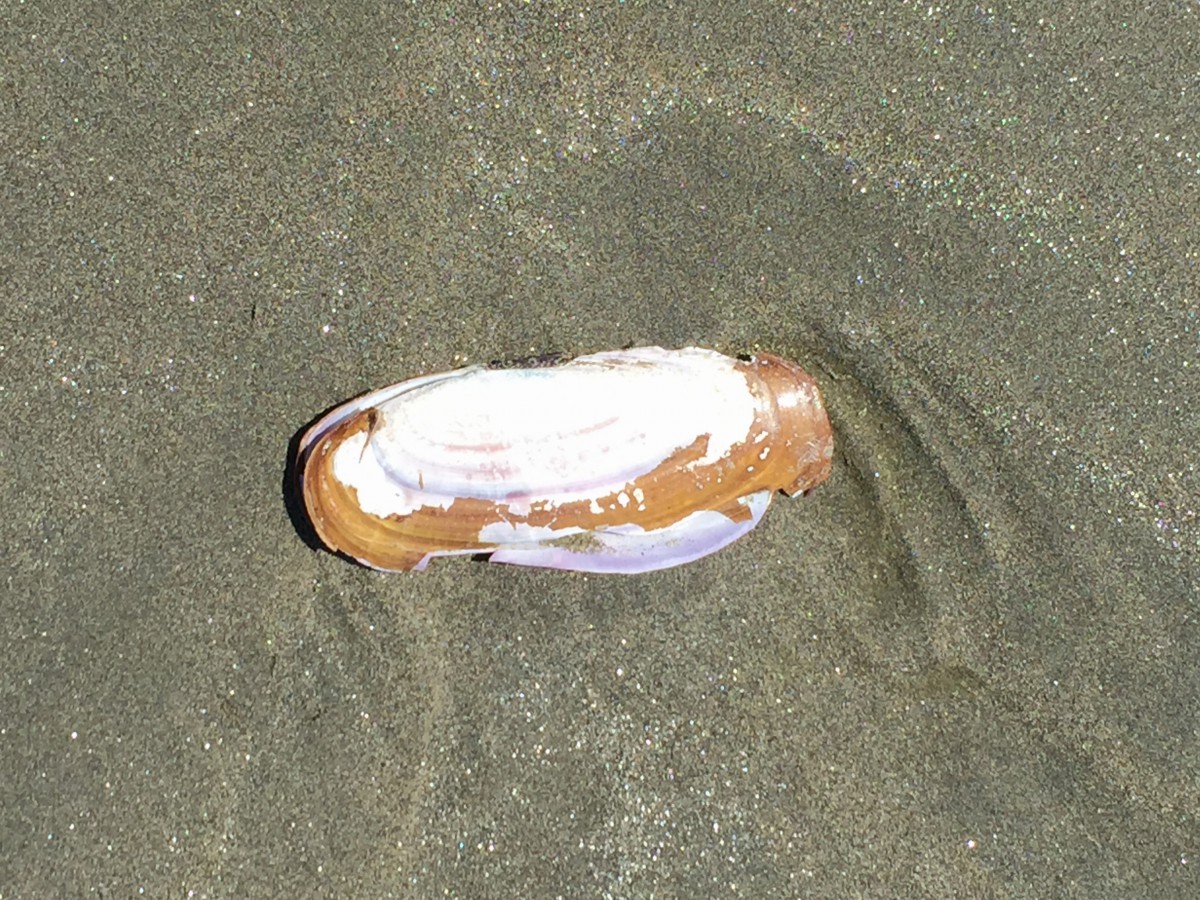
2. Razor Clams

Ocean Shores calls itself the razor clam capital of the Northwest:

razor clar
razor clam

In fact, the city hosts an annual Razor Clam Festival. Razor clams are much different than the more oval clams you’re probably used to. They are longer, and fry up well. They are much chewier than the smaller clams. But, like smaller varieties of clams, they cook up into a delicious chowder. Be sure to look for New England, or Boston, clam chowder, which is white and made with cream. Don’t be fooled by Manhattan clam chowder, which is made with a tomato base and is therefore red. It’s nowhere near as good as the white kind.

3. Nature’s Cycle of Life

There’s nowhere like a beach to get in touch with the natural cycle of life. Shells—crabs, clams, sand dollars—that wash up on shore remind us that organisms live out their lives in their native habitat and then disintegrate to nourish the land. This week, for the first time, I saw a dead sea otter on the beach:

dead sea otter on beach

He had apparently washed up at high tide, because he was way above the water line when I saw him.

I saw him again the next day, and he was covered with a thin coating of mud, as if high tide had washed over him and then retreated. There were only a few flies on him, probably because he was so well coated, but eventually he, too, will dissolve back into nature.

Tacoma, WA: “Hollywood-by-the-Sea”?

A made-in-Tacoma silent movie – thought to be lost forever – has been found in the vaults of a New York City museum and will once again be projected on the big screen.

The intact melodrama, complete with Hollywood stars and scenes of 1926 Tacoma, is being restored for a late summer screening at the Rialto Theater – the first theater it was projected at more than 80 years ago.

As a newcomer to Tacoma, I knew nothing about this fascinating piece of Tacoma history. What a story! ‘Eyes of the Totem’: Long-lost silent movie from 1920s Tacoma is found appeared in last Sunday’s local paper, The News Tribune.

Hollywood, California, had become established as the center of the movie industry by the mid 1920s. But in 1924 Hollywood producer Harvey C. Weaver came to Tacoma to establish what he called Hollywood-by-the-Sea. Together with a few local businessmen eager to get in on the investment opportunity, he started H.C. Weaver Productions, Inc. They acquired a five-acre piece of land at Tacoma’s Titlow Beach, near the current Tacoma Narrows Bridge. Tacoma was a regional center of the local lumber industry, and lumber companies donated wood used to build a 108-foot by 105-foot studio with a 50-foot-high ceiling.

According to the news story,

Weaver was bullish on the Pacific Northwest and its varied terrain.

“The public is getting tired of seeing the same scenery – the country immediately surrounding Los Angeles,” Weaver said. “Within the same distance of Tacoma we have much more wonderful scenery.”

Weaver also hinted that local residents might be used in the films, although he acknowledged that well-known actors would have to be cast in the major roles.

Weaver Productions made three films in Tacoma, the second of which, Eyes of the Totem, was released in 1927. The film is of great local interest because it features many scenes that show the downtown area of Tacoma at the time. The totem pole referenced in the film’s title, carved for President Theodore Roosevelt’s 1903 visit to Tacoma, still exists. It currently stands in downtown Fireman’s Park.

The third and final film of Weaver Productions was also released in 1927. After that, little was heard of the three films again, and all copies of them were presumed to have been lost. Of the almost 11,000 films made during the American silent film era, 1912–1929, only about 30% now survive. Weaver Productions was one of the casualties of the introduction of sound films heralded by the October 1927 release of Al Jolson’s The Jazz Singer.

The moving force behind the rediscovery and refurbishment of Eyes of the Totem was Lauren Hoogkamer, a Washington native hired as Tacoma’s historic preservation coordinator after a stint at the Los Angeles Conservancy, where she was involved in a project that screens silent films at the city’s historic theaters. She had heard a rumor that a copy of the film might exist at the Museum of Modern Art in New York City. She was finally able to track it down by searching under the director’s name rather than that of the production company. Many other people have played a role in the preservation of the film, which will be shown to local audiences in Tacoma’s historic Rialto Theater in September.

This brief summary is just a taste of all the coverage by The News Tribune. I encourage you to take a look at the newspaper’s web site, which offers lots more information, including photos and a short video excerpt from the movie.

Also see A Tacoma house made for Hollywood from today’s newspaper:

Architect Gaston Lance designed the home about a decade after he wrapped up his movie career as art director and set creator for H.C. Weaver Studios.

Tacoma’s War Memorial Park

In honor of Memorial Day here in the United States, here is a look at Tacoma’s War Memorial Park.

This park is not part of Tacoma’s Metro Parks organization, and I can’t find out exactly who owns and runs it. Most of the information here comes from a presentation by a member of the Tacoma Historical Society, which organized today’s Memorial Day event at the park.

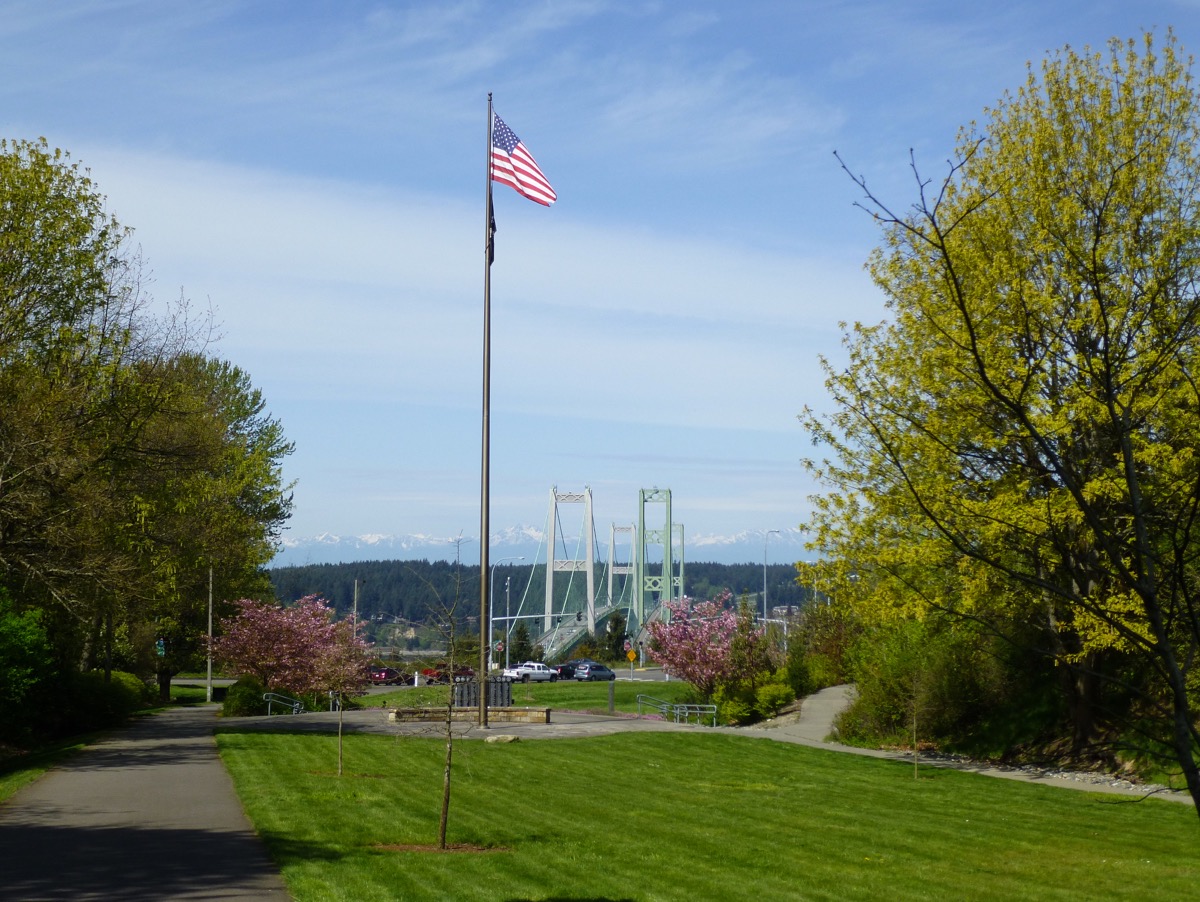
War Memorial Park, originally called Living War Memorial Park, dates from 1952, when the land was donated by Harold Woodworth. The narrow strip of land served as the staging area for the construction of the Tacoma Narrows Bridge (the bridge on the right in the photo at the top of this post), completed in 1950. That bridge was constructed to replace the famous “Galloping Gertie” bridge that collapsed on November 7, 1940, which you can read about here. When the 1950 bridge proved inadequate for traffic between Tacoma and the Kitsap Peninsula, a second bridge, the one on the left in the photo above, was built; it opened in 2007. Now the 1950 bridge carries traffic heading west on Highway 16, and the 2007 bridge carries traffic heading east. Drivers pay a toll to cross the newer bridge.

Dedication

Entrance: War Memorial Park
War Memorial Park

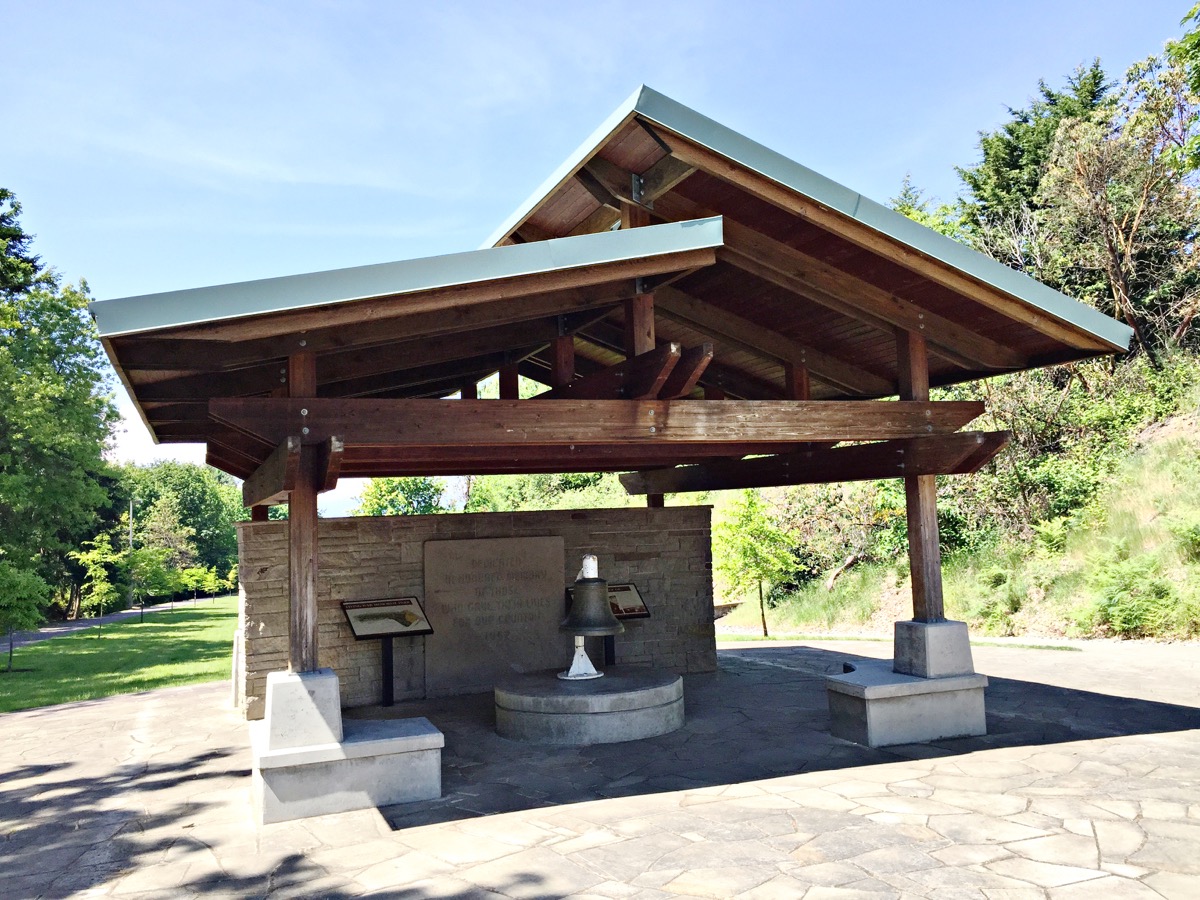
Tacoma Bell 1903The covered shelter that marks the entrance to the park houses the bell from the cruiser USS Tacoma, launched in 1903. The ship visited Tacoma in 1904, saw service in the Caribbean during WW I, and ran aground off the coast of Mexico in 1924.


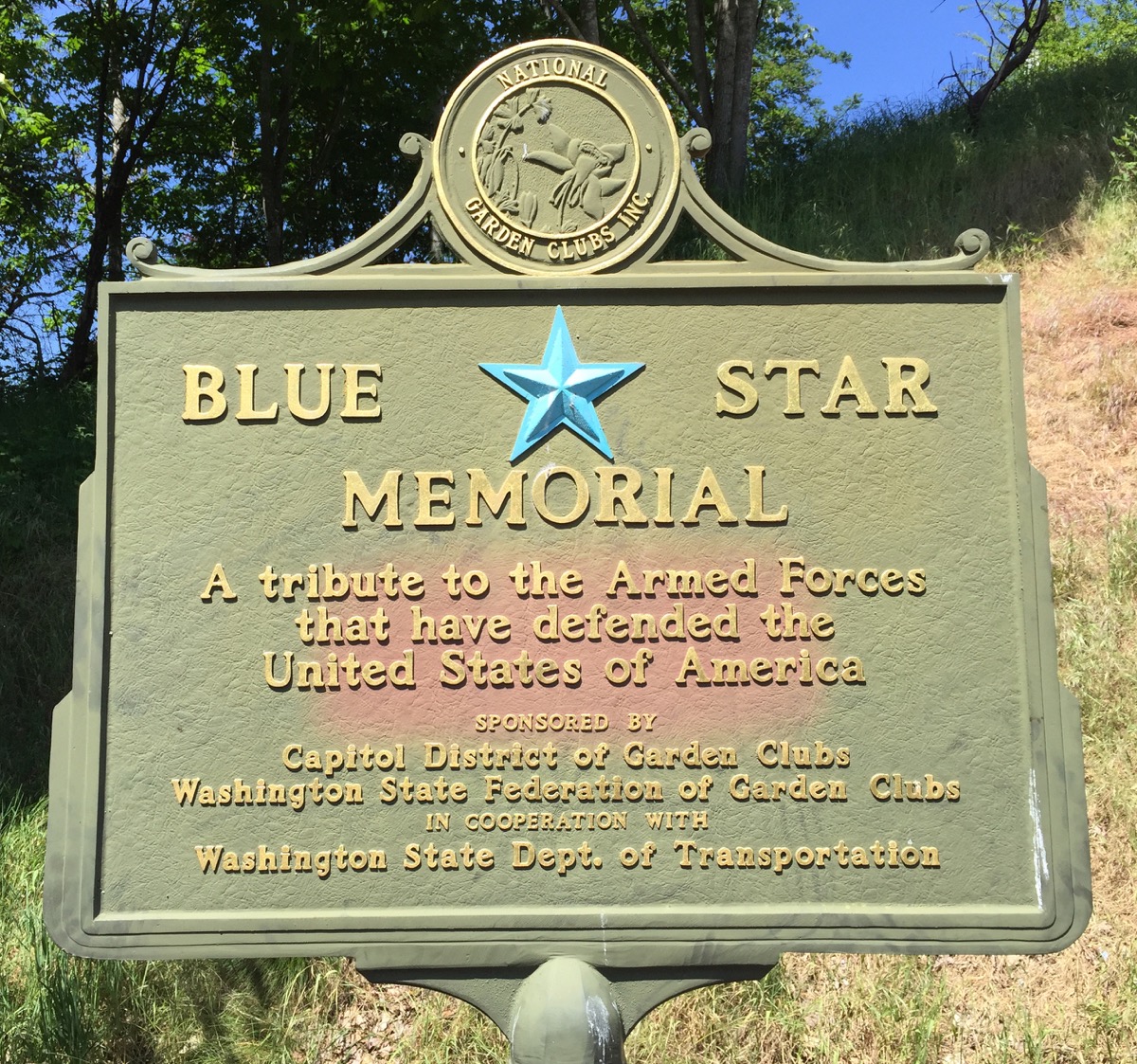
War Memorial Park includes a World War I memorial, dedicated to the memory of the 162 residents of Pierce County who died in the war, that was dedicated on Memorial Day in 2011. There is also a World War II memorial with 760 names that was built through the joint efforts of the Tacoma Historical Society and American Legion Post 2. The park is also a stop on the Blue Star Memorial Highways, a project that originated in 1944 and is now overseen by National Garden Clubs, Inc.

Blue Star Memorial

The Tacoma Historical Society hopes to add memorials for the Korean and Vietnam wars in the future.

Today’s service at War Memorial Park, arranged by the Tacoma Historical Society and American Legion Post 2, honors all soldiers who have served in the U.S. armed forces.

An 11-Year-Old Hero

On April 13, 1949, a magnitude 7.1 earthquake hit Tacoma, WA, at 11:55 A.M. Marvin Klegman, 11 years old, was a school safety patrol member at Tacoma’s Lowell Elementary School assigned to noon patrol duty. Marvin was out of the school when the earthquake occurred but went back to look for any students still inside. He found 6-year-old kindergartner Kelcy Allen, took his hand, and told him they had to get out. As they ran, bricks from the school’s cornerstone fell, and Marvin threw himself on top of the younger boy. Kelcy survived, but Marvin was killed by a brick that fell on his head.

(Click here for a photo of the fallen debris from the archives of the Tacoma Public Library.)

Kelcy Allen has always remembered that day. He’s grateful that he got a second chance at life. Although he knew about the rescue, he did not know the name of the boy who had saved him. But another earthquake that hit the Puget Sound area in 2001 sent him to the Tacoma Public Library to see if he could find out who the older boy was.

There Allen learned that the boy who had saved him was Marvin Klegman. Allen began telling the story of how Klegman had rescued him, and that lead to an effort to raise funds to commemorate Klegman’s heroic action. Tacoma sculpture artist Larry Anderson was commissioned to design the statue, which was installed outside the current Lowell School at the corner of North 12th and I streets, and dedicated on September 11, 2003. The statue portrays Klegman holding Allen’s hand and looking upward as the two run to safety. Bricks lay at their feet.

Marvin Klegman statue, Lowell School, Tacoma, WA

Marvin Klegman was a Cub Scout as well as a school safety patrol member. He also delivered papers for the Tacoma daily, The News Tribune, and had won a Schwinn bicycle for selling the most subscriptions in a contest. Today, students of Lowell School celebrate Marvin Klegman Day every year by hearing the story of his bravery and participating in their own acts of kindness toward others. The local Red Cross now presents a Marvin Klegman Memorial Award for heroism.

Last month Kelcy Allen spoke at Lowell School’s Marvin Klegman Day commemoration. Students were surprised to learn that he is the young boy represented in the statue. He told the students that not everyone can save a life the way Marvin did, but everyone can perform smaller acts of kindness. He suggested baking cookies and taking them to a senior center, befriending a new student at school, or donating their outgrown toys to charity.

Lowell School has its own historical importance as the district’s oldest school. Originally known as the First Ward School, it was established in Old Tacoma in 1869 in a log cabin built at the corner of North 28th and Starr streets. That log cabin was destroyed by fire in 1875. Renamed Lowell School after American poet James Russell Lowell in 1890, the school occupied several locations until 1892, when the building at the intersection of North 12th and Yakima opened. That building was condemned after the 1949 earthquake, and a new school was completed in February 1951 on the corner of North 12th and I streets.