Last Week’s Links

Middle-age memory decline a matter of changing focus

The inability to remember details, such as the location of objects, begins in early midlife (the 40s) and may be the result of a change in what information the brain focuses on during memory formation and retrieval, rather than a decline in brain function, according to a study by McGill University researchers.

Senior author Natasha Rajah, Director of the Brain Imaging Centre at McGill University’s Douglas Institute and Associate Professor in McGill’s Department of Psychiatry, says that this decline in middle age may be a sign not of declining brain function, but rather of focusing on different aspects of information. “Rajah says that middle-aged and older adults might improve their recall abilities by learning to focus on external rather than internal information.”

Too Old for Sex? Not at This Nursing Home

A nursing home in the Bronx, New York, follows a “sexual expression policy” that allows residents to spend time together:

a number of older Americans … are having intimate relationships well into their 70s and 80s, helped in some cases by Viagra and more tolerant societal attitudes toward sex outside marriage. These aging lovers have challenged traditional notions of growing old and, in some cases, raised logistical and legal issues for their families, caretakers and the institutions they call home.

But the article also notes the other side of such a policy:

But intimacy in nursing homes also raises questions about whether some residents can consent to sex. Henry Rayhons, a former Iowa state legislator, was charged with sexual abuse in 2014 after being accused of having sex with his wife, who had severe Alzheimer’s disease and was in a nursing home. A jury found him not guilty.

Alexander Masters’s book based on discarded journals gives ‘throwing your life away’ a new meaning
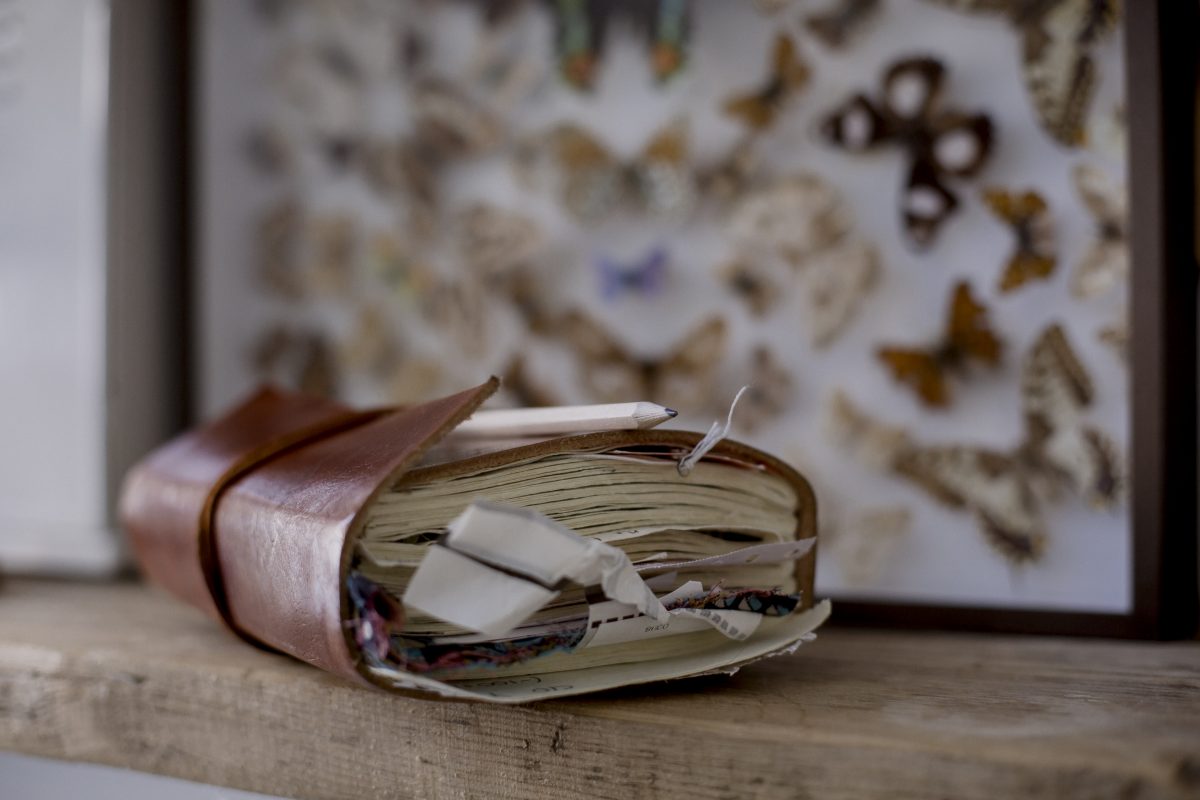
leather diaryMany of us in our later years think about writing down something about our lives to leave a legacy for future generations. Here’s an interesting story about a biographer, Alexander Masters, who has published the book A Life Discarded: 148 Diaries Found in a Skip. In 2001 two Cambridge University professors found 148 diaries in a Dumpster (the Canadian term is skip). Not wanting their find to go to waste, they gave the diaries to Masters.

Becky Toyne examines Masters’ project here and concludes:

We don’t have journal writing like this any more. We remain obsessive chroniclers of our lives, only in public pictures rather than private text (and we edit out all the sad bits). By contrast, the diaries of “I” build to a 40-million word chronicle of a life containing very little excitement. The difference? “These books were alive,” says the Cambridge professor upon finding them strewn about a skip – and in Masters’s heartbreaking, heartwarming biography we learn that, however unremarkable or littered with disappointments our existence might turn out to be, so are we.

What Do Contested Conventions Look Like? Ask Hollywood And Sinclair Lewis

I offer this article in preparation for the upcoming political conventions.

And this is as political as I’ll get here, I promise.


© 2016 by Mary Daniels Brown
Three Things Thursday

Thanks to Nerd in the Brain for the weekly challenge Three Things Thursday:

three things that make me smile: an exercise in gratitude – feel free to steal this idea with wild abandon and fill your blog with the happy

three-things-thursday-badge-new

Lavender Festival

Last week several of us from Franke Tobey Jones visited the lavender festival held by:

Blue Willow Lavender Farm
10615 Wright Bliss Rd KPN, Gig Harbor, WA 98329
253–225–9030

I’ve been wanting to attend a lavender festival ever since moving out here, so I eagerly signed up for this trip. Here are three things I learned.

(Click on any photo to see a larger version.)

(1) So Many Varieties!

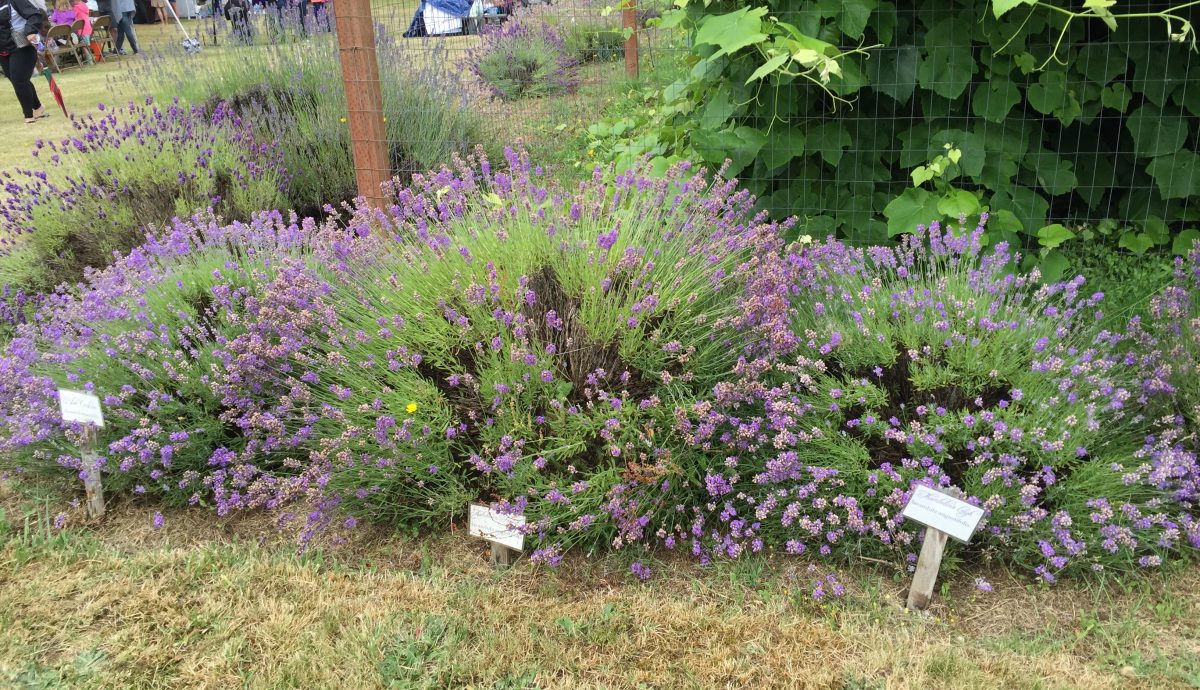
I had no idea that there are so many varieties of lavender. The farm featured several rows of different varieties, all labled:

varieties of lavender

(2) Not all Lavender is Lavender

Some lavender is white:

(3) Lavender is Used in Many Ways

The gift shop contained so many items that use lavender: soap, body lotion, essential oil, flavoring for food and drinks. I bought some tea:

lavender tea

Bonus

Lavender fields

lavender fields

© 2016 by Mary Daniels Brown

What I’ve Been Reading

Last Week’s Links

Happiness increases after consumption of fruit and vegetables, study finds

orangesWe know we should eat lots of fruits and vegetables to keep our bodies healthy, but new research suggests this approach may also help our mental health as well. The study out of the University of Warwick, to be published soon in American Journal of Public Health, found that:

people who changed from almost no fruit and veg to eight portions of fruit and veg a day would experience an increase in life satisfaction equivalent to moving from unemployment to employment. The well-being improvements occurred within 24 months.

Star Trek and the Kiss That Changed TV
Star Trek: The Exhibition

“Everything I need to know about life I learned from Star Trek” has long been my motto. I’m talking specifically here about the original series featuring William Shatner as Capt. James T. Kirk and Leonard Nimoy as Mr. Spock.

Finding this article truly warmed my heart. Natalie Haynes writes that Nichelle Nichols, who played Lt. Uhura, said that Gene Roddenberry, the series’ creator, believed in a world of tolerance: “He believed in that world, if you got it you got it. If you didn’t get it, you’d see it anyway.”

It’s a neat summary of the allegorical complexity of Star Trek: if you get the subtext, you get it. If you don’t, you just see the surface story. Whenever Roddenberry or his writers had a political point to make, they tended to use allegory as their best way to get that point across. One of the joys of Star Trek is that our crew is constantly exploring, constantly curious. So there is always a planet, a species, a story which can throw its illuminating light upon the less exotic world of the earthbound viewer.

Haynes examines how the same approach continued in the later Star Trek spinoffs, The Next Generation and Deep Space Nine. I haven’t watched all of the episodes of the later shows, but I cannot forget the lessons that the original series taught us about racism, greed, war, despotism, and other dark aspects of human nature.

© 2016 by Mary Daniels Brown

Three Things Thursday

Thanks to Nerd in the Brain for the weekly challenge Three Things Thursday:

three things that make me smile: an exercise in gratitude – feel free to steal this idea with wild abandon and fill your blog with the happy

three-things-thursday-badge-new

Recently we’ve come across some artistic representations of animals (click on any photo to see a larger version):

(1) Snake Sculpture

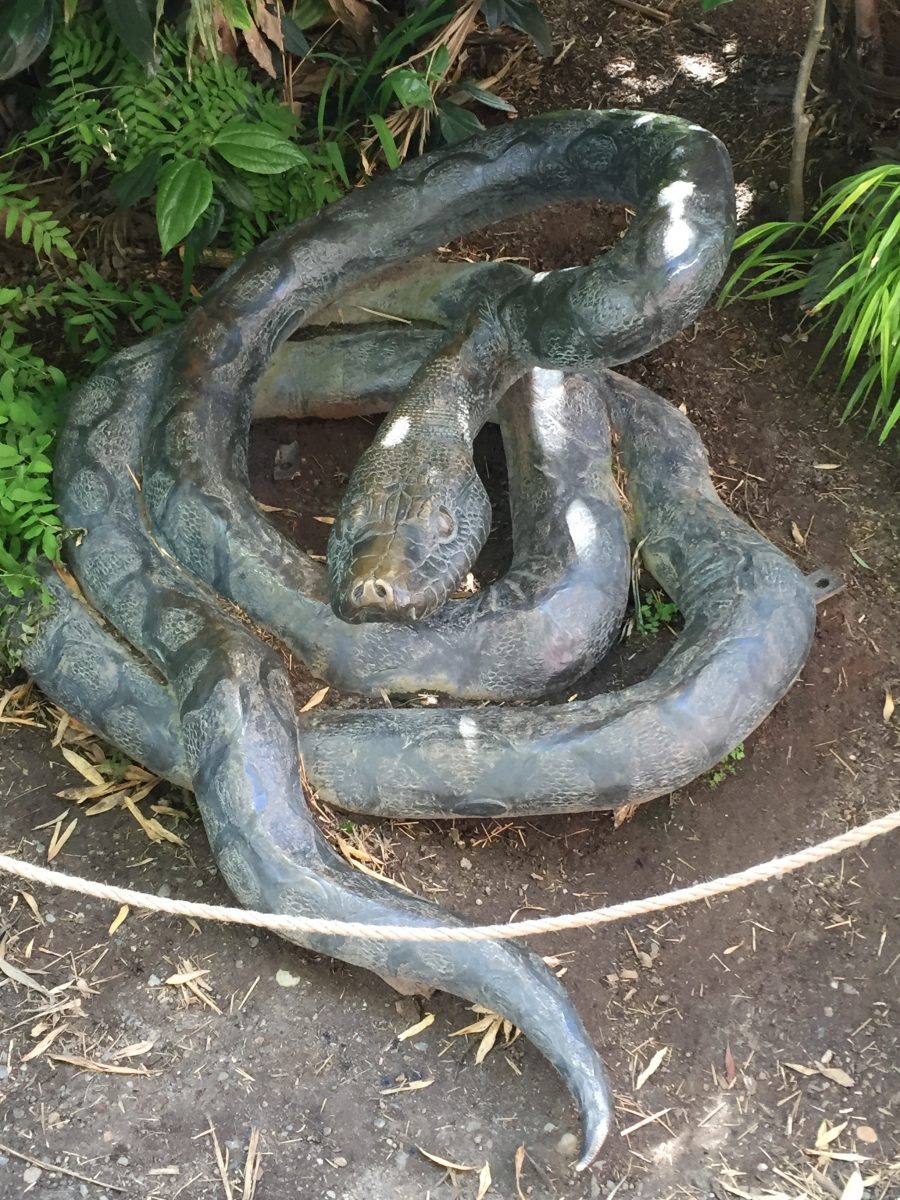
carved snake 02

We discovered this snake at the Point Defiance Zoo & Aquarium. It looks so real that I was taken aback the first time I came upon it in the Asian Forest section. A few days ago we visited the zoo again with a 3 1/2 year-old family member. Like me, she stopped in her tracks when she saw this guy. “Is it moving?” she asked. When I told her no, it was a statue, she said, “Whew!” I know exactly how she felt.

(2) Wooden Slug

Slug Sculpture

We came upon this carved slug on our most recent trip to Northwest Trek. We had never been him before. In addition to rain and a temperate climate, the Pacific Northwest is also famous for slugs, including the big banana slug. This fellow apparently arrived just in time for the annual Slug Fest, which was to be held the following weekend.

(3) Neighborhood Sea Serpent

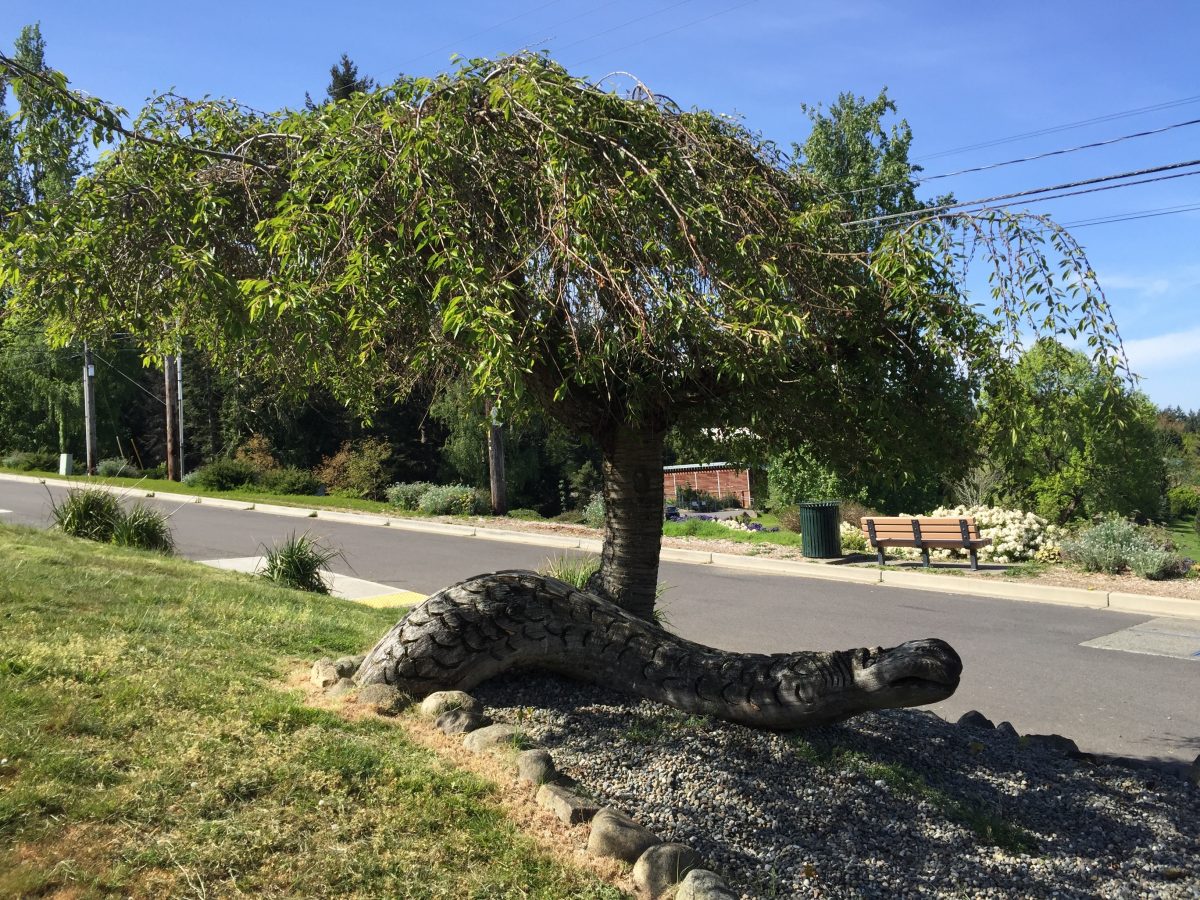
carved snake 01

And what would a Pacific Northwest neighborhood on Commencement Bay be without its own resident sea serpent? We came across this clever use of a tree root on one of our walks. I always marvel at examples of such creativity.

© 2016 by Mary Daniels Brown

Articles That Caught My Eye Last Week

Exercise Program No Help for Some Seniors’ Hearts

A recent study out of the University of Pittsburgh Graduate School of Public Health found that “Starting moderate-intensity workouts a few times a week didn’t prevent cardiovascular events for sedentary, functionally-limited older adults.” However, these results:

shouldn’t discourage physicians or patients from efforts to establish a walking and weight training regimen, the researchers argued. Along with prior studies showing numerous benefits of exercise on the heart, primary results from [the trial] showed an 18% reduction in incidence of major mobility disability and possibly a cognitive advantage as well.

The study included 1,635 sedentary participants who were between the ages of 70 and 89 years and at high risk for mobility disability but still able to walk unaided. “It is possible that exercise needs to be started earlier in life to reduce heart attacks and strokes, or that even more exercise is needed,” said Anne Newman, MD, MPH, lead author of the study published in JAMA Cardiology.

Alzheimer’s Disease as an Adventure in Wonderland

In her memoir “Aliceheimer’s: Alzheimer’s Through the Looking Glass,” Dana Walrath uses drawings and stories to chronicle three years of caregiving for her mother, Alice, who was in the middle stages of Alzheimer’s disease. The experience turned out to be a magical trip down the rabbit hole of memory loss, an outcome that inspired Dr. Walrath, a medical anthropologist who taught at the University of Vermont College of Medicine and who also studied art and writing, to share their tale.

Read an interview with Dr. Walrath about the creation of this example of graphic medicine.

10 Months, 45 National Parks, 11 Rules

This article caught my eye because my husband and I have promised ourselves that we will travel now that we’ve retired—somtthing we did very little of earlier in life. Read here about how Jeremy Cronon managed to visit 45 of the 47 national parks in the contiguous Unived States in 10 months.

© 2016 by Mary Daniels Brown