We drove through the rain for the last hour or so of the trip yesterday. Since we had rain for the whole week we were here last year, I expected that the rain would continue, but we awoke this morning to bright sun.
We decided to take advantage of the good weather by visiting nearby Hoh Rain Forest. We had hoped to go last year, but Mother Nature didn’t cooperate. It’s about a 30-mile drive from the lodge to the visitors’ center. (See the map in yesterday’s post.)
(Click on any photo to see a larger version.)
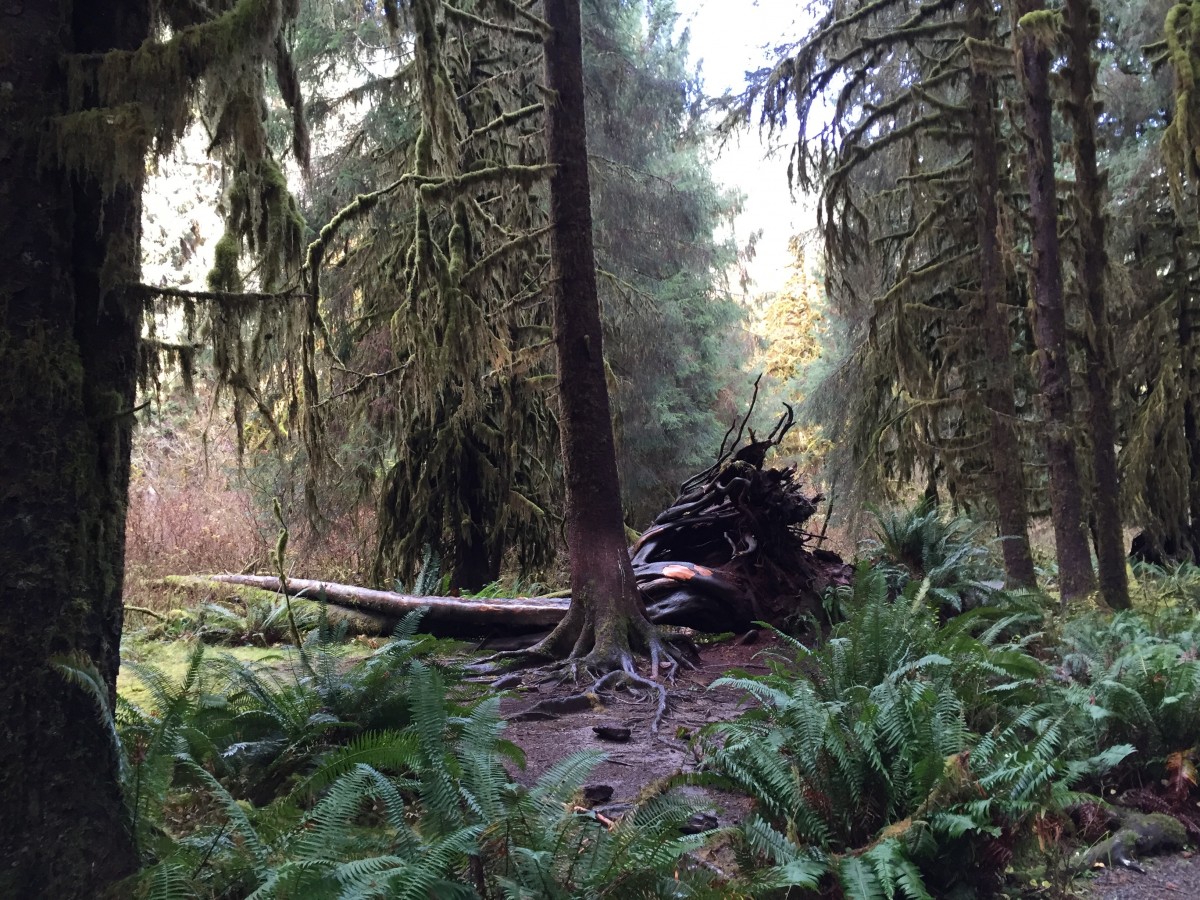
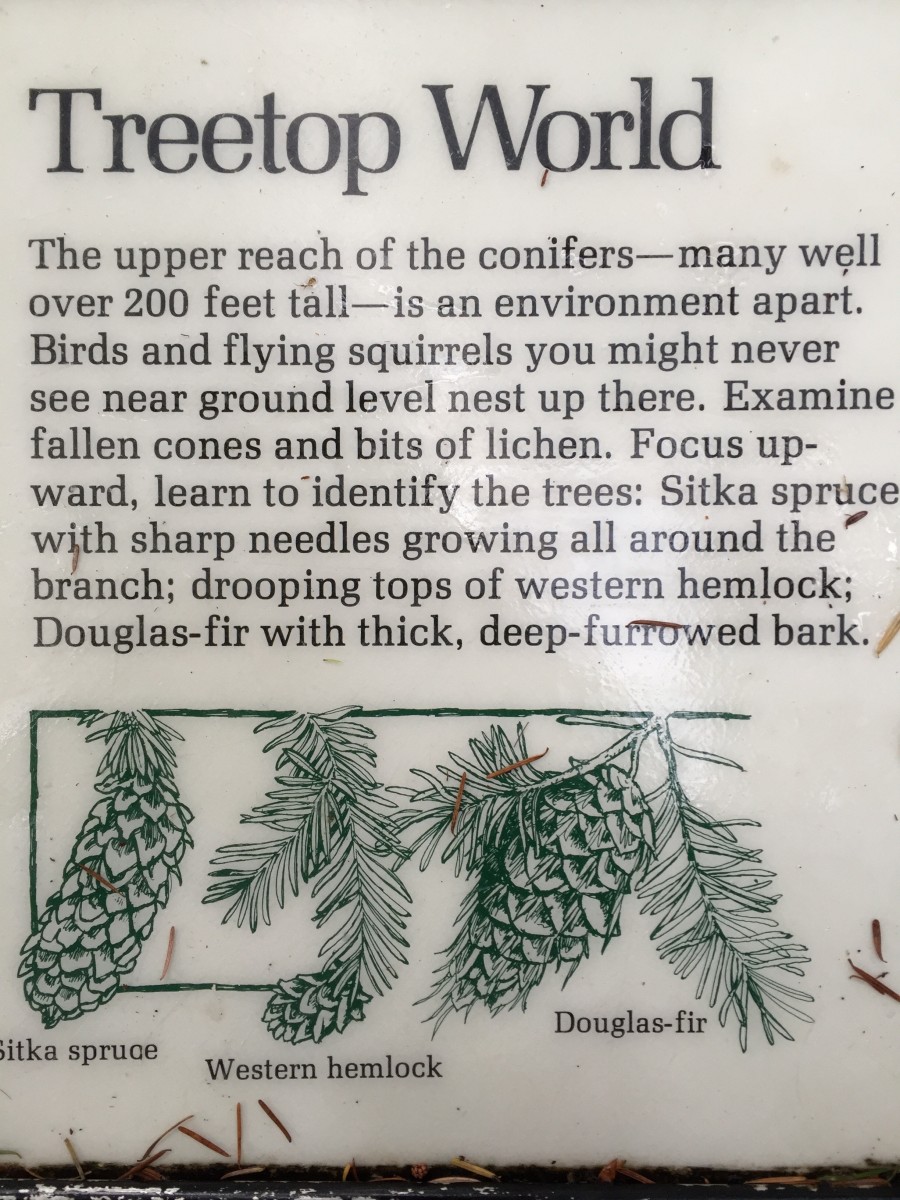
Located 30 miles from the coast on the west side of Olympic National Park, Hoh Rain Forest receives about 140 inches of rainfall annually. Some of the largest trees in the world grow here. Western red cedar and western hemlock grow up to 200 feet tall, while Sitka spruce and Douglas firs can reach 300 feet.
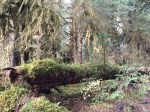
Types of trees in Hoh Rain Forest
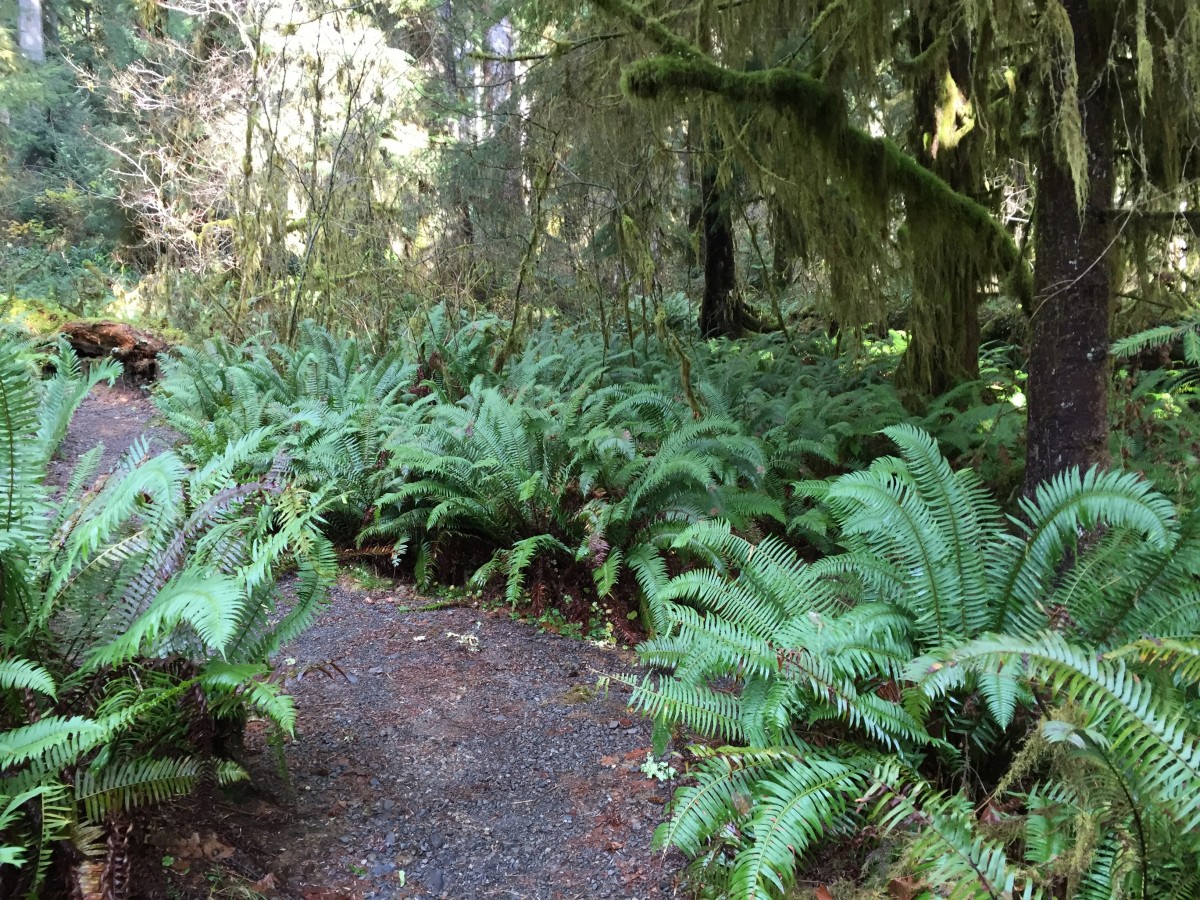
The rain forest environment is also perfect for ferns:
Ferns love the rain forest
We took the trail called the Hall of Mosses. Mosses cover the trees, making trunks and branches look like green fuzz.
A mossy tree overhangs mossy Taft Creek
Moss-covered tree
Mossy tree
Mossy nurse log
The heavy moisture in the air muffles sounds. If you look up, you’re likely to see the tops of the evergreens swaying in a breeze that you neither hear nor feel.
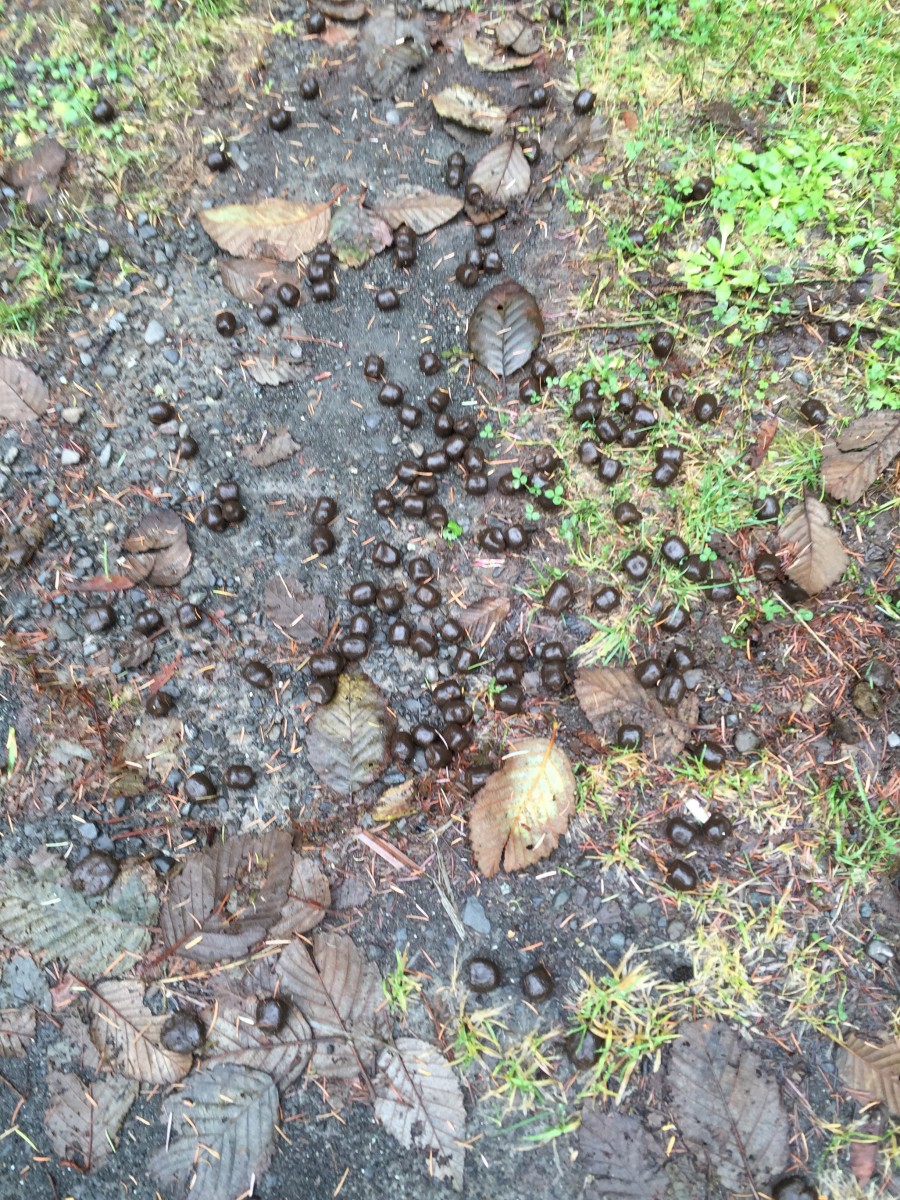
Elk scat
Roosevelt elk live here, where they find a rich food source of all the plants that grow on the forest floor. Elk are especially fond of salmonberry bushes, which they keep trimmed well below their growth potential of 15 feet. We didn’t see any elk, but we did see evidence of their presence:
Another Thursday, another edition of Three Things Thursday, the purpose of which is to “share three things from the previous week that made you smile or laugh or appreciate the awesome of your life.”
Three Questions and Answers
1. What’s that bird?
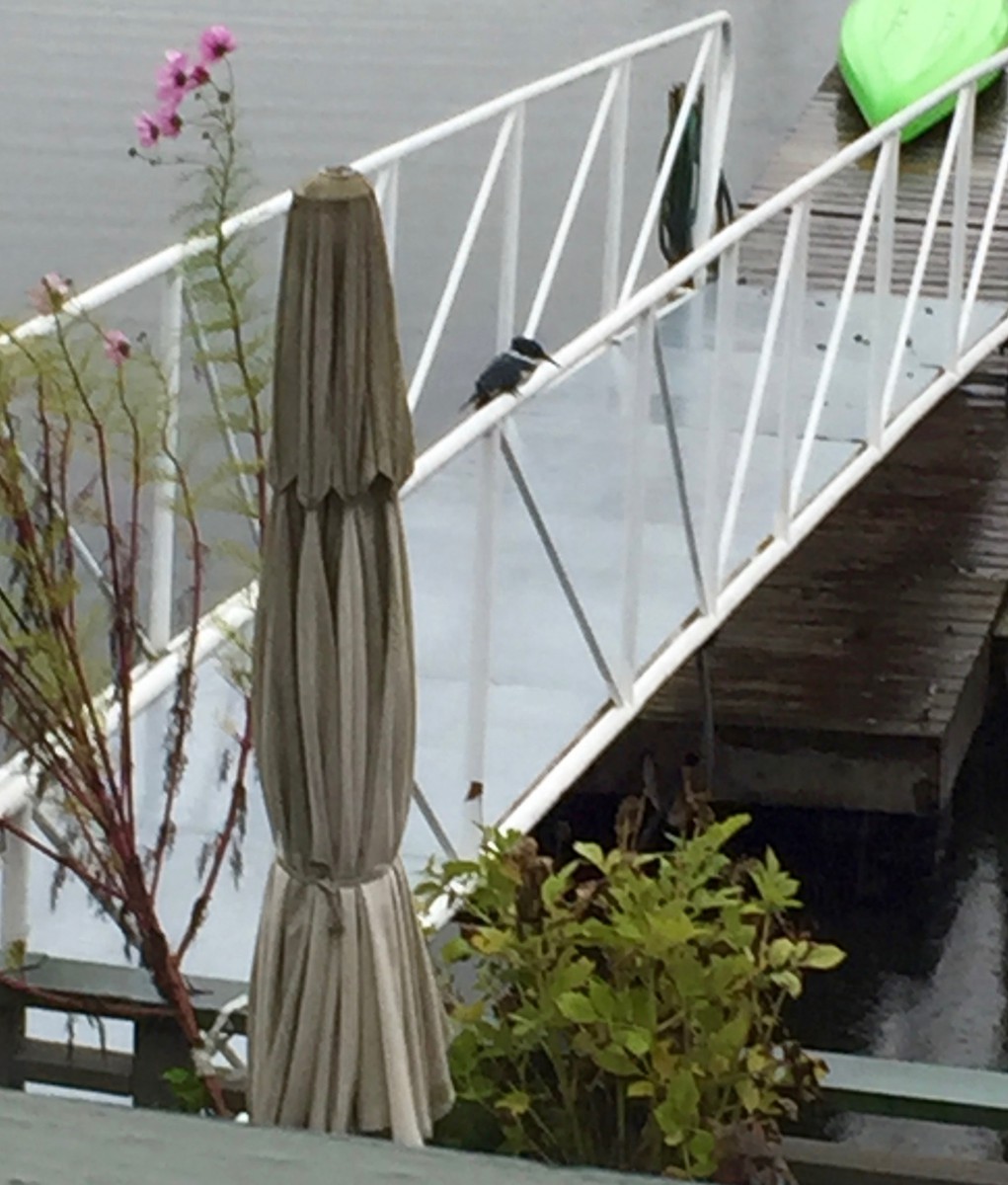
That’s the question we asked our waitress when we saw this bird:
We had taken the Tacoma Narrows Bridge over to Gig Harbor for a follow-up visit with the eye doctor after my cataract surgery. When we stopped for lunch after the visit, we saw this guy. Soon another bird who looked just like this one appeared as well. They both perched, though not together, where they could watch the water. We assumed they were probably watching for fish to eat.
The waitress didn’t know what kind of bird this was, so when we got home we consulted Birds of the Pacific Northwest Coast by Nancy Baron and John Acorn.
Answer: It’s a belted kingfisher. And yes, they were having lunch, too, watching for fish to dive for.
2. What does that mean?
While watching the belted kingfishers, we spotted this sailboat moored nearby in the marina:
When I asked my husband what zaftig means, he checked his phone.
Answer:
adjective, Slang.
1. (of a woman) having a pleasantly plump figure.
2. full-bodied; well-proportioned.
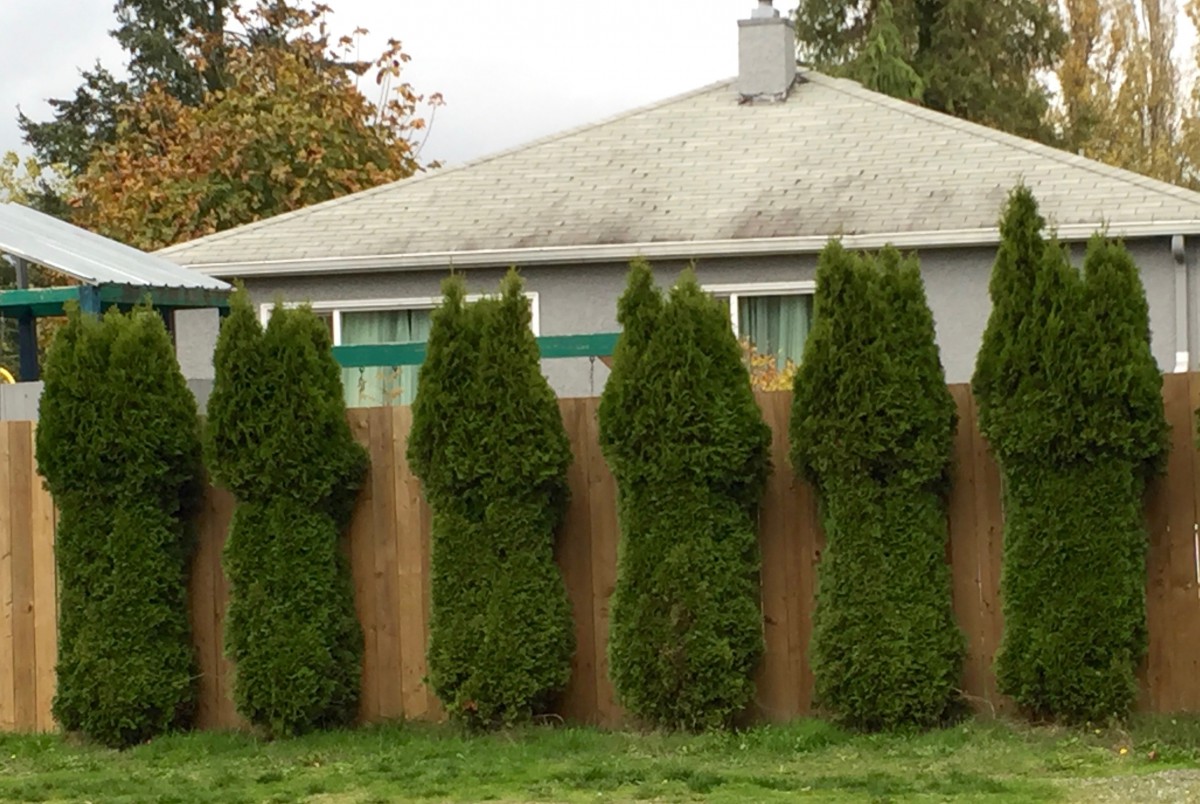
That’s what I thought when I saw these bushes for the first time:
I wondered why anyone would sculpt their bushes into this suggestively phallic shape. When I noticed similarly shaped bushes at other houses, I assumed that the home owners must employ the same landscaping service.
On a recent Franke Tobey Jones outing, I heard a woman on the bus explaining this mystery to her friend.
Answer: The deer, which we have a lot of, eat the bushes. The tops of the bushes are wider because the deer can’t reach that high.
So I was right: The home owners do have the same landscaping service.
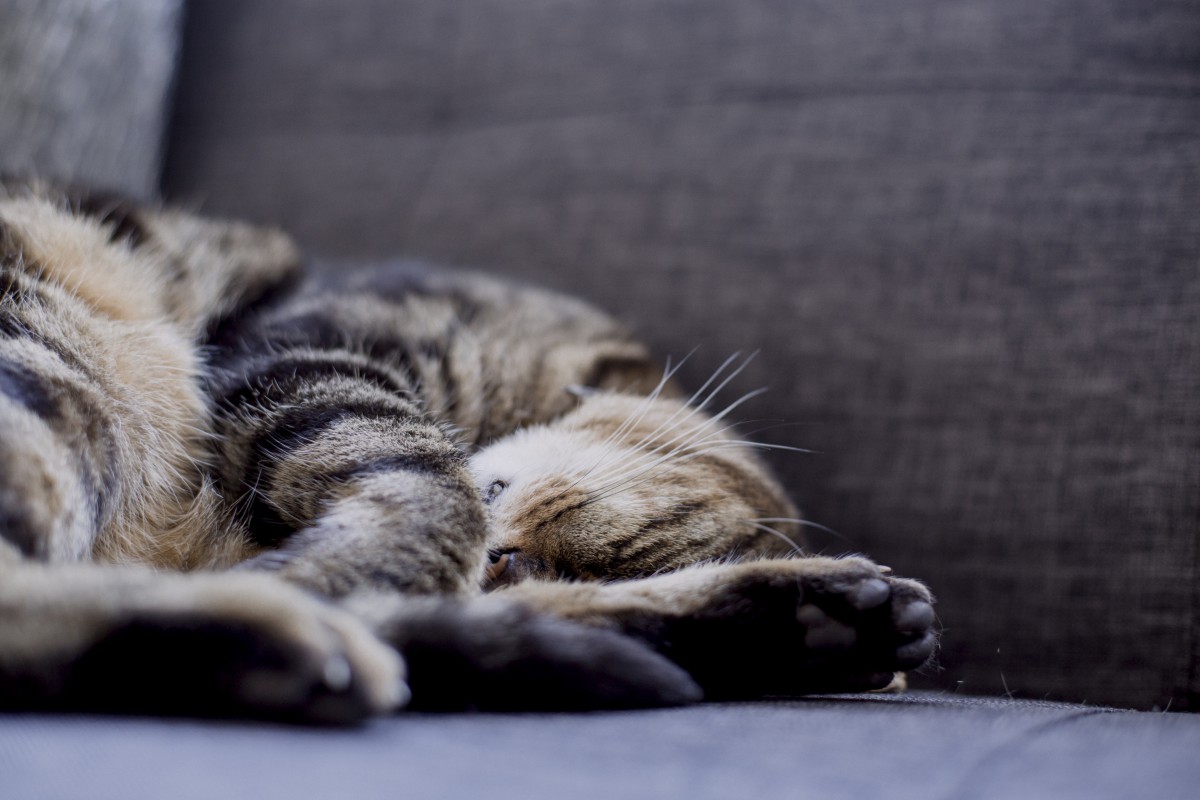
National Cat Day was founded in 2005 by Pet and Family Lifestyle Expert & Animal Welfare Advocate Colleen Paige to help galvanize the public to recognize the number of cats that need to be rescued each year and also to encourage cat lovers to celebrate the cat(s) in their lives for the unconditional love and companionship they bestow upon us.
The ASPCA (American Society for the Prevention of Cruelty to Animals) estimates that people in the United States own between 74 and 96 million cats. From the very beginning, the internet has been a place where cat lovers post photos of their pets. If you don’t have a cat of your own (what’s wrong with you?), you can find lots of photos on the National Cat Day web site.
But National Cat Day isn’t just about goofy photos. This observance has three serious reasons for existence:
to educate people about the number of cats in animal shelters: “Estimates reveal that there are approximately 4 million cats entering shelters every year with 1–2 million being euthanized”
to encourage people to “ADOPT….don’t shop” when looking for a pet
to advocate for responsible pet ownership by reminding people to spay and neuter their pets
Cats are always willing to help you work.
The sponsors of National Cat Day are BLUE Naturally Fresh cat litter and Petco.
Here are a few more web sites to visit for information about pet ownership in the U.S., including information on homeless and unwanted animals, the pet overpopulation crisis, and the importance of spaying and neutering pets:
Here’s the latest installment of Three Things Thursday, the purpose of which is to “share three things from the previous week that made you smile or laugh or appreciate the awesome of your life.”
Nuggets of Knowledge from the Washington State Fair
In the post about our recent trip to the Washington State Fair, I wrote about our visit to the animal barns. One of the things that makes this visit so much fun is seeing how the kids from FFA (Future Farmers of America) and the various 4-H Clubs invest in their animals. Looking at the displays that accompany the animals, it’s evident that these are not just fair projects; these animals are pets that the kids genuinely love.
On our first visit to the fair many years ago, we were especially enthralled by a poster put up by a child, age 10, about how to be a good shepherd. The poster listed all the steps that a good shepherd does to care for his sheep properly. The final item was “Docks the tails.”
This brought tears to my eyes. Can’t you just imagine a child being absolutely horrified when told he has to clip his lambs’ tails—until he learns the reason why (to prevent the tails from becoming encrusted with fecal matter)? And I can imagine him still having trouble actually doing the docking, even though he knows he has to, for the sheep’s sake.
This year we saw a young girl stretched out on the hay in a pen next to her reclining llama. (The llama was longer than she was.) One adolescent girl, while fondling her goat’s head, told us that this goat is “super sweet.” Everywhere we saw kids petting, nuzzling, grooming, and talking to their animals.
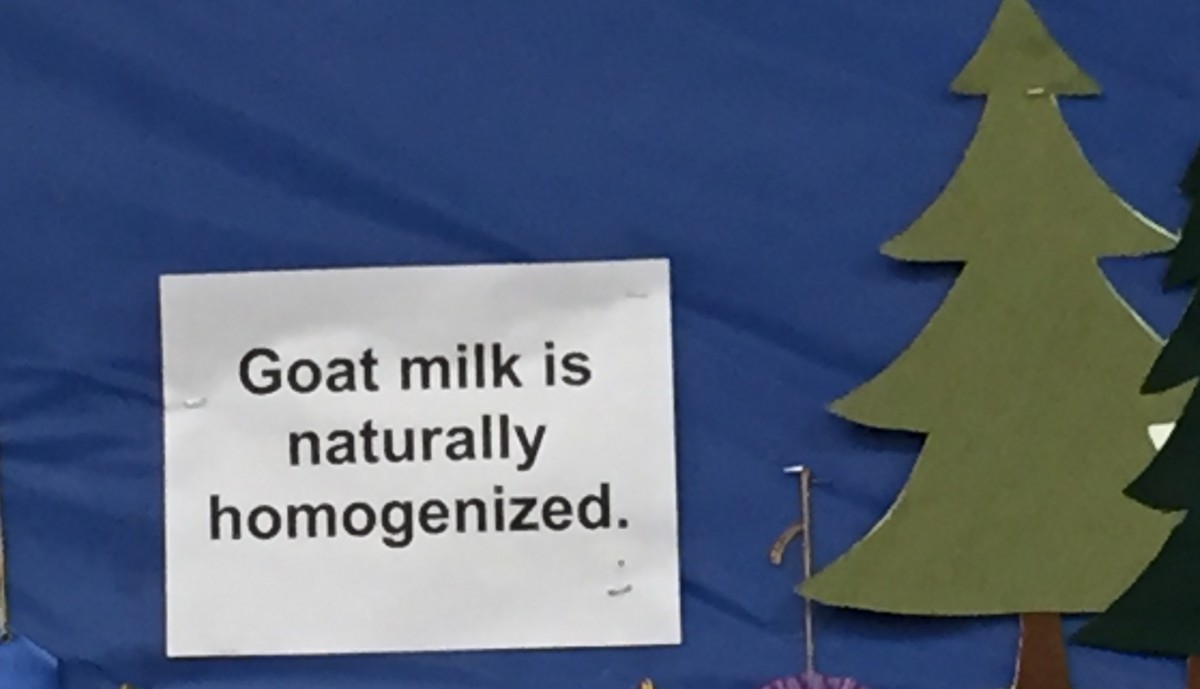
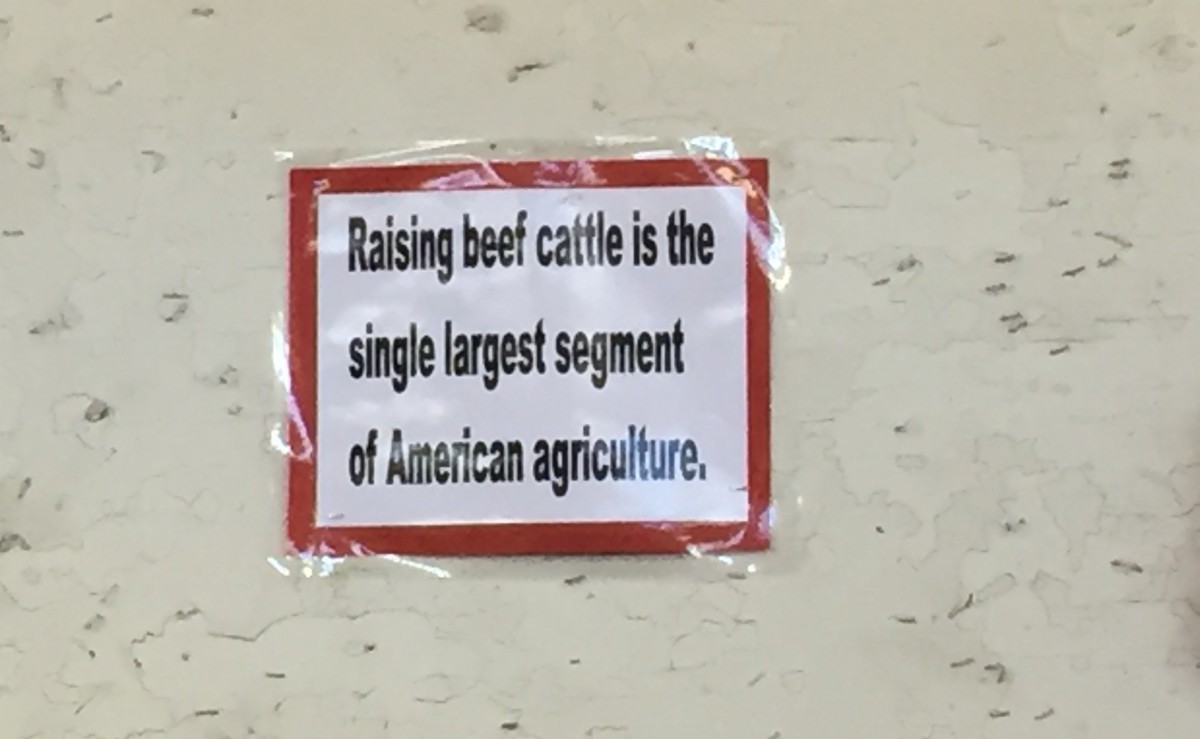
The signs and posters that the kids make to accompany their animals show how much they’ve learned from raising them. Here are three nuggets of knowledge I learned in the animal barns this year.
For more than 100 years the fair held annually in Puyallup (pew-Al-up), Washington, was known as the Puyallup Fair. I know this because I used to have a pencil (unfortunately lost in our recent move) emblazoned with “Puyallup Fair 100 Years” that my daughter sent me in 2000. The fair’s tagline was “Do the Puyallup!” But in 2013 somebody (I’d keep my name out of it, too, if I had been responsible) came up with the brilliant idea to rename the fair the Washington State Fair. Whoever did this agreed to retain the “Do the Puyallup!” tagline, but it’s just not the same. According to the Washington State Fair Facebook page:
It’s a fact that since our beginning in 1900, our name has changed four times; the Valley Fair, to the Western Washington Fair, to the Puyallup Fair and most recently to the Washington State Fair. For over 60 years the fair was known as the Western Washington Fair. Our previous name, The Puyallup Fair, is a name that will always mean a lot to us, as well as the people that helped make this the great Fair it is today. We still love to hear the old “Do the Puyallup” jingle and we are proud to host the Fair in Puyallup every year. Puyallup will always be an important aspect of our identity, but the name change allows the rest of Washington to feel connected to the Fair as well.
But I digress. Today our activities director drove about 10 of us down for a visit to the Washington State Fair. On a weekday after the start of school, the grounds were not at all crowded, and we had gorgeous weather.
The fall fair began in 1900 as a way to showcase the crops that flourished in the rich soil of the Puyallup River valley. (See related post for more background.) Since then it has grown to include farm animals and produce from all over the state, as well as carnival games, rides, vendor booths, and LOTS of food.
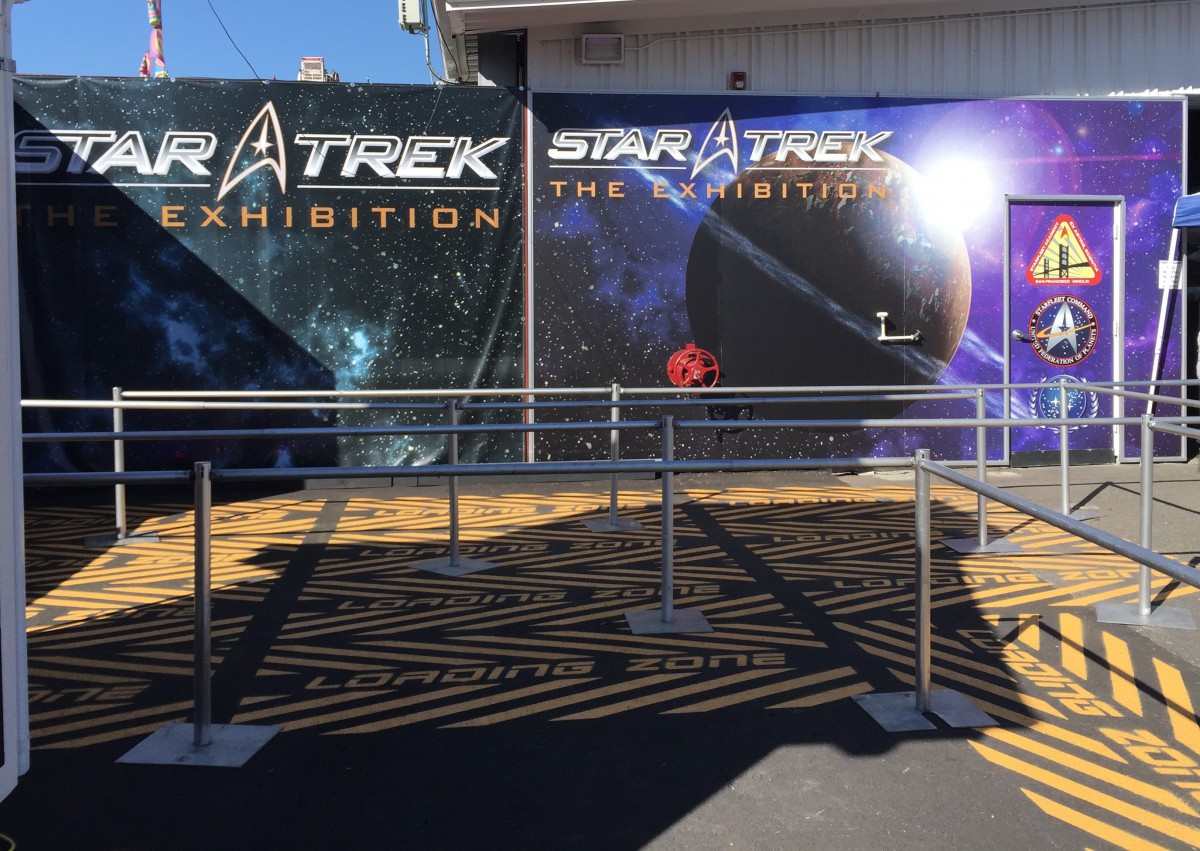
But my husband F. and I headed straight for this year’s featured exhibit, Star Trek: The Exhibition, which traces the history of the Star Trek franchise from the original 1960s television series up through the latest motion picture. We got to see lots of photos, costumes, and props from the various television shows, as well as a 7/8 scale mock-up of the bridge from the original series. (It had to be downsized a bit so that it could be moved.)
Star Trek: The Exhibition
(Click on any photo to see a larger version.)
We were not allowed to take photos inside the exhibit, but the link above will take you to the exhibit’s official web site featuring lots of photos and video clips.
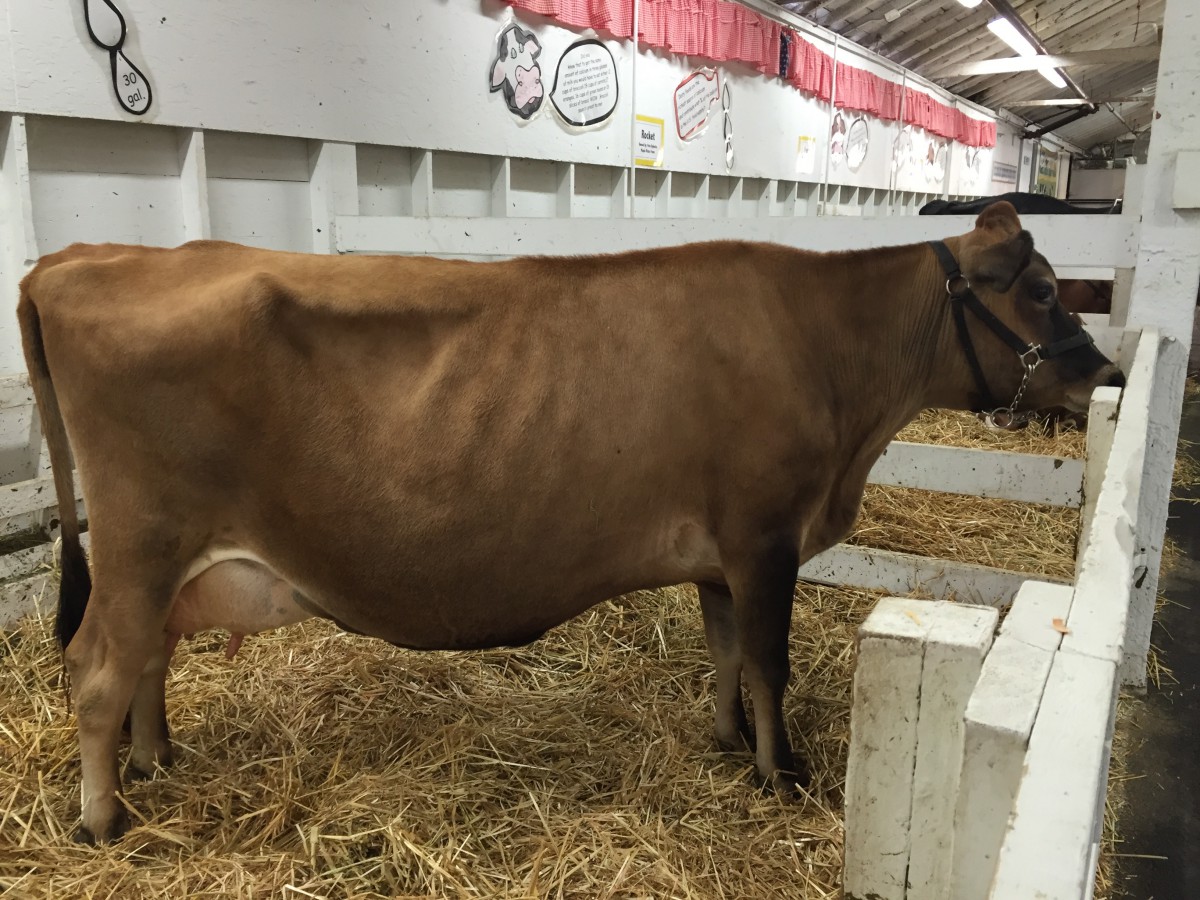
After that we headed for the animal barns. There were lots of traditional farm animals on display. My grandfather was a dairy farmer, and I have a soft spot in my heart for cows. But I’ll restrict myself to just one photo:
Cow
Most of the sheep had been shorn within a few days of the fair:
Sheep (shorn)
I was expecting them all to look like this:
Sheep (unshorn)
But one of the youngsters displaying sheep explained that they have to be shorn for competition because the judges want to be able to see their bodies, not just their wool.
There were also lots of goats, pigs, and rabbits. Another animal that I did not realize is so popular with 4-H kids is the llama:
Llama
Next we took a look at the fruits, vegetables, and flowers. A lot of people won ribbons for their flowers:
Flowers
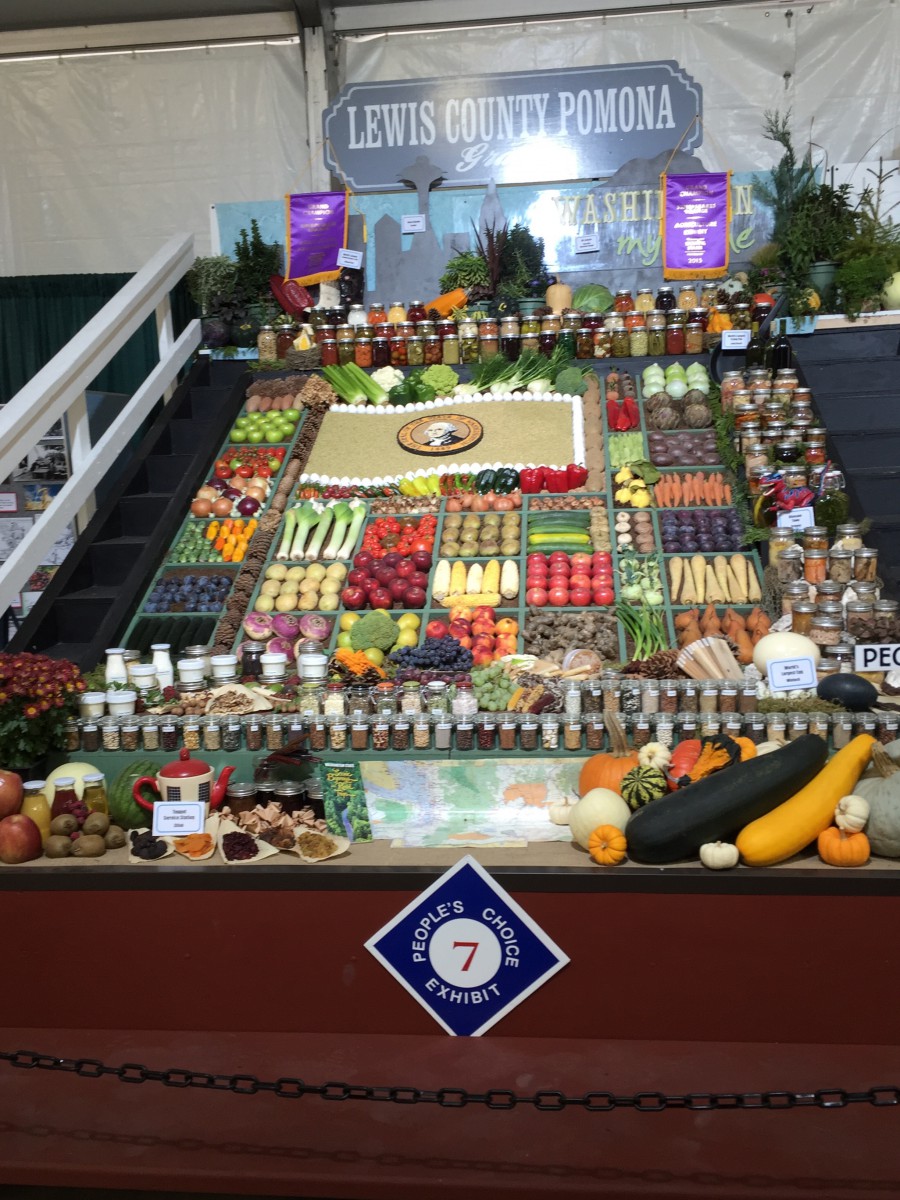
I am always fascinated by the artworks created by Grange chapters across the state out of their local products. One that particularly caught my eye was this one featuring a replica of the Washington State flag:
Vegetable Art
Vegetable Art: Close-Up
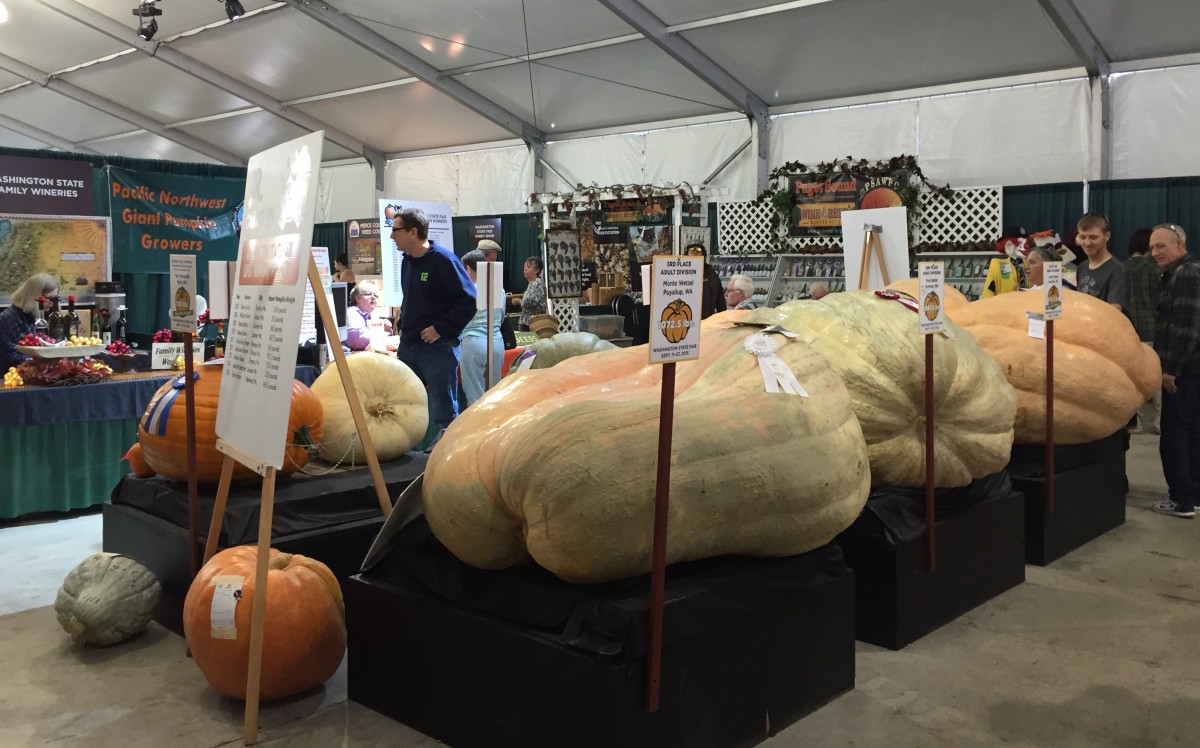
And of course there were awards for the state’s largest pumpkins and squashes:
Huge Pumpkins & Squashes
For lunch we chose The Mad Greek because I arrived at the fair hoping I could find a gyro. I was so busy eating that I forgot to take a photo. But these are a few of the MANY other eateries available:
Killer Kielbasa
Deep Fried Butter
Bacon!!!
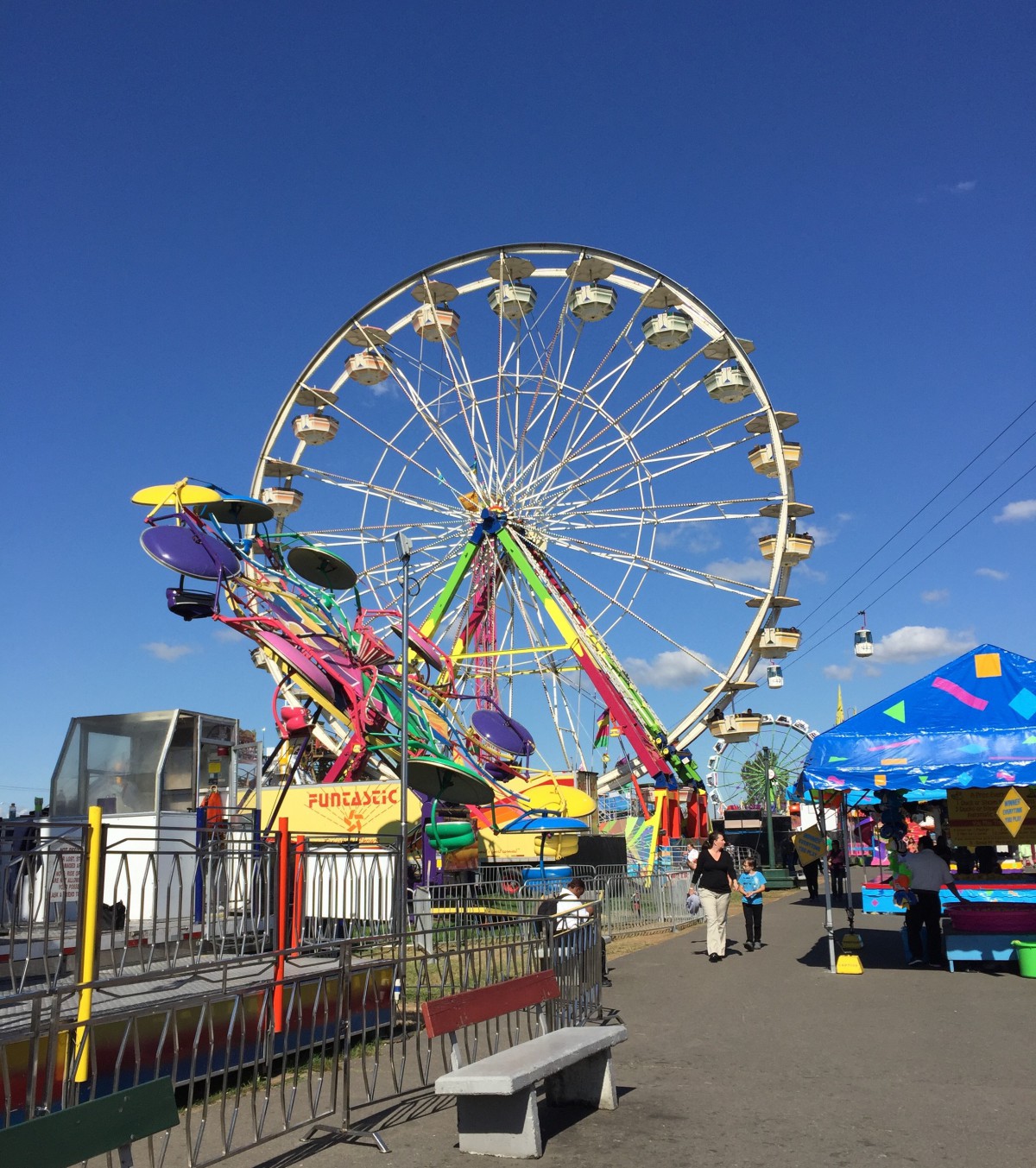
I’ll end with a photo of an iconic fair ride that also shows what a beautiful day it was.
Anchorage is a shallow port. Cruise ships have to dock at high tide and cannot leave until high tide, ensuring visitors of almost 12 hours in which to enjoy the city. Anchorage is Alaska’s most populous city, containing about 40% of the state’s total population.
We visited Anchorage the same day as President Obama. There was some disruption of traffic in the downtown area because of his presence. Fortunately, we had chosen to take a trip to the Alaska Zoo, which is located on the outskirts of the city. This zoo is appropriately named, since it’s the only zoo in Alaska.
According to our tour guide, it all started with an elephant named Annabelle. In 1966 an Anchorage resident won a contest that offered as the prize $3,000 or a baby elephant. He chose the elephant, a female named Annabelle. Visiting Annabelle became such a popular activity that eventually a non-profit corporation was formed to build a place where the public could visit and learn about animals. The Alaska Children’s Zoo opened in 1969; the name was changed to the Alaska Zoo in June 1980.
Annabelle died in 1997, but the Alaska Zoo continues to thrive. Located on 25 acres of land, it attracts about 200,000 visitors per year. It houses a variety of animals native to the state and also participates in the Species Survival Program for tigers and snow leopards.
We saw so many animals that it’s tempting to include way more photos than you probably want to see, so I’ll focus on three animals: musk ox, snow leopard, and gray wolf. Click on any photo to see a larger version.
Our home town zoo in Tacoma, Point Defiance Zoo & Aquarium, features three musk oxen, and they have long been among my favorite animals. I was therefore thrilled to learn that the Alaska Zoo has several, including a baby:
They keep the baby’s father in a separate, adjacent enclosure:
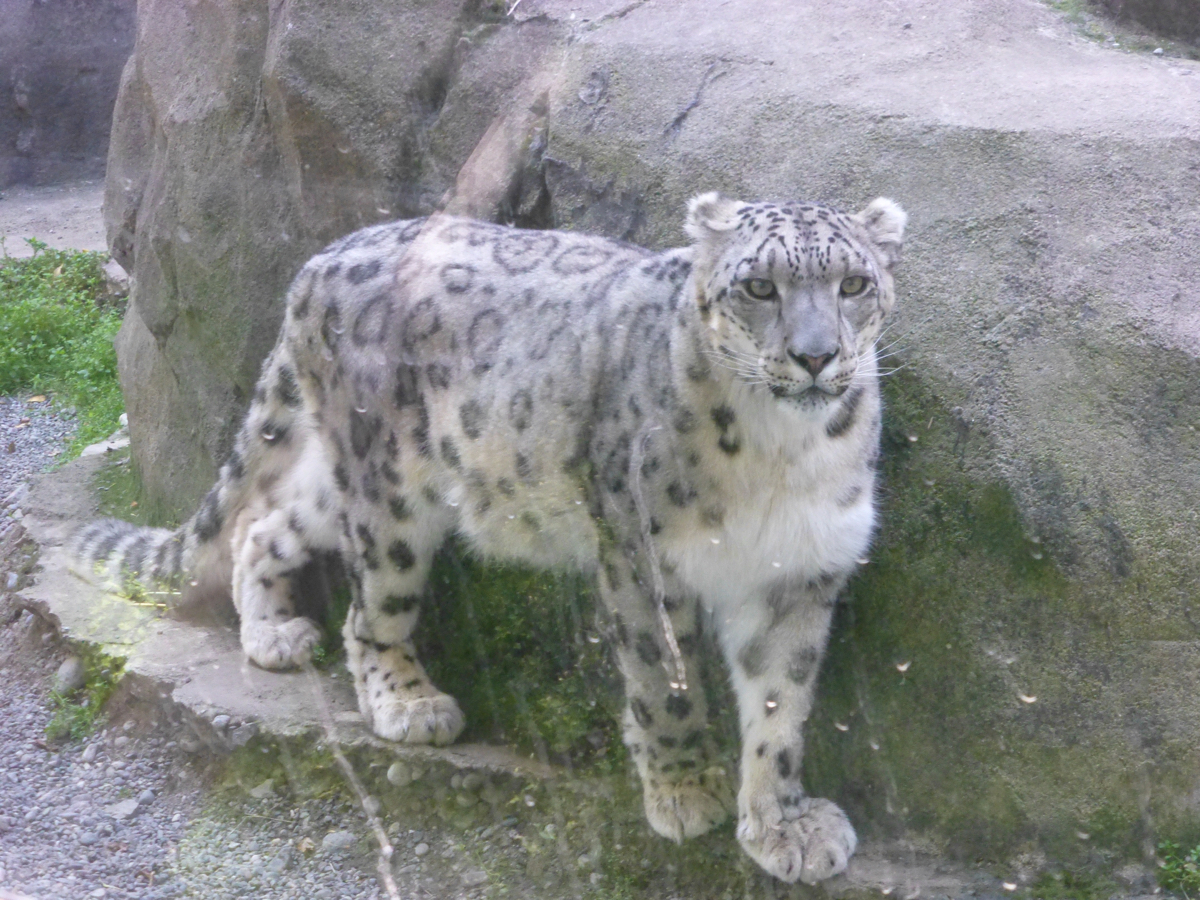
The snow leopard is an endangered species of cat native to the mountains of Central and South Asia. This one lives at the Alaska Zoo:
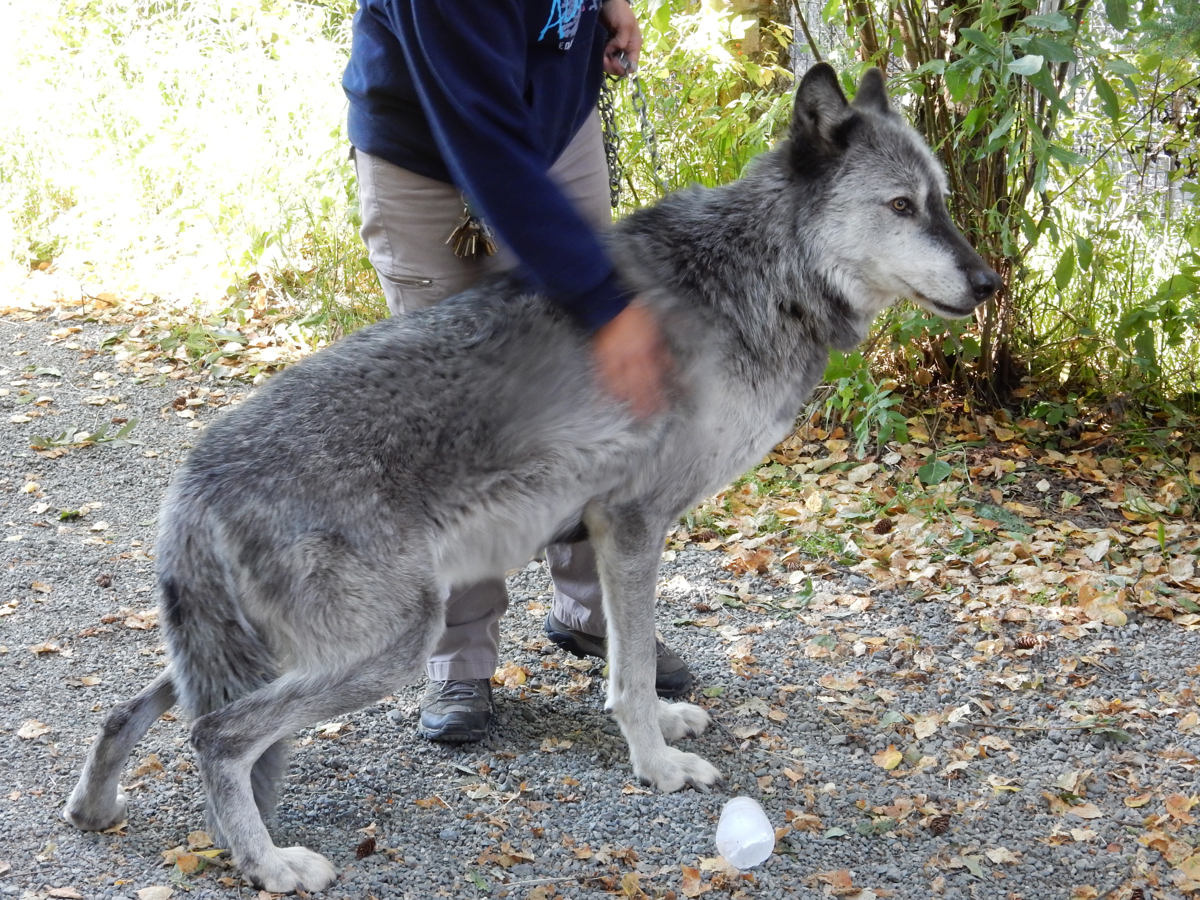
We also got to see one of the gray wolves kept at the zoo:
Someone asked if the zoo keeper approved of the interbreeding of wolves with dogs for domestic pets, and he replied adamantly that he does not. “These animals are not pets,” he said, stressing that the jaws of the wolf are twice as powerful as those of a dog and could inflict severe damage on a human. As beautiful as this wolf is, I did not want to get too close to him.
In addition to these three, we also saw the following animals:
alpaca
Tibetan yak
moose (adult male and calf)
brown bear and cubs
swans and cygnets
bald eagle
tiger
caribou
coyote
On the trip from the zoo back to our ship, the bus driver stopped where we could see Mount Denali (photo at the top of this post), formerly known as Mount McKinley. With a summit elevation of 20,310 feet (6,190.5 m) above sea level, it is the highest peak in North America. Shortly before President Obama’s visit to Anchorage, the U.S. Department of the Interior announced that the mountain would now officially be designated by its native name, Denali.
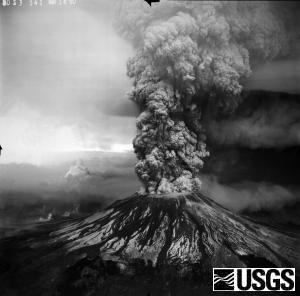
Today is the 35th anniversary of the eruption of Mount St. Helens, a mountain in the Cascade Range, located in southwestern Washington State.
At 8:32:17 a.m. PDT on Sunday, May 18, 1980, an earthquake caused the north face of the mountain to slide away, producing the largest landslide ever recorded that moved at 110 to 155 miles per hour (177 to 249 km/h). The eruption column rose 80,000 feet (24 km; 15 mi) into the atmosphere. Strong winds carried ash east of the volcano at an average speed of about 60 miles per hour (97 km/h). In Spokane, WA, 250 miles away, visibility was reduced to 10 feet (3.0 m) by noon. Noticeable amounts of ash fell in 11 states. Some of the ash drifted around the world in two weeks. The eruption lasted about 9 hours.
Volcano Illustration (click to enlarge) (photographed at the Washington State History Museum)
The U.S. Geological Survey reports the following data about the 1980 eruption:
1,314 feet (400 m): elevation lost
2,084 feet (635 m): depth of crater formed
0.60 cubic miles (2.5 cubic kilometers; 3.3 billion cubic yards; 165 million large dump trucks): volume of landslide deposit
80,000 feet (24,000 m): height of eruption column reached in less than 15 minutes
0.26 cubic miles (1.0 cubic kilometers): volume of volcanic ash produced
Destruction caused by the eruption covered 150 square miles:
1. 57 people were killed.
2. More than 11 million animals died, including:
1,500 elk
5,000 deer
12 million salmon fingerlings
3. More than 4 billion board feet of timber, 230 square miles (600 km2) of forest were knocked down, though some lumber was later recovered.
4. Also destroyed:
200 houses
27 bridges
15 miles (24 km) of railways
185 miles (298 km) of highway
The number of human lives lost could have been much higher. Because the eruption occurred on a Sunday, more than 300 loggers were not working in the area.
Eruptions since 1980
During the summer of 1980, five more eruptions occurred. Geologists also carefully watched incidents of volcanic activity between 2004 and 2008.
Resources
Dzurisin, D., Driedger, C.L., and Faust, L.M., 2013, Mount St. Helens, 1980 to now—what’s going on?: U.S. Geological Survey Fact Sheet 2013–3014, v. 1.1, 6 p. and videos. (Available at http://pubs.usgs.gov/fs/2013/3014/)
I used the PDF of this fact sheet for much of the information here. The web version includes videos.
Because the May 18, 1980, eruption was preceded by more than two months of earthquakes and steam-venting episodes, people began to doubt that danger was imminent. This four-minute video from History.com condenses the history of the eruption and gives a good idea of how people reacted, both before and after, the eruption. Be sure to notice the remarks of local Mount St. Helens resident Harry R. Truman, who is buried, along with his 16 cats, on the mountain.
Note: Music accompanies this video. You can turn it down or mute it, as you wish. You have been warned.
This CBS News report covers the return of life to the Mount St. Helens area in the 35 years since the eruption. It’s an uplifting story to see after reading about all the devastation.
Once again it’s time for the blog challenge Three Things Thursday, the purpose of which is to “share three things from the previous week that made you smile or laugh or appreciate the awesome of your life.”
Also once again, thanks to my husband for #1 and #2.
1. A Heron’s Lunch
My husband came upon this great blue heron just as he (the heron, not my husband) found his lunch.
I love these large, magnificent birds, even when they’re not flying.
His feathers appear rather thin and wispy. Is he sick? Or will his feathers fill out more as mating season advances?
3. Out of the Frying Pan…
We moved from St. Louis, MO—land of tornadoes, flash floods, and even the occasional earthquake—to Tacoma, WA—land of rain, the occasional earthquake, and the possibility of a volcanic eruption.
Mysterious and majestic Mount Rainier, which I love so much and which you’ll see photographs of all over this blog (just look at the sidebar on the left), is an active volcano that, sooner or later, will blow its top.
I’ll have more to say about this in the next week or so. In the meantime, I choose to view this sign with some amusement rather than fear. But if the worst-case scenario comes to pass in the next 20–30 years, I’ll be very glad to have these directive signs about.
Once again it’s time for the blog challenge Three Things Thursday, the purpose of which is to “share three things from the previous week that made you smile or laugh or appreciate the awesome of your life.”
I usually find a theme for these Thursday posts, but nothing presented itself this week. So here are three random but awesome things about my life.
1. My Book Club
Back in St. Louis I participated in two book clubs for several years. When we moved to Tacoma, one of the first things I looked for (after the library, of course) was a book club. I asked at my local branch of the Tacoma Public Library and was shocked to find that the entire system had only one, which met at the downtown headquarters on a weekday night. Shortly thereafter I also applied for a Pierce County Library card and made the same inquiry. I attended one afternoon meeting at one of the branches and found that it wasn’t for me.
Finally, I found in the local newspaper an announcement about book clubs at King’s Books, a local independent store that sells new and used books. King’s offers a wide range of book clubs (as well as other book- and author-related events). I chose the Classics Book Club because I’ve reached a point in my life when I think I need to start filling in the gaps of my life-time reading.
Winesburg, Ohio (1947 Modern Library edition)
I’ve been with this book club about a year now. I’ve enjoyed it and learned a lot. We’re small but strong. Last night six of us had an entertaining and informative discussion about Winesburg, Ohio (1919) by Sherwood Anderson.
We also got the list of upcoming books put together by our leader. Our definition of classic is something published 50 or more years ago. Over the next 12 months we’ll be reading these 13 works:
The Haunted Bookshop by Christopher Morley (1919)
Cover Her Face by P.D. James (1962)
Jane Eyre by Charlotte Bronte (1847)
Wide Sargasso Sea by Jean Rhys (1961)
The Mountains of California by John Muir (1894)
Invasion of the Body Snatchers by Jack Finney (1955)
The Left Hand of Darkness by Ursula LeGuin (1969)
Breakfast at Tiffany’s by Truman Capote (1958)
Cat on a Hot Tin Roof by Tennessee Williams (1955)
The Children’s Hour by Lillian Hellman (1934)
The House of Mirth by Edith Wharton (1905)
The Bell Jar by Sylvia Plath (1963)
The Group by Mary McCarthy (1963)
2. Spring
The unseasonably warm weather we had a few weeks back has hurried spring along. The pink earliest blooming trees are beginning to lose their blooms, yellow daffodils are prolific (although they, too, are past their peak), and now these trees are in bloom:
Don’t you wish you were here on the street where I live?
3. Eagles Soaring
On a walk around the neighborhood this morning we saw two bald eagles soaring overhead. It’s hard to miss their white heads.
Today was such a beautiful day in the neighborhood that we went for a walk with our daughter this afternoon at the Tacoma Nature Center. The Nature Center is a 71-acre nature preserve that includes Snake Lake and the surrounding wetlands and forest.
Snake Lake is a 17-acre lake and wetland area that is home to wood ducks, mallard ducks, and Canada geese. The entire Nature Center is home to more than 20 species of mammals and about 100 species of birds.
The Nature Center offers more than two miles of walking trails, which we took advantage of this afternoon. According to Run Keeper, we walked a little more than 1.6 miles today.
trails at The Nature Center
When we first arrived, we heard frogs croaking (probably Pacific tree frogs), but we never saw them. We also saw a pair of Canada geese swimming on the lake. We also saw the colorful male wood duck and several turtles on logs, but they were too far away to be photographed with a camera phone. But I did get a picture of this pair of mallard ducks:
mallard ducks
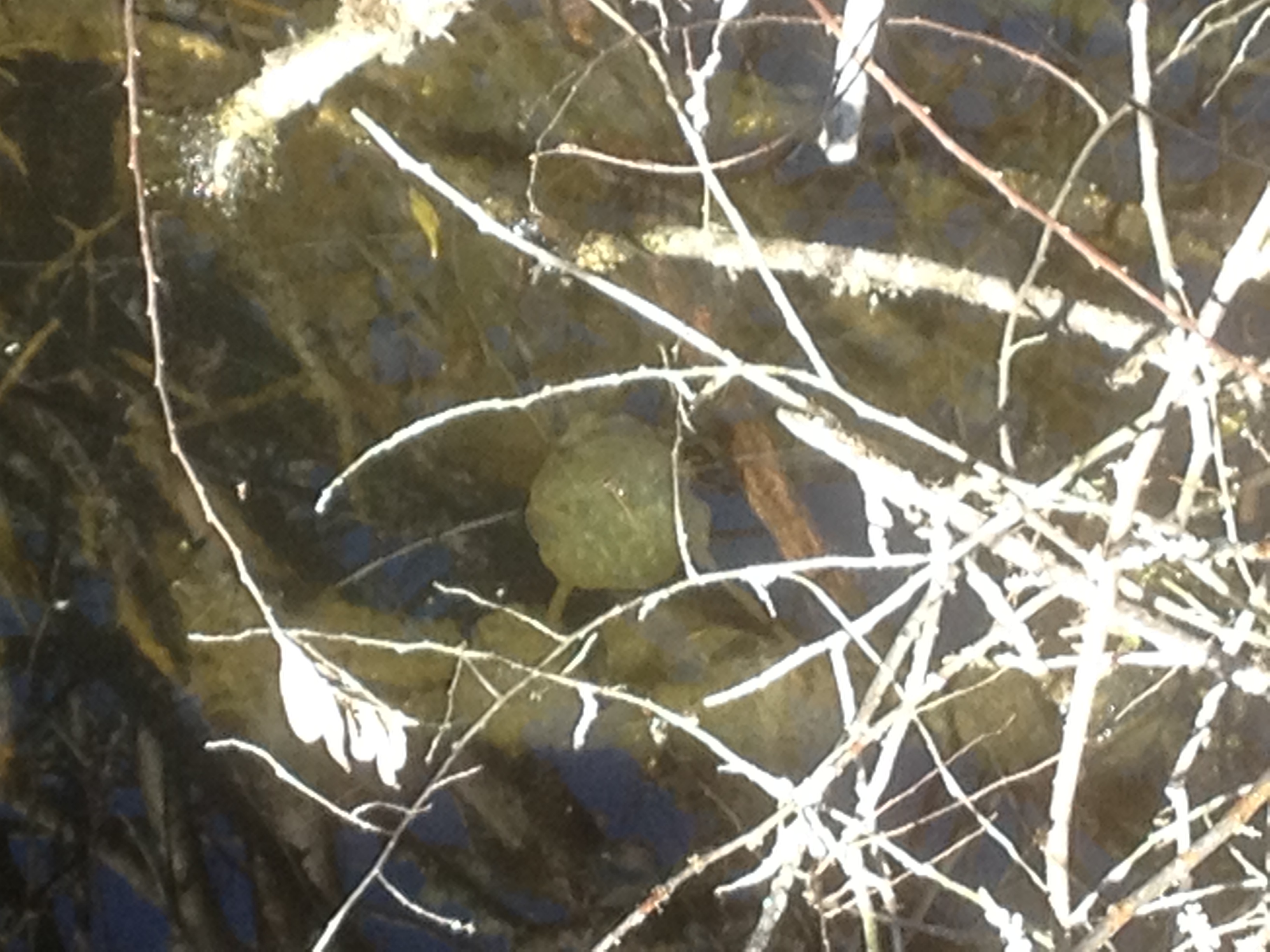
As we were crossing one of the bridges over the lake, a couple of teenaged nature guides were showing a group of young children a clump of salamander eggs (the roundish blob in the center of the photo) just beneath the surface of the water:
salamander eggs
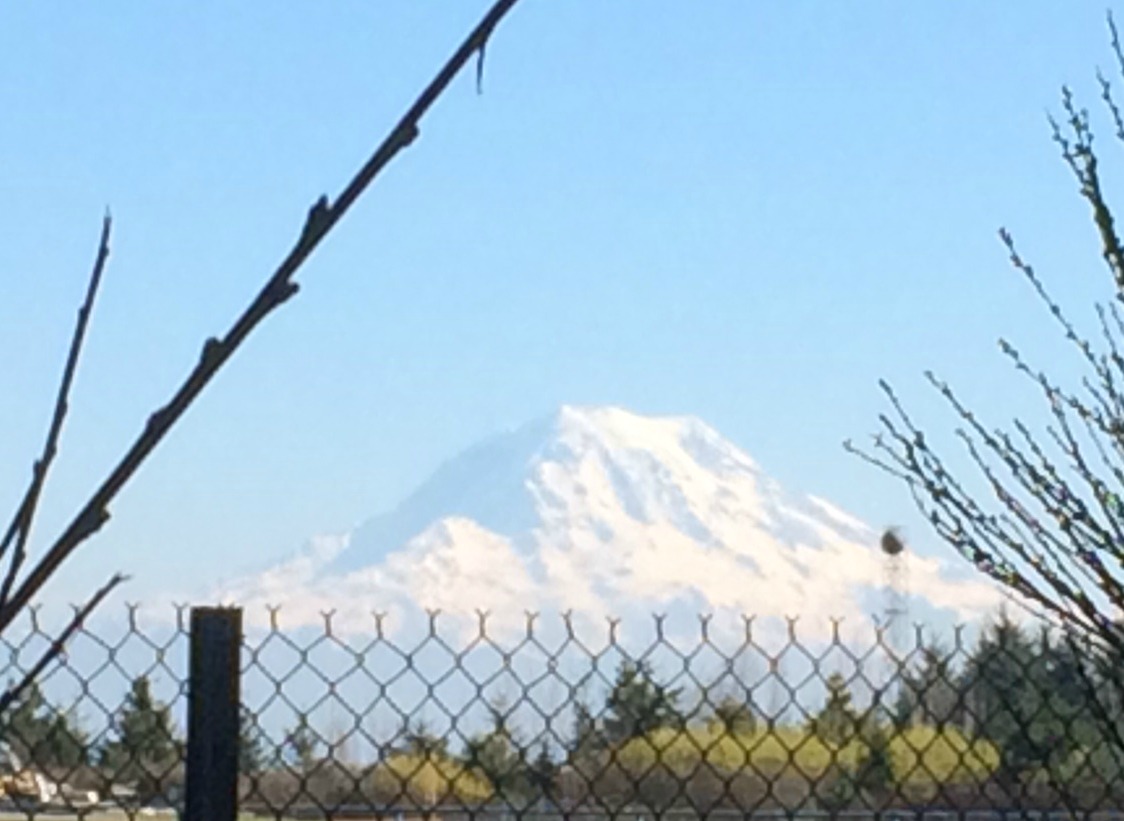
Magnificent Mount Rainier was visible on this clear, sunny day:
Mount Rainier
My husband and daughter took me to an anthill that they discovered last summer:
large anthill
There were some ants moving about, but on the walk back we saw several smaller but busier anthills. In this photo, the part that looks like dark mud is actually swarming ants:
ant swarm
And here’s a close-up of them:
close-up: ants
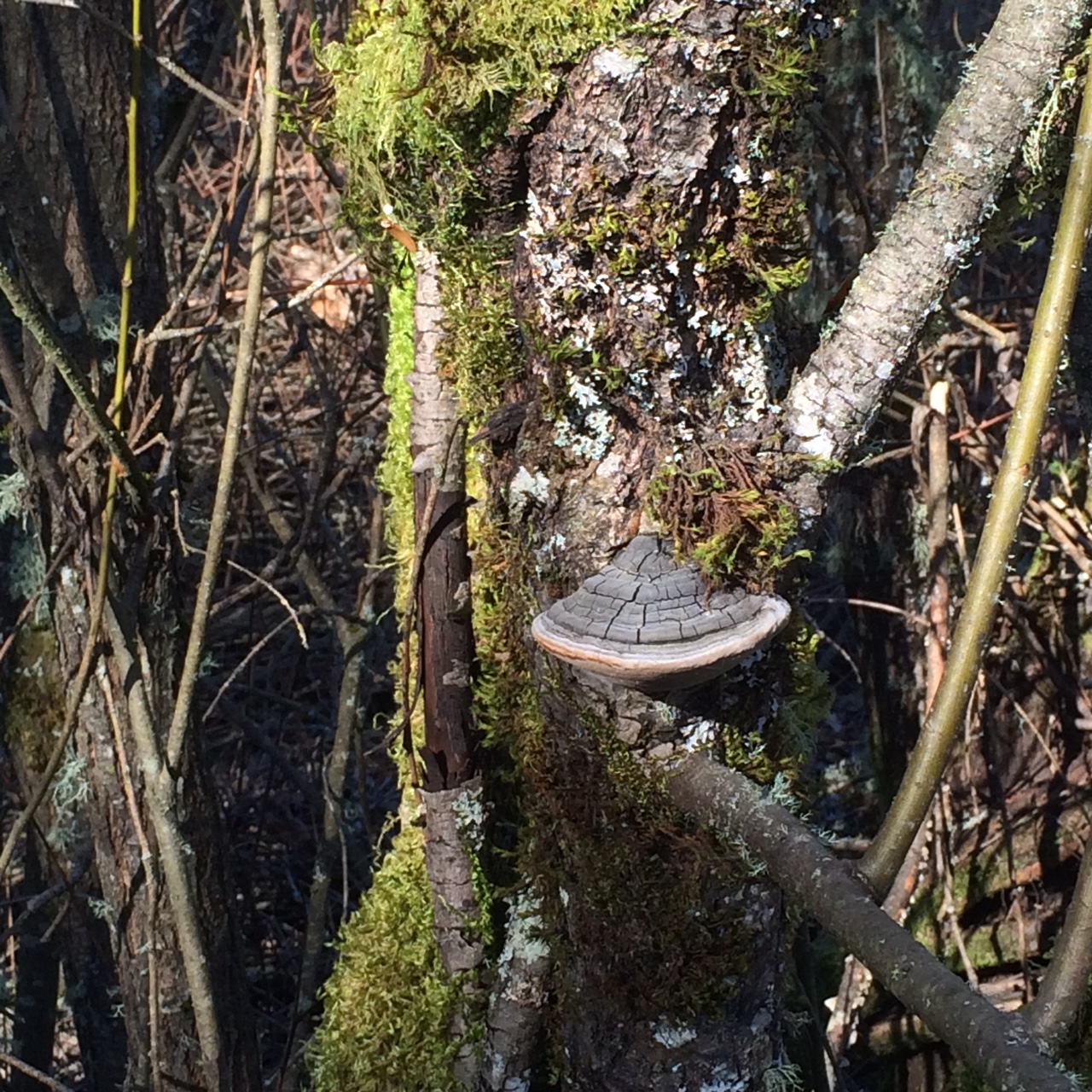
Here are a couple of other forest sights:
holly berriesthe obligatory fungus photo
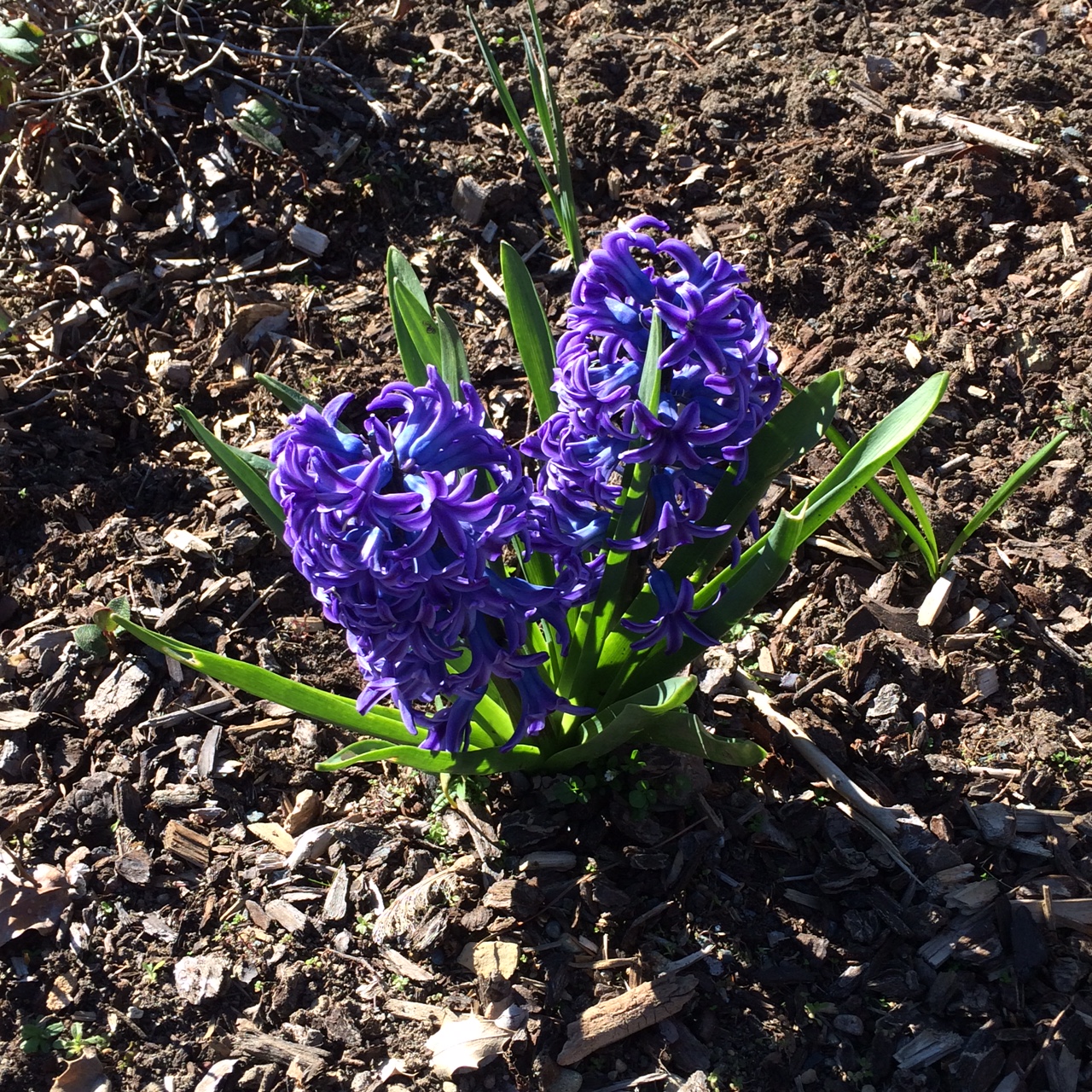
When we got back to the parking lot, I couldn’t miss the opportunity to photograph this lovely purple hyacinth:




















 Retreading for Retirement