Road Scholar Program: Day 1

Since our move to Washington State, we’ve done most of our exploring along the coast, between northern Washington and San Francisco. Now that summer is over, we decided to head east over the Cascade Mountains. This is not a trip for summer, as the temperatures east of the Cascades are often in the 90s, sometimes even more than 100. We signed up for the Road Scholar (formerly ElderHostel) class called Nature at Work in the North Cascades, Northwest History in Story and Song, and Life in Methow Valley.

(Click on any photo to see a larger version.)

This morning we set out on our trip over the Cascade Loop:

Cascades Loop map

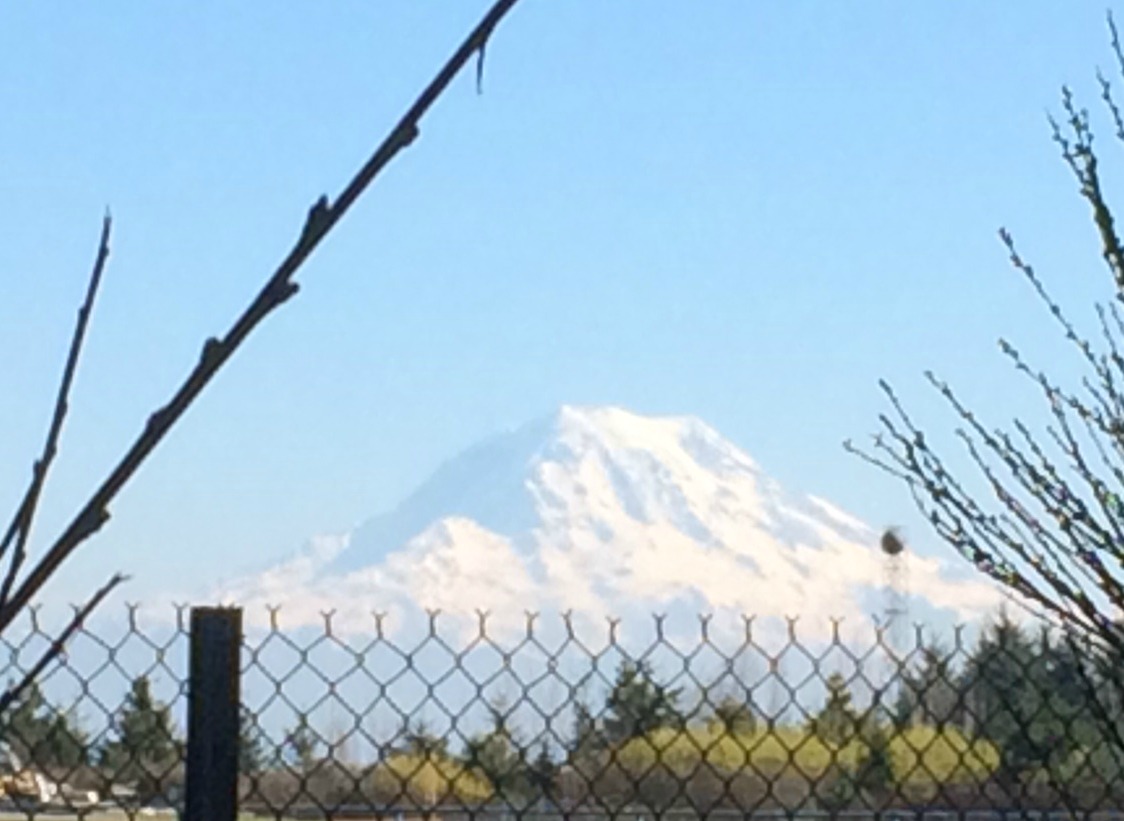
We decided we’d take the northern route out today and the southern route on our way back home. Highway 20 goes through the North Cascades in an area often referred to as the North American Alps. You can see the pointed, rocky mountaintop typical of this area in the photo at the top of this post.

Our destination was Sun Mountain Lodge, a resort on 3,000 acres with miles of hiking trails, on the outskirts of Winthrop, Washington. This area is known as the Methow Valley. Methow is pronounced MET-how. The river and its surrounding valley take their name from the Native Americans who originally traveled the land fishing, hunting, and gathering wild foods such as berries and roots.

The program began in mid-afternoon with a lecture entitled “How Nature Works” by Dana, a local botanist. His focus was on how plants convert energy from the sun into food. After his talk he lead us on a nature walk on one of the trails closest to the lodge. He showed us how to use a botanist’s loupe (small magnifying glass) to look closely at flowers, leaves, and seeds.

My big discovery on this walk was quaking aspens, which I had never seen and heard before. Or at least I’m not aware of having seen them before. According to my book about plants of the Pacific Northwest, aspens cover New England, where I grew up, but I don’t remember them. Perhaps I lived in an area that wasn’t high enough for them. Because aspens like cool weather, they are usually found at elevations between 5,000 and 12,000 feet (1,500–3,700 m).

The flat leaves of these aspen trees, Populus tremuloides, shake or quiver in the slightest breeze in an effort to take in as much carbon dioxide and to expel as much oxygen as possible. This behavior has given the trees the name quaking or trembling aspens.

If, like me, you’ve never seen and heard quaking aspens, here’s a short video for you (it really is short, just 17 seconds; be sure to turn up the volume on the video player so you can hear the quaking):


Going to the Fair!

For more than 100 years the fair held annually in Puyallup (pew-Al-up), Washington, was known as the Puyallup Fair. I know this because I used to have a pencil (unfortunately lost in our recent move) emblazoned with “Puyallup Fair 100 Years” that my daughter sent me in 2000. The fair’s tagline was “Do the Puyallup!” But in 2013 somebody (I’d keep my name out of it, too, if I had been responsible) came up with the brilliant idea to rename the fair the Washington State Fair. Whoever did this agreed to retain the “Do the Puyallup!” tagline, but it’s just not the same. According to the Washington State Fair Facebook page:

It’s a fact that since our beginning in 1900, our name has changed four times; the Valley Fair, to the Western Washington Fair, to the Puyallup Fair and most recently to the Washington State Fair. For over 60 years the fair was known as the Western Washington Fair. Our previous name, The Puyallup Fair, is a name that will always mean a lot to us, as well as the people that helped make this the great Fair it is today. We still love to hear the old “Do the Puyallup” jingle and we are proud to host the Fair in Puyallup every year. Puyallup will always be an important aspect of our identity, but the name change allows the rest of Washington to feel connected to the Fair as well.

But I digress. Today our activities director drove about 10 of us down for a visit to the Washington State Fair. On a weekday after the start of school, the grounds were not at all crowded, and we had gorgeous weather.

The fall fair began in 1900 as a way to showcase the crops that flourished in the rich soil of the Puyallup River valley. (See related post for more background.) Since then it has grown to include farm animals and produce from all over the state, as well as carnival games, rides, vendor booths, and LOTS of food.

But my husband F. and I headed straight for this year’s featured exhibit, Star Trek: The Exhibition, which traces the history of the Star Trek franchise from the original 1960s television series up through the latest motion picture. We got to see lots of photos, costumes, and props from the various television shows, as well as a 7/8 scale mock-up of the bridge from the original series. (It had to be downsized a bit so that it could be moved.)

Star Trek: The Exhibition

(Click on any photo to see a larger version.)

We were not allowed to take photos inside the exhibit, but the link above will take you to the exhibit’s official web site featuring lots of photos and video clips.

After that we headed for the animal barns. There were lots of traditional farm animals on display. My grandfather was a dairy farmer, and I have a soft spot in my heart for cows. But I’ll restrict myself to just one photo:

Cow
Cow

Most of the sheep had been shorn within a few days of the fair:

Sheep (shorn)
Sheep (shorn)

I was expecting them all to look like this:

Sheep (unshorn)
Sheep (unshorn)

But one of the youngsters displaying sheep explained that they have to be shorn for competition because the judges want to be able to see their bodies, not just their wool.

There were also lots of goats, pigs, and rabbits. Another animal that I did not realize is so popular with 4-H kids is the llama:

Llama
Llama

Next we took a look at the fruits, vegetables, and flowers. A lot of people won ribbons for their flowers:

Flowers
Flowers

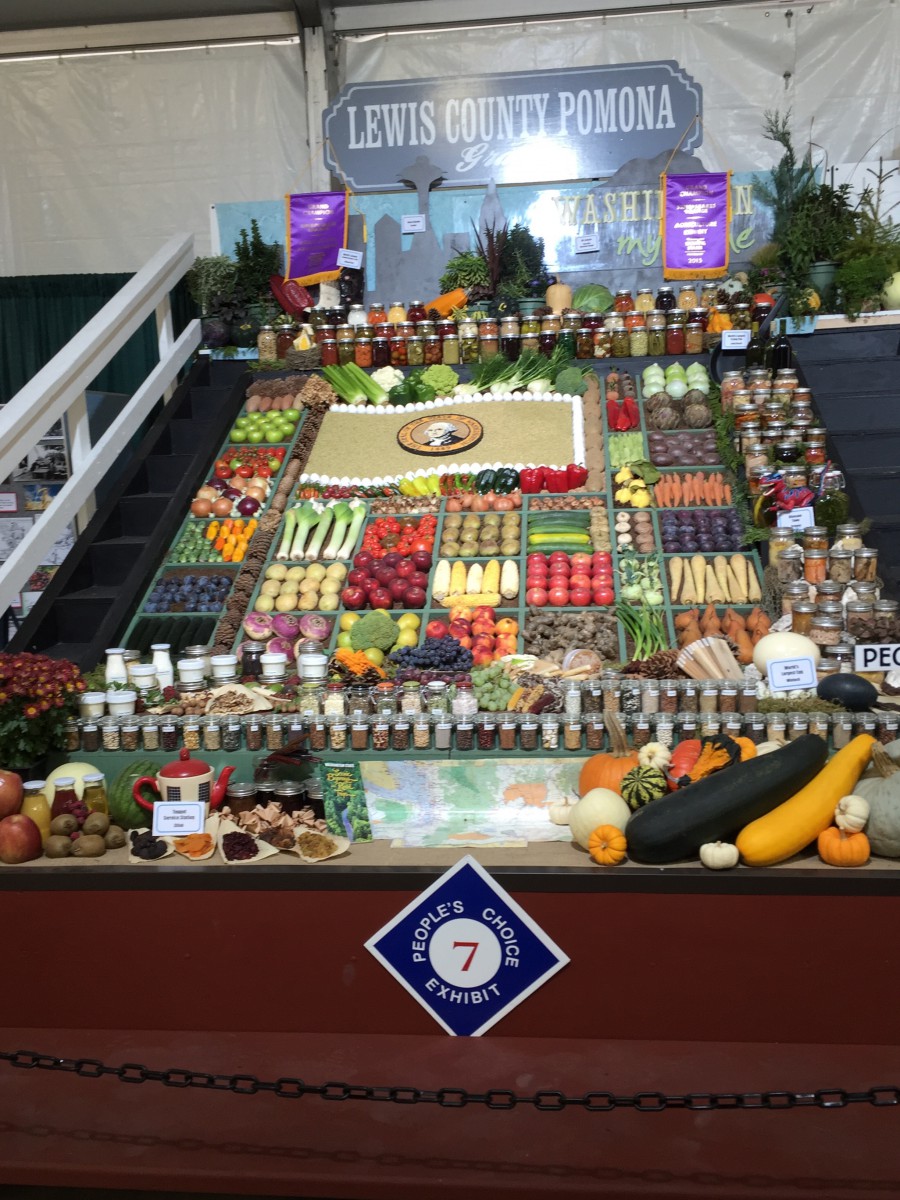
I am always fascinated by the artworks created by Grange chapters across the state out of their local products. One that particularly caught my eye was this one featuring a replica of the Washington State flag:

Vegetable Art
Vegetable Art


Vegetable Art: Close-Up

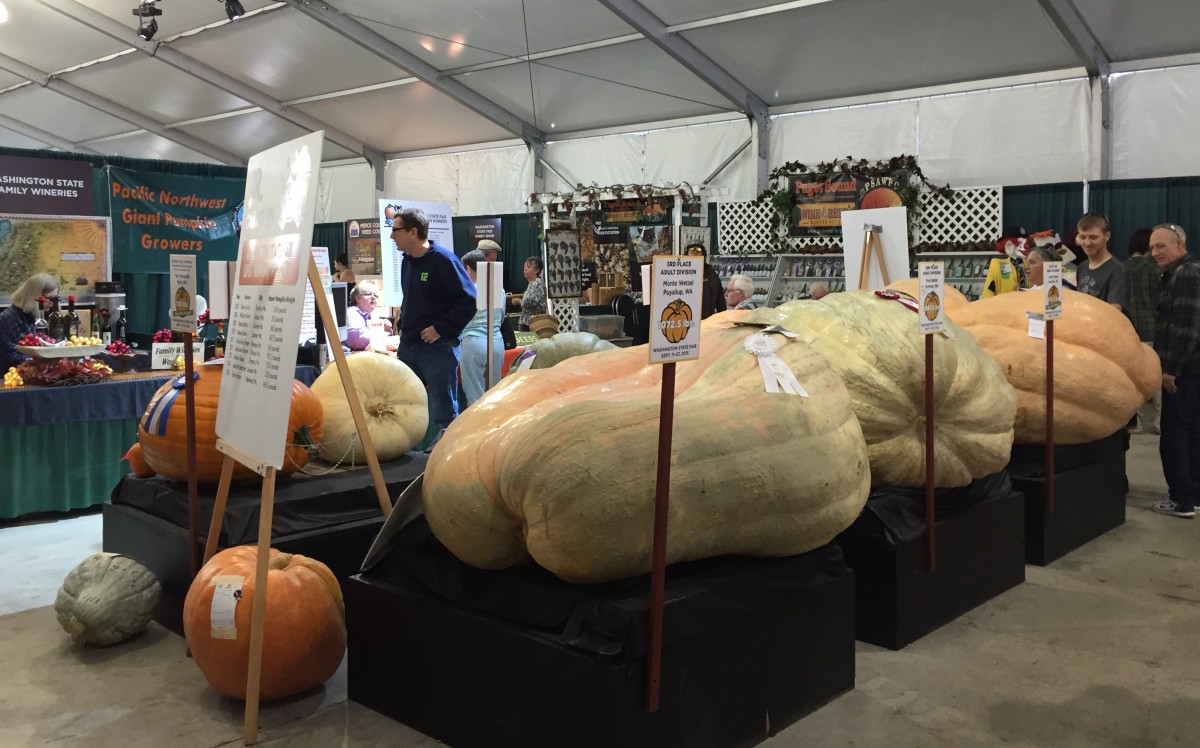
And of course there were awards for the state’s largest pumpkins and squashes:

Huge Pumpkins & Squashes

For lunch we chose The Mad Greek because I arrived at the fair hoping I could find a gyro. I was so busy eating that I forgot to take a photo. But these are a few of the MANY other eateries available:

Killer Kielbasa
Killer Kielbasa


Deep Fried Butter Stand
Deep Fried Butter


Bacon!!! Stand
Bacon!!!

I’ll end with a photo of an iconic fair ride that also shows what a beautiful day it was.

Ferris Wheel
Ferris Wheel

Until next year!

35 Years Ago Today: Mount St. Helens Erupts

Today is the 35th anniversary of the eruption of Mount St. Helens, a mountain in the Cascade Range, located in southwestern Washington State.

At 8:32:17 a.m. PDT on Sunday, May 18, 1980, an earthquake caused the north face of the mountain to slide away, producing the largest landslide ever recorded that moved at 110 to 155 miles per hour (177 to 249 km/h). The eruption column rose 80,000 feet (24 km; 15 mi) into the atmosphere. Strong winds carried ash east of the volcano at an average speed of about 60 miles per hour (97 km/h). In Spokane, WA, 250 miles away, visibility was reduced to 10 feet (3.0 m) by noon. Noticeable amounts of ash fell in 11 states. Some of the ash drifted around the world in two weeks. The eruption lasted about 9 hours.

Volcano Illustration
Volcano Illustration (click to enlarge) (photographed at the Washington State History Museum)

The U.S. Geological Survey reports the following data about the 1980 eruption:

  • 1,314 feet (400 m): elevation lost
  • 2,084 feet (635 m): depth of crater formed
  • 0.60 cubic miles (2.5 cubic kilometers; 3.3 billion cubic yards; 165 million large dump trucks): volume of landslide deposit
  • 80,000 feet (24,000 m): height of eruption column reached in less than 15 minutes
  • 0.26 cubic miles (1.0 cubic kilometers): volume of volcanic ash produced

Destruction caused by the eruption covered 150 square miles:

1. 57 people were killed.

2. More than 11 million animals died, including:

  • 1,500 elk
  • 5,000 deer
  • 12 million salmon fingerlings

3. More than 4 billion board feet of timber, 230 square miles (600 km2) of forest were knocked down, though some lumber was later recovered.

4. Also destroyed:

  • 200 houses
  • 27 bridges
  • 15 miles (24 km) of railways
  • 185 miles (298 km) of highway

The number of human lives lost could have been much higher. Because the eruption occurred on a Sunday, more than 300 loggers were not working in the area.

Eruptions since 1980

During the summer of 1980, five more eruptions occurred. Geologists also carefully watched incidents of volcanic activity between 2004 and 2008.

Resources

Dzurisin, D., Driedger, C.L., and Faust, L.M., 2013, Mount St. Helens, 1980 to now—what’s going on?: U.S. Geological Survey Fact Sheet 2013–3014, v. 1.1, 6 p. and videos. (Available at http://pubs.usgs.gov/fs/2013/3014/)

I used the PDF of this fact sheet for much of the information here. The web version includes videos.

Mount St. Helens Erupts

Because the May 18, 1980, eruption was preceded by more than two months of earthquakes and steam-venting episodes, people began to doubt that danger was imminent. This four-minute video from History.com condenses the history of the eruption and gives a good idea of how people reacted, both before and after, the eruption. Be sure to notice the remarks of local Mount St. Helens resident Harry R. Truman, who is buried, along with his 16 cats, on the mountain.

Note: Music accompanies this video. You can turn it down or mute it, as you wish. You have been warned.

35 years after Mount St. Helens eruption, nature returns

This CBS News report covers the return of life to the Mount St. Helens area in the 35 years since the eruption. It’s an uplifting story to see after reading about all the devastation.

Scotch Broom

Along the banks of highways all over the Pacific Northwest, you’ll see these bright yellow flowers. But don’t be fooled by their pretty color: They grow on a plant called Scotch broom, Cytisus scoparius, a member of the pea family, which is not a decorative plant but an invasive, noxious weed.

Scotch broom is native to Britain and central Europe. It was introduced in North America in the 1860s as a garden ornamental and was planted along roadsides and open banks to prevent soil erosion. But because Scotch broom can tolerate a wide range of soil and moisture conditions, it quickly became invasive. Invasive species create monocultures, dense areas of growth that displace native and beneficial plants and cause loss of grassland, such as pastures, and open forest habitat. These monocultures impede movement of wildlife and increase both the frequency and intensity of fires.

Scotch broom is a fast-growing deciduous shrub from five to 10 feet tall. Each shrub may live as long as 30 years. An excerpt from the book Weed Control in Natural Areas in the Western United States lists the weed’s range as:

The entire Atlantic and Pacific coasts from Alaska to British Columbia to California, and from Nova Scotia through Georgia.
Also Idaho, Montana and Utah, as well as one Hawaiian island.

According to Jim Pojar and Andy MacKinnon in Plants of the Pacific Northwest Coast, revised edition:

‘Broom’ is derived from the Anglo-Saxon brom meaning ‘foliage.’ The word was applied to shrubs that were used for making ‘besoms,’ which are bunches of twigs us as brooms.

Scotch broomPeak flowering time for Scotch broom is from March or April until June, but some blooms may appear sporadically during the year. The plants often drop their leaves during dry summer months and may be leafless for most of the year. Seeds are produced in seedpods at the end of the summer. When mature, the pods split open and eject seeds up to 20 feet. According to the Washington State Noxious Weed Control Board, each plant can produce thousands of seeds each year, and the seeds can survive in soil for more than 30 years, with some estimates as high as 80 years. This enormous production and long life of its seeds is another reason why Scotch broom is so invasive.

Washington State University Extension warns that, if eaten, all parts of the plants are toxic to livestock, horses, and humans.

The yellow flowers may look pretty, but they represent vegetation devastation. A 2011 article in The Olympian, the newspaper in Washington’s capital of Olympia, reports that Scotch broom causes around $100 million in agricultural and forestry losses each year in Oregon and Washington.

May is U.K. National Asparagus Month

May is National Asparagus Month in the U.K., but since asparagus is one of my favorite foods, I intend to celebrate it here in the U.S. as well. The celebration is sponsored by British Asparagus Growers.

The British Asparagus web site features more than 80 recipes “developed by a dozen celebrity chefs and accomplished food writers.” There’s also a long list of the health benefits of eating asparagus.

In the United States, the Michigan Asparagus Advisory Board has an informative web site. The purpose of this site is to promote asparagus grown in Michigan, but there’s a lot of general information about the vegetable as well. Here are a few of their facts about asparagus that I found most interesting:

  • Asparagus is a member of the Lily family.
  • Under ideal conditions, an asparagus spear can grow 10″ in a 24-hour period.
  • The larger the diameter, the better the quality!

This site calls asparagus “one of the most nutritionally well-balanced vegetables in existence” and “the leading supplier among vegetables of folic acid,” a fact that will appeal to pregnant women. Asparagus is also low in calories and very low in sodium. Check the nutrition page for a complete list of this vegetable’s nutrient value.

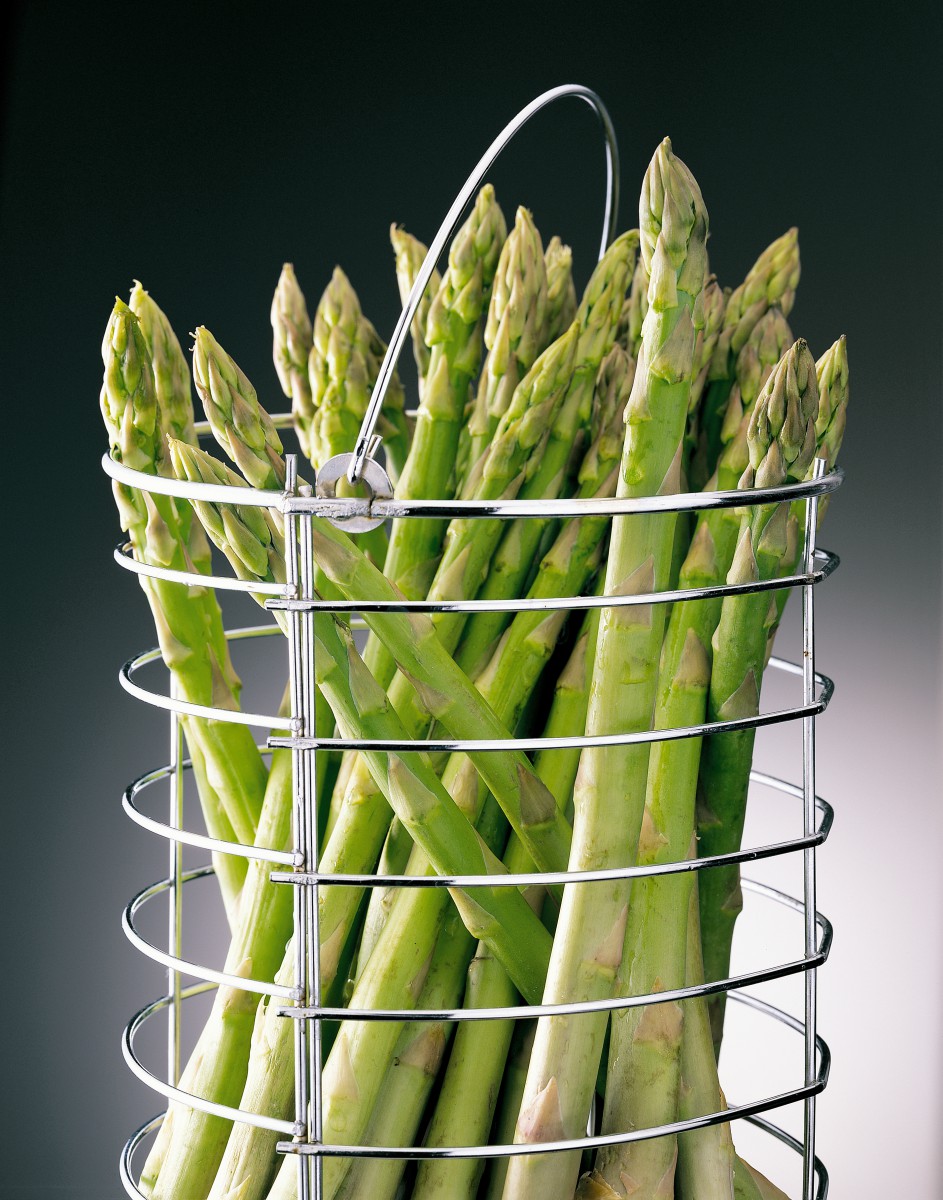
asparagus upright for cooking
Photograph from British Asparagus

You’ll also find instructions for several different ways of cooking asparagus here, including how to steam the spears in an upright position in a double boiler or tall pan. This method helps to prevent the tips from getting overcooked before the stalks are fully cooked. There are tips on how to store asparagus, including directions for canning and freezing. And, of course, there’s a collection of recipes for appetizers, soups, salads, side dishes, and entrees. And check the FAQ page for an explanation of why your urine smells funny after you eat asparagus.

The California Asparagus Commission also has lots to say to promote its product. Its recipe collection includes a special section of recipes for kids. The cooking section contains directions for stir-frying, grilling, and roasting as well as the more common methods of boiling, steaming, and microwaving. The FAQ page explains how white asparagus differs from the green variety and why the green spears are a bit more nutritious than the white ones. Also according to the FAQ page, “California, Washington and Michigan are considered the major asparagus growing states.”

A couple of weeks ago we bought red asparagus at the farmers’ market. The sign said the red variety is more tender and less fibrous than the green kind. We steamed it up, and I did think it was a bit less fibrous. But I was surprised to find that when I sliced the stalk, it was green inside, with just a very thin red outer layer. I tried looking for information about red asparagus, but all I could find was references to herbal supplements made from red asparagus root, which is a different plant.

In the past I’ve also seen purple asparagus. On the web site of Aspara Pacific Ltd., an asparagus breeding company in New Zealand, I found this information:

Pacific Purple is a new “super-sweet” asparagus variety. Its distinctive dark purple spears have gained immediate acceptance in markets in Europe, Asia and north America. Pacific Purple tastes sweeter, has less fibre and more anti-oxidants than green asparagus.

Bred by Aspara Pacific, Pacific Purple produces a very high quality spear that is dark purple in colour from tip to butt. The spears have a slightly larger diameter than most green varieties.

Dual Purpose- Very tender spears and high sugar content means Pacific Purple can be grown as a dual-purpose variety for purple or for super-sweet white asparagus.

The Romans had a saying, “Quick as asparagus,” which meant essentially “very quick.” No matter how you prepare this spring vegetable, it will be deliciously ready in two shakes of a lamb’s tail.

Three Things Thursday

Last Friday morning I realized that I had not done a post for Three Things Thursday, the purpose of which is to “share three things from the previous week that made you smile or laugh or appreciate the awesome of your life.” I don’t know how I forgot to do it, since it’s one of the things I most look forward to in my week.

However, I’m back this week with…

A Walk Through the Woods

We live within walking distance of the Point Defiance Zoo & Aquarium. All we have to do to get there is cross a road and walk a short path through the woods, and there we are, on the edge of the parking lot and about a block from the zoo entrance.

Last Saturday was a beautiful day here in Tacoma, WA, USA, and so we took off for a visit to the zoo. We saw lots of interesting things there, both animals and plants, but what I’d like to show you this week is three interesting things I noticed while walking the path through the woods.

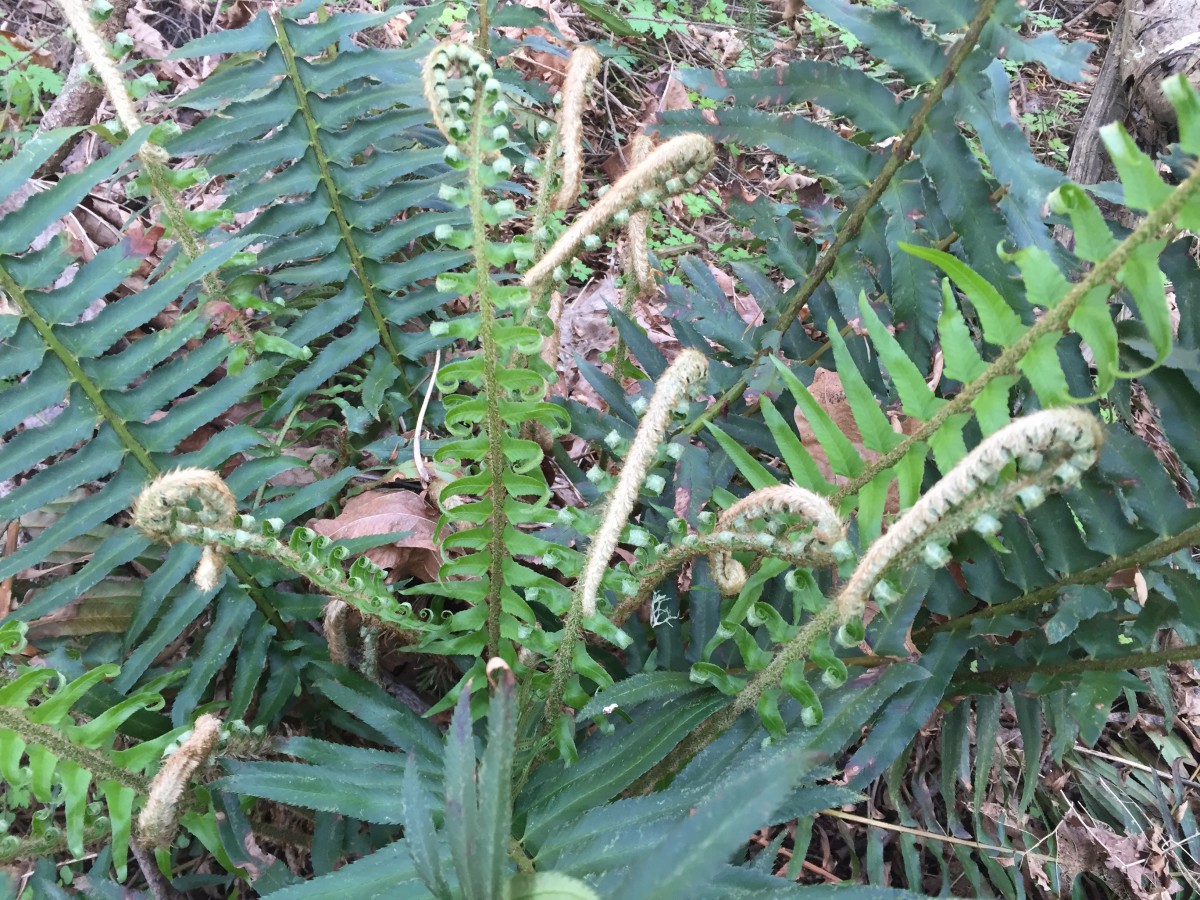
1. Fiddleheads

fern fiddleheads
Fern fiddleheads

I think these are sword ferns. You can see why the new fronds growing out of the center of the plant are called fiddleheads.

In the Stephen King novel The Girl Who Loved Tom Gordon, a young girl gets lost on the northern end of the Appalachian Trail and wanders through the forest for several days. One of the things she eats to survive is fiddleheads.

But I don’t suggest that you go out and get some of these to boil up for dinner. Check with a local naturalist before consuming anything you find growing in the wild. Better still, just don’t eat anything you’re not absolutely sure about.

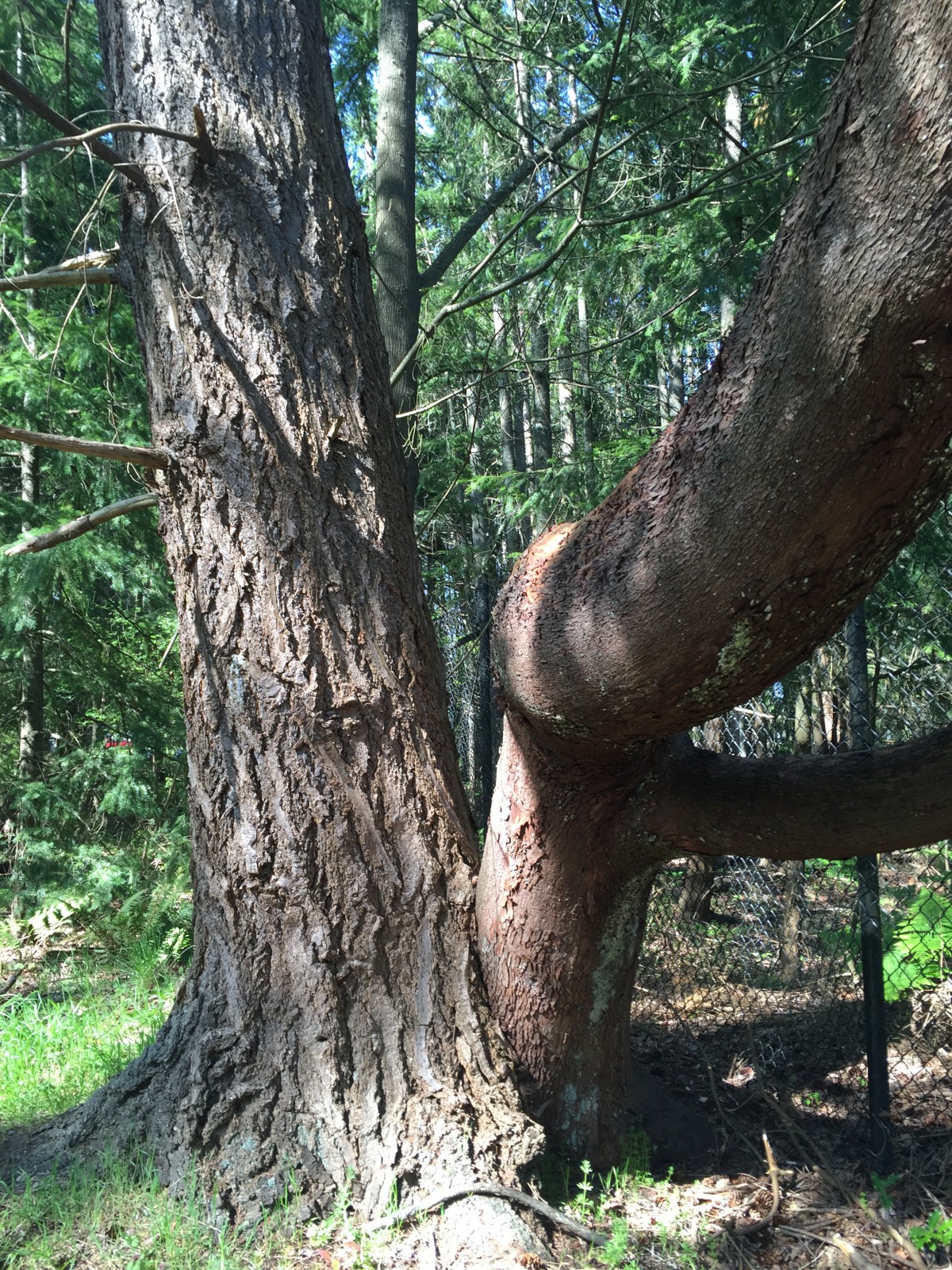
2. Two Trees

two trees
Two trees

The tree on the left, with the shaggy bark, is an evergreen, most likely a Douglas fir. It grows straight and tall, with spindly branches at the top that drape down. The tree on the right is a madrona—or, alternately, madrone—which often grows at an angle to reach any open space of sunlight beneath the evergreen canopy. Madronas are all angles and elbows as they send out lots of branches in search of sunlight. They are much shorter than their evergreen neighbors.

Perhaps these differences are what allowed these two trees to snuggle up so closely while growing. Douglas fir and madronas often grow near each other.

Madronas grow along a limited stretch of the Pacific coast, from northern Oregon up to southern British Columbia. They are easily recognizable by their brownish-red bark that peels off in thin sheets.

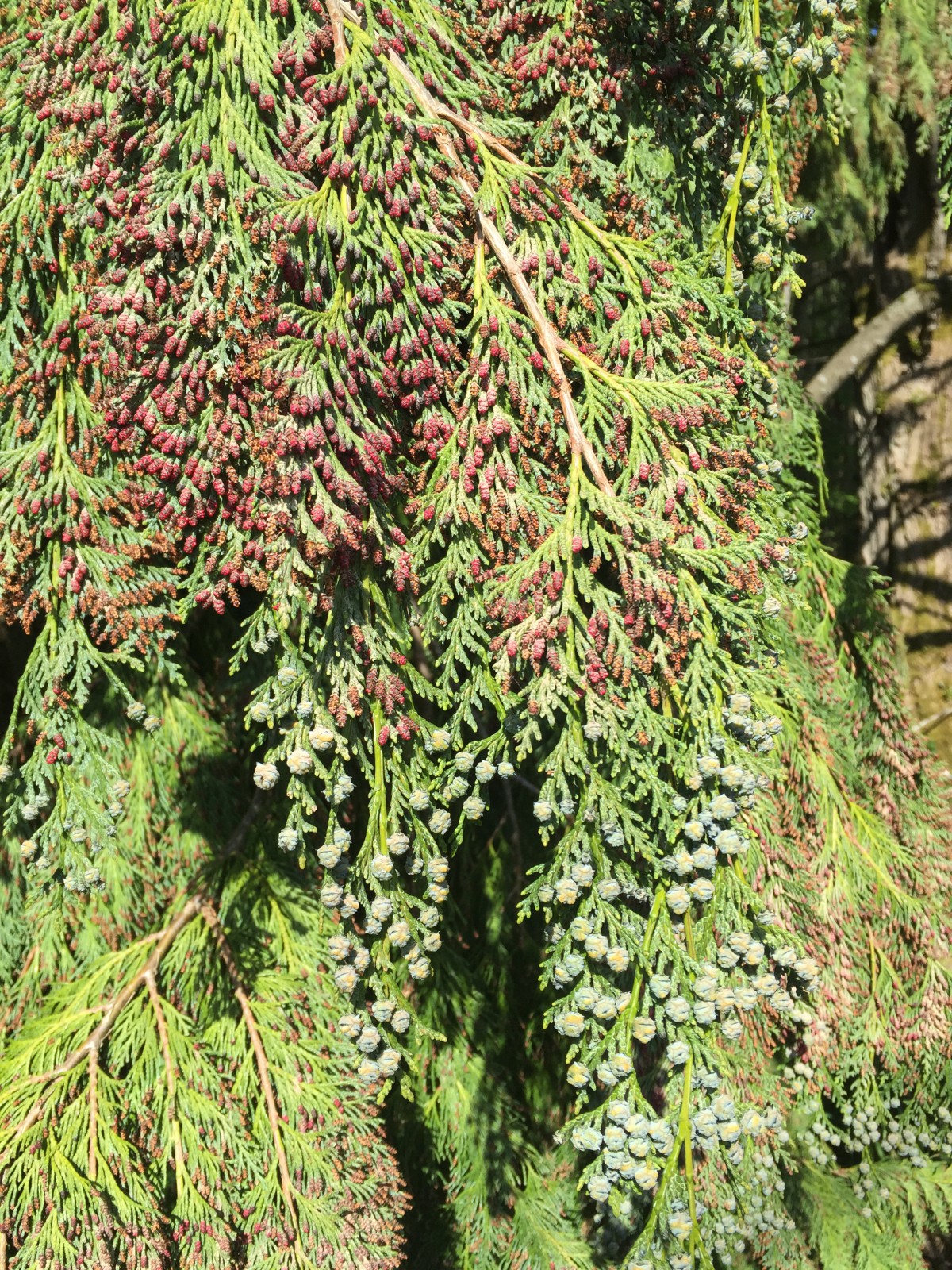
3. Hemlock? Cedar?

unknown tree
Do you know what this tree is?

I’m still trying to figure out what tree this is. I will have to go back and look at the bark more closely.

When we touched the brownish areas on the leaves, a very fine brown dust wafted off. The bluish berries near the ends of the leaves resemble those of cedar trees.

If you know what tree this is, please let me know in the comments. It grows in Point Defiance Park in Tacoma, WA, USA.

Reference

Cover: Plants of the Pacific Northwest CoastPolar, Jim and Andy MacKinnon. Plants of the Pacific Northwest Coast: Washington, Oregon British Columbia, & Alaska
Revised edition, 2004
Vancouver, British Columbia: Lone Pine Publishing
ISBN 978–1–55105–530–5

Opening Day: Puyallup Farmers’ Market

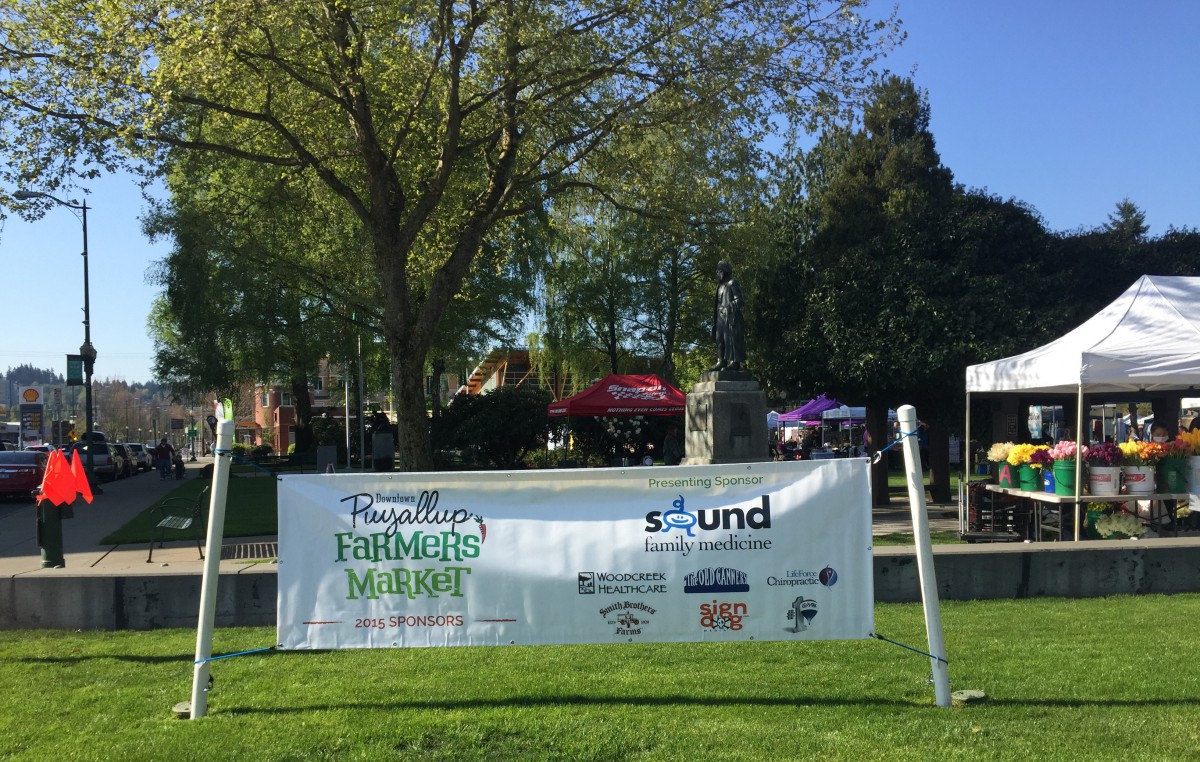
Our daughter K. lives in Puyallup (pronounced pew-AL-up), a city about 12 miles southeast of Tacoma. The Puyallup River Valley provides great growing conditions that have made the area a prime site for growers of all kinds of produce, and the city has therefore hosted a thriving farmers’ market for 32 years.

It has become our summer tradition to meet K. for a trip through the Puyallup Farmers’ Market followed by lunch. Today was opening day. The market is held from 9:00 to 2:00 every Saturday in Pioneer Park, the center of downtown Puyallup. It’s sponsored by the Puyallup Main Street Association, an organization that “envisions a downtown business district that is alive, inviting, healthy and thriving while retaining its hometown, friendly charm.”

In addition to fruits and vegetables, the market features local artisans offering their products, including candles, soap, tea, wood crafts, jewelry, clothing, knitting, crocheting, honey, jams and jellies, meat, fish and other seafood, and baked goods. Often civic organizations also attend. Today the people from greyhound rescue were there with some of their dogs.

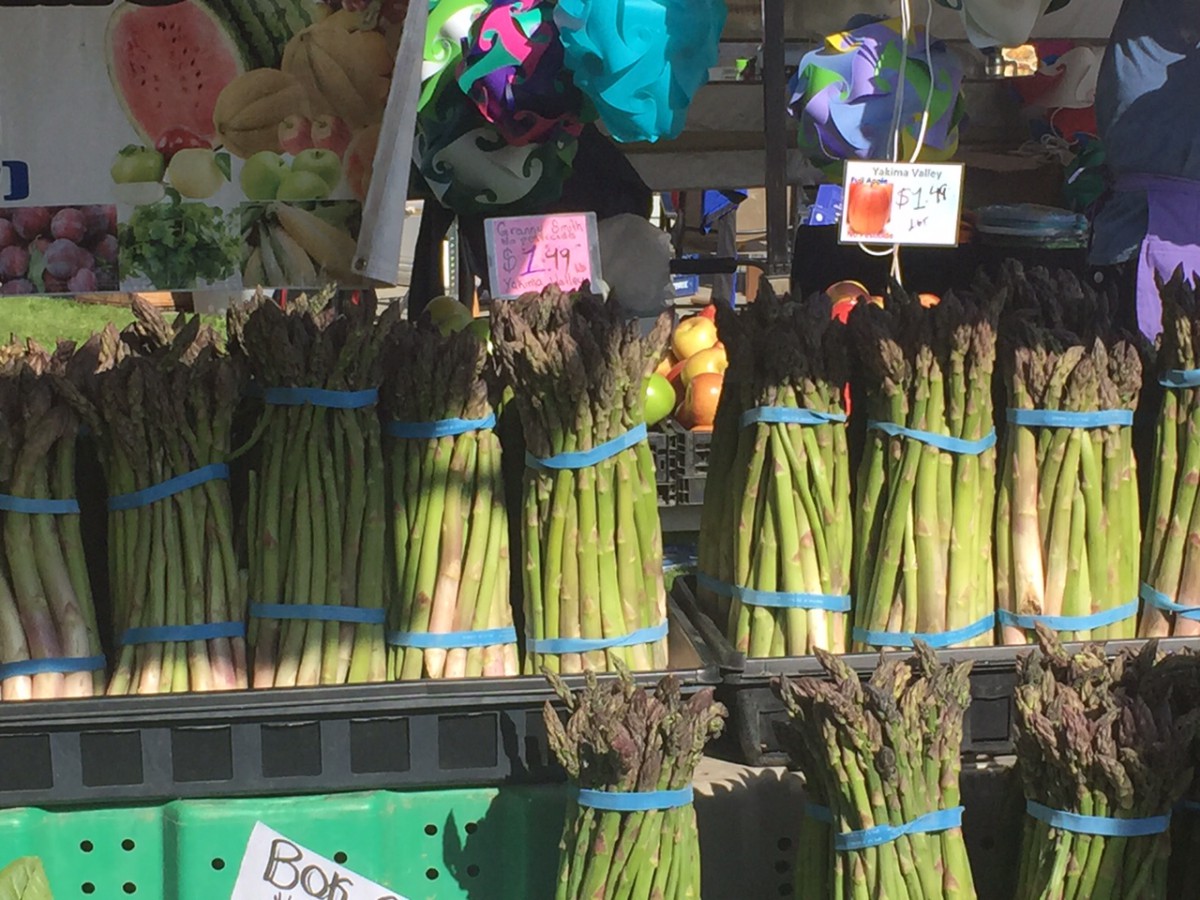
Because spring arrived here about a month earlier than usual this year, there was already an abundance of vegetables at the market:

Veggies
Veggies

The other main crop is always flowers. There are endless artistic bouquets available at reasonable prices:

bouquets
Bouquets

There are flowers and more flowers:

Puy mkt flowers02

flowers


People interested in growing their own vegetables, fruits, herbs, and flowers can also find starter plants:

Plants for sale
Plants for sale

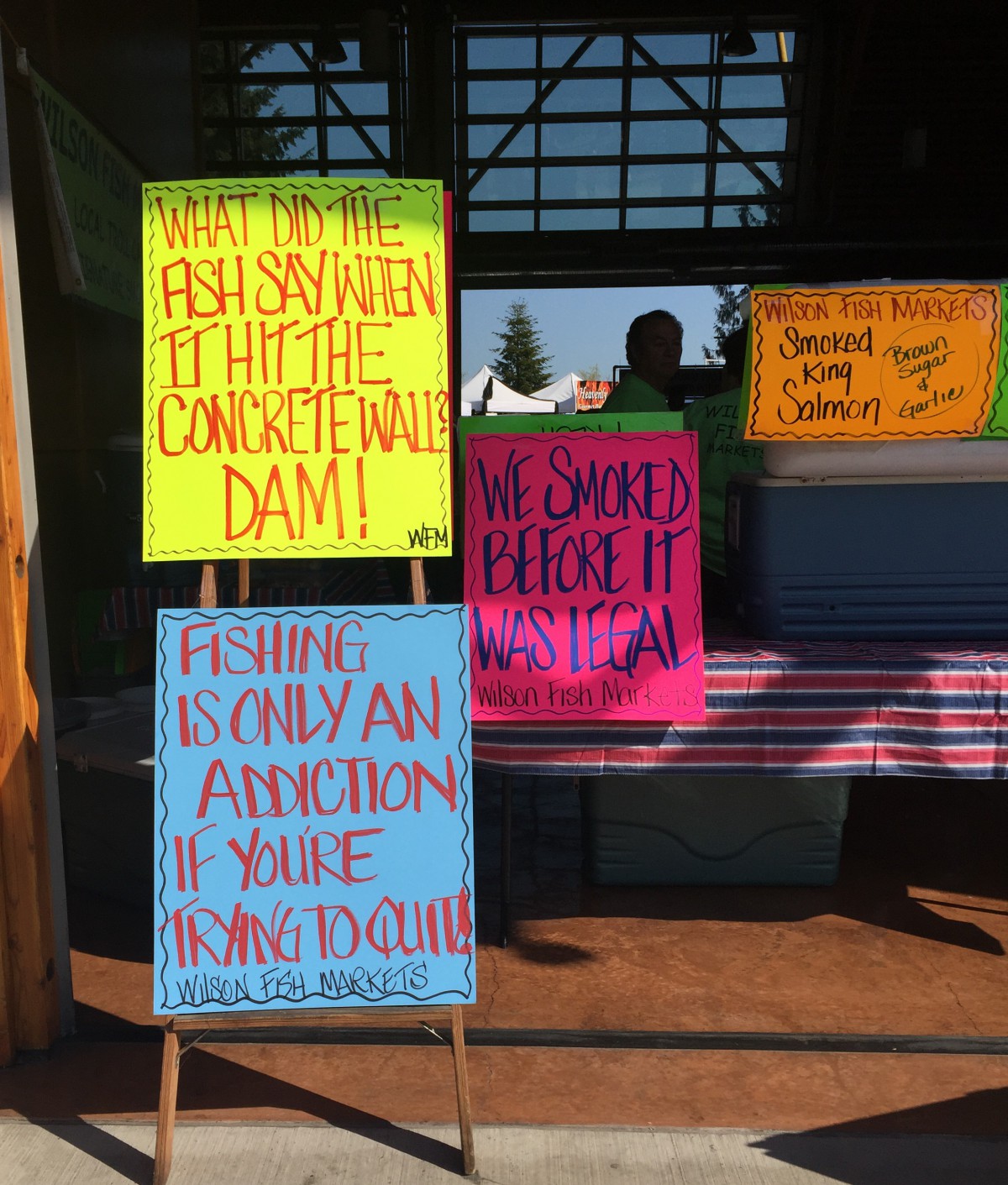
We bought some delicious salmon from a fisherman with quite a sense of humor:

Wilson Fish Markets signs
Wilson Fish Markets

And Puyallup is smack in the middle of Seahawks country:

Seahawks Gear
Seahawks Gear

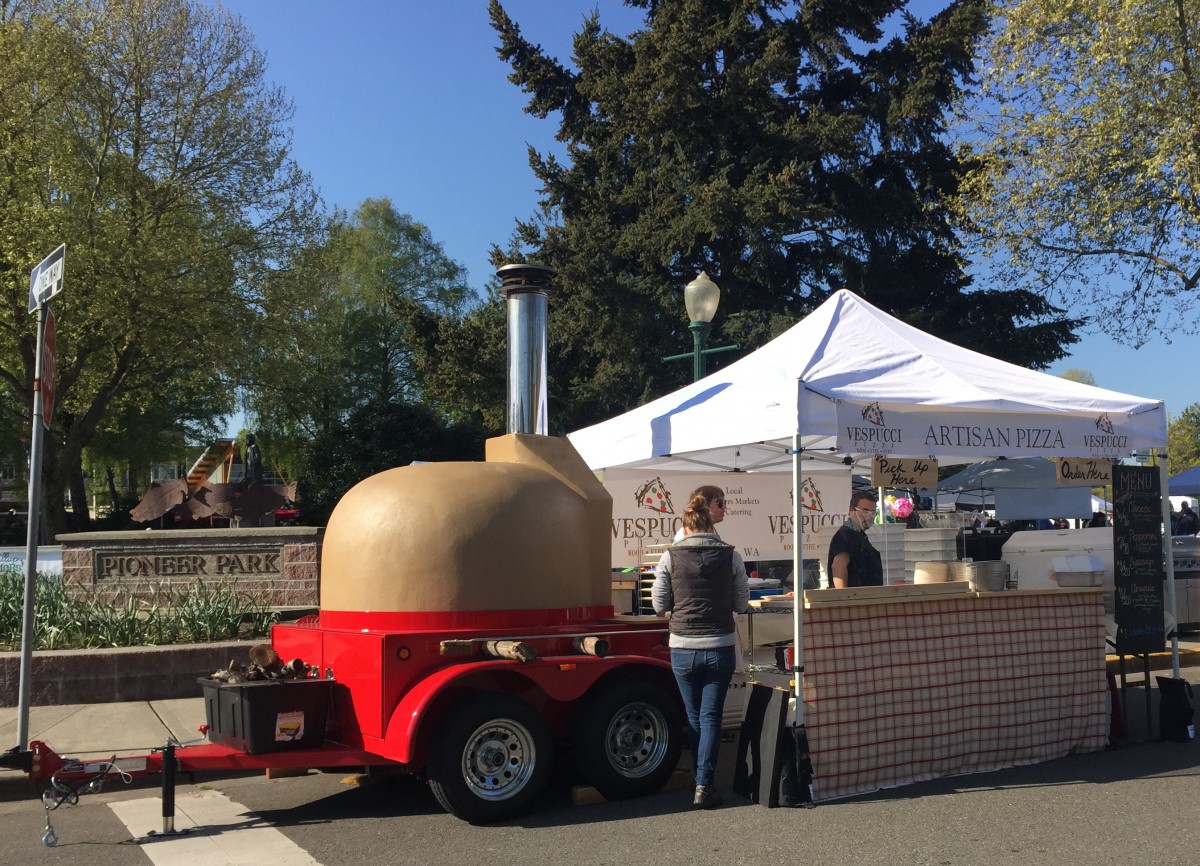
And where there’s a crowd there must be food. You can find just about any food item you like. The Vespucci Pizza oven had a good spot at the place where we entered the park:

Vespucci Pizza oven
Vespucci Pizza oven

There are a lot of items to see at the market, but people watching is also a grand experience. The market is family friendly, and a there are a lot of people pulling wagons full of both kids and purchases. Although dogs are not allowed inside the covered pavilion, lots of people walk their dogs in the uncovered areas. We saw one black Great Dane whose gorgeous coat glistened in the sun.

It was a beautiful, sunny day, with temperatures in the low 60s, to celebrate the Puyallup Farmers’ Market opening. I definitely “like” the Puyallup Farmers’ Market Facebook page. This year we’ll be able to enjoy it every Saturday through October 17.

Happy St. Patrick’s Day!

These are real Irish shamrocks!

Happy St. Patrick’s Day to everyone who’s Irish, and to everyone who wishes they were.

Three Things Thursday

Once again it’s time for the blog challenge Three Things Thursday, the purpose of which is to “share three things from the previous week that made you smile or laugh or appreciate the awesome of your life.”

three-things-thursday-participant

I usually find a theme for these Thursday posts, but nothing presented itself this week. So here are three random but awesome things about my life.

1. My Book Club

Back in St. Louis I participated in two book clubs for several years. When we moved to Tacoma, one of the first things I looked for (after the library, of course) was a book club. I asked at my local branch of the Tacoma Public Library and was shocked to find that the entire system had only one, which met at the downtown headquarters on a weekday night. Shortly thereafter I also applied for a Pierce County Library card and made the same inquiry. I attended one afternoon meeting at one of the branches and found that it wasn’t for me.

Finally, I found in the local newspaper an announcement about book clubs at King’s Books, a local independent store that sells new and used books. King’s offers a wide range of book clubs (as well as other book- and author-related events). I chose the Classics Book Club because I’ve reached a point in my life when I think I need to start filling in the gaps of my life-time reading.

Cover: Winesburg, Ohio
Winesburg, Ohio (1947 Modern Library edition)

I’ve been with this book club about a year now. I’ve enjoyed it and learned a lot. We’re small but strong. Last night six of us had an entertaining and informative discussion about Winesburg, Ohio (1919) by Sherwood Anderson.

We also got the list of upcoming books put together by our leader. Our definition of classic is something published 50 or more years ago. Over the next 12 months we’ll be reading these 13 works:


  • The Haunted Bookshop by Christopher Morley (1919)
  • Cover Her Face by P.D. James (1962)
  • Jane Eyre by Charlotte Bronte (1847)
  • Wide Sargasso Sea by Jean Rhys (1961)
  • The Mountains of California by John Muir (1894)
  • Invasion of the Body Snatchers by Jack Finney (1955)
  • The Left Hand of Darkness by Ursula LeGuin (1969)
  • Breakfast at Tiffany’s by Truman Capote (1958)
  • Cat on a Hot Tin Roof by Tennessee Williams (1955)
  • The Children’s Hour by Lillian Hellman (1934)
  • The House of Mirth by Edith Wharton (1905)
  • The Bell Jar by Sylvia Plath (1963)
  • The Group by Mary McCarthy (1963)

2. Spring

The unseasonably warm weather we had a few weeks back has hurried spring along. The pink earliest blooming trees are beginning to lose their blooms, yellow daffodils are prolific (although they, too, are past their peak), and now these trees are in bloom:

blooming trees

Don’t you wish you were here on the street where I live?

3. Eagles Soaring

On a walk around the neighborhood this morning we saw two bald eagles soaring overhead. It’s hard to miss their white heads.

Tacoma Nature Center

Today was such a beautiful day in the neighborhood that we went for a walk with our daughter this afternoon at the Tacoma Nature Center. The Nature Center is a 71-acre nature preserve that includes Snake Lake and the surrounding wetlands and forest.

Snake Lake is a 17-acre lake and wetland area that is home to wood ducks, mallard ducks, and Canada geese. The entire Nature Center is home to more than 20 species of mammals and about 100 species of birds.

The Nature Center offers more than two miles of walking trails, which we took advantage of this afternoon. According to Run Keeper, we walked a little more than 1.6 miles today.

trails at The Nature Center

When we first arrived, we heard frogs croaking (probably Pacific tree frogs), but we never saw them. We also saw a pair of Canada geese swimming on the lake. We also saw the colorful male wood duck and several turtles on logs, but they were too far away to be photographed with a camera phone. But I did get a picture of this pair of mallard ducks:

mallard ducks
mallard ducks

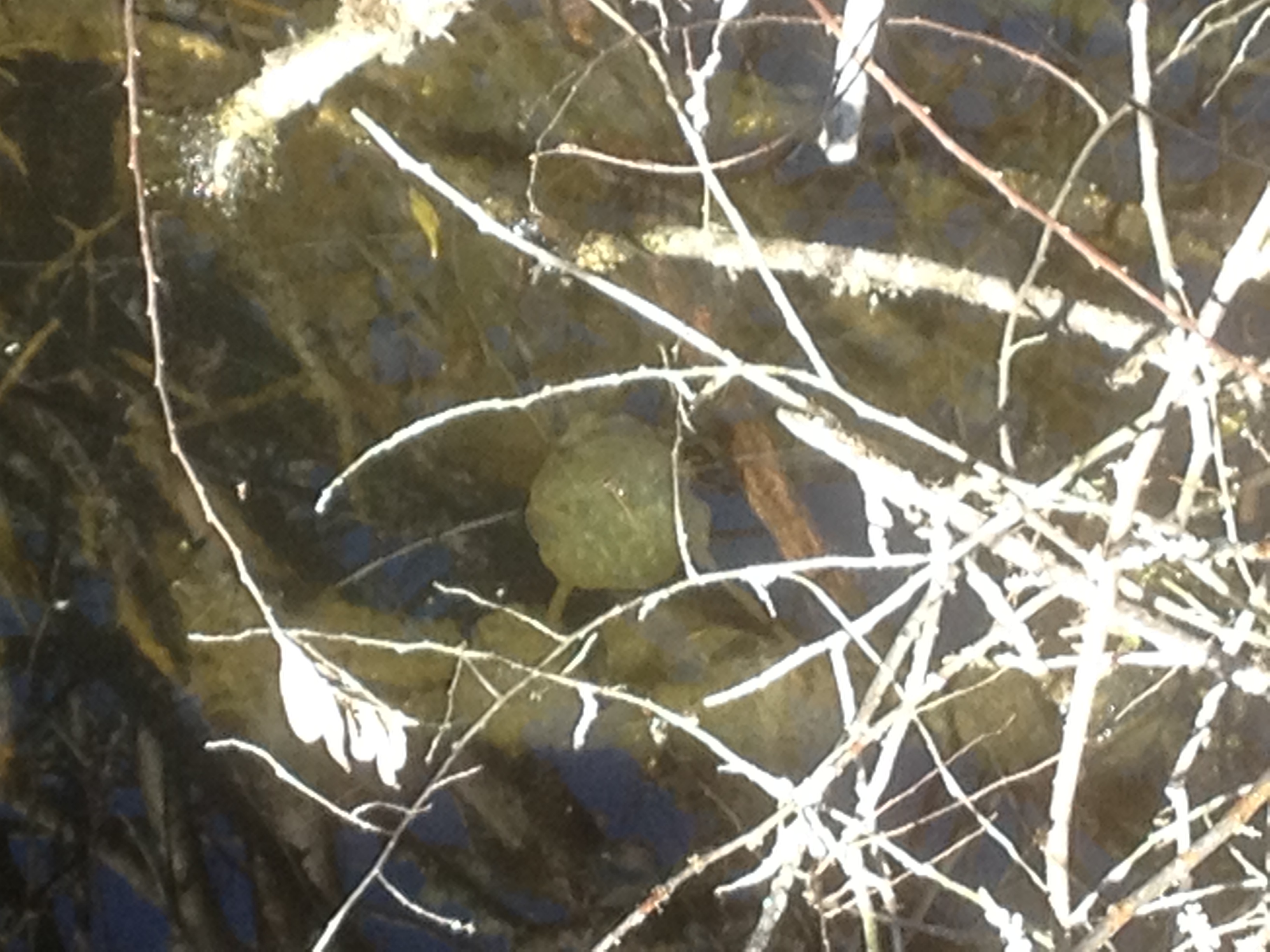
As we were crossing one of the bridges over the lake, a couple of teenaged nature guides were showing a group of young children a clump of salamander eggs (the roundish blob in the center of the photo) just beneath the surface of the water:

salamander eggs
salamander eggs

Magnificent Mount Rainier was visible on this clear, sunny day:

Mount Rainier
Mount Rainier

My husband and daughter took me to an anthill that they discovered last summer:

large anthill
large anthill

There were some ants moving about, but on the walk back we saw several smaller but busier anthills. In this photo, the part that looks like dark mud is actually swarming ants:

ant swarm
ant swarm

And here’s a close-up of them:

close-up: ants
close-up: ants

Here are a couple of other forest sights:

holly berries
holly berries
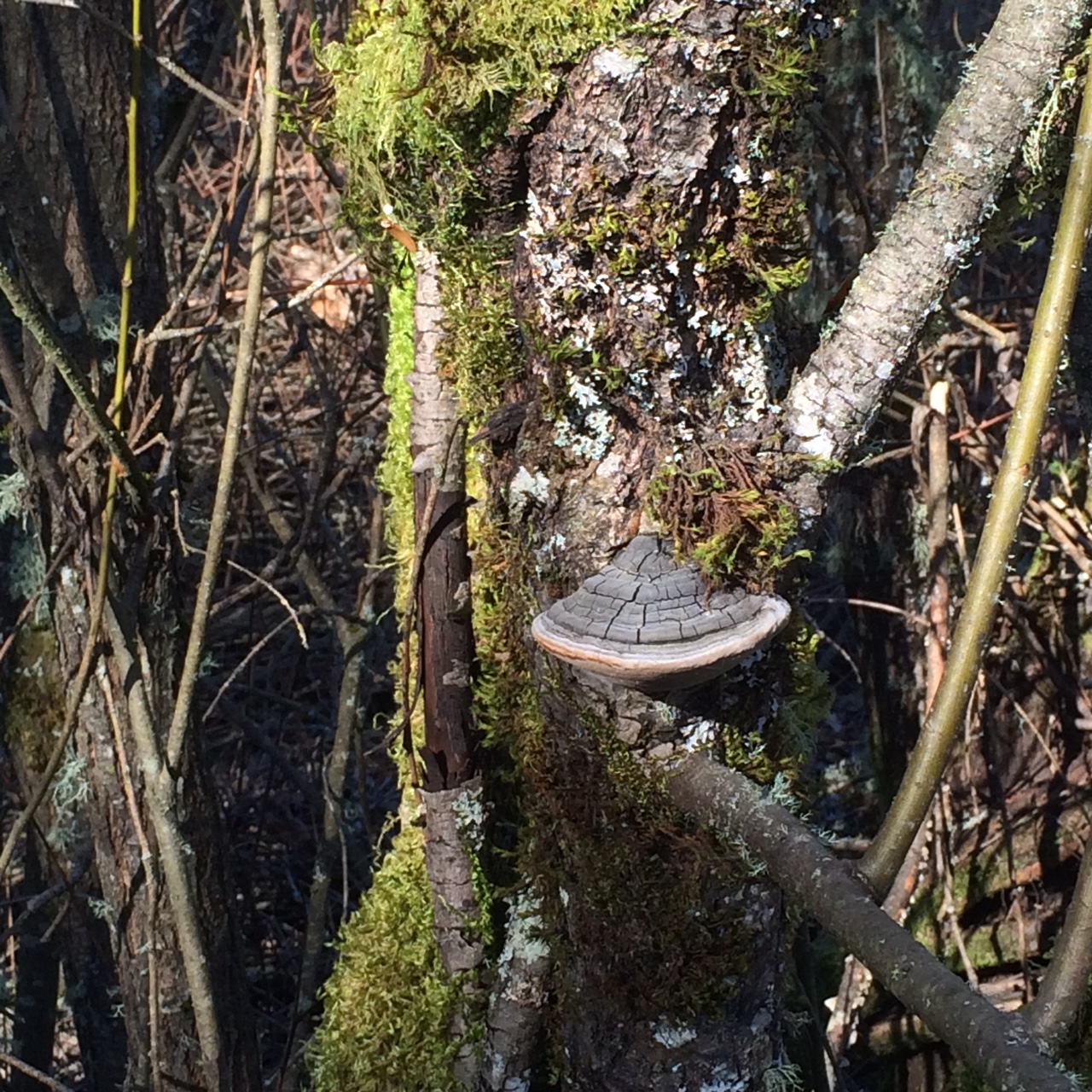
fungus
the obligatory fungus photo

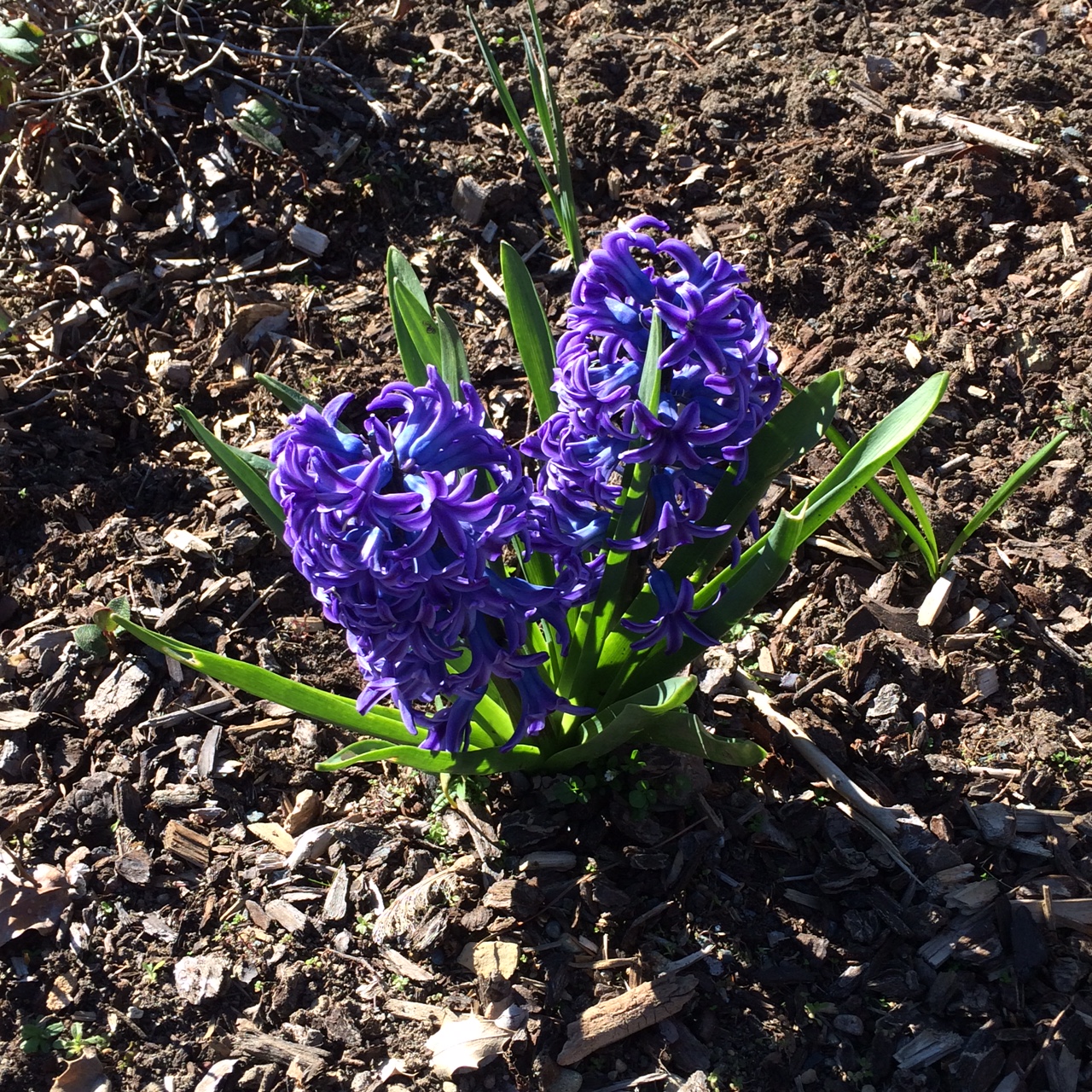
When we got back to the parking lot, I couldn’t miss the opportunity to photograph this lovely purple hyacinth:

purple hyacinth
purple hyacinth