If you’ve watched Downton Abbey or any other Masterpiece! presentation, you’ve seen the commercials showing Viking’s longships cruising the world’s rivers.
My husband F. and I are setting out on the Viking River CruisesGrand European Tour. We had a 10-hour direct Delta flight from Sea-Tac (Seattle-Tacoma) International Airport to Amsterdam. After a layover of just under two hours in Amsterdam, we caught a one hour and 40 minute flight to Budapest, where we were met by representatives from Viking and taken to our ship, Vidar. We left Sea-Tac in the early afternoon of May 31 and arrived in Europe in the early afternoon of June 1.
Viking River Cruises: Grand European Tour
Neither F. nor I was able to sleep at all on the plane, so we were pretty exhausted by the time we arrived on board. Fortunately, our stateroom was ready as soon as we arrived. The ship’s personnel urged us to use our free time until dinner to walk around Budapest on our own, but we opted to take a nap instead. At dinner we discovered that just about everyone we talked to had done the same. We had no trouble falling right back to sleep after dinner.
This morning we had a tour of Budapest. We had a local Hungarian guide, who told us that the Hungarian pronunciation is Budapesht. The city comprises two formerly separate cities, Buda and Pest, separated by the Danube River. Buda is the older city, high on a hill, while the newer Pest is on lower ground across the river.
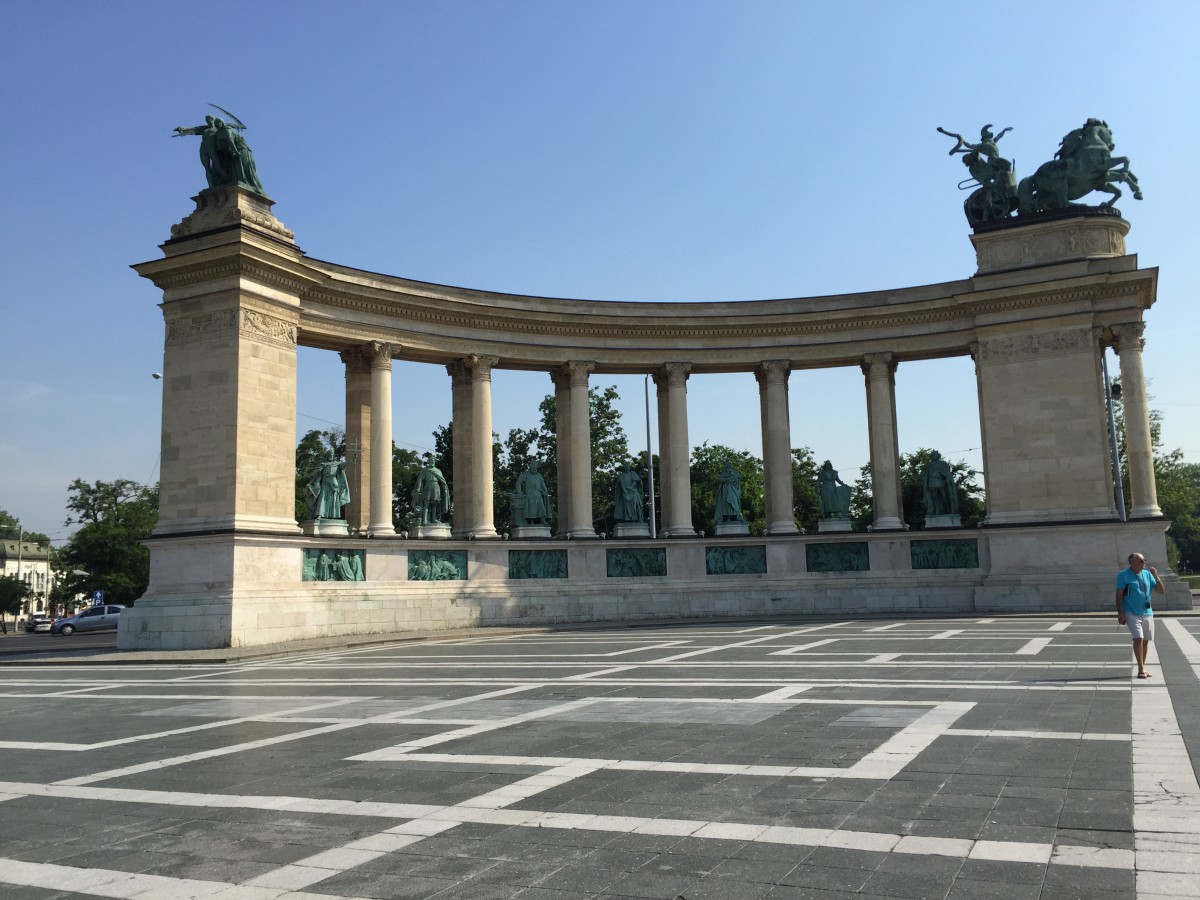
Fisherman’s Bastion, BudapestCeramic tile roof on Matthias Church, BudapestPortion of Heroes’ Square, Budapest
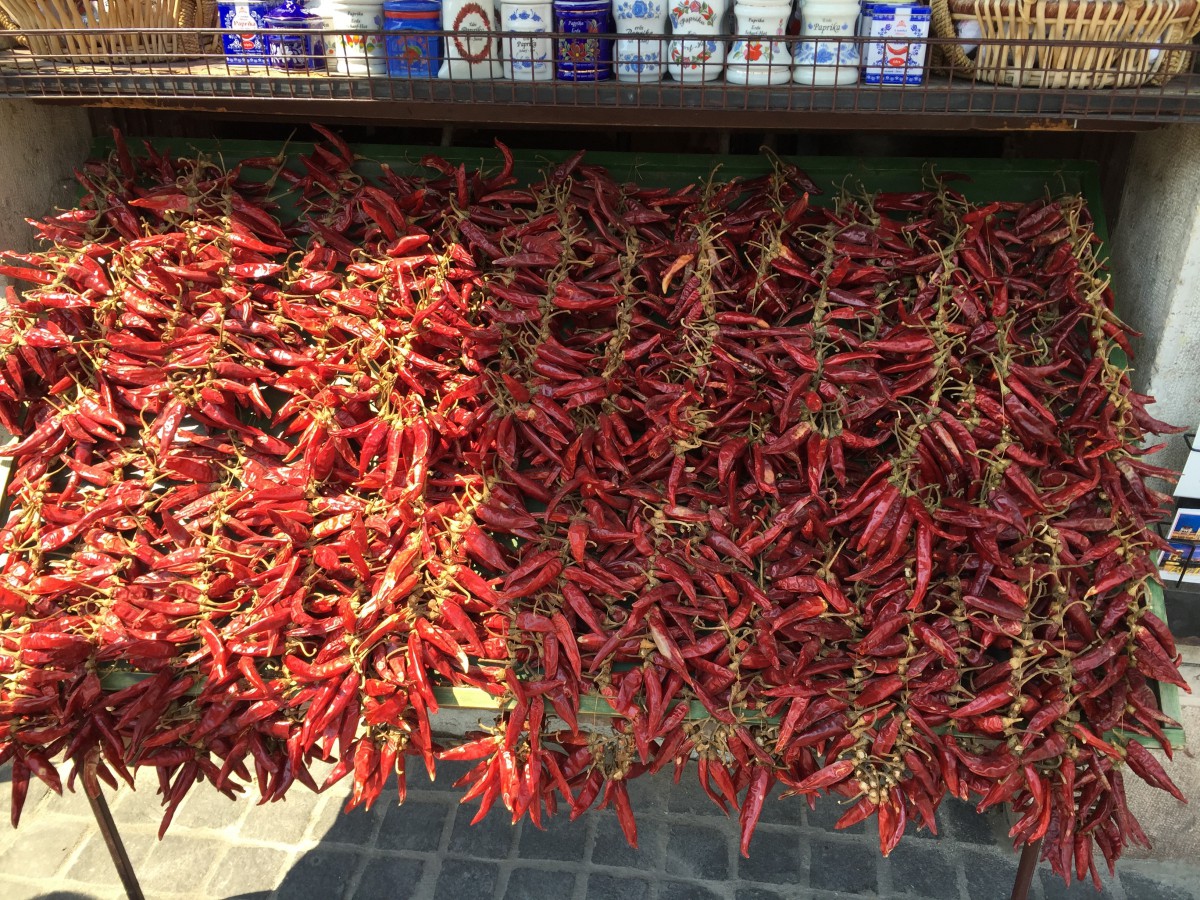
Hungary is famous for its paprika. The capsicum pepper plant used to make this popular seasoning was introduced to Hungary by the Turks in the 16th century. The spice’s pungency ranges from sweet to very hot. The brighter red the paprika, the hotter the spice. We made sure that the tins we bought to bring home were labeled “mild.”
On April 13, 1949, a magnitude 7.1 earthquake hit Tacoma, WA, at 11:55 A.M. Marvin Klegman, 11 years old, was a school safety patrol member at Tacoma’s Lowell Elementary School assigned to noon patrol duty. Marvin was out of the school when the earthquake occurred but went back to look for any students still inside. He found 6-year-old kindergartner Kelcy Allen, took his hand, and told him they had to get out. As they ran, bricks from the school’s cornerstone fell, and Marvin threw himself on top of the younger boy. Kelcy survived, but Marvin was killed by a brick that fell on his head.
(Click here for a photo of the fallen debris from the archives of the Tacoma Public Library.)
Kelcy Allen has always remembered that day. He’s grateful that he got a second chance at life. Although he knew about the rescue, he did not know the name of the boy who had saved him. But another earthquake that hit the Puget Sound area in 2001 sent him to the Tacoma Public Library to see if he could find out who the older boy was.
There Allen learned that the boy who had saved him was Marvin Klegman. Allen began telling the story of how Klegman had rescued him, and that lead to an effort to raise funds to commemorate Klegman’s heroic action. Tacoma sculpture artist Larry Anderson was commissioned to design the statue, which was installed outside the current Lowell School at the corner of North 12th and I streets, and dedicated on September 11, 2003. The statue portrays Klegman holding Allen’s hand and looking upward as the two run to safety. Bricks lay at their feet.
Marvin Klegman statue, Lowell School, Tacoma, WA
Marvin Klegman was a Cub Scout as well as a school safety patrol member. He also delivered papers for the Tacoma daily, The News Tribune, and had won a Schwinn bicycle for selling the most subscriptions in a contest. Today, students of Lowell School celebrate Marvin Klegman Day every year by hearing the story of his bravery and participating in their own acts of kindness toward others. The local Red Cross now presents a Marvin Klegman Memorial Award for heroism.
Last month Kelcy Allen spoke at Lowell School’s Marvin Klegman Day commemoration. Students were surprised to learn that he is the young boy represented in the statue. He told the students that not everyone can save a life the way Marvin did, but everyone can perform smaller acts of kindness. He suggested baking cookies and taking them to a senior center, befriending a new student at school, or donating their outgrown toys to charity.
Lowell School has its own historical importance as the district’s oldest school. Originally known as the First Ward School, it was established in Old Tacoma in 1869 in a log cabin built at the corner of North 28th and Starr streets. That log cabin was destroyed by fire in 1875. Renamed Lowell School after American poet James Russell Lowell in 1890, the school occupied several locations until 1892, when the building at the intersection of North 12th and Yakima opened. That building was condemned after the 1949 earthquake, and a new school was completed in February 1951 on the corner of North 12th and I streets.
(Click on any of the images to see a larger version.)
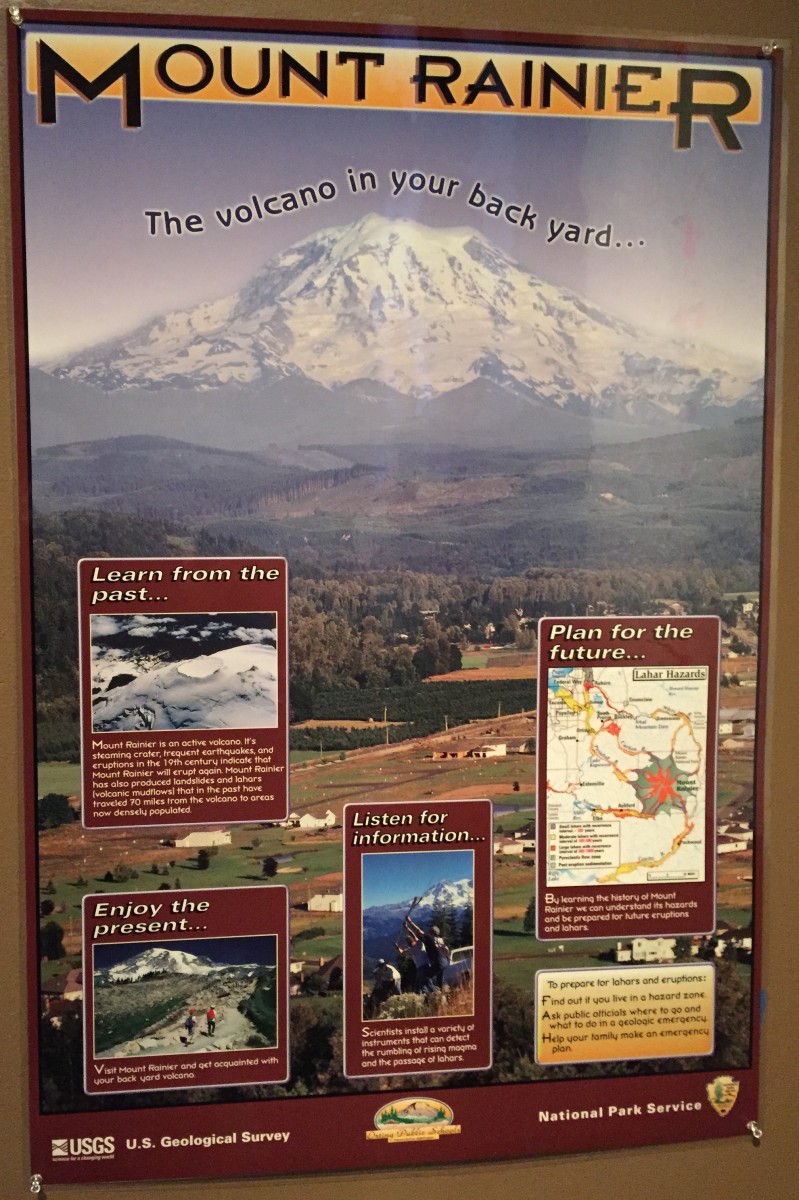
Mount Rainier is so beautiful and majestic to see that it’s easy to forget how potentially dangerous it is. Here in Tacoma, WA, we live in the shadow of this active volcano:
Living in the shadow of an active volcano (photographed at Washington State History Museum)
Washington is home to five major composite volcanoes or stratovolcanoes (from north to south): Mount Baker, Glacier Peak, Mount Rainier, Mount St. Helens, and Mount Adams. These volcanoes and Mount Hood to the south in Oregon are part of the Cascade Range, a volcanic arc that stretches from southwestern British Columbia to northern California.
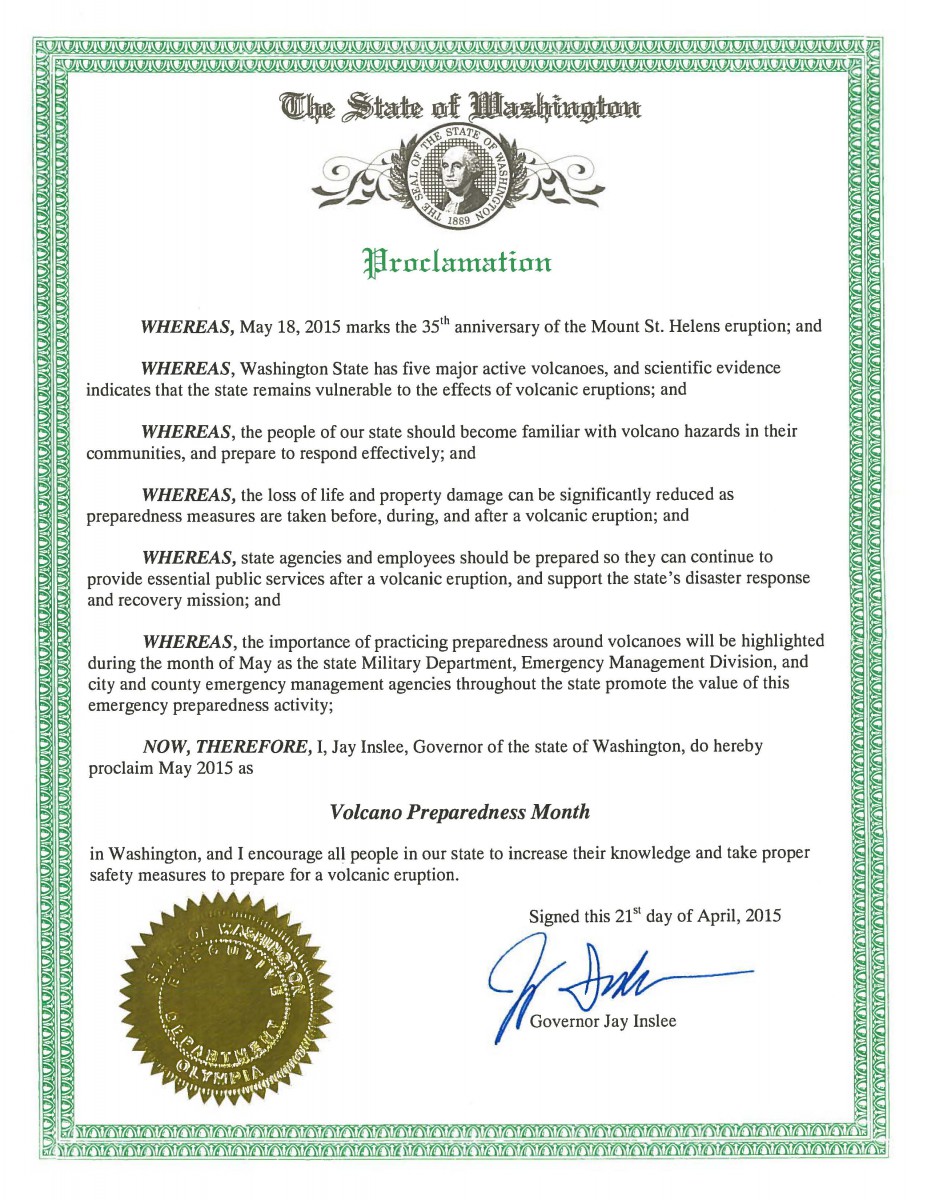
State of Washington Proclamation for Volcano Preparedness Month
The Washington State History Museum presented an exhibit earlier this month entitled “Living in the Shadows” to remind the public that what happened at Mount St. Helens could happen here:
Photographed at Washington State History Museum
When most people think of the danger of a volcanic eruption, they think immediately of flowing lava. But there are two more immediate and potentially widespread dangers:
lahars—volcanic mudflows
pyroclastic flows—ground-hugging avalanches of hot volcanic ash, pumice, rock fragments, and gases that destroy everything in their path
Dangerous Mount Rainier (photographed at Pacific Science Center)
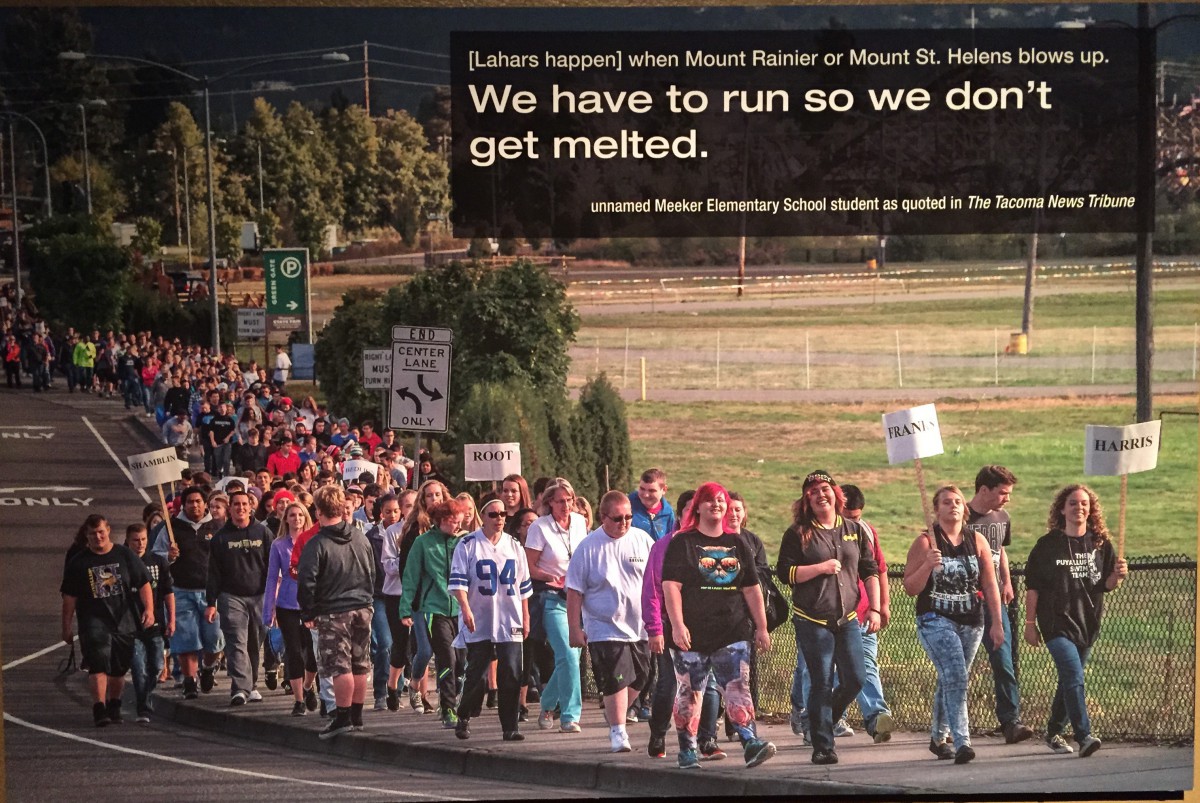
As part of the state’s volcano preparedness program, students perform annual lahar drills in which they practice evacuating their schools ahead of lahar:
School lahar drill (photographed at Washington State History Museum)
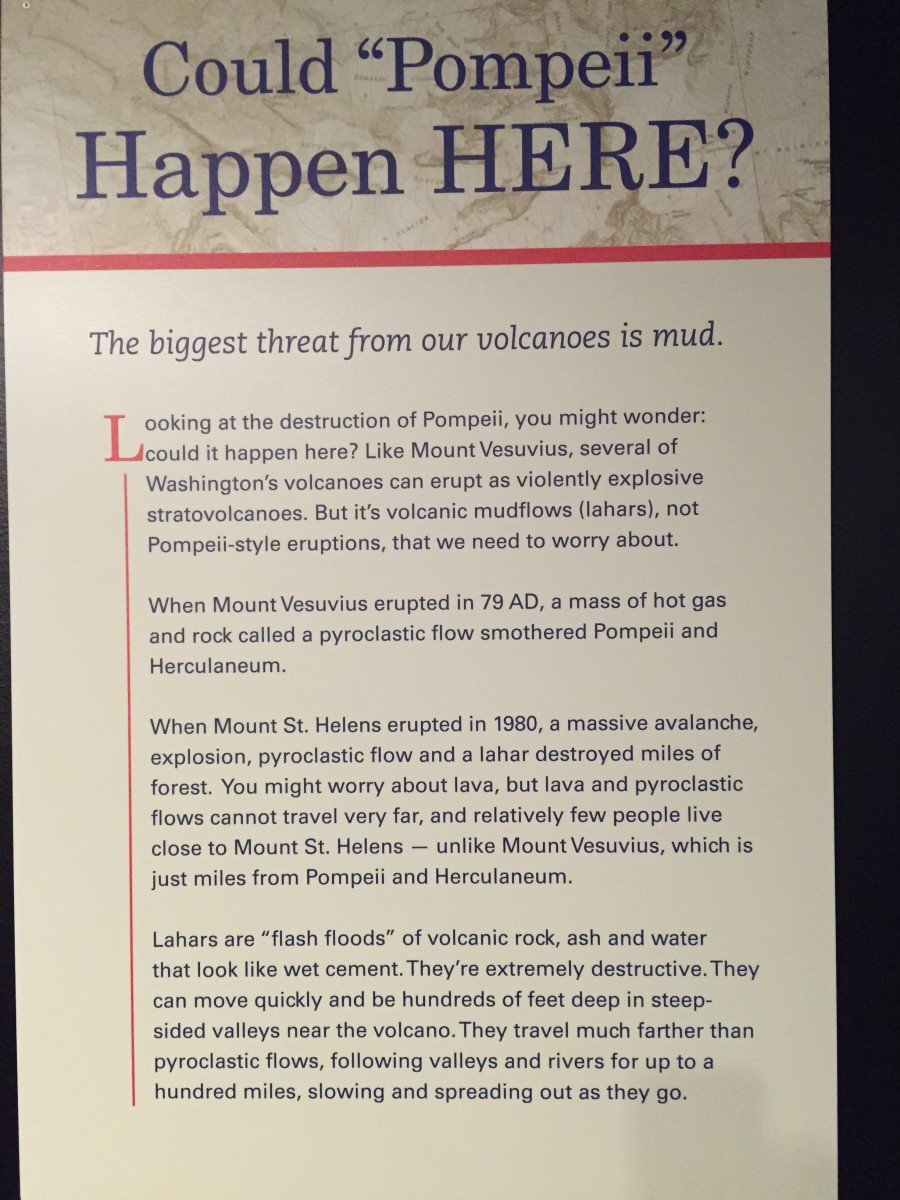
On our recent visit to see Pompeii: The Exhibition, we found the Pacific Science Center in Seattle used the eruption of Mount Vesuvius in Italy in 79 A.D. as a springboard for education about our local situation:
Lahar and pyroclastic flow (photographed at Pacific Science Center)
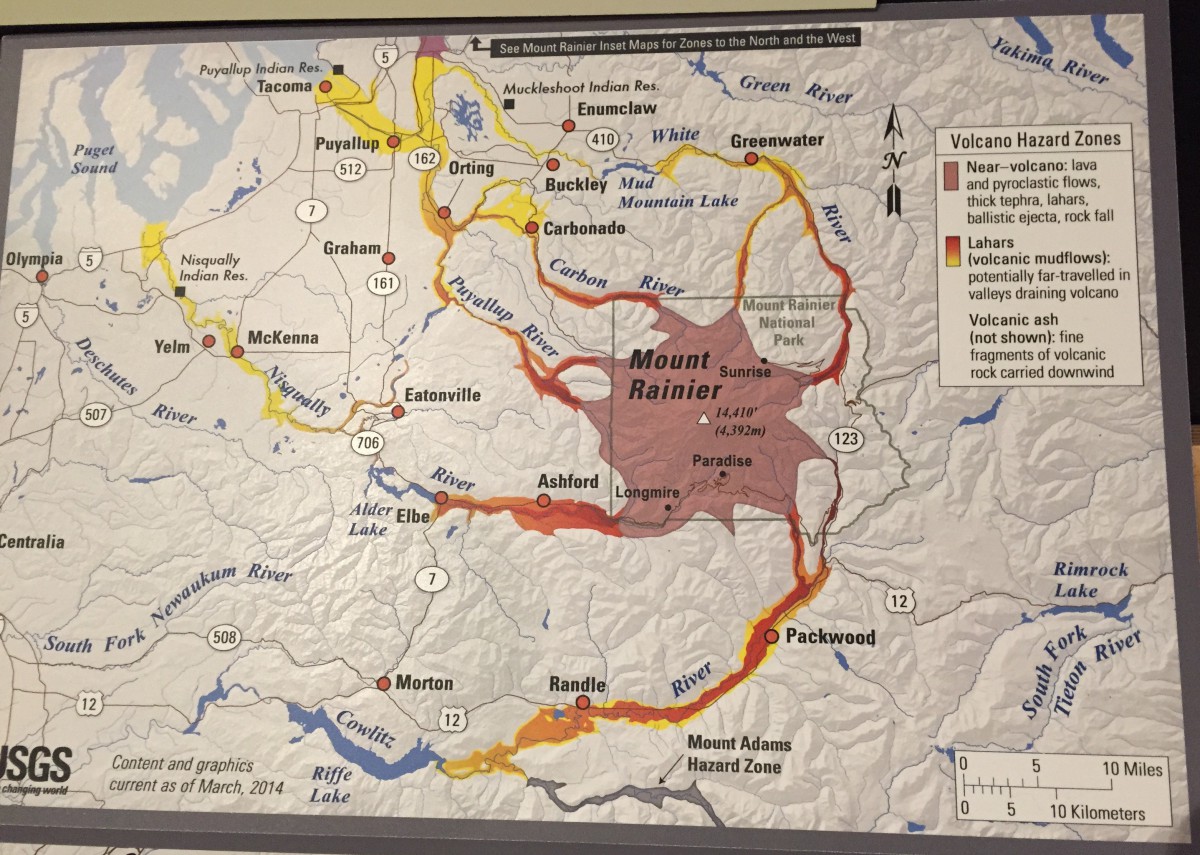
This map shows the potential danger zones if Mount Rainier were to erupt:
Mount Rainier hazard zones (photographed at Pacific Science Center)
My home town of Tacoma is up there near the top, on the left.
The beautiful Cascades have been around for years. Long before the USGS (U. S. Geological Survey) started keeping records, Native Americans knew of the mountains’ power:
(photographed at Washington State History Museum)
Washington’s Volcano Preparedness Month announcements and activities remind us that it’s not a question of “if Mount Rainier erupts,” but rather “when Mount Rainier erupts.”
Dzurisin, D., Driedger, C.L., and Faust, L.M., 2013, Mount St. Helens, 1980 to now—what’s going on?: U.S. Geological Survey Fact Sheet 2013–3014, v. 1.1, 6 p. and videos. (Available at http://pubs.usgs.gov/fs/2013/3014/)
Once again it’s time for the blog challenge Three Things Thursday, the purpose of which is to “share three things from the previous week that made you smile or laugh or appreciate the awesome of your life.”
Also once again, thanks to my husband for #1 and #2.
1. A Heron’s Lunch
My husband came upon this great blue heron just as he (the heron, not my husband) found his lunch.
I love these large, magnificent birds, even when they’re not flying.
His feathers appear rather thin and wispy. Is he sick? Or will his feathers fill out more as mating season advances?
3. Out of the Frying Pan…
We moved from St. Louis, MO—land of tornadoes, flash floods, and even the occasional earthquake—to Tacoma, WA—land of rain, the occasional earthquake, and the possibility of a volcanic eruption.
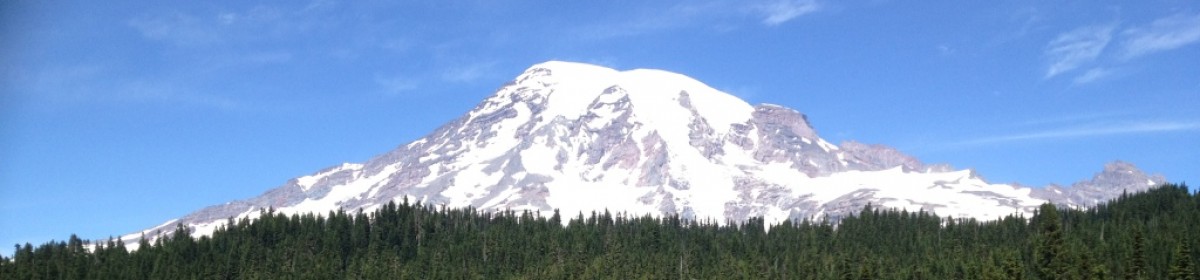
Mysterious and majestic Mount Rainier, which I love so much and which you’ll see photographs of all over this blog (just look at the sidebar on the left), is an active volcano that, sooner or later, will blow its top.
I’ll have more to say about this in the next week or so. In the meantime, I choose to view this sign with some amusement rather than fear. But if the worst-case scenario comes to pass in the next 20–30 years, I’ll be very glad to have these directive signs about.
The Roman city of Pompeii, on the western coast of Italy, was a thriving port in the first century. The region’s fertile soil made it a leading source of agricultural products, including grains, nuts, and fruits, particularly grapes that were made into wine. But life in this prosperous city came to an abrupt halt in 79 A.D., when Mount Vesuvius erupted and covered everything with 13 to 20 feet (4 to 6 meters) of pumice and ash.
Pompeii lay buried and forgotten until its rediscovery about 250 years ago. The artifacts found there were well preserved because of the lack of air and moisture. Archaeologists have carefully excavated the site and uncovered many artworks and objects that indicate what life was like for the residents of the city in the first century.
Selected artifacts from Pompeii comprise an exhibit that has toured the world. We caught the exhibit today, near the end of its run at the Pacific Science Center in Seattle, WA, the final stop on its current tour.
Terra Sigillata Cup
This terracotta cup was found in a house in Pompeii packed in a wooden crate with 89 similar pieces and 37 lamps. It indicated the high quality of North Italian ceramics manufactured from the end of the first century and throughout the second century A.D.
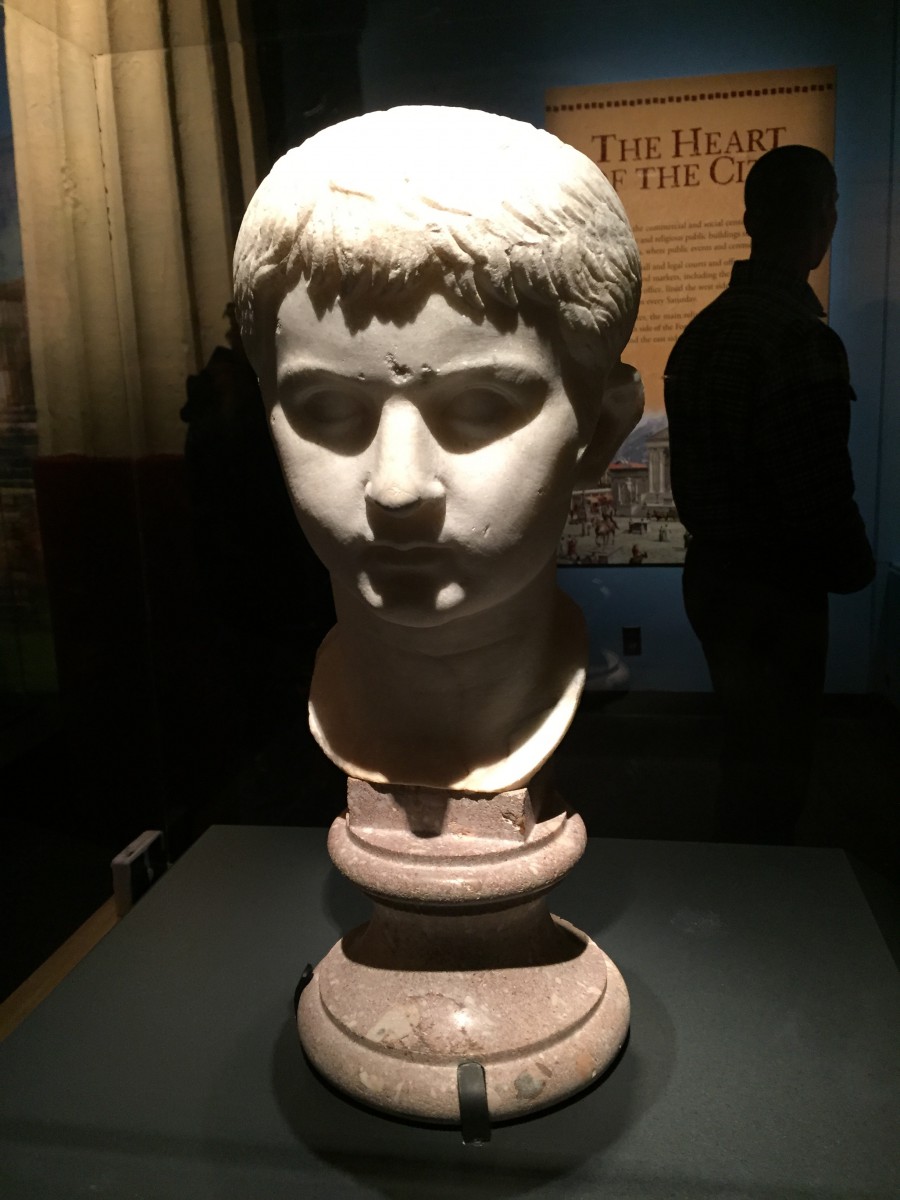
Gaius Caesar: Age 10
This bust is thought to represent the 10-year-old Gaius Caesar, grandson of the Emperor Augustus. It was found in Herculaneum, a city near Pompeii that was also destroyed by the eruption of Mount Vesuvius. The marble bust is thought to have been made between 63 B.C. and 14 A.D.
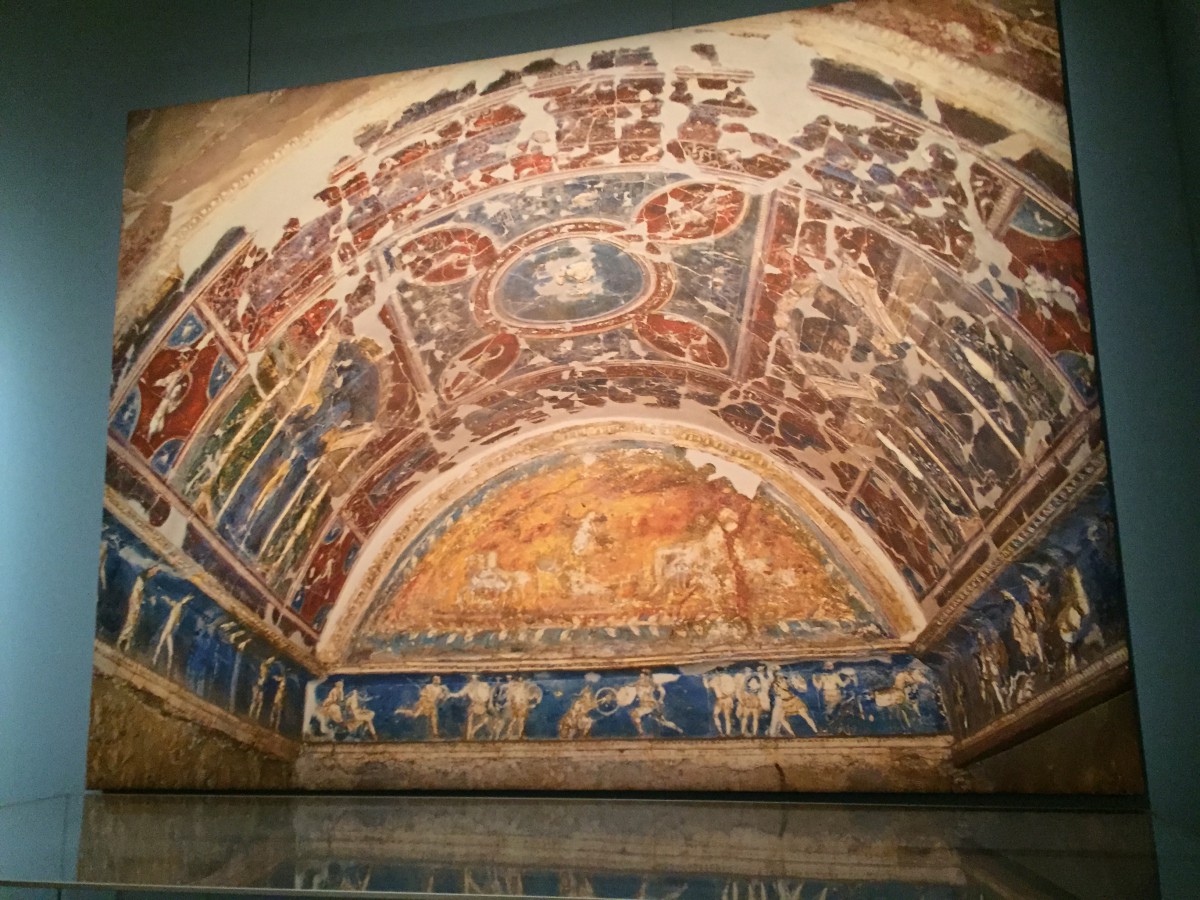
Pompeii was a vibrant, cosmopolitan city because of its trade-route location. By 79 A.D. many wealthy Roman citizens had holiday villas there furnished with artworks, such as statues and mosaics, and painted walls called frescoes:
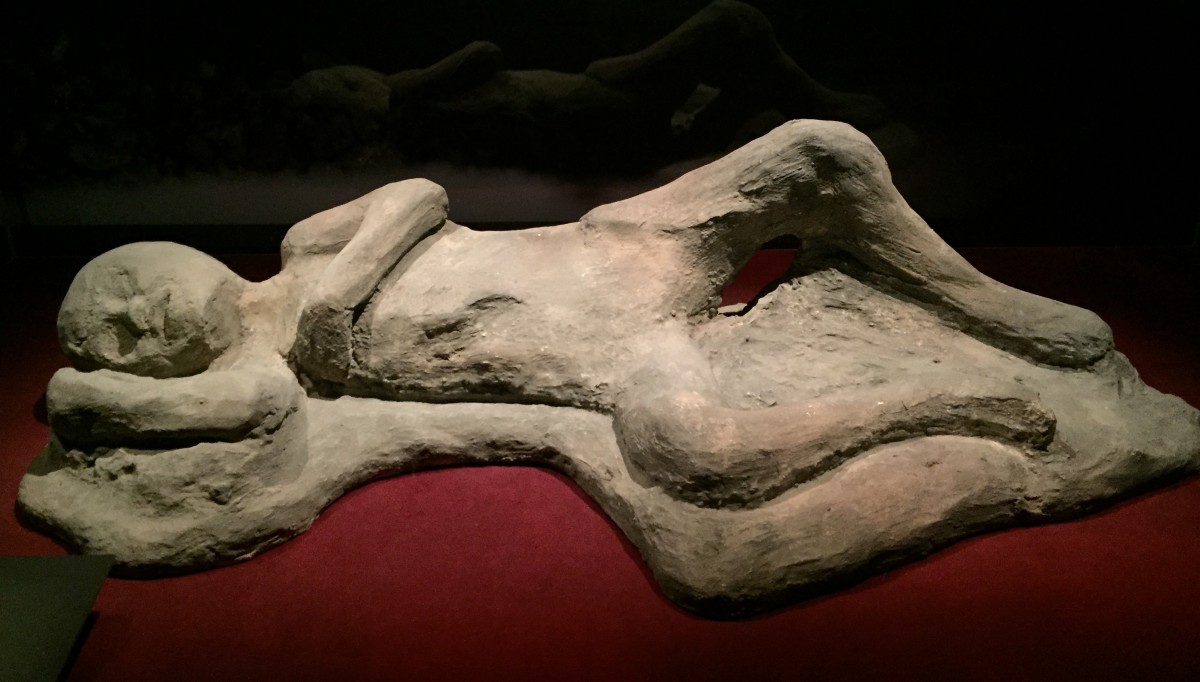
During the excavation of Pompeii, archaeologists used plaster to fill in the voids that had once held human bodies. These plaster casts reveal the exact positions people were in when they died.
Reclining bodyBody of child
I was a classics major in college and had read the surviving letter by Pliny the Younger, who witnessed the eruption of Vesuvius. In the letter he describes not only the eruption itself, but also the death of his uncle, Pliny the Elder, an admiral of the Roman fleet who died trying to rescue Pompeii’s citizens from the devastation. As much as I enjoyed seeing the many artifacts and artworks, the location of these body casts at the end of the exhibit reminded me of the sudden extinction of so many lives. (Estimates of the population of Pompeii at the time of the eruption range from 11,000 to 20,000).
I am glad to have had the opportunity to view this exhibition. It features not only human cultural achievement but also the massive power of the natural world.
Once again it’s time for the blog challenge Three Things Thursday, the purpose of which is to “share three things from the previous week that made you smile or laugh or appreciate the awesome of your life.”
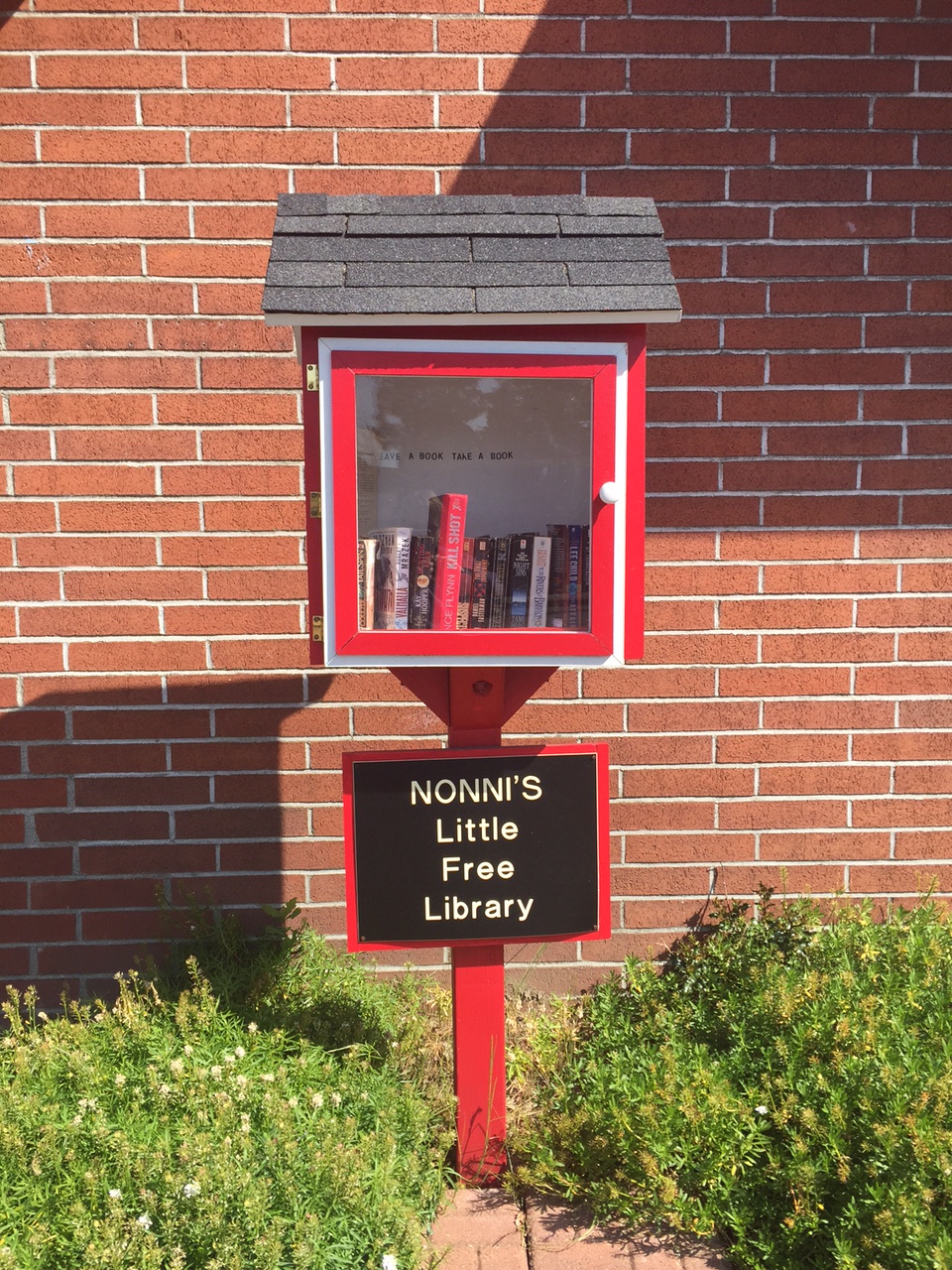
1. Little Free Library
I had heard about and seen photos of little free libraries on Facebook and other social media and news sites, but I had never seen one in the wild until last Saturday.
This little gem is outside an insurance company office in Puyallup, WA.
The Little Free Library movement was started in Wisconsin by Todd Bol and Rick Brooks in 2009. Its mission is two-fold:
To promote literacy and the love of reading by building free book exchanges worldwide.
To build a sense of community as we share skills, creativity and wisdom across generations.
Its goal is “To build 2,510 Little Free Libraries—as many as Andrew Carnegie.”
This goal was reached in August of 2012, a year and a half before our original target date. By January of 2015, the total number of registered Little Free Libraries in the world was conservatively estimated to be nearly 25,000, with thousands more being built.
The philosophy behind little free libraries is “Take a book. Return a book.” In other words, for every book you take, you should put one book back. The aim of the process is to promote not only general literacy, but also neighborhood community. These libraries are run on the honor system by community members, for each other.
Check the Little Free Library web site for information on how to establish and maintain one in your neighborhood.
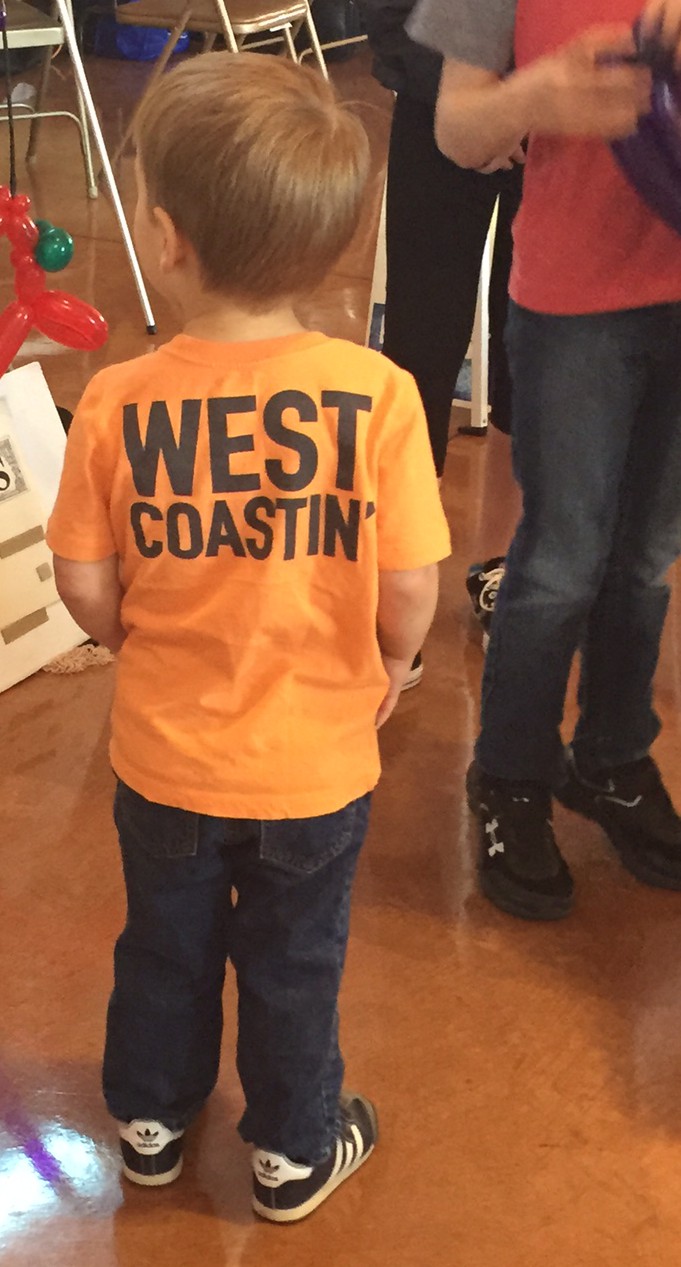
2. West Coastin’
Since retiring from St. Louis, MO, to Tacoma, WA, my husband and I have been enjoying what we think of as West Coasting. So I was delighted to see a little guy wearing this T-shirt:
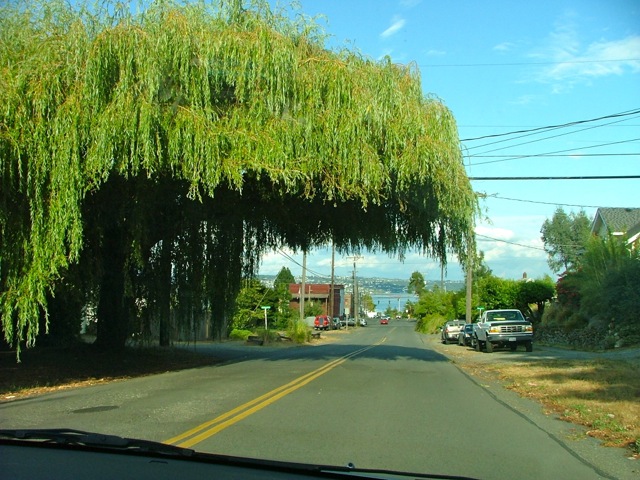
3. Easy Passage
We took this photo from our car on a 2009 visit to Tacoma. The tree was on a road leading to the Point Defiance Zoo & Aquarium.
Photographed in 2009
We ended up living just around the corner from this tree. When I arrived at my new home in April 2013, I was disappointed not to see this tree. Sometimes on our walks we stand near its stump and fondly remember how much it amused us when we first spotted it.
Once again it’s time for the blog challenge Three Things Thursday, the purpose of which is to “share three things from the previous week that made you smile or laugh or appreciate the awesome of your life.”
Three Things Emblematic of Tacoma
emblematic:
representing something (such as an idea, state, or emotion) that cannot be seen by itself.
I’ve been in my new hometown of Tacoma, WA, for two years now and still enjoy exploring the city and learning about new aspects of it. Today I feature three things that are emblematic of Tacoma.
1. Museum of Glass
Museum of Glass
1801 Dock St, Tacoma, WA 98402
(253) 284–4750
the Museum’s stainless steel cone serves as a beacon to a stunning contemporary art museum as well as a symbol for the restoration of a waterway and the revitalization of a city.
The idea for the Museum of Glass arose in August of 1992 from a conversation between Phil Phibbs, who had recently retired as president of the University of Puget Sound, and Dale Chihuly, a world-renown glass artist who had grown up near and attended the university.
A few weeks later Dr. Phibbs brought his idea for a glass museum to the Executive Council for a Greater Tacoma, a group of business and governmental leaders. He was invited to stay for the next presentation, a plan for redevelopment of the Thea Foss Waterway, a strip of empty industrial land next to a body of polluted water in downtown Tacoma. The Council agreed that the proposed glass museum would be an appropriate anchor tenant for the proposed redevelopment.
“In September 1997, Canadian architect Arthur Erickson unveiled the Museum’s design concept, which included an iconic, tilted cone.” Construction began in June of 2000, and the Museum of Glass, with its adjoining Chihuly Bridge of Glass, opened on July 6, 2002. The museum features work of glass artists from all over the world.
Located within the 90-foot tall steel cone, the Hot Shop Amphitheater allows visitors to watch as artists create art pieces from molten glass. The museum features displays in its indoor galleries, art installations on its outdoor plazas, and an extensive list of educational programs.
2. Tacoma Dome
Tacoma Dome
2727 E D St, Tacoma, WA 98421
(253) 272–3663
The Tacoma Dome, owned and operated by the City of Tacoma, is the largest arena in the world with a wooden dome. Construction began on July 1, 1981, and the Dome opened on April 21, 1983. It is 530 feet (160 m) in diameter and 152 feet (46 m) tall, and can seat up to 23,000. Most of the arena’s seating is not fixed, so that the space can be configured for many different types of events. It’s not unusual to see bleachers standing in the parking lot when driving by the Dome on I 5
The Tacoma Dome’s roof was built with 1.6 million board feet and weighs 1,444,000 pounds. 24,541,382 cubic feet of concrete was used in the construction of the Tacoma Dome. This is enough to build a sidewalk 70 miles long. The Tacoma Dome is 530 feet in diameter and 152 feet tall.
The Tacoma Dome’s aluminum super-grid is one of the world’s largest at 384’ x 160‘. The total cable length is approximately 47,661’ or just over nine miles. There are over 275 support points on the Dome and the grid includes an estimated 2.5 miles of welding.
The Tacoma Dome hosted the 1990 Goodwill Games, the 1988 and 1989 NCAA Women’s Basketball Final Four, and the 1987 United States Figure Skating Championships. The Seattle Sonics National Basketball Association team held its home games of the 1994–1995 season during renovation of Key Arena in Seattle.
Throughout the year the Tacoma Dome hosts many kinds of civic events and gatherings, including music concerts, trade shows, fairs, sporting events, and local high school and college graduations.
I’ve saved the best for last. You’ll see a lot of different photos of Mount Rainier on this blog because I love it so much.
The mountain is about 70 miles southeast of Tacoma, but on a clear day it looks as if you could reach out and touch it. The mountain is so emblematic of Tacoma that a lot of companies use it in their logo. See, for example, Tacoma’s local daily newspaper, The News Tribune.
Mount Rainier reaches 14,410 feet above sea level.
An active volcano, Mount Rainier is the most glaciated peak in the contiguous U.S.A., spawning six major rivers. Subalpine wildflower meadows ring the icy volcano while ancient forest cloaks Mount Rainier’s lower slopes. Wildlife abounds in the park’s ecosystems.
The National Park Service website offers lots of information about both the animals and the vegetation surrounding Mount Rainier. It even has webcams. The park is open all year, although much of it is inaccessible to traffic during the winter (which usually starts early and ends late). Be sure to check the website for weather conditions, including the need for tire chains, when planning your visit.
Between 1.5 and 2 million people visit Mount Rainier National Park every year. We in Tacoma are lucky enough to be able to see the mountain frequently throughout the year.
Once again it’s time for the blog challenge Three Things Thursday, the purpose of which is to “share three things from the previous week that made you smile or laugh or appreciate the awesome of your life.”
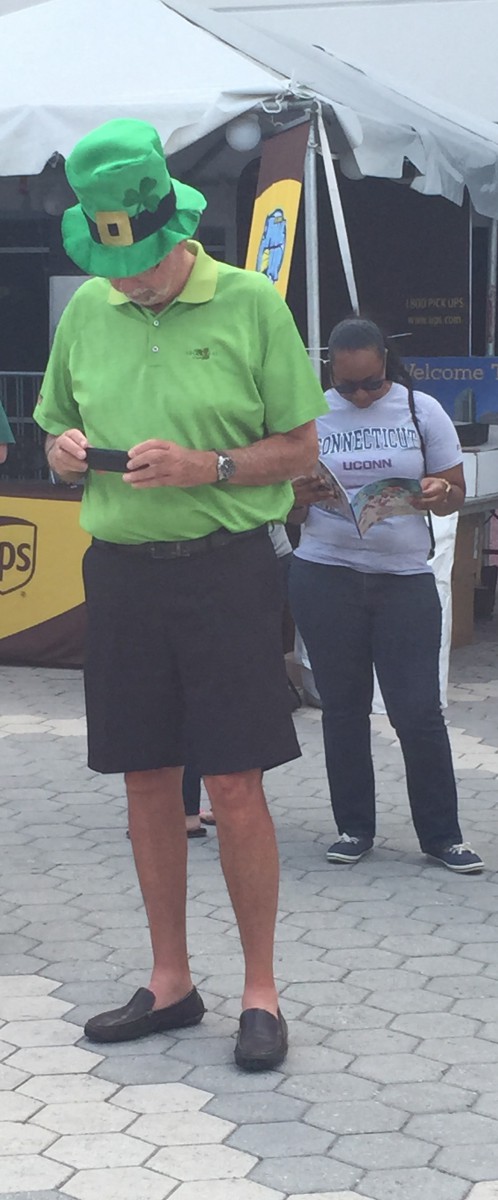
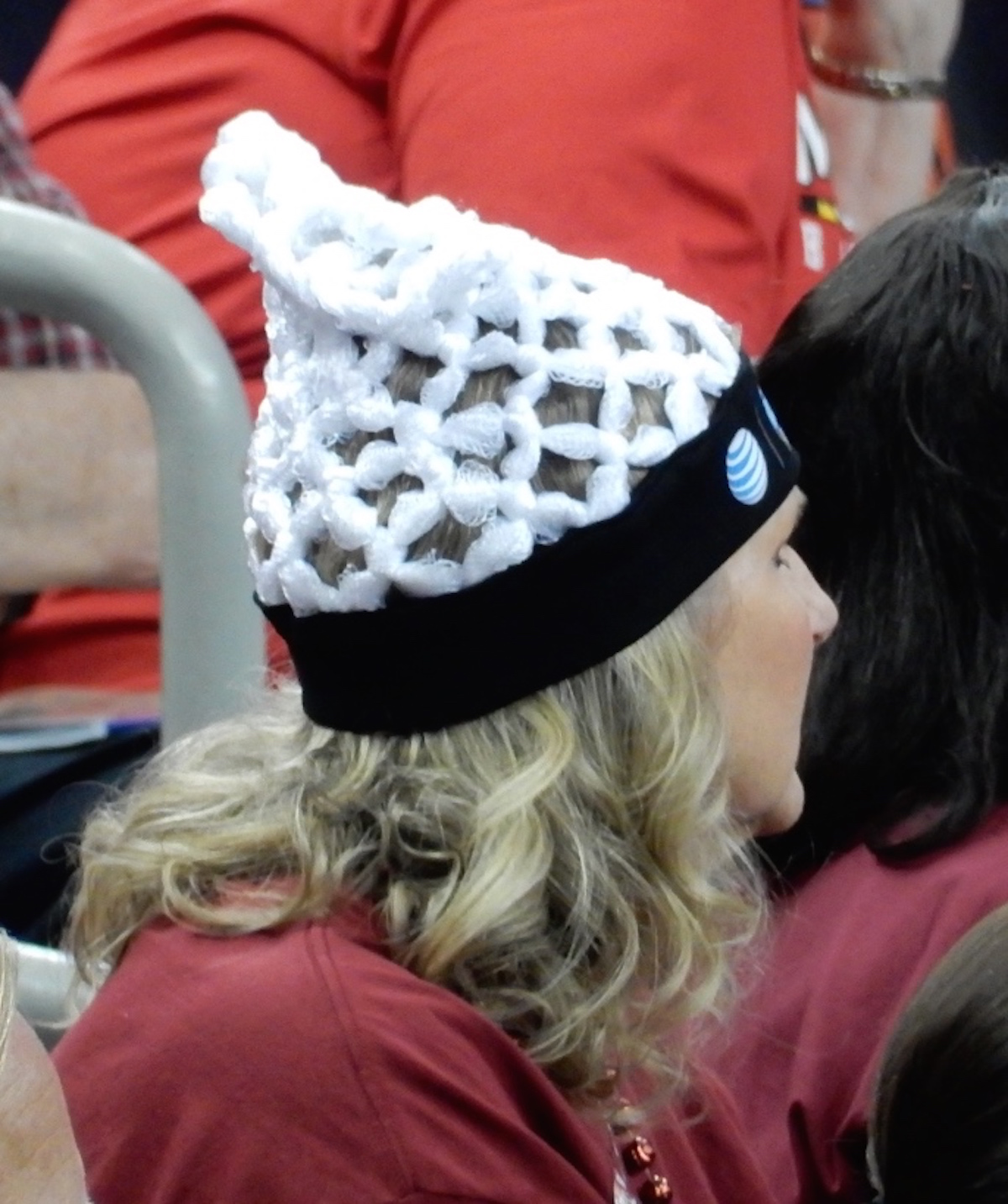
One of the things I love so much about this experience is seeing how creative some of the fans get with their clothing. Here are my awards for outstanding headgear at this year’s Women’s Final Four:
Once again it’s time for the blog challenge Three Things Thursday, the purpose of which is to “share three things from the previous week that made you smile or laugh or appreciate the awesome of your life.”
Food in Portland
I’ve written about our trip last weekend to Portland, OR, here and here.
Although we weren’t there for very long, we did have some memorable food experiences.
1. Kells Irish Pub
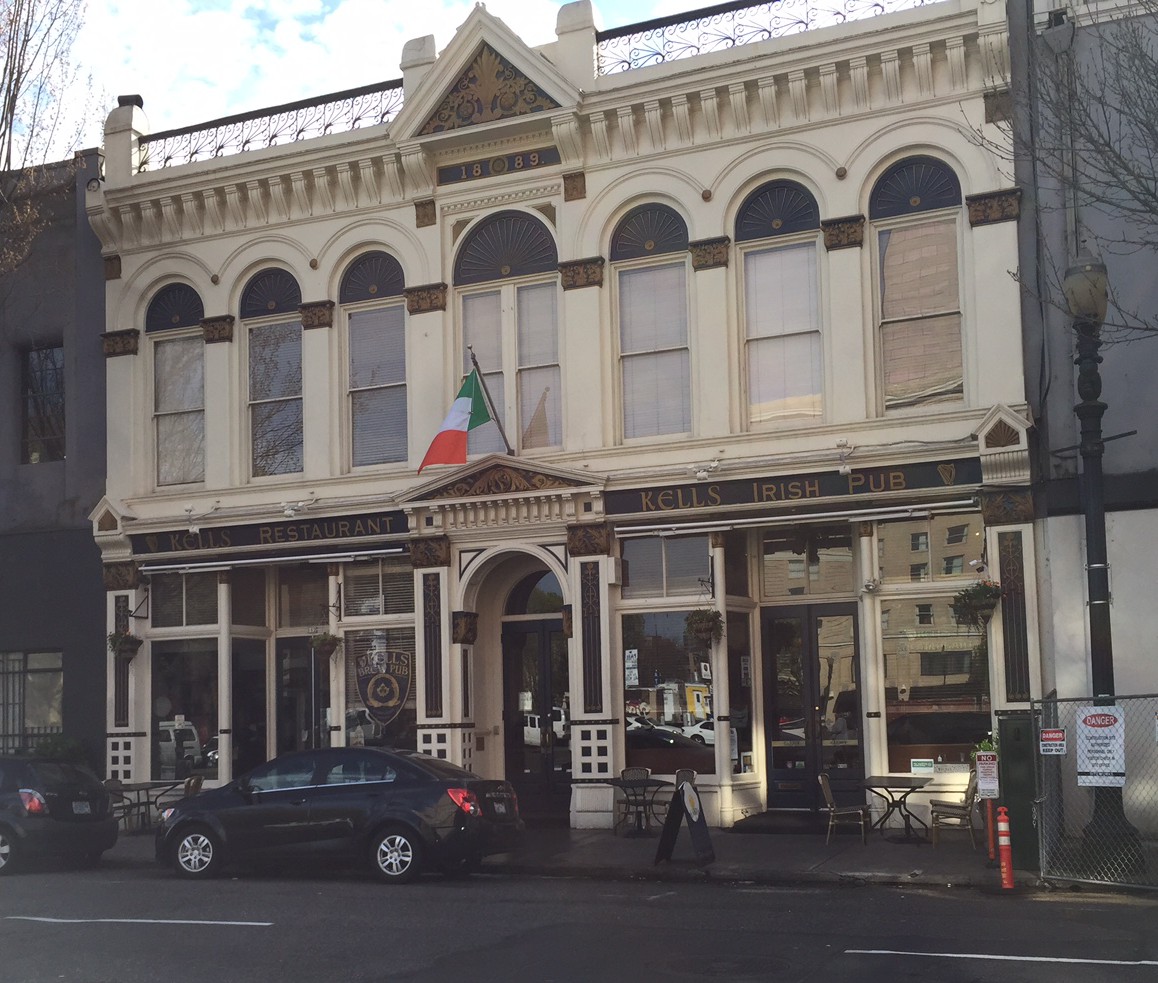
The conference my daughter and I attended was at the Embassy Suites in Portland’s historic Old Town district. We arrived in time for a mid-afternoon lunch at nearby Kells Irish Pub:
112 SW Second Avenue, Portland, OR 97204
(503) 227–4057
Like most of the businesses in this redeveloped area, Kells is in a historic old building. This one was built in 1889 and is on the National Historic Register:
Kells Irish Pub
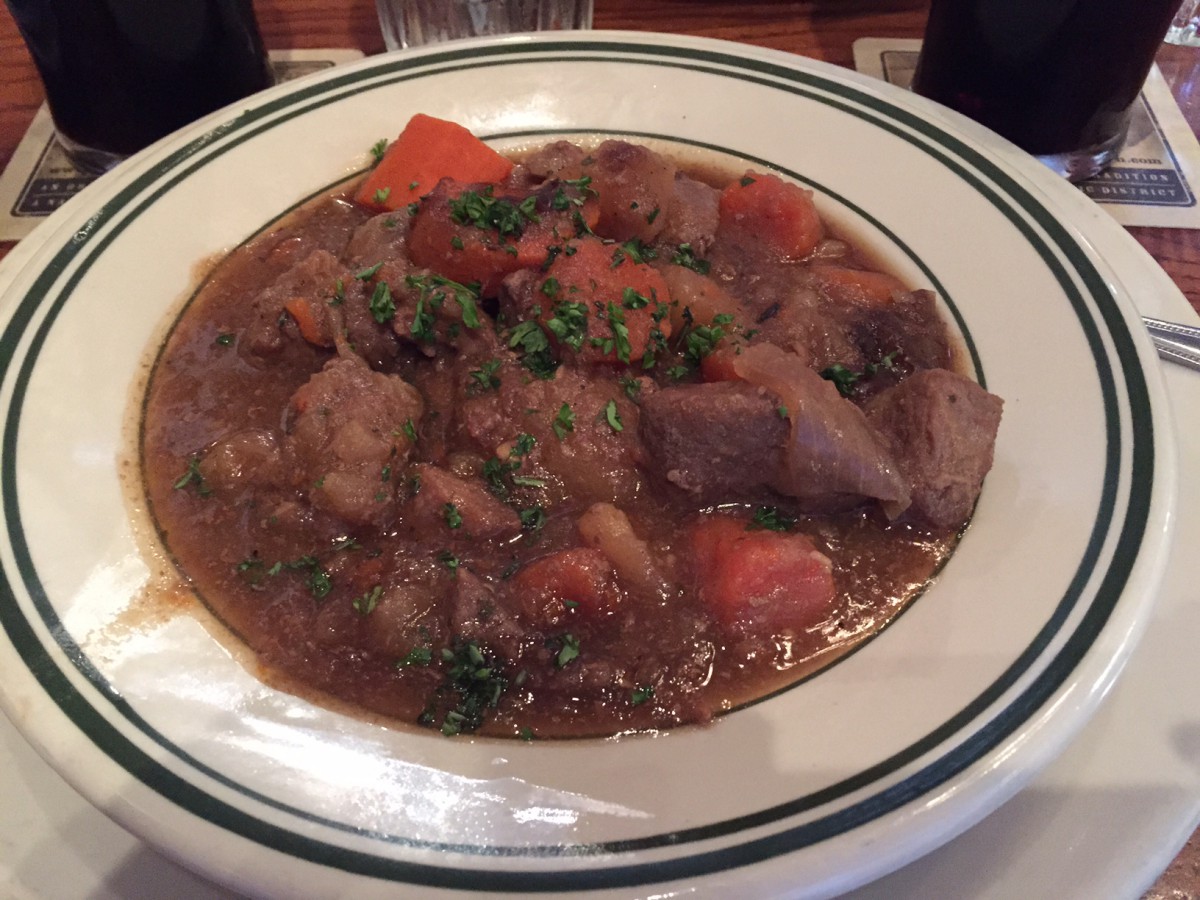
And of course we ate and drank traditional Irish fare:
A pint of Kells Stout between 2 pints of GuinnessIrish lamb stew
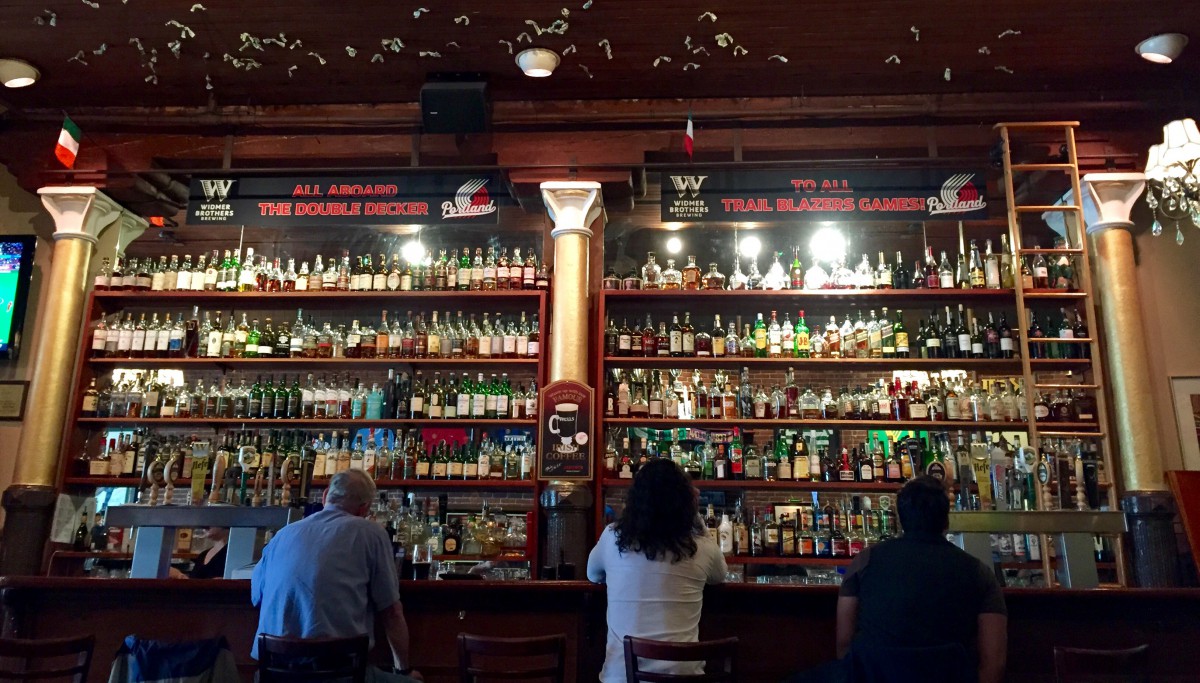
Kells even has a huge wall of whiskeys that requires a library ladder for full access, which you can see at the right side of the photo featured at the top of this post.
They have a second site in Portland and—wait for it!—one in nearby (to us) Seattle and one in San Francisco, a city we occasionally visit.
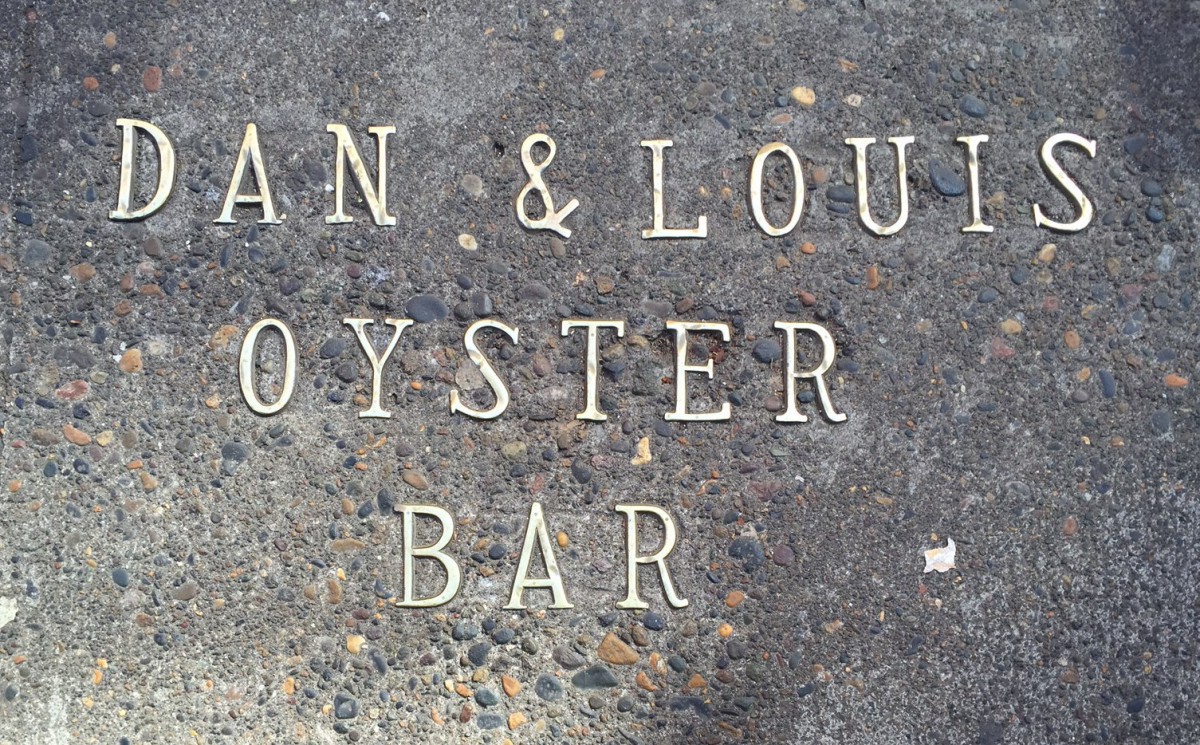
2. Dan & Louis Oyster Bar
After the conference Saturday night, we went for dinner to Dan & Louis Oyster Bar, also within walking distance of the hotel in Portland’s historic district:
208 SW Ankeny St. Portland, OR 97204
Opened in 1907, it bills itself as the “oldest family-owned restaurant in town.” It even has its name inlaid in the sidewalk outside the entrance:
My husband and I had lunch here when visiting Portland about 15 years ago. I remembered the restaurant having the best oyster stew I’d ever tasted, and I’m happy to report that it still does.
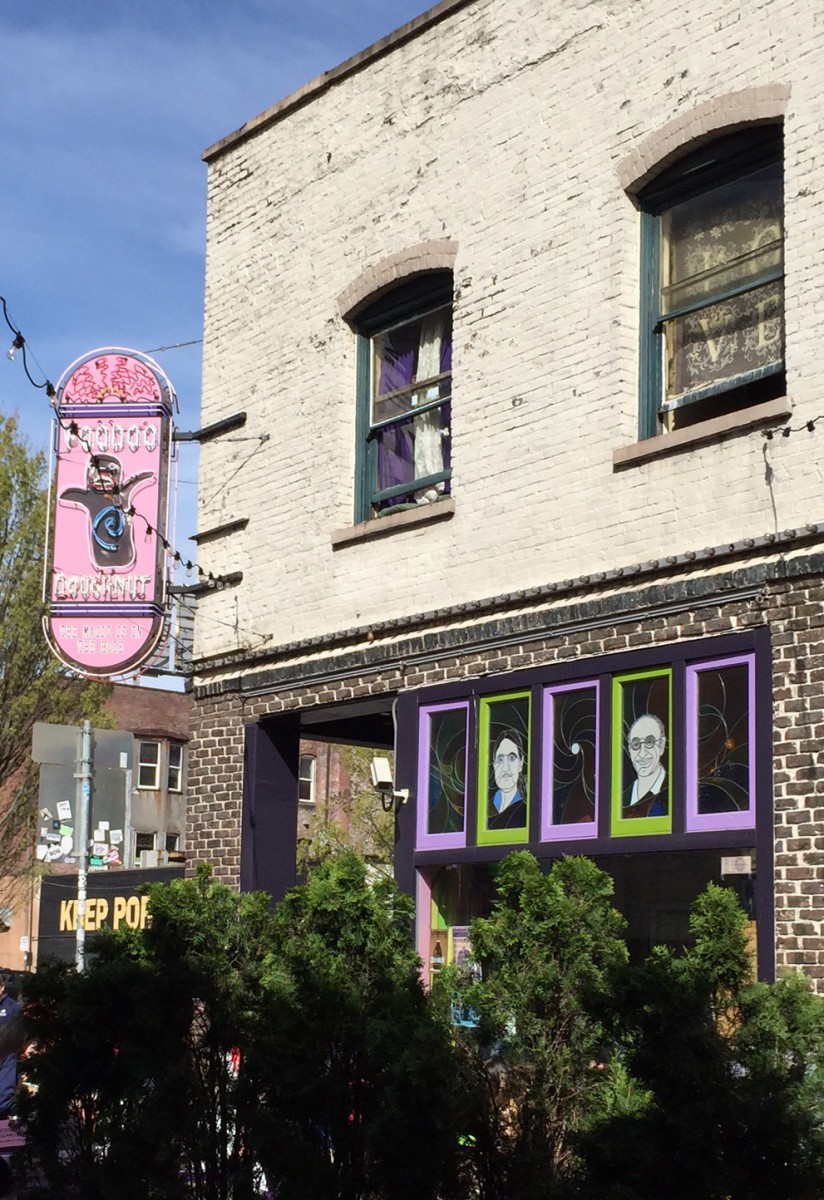
3. Voodoo Donuts
Voodoo Doughnuts
We never did get to eat the creations of the very famous Voodoo Doughnuts because every time we walked by there was a ridiculously long line.
That may be a good thing, though, because it will probably take me at least a few months to decide which doughnut I want. Check the website for photos and descriptions of their many offerings.
Once again it’s time for the blog challenge Three Things Thursday, the purpose of which is to “share three things from the previous week that made you smile or laugh or appreciate the awesome of your life.”
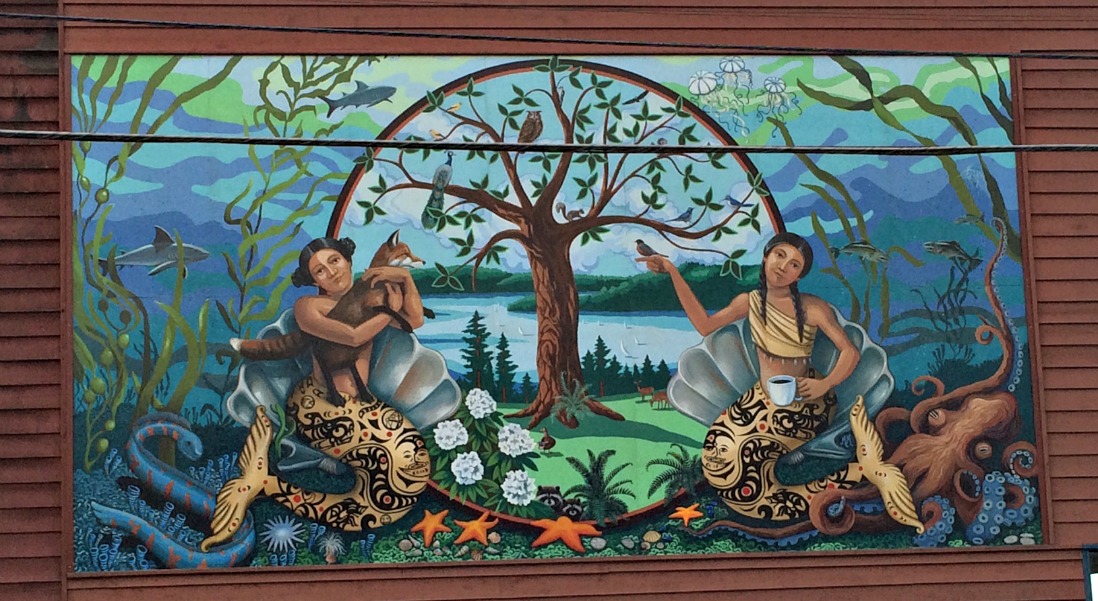
There’s some awesome art work on public display in our neighborhood. Here are three examples.
1. Antique Sandwich Co.
One of the most interesting places nearby is the Antique Sandwich Co., founded as a family business in 1973.
5102 N Pearl St, Tacoma, WA 98407
(253) 752–4069
The restaurant serves breakfast, lunch, and dinner, and offers a varied menu that includes granola, cinnamon rolls, sandwiches, soups, lasagna, quiche, pies, cakes, and a big selection of teas and coffees. They also host frequent musical performances.
The mural pictured here graces the N. 51st Street side of the shop’s antique building.
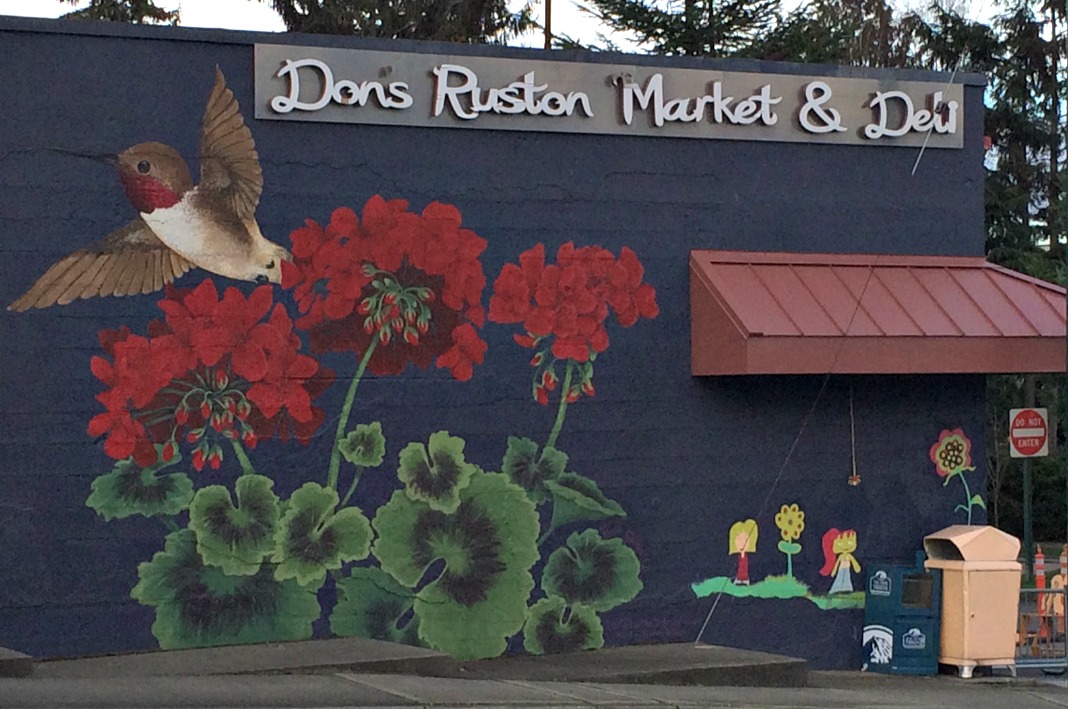
5102 N Winnifred St, Ruston, WA 98407
(253) 759–8151
Don’s has graced its corner in the little city of Ruston for more than 30 years. It offers seasonal kayak rentals, but its main attraction is the antique soda fountain that features a lengthy list of milkshakes and sodas. For more information, check out this article from our local Tacoma newspaper, The News Tribune.
This photo shows the decorative mural on the N. 51st Street side of the store. The mural is actually much bigger (it extends further off the left side of the photo), but I couldn’t get the whole thing because a van was parked on the street.
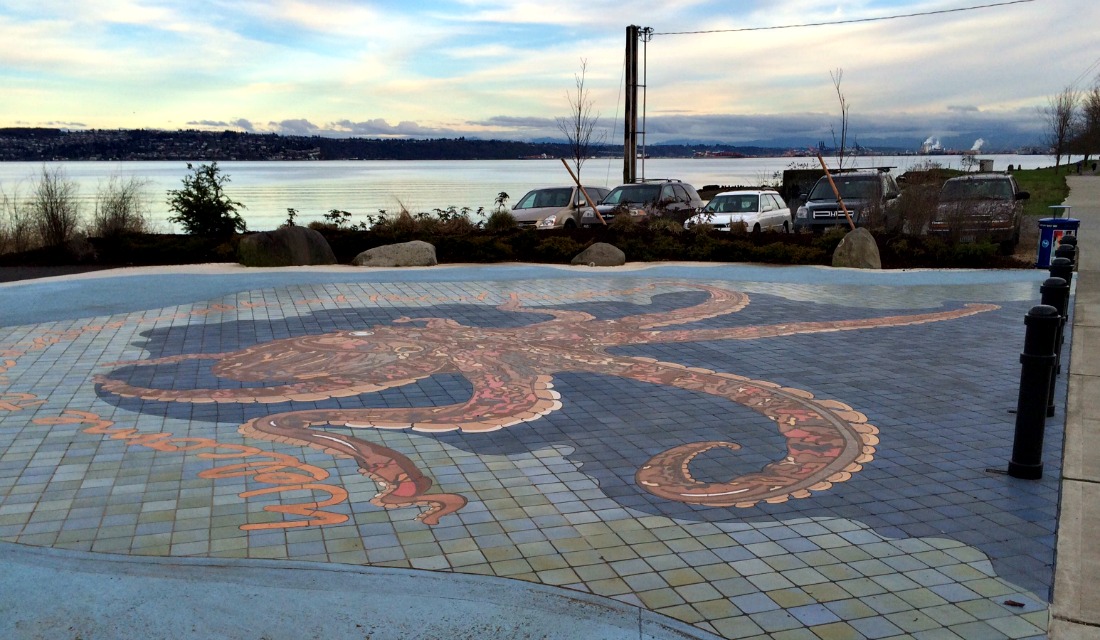
3. Octopus on The Waterwalk at Point Ruston
About three steep blocks down N. 51st Street from Don’s Ruston Market is the new development of Point Ruston, currently under construction. When finished, the development will include apartments, condos, restaurants, retail shops, and a movie theater.
5005 Ruston Way, Tacoma, WA 98407
(253) 759–6400
The Waterwalk is a park that stretches along the edge of Commencement Bay at Point Ruston and eventually connects to a walkway into nearby Point Defiance Park. This octopus graces an entrance into the park off Ruston Way. There are other art spots along the walkway featuring fish, jellyfish, and squids. I photographed the octopus because the Giant Pacific Octopus, prolific in this area, is one of my favorite animals.

















 Retreading for Retirement