Three Things Thursday

Here are some photos from our recent trip to Winthrop, WA, in honor of Three Things Thursday, the purpose of which is to “share three things from the previous week that made you smile or laugh or appreciate the awesome of your life.”

Click on any photo to see a larger version.

1. Floyd

Floyd
Floyd

This North American bison from Wyoming greets visitors just inside the door at Sun Mountain Lodge.

2. Mule Deer

mule deer at lodge
mule deer at lodge

The Methow Valley has one of the largest herds of mule deer in the country. A good portion of them gather to graze on the lawn of Sun Mountain Lodge.

3. Stunted Pine

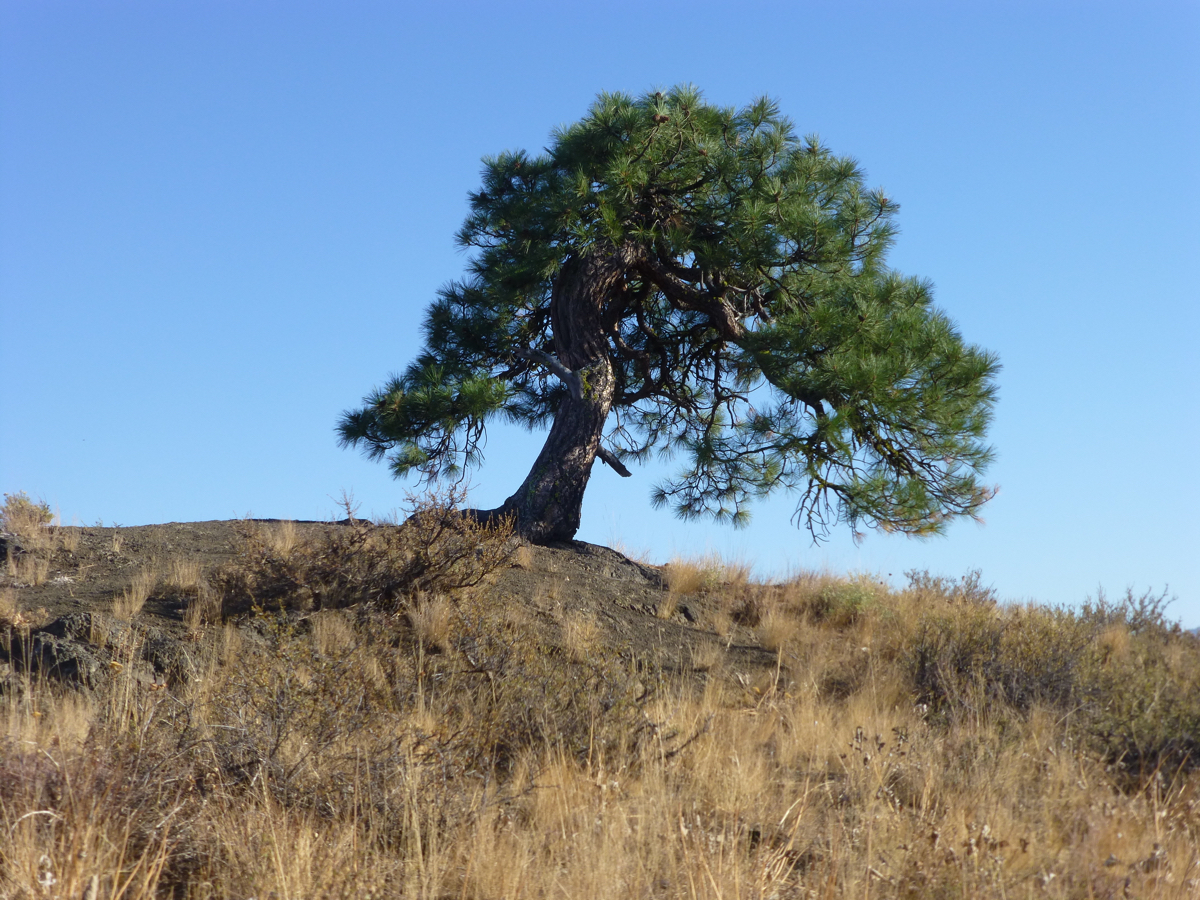
Stunted Ponderosa pine

Just a bit behind the deer in photo #2, this Ponderosa pine sits atop a hill. Because it is growing from a crack in the rock, it has remained small. It reminded us of a bonsai tree.

Road Scholar Program: Day 2

Today began with more of Dana’s presentation “How Nature Works.” He emphasized the way that fire serves to maintain nature’s balance. This is a salient issue because the recent wildfires in Washington burned close by but were stopped before reaching downtown Winthrop.

According to Dana, Ponderosa pines have developed thick bark that protects them from fire. Brush fires burn quickly, and when they sweep through a forested area, they are gone before they can burn through the bark of a Ponderosa pine and harm the interior, living part of the tree. These fires burn low-lying vegetation that competes with trees for nutrients from the soil. When allowed to burn freely, these fires keep down the growth of vegetation on the forest floor. But when the fires are routinely extinguished, low vegetation builds up so that, when a fire does arise, there is plenty of fuel for it to burn through. This is why the recent fires were able to spread across the area so quickly.

(Click on any photo to see a larger version.)

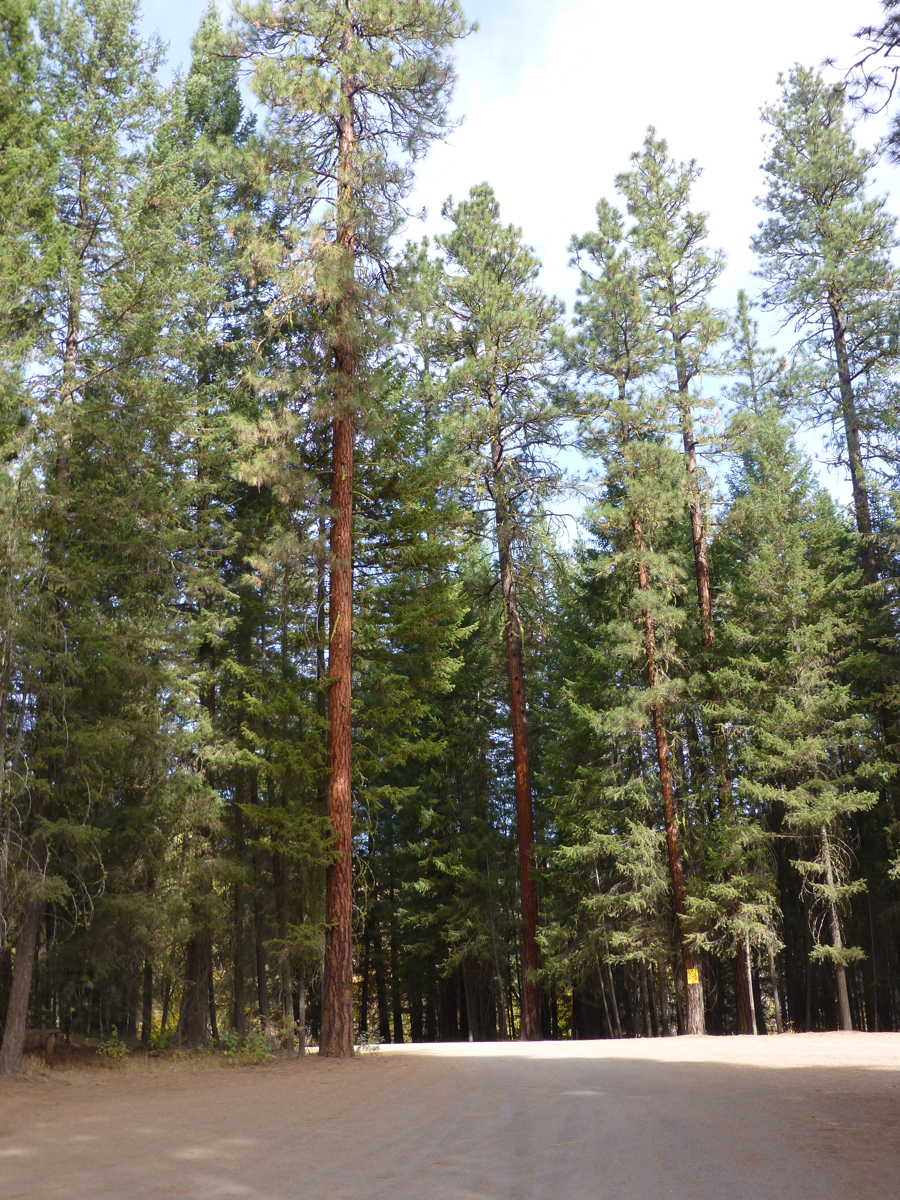
Later, on a walk along the trails near the lodge, we saw the tall Ponderosa pines, with their distinctive orange bark:

Ponderosa pines
Ponderosa pines

Dana also took us to the nearby beaver pond. Despite the name, beavers no longer live there because the owners of the land now trap and relocate them when they show up. The reason, Dana told us, is that beavers would cut down all the aspens that surround the pond within about 10 years.

beaver pond

Although we didn’t get to see beavers, we did see both ducks and geese swimming on the pond.

The second part of today’s program was the introduction of “Northwest History in Story and Song” presented by Hank, a singer, historian, and storyteller. Hank discussed the European exploration of the Pacific Northwest. He punctuated his slide presentation with songs that capture the spirit of the people who manned the ships that came looking for the Northwest Passage. Such songs represent the oral history tradition that prevailed before most people could read and write. On the ships, the shantyman sang songs that provided the rhythm necessary for whatever job the men were performing: The more rapid the action, the more lively the song.

Road Scholar Program: Day 1

Since our move to Washington State, we’ve done most of our exploring along the coast, between northern Washington and San Francisco. Now that summer is over, we decided to head east over the Cascade Mountains. This is not a trip for summer, as the temperatures east of the Cascades are often in the 90s, sometimes even more than 100. We signed up for the Road Scholar (formerly ElderHostel) class called Nature at Work in the North Cascades, Northwest History in Story and Song, and Life in Methow Valley.

(Click on any photo to see a larger version.)

This morning we set out on our trip over the Cascade Loop:

Cascades Loop map

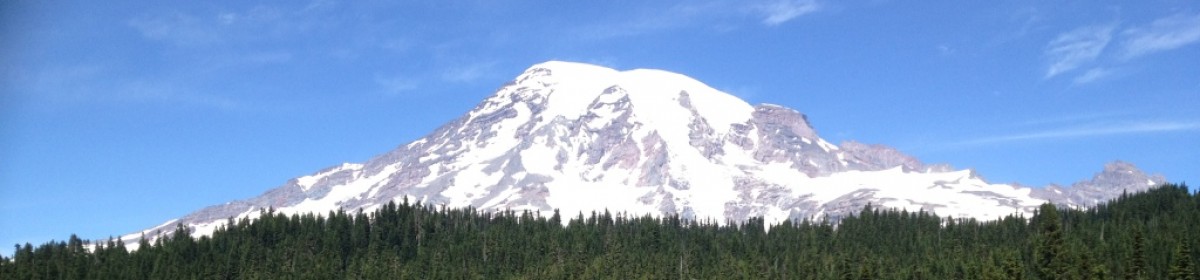
We decided we’d take the northern route out today and the southern route on our way back home. Highway 20 goes through the North Cascades in an area often referred to as the North American Alps. You can see the pointed, rocky mountaintop typical of this area in the photo at the top of this post.

Our destination was Sun Mountain Lodge, a resort on 3,000 acres with miles of hiking trails, on the outskirts of Winthrop, Washington. This area is known as the Methow Valley. Methow is pronounced MET-how. The river and its surrounding valley take their name from the Native Americans who originally traveled the land fishing, hunting, and gathering wild foods such as berries and roots.

The program began in mid-afternoon with a lecture entitled “How Nature Works” by Dana, a local botanist. His focus was on how plants convert energy from the sun into food. After his talk he lead us on a nature walk on one of the trails closest to the lodge. He showed us how to use a botanist’s loupe (small magnifying glass) to look closely at flowers, leaves, and seeds.

My big discovery on this walk was quaking aspens, which I had never seen and heard before. Or at least I’m not aware of having seen them before. According to my book about plants of the Pacific Northwest, aspens cover New England, where I grew up, but I don’t remember them. Perhaps I lived in an area that wasn’t high enough for them. Because aspens like cool weather, they are usually found at elevations between 5,000 and 12,000 feet (1,500–3,700 m).

The flat leaves of these aspen trees, Populus tremuloides, shake or quiver in the slightest breeze in an effort to take in as much carbon dioxide and to expel as much oxygen as possible. This behavior has given the trees the name quaking or trembling aspens.

If, like me, you’ve never seen and heard quaking aspens, here’s a short video for you (it really is short, just 17 seconds; be sure to turn up the volume on the video player so you can hear the quaking):

Three Things Thursday

Another miscellaneous list for Three Things Thursday, the purpose of which is to “share three things from the previous week that made you smile or laugh or appreciate the awesome of your life.”

1. Potty Parity?

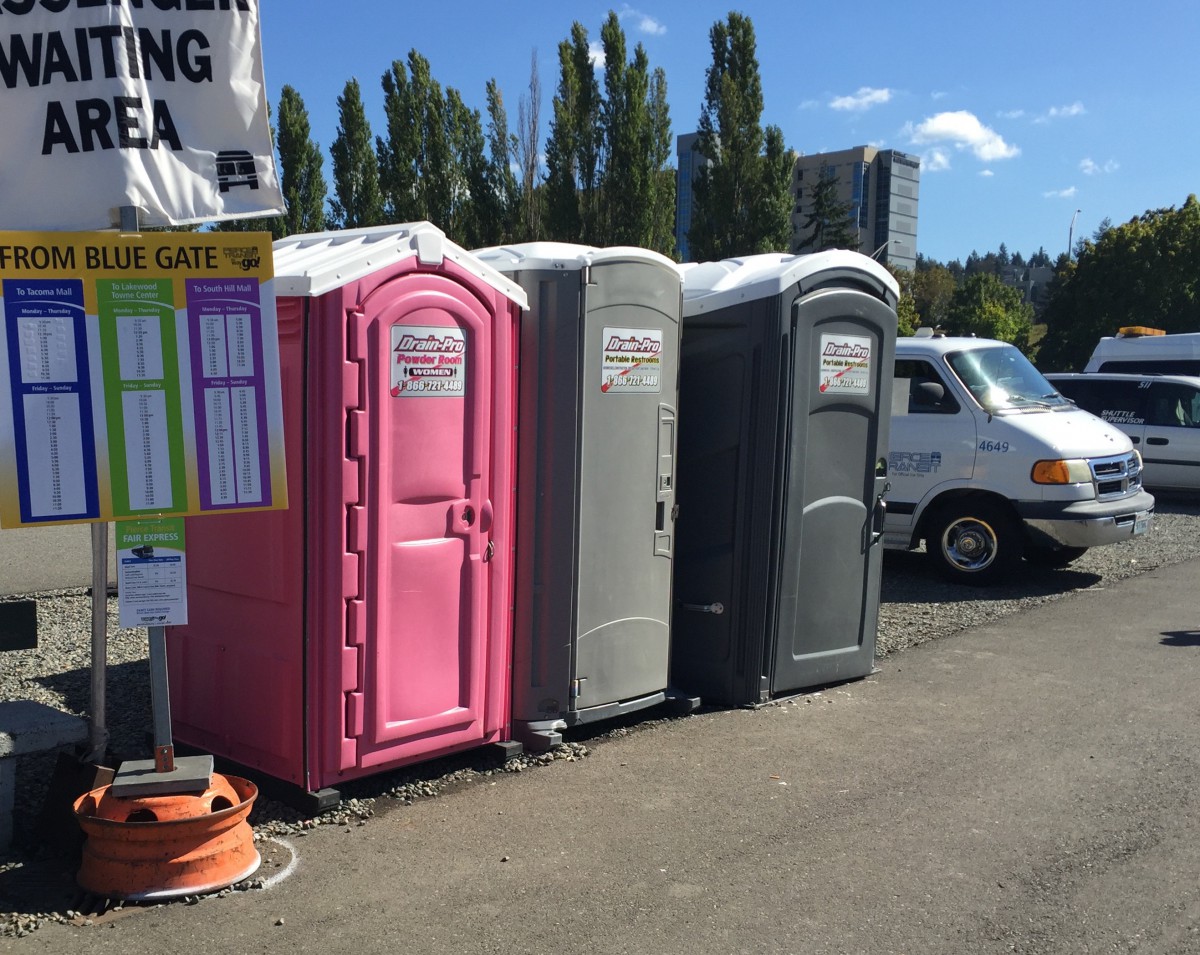
Pink PortaPotty

I had never seen a pink PortaPotty. As you’d expect, this one is labeled Women.

Photographed in the parking lot at the Washington State Fair.

2. Water Conservation

In a drought, we all help out.

This sign happens to be on our front lawn, but we’ve been seeing them all over town since Tacoma joined the cities of Everett and Seattle in a voluntary water conservation effort.

According to Tacoma Public Utilities, “Over the last six weeks, the region has collectively cut back water use by 14 percent.” This conservation effort has been especially important now because salmon are swimming up river to spawn. Both lowered levels of streams and warmer-than-usual water temperatures can adversely affect the salmon run. The Green River, Tacoma’s primary water source, is home to chinook salmon, a threatened species.

Because we’ve had a bit of rain recently, our lawns don’t look as bad as they might have otherwise.

3. Profound Philosophical Pondering

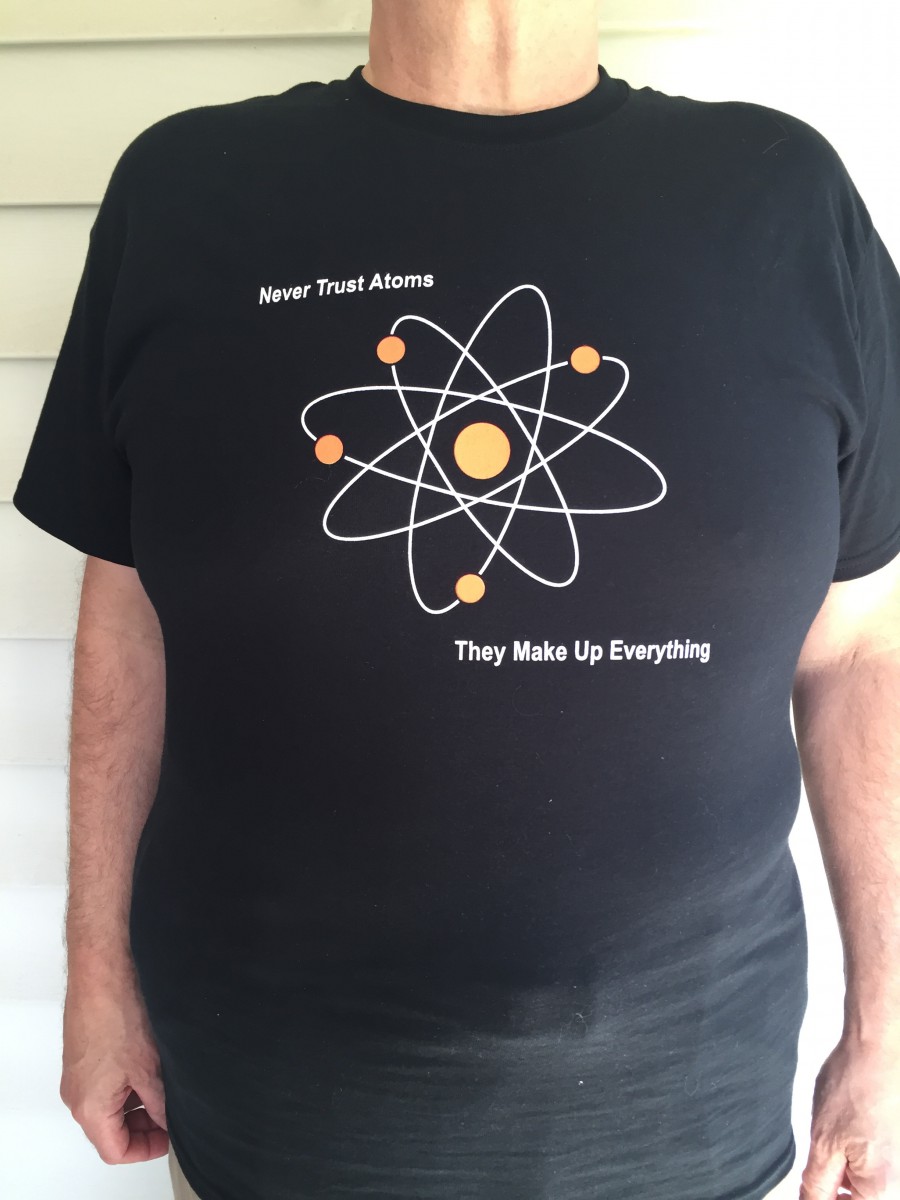
Never trust atoms: They make up everything.

It’s so hard to find a really good T-shirt nowadays. Many of them are just plain raunchy. I was delighted to find this one on our recent trip to Leavenworth, WA.

“CSI” Finale: Good Idea, So-So Execution

Spoiler Alert:

I recorded Sunday night’s CSI series finale and watched it last night (Monday). If you have it on your DVR but haven’t watched it yet, you might not want to read this post right now because it discusses what happens in the finale.

If you haven’t seen the CSI finale, go watch it now, then come back here. I’ll wait.

scroll divider

CSI fascinated me right from the beginning. I like both mysteries and psychology, and murder is where those two often intersect. Throw in some hard science to form hypotheses around, and you’ve got a winning formula. I was heartened to hear that there would be a series finale and eagerly looked forward to it.

The network promised that the finale would bring back some of the series characters, most notably original CSI lab director Gil Grissom (played by William Petersen) and long-term investigator Catherine Willows (Marg Helgenberger).

Getting Grissom back to Las Vegas required a big story dislocation. Also, it’s hard to believe that he would have so drastically changed his area of expertise and interest, from bugs to marine biology.

Getting Willows back to Las Vegas was easy: She owns the casino (formerly her father’s) where the initial explosion occurs. But here’s the problem: I’m pretty sure the FBI would never allow her to be a Special Agent for them while owning a casino; the potential for misconduct is just too great.

I was also glad to see a cameo appearance by Jim Brass (Paul Guilfoyle), former LVPD captain turned hotel security guard. I would also have liked to see at least a bit of investigator Nick Stokes (George Eads), whose character I always liked. I’m grateful the show did not bring back Laurence Fishburne, whose character never meshed with the other characters or the show as a whole.

Ultimately, it was nostalgia that saved the show. The storyline was very thin. It got worse as the show continued, until, in the end, any semblance of a believable plot was long gone. And what was that whole thing with the color-coded bees? Part of what made CSI so riveting was its explanations of the science at work. But I never did get the relationship between the bees that the police academy cadets released—“Follow your maps carefully,” Grissom instructed them—and the bees that returned to the hives where Sara and Gil were patiently waiting.

And I almost felt sorry for Marg Helgenberger, who, during the bomb scene in the parking garage, had some of the worst dialogue I’ve heard in a long time:

  • “There’s no time for the bomb squad. This is on us now.”
  • “Listen to me. Listen to the sound of my voice.”
  • “Carefully place the points of your pliers around the RED wire. I repeat: the RED wire.”
  • “We have to cut the wires at the same time. If we’re even a millisecond off, the bombs will explode.”

This scene was truly painful to watch.

And I still don’t know how I feel about the ending. Of course it was nice to see Sara and Gil sail off into the sunset together. But Sara had just been promoted to lab director. Is she really going to give that up to live on a boat, even if she does truly love her man? I get the feeling that the writers wrote the ending that best fit the series (Sara as director) but then decided to go with the sentimental favorite ending (sailing into the sunset) instead.

What about you? What did you think of the CSI series finale?

Trip to Olympia Farmers Market

Today a few of us from Franke Tobey Jones took our annual trip down to Washington’s capital city, Olympia, to visit the Olympia Farmers Market and have lunch. Our new activities director didn’t know that we usually go in August, but today worked just as well. It was overcast and cloudy, but we need rain so badly that nobody complained about the weather.

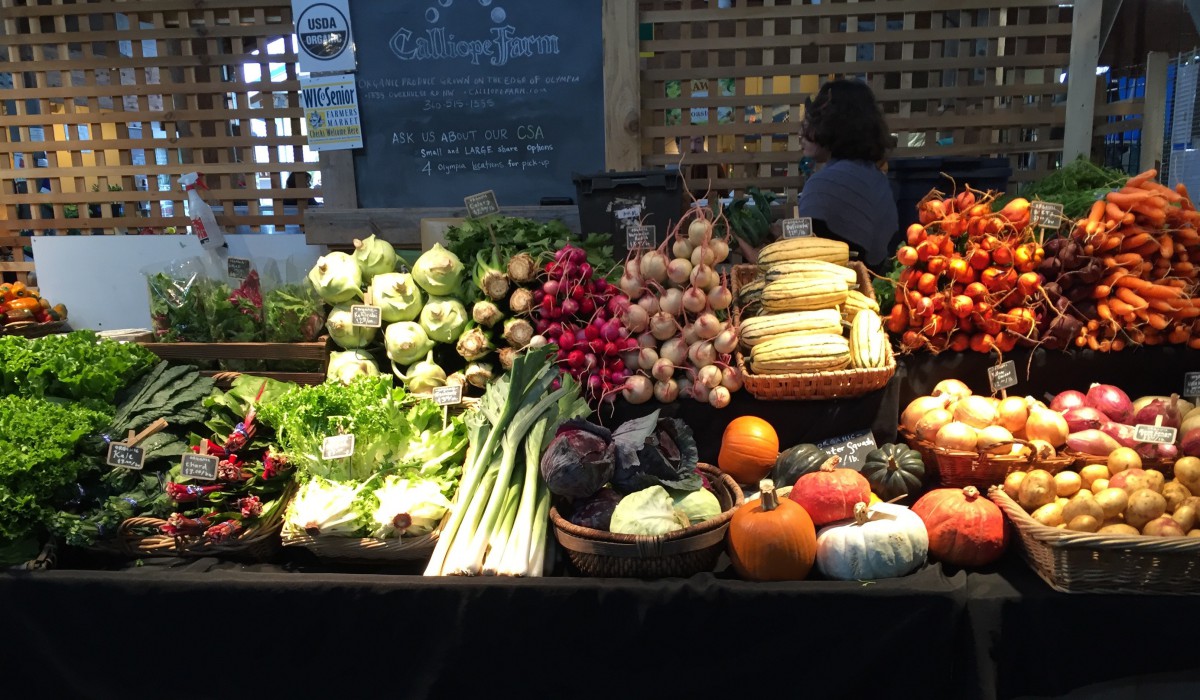
This September visit worked out well for my husband and me. We usually visit the Puyallup Farmers Market with our daughter most Saturdays during the summer, but it ended earlier this month. We were therefore happy for the opportunity to get some locally grown produce:

Vegetables

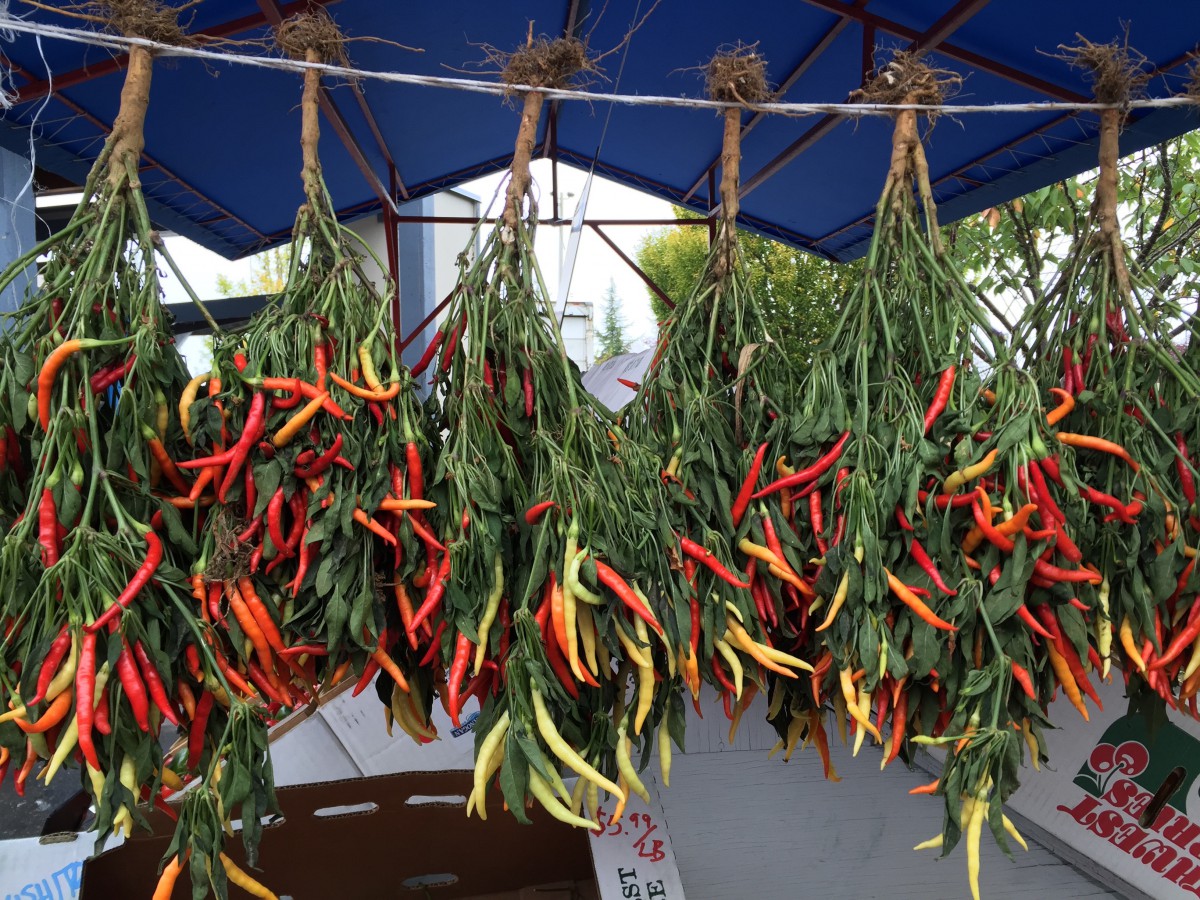
The photo below came from a stand of peppers that featured “sweet” varieties on one side and “hot” ones on the other:

Peppers

The Olympia Farmers Market features local small businesses. In addition to produce, vendors offer cheese and dairy products, jams and jellies made from local fruit, honey and wax items like candles, baked goods, herbs, and plants.

And flowers. There were some truly spectacular dahlia bouquets on display today. I’m kicking myself because I meant to take a photo but got distracted talking to one of my companions. You’ll have to take my word for it. The colors were gorgeous: various shades of yellow, orange, red, and purple (my favorite).

There are always several craft vendors at the Olympia farmers market as well. Like the fruit, vegetable, and flower vendors, these are all local small businesses. Sometimes at fairs you’ll find a heavy dose of mediocre craft things, but not here. These items are top quality, made by professionals. Today we saw ceramics, wood items, paper goods, soaps, candles, metal art, and photography.

After our shopping spree, we went across the parking lot for lunch at Anthony’s Homeport for lunch. This restaurant is always popular with our group because of both the food and the view of the adjacent marina and, a bit farther off, the state capital building. The clam chowder, which all five at our table ordered, was especially good today.

Three Things Thursday

Here’s the latest installment of Three Things Thursday, the purpose of which is to “share three things from the previous week that made you smile or laugh or appreciate the awesome of your life.”

three-things-thursday-participant

Nuggets of Knowledge from the Washington State Fair

In the post about our recent trip to the Washington State Fair, I wrote about our visit to the animal barns. One of the things that makes this visit so much fun is seeing how the kids from FFA (Future Farmers of America) and the various 4-H Clubs invest in their animals. Looking at the displays that accompany the animals, it’s evident that these are not just fair projects; these animals are pets that the kids genuinely love.

On our first visit to the fair many years ago, we were especially enthralled by a poster put up by a child, age 10, about how to be a good shepherd. The poster listed all the steps that a good shepherd does to care for his sheep properly. The final item was “Docks the tails.”

This brought tears to my eyes. Can’t you just imagine a child being absolutely horrified when told he has to clip his lambs’ tails—until he learns the reason why (to prevent the tails from becoming encrusted with fecal matter)? And I can imagine him still having trouble actually doing the docking, even though he knows he has to, for the sheep’s sake.

This year we saw a young girl stretched out on the hay in a pen next to her reclining llama. (The llama was longer than she was.) One adolescent girl, while fondling her goat’s head, told us that this goat is “super sweet.” Everywhere we saw kids petting, nuzzling, grooming, and talking to their animals.

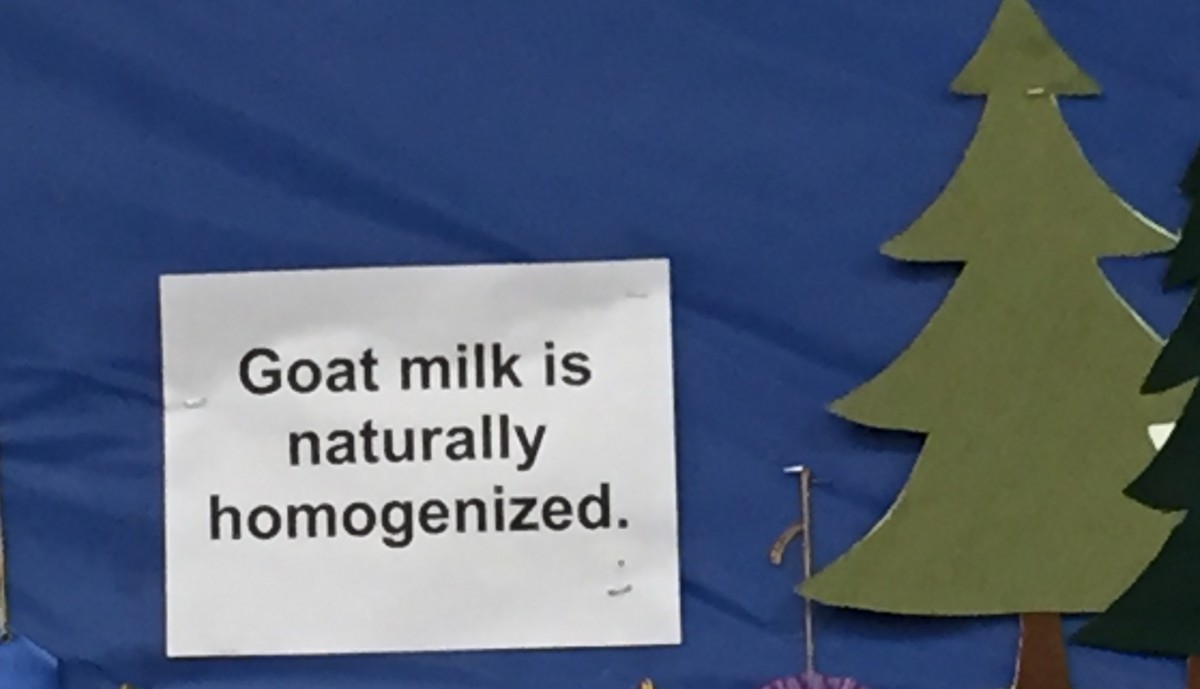
The signs and posters that the kids make to accompany their animals show how much they’ve learned from raising them. Here are three nuggets of knowledge I learned in the animal barns this year.

Nugget #1

Nugget #1

Nugget #2

Nugget #2

*Nugget #3

Nugget #3

Going to the Fair!

For more than 100 years the fair held annually in Puyallup (pew-Al-up), Washington, was known as the Puyallup Fair. I know this because I used to have a pencil (unfortunately lost in our recent move) emblazoned with “Puyallup Fair 100 Years” that my daughter sent me in 2000. The fair’s tagline was “Do the Puyallup!” But in 2013 somebody (I’d keep my name out of it, too, if I had been responsible) came up with the brilliant idea to rename the fair the Washington State Fair. Whoever did this agreed to retain the “Do the Puyallup!” tagline, but it’s just not the same. According to the Washington State Fair Facebook page:

It’s a fact that since our beginning in 1900, our name has changed four times; the Valley Fair, to the Western Washington Fair, to the Puyallup Fair and most recently to the Washington State Fair. For over 60 years the fair was known as the Western Washington Fair. Our previous name, The Puyallup Fair, is a name that will always mean a lot to us, as well as the people that helped make this the great Fair it is today. We still love to hear the old “Do the Puyallup” jingle and we are proud to host the Fair in Puyallup every year. Puyallup will always be an important aspect of our identity, but the name change allows the rest of Washington to feel connected to the Fair as well.

But I digress. Today our activities director drove about 10 of us down for a visit to the Washington State Fair. On a weekday after the start of school, the grounds were not at all crowded, and we had gorgeous weather.

The fall fair began in 1900 as a way to showcase the crops that flourished in the rich soil of the Puyallup River valley. (See related post for more background.) Since then it has grown to include farm animals and produce from all over the state, as well as carnival games, rides, vendor booths, and LOTS of food.

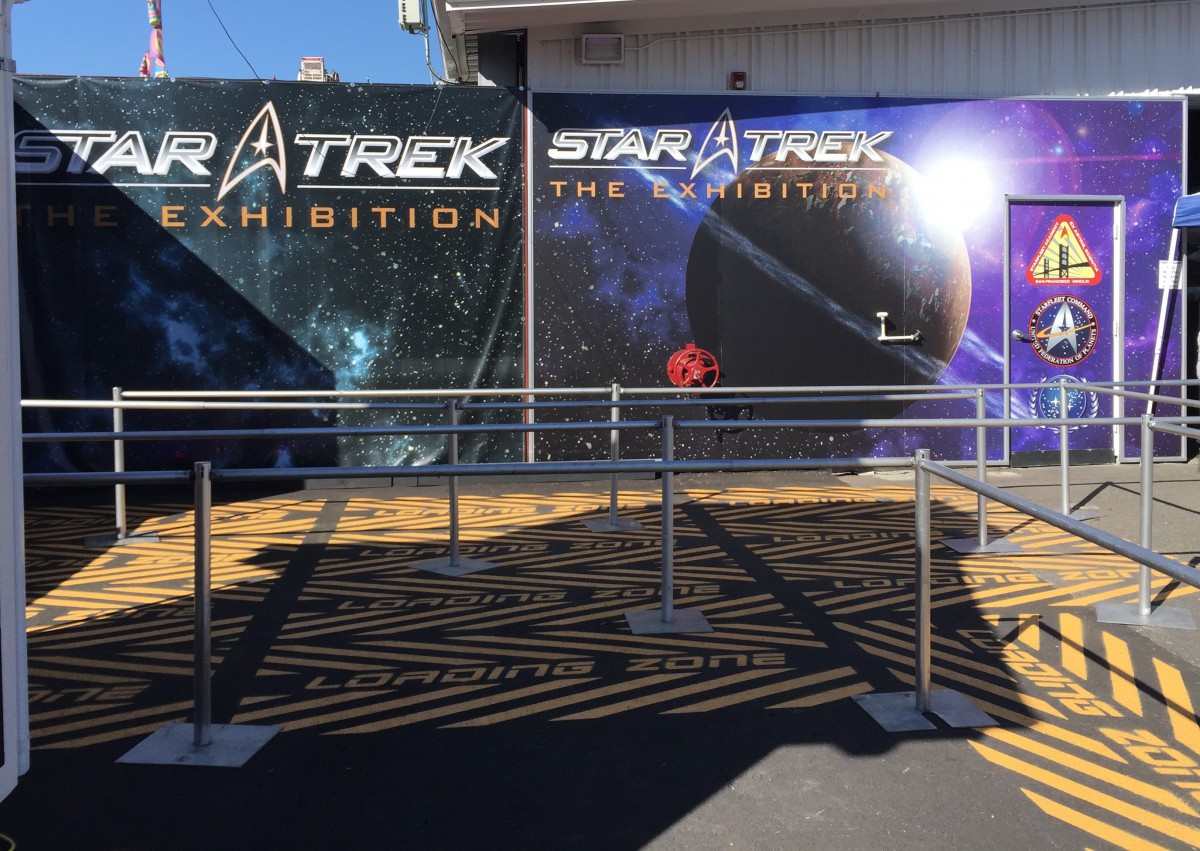
But my husband F. and I headed straight for this year’s featured exhibit, Star Trek: The Exhibition, which traces the history of the Star Trek franchise from the original 1960s television series up through the latest motion picture. We got to see lots of photos, costumes, and props from the various television shows, as well as a 7/8 scale mock-up of the bridge from the original series. (It had to be downsized a bit so that it could be moved.)

Star Trek: The Exhibition

(Click on any photo to see a larger version.)

We were not allowed to take photos inside the exhibit, but the link above will take you to the exhibit’s official web site featuring lots of photos and video clips.

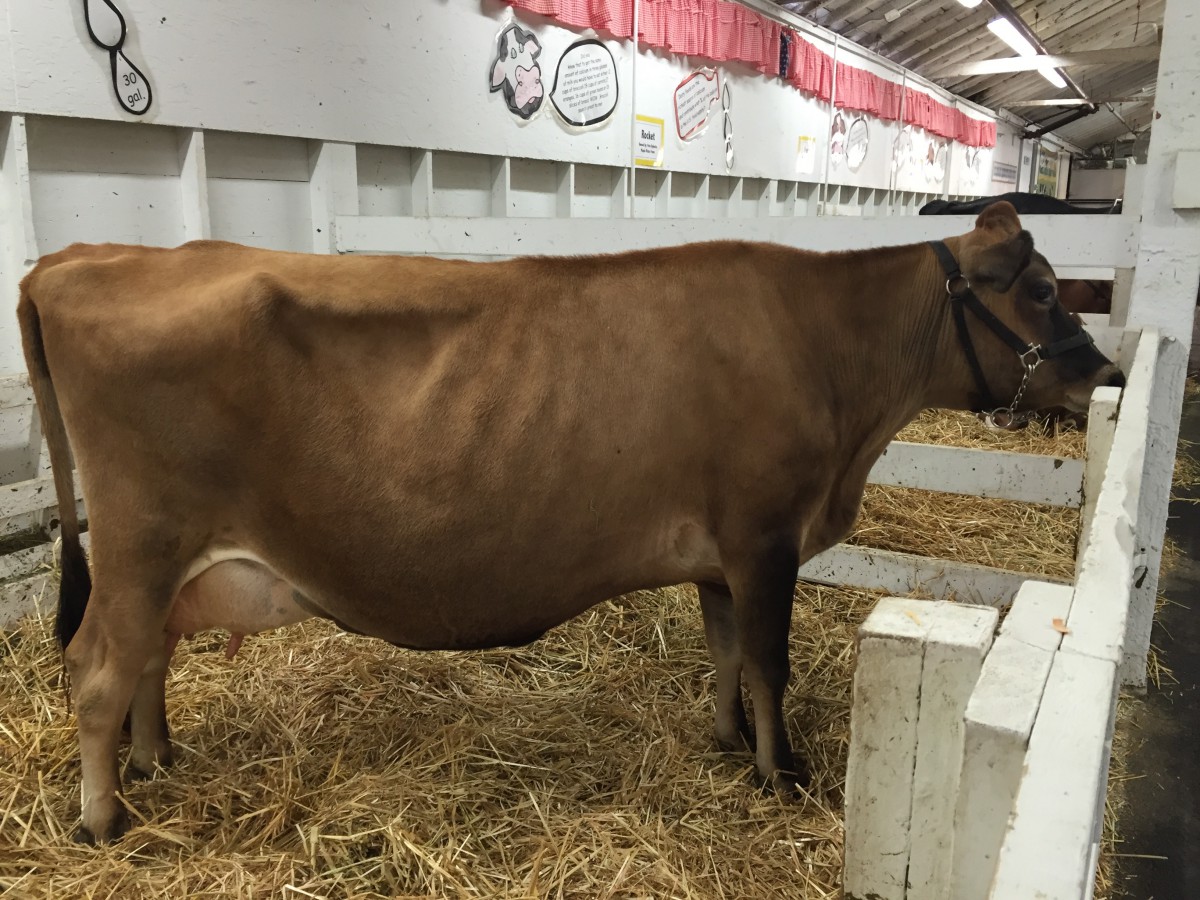
After that we headed for the animal barns. There were lots of traditional farm animals on display. My grandfather was a dairy farmer, and I have a soft spot in my heart for cows. But I’ll restrict myself to just one photo:

Cow
Cow

Most of the sheep had been shorn within a few days of the fair:

Sheep (shorn)
Sheep (shorn)

I was expecting them all to look like this:

Sheep (unshorn)
Sheep (unshorn)

But one of the youngsters displaying sheep explained that they have to be shorn for competition because the judges want to be able to see their bodies, not just their wool.

There were also lots of goats, pigs, and rabbits. Another animal that I did not realize is so popular with 4-H kids is the llama:

Llama
Llama

Next we took a look at the fruits, vegetables, and flowers. A lot of people won ribbons for their flowers:

Flowers
Flowers

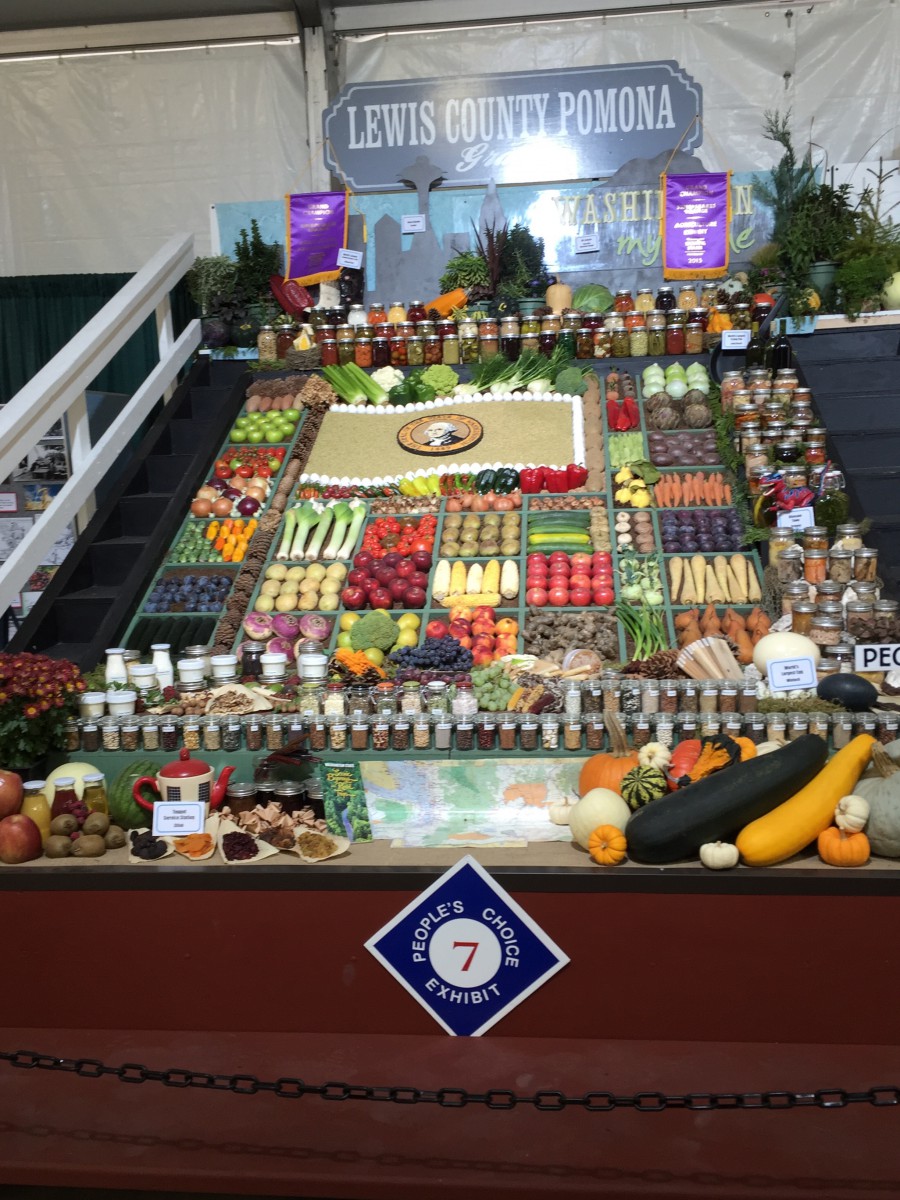
I am always fascinated by the artworks created by Grange chapters across the state out of their local products. One that particularly caught my eye was this one featuring a replica of the Washington State flag:

Vegetable Art
Vegetable Art


Vegetable Art: Close-Up

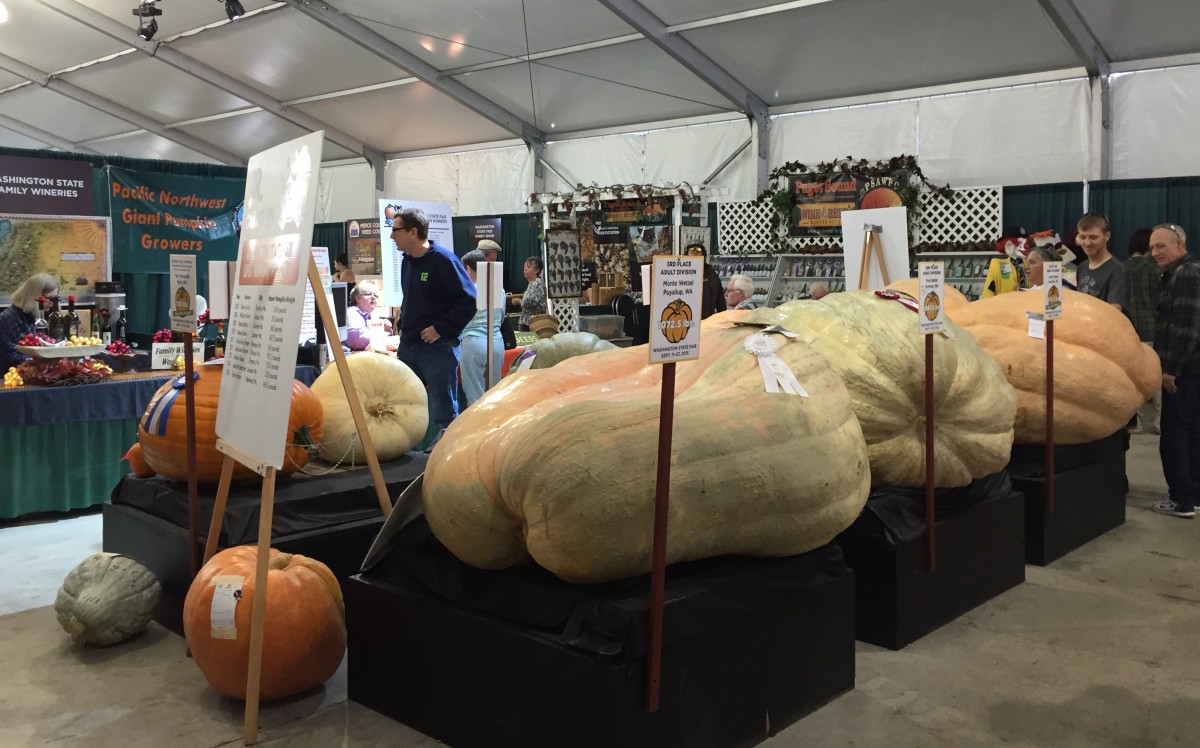
And of course there were awards for the state’s largest pumpkins and squashes:

Huge Pumpkins & Squashes

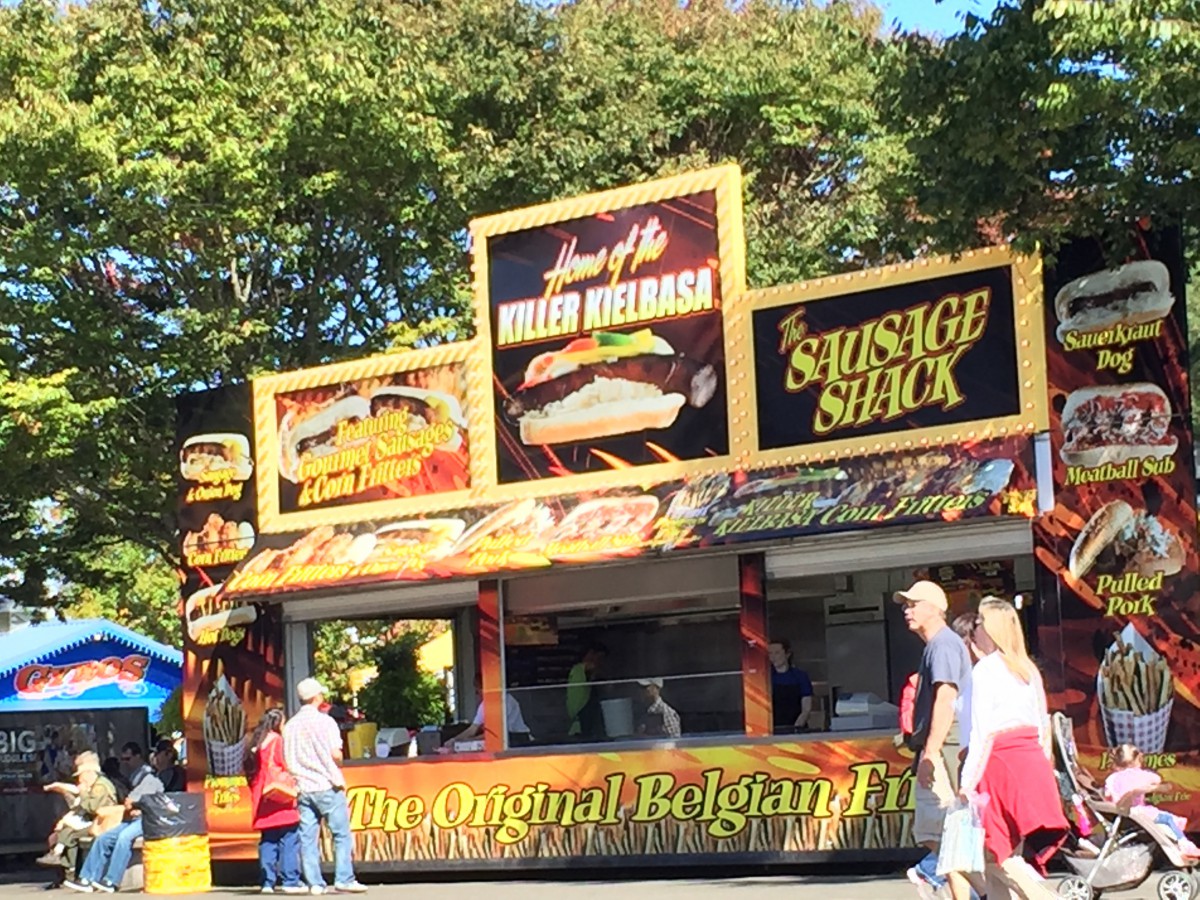
For lunch we chose The Mad Greek because I arrived at the fair hoping I could find a gyro. I was so busy eating that I forgot to take a photo. But these are a few of the MANY other eateries available:

Killer Kielbasa
Killer Kielbasa


Deep Fried Butter Stand
Deep Fried Butter


Bacon!!! Stand
Bacon!!!

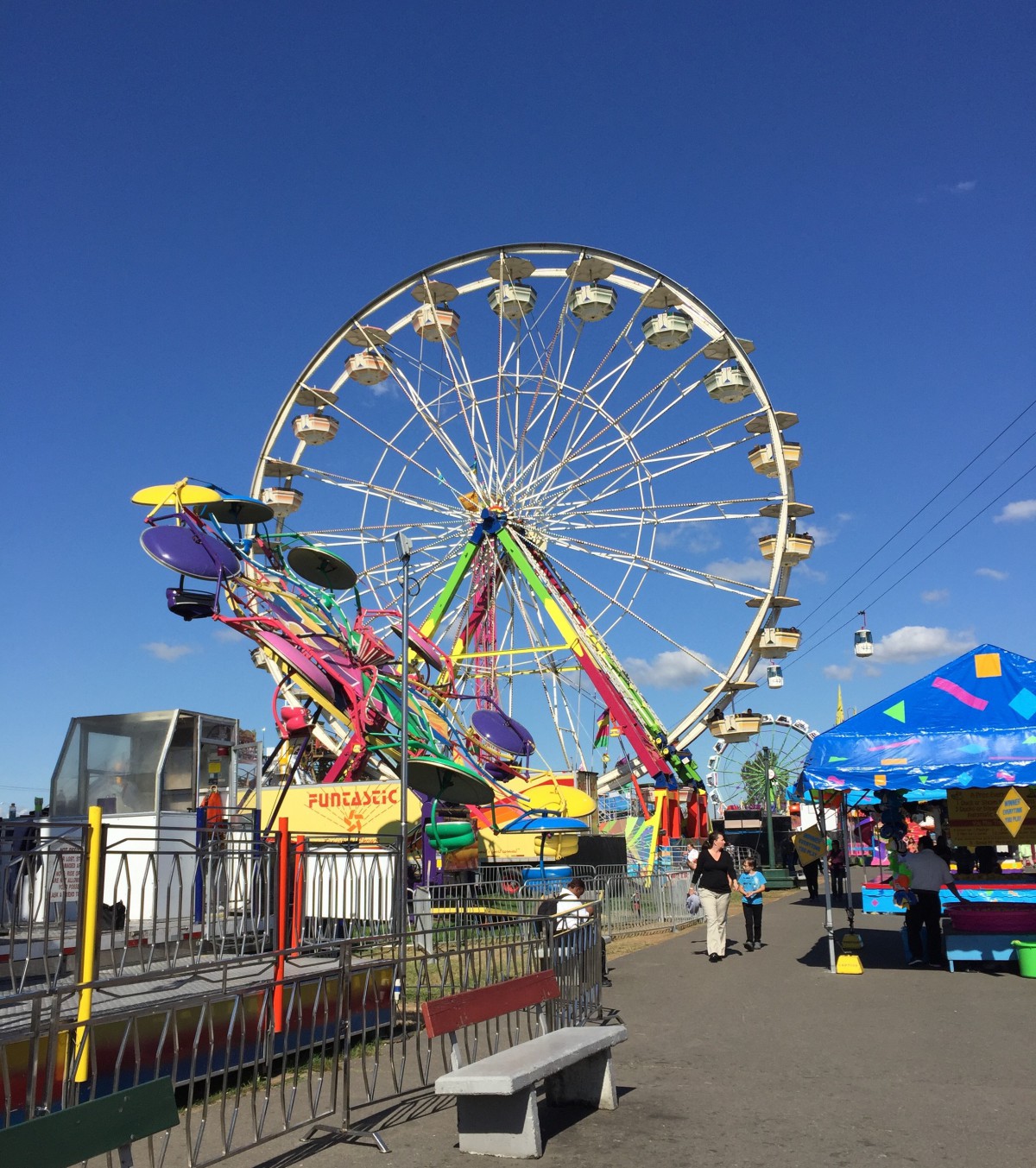
I’ll end with a photo of an iconic fair ride that also shows what a beautiful day it was.

Ferris Wheel
Ferris Wheel

Until next year!

Three Things Thursday

Another week, another edition of Three Things Thursday, the purpose of which is to “share three things from the previous week that made you smile or laugh or appreciate the awesome of your life.”

Items in the News

Don’t worry, there’s not a presidential debate or Trump article among them.

Seattle Aquarium trains otter to use inhaler for her asthma

The Seattle Aquarium believes it has diagnosed the first case of a sea otter with asthma and is training the animal to use an inhaler.

A veterinarian is training a one-year-old sea otter to use an inhaler to treat asthma diagnosed when smoke from nearby forest fires made breathing difficult. The otter, named Mishka, uses the same medication that humans use.

Dr. Lesanna Lahner believes that lack of genetic diversity may have contributed to Mishka’s asthma. When sea otters became extinct in Washington State 40 years ago, Alaskan sea otters were moved south to repopulate Puget Sound.

Eating Healthy Foods May Lower Depression Risk

Here’s yet another reason to eat a healthy diet.

Research from a large new study suggests that people who follow a healthy diet to a moderate or large extent have lower risk for developing depression than people who don’t follow similar dietary guidelines. The study defined a healthy diet as one high in vegetables, fruits, nuts, and fish, and low in fast food and processed meats.

The study followed 15,000 university graduates in Spain for 8.5 years.

“Even a moderate adherence to these healthy dietary patterns … was associated with an important reduction in the risk of developing depression,” [study author Almudena] Sanchez-Villegas told Live Science.

These results, published in the journal BMC Medicine, support the results of Sanchez-Villegas’s earlier research, reported in 2006 and 2009, that found a lower rate of depression among people who followed the Mediterranean diet. The Mediterranean diet is defined as one high in vegetables, fruits, fish, and olive oil; this diet is often used as a standard for the definition of a healthy diet. The new research studied participants whose diet closely resembles the Mediterranean diet but not not require strict adherence to it.

Coming Soon to Facebook: A ‘Dislike’ Button

Finally!

Sometimes people on Facebook post sad news or details of some misfortune, such as “I have a bad cold and don’t feel like getting out of bed this morning.” I certainly hesitate to “like” such posts, because I don’t like the fact that the person is sick or suffering from some other bad occurrence. But I would like to respond in some way that shows empathy, concern, and support. So far, the only solution I’ve found to this dilemma is to post a comment containing a frowny face emoticon, 😦 . I’ve often wished for the ability to choose a “dislike” button.

Now the New York Times reports that Mark Zuckerberg, co-founder and chief executive officer of Facebook, says the company is close to testing a “dislike” button similar to the “like” button:

Facebook users — there are now 1.5 billion, the company says — have long requested a way to express negative emotions or empathy with something sad or tragic posted on the social network, he said.

According to the article, some critics of Facebook don’t like this idea because, according to one user, “There is already enough hate on Facebook and social media.”

I’m not quite sure how this logic works. If I “like” someone’s report of sickness or death of a loved one because I don’t have the option of disliking the news but don’t want to ignore it, isn’t that hateful? Wouldn’t it be better if I could click a button to show that I dislike the bad news?

What do you think? What do you do about “liking” bad news on Facebook?
Three Things Thursday

It’s time again for Three Things Thursday, the purpose of which is to “share three things from the previous week that made you smile or laugh or appreciate the awesome of your life.”

three-things-thursday-participant

Here are three miscellaneous, interesting tidbits from our Alaskan cruise. Click on any photo to see a larger version.

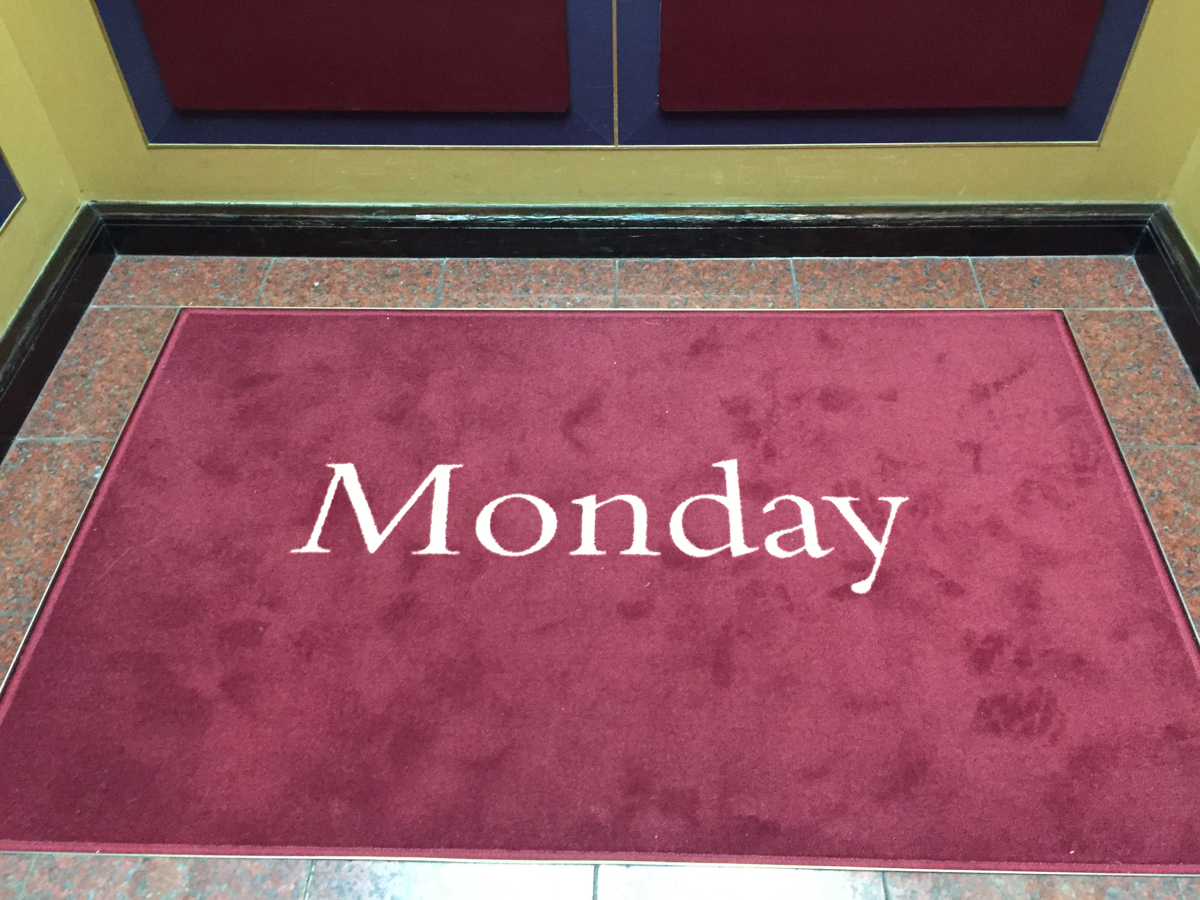
1. Calendar carpet

With no cell service and only intermittent internet availability on a cruise, it’s easy to lose track of what day of the week it is. Fortunately, our ship’s staff changed the carpets in the elevators every day to keep us up to date.

Calendar carpet

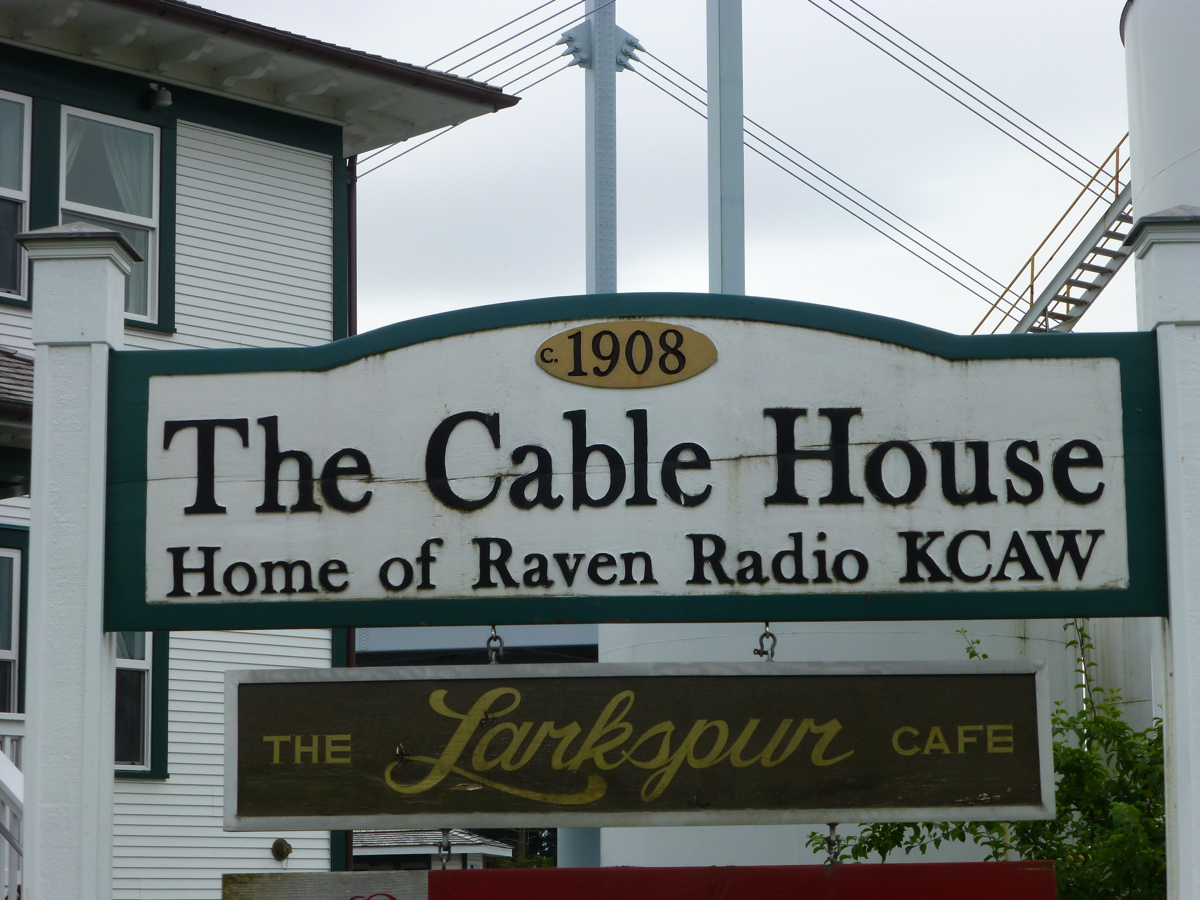
2. Sitka humor

Notice the call letters of Raven Radio in Sitka, AK.

KCAW

3. For all you Deadliest Catch fans

I’ve never watched this show, but our shuttle driver in Homer, AK, pointed out that this boat was in the harbor on the day we visited Homer.

Time Bandit