Three Things Thursday

Another fun edition of Three Things Thursday, the purpose of which is to “share three things from the previous week that made you smile or laugh or appreciate the awesome of your life.”

three-things-thursday-participant

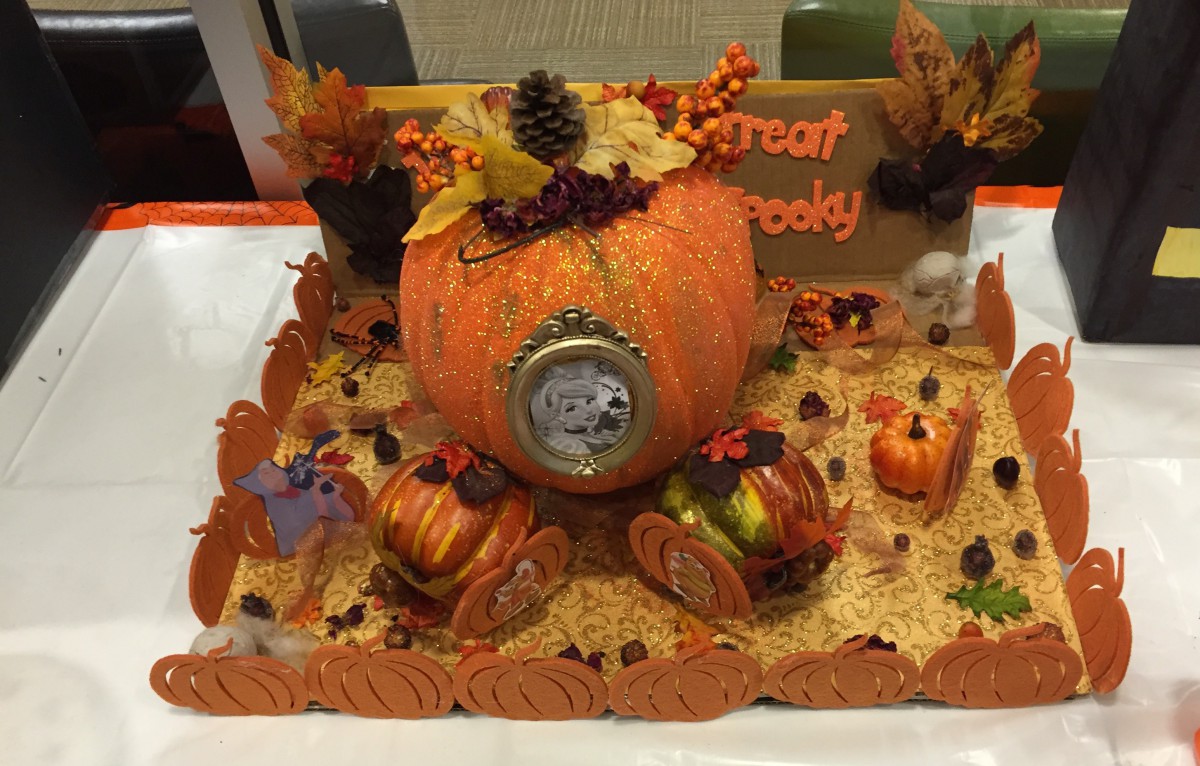
Yesterday I had cataract surgery on my right eye. The folks at the eye surgery center had set up a contest that allowed people to vote for their favorite pumpkin creation.

Cinderella’s coach is at the top of this post. Here are three more:

1. Snoopy

I fell in love with this Snoopy, the first of the entries that I saw. The body is a large pumpkin, the paws are two small pumpkins, and the head is a large butternut squash (a pumpkin is technically a squash, so this qualifies) with the stem as the nose.

Pumpkin Snoopy

I never would have thought of using a butternut squash for the head, but once it saw it here, I realized that it is, of course, perfect.

2. Scary Eyeball

I’m not sure if this is supposed to be anything in particular. But it’s definitely an eyeball, and that’s certainly appropriate for an eye clinic.

scary pumpkin eyeball

3. The Stay Puff Marshmallow Man

Do you remember the scene in Ghostbusters when the Dan Ackroyd character can’t control his thoughts and the evil force uses them to create a giant, threatening Stay Puff Marshmallow man? Here he is, in all his evil glory:

Pumpkin Stay Puff Marshmallow Man

I couldn’t decide whether to vote for Snoopy or the Stay Puff Marshmallow man. So my husband and I worked together: I voted for Stay Puff and he voted for Snoopy.

I won’t be going back to the surgery center to see which pumpkin creation won. Actually, I don’t even want to know which one won. I just enjoyed seeing them all.

Happy Halloween, everybody!

Tomorrow is National Cat Day!

Make your preparations early. Tomorrow is National Cat Day:

National Cat Day logo

National Cat Day was founded in 2005 by Pet and Family Lifestyle Expert & Animal Welfare Advocate Colleen Paige to help galvanize the public to recognize the number of cats that need to be rescued each year and also to encourage cat lovers to celebrate the cat(s) in their lives for the unconditional love and companionship they bestow upon us.

The ASPCA (American Society for the Prevention of Cruelty to Animals) estimates that people in the United States own between 74 and 96 million cats. From the very beginning, the internet has been a place where cat lovers post photos of their pets. If you don’t have a cat of your own (what’s wrong with you?), you can find lots of photos on the National Cat Day web site.

But National Cat Day isn’t just about goofy photos. This observance has three serious reasons for existence:

  • to educate people about the number of cats in animal shelters: “Estimates reveal that there are approximately 4 million cats entering shelters every year with 1–2 million being euthanized”
  • to encourage people to “ADOPT….don’t shop” when looking for a pet
  • to advocate for responsible pet ownership by reminding people to spay and neuter their pets
cat sleeping on laptop
Cats are always willing to help you work.

The sponsors of National Cat Day are BLUE Naturally Fresh cat litter and Petco.

Here are a few more web sites to visit for information about pet ownership in the U.S., including information on homeless and unwanted animals, the pet overpopulation crisis, and the importance of spaying and neutering pets:

Notes on Healthy Aging

Graceful Aging Exercises for Everyone

You can’t stop aging, but you can slow down the process with the help of an exercise routine. Even a small amount of activity can help you keep joints mobile, maintain muscle strength, and improve stability. And the best news of all: It’s never too late to start an exercise routine.

The first step in starting an exercise program is to check withy your doctor, who will tell you if there are any activities you should avoid. Certain conditions such as diabetes may also affect the timing of when to take medications and when to exercise.

Begin an exercise program slowly and listen to your body. If a particular exercise is difficult for you or causes you pain, ask your doctor if another exercise might be better for you. And it’s important to start out with a little bit of exercise and gradually increase the amount and intensity.

The easiest exercise to begin with, after checking with your doctor, is walking, which improves cardiovascular fitness, bone strength, and joint mobility. Physiologists recommend aiming for 30 minutes of walking five days a week, but, as with all exercise programs, start with a small amount and gradually build up to longer and more frequent sessions.

In addition to cardiovascular activities such as brisk walking or swimming, a complete exercise program also includes resistance training, such as lifting weights, during two or three of your exercise days each week. These exercises build muscle strength and improve balance, important considerations for avoiding falls.

Tai chi can help build strength, relieve pain

Many senior centers and retirements offer classes in Tai chi, a modified form of an ancient Chinese martial art that emphasizes slow, gentle movements. A recent study published in the British Journal of Sports Medicine found that Tai chi could be an effective exercise suitable for middle-aged and older adults, even those who may have multiple health conditions.

Tai chi is a set of exercises that emphasize breathing control, whole body exercises with bent knees and slow, flowing movements. In addition to strength, it can help to improve posture, balance and concentration, the researchers note.

Hearing Loss Costs Far More Than Ability to Hear

Hearing loss is one of the most common conditions affecting adults, and the most common among older adults. An estimated 30 million to 48 million Americans have hearing loss that significantly diminishes the quality of their lives — academically, professionally and medically as well as socially.

In this article New York Times health writer Jane E. Brody reports that, while one in three people over age 60 has life-diminishing hearing loss, most people wait between five and 15 years to seek help. A large survey by the National Council on the Aging found that those who had hearing aids tended to be more socially active and less depressed, worried, paranoid, or insecure than people without hearing aids.

People without hearing aids also tend to have an increased risk of dementia over those with the devices. Hearing aids may improve cognitive functioning by maintaining auditory input into the brain that are diminished by hearing loss.

Is It Old Age, or A.D.H.D.?

Those of us who grew up in the 1950s and 1960s never heard of ADHD, or attention deficit hyperactivity disorder. While ADHD is nowadays a diagnosis given to children who have trouble paying attention in school, back when we were in school children who struggled were told to settle down, quiet down, or stop daydreaming out the window.

In 2012, in one of the only epidemiological studies done on A.D.H.D. in older adults, a large Dutch population study found the condition in close to 3 percent of people over 60.

Although there’s little data on the prevalence of ADHD in older adults, increased awareness of the condition, now thought to persist throughout one’s lifetime, is bringing more older adults to specialty clinics for diagnosis and treatment.

Dr. [Thomas] Brown [associate director of the Yale Clinic for Attention and Related Disorders at the Yale School of Medicine] said, “Most doctors are not thinking of A.D.H.D. as a characteristic of somebody who is 60 or over.” Hence, the condition may be overlooked in the 80-year-old who has trouble staying engaged at the senior center, despite a lifelong history of inattention. “They figure it’s just cognitive decline from aging” or diagnose depression or anxiety in such patients, which may or may not be the case, he said.

Many older adults who have trouble paying attention or sitting still are thought to have cognitive impairment caused by aging. But if the person has had the same symptoms throughout life, diagnosis and treatment for ADHD may greatly improve their condition.

Three Things Thursday

Thursday is again upon us. Time for another entry of Three Things Thursday, the purpose of which is to “share three things from the previous week that made you smile or laugh or appreciate the awesome of your life.”

Singing Group

Two or three months ago Tacoma Metro Park District put out a notice that they were thinking of starting a singing group for their 50 and Over activities program. I was in one community chorus or another for several years back in St. Louis. After moving to Tacoma I had looked around casually for a singing group but didn’t find anything in my league. What I mean by that is: if the group requires an audition, it’s out of my league.

I finally got word that there was enough interest in the Park District’s group that they were moving ahead. I attended my first meeting on Monday. There were about seven people there, plus two employees of the Park District. One of the women had brought some printouts of popular old songs such as Let Me Call You Sweetheart and Mr. Sandman. We sang through a few of those songs, without accompaniment. There is no money in the budget to hire someone to play the piano, but there may be a possibility of finding a volunteer.

The choruses that I participated in before sang in four-part harmony accompanied by an accomplished pianist. We prepared real music such as Handel’s Messiah, Vivaldi’s Gloria, and an assortment of popular tunes, and we performed twice a year. Therefore, what I found on Monday isn’t exactly what I was expecting. But I’ll give it a few more weeks to develop. As the group’s existence gets publicized more widely, maybe more people will show up and a more formal structure will develop. I don’t play to stay if it remains just a few people getting together once a week to sing old songs without any accompaniment, not even a pitch pipe.

But the experience did remind me how much I enjoyed participating in a community chorus. I should probably start looking again, more seriously this time, for one that’s appropriate for my level.

Return of the Writing Mojo

typewriterI’ve been having a hard time with my writing lately. I’ve been at it long enough to know that the creative process ebbs and flows, and a writer has to be prepared to soldier on when the going gets tough and trust that the mojo will return. I’ve been gritting my teeth and continuing to type, even though only pretty pedestrian prose was showing up on my computer screen.

But a couple of days ago, the mojo finally returned. It always shows up in the same way: I wake up at about 4:00 AM just full of ideas. Then, whole passages of perfect prose begin to form themselves inside my head. In the past I’ve told myself that those passages would still be in my head later, then turned over and gone back to sleep. But I’ve learned that the passages will, in fact, not be there later, and I’d better get up right away and write them down before they evaporate.

It’s an exhausting process, but also heavenly.

Play Ball!

It’s my favorite time of the year: baseball playoff season.
St. Louis Cardinals logoMy beloved St. Louis Cardinals had the best record in baseball this season, so they should be in the World Series, right?


Wrong. They came up against their archrivals, the Chicago Cubs, who won the wild card spot. The Cardinals and the Cubs have been playing since 1898, so this rivalry has had lots of time to fester. In a short series, any team might be able to beat any other team. That’s what happened in the best-of-five division series: The Cubs beat the Cardinals. And that’s why they play the games instead of just figuring the whole thing out on paper.

But in the next round, which is a best-of-seven series, the New York Mets swept the Cubs to win the National League pennant. I find some consolation in that, but not much.

The American League is still working on determining who will meet the Mets in the World Series. Right now the Kansas City Royals lead the Toronto Blue Jays by three games to two. If the Royals win tomorrow, they’ll advance to meet the Mets. But if the Blue Jays win tomorrow, there will be a winner-takes-all game on Saturday.

The World Series is an anxious time if your team is playing. But when, like this year for me, your team is not there, the Series takes on a kind of Zen aura. Then I can appreciate the game for its own sake. There’s a purity in being a disinterested observer watching the game unfold, a purity unsullied by the ecstasy of victory or the agony of defeat. Such a moment elevates my appreciation of the essence of the game.

And of course I’m only writing all that purple prose because this year, my team won’t be there.
Northwest Sinfonietta

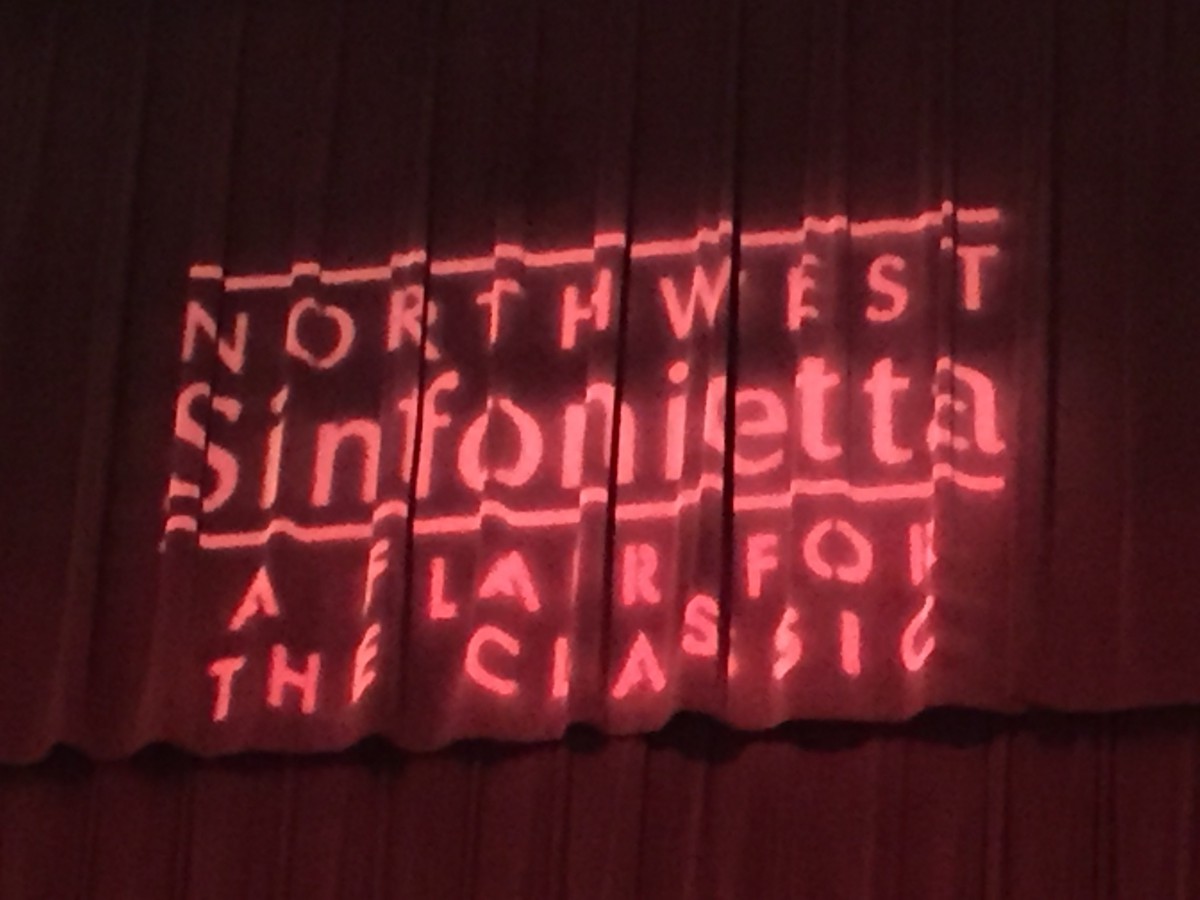
For a small city, Tacoma has a surprisingly vibrant arts scene. In fact, October is Tacoma Arts Month. On Saturday night we attended our first performance by one of the region’s outstanding arts organizations, the Northwest Sinfonietta (NWS).

The NWS originated with a group of musicians who came together for a one-time special concert honoring the 200th anniversary of Mozart’s death in December 1991. It has now grown into a chamber orchestra comprising 35 professional musicians.

What is a chamber orchestra?

Definition: Musical group that is larger than a chamber ensemble but smaller than a full-size orchestra, creating a perfect balance between intimacy and power.

—from the concert program

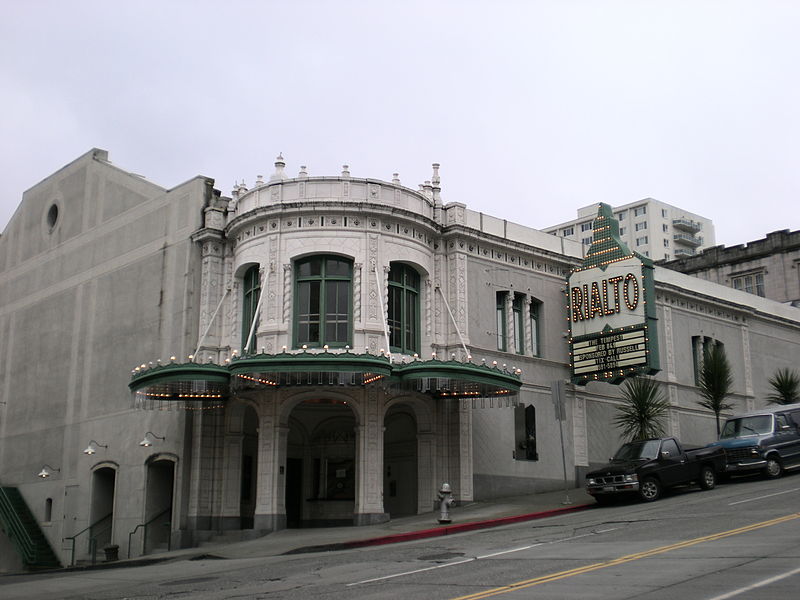
The NWS performs a season of concerts in Seattle, Tacoma, and Puyallup. We attended the performance at downtown Tacoma’s Rialto Theater, one of four venues in the Broadway Center for the Performing Arts.

public domain photo of Rialto Theater from Wikipedia
public domain photo from Wikipedia

The Rialto was built in 1918 as a movie theater. It gradually fell into disrepair but was rehabilitated as a performing arts venue in 1991. It was added to the U.S. National Register of Historic Places in 1992.

On Saturday night we heard the orchestra perform the following pieces:

Music for the Theatre by Aaron Copland (1925)
Piano Concerto No. 20, K. 466, by Mozart (1785)
Symphony No. 8, Op. 93, by Beethoven (composed 1812, premiered 1813)

The Rialto now, since its renovation, has 738 seats. Because the theater and the orchestra are both small, patrons get an intimate, up-close-and-personal experience much different from that of attending a symphony orchestra performance in a large hall. The conductor, David Lockington, increased this personalized feeling when he turned to face the audience and explained the upcoming music before both the Copland and the Beethoven pieces. In all my years of attending symphony performances in St. Louis, Tanglewood (summer home of the Boston Symphony Orchestra), and Seattle, I’ve seen a conductor do that only once.

I’m looking forward to our next two NWS performances, next month and next April.

Three Things Thursday

Once again, it’s time for Three Things Thursday, the purpose of which is to “share three things from the previous week that made you smile or laugh or appreciate the awesome of your life.”

three-things-thursday-participant

It’s Pumpkin Thursday!

It’s fall, or the Season of the Pumpkin.

(Click on any photo for a larger version.)

Awesome Pumpkin #1

Pumpkin Centerpiece

This is the centerpiece from our table at last night’s quarterly dinner for independent-living residents here at Franke Tobey Jones. These dinners are always awesome for two reasons:

(1) They are about the only time when all of us from the three independent-living sections get together. It’s good to see a lot of people I don’t often cross paths with in other activities.

(2) The food is always very good. This time Chef Tim presented us with the following menu:

mixed green salad with berries and raspberry vinegarette dressing

salmon Louie (salmon smothered in crab)

roasted pork loin in mustard sauce

asparagus

couscous with carrot chunks

apple turnovers with optional toppings: caramel, cinnamon whipped cream, and walnuts

Awesome Pumpkin #2

Pumpkin Blackberry Ice Cream

On our trip to Winthrop, WA, we stopped at Sherry’s Sweets downtown for some ice cream. There were so many tempting flavors that I couldn’t pick just one. After much deliberation, I went with two seasonal favorites, pumpkin and wild blackberry. They were so good that I still can’t stop thinking about them.

Awesome Pumpkin #3

Pumpkin Spice Coffee

Yes, it’s time for pumpkin spice coffee once again. I’ll change things up occasionally with a cup of Trader Joe’s pumpkin chai tea.

scroll divider

Until next week, I wish all of you a big dose of awesomeness!

Three Things Thursday

Here are some photos from our recent trip to Winthrop, WA, in honor of Three Things Thursday, the purpose of which is to “share three things from the previous week that made you smile or laugh or appreciate the awesome of your life.”

Click on any photo to see a larger version.

1. Floyd

Floyd
Floyd

This North American bison from Wyoming greets visitors just inside the door at Sun Mountain Lodge.

2. Mule Deer

mule deer at lodge
mule deer at lodge

The Methow Valley has one of the largest herds of mule deer in the country. A good portion of them gather to graze on the lawn of Sun Mountain Lodge.

3. Stunted Pine

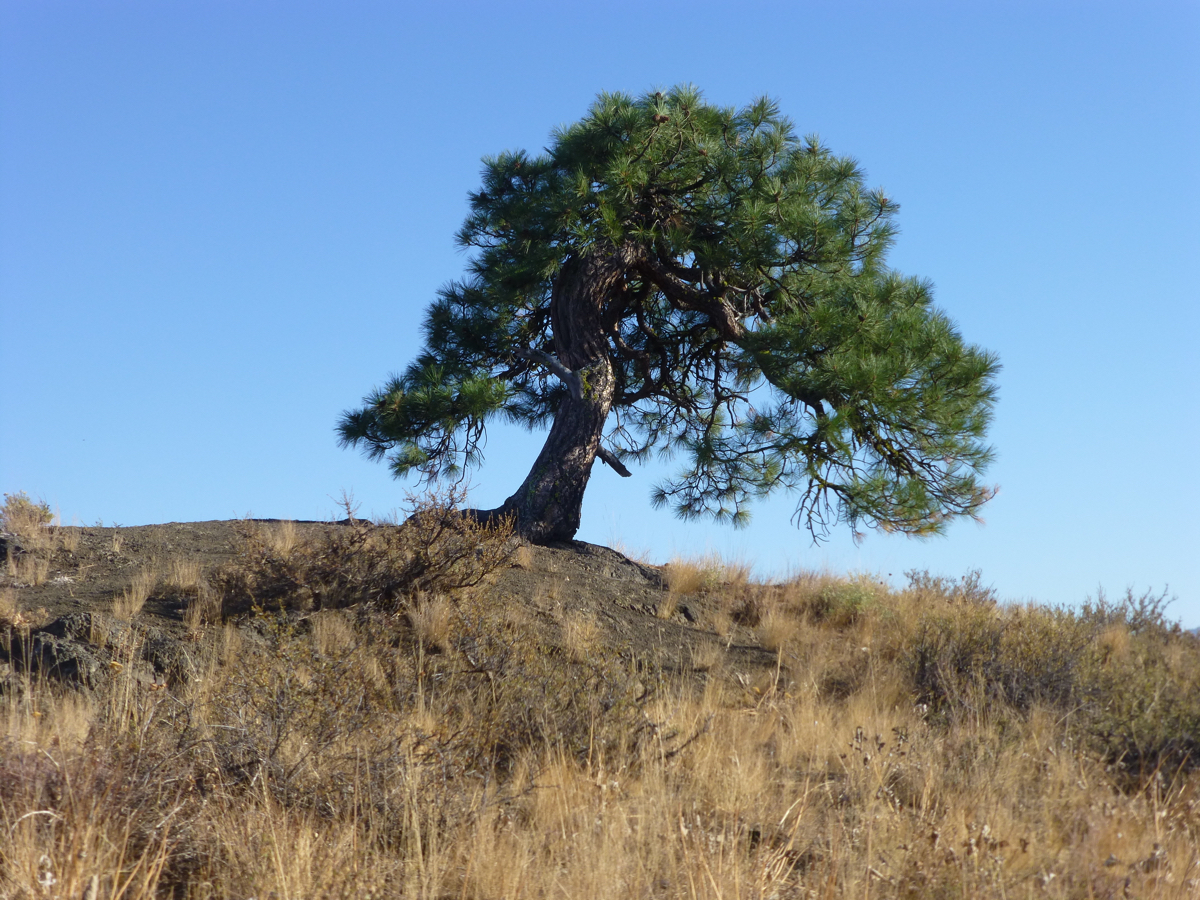
Stunted Ponderosa pine

Just a bit behind the deer in photo #2, this Ponderosa pine sits atop a hill. Because it is growing from a crack in the rock, it has remained small. It reminded us of a bonsai tree.

Road Scholar Program: Day 2

Today began with more of Dana’s presentation “How Nature Works.” He emphasized the way that fire serves to maintain nature’s balance. This is a salient issue because the recent wildfires in Washington burned close by but were stopped before reaching downtown Winthrop.

According to Dana, Ponderosa pines have developed thick bark that protects them from fire. Brush fires burn quickly, and when they sweep through a forested area, they are gone before they can burn through the bark of a Ponderosa pine and harm the interior, living part of the tree. These fires burn low-lying vegetation that competes with trees for nutrients from the soil. When allowed to burn freely, these fires keep down the growth of vegetation on the forest floor. But when the fires are routinely extinguished, low vegetation builds up so that, when a fire does arise, there is plenty of fuel for it to burn through. This is why the recent fires were able to spread across the area so quickly.

(Click on any photo to see a larger version.)

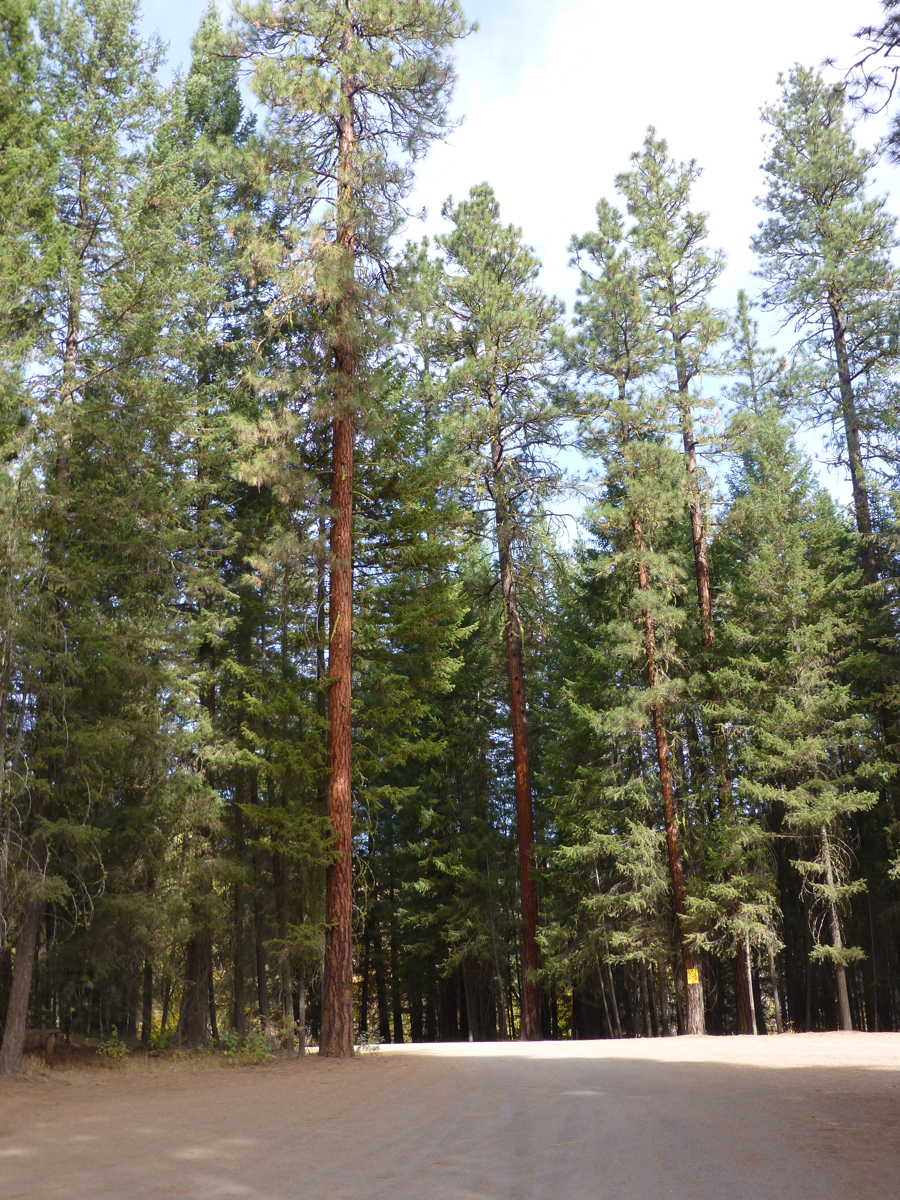
Later, on a walk along the trails near the lodge, we saw the tall Ponderosa pines, with their distinctive orange bark:

Ponderosa pines
Ponderosa pines

Dana also took us to the nearby beaver pond. Despite the name, beavers no longer live there because the owners of the land now trap and relocate them when they show up. The reason, Dana told us, is that beavers would cut down all the aspens that surround the pond within about 10 years.

beaver pond

Although we didn’t get to see beavers, we did see both ducks and geese swimming on the pond.

The second part of today’s program was the introduction of “Northwest History in Story and Song” presented by Hank, a singer, historian, and storyteller. Hank discussed the European exploration of the Pacific Northwest. He punctuated his slide presentation with songs that capture the spirit of the people who manned the ships that came looking for the Northwest Passage. Such songs represent the oral history tradition that prevailed before most people could read and write. On the ships, the shantyman sang songs that provided the rhythm necessary for whatever job the men were performing: The more rapid the action, the more lively the song.

Road Scholar Program: Day 1

Since our move to Washington State, we’ve done most of our exploring along the coast, between northern Washington and San Francisco. Now that summer is over, we decided to head east over the Cascade Mountains. This is not a trip for summer, as the temperatures east of the Cascades are often in the 90s, sometimes even more than 100. We signed up for the Road Scholar (formerly ElderHostel) class called Nature at Work in the North Cascades, Northwest History in Story and Song, and Life in Methow Valley.

(Click on any photo to see a larger version.)

This morning we set out on our trip over the Cascade Loop:

Cascades Loop map

We decided we’d take the northern route out today and the southern route on our way back home. Highway 20 goes through the North Cascades in an area often referred to as the North American Alps. You can see the pointed, rocky mountaintop typical of this area in the photo at the top of this post.

Our destination was Sun Mountain Lodge, a resort on 3,000 acres with miles of hiking trails, on the outskirts of Winthrop, Washington. This area is known as the Methow Valley. Methow is pronounced MET-how. The river and its surrounding valley take their name from the Native Americans who originally traveled the land fishing, hunting, and gathering wild foods such as berries and roots.

The program began in mid-afternoon with a lecture entitled “How Nature Works” by Dana, a local botanist. His focus was on how plants convert energy from the sun into food. After his talk he lead us on a nature walk on one of the trails closest to the lodge. He showed us how to use a botanist’s loupe (small magnifying glass) to look closely at flowers, leaves, and seeds.

My big discovery on this walk was quaking aspens, which I had never seen and heard before. Or at least I’m not aware of having seen them before. According to my book about plants of the Pacific Northwest, aspens cover New England, where I grew up, but I don’t remember them. Perhaps I lived in an area that wasn’t high enough for them. Because aspens like cool weather, they are usually found at elevations between 5,000 and 12,000 feet (1,500–3,700 m).

The flat leaves of these aspen trees, Populus tremuloides, shake or quiver in the slightest breeze in an effort to take in as much carbon dioxide and to expel as much oxygen as possible. This behavior has given the trees the name quaking or trembling aspens.

If, like me, you’ve never seen and heard quaking aspens, here’s a short video for you (it really is short, just 17 seconds; be sure to turn up the volume on the video player so you can hear the quaking):

Three Things Thursday

Another miscellaneous list for Three Things Thursday, the purpose of which is to “share three things from the previous week that made you smile or laugh or appreciate the awesome of your life.”

1. Potty Parity?

Pink PortaPotty

I had never seen a pink PortaPotty. As you’d expect, this one is labeled Women.

Photographed in the parking lot at the Washington State Fair.

2. Water Conservation

In a drought, we all help out.

This sign happens to be on our front lawn, but we’ve been seeing them all over town since Tacoma joined the cities of Everett and Seattle in a voluntary water conservation effort.

According to Tacoma Public Utilities, “Over the last six weeks, the region has collectively cut back water use by 14 percent.” This conservation effort has been especially important now because salmon are swimming up river to spawn. Both lowered levels of streams and warmer-than-usual water temperatures can adversely affect the salmon run. The Green River, Tacoma’s primary water source, is home to chinook salmon, a threatened species.

Because we’ve had a bit of rain recently, our lawns don’t look as bad as they might have otherwise.

3. Profound Philosophical Pondering

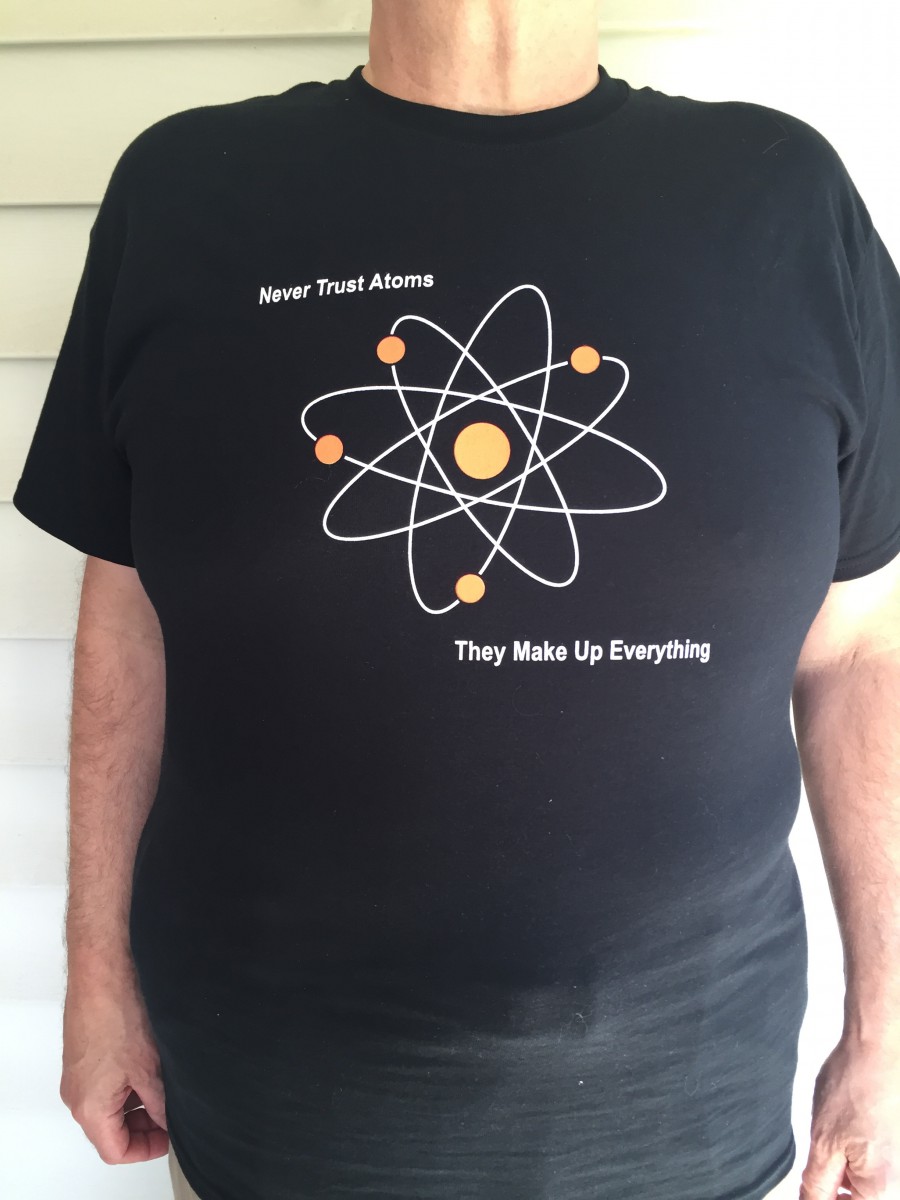
Never trust atoms: They make up everything.

It’s so hard to find a really good T-shirt nowadays. Many of them are just plain raunchy. I was delighted to find this one on our recent trip to Leavenworth, WA.