Living in the Shadow of an Active Volcano

Related Post:


(Click on any of the images to see a larger version.)

Mount Rainier is so beautiful and majestic to see that it’s easy to forget how potentially dangerous it is. Here in Tacoma, WA, we live in the shadow of this active volcano:

in the shadow of an active volcano
Living in the shadow of an active volcano (photographed at Washington State History Museum)

Washington is home to five major composite volcanoes or stratovolcanoes (from north to south): Mount Baker, Glacier Peak, Mount Rainier, Mount St. Helens, and Mount Adams. These volcanoes and Mount Hood to the south in Oregon are part of the Cascade Range, a volcanic arc that stretches from southwestern British Columbia to northern California.

Washington State Department of Natural Resources

In conjunction with the anniversary of the eruption of Mount St. Helens on May 18, 1980, May is Washington State Volcano Preparedness Month:
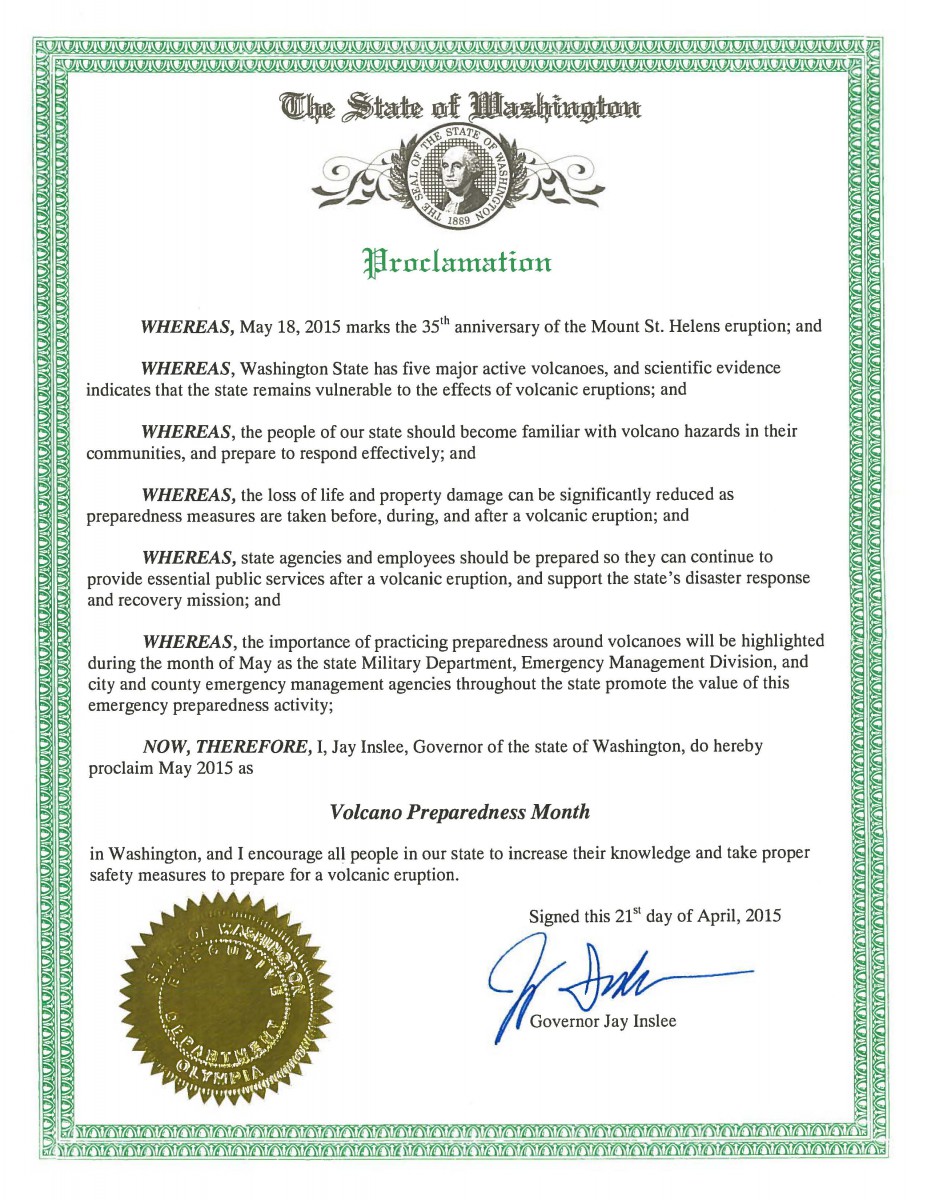
State of Washington Proclamation for Volcano Preparedness Month

The Washington State History Museum presented an exhibit earlier this month entitled “Living in the Shadows” to remind the public that what happened at Mount St. Helens could happen here:
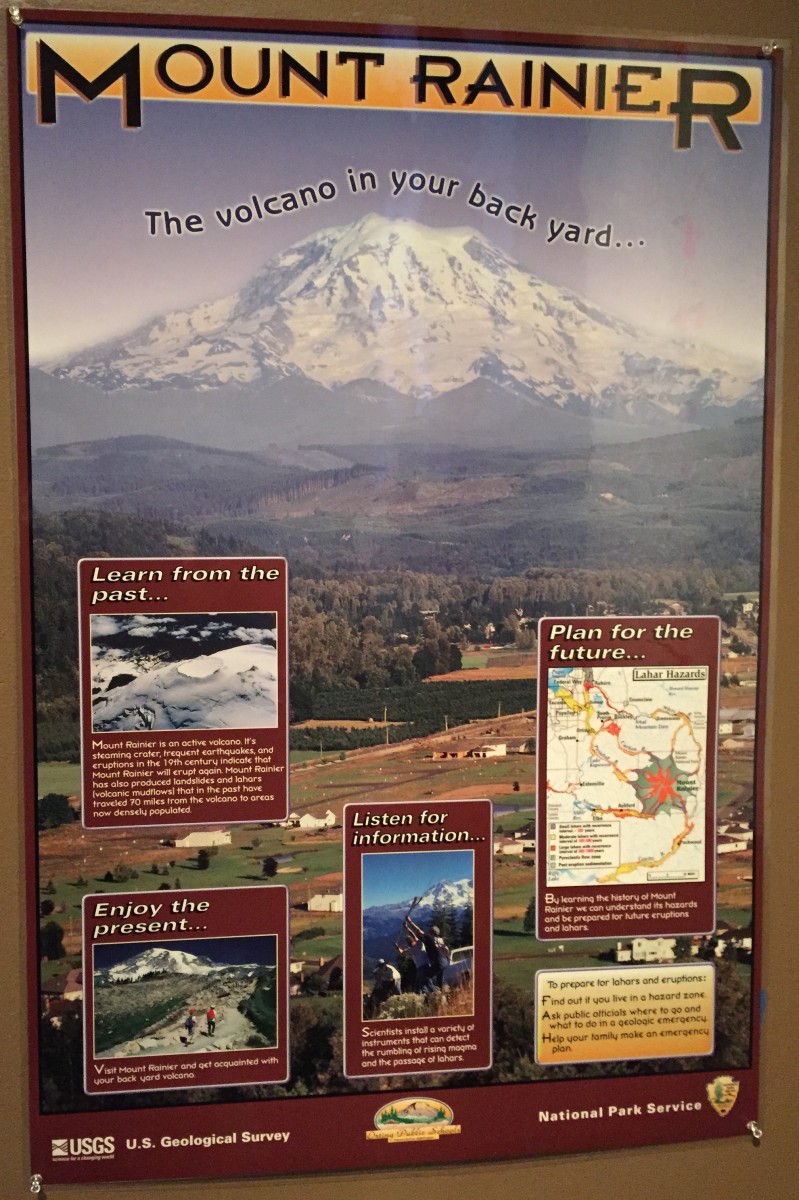
Photographed at Washington State History Museum

When most people think of the danger of a volcanic eruption, they think immediately of flowing lava. But there are two more immediate and potentially widespread dangers:

  • lahars—volcanic mudflows
  • pyroclastic flows—ground-hugging avalanches of hot volcanic ash, pumice, rock fragments, and gases that destroy everything in their path
Dangerous Mount Rainier
Dangerous Mount Rainier (photographed at Pacific Science Center)

As part of the state’s volcano preparedness program, students perform annual lahar drills in which they practice evacuating their schools ahead of lahar:
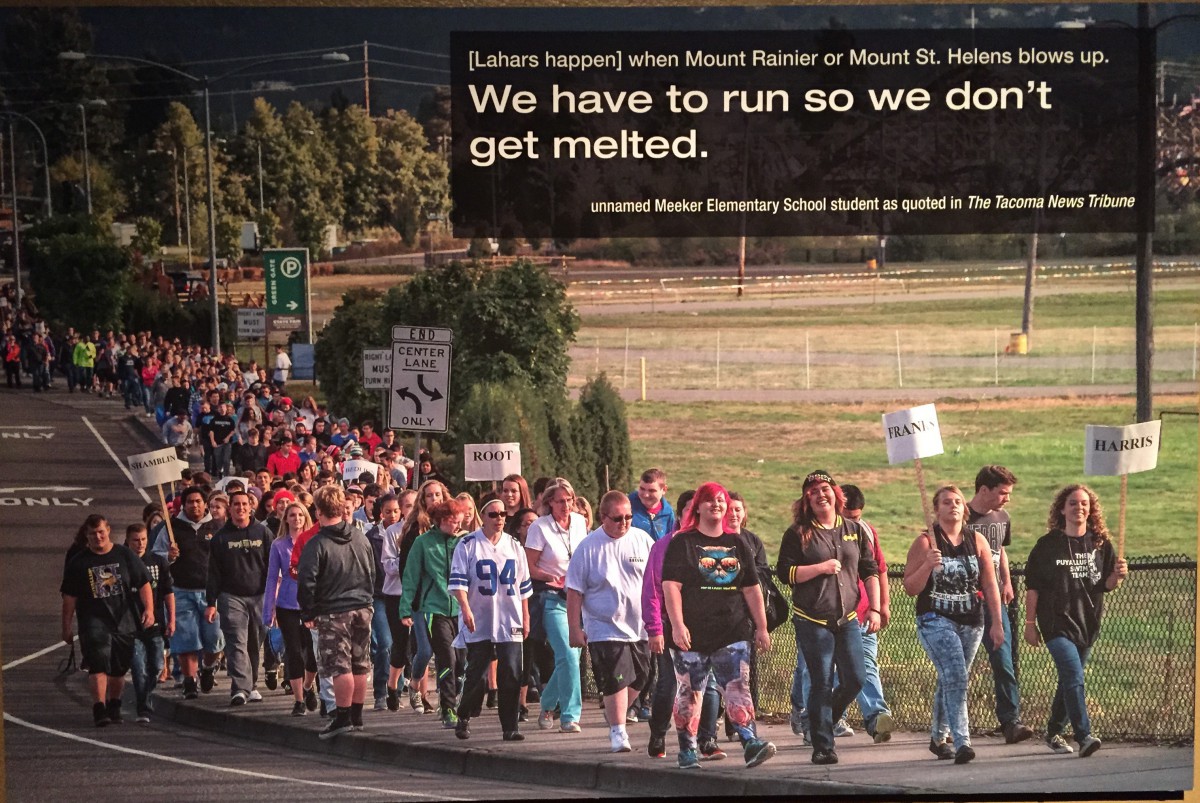
Student lahar drill
School lahar drill (photographed at Washington State History Museum)

Also see the local news article Orting schools conducting lahar drill Thursday.

On our recent visit to see Pompeii: The Exhibition, we found the Pacific Science Center in Seattle used the eruption of Mount Vesuvius in Italy in 79 A.D. as a springboard for education about our local situation:
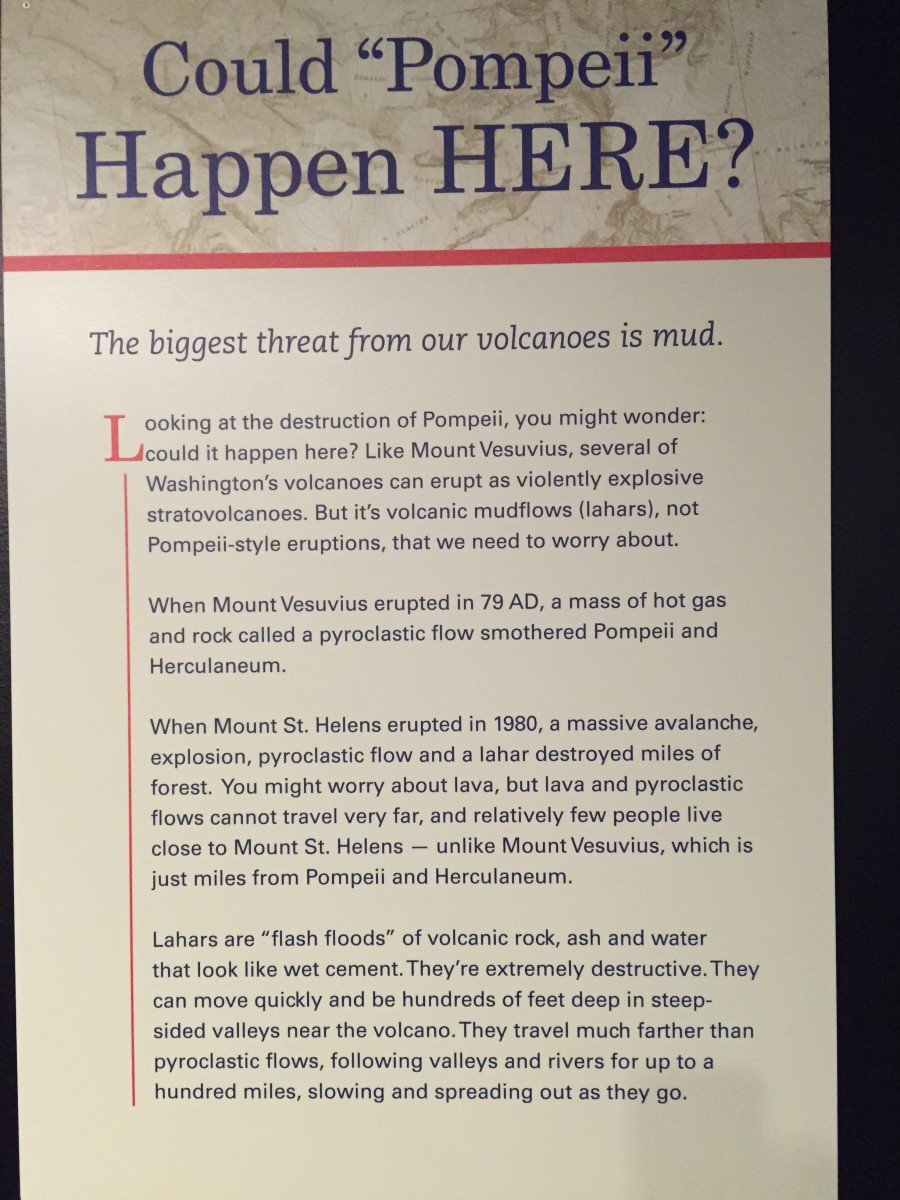
description of lahar and pyroclastic flow
Lahar and pyroclastic flow (photographed at Pacific Science Center)

This map shows the potential danger zones if Mount Rainier were to erupt:
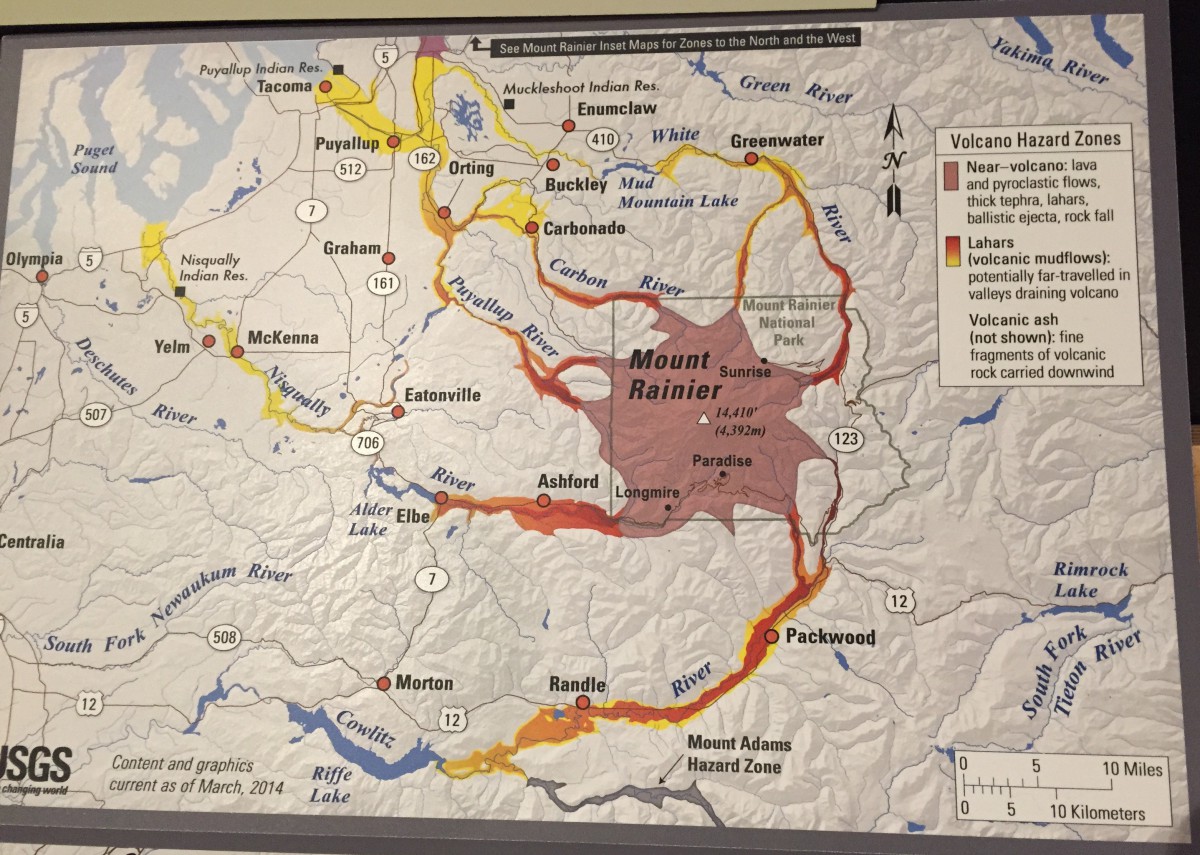
Mount Rainier hazard zones
Mount Rainier hazard zones (photographed at Pacific Science Center)

My home town of Tacoma is up there near the top, on the left.

The beautiful Cascades have been around for years. Long before the USGS (U. S. Geological Survey) started keeping records, Native Americans knew of the mountains’ power:

Volcanoes through Native Eyes
(photographed at Washington State History Museum)

Washington’s Volcano Preparedness Month announcements and activities remind us that it’s not a question of “if Mount Rainier erupts,” but rather “when Mount Rainier erupts.”

Additional Resources

35 years after Mount St. Helens erupted: A new world of research

Dzurisin, D., Driedger, C.L., and Faust, L.M., 2013, Mount St. Helens, 1980 to now—what’s going on?: U.S. Geological Survey Fact Sheet 2013–3014, v. 1.1, 6 p. and videos. (Available at http://pubs.usgs.gov/fs/2013/3014/)

Recent News Articles about Erupting Volcanoes

Did she blow? NW submarine volcano likely just erupted

Scientists find missing link in Yellowstone plumbing: This giant volcano is very much alive
Calbuco Volcano Erupts in Chile, and Nearby Town Evacuated

‘Wired’ Underwater Volcano May Be Erupting Off Oregon

35 Years Ago Today: Mount St. Helens Erupts

Today is the 35th anniversary of the eruption of Mount St. Helens, a mountain in the Cascade Range, located in southwestern Washington State.

At 8:32:17 a.m. PDT on Sunday, May 18, 1980, an earthquake caused the north face of the mountain to slide away, producing the largest landslide ever recorded that moved at 110 to 155 miles per hour (177 to 249 km/h). The eruption column rose 80,000 feet (24 km; 15 mi) into the atmosphere. Strong winds carried ash east of the volcano at an average speed of about 60 miles per hour (97 km/h). In Spokane, WA, 250 miles away, visibility was reduced to 10 feet (3.0 m) by noon. Noticeable amounts of ash fell in 11 states. Some of the ash drifted around the world in two weeks. The eruption lasted about 9 hours.

Volcano Illustration
Volcano Illustration (click to enlarge) (photographed at the Washington State History Museum)

The U.S. Geological Survey reports the following data about the 1980 eruption:

  • 1,314 feet (400 m): elevation lost
  • 2,084 feet (635 m): depth of crater formed
  • 0.60 cubic miles (2.5 cubic kilometers; 3.3 billion cubic yards; 165 million large dump trucks): volume of landslide deposit
  • 80,000 feet (24,000 m): height of eruption column reached in less than 15 minutes
  • 0.26 cubic miles (1.0 cubic kilometers): volume of volcanic ash produced

Destruction caused by the eruption covered 150 square miles:

1. 57 people were killed.

2. More than 11 million animals died, including:

  • 1,500 elk
  • 5,000 deer
  • 12 million salmon fingerlings

3. More than 4 billion board feet of timber, 230 square miles (600 km2) of forest were knocked down, though some lumber was later recovered.

4. Also destroyed:

  • 200 houses
  • 27 bridges
  • 15 miles (24 km) of railways
  • 185 miles (298 km) of highway

The number of human lives lost could have been much higher. Because the eruption occurred on a Sunday, more than 300 loggers were not working in the area.

Eruptions since 1980

During the summer of 1980, five more eruptions occurred. Geologists also carefully watched incidents of volcanic activity between 2004 and 2008.

Resources

Dzurisin, D., Driedger, C.L., and Faust, L.M., 2013, Mount St. Helens, 1980 to now—what’s going on?: U.S. Geological Survey Fact Sheet 2013–3014, v. 1.1, 6 p. and videos. (Available at http://pubs.usgs.gov/fs/2013/3014/)

I used the PDF of this fact sheet for much of the information here. The web version includes videos.

Mount St. Helens Erupts

Because the May 18, 1980, eruption was preceded by more than two months of earthquakes and steam-venting episodes, people began to doubt that danger was imminent. This four-minute video from History.com condenses the history of the eruption and gives a good idea of how people reacted, both before and after, the eruption. Be sure to notice the remarks of local Mount St. Helens resident Harry R. Truman, who is buried, along with his 16 cats, on the mountain.

Note: Music accompanies this video. You can turn it down or mute it, as you wish. You have been warned.

35 years after Mount St. Helens eruption, nature returns

This CBS News report covers the return of life to the Mount St. Helens area in the 35 years since the eruption. It’s an uplifting story to see after reading about all the devastation.

On the Menu: Copper River Salmon

Every year folks around here eagerly await Copper River salmon season. This article in today’s newspaper announces the arrival of thousands of pounds of ceremonial fish, the first fish of the Copper River salmon season, in Seattle via an Alaska Airlines jet. According to television news reports, true devotees gladly pay upwards of $100 a pound to score some of this precious cargo. Considered by many to be the highest quality salmon available, Copper River salmon feature bright red flesh with a rich taste and buttery consistency.

The Copper River, nearly 300 miles (470 km) long, runs through south-central Alaska into the Gulf of Alaska. Ranked by water output, it is the 10th-largest river in the United States. Both the river and the Copper Glacier from which it arises take their names from nearby former copper mines.

Because the Copper River is a fast-moving, glacial river, salmon have to store up a lot of oil and fat content to make the journey upstream. This high oil and fat content gives the salmon their characteristic color and flavor.

Health experts recommend eating salmon because it’s high in protein and essential nutrients but low in saturated fat. Another benefit is its high concentration of omega–3 fatty acids, which have been reported to contribute to heart health, reduce inflammatory diseases, and perhaps prevent cancer.

Fishing boats catch three kinds of wild salmon from the Copper River: coho, sockeye, and king, the largest. The amount of fish caught each year varies, but the Alaska Department of Fish and Game reports that more than 1.8 million salmon were caught in 2013.

Another article from our local newspaper, The News Tribune, describes the arrival of the flown-in salmon at its destination in the South Puget Sound area, Northern Fish Co., which is not far from where we live.

“We got 2,000 pounds today and more tomorrow,” said fourth-generation Northern Fish owner John Swanes.

According to Swanes, “Early Copper River fish is the best, with a high oil content.”

While some of the Copper River salmon will be sold at the company’s two retail stores in Tacoma, most of it will be sold to wholesale customers, including local independent seafood and grocery outlets, and higher-end restaurants.

At the retail level, whole Copper River kings will be selling for $29.95 per pound, with filets priced at $42.95. Whole sockeyes will be offered at $23.95 and filets at $29.95 per pound. All initial fish are net-caught in the deep-water open ocean near the mouth of the Copper River.

The Copper River salmon season usually lasts from May through September.

Three Things Thursday

Once again it’s time for the blog challenge Three Things Thursday, the purpose of which is to “share three things from the previous week that made you smile or laugh or appreciate the awesome of your life.”

1. Little Free Library

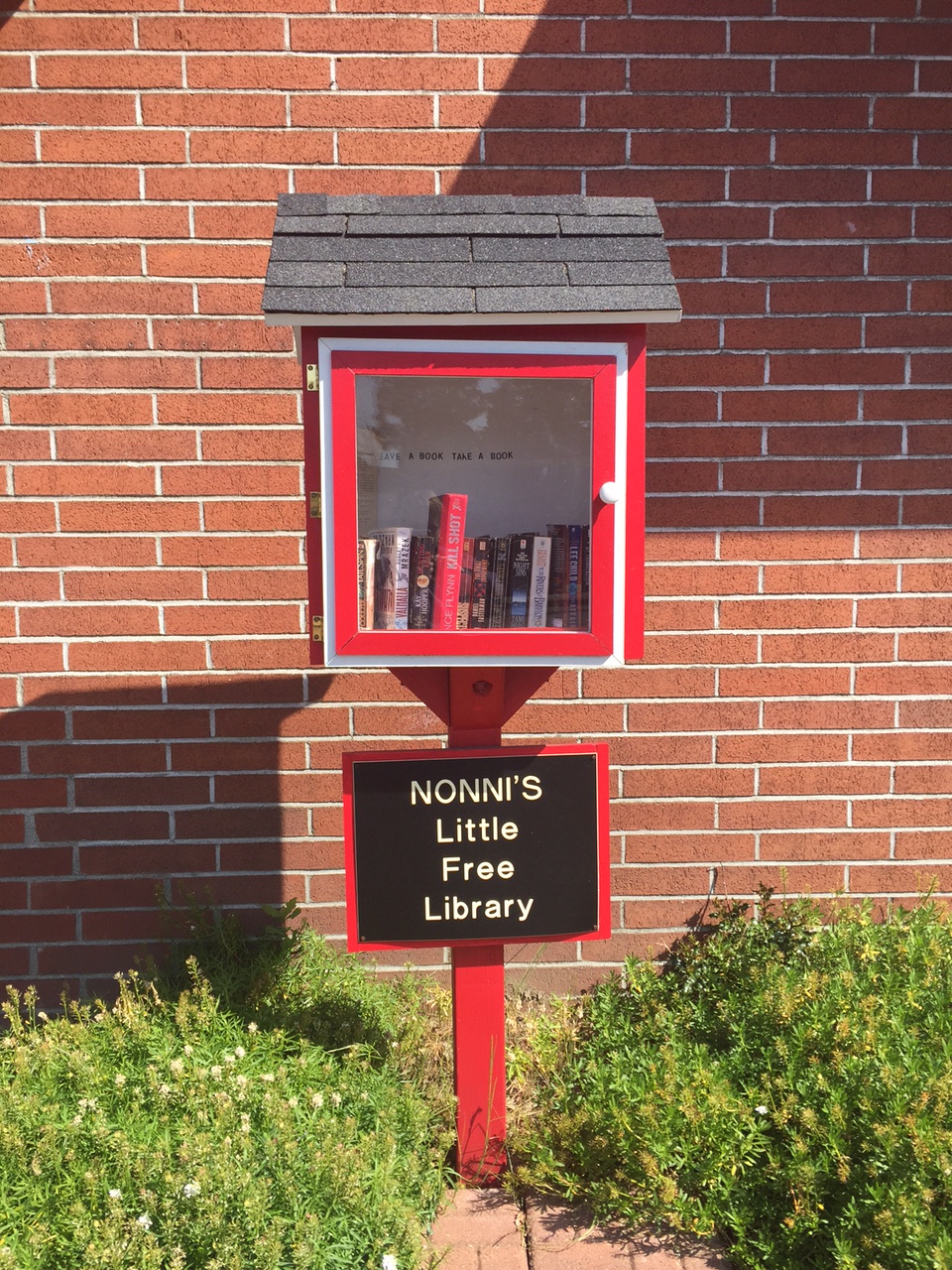
I had heard about and seen photos of little free libraries on Facebook and other social media and news sites, but I had never seen one in the wild until last Saturday.

little free library

This little gem is outside an insurance company office in Puyallup, WA.

The Little Free Library movement was started in Wisconsin by Todd Bol and Rick Brooks in 2009. Its mission is two-fold:

  • To promote literacy and the love of reading by building free book exchanges worldwide.
  • To build a sense of community as we share skills, creativity and wisdom across generations.

Its goal is “To build 2,510 Little Free Libraries—as many as Andrew Carnegie.”

This goal was reached in August of 2012, a year and a half before our original target date. By January of 2015, the total number of registered Little Free Libraries in the world was conservatively estimated to be nearly 25,000, with thousands more being built.

The philosophy behind little free libraries is “Take a book. Return a book.” In other words, for every book you take, you should put one book back. The aim of the process is to promote not only general literacy, but also neighborhood community. These libraries are run on the honor system by community members, for each other.

Check the Little Free Library web site for information on how to establish and maintain one in your neighborhood.

2. West Coastin’

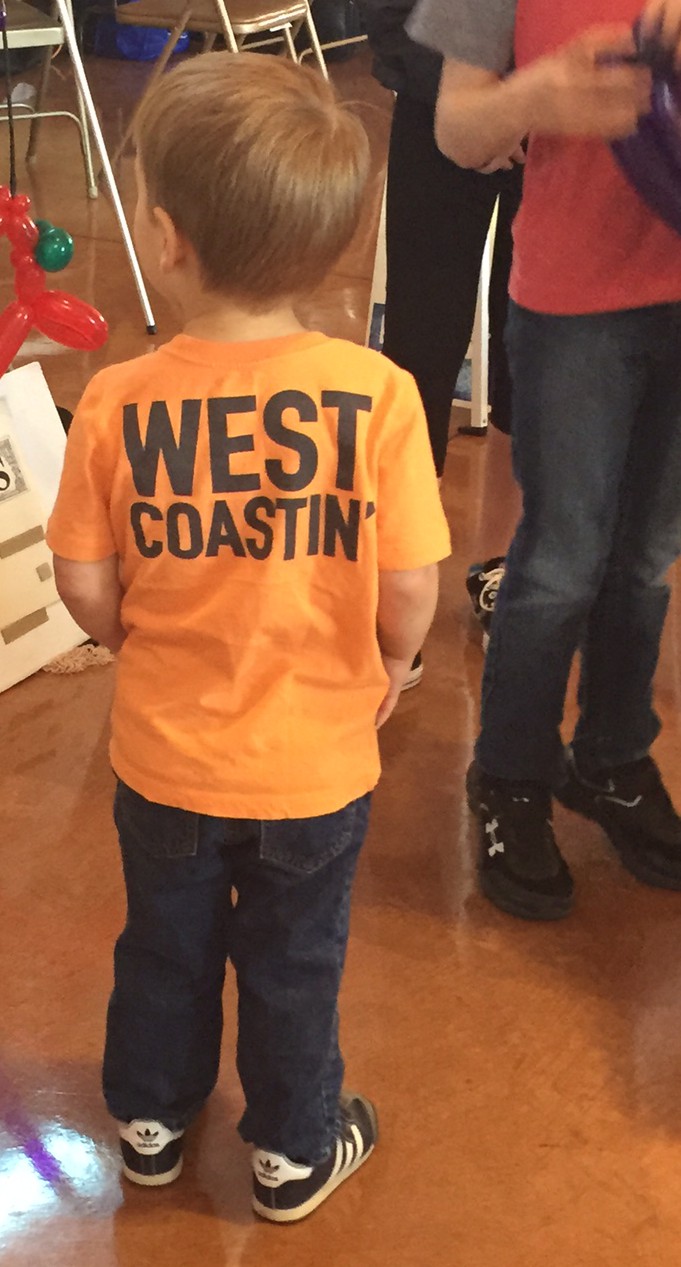
Since retiring from St. Louis, MO, to Tacoma, WA, my husband and I have been enjoying what we think of as West Coasting. So I was delighted to see a little guy wearing this T-shirt:

"West Coastin'" shirt

3. Easy Passage

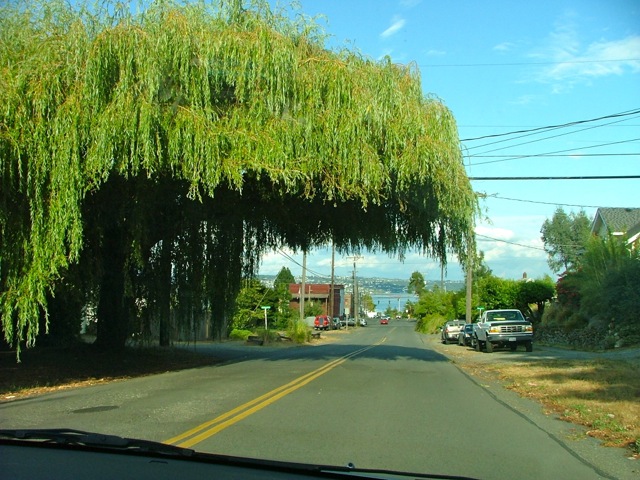
We took this photo from our car on a 2009 visit to Tacoma. The tree was on a road leading to the Point Defiance Zoo & Aquarium.

willow tree trimmed over street
Photographed in 2009

We ended up living just around the corner from this tree. When I arrived at my new home in April 2013, I was disappointed not to see this tree. Sometimes on our walks we stand near its stump and fondly remember how much it amused us when we first spotted it.

Three Things Thursday

Once again it’s time for the blog challenge Three Things Thursday, the purpose of which is to “share three things from the previous week that made you smile or laugh or appreciate the awesome of your life.”

three-things-thursday-participant

Three Things Emblematic of Tacoma

emblematic:

representing something (such as an idea, state, or emotion) that cannot be seen by itself.

Source

I’ve been in my new hometown of Tacoma, WA, for two years now and still enjoy exploring the city and learning about new aspects of it. Today I feature three things that are emblematic of Tacoma.

1. Museum of Glass

museum of glass

Museum of Glass
1801 Dock St, Tacoma, WA 98402
(253) 284–4750

the Museum’s stainless steel cone serves as a beacon to a stunning contemporary art museum as well as a symbol for the restoration of a waterway and the revitalization of a city.

The idea for the Museum of Glass arose in August of 1992 from a conversation between Phil Phibbs, who had recently retired as president of the University of Puget Sound, and Dale Chihuly, a world-renown glass artist who had grown up near and attended the university.

A few weeks later Dr. Phibbs brought his idea for a glass museum to the Executive Council for a Greater Tacoma, a group of business and governmental leaders. He was invited to stay for the next presentation, a plan for redevelopment of the Thea Foss Waterway, a strip of empty industrial land next to a body of polluted water in downtown Tacoma. The Council agreed that the proposed glass museum would be an appropriate anchor tenant for the proposed redevelopment.

“In September 1997, Canadian architect Arthur Erickson unveiled the Museum’s design concept, which included an iconic, tilted cone.” Construction began in June of 2000, and the Museum of Glass, with its adjoining Chihuly Bridge of Glass, opened on July 6, 2002. The museum features work of glass artists from all over the world.

Located within the 90-foot tall steel cone, the Hot Shop Amphitheater allows visitors to watch as artists create art pieces from molten glass. The museum features displays in its indoor galleries, art installations on its outdoor plazas, and an extensive  list of educational programs.

2. Tacoma Dome

Tacoma Dome

Tacoma Dome
2727 E D St, Tacoma, WA 98421
(253) 272–3663

The Tacoma Dome, owned and operated by the City of Tacoma, is the largest arena in the world with a wooden dome. Construction began on July 1, 1981, and the Dome opened on April 21, 1983. It is 530 feet (160 m) in diameter and 152 feet (46 m) tall, and can seat up to 23,000. Most of the arena’s seating is not fixed, so that the space can be configured for many different types of events. It’s not unusual to see bleachers standing in the parking lot when driving by the Dome on I 5

The Tacoma Dome’s roof was built with 1.6 million board feet and weighs 1,444,000 pounds. 24,541,382 cubic feet of concrete was used in the construction of the Tacoma Dome. This is enough to build a sidewalk 70 miles long. The Tacoma Dome is 530 feet in diameter and 152 feet tall.

The Tacoma Dome’s aluminum super-grid is one of the world’s largest at 384’ x 160‘. The total cable length is approximately 47,661’ or just over nine miles. There are over 275 support points on the Dome and the grid includes an estimated 2.5 miles of welding.

The Tacoma Dome hosted the 1990 Goodwill Games, the 1988 and 1989 NCAA Women’s Basketball Final Four, and the 1987 United States Figure Skating Championships. The Seattle Sonics National Basketball Association team held its home games of the 1994–1995 season during renovation of Key Arena in Seattle.

Throughout the year the Tacoma Dome hosts many kinds of civic events and gatherings, including music concerts, trade shows, fairs, sporting events, and local high school and college graduations.

3. Mount Rainier

Mount Rainier
Mount Rainier photographed on Jan. 25, 2015

Mount Rainier National Park

I’ve saved the best for last. You’ll see a lot of different photos of Mount Rainier on this blog because I love it so much.

The mountain is about 70 miles southeast of Tacoma, but on a clear day it looks as if you could reach out and touch it. The mountain is so emblematic of Tacoma that a lot of companies use it in their logo. See, for example, Tacoma’s local daily newspaper, The News Tribune.

Mount Rainier reaches 14,410 feet above sea level.

An active volcano, Mount Rainier is the most glaciated peak in the contiguous U.S.A., spawning six major rivers. Subalpine wildflower meadows ring the icy volcano while ancient forest cloaks Mount Rainier’s lower slopes. Wildlife abounds in the park’s ecosystems.

The National Park Service website offers lots of information about both the animals and the vegetation surrounding Mount Rainier. It even has webcams. The park is open all year, although much of it is inaccessible to traffic during the winter (which usually starts early and ends late). Be sure to check the website for weather conditions, including the need for tire chains, when planning your visit.

Between 1.5 and 2 million people visit Mount Rainier National Park every year. We in Tacoma are lucky enough to be able to see the mountain frequently throughout the year.

Three Things Thursday

Last Friday morning I realized that I had not done a post for Three Things Thursday, the purpose of which is to “share three things from the previous week that made you smile or laugh or appreciate the awesome of your life.” I don’t know how I forgot to do it, since it’s one of the things I most look forward to in my week.

However, I’m back this week with…

A Walk Through the Woods

We live within walking distance of the Point Defiance Zoo & Aquarium. All we have to do to get there is cross a road and walk a short path through the woods, and there we are, on the edge of the parking lot and about a block from the zoo entrance.

Last Saturday was a beautiful day here in Tacoma, WA, USA, and so we took off for a visit to the zoo. We saw lots of interesting things there, both animals and plants, but what I’d like to show you this week is three interesting things I noticed while walking the path through the woods.

1. Fiddleheads

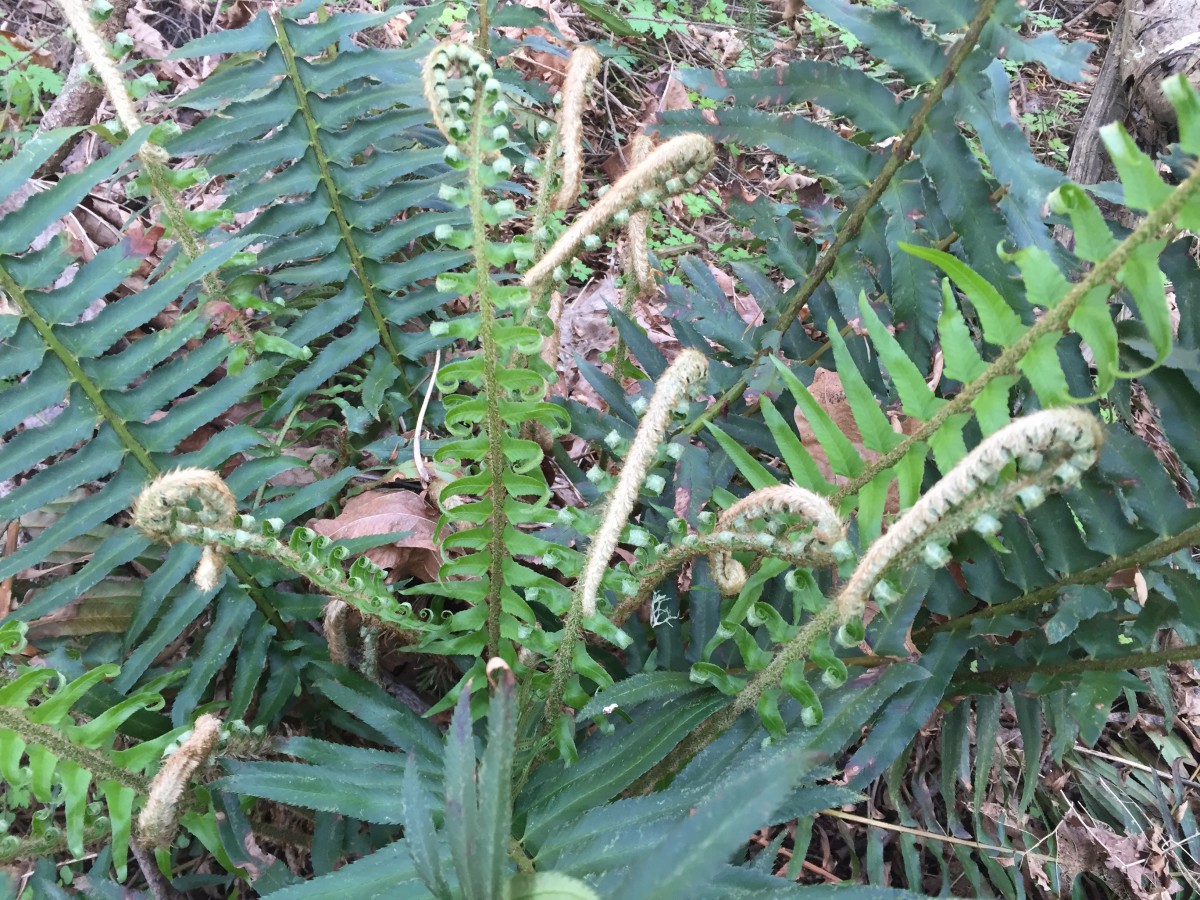
fern fiddleheads
Fern fiddleheads

I think these are sword ferns. You can see why the new fronds growing out of the center of the plant are called fiddleheads.

In the Stephen King novel The Girl Who Loved Tom Gordon, a young girl gets lost on the northern end of the Appalachian Trail and wanders through the forest for several days. One of the things she eats to survive is fiddleheads.

But I don’t suggest that you go out and get some of these to boil up for dinner. Check with a local naturalist before consuming anything you find growing in the wild. Better still, just don’t eat anything you’re not absolutely sure about.

2. Two Trees

two trees
Two trees

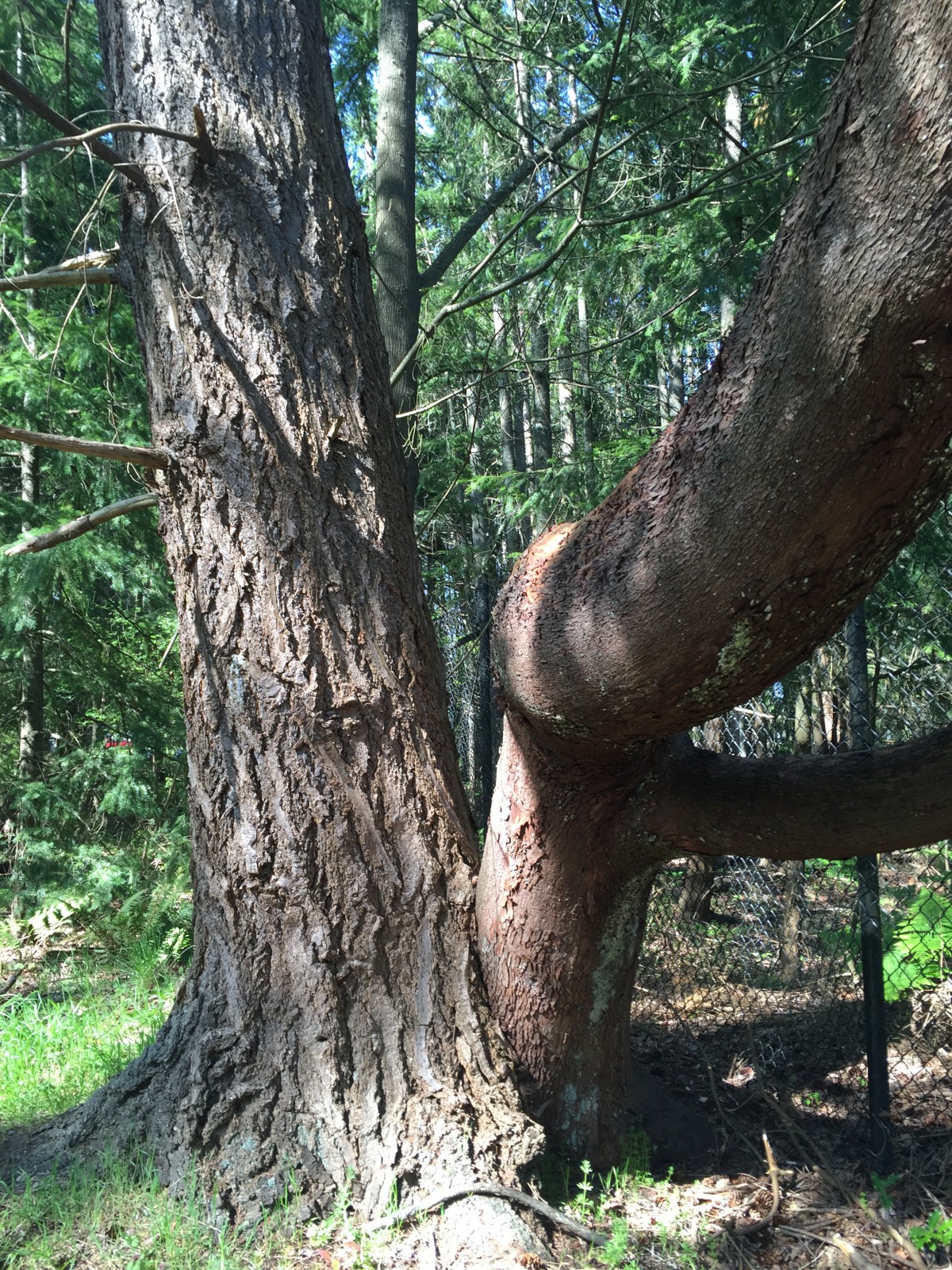
The tree on the left, with the shaggy bark, is an evergreen, most likely a Douglas fir. It grows straight and tall, with spindly branches at the top that drape down. The tree on the right is a madrona—or, alternately, madrone—which often grows at an angle to reach any open space of sunlight beneath the evergreen canopy. Madronas are all angles and elbows as they send out lots of branches in search of sunlight. They are much shorter than their evergreen neighbors.

Perhaps these differences are what allowed these two trees to snuggle up so closely while growing. Douglas fir and madronas often grow near each other.

Madronas grow along a limited stretch of the Pacific coast, from northern Oregon up to southern British Columbia. They are easily recognizable by their brownish-red bark that peels off in thin sheets.

3. Hemlock? Cedar?

unknown tree
Do you know what this tree is?

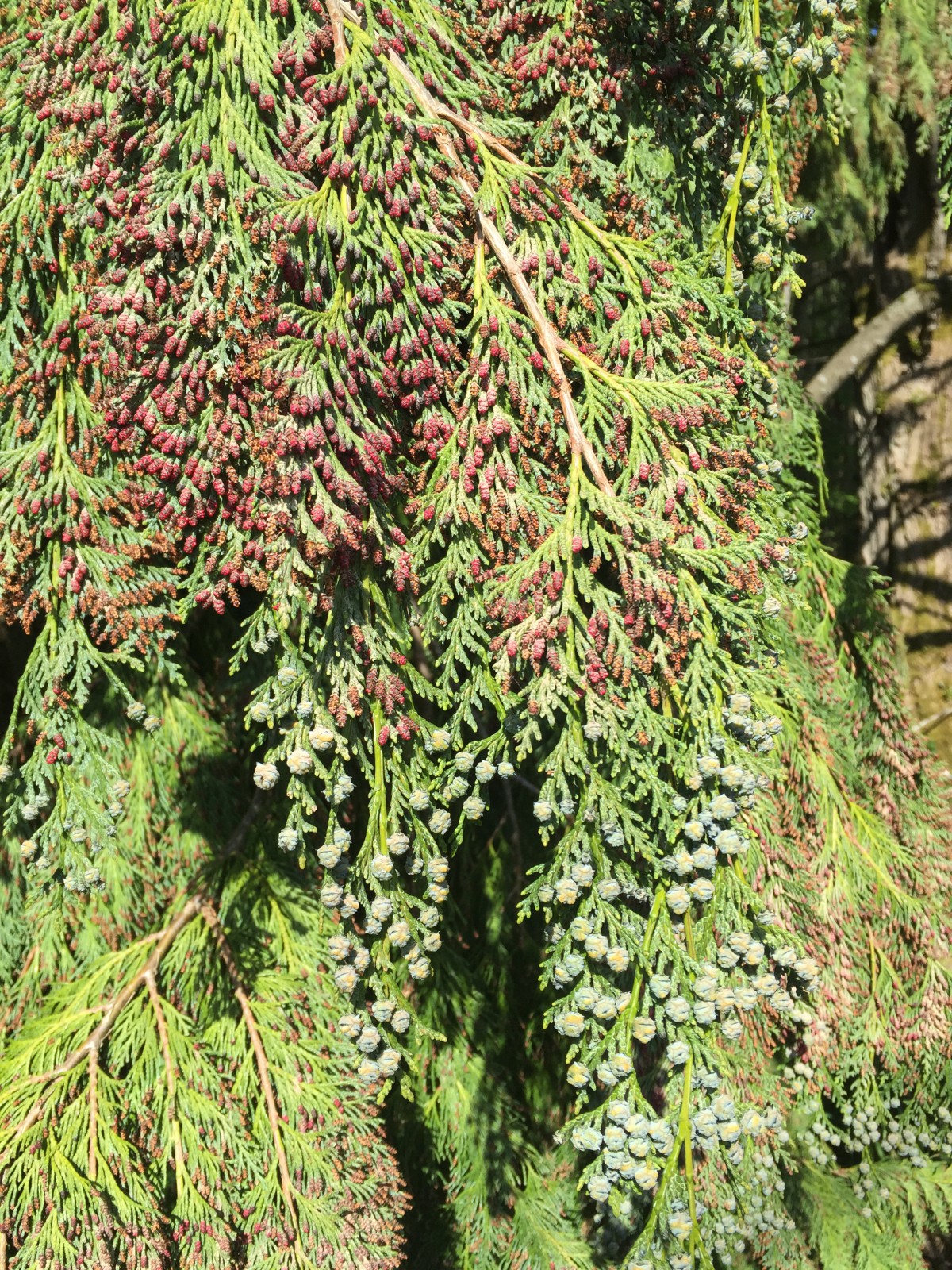
I’m still trying to figure out what tree this is. I will have to go back and look at the bark more closely.

When we touched the brownish areas on the leaves, a very fine brown dust wafted off. The bluish berries near the ends of the leaves resemble those of cedar trees.

If you know what tree this is, please let me know in the comments. It grows in Point Defiance Park in Tacoma, WA, USA.

Reference

Cover: Plants of the Pacific Northwest CoastPolar, Jim and Andy MacKinnon. Plants of the Pacific Northwest Coast: Washington, Oregon British Columbia, & Alaska
Revised edition, 2004
Vancouver, British Columbia: Lone Pine Publishing
ISBN 978–1–55105–530–5

Opening Day: Puyallup Farmers’ Market

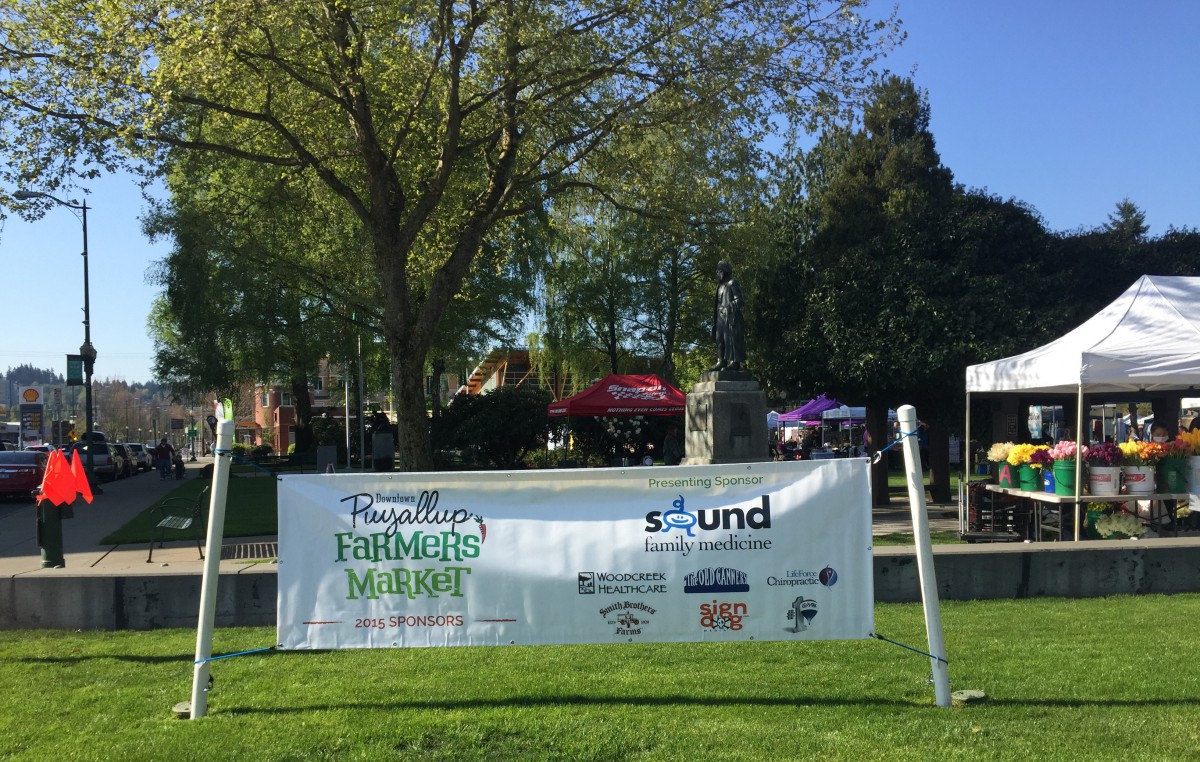
Our daughter K. lives in Puyallup (pronounced pew-AL-up), a city about 12 miles southeast of Tacoma. The Puyallup River Valley provides great growing conditions that have made the area a prime site for growers of all kinds of produce, and the city has therefore hosted a thriving farmers’ market for 32 years.

It has become our summer tradition to meet K. for a trip through the Puyallup Farmers’ Market followed by lunch. Today was opening day. The market is held from 9:00 to 2:00 every Saturday in Pioneer Park, the center of downtown Puyallup. It’s sponsored by the Puyallup Main Street Association, an organization that “envisions a downtown business district that is alive, inviting, healthy and thriving while retaining its hometown, friendly charm.”

In addition to fruits and vegetables, the market features local artisans offering their products, including candles, soap, tea, wood crafts, jewelry, clothing, knitting, crocheting, honey, jams and jellies, meat, fish and other seafood, and baked goods. Often civic organizations also attend. Today the people from greyhound rescue were there with some of their dogs.

Because spring arrived here about a month earlier than usual this year, there was already an abundance of vegetables at the market:

Veggies
Veggies

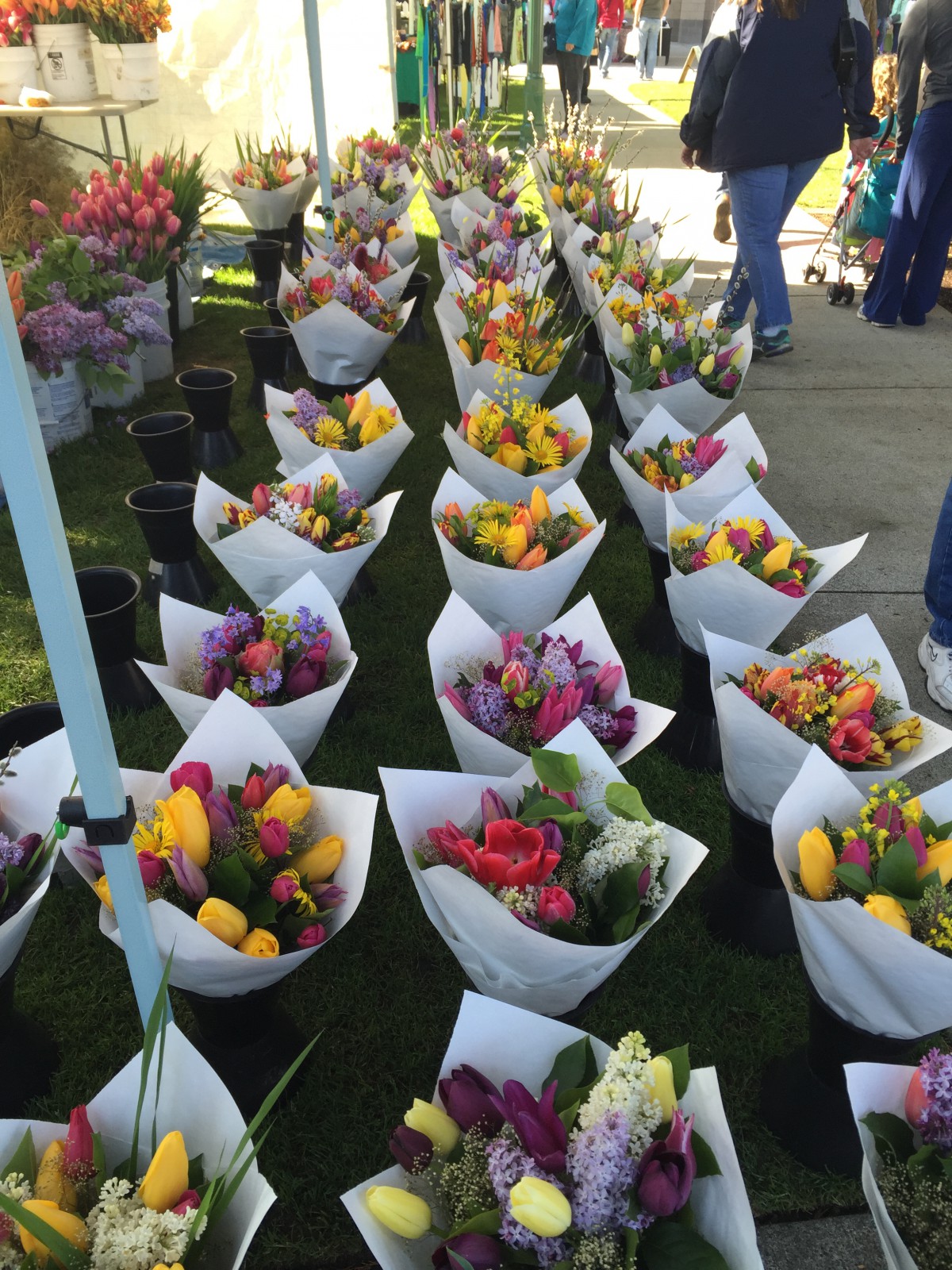
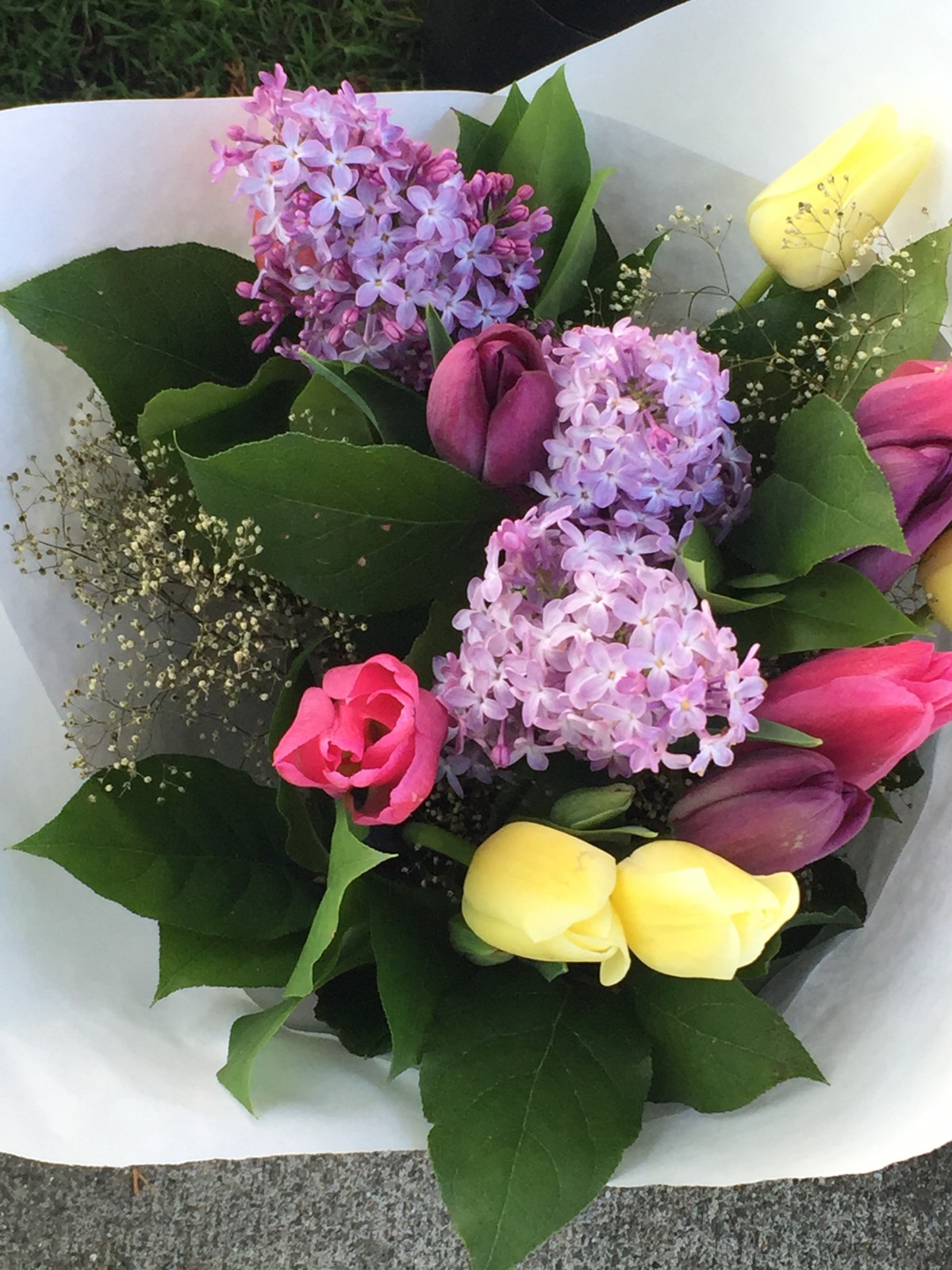
The other main crop is always flowers. There are endless artistic bouquets available at reasonable prices:

bouquets
Bouquets

There are flowers and more flowers:

Puy mkt flowers02

flowers


People interested in growing their own vegetables, fruits, herbs, and flowers can also find starter plants:

Plants for sale
Plants for sale

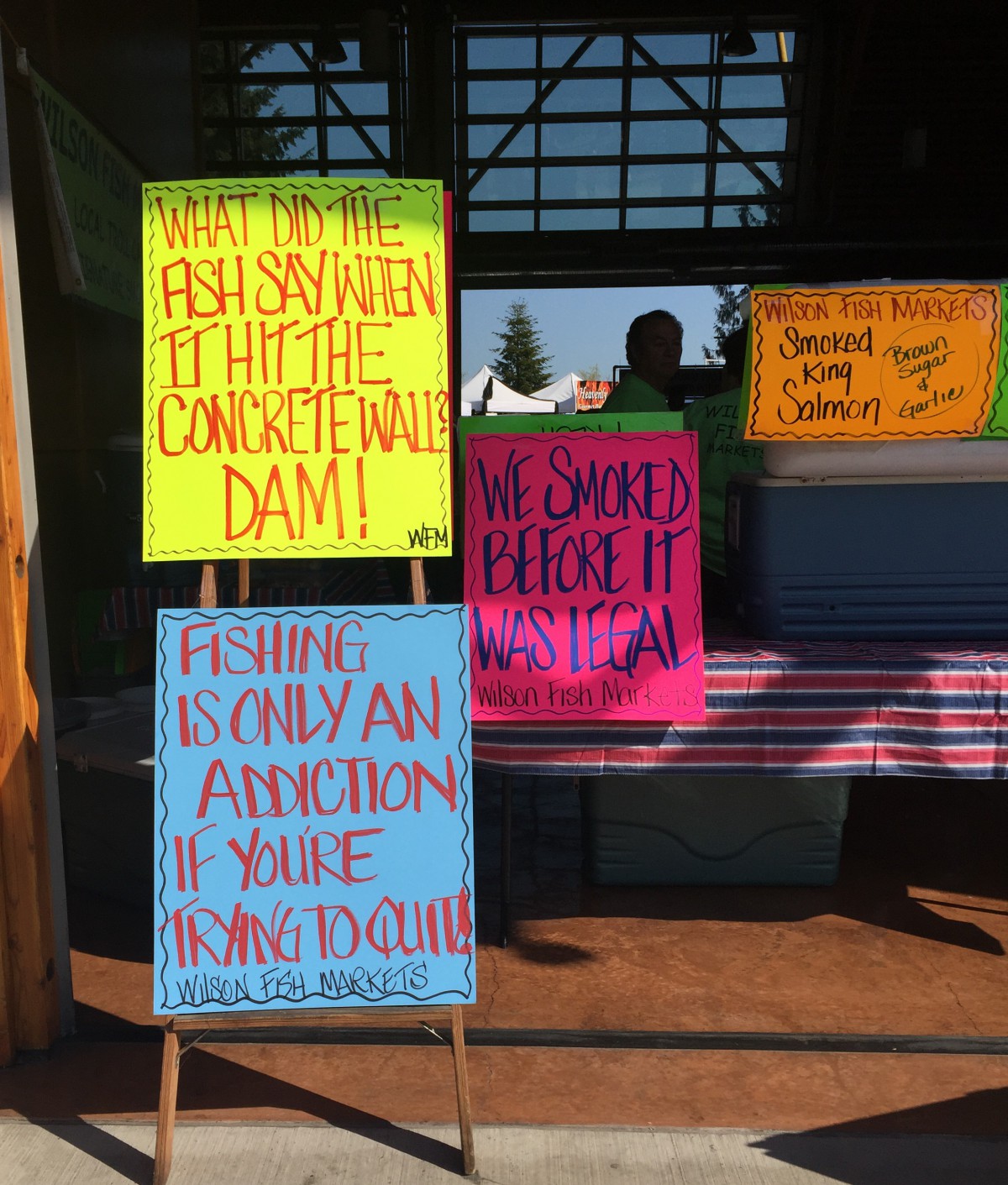
We bought some delicious salmon from a fisherman with quite a sense of humor:

Wilson Fish Markets signs
Wilson Fish Markets

And Puyallup is smack in the middle of Seahawks country:

Seahawks Gear
Seahawks Gear

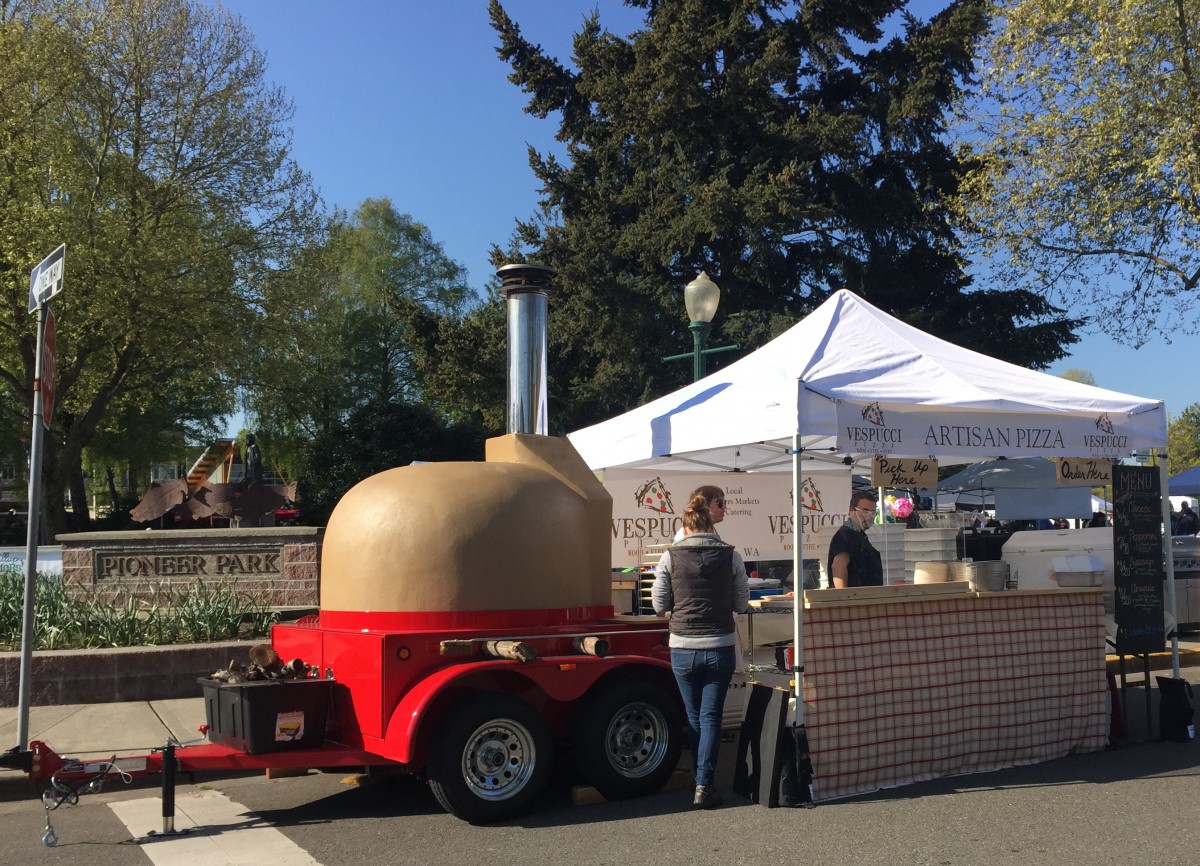
And where there’s a crowd there must be food. You can find just about any food item you like. The Vespucci Pizza oven had a good spot at the place where we entered the park:

Vespucci Pizza oven
Vespucci Pizza oven

There are a lot of items to see at the market, but people watching is also a grand experience. The market is family friendly, and a there are a lot of people pulling wagons full of both kids and purchases. Although dogs are not allowed inside the covered pavilion, lots of people walk their dogs in the uncovered areas. We saw one black Great Dane whose gorgeous coat glistened in the sun.

It was a beautiful, sunny day, with temperatures in the low 60s, to celebrate the Puyallup Farmers’ Market opening. I definitely “like” the Puyallup Farmers’ Market Facebook page. This year we’ll be able to enjoy it every Saturday through October 17.

At Home: My Two-Year Anniversary in Tacoma

Today I celebrate two years of living in Tacoma. I actually arrived in Tacoma on April 9, 2013, then stayed in a motel overnight before moving into my new home on April 10.

We had been visiting Tacoma for a week each year for several years before deciding to move here. I therefore knew a little about getting around, but not very much. I knew only one route to my new home from the motel where I stayed. (We’d been staying there regularly for many years.) I have since discovered a few alternate routes to my house, including one that cuts about 15 minutes off that route I drove on my first day as a resident here.

After two years, I finally feel that I’m beginning to know my general way around. I still use Google Maps a lot, but now when people say, “That store is on Hosmer Street” or “We’re on Steele Street,” I have a general idea of where to head. I also no longer fear getting lost and can approach finding somewhere I’ve never gone before as an opportunity to explore new places.

I arrived at my house at 10:00 AM on April 10, 2013, in a torrential downpour. Of course I knew about the frequent rain here—our daughter had been reminding us that we’d have to get used to it—so I wasn’t surprised. After getting my keys, I pulled my car into the attached garage and unloaded the boxes of necessities that I had brought with me from St. Louis. My car could not have held even one more dish or pan.

By the time I had unloaded the boxes—not unpacked them yet, but at least removed them from my car and put them in the appropriate rooms—it was 11:00 AM. I was ready to head out to Target, Costco, and Safeway to purchase necessities I hadn’t been able to bring with me (coffee maker, vacuum cleaner, cleaning supplies, and yes, food). Was I surprised to find that the sky was clear and the sun was shining brightly.

That was the first time I realized that the old adage “If you don’t like the weather, just wait a minute and it will change” applies here more than anywhere else I’ve ever lived. In the two years I’ve been here I’ve learned a lot about dealing with the weather:

  • Even if it’s raining now, it might not still be raining an hour from now.
  • Even if it’s not raining now, that doesn’t mean it won’t be raining an hour from now (so bring along that umbrella or raincoat).
  • A morning of fog and drizzle (quite common) doesn’t mean that the afternoon won’t be beautifully sunny.
  • The hottest part of the day here isn’t around high noon, as it was in St. Louis, but usually at 3:00 or 4:00 PM.
  • If you expect to live around here, you can’t be skittish about occasionally getting a bit wet. Also, my mother was right when she told me, “You’re not sugar. You won’t melt.”

I do not miss the unbearable heat and humidity of St. Louis summers at all.

But after 40+ years in St. Louis, I do kind of miss the St. Louis Cardinals and still follow them in the standings. Nonetheless, I have adopted the Seattle Mariners as my home MLB team and faithfully follow their ups and downs (so far, unfortunately, mostly downs) and tune in to the games. I’m grateful that the Mariners AAA minor league team, the Rainiers, is headquartered right here in Tacoma. Attending their games is much easier—and much cheaper—than making the trip up to Seattle’s Safeco Field. And I’ve become an enthusiastic football fan here in Seattle Seahawks territory, where everybody is expected to be The Twelfth Man. Like a lot of other people around here, I still wish the Supersonics, the local NBA team, had not moved away and remade itself as the Oklahoma City Thunder.

Our recent five-day trip to Tampa, FL, for the Women’s Final Four college basketball championship tournament made me realize how much I’ve come to think of Tacoma as my home. Two features here that I love the most are the water, with its high and low tides, and Mount Rainier. There’s water aplenty in Tampa, too, but the sun just doesn’t glint off Tampa water the same way it does off the water of our Commencement Bay. And Tampa is just so FLAT. After about four days, I was craving a glimpse of my mountain.

Because our flight back from Tampa didn’t get in until after dark, we couldn’t see the mountains from the plane as we usually can. But I could feel their presence. For air travelers, the local airport represents home, and when we stepped off the plane at Sea-Tac Airport, I felt that’s where I was. I’ve flown into Sea-Tac lots of times over the years, and I was always excited to see my daughter and to be on vacation. But this time, walking through Sea-Tac made me feel grounded, made me feel that I was back where I truly belonged.

It’s great to be back in the Pacific Northwest, where there’s still a chill in the air that requires a light jacket. Goodbye to the 88 degrees F. of Tampa. It was a great place to visit, but I’m glad to be home. In Tacoma, WA.

Departing from Sea-Tac Airport

During the 40+ years we lived in St. Louis, we became spoiled air travelers. St. Louis was the hub for TWA, which meant that we could get a direct flight from our home airport to just about any other major city in the United States. And back in the truly good old days, we often had our choice of several direct flights and could pick the most convenient time for us.

But when TWA went belly up, American Airlines absorbed it and soon phased out St. Louis as a hub in favor of Chicago and Dallas/Fort Worth. No longer could we get a direct flight to anywhere and instead had to travel to either Chicago or DFW to get a connecting flight to wherever we wanted to go. The number of available flights also dwindled. We usually ended up with no choices, forced to take the one available flight to the new hub and then the one flight to our destination city.

Now that we’ve retired to Tacoma, WA, Sea-Tac Airport has become our new hometown airport. Alaska Airlines has for some time been the major airline headquartered at Sea-Tac and has been increasing its service area. In fact, Alaska initiated a nonstop flight between Sea-Tac and St. Louis just before we left St. Louis.

Recently, Delta Air Lines has begun to compete with Alaska Airlines as the major carrier out of Sea-Tac. This healthy competition is good for consumers in terms of number of destination cities and number of available flights.

But the addition of flights is a drawback in that Sea-Tac does not have the infrastructure to support both the increased number of flights and the increased number of passengers. Where passengers already see this problem is in the horrendously long lines that form at the entrances to the security checkpoints.

And the problems will only get worse. On January 27, 2015, The Seattle Times reported on plans to expand Sea-Tac to accommodate an expected boom of passengers over the next 20 years: Traffic at the airport is expected to grow from last year’s [2014] 37 million passengers to 66 million 20 years from now:

A new International Arrivals Facility planned for 2019 is only the beginning. Also on the drawing board are plans for 35 more airplane gates added to the north and south of the airport’s 81 current gates, and potentially an additional new passenger terminal.

This article reports that Alaska Airlines and Delta Air Lines are involved in a dispute over “how, or even whether,” the new International Arrivals Facility (IAF) should be funded. The cost of the proposed new facility was recently increased to $608 million.

More recently KING 5, Seattle’s NBC affiliate station, reported on March 5, 2015, about a public meeting at which Sea-Tac International Airport and Port of Seattle officials presented expansion plans:

Sea-Tac projects up to 66 million passengers by 2034 and indicates it needs to add gates, a new international terminal and reconfigure other infrastructure around the property.

There will be several more public meetings in upcoming months to gather public input on the expansion plans.

In the meantime, anyone flying out of Sea-Tac Airport should plan to allow plenty of time for getting through the screening process. When we arrived at about 6:45 for a recent early-morning flight, the line was not too long, but later in the day the line can snake out of sight down the concourse. Plan to arrive at least two hours before your scheduled departure time, or even earlier if you’re flying out during the peak mid-day hours.

Tacoma’s Daffodil Princesses

Yellow dresses, smiles to sweep Pantages for Daffodil Festival coronation

One of the most unusual events that our new home town of Tacoma, WA, features is the annual spring Daffodil Festival. Twenty-four high schools in Pierce County each choose a Daffodil Princess, and one of the princesses will be crowned Daffodil Queen. You can read about this year’s princesses in this article.

Photo of Daffodil Princesses
Photo from The News Tribune

The Daffodil Festival started in 1934 to celebrate the agricultural industry in the area around the city of Puyallup (pronounced pew-AL-up; named after a local Native American tribe), a bit south of Tacoma. Daffodils arrived in the Puyallup Valley in around 1925 to replace the area’s previous large crop, hops. Now about 200 varieties of daffodil thrive in the area’s rich soil.

After the first parade in 1934, the festival became a celebration of community spirit and grew to encompass four cities—Tacoma, Puyallup, Sumner, and Orting—in Pierce County. There has been a parade every year since 1934 except for the war years of 1943–1945. The annual parade features high school bands, floats, businesses, and local organizations.

There are specific eligibility requirements for selection of Daffodil Princesses:

  1. A candidate must be a senior – in regular high school attendance.
  2. A candidate must have at least a 3.2 Grade Point Average, cumulative for her high school career. (calculated through June of their junior year)
  3. Never have been married or may not marry during the current Festival year, ending September 30th.
  4. Never have given birth, nor shall become pregnant during the current Festival year, ending September 30th.
  5. Never have been found guilty of committing a felony.
  6. A candidate must attend at least one class at the school that they are representing.

At the coronation program to be held on Saturday, March 28. 2015, all the Daffodil Princesses will be judged on academic standing, personality and attitude, speaking ability, appearance, sociability, and impromptu speaking ability. One of the young women will then be chosen to reign as Daffodil Queen until the end of the season on September 30. Many Festival activities are held throughout the season.