Click on this link to see the photo, even if you don’t read the article.
“After an operation that looked like a cross between a lunar landing and a low-budget sci-fi flick, entomologists on Saturday suctioned away the first “murder hornet” nest found in the United States.”
The first nest of the invasive Asian giant hornets was found and destroyed in northern Washington state. It’s an interesting article, with a lot of photos.
Reading comprehension, defined as the “ability to process and retain information from texts,” is something we usually think of as happening to children in their early years of school. But here Christine Ro reports on some recent research into enhancing reading comprehension for adults and offers some suggestions for doing so.
Unsurprisingly, some of her suggestions involve slowing down while reading and actively engaging with the text, for example, by annotating, all examples of slow reading.
Amidst all the discussion of pandemic fatigue, many families are wondering if they’ll be able to celebrate together this fall and winter. This article indicates that Barbara Alexander, a physician and the president-elect of the Infectious Diseases Society of America, will not attend the annual Christmas gathering of about 35 people at her parents’ farm this year.
“the CDC [Centers for Disease Control and Prevention] is acknowledging that even brief contact can lead to transmission. Specifically, the new guidance suggests that those spending a total of 15 minutes of contact with an infectious person over the course of a 24-hour period should be considered in close contact.”
Here’s some more information if you’re still making up your mind about attending family events this holiday season.
In normal times, Dr. Vin Gupta would be spending more time with his family and less time on national TV.
But since the world is battling a pandemic — and a flood of conflicting information — pick any weekday and you’ll likely see Gupta, a critical care pulmonologist and an affiliate assistant professor at the University of Washington’s Institute for Health Metrics and Evaluation, on at least one news show on either NBC or MSNBC as a medical contributor.
Many of the first cases of COVID-19 in the U.S. appeared in Washington state. Here’s a profile of a physician from the University of Washington who has emerged as one of the experts seen most often on news coverage of the virus.
One of the worst things about growing old is the social isolation caused by the loss of friends and family members. This year the viral pandemic, with its enforced isolation to suppress the contagion, has been especially hard on older people, particularly those in nursing homes, where strict regulations prohibiting visiting have been necessary to control the spread of the disease.
The article explores how some facilities are addressing the seemingly contradictory requirements for both physical distancing and personal human contact.
I always watch the World Series, even when, like this year, none of my favorite teams is one of the last two left standing. But I turned the TV off after the announcement of the Series MVP (Corey Seager of the L.A. Dodgers) and didn’t learn until the next day that Dodgers’ player Justin Turner, who had been pulled late in the final game because of a positive COVID-19 test result, had come out onto the field to celebrate the victory with his teammates.
While I can certainly understand his desire to celebrate, I was incensed and disappointed by his action. In many of the photos he’s not even wearing a mask.
What do you think?
Should Turner have been allowed to leave the room where he was isolated and mingle with his teammates on the field?
© 2020 by Mary Daniels Brown

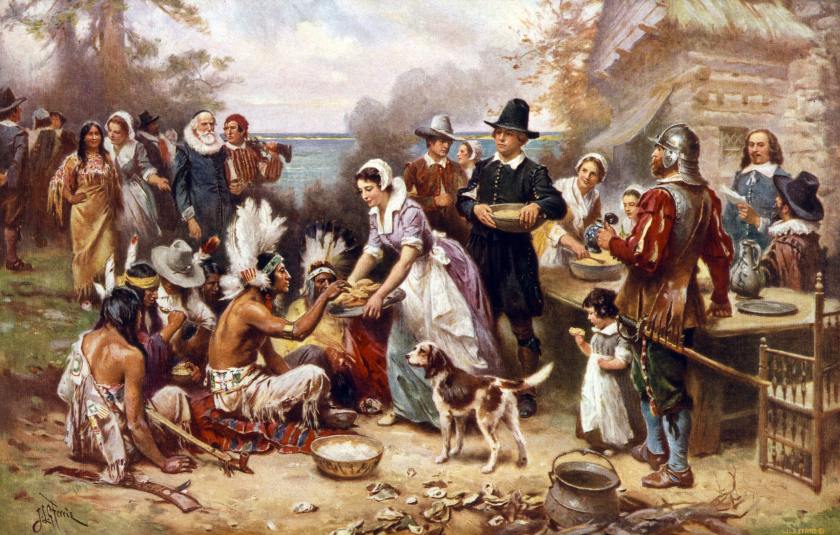 In my research and experience as a teacher educator, I have found social studies curricular materials (textbooks and state standards) routinely place indigenous peoples in a troubling narrative that promotes “Manifest Destiny” – the belief that the creation of the United States and the dominance of white American culture were destined and that the costs to others, especially to indigenous peoples, were justified.

 Retreading for Retirement