Thanks to Nerd in the Brain for the weekly challenge Three Things Thursday:
three things that make me smile: an exercise in gratitude – feel free to steal this idea with wild abandon and fill your blog with the happy
The Seattle Seahawks opened the 2016 season last Sunday with a heart-stopping come-from-behind victory in the final 44 seconds of the game. Seahawks fans used to call themselves The 12th Man, but a college in Texas apparently has trademark rights on that phrase. Therefore, the correct nomenclature is now The 12. There are big flags sporting a giant 12 on a blue background just about everywhere you look.
People here take their football very seriously, as these photos demonstrate.
Seahawks’ fan’s carSeahawks Hot SauceKayaks in Seahawks team colors
New research suggests that people get happier with age. Earlier research has suggested that peoples’ mental health improves as they age, and this study of 1,546 randomly selected adults in San Diego County suggests a correlation with happiness.
Even in an era when it seems every life is displayed on social media for the world to see, a whole generation is getting older, and its stories, if not written or otherwise recorded, will be lost. Serving that market is becoming a small-business enterprise.
This article describes how personal historians work with clients to write the individual’s life history.
An account of Serenbe, a multigenerational community in Chattahoochee Hills, outside Atlanta,GA. The community clusters homes and commercial buildings together so that a large portion of wooded land can be left undeveloped.
Nygren’s vision for Serenbe was modeled on the English countryside, where high-density villages are surrounded by expansive rural spaces.
Dr. VJ Periyakoil, director of the Stanford Palliative Care Education & Training Program, describes the Stanford Letter Project, which encourages older adults to write letters to their loved ones expressing sentiments they might not have been able to say face-to-face. The article contains a link to the Stanford Letter Project, which offers free letter templates.
Thanks to Nerd in the Brain for the weekly challenge Three Things Thursday:
three things that make me smile: an exercise in gratitude – feel free to steal this idea with wild abandon and fill your blog with the happy
Last week we took a trip to Victoria, BC, with a group from our retirement community. There’s so much to see and do there, but today I’ll focus on three things that amused me.
(1) I love puns
I make no apology for this personality quirk.
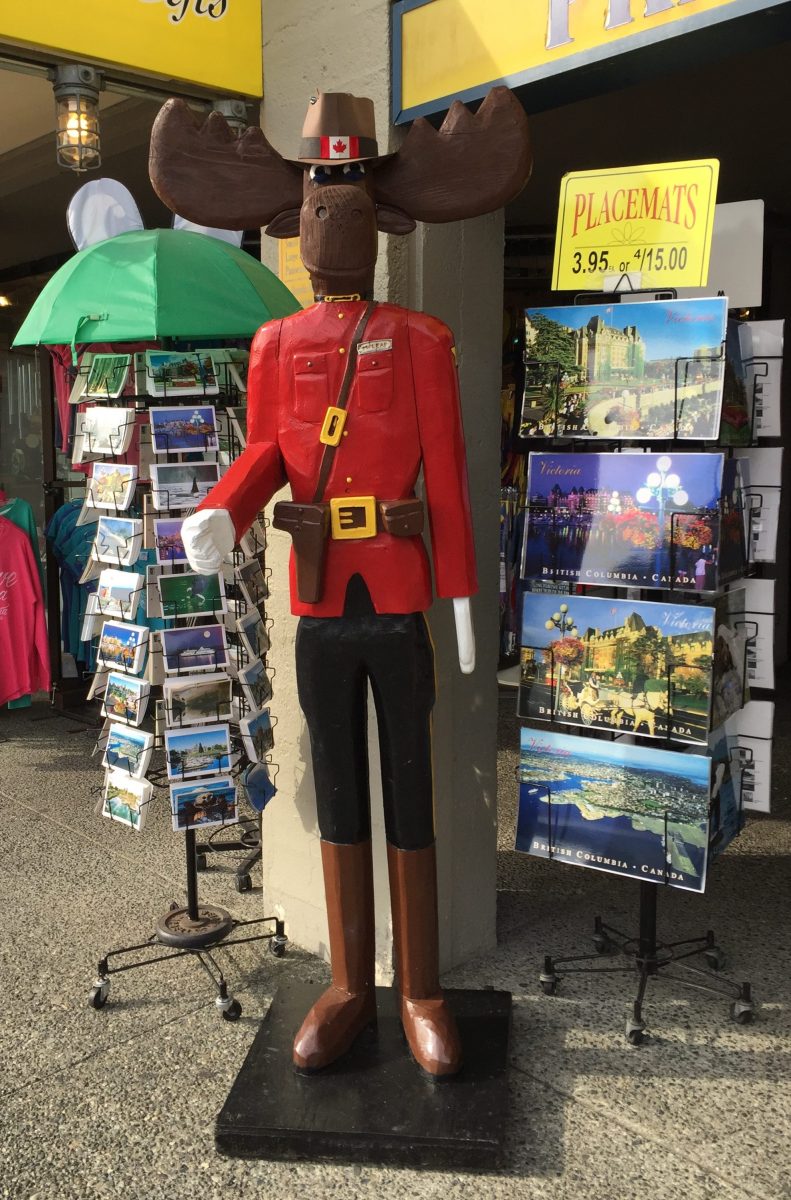
(2) Mountie Moose
Royal Canadian Mounted Moose
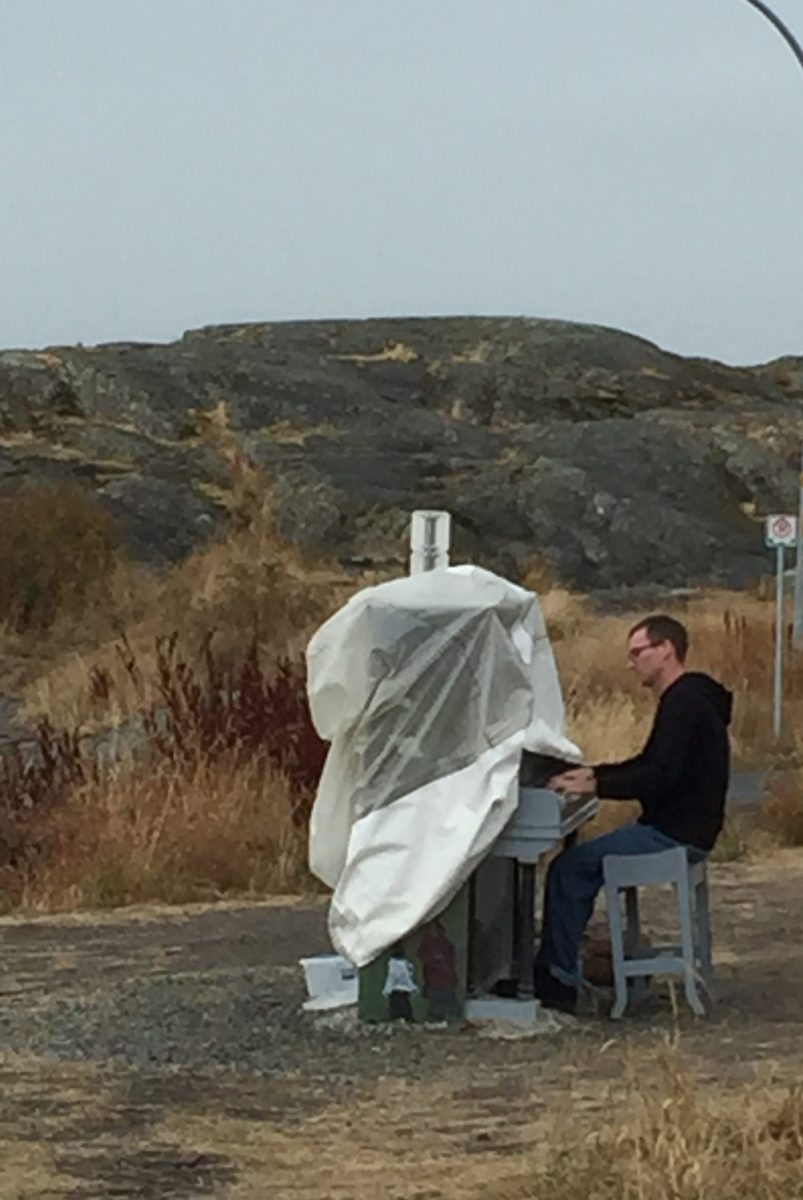
(3) Piano Alfresco
On our bus ride along the scenic route, we noticed a couple of pianos in plastic covers along the sidewalk. When we stopped along the way at a photo opportunity, a young man walked over to the nearby piano, unzipped the plastic cover, and sat down and played for a few minutes. Then he rezipped the cover and walked on his way.
Apparently these pianos are set out just so anyone who wants to can stop and play for a while. I’ve never seen anything like this before. What a great idea!
Until next time, I hope everyone has a great week.
Four years ago photographer Andrew George approached the medical director of a Los Angeles hospital with an unusual request: He wanted to meet and take photographs of people about to die.
There was nothing macabre about the request, George says. He simply wanted to learn of and reflect the wisdom these people had gained in the hope that others could discover how to lead better, more fulfilling lives.
Read what George learned about the hopes, dreams, happy memories, and regrets of his participants.
For older adults, having more or closer family members in one’s social network decreases his or her likelihood of death, but having a larger or closer group of friends does not, finds a new study that will be presented at the 111th Annual Meeting of the American Sociological Association (ASA).
The battle continues to rage between drug companies that are trying to make as much money as possible and insurers trying to drive down drug prices. And consumers are squarely in the middle.
This article from National Public Radio (NPR) suggests checking with your insurer to see if your prescriptions will be covered next year. If your insurance company drops coverage of one or more of your medications, you may have to consult your doctor about replacements.
While the life expectancy of American women has remained stagnant, the cause or causes of this stagnation has eluded researchers. But new research has “found that many common demographic traits — whether a woman is rich, poor, unemployed, working, single or married — might not be as important as the state in which she lives.”
The finding that the social and economic environment of states affects women’s life expectancy but not men’s surprised researchers: “Women have consistently had longer life expectancy than men, and still do, though less so than 30 years ago.” Another surprising conclusion from the research is that people’s environment can be just as important to their health as their individual behaviors (such as exercise and healthy eating).
Thanks to Nerd in the Brain for the weekly challenge Three Things Thursday:
three things that make me smile: an exercise in gratitude – feel free to steal this idea with wild abandon and fill your blog with the happy
I have missed several weeks of Three Things Thursday because of a couple of family situations that required drop-everything-and-go travel. I’m glad to be back.
Memories from New England
My husband and I grew up in Connecticut, lived most of our adult lives (42 years) in St. Louis, then retired to Tacoma, WA. The first of our unexpected trips required a return to Connecticut, where I waxed nostalgic over several things emblematic of the region.
(Click on any photo to see a larger version.)
(1) White Birch Trees
white birch trees
These beautiful trees (Betula papyrifera) are all over the wooded areas of New England. I didn’t realize how much I love them until we moved to the midwest, where these trees don’t grow. Their white bark with narrow, horizontal black lines peels off in sheets. The bark is water repellant, and Native Americans used birch bark to build canoes.
I was glad to be reunited with birch trees when we moved to Washington State. Many of the trees here are not as white as those in New England. White barks signifies older trees; younger trees have light brown bark. Birch is a short-lived species that doesn’t do well in humidity, which may account for the color difference between New England and Pacific Northwest trees. The birch trees here are definitely recognizable, though, and are one of the first natural phenomena I noticed when I moved here.
Also known as paper birch, these trees are among the first to grow after forest fires. They provide winter forage for moose.
(2) Buildings with Several Numbers
Elton Tavern, Burlington, CT, USA
These plaques are on the Elton Tavern in my hometown of Burlington, CT (shown in the feature image at the top of this post). When I was a kid, the building was a private house. The local lore was that the building was originally an inn where George Washington stopped for the night on his travels. In more recent years the town historical society has bought and refurbished the building, but I haven’t been in town to attend the now annual Tavern Day that features colonial crafts and history. The road on which the building sits has always been called George Washington Turnpike.
Plaques such as these mark buildings all over New England. In many town centers you’ll see houses with a street number on the left of the front door and the date the house was built on the right. New Englanders take their early history quite seriously.
(3) White Clapboard Churches
Burlington Congregational Church, Burlington, CT
This is the Congregational Church in Burlington, CT, which was founded in 1774. You’ll find a church that looks almost exactly like this one in most New England towns. This is not surprising, since the right to worship as they chose was what brought most early settlers to the area.
This heart-warming article reports on an eight-week storytelling workshop at Northwestern University that helps couples coping with Alzheimer’s disease stay connected:
Each couple’s story serves as a reminder of both the good and challenging times they have shared, experiences both poignant and humorous that reveal inner strength, resilience and love and appreciation for one another that can be easily forgotten when confronted by a frightening, progressive neurological disease like Alzheimer’s.
I’ve been signed up as an organ donor since early adulthood, but lately I’ve been wondering how useful my organs would be now that I’m approaching 70. This piece explains how age makes those of us over 65 “particularly desirable as donors, living or dead, for older recipients, who represent a growing proportion of transplant patients.”
A healthy diet, physical activity and normal body mass index have been connected to overall better health, with a new study at the University of California Los Angeles suggesting the combination of healthful choices may help prevent Alzheimer’s disease.
Just in case we needed yet another reminder of the importance of healthy eating and exercise.
A small study suggests that adding a virtual reality obstacle course to treadmill workouts may help prevent falls among older adults:
“Our idea was to use the virtual reality environment to safely train both the motor or gait aspects that are important to fall risk, while also implicitly teaching the participants to improve the cognitive functions that are important for safe ambulation,” said lead study author Anat Mirelman of Tel Aviv University in Israel.
The inability to remember details, such as the location of objects, begins in early midlife (the 40s) and may be the result of a change in what information the brain focuses on during memory formation and retrieval, rather than a decline in brain function, according to a study by McGill University researchers.
Senior author Natasha Rajah, Director of the Brain Imaging Centre at McGill University’s Douglas Institute and Associate Professor in McGill’s Department of Psychiatry, says that this decline in middle age may be a sign not of declining brain function, but rather of focusing on different aspects of information. “Rajah says that middle-aged and older adults might improve their recall abilities by learning to focus on external rather than internal information.”
A nursing home in the Bronx, New York, follows a “sexual expression policy” that allows residents to spend time together:
a number of older Americans … are having intimate relationships well into their 70s and 80s, helped in some cases by Viagra and more tolerant societal attitudes toward sex outside marriage. These aging lovers have challenged traditional notions of growing old and, in some cases, raised logistical and legal issues for their families, caretakers and the institutions they call home.
But the article also notes the other side of such a policy:
But intimacy in nursing homes also raises questions about whether some residents can consent to sex. Henry Rayhons, a former Iowa state legislator, was charged with sexual abuse in 2014 after being accused of having sex with his wife, who had severe Alzheimer’s disease and was in a nursing home. A jury found him not guilty.
Many of us in our later years think about writing down something about our lives to leave a legacy for future generations. Here’s an interesting story about a biographer, Alexander Masters, who has published the book A Life Discarded: 148 Diaries Found in a Skip. In 2001 two Cambridge University professors found 148 diaries in a Dumpster (the Canadian term is skip). Not wanting their find to go to waste, they gave the diaries to Masters.
Becky Toyne examines Masters’ project here and concludes:
We don’t have journal writing like this any more. We remain obsessive chroniclers of our lives, only in public pictures rather than private text (and we edit out all the sad bits). By contrast, the diaries of “I” build to a 40-million word chronicle of a life containing very little excitement. The difference? “These books were alive,” says the Cambridge professor upon finding them strewn about a skip – and in Masters’s heartbreaking, heartwarming biography we learn that, however unremarkable or littered with disappointments our existence might turn out to be, so are we.
We know we should eat lots of fruits and vegetables to keep our bodies healthy, but new research suggests this approach may also help our mental health as well. The study out of the University of Warwick, to be published soon in American Journal of Public Health, found that:
people who changed from almost no fruit and veg to eight portions of fruit and veg a day would experience an increase in life satisfaction equivalent to moving from unemployment to employment. The well-being improvements occurred within 24 months.
“Everything I need to know about life I learned from Star Trek” has long been my motto. I’m talking specifically here about the original series featuring William Shatner as Capt. James T. Kirk and Leonard Nimoy as Mr. Spock.
Finding this article truly warmed my heart. Natalie Haynes writes that Nichelle Nichols, who played Lt. Uhura, said that Gene Roddenberry, the series’ creator, believed in a world of tolerance: “He believed in that world, if you got it you got it. If you didn’t get it, you’d see it anyway.”
It’s a neat summary of the allegorical complexity of Star Trek: if you get the subtext, you get it. If you don’t, you just see the surface story. Whenever Roddenberry or his writers had a political point to make, they tended to use allegory as their best way to get that point across. One of the joys of Star Trek is that our crew is constantly exploring, constantly curious. So there is always a planet, a species, a story which can throw its illuminating light upon the less exotic world of the earthbound viewer.
Haynes examines how the same approach continued in the later Star Trek spinoffs, The Next Generation and Deep Space Nine. I haven’t watched all of the episodes of the later shows, but I cannot forget the lessons that the original series taught us about racism, greed, war, despotism, and other dark aspects of human nature.
Thanks to Nerd in the Brain for the weekly challenge Three Things Thursday:
three things that make me smile: an exercise in gratitude – feel free to steal this idea with wild abandon and fill your blog with the happy
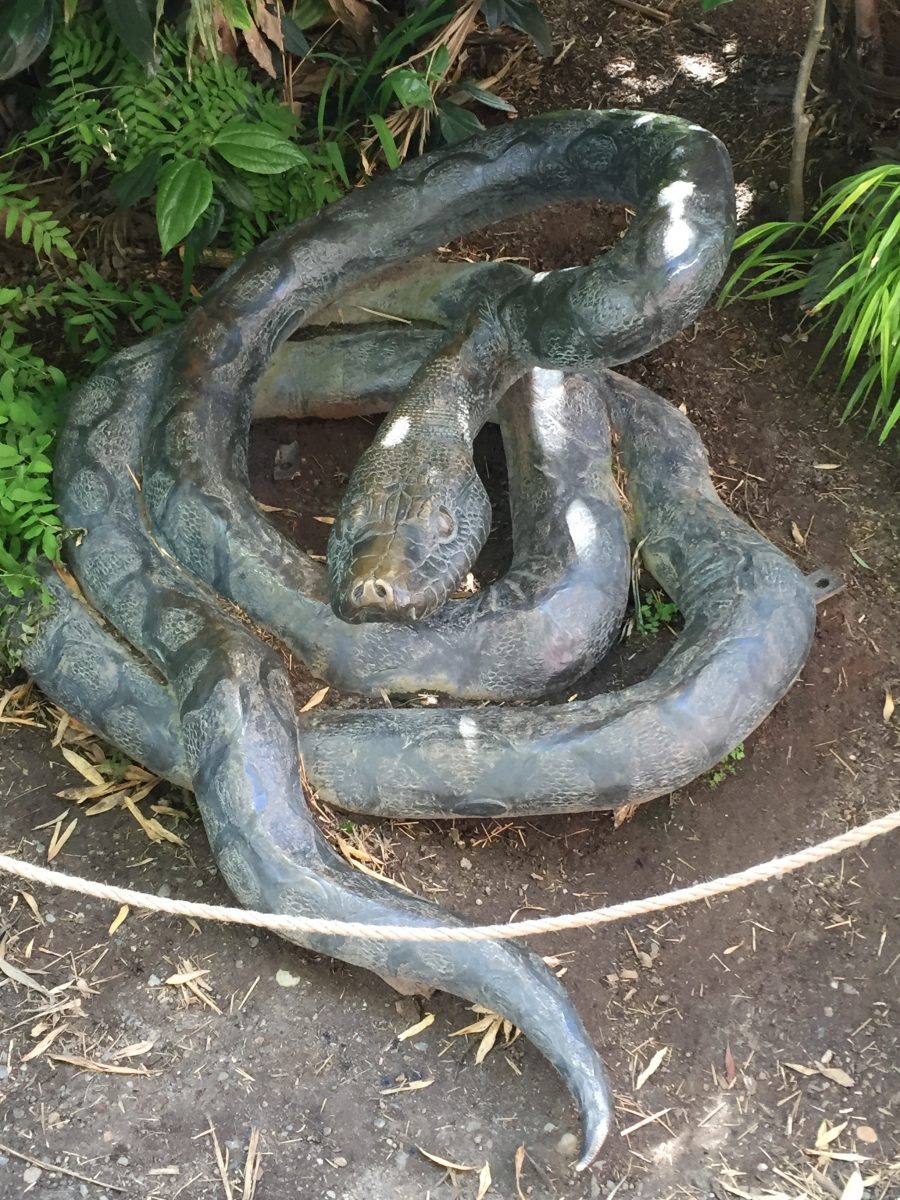
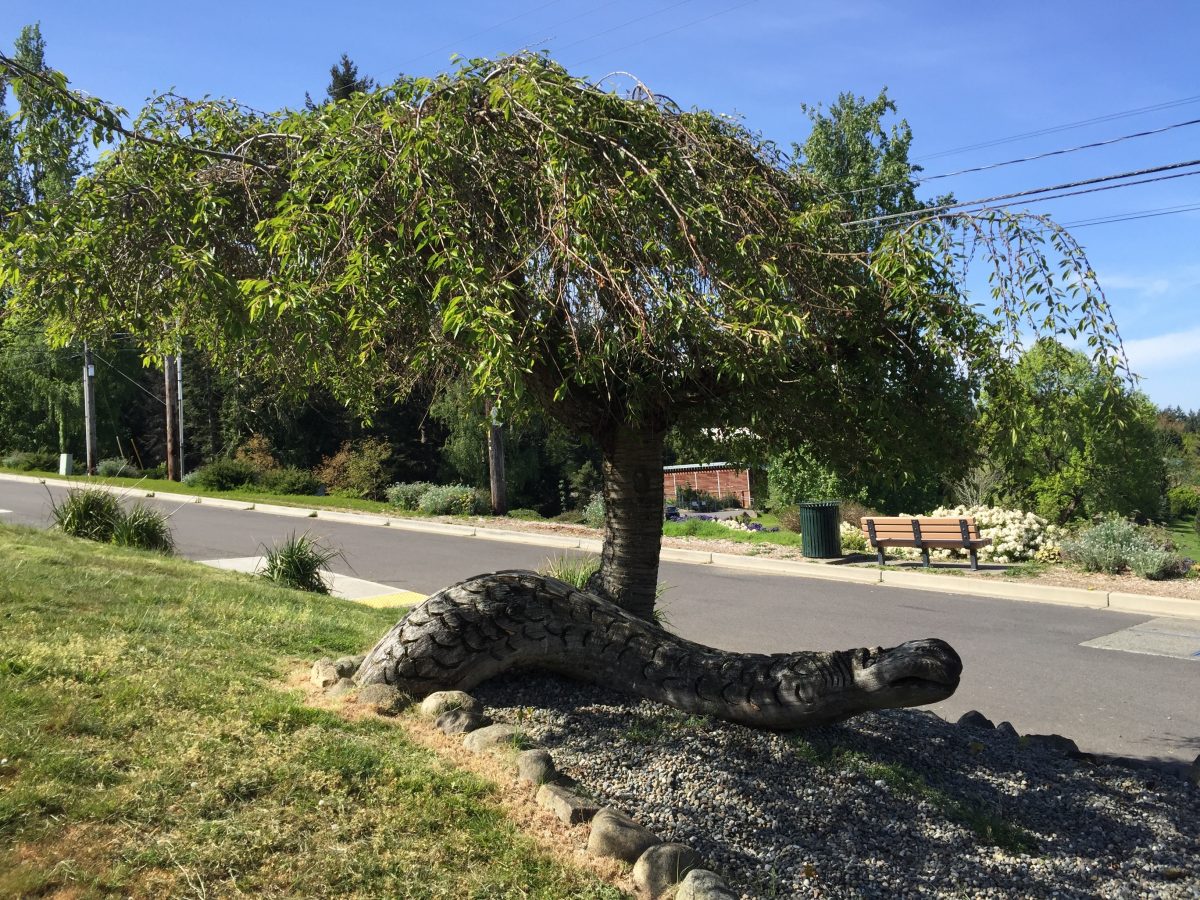
Recently we’ve come across some artistic representations of animals (click on any photo to see a larger version):
(1) Snake Sculpture
We discovered this snake at the Point Defiance Zoo & Aquarium. It looks so real that I was taken aback the first time I came upon it in the Asian Forest section. A few days ago we visited the zoo again with a 3 1/2 year-old family member. Like me, she stopped in her tracks when she saw this guy. “Is it moving?” she asked. When I told her no, it was a statue, she said, “Whew!” I know exactly how she felt.
(2) Wooden Slug
We came upon this carved slug on our most recent trip to Northwest Trek. We had never been him before. In addition to rain and a temperate climate, the Pacific Northwest is also famous for slugs, including the big banana slug. This fellow apparently arrived just in time for the annual Slug Fest, which was to be held the following weekend.
(3) Neighborhood Sea Serpent
And what would a Pacific Northwest neighborhood on Commencement Bay be without its own resident sea serpent? We came across this clever use of a tree root on one of our walks. I always marvel at examples of such creativity.













 Retreading for Retirement