Articles That Caught My Eye Last Week

Exercise Program No Help for Some Seniors’ Hearts

A recent study out of the University of Pittsburgh Graduate School of Public Health found that “Starting moderate-intensity workouts a few times a week didn’t prevent cardiovascular events for sedentary, functionally-limited older adults.” However, these results:

shouldn’t discourage physicians or patients from efforts to establish a walking and weight training regimen, the researchers argued. Along with prior studies showing numerous benefits of exercise on the heart, primary results from [the trial] showed an 18% reduction in incidence of major mobility disability and possibly a cognitive advantage as well.

The study included 1,635 sedentary participants who were between the ages of 70 and 89 years and at high risk for mobility disability but still able to walk unaided. “It is possible that exercise needs to be started earlier in life to reduce heart attacks and strokes, or that even more exercise is needed,” said Anne Newman, MD, MPH, lead author of the study published in JAMA Cardiology.

Alzheimer’s Disease as an Adventure in Wonderland

In her memoir “Aliceheimer’s: Alzheimer’s Through the Looking Glass,” Dana Walrath uses drawings and stories to chronicle three years of caregiving for her mother, Alice, who was in the middle stages of Alzheimer’s disease. The experience turned out to be a magical trip down the rabbit hole of memory loss, an outcome that inspired Dr. Walrath, a medical anthropologist who taught at the University of Vermont College of Medicine and who also studied art and writing, to share their tale.

Read an interview with Dr. Walrath about the creation of this example of graphic medicine.

10 Months, 45 National Parks, 11 Rules

This article caught my eye because my husband and I have promised ourselves that we will travel now that we’ve retired—somtthing we did very little of earlier in life. Read here about how Jeremy Cronon managed to visit 45 of the 47 national parks in the contiguous Unived States in 10 months.

© 2016 by Mary Daniels Brown

Three Things Thursday: Mount St. Helens

Thanks to Nerd in the Brain for the weekly challenge Three Things Thursday:

three things that make me smile: an exercise in gratitude – feel free to steal this idea with wild abandon and fill your blog with the happy

three-things-thursday-badge-new

Trip to Mount St. Helens Volcanic Monument

Related Posts:

You know how we often say “We should do XXX sometime” but then never getting around to actually doing it?

A trip out to Mount St. Helens has been one of those things for us ever since we moved to the Pacific Northwest. Fortunately, our activities director here at Franke Tobey Jones arranged a bus trip, and we eagerly signed up.

Mount St. Helens, which erupted on Sunday, May 18, 1980, is easily recognizable by the giant crater caused by a landslide on the mountain’s north face. I have written in detail about that eruption (see the two related posts), so I’ll just include some observations here.

(Click on any photo to see a larger version.)

(1) The mountain’s crater and the devastation as well as regrowth around it are evident in this photo:

Mt St Helens 02

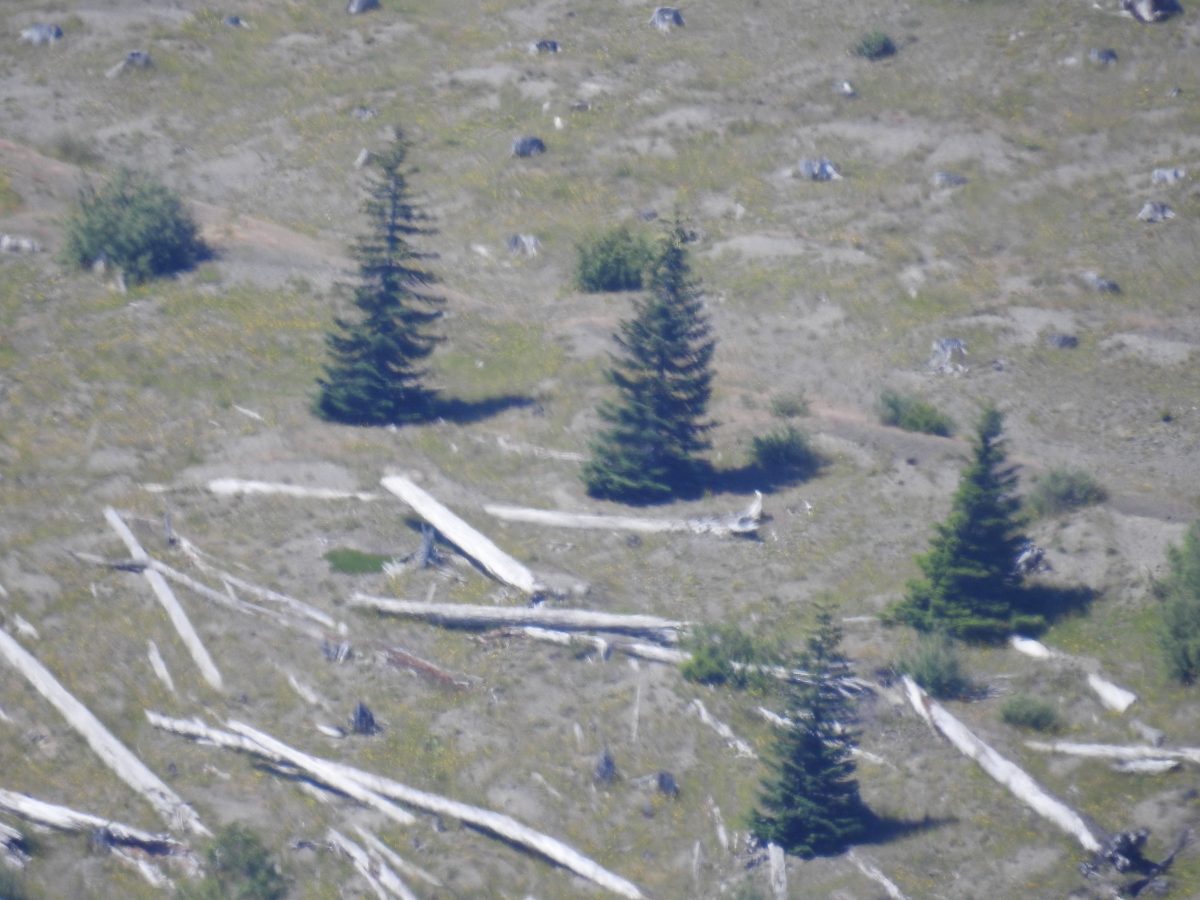
(2) You can still see evidence of the downed logs that covered the area around the volcano like matchsticks as a result of the eruption:

fallen logs

You can also see the new evergreen trees that have grown up to begin the natural process of reforestation.

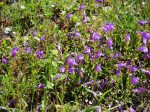
(3) Wild flowers proliferate, evidence of nature restoring itself:

For More Information

In quite a case of synchronicity, today I find this news article: Crystal movement under Mount St. Helens may have predicted 1980 eruption

Mount St. Helens Visitor Information

Eruption Geology and Monitoring

Mount St. Helens Science and Learning Center at Coldwater

Lawetlat’la

© 2016 by Mary Daniels Brown

Three Things Thursday: Northwest Trek

Thanks to Nerd in the Brain for the weekly challenge Three Things Thursday:

three things that make me smile: an exercise in gratitude – feel free to steal this idea with wild abandon and fill your blog with the happy

three-things-thursday-badge-new

Trip to Northwest Trek

Earlier this week we took a trip out to Northwest Trek near Eatonville, WA, USA. A facility of Metro Parks Tacoma, Northwest Trek focuses on both flora and fauna native to the Pacific Northwest. Its main feature is a 450-acre free-roaming area, containing meadows, forest, and wetlands, where many non-predatory animals live with only minimal human intervention. Visitors ride trams around the area to view the animals in their natural habitat.

I usually concentrate on the animals, but this time I decided to look at some of the plants as well. Here are three of my favorite things from this visit.

(Click on any photo to see a larger version.)

(1) Salmonberry

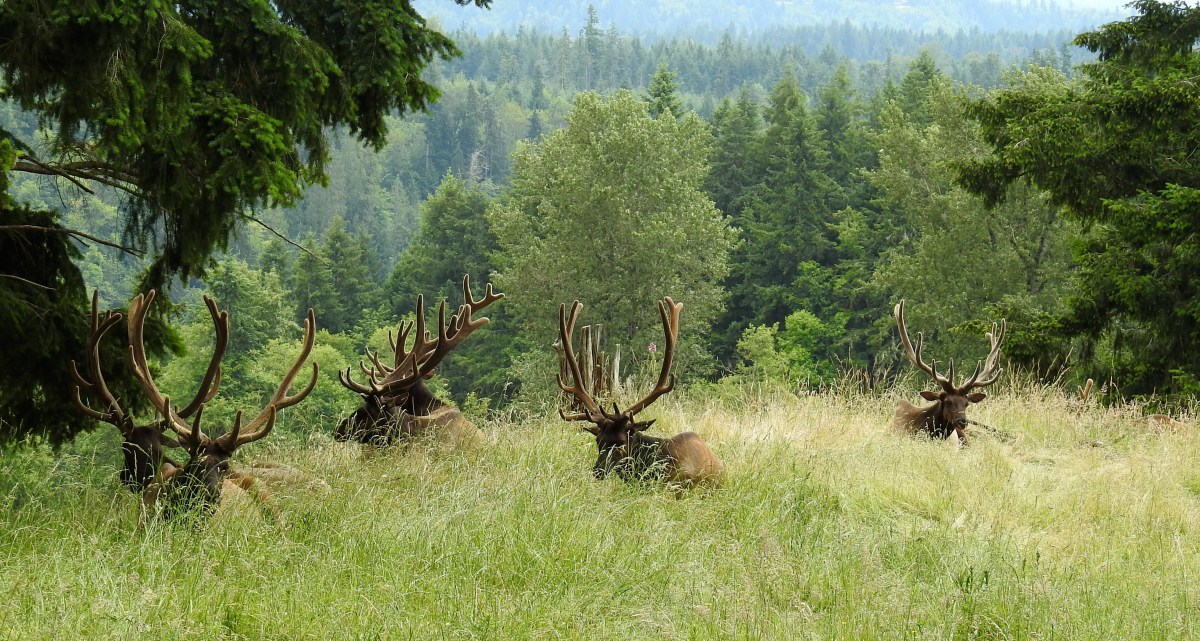
(2) Roosevelt Elk Bucks

Elk bucks

Look at these six big guys lounging around. Right now their antlers are growing to make them attractive to the females come mating season. Antlers are covered with a substance called velvet. If you were to touch the antlers now, they would feel like soft velvet rather than the harder substance they will later become. But please don’t touch these growing antlers! They can grow as much as one-half inch per day and are suffused with blood vessels. If you were to touch them, you could feel the animal’s pulse as blood feeds the growing velvet. Because of the large blood supply, even a small tear in the velvet could cause the bull elk to bleed to death. That’s probably why these bulls are content to sit around instead of risking a possibly fatal nick to their antlers.

However, this bromance will end at about the end of July, when hormones begin to surge at the beginning of the rutting season. Then there will be fierce competition among the guys to attract the females. After mating season ends, the antlers will fall off. Then next spring the whole process will start again.

My thanks to my husband, who happened to be on the correct side of the tram, for letting me use this great photo.

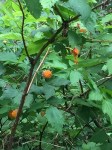
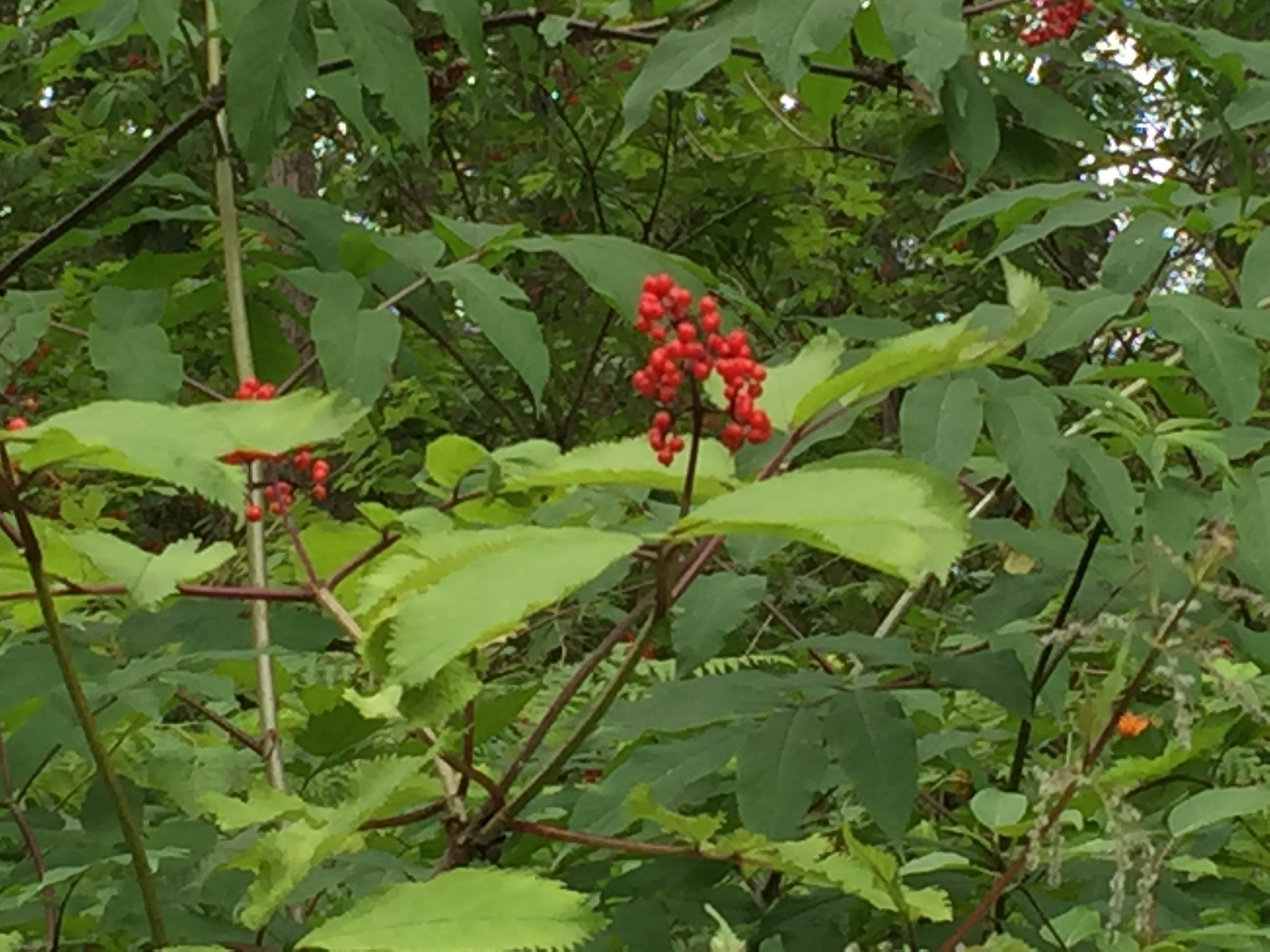
(3) Red Elderberry

red elderberry

Red elderberry bushes grow along stream banks, in swampy thickets, in moist clearings, and in open forests. These bushes are common along the coast of the Pacific Northwest. The small red berries are not palatable and can cause nausea when raw. However, the cooked berries were an important food source for native coastal peoples. The berries are still used to make elderberry jelly or elderberry wine.


© 2016 by Mary Daniels Brown

Last Week’s Links

Recent Articles on Aging

Another Delicate Topic With Aging: When Is It Time to Give Up Guns?

In a nation with widespread gun ownership and an aging population, firearm removal has been added to the burdens of caring for older relatives — alongside seizing the car keys and taking away the checkbook.

Experts in public safety and geriatric care say that relatives often lack guidance in navigating these difficult conversations. Instead, they are sneaking guns from the homes of parents with Alzheimer’s, covertly disabling pistols belonging to aging sharpshooters, and in many cases avoiding the topic altogether, something that concerns people working in medicine and law enforcement.

This article contains suggestions for negotiating this difficult topic.

The New MIND Diet May Help Prevent Alzheimer’s

Research has found that a new diet plan – called the MIND diet – can have a profound impact on your brain health as you age, and can even lower your odds of getting Alzheimer’s disease.

The MIND diet takes two proven diets – the heart-healthy Mediterranean diet and the blood-pressure lowering DASH diet – and zeroes in on the foods in each that specifically affect brain health.

The Savvy Senior

This web site is new to me:

Welcome to Savvy Senior! A nationally syndicated information column devoted to older adults and the families who support them. Researched and written by senior advocate, author and NBC Today show contributor Jim Miller, Savvy Senior is published in more than 400 newspapers and magazines nationwide.

The home page contains a list of senior resources broken into categories such as Medicaid, Medicare, and Social Security; end of life issues; travel; and state and local resources.

Sibling Rivalry: The Grown-Up Version

Welcome to sibling rivalry, the grown-up variety. There is no law that says we have to love the ones we were raised with, or even that we must reconcile before the grand finale. But as millions of baby boomers hit Act Three, the issue is rankling a generation that grew up believing in sharing, openness and the concept of “closure.”

This article describes how adult sibling rivalry is currently represented in popular culture:

On stage in New York recently, “The Humans,” “Dot,” “Familiar,” “Hold On to Me Darling,” “Buried Child” and “Head of Passes” all touch on siblings dealing with money, memories and taking care of ailing parents. The television show “Transparent” may purport to be about a 70-year-old man-turned woman, but it is really about the family’s next generation, acting more like children than children. The Netflix series “Bloodline” has just returned for a second season and deals with four siblings, one of whom — spoiler alert — drowned another at last season’s end. In the film “Alice Through the Looking Glass,” sibling rivalry nearly stops time.

Three books on the best-seller list deal with feuding siblings, including “The Nest” (“Jack and Leo were brothers but they weren’t friends”; “Miller’s Valley,” in which two sisters live on the same property but don’t speak to each other; and “The Nightingale,” about two very different sisters during World War II.


© 2016 by Mary Daniels Brown
Three Things Thursday

Thanks to Nerd in the Brain for the weekly challenge Three Things Thursday:

three things that make me smile: an exercise in gratitude – feel free to steal this idea with wild abandon and fill your blog with the happy

three-things-thursday-badge-new

Considering all the rhetoric being slung around here in the U.S., I’m grateful for people who find straightforward yet creative ways to communicate positive, respectful messages.

Here are three examples (click on any photo for a larger version):

Bike safely
Bike safely
No crabbing allowed
No crabbing allowed
Be an organ donor
Be an organ donor

Hackers are spoofing text messages to steal two-factor authentication codes – Business Insider

Earlier this week, Alex MacCaw, cofounder of data API company Clearbit, shared a screenshot of a text attempting to trick its way past two-factor authentication (2FA) on a Google account.

Source: Hackers are spoofing text messages to steal two-factor authentication codes – Business Insider

Please read this short article. It could save you from a big headache.

Last Week’s Links

Recent Articles on Aging, Reading, and Life in the Pacific Northwest

Why you should care about this week’s giant earthquake drill

About 20,000 people are testing the region’s readiness for disaster this week, preparing for an earthquake-and-tsunami one-two punch that could devastate the Pacific Northwest should a megaquake rip along the 600-mile-long offshore fault known as the Cascadia Subduction Zone.

The “Cascadia Rising” exercise — the largest of its kind ever in the Pacific Northwest — tests emergency responses across the region.

The potential for destruction here is staggering. Here’s just one statistic:

FEMA projects that about 9,400 people in Washington would die in the event of a megaquake and tsunami.

Is It Harder to Be Transported By a Book As You Get Older?

I’ve always loved losing myself in a great work of fiction, and the question of whether that pleasure has diminished as I’ve gotten older never even crossed my mind.

Bookends is a recurring feature in the New York Times:

In Bookends, two writers take on questions about the world of books. This week, Francine Prose and Benjamin Moser discuss the difficulties of getting lost in reading after a certain age.

Francine Prose writes that she no longer gets immersed in books as she did as a child:

A neurologist friend says that adults are likelier than children to cross-­reference when they read, to compare people and things in a book with people and things they know, which is why an adult reading experience may be a “dip” compared with the child’s “soak.” I enjoy reading a book written centuries ago and discovering a character almost exactly like someone I know. And so I am cross-referencing: My attention is divided between the fictional character and the real-life counterpart.

She admits, however, that “Despite everything, immersion still happens”:

I’m more surprised and grateful now to be transported by words on a page from one world to another. Perhaps because, as grown-ups, we value what is harder won.

Benjamin Moser, on the other hand, believes that becoming a writer ruined him for the experience of getting lost in a book:

As I’ve grown older, I’ve reluctantly discovered that I don’t, in fact, really want to read more books. That doesn’t mean I don’t want to read. I find, though, I want to read the same books.

What those books have in common, he says is this:

they do not try to drag me into a narrative. I can open them to any page and read words — as many or as few as I like — that clean my brain rather than stuff it. The longer I write, the more I realize that stories are the last thing I need. What is missing are not stories but the words to tell them.

Libraries in care homes can improve residents’ mood and memory

Norman Miller describes how reading groups can serve older adults:

A growing number of care homes are discovering that libraries and reading groups can transform the lives of their residents, including those with dementia.

Research published by the centre for research into reading, literature and society (Crils) at the University of Liverpool has found that while any reading helps sharpen the minds of older people, shared reading in groups offers particular benefits. Almost 90% of participants reported uplifted mood, better concentration and better long- and short-term memory.


© 2016 by Mary Daniels Brown

Three Things Thursday

Thanks to Nerd in the Brain for the weekly challenge Three Things Thursday:

three things that make me smile: an exercise in gratitude – feel free to steal this idea with wild abandon and fill your blog with the happy

three-things-thursday-badge-new

Usually I feature things that interest or amuse me in these weekly postings. And of course I’m grateful for things that interest or amuse me. But this week I decided to focus on the “exercise in gratitude” part of this challenge’s definition.

Here, then, are three things for which I am especially grateful.

(Click on any photo to see a larger version.)

(1) Nature’s Bounty

(2) My Family

My Family
My Family

(3) The Beauty of the Earth


© 2016 by Mary Daniels Brown

Last Week’s Links

Recent Articles on Aging and Retirement

Old and on the Street: The Graying of America’s Homeless

The homeless in America are getting old.

There were 306,000 people over 50 living on the streets in 2014, the most recent data available, a 20 percent jump since 2007, according to the Department of Housing and Urban Development. They now make up 31 percent of the nation’s homeless population.

This New York Times article takes a detailed look at the growing number of homeless older people in the U.S.

When seniors stop driving, social isolation looms

Social isolation is one of the primary factors in reducing the quality of life for older adults. Some recent research examined how giving up driving can contribute to such isolation:

When elderly drivers have to stop getting behind the wheel, they run the risk of social isolation, especially if they don’t have an alternative transportation plan, a recent study suggests.

The study looked at driving habits and social activities, like visiting friends and family or going out to dinner or the movies, for more than 4,300 adults over age 65.

Fearing Drugs’ Rare Side Effects, Millions Take Their Chances With Osteoporosis

This article reports on a dramatic drop in the number of patients taking drugs for treatment of osteoporosis because of their fear of rare but severe side effects. But, as the article points out, many more people benefit from the medications than are harmed by them:

“You only need to treat 50 people to prevent a fracture, but you need to treat 40,000 to see an atypical fracture,” said Dr. Clifford J. Rosen, a professor of medicine at Tufts University who has no association with the makers of the drugs.

Be sure to discuss all medications with your health practitioner.

© 2016 by Mary Daniels Brown

Three Things Thursday

Thanks to Nerd in the Brain for the weekly challenge Three Things Thursday:

three things that make me smile: an exercise in gratitude – feel free to steal this idea with wild abandon and fill your blog with the happy

three-things-thursday-badge-new

We have a couple of trips scheduled for the next two years, for which we recently bought a new camera with a gigantic zoom lens. My husband has been walking around practicing zoomed-in photography. Eventually I will claim the camera for my own practice shots, but in the meantime I’m grateful that he has allowed me to use these three bird pictures.

(Click on any photo to see a larger version.)

(1) Singing Bird

bird singing

I haven’t yet tried to look this guy up in my bird book. My husband says he was singing his heart out.

(2) Hornbill

Hubby photographed this exotic bird on a visit to Point Defiance Zoo & Aquarium.

hornbill

Here’s some more information:

Meet Pilai the Hornbill! She is 20 years old and weighs a little over 3 pounds. She lives at the Asian Forest Sanctuary exhibit. Her favorite snacks are grapes and bananas. She also loves blueberries but they have to be the perfect amount of ripeness for her to eat them. Pilai plays with small toys but her favorite is a rock that she uses to toss around and clean out her beak with. Hornbills in the wild also use rocks and bark to clean their beaks.

(3) Flickers (I think)

I was pretty sure these were a female (left) and male (right) flicker:

flickers

However, when I checked my bird book, the sketch didn’t look exactly like this. The book has the red on the front of the face, not on the back of the head as it appears to be on the bird on the right. But the book says flickers are common on the ground, where they move around eating ants, and that description fits what the birds in this photo appear to be doing.

Flickers are large birds in the woodpecker family and are common around here, so I’m sticking with my original identification unless someone can identify these as something else. Please let me know in the comments if these aren’t flickers and you know what they are.

Have a good week, everybody!

© 2016 by Mary Daniels Brown