Annual Blog Report

Even though the year isn’t quite over yet, the stat monkeys have sent me an annual report for Retreading for Retirement. I’ll be doing my own number crunching for a later report, but here’s what this one has to say.

“In 2015, there were 162 new posts, growing the total archive of this blog to 197 posts.”

These were the five posts most viewed in 2015:

(1) 3 Things Thursday, featuring public art in Tacoma; from February

(2) Three Things Thursday, featuring a Little Free Library; from May

(3) Tacoma, WA: “Hollywood-by-the-Sea”?, about Tacoma as a short-lived center for moviemaking; from May

(4) ML King Day at WA State History Museum, from January

(5) Three Things Thursday, featuring Three Things Emblematic of Tacoma; from April

Some of my favorite posts to write were those about Tacoma and its history. Here are a couple from May:

(1) An 11-Year-Old Hero

(2) 35 Years Ago Today: Mount St. Helens Erupts

I also liked writing about our various travels, both local and abroad. Here are a couple of posts I enjoyed putting together:

(1) Sitka: Sea Otter & Wildlife Quest

(2) What I Learned on My European Trip

I hope you enjoyed reading Retreading for Retirement this year as much as I enjoyed writing it.

3 Things Thursday: Christmas Tree Edition

In honor of Christmas Eve, here’s a Christmas Tree Edition of Three Things Thursday, the purpose of which is to “share three things from the previous week that made you smile or laugh or appreciate the awesome of your life.”

(Click on any image to see a larger version.)

(1) Teacup Tree

Teacup Tree

One of the dining rooms here at Franke Tobey Jones features this Teacup Tree, adorned with old-fashioned teacups glued to their saucers.

Here’s a close-up of a cup:

Close-up: Teacup

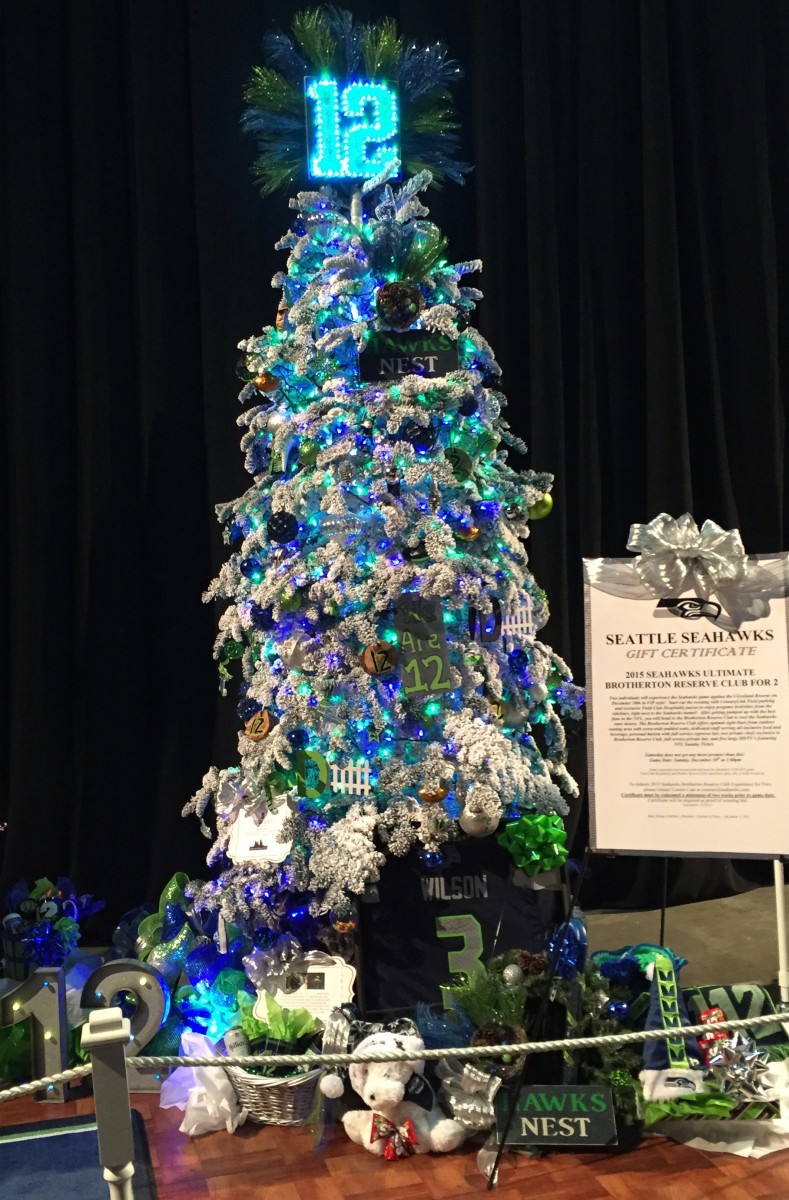
(2) Seahawks Tree

This one is from the Festival of Trees:

Seahawks Tree

We take our Seahawks football very seriously here. The 12 flag is in honor of … Well, it used to be in honor of the 12th man, but apparently some university has that phrase trademarked and the loudest fans in the NFL can no longer be called that. So now we are just The 12. But we’re still the loudest and proudest.

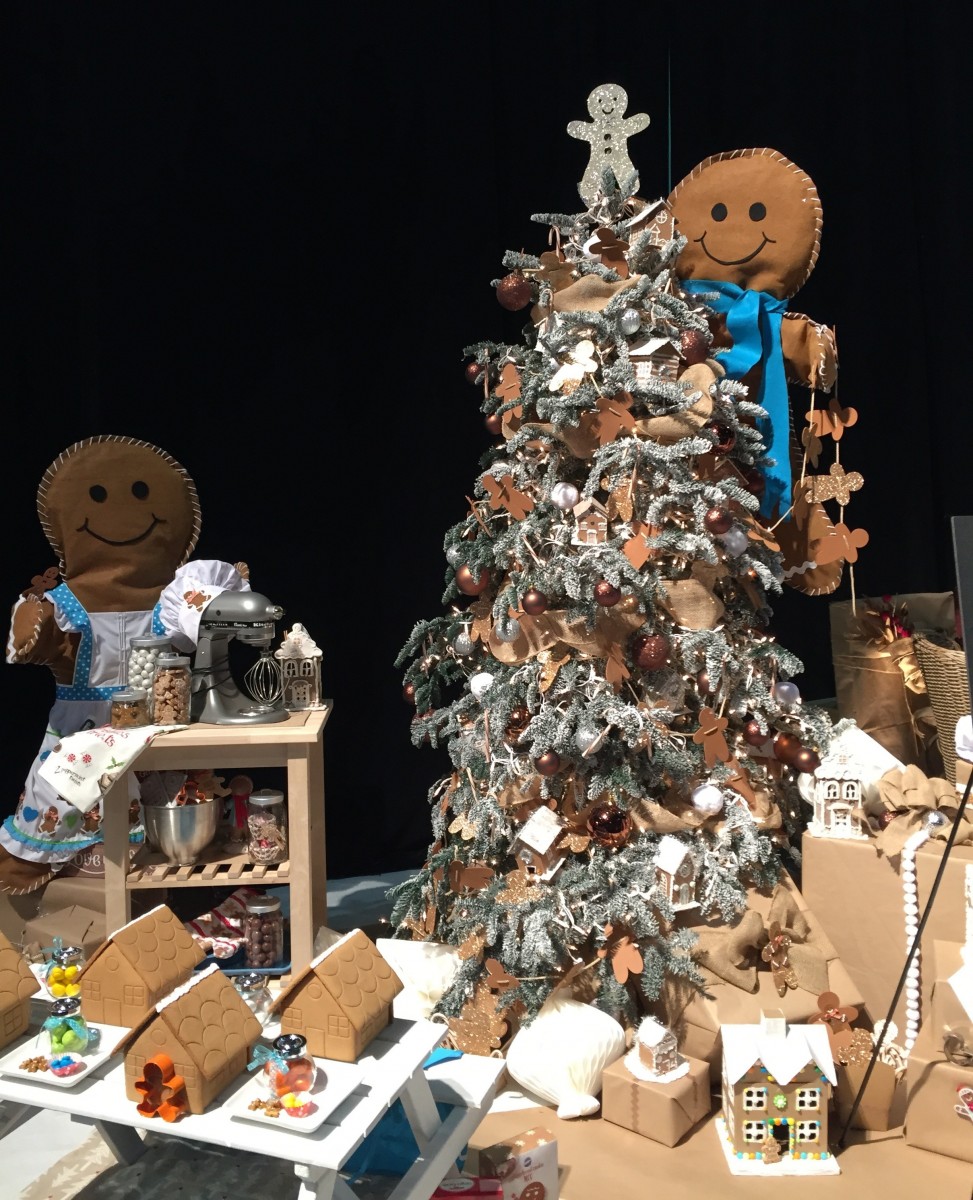
(3) Gingerbread Tree

I love gingerbread men:

Gingerbread Tree

This one is also from the Festival of Trees.

There were so many beautiful and clever trees at the Festival of Trees that I wish I could include all of them here. But I’m limited to three, and I always follow directions.

For all who celebrate Christmas, I wish you a very cheery Christmas Eve.

Three Things Thursday: Fantasy Lights at Spanaway Park

Here’s yet another holiday offering for Three Things Thursday, the purpose of which is to “share three things from the previous week that made you smile or laugh or appreciate the awesome of your life.”

three-things-thursday-participant

Fantasy Lights at Spanaway Park

Ever since moving to Tacoma we have heard about the huge, beautiful holiday lights display in Pierce County’s nearby Spanaway Park. When our retirement community offered a bus trip to see the lights, my husband and I immediately signed up.

Spanaway Park
14905 Bresemann Blvd. S.
Spanaway, WA

Fantasy Lights runs annually from Thanksgiving through New Year’s Day. It features more than 300 separate installations of lighted art spread out along a two-mile roadway that winds through Pierce County’s Spanaway Park.

The event has its own Facebook page, although the latest activity there is from December 2014. At that time several people posted that they would not be attending because the nativity scene had been removed. Also, the prices listed on that page are apparently also from a year ago, as they have gone up slightly.

One of the big draws of this event is that you drive through rather than walking, which makes it a perfect activity for a retirement community. The Pierce County official web site warns that there can be a wait of an hour or more to get into the park on weekend nights and advises a mid-week visit instead. We went on Tuesday night. Our bus driver tuned in to the FM station that broadcasts holiday music performed by a local high school to add to the holiday experience.

I took a lot of pictures and had to throw out most of them. The possibility of getting good photos is small for several reasons:

  • Your vehicle is moving, albeit slowly.
  • It’s dark, and you’re too far away to use flash.
  • The road winds back and forth, which means there’s always another display farther away behind the one you’re trying to shoot.
  • When you try to take photos out of one window, you also have reflections on the window of displays on the other side of the road. Individuals in cars can eliminate this problem by opening windows, but people on our bus didn’t want to do that. We saw another solution to this problem in the car ahead of us: They opened their sunroof and stood up to take pictures.

For all of these reasons, my photos aren’t very good. Because they look better at smaller sizes, I’ve kept most of them smaller than my usual blog photos. You can click on photos to see a somewhat larger version, but you probably won’t like it any better.

Here are the best of my photos:

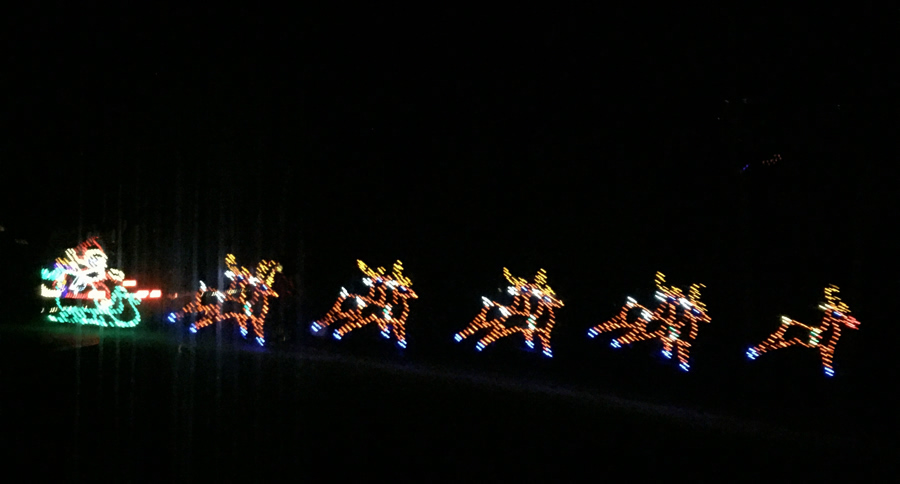
(1) Santa’s Sleigh and Reindeer

Santa, sleigh, and reindeer

(2) Octopus

octopus

He’s not particularly Christmasy, but I’m partial to the Giant Pacific Octopus, which is native to these parts.

(3) Pirate Santa

This is the best one of the many photos I took.

Santa on pirate ship

Bonus

I leave you with this holiday admonition:

Have a safe holiday

Older Actors Are Having an Awards Season Moment – The New York Times

This year’s films with seasoned stars (“please don’t say ‘veteran,’” Ian McKellen, a hale 76, implored during a recent fireside chat with the Bagger at his hotel suite) also largely depart from familiar narrative arcs, like wrestling with dementia. (An exception is “Mr. Holmes,” in which Mr. McKellen’s famous detective struggles with a failing mind.) They don’t reduce their characters to what have become antediluvian caricatures: wholly sweet, or sharp-tongued, or doddering or dotty. In this year’s batch, the characters have sex; smoke marijuana; flirt; curse a mean streak; and, in the case of “45 Years,” ache over fresh emotional wounds.

Source: Older Actors Are Having an Awards Season Moment – The New York Times

Three Things Thursday

Here’s this week’s entry for Three Things Thursday, the purpose of which is to “share three things from the previous week that made you smile or laugh or appreciate the awesome of your life.”

three-things-thursday-participant

(1) My Husband’s Newest Toy

This is Roomba learning its way around our house:

I very much thought that this gadget would be just a toy, but I was amazed to discover how good a vacuum cleaner it is. It works on both wood floors and carpets; it senses what kind of surface it’s on and adjusts modes accordingly. The biggest drawback is that it has a small dust bin and therefore must be emptied frequently.

And there’s an app for this, which you download to your smartphone and use to program the unit. Our Roomba begins its appointed rounds of our main living area—foyer, hallway, guest bathroom, kitchen, and living room—at 1:00 AM. If the battery runs out before the vacuuming is done, Roomba returns to its home base, docks to recharge, then resumes cleaning where it left off.

I’ve seen the videos on Facebook of cats riding around the house on a Roomba, but we’re content to let it do its thing unencumbered while we’re sleeping.

Oh, and this thing is not cheap. Consequently, it is my husband’s and my Christmas gift to each other.

(2) Steller’s Jay

Back in St. Louis, where we lived for 42 years, we had a lot of Eastern Blue Jays, which feature a blue body with areas of white on shoulder and head areas. On one of our first trips out to the Pacific Northwest to visit our daughter while she was in college, we drove out to Mount Rainier National Park. Just outside the entrance to the park we stopped for lunch, where we saw several birds that looked like Blue Jays but with charcoal gray instead of white patches.

Steller's Jay

The waitress told us that the bird is a Steller’s Jay. Since moving to Tacoma, we haven’t seen many Steller’s Jays because they hang out in forests, not in cities. But on our Thanksgiving trip to the coast of Washington’s Olympic Peninsula, my husband caught this photo of one while out on a walk.

Don’t tell the Eastern Blue Jays, but I think the Steller’s Jay, with its contrasting blue and dark gray feathers, is just a bit prettier.

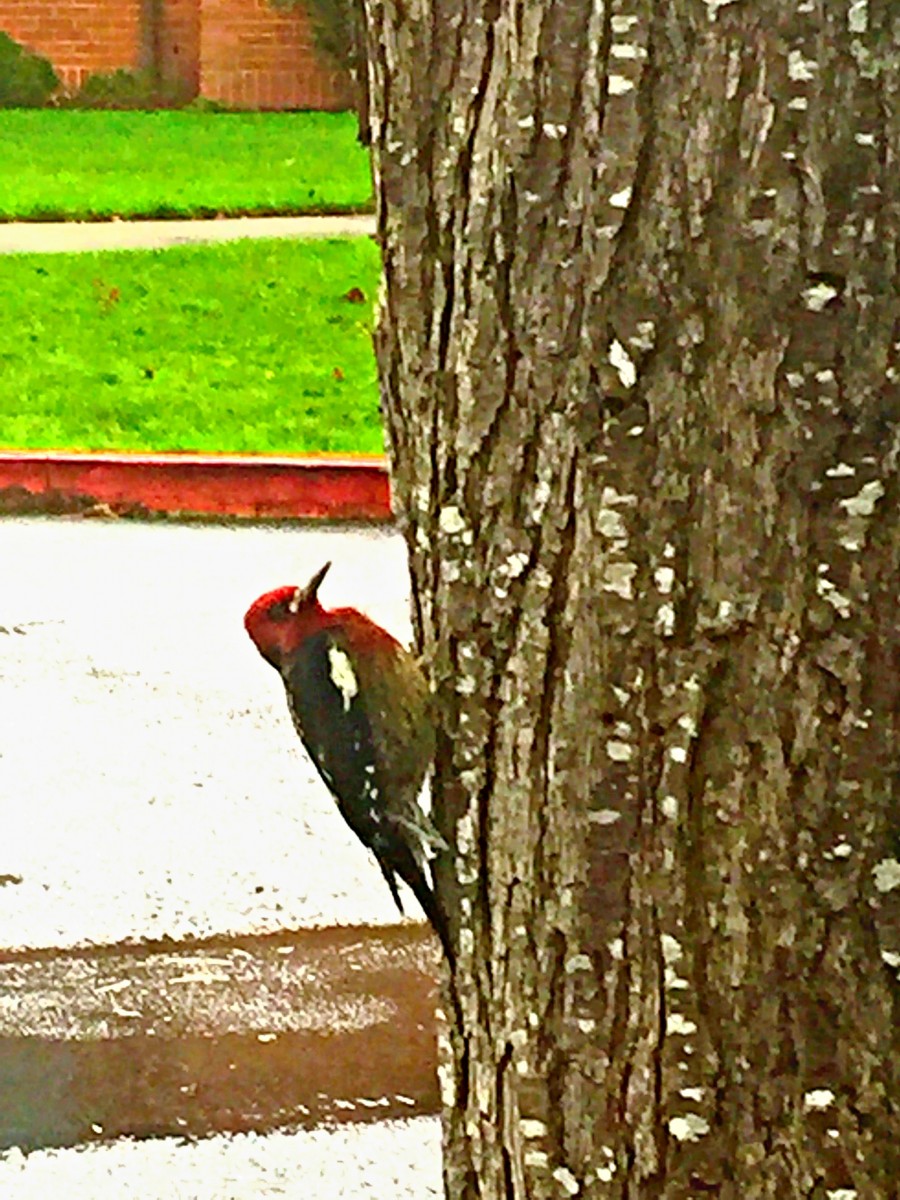
(3) Red-Breasted Sapsucker

A couple of times over the last week I’ve noticed another bird I’m unfamiliar with in our front yard. I was only able to get photos the second time, and that was a rainy and dreary day, so I apologize for the low quality of this photo:

Red-Breasted Sapsucker

According to Birds of the Pacific Northwest Coast by Nancy Baron and John Acorn, sapsuckers drill small holes in the bark of a tree. These holes fill with sap, which attracts insects. The birds then have a two-course meal: They both eat the insects and drink the sap. Hummingbirds often associate with sapsuckers so that they can share the sap.

After I had photographed the bird and looked it up in the book, I went back and looked at the trunk of the tree where I’d seen him. Sure enough, the trunk is covered with tiny holes. When I was photographing the bird, I was surprised that he hung around as long as he did while I gradually moved in closer. Now I see that he was concentrating so hard on drilling all those holes that he probably didn’t even notice me.

Notes on Aging

Lifting Weights, Twice a Week, May Aid the Brain

Many neurological studies have found that, by late middle age, most of us have begun developing age-related holes or lesions in our brains’ white matter, which is the material that connects and passes messages between different brain regions.

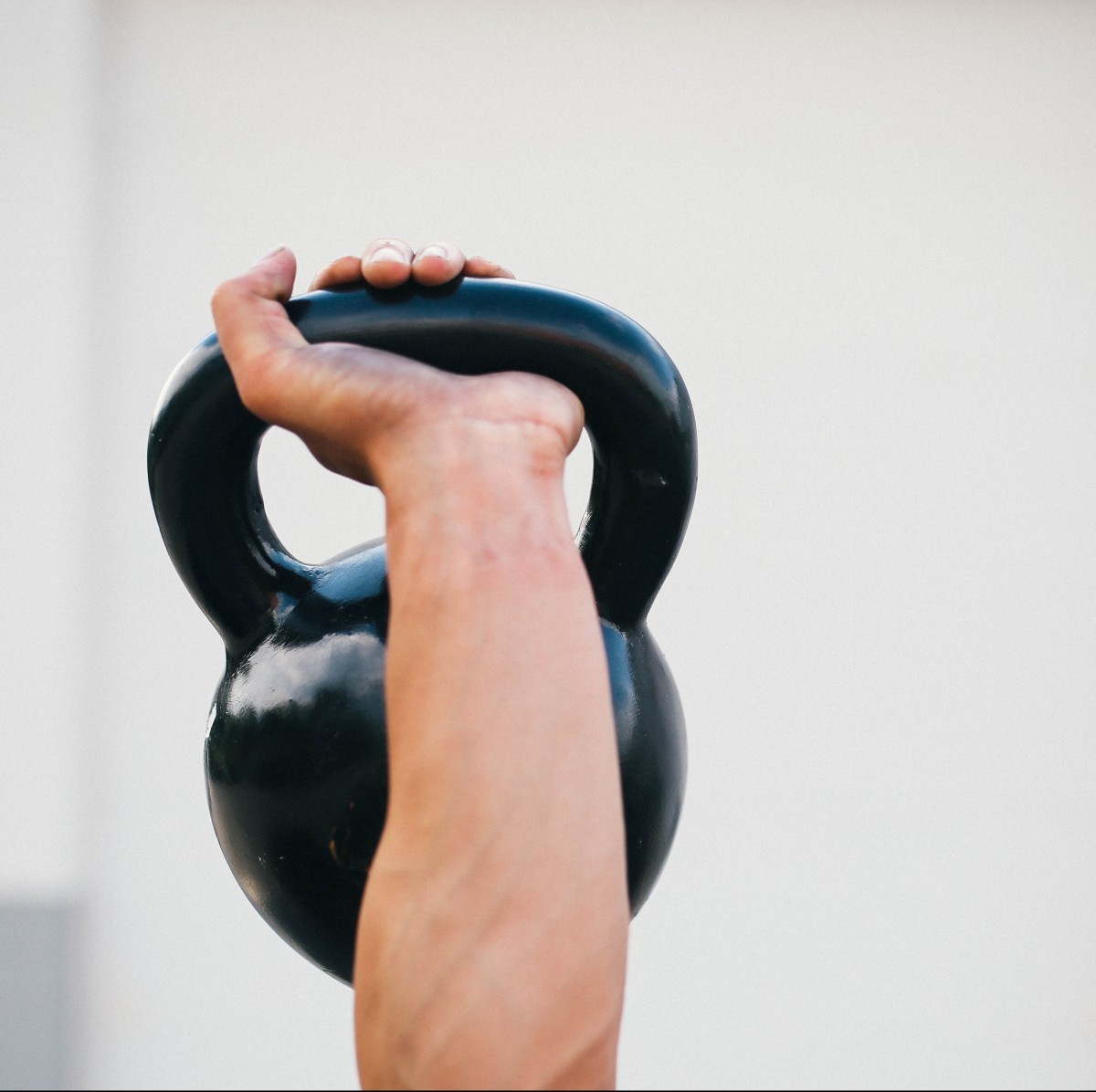
lifting kettle bellThese brain lesions show up on imaging studies before people begin experiencing their symptoms, just as osteoarthritis (joint degeneration) shows up on x-rays before people begin feeling pain. Most studies that advocate the benefits of exercise on maintaining brain health have focused on aerobic exercise, such as brisk walking. But a new study suggests that light resistance exercise, lifting weights, may also improve brain health.

Teresa Liu-Ambrose, professor of physical therapy and director of the Aging, Mobility, and Cognitive Neuroscience Laboratory at the University of British Columbia in Vancouver, looked at the brains of a large group of generally healthy women between the ages of 65 and 75 who already were enrolled in a brain health study that she was leading. The new study focused on 54 of the women whose brain scans showed existing white matter lesions.

For this study, researchers divided the participant pool into three groups:

  1. Those who began a once-weekly program of light upper- and lower-body weight training
  2. Those who underwent the same weight training program twice a week
  3. The control group, who began a twice-weekly program of stretching exercises and balance training

The results found that those in group 2 “displayed significantly less shrinkage and tattering of their white matter” than those in both of the other two groups. These results, published in The Journal of the American Geriatrics Society, suggest that working out just once a week may not be sufficient.

Whatever the reason, exercise, including weight training, clearly “has benefit for the brain,” Dr. Liu-Ambrose said. “However we are just really now gaining an appreciation for how impactful exercise can be.”

Can You Get Smarter?

In this opinion piece in the New York Times, Richard A. Friedman, professor of clinical psychiatry at Weill Cornell Medical College, examines the question of whether brain training can enhance memory and cognitive functioning. Since “one in nine people age 65 and older has Alzheimer’s disease,” concerns about maintaining brain health are common, and brain training has become a multibillion-dollar industry.

Friedman looks at the effects of several areas of intervention on improving brain health: mental exercises, physical exercise, and medication. He discusses both the encouraging news and the caveats arising from the scientific research.

He concludes that there is one thing that consistently seems to help preserve cognitive functioning: other people. Analysis of data from a large study:

showed that people with the highest level of social integration had less than half the decline in their cognitive function of the least socially active subjects. Also, the cognitive protective effects of socializing were greatest among subjects with fewer than 12 years of education.

Friedman concludes:

there is much that you can do to reach your cognitive potential and to keep it. Forget the smart drugs and supplements; put on your shorts and go exercise. If you’re 60 and up, consider brain training. And do it all with your friends.

Costs for Dementia Care Far Exceeding Other Diseases, Study Finds

Three diseases, leading killers of Americans, often involve long periods of decline before death. Two of them — heart disease and cancer — usually require expensive drugs, surgeries and hospitalizations. The third, dementia, has no effective treatments to slow its course.

This eye-opening article looks at the costs associated with long-term care of patients with dementia. What’s most sobering is the that fact that much of the required care is not covered by Medicare:

On average, the out-of-pocket cost for a patient with dementia was $61,522 — more than 80 percent higher than the cost for someone with heart disease or cancer.

While Medicare covers medical care, such as doctor visits, hospitalization, and surgery, it does not cover the personal care required by many people with dementia—help with bathing, dressing, and eating. Most people pay for this care from their own funds. When they have nothing left, Medicaid, a joint federal and state program, takes over.

This article makes clear why caring for an elderly relative with dementia can be such a devastating burden, both physically and financially.

Assessing the Fitness of Wearable Tech

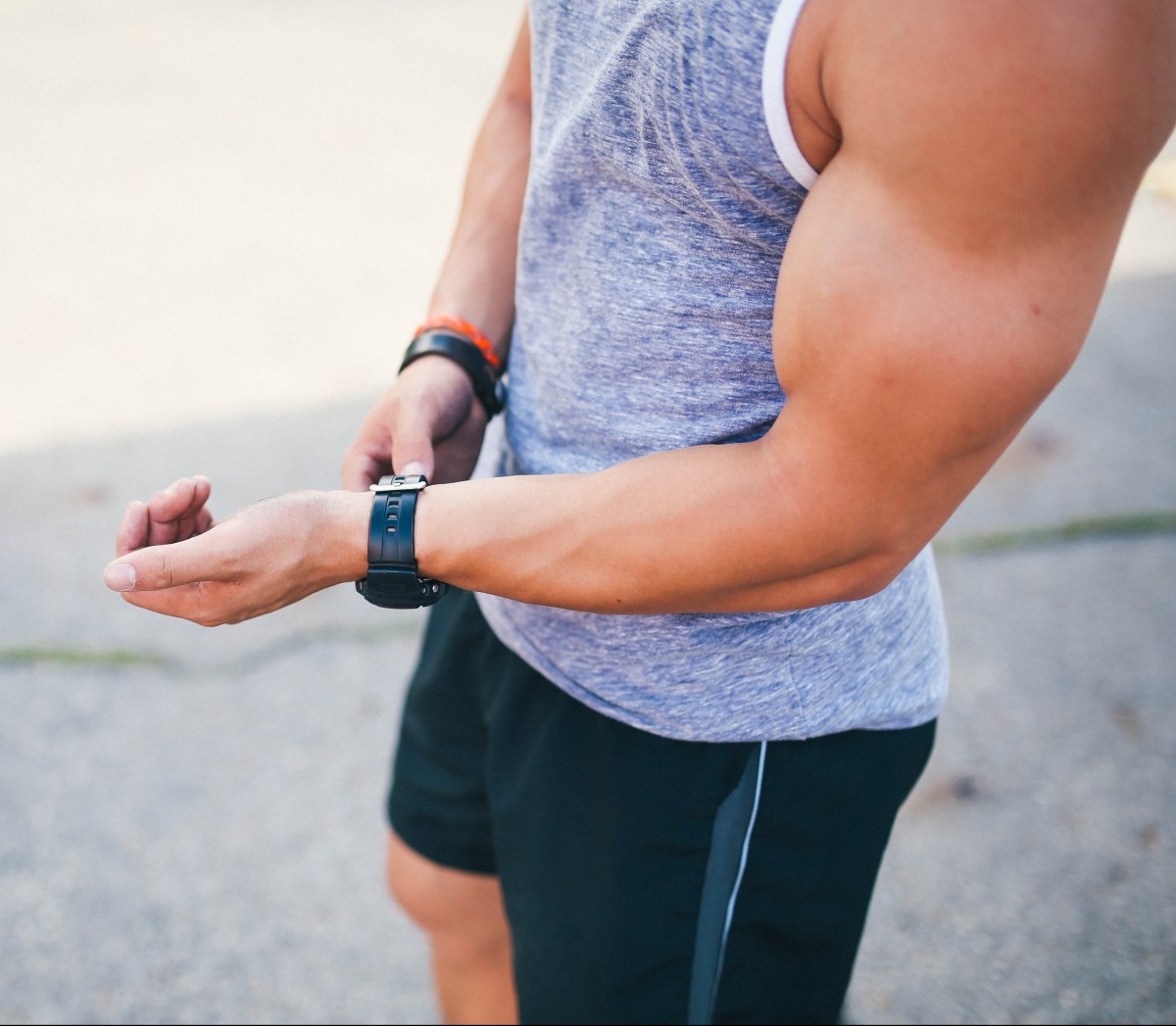
wearable fitness trackerJane E. Brody discusses fitness trackers: “experts say that older adults are among those who could benefit most from such devices.”

The wearable fitness tracker has blossomed, but the gadgets can be expensive, from about $49 to $250, Brody reports. But, according to a study published recently in JAMA (Journal of the American Medical Association), smartphone applications are just as accurate as wearable devices in tracking physical activity.


Lunch Bunch: Black Diamond Bakery And Restaurant

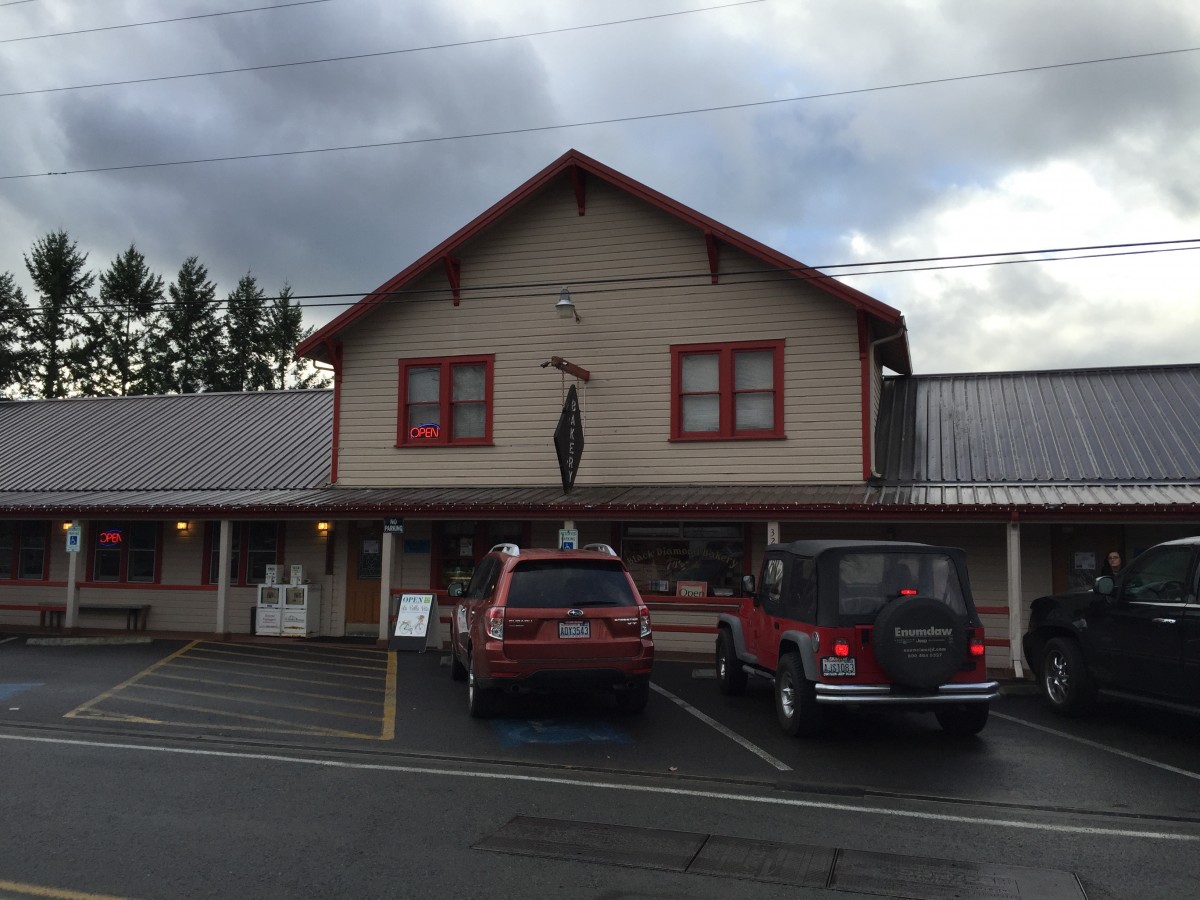
Today we took about a 45-minute bus trip to eat at a restaurant recommended by several long-time area residents:

Black Diamond Bakery And Restaurant

32805 Railroad Ave, Black Diamond, WA 98010
Phone:(360) 886–2741

Black Diamond Bakery opened in 1902 to supply bread baked in a brick oven for the families of miners working in the Black Diamond coal mine. Since that time, the business has expanded to include a restaurant, a deli, a juice bar, an ice cream shop, a coffee shop, and a gift shop. The bakery offerings have also expanded to include all kinds of breads, cakes, pies, and pastries.

I decided to eat light so that I’d have room for dessert. I had a half a club sandwich with a cup of the soup of the day, clam chowder. All the sandwiches are made from bread baked fresh daily. I had mine on wheat, and it was delicious. My husband had chili, which he pronounced excellent. One of our tablemates had a breakfast item of eggs benedict served over turkey and avocado, with a huge serving of hash browns alongside. He said it was very good, even though he was too full to eat the potatoes. One woman had the curried chicken salad served with a thick slice of banana bread. The salad was so generous that she took some home. The pastrami and meatloaf sandwiches also received high praise.

And the desserts! I had marionberry pie, with a delicious, flaky crust. The servings here were also generous. Two people at our table shared a piece of coconut cream pie and both declared it delicious. (I did NOT share my pie!) Many people said they couldn’t eat dessert because their lunch items filled them up too much, but everyone who did order dessert said it was well worth the calories.

In the Best of Everything of Western Washington annual contest run by King 5, Seattle’s local NBC affiliate television station, Black Diamond Bakery and Restaurant won the category of best bakery in 2008 and was a finalist in 2010 and 2012.

Black Diamond Bakery and Restaurant get the following ratings on social media:

  • 3.8 out of 5 stars on Google Reviews
  • 3.5 out of 5 stars on Yelp
  • 3.5 out of 5 stars on TripAdvisor
  • 3.8 out of 5 stars on Zomato
  • 7.2 out of 10 stars on Foursquare

I did not hear one complaint on the bus ride home. Everyone seemed well satisfied, especially since our activities director did all the driving.

Three Things Thursday

Another Thursday, another episode in the continuing saga of Three Things Thursday, the purpose of which is to “share three things from the previous week that made you smile or laugh or appreciate the awesome of your life.”

three-things-thursday-participant

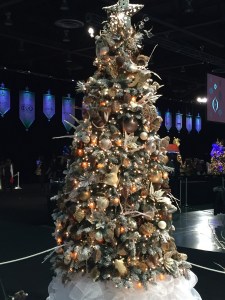
Tacoma’s Festival of Trees

I love learning about the history, culture, and traditions of my new hometown, Tacoma, WA. Today it’s the Festival of Trees, which I had heard of but never attended before. The event even has its own Facebook page.

Festival of Trees is an annual fund raiser for Mary Bridge Children’s Hospital here in Tacoma. The hospital opened in 1955. One of only three pediatric hospitals in Washington, Mary Bridge has been designated by the state as the Level II pediatric trauma center for this region. In 2012 Mary Bridge was named one of the country’s top hospitals by the Leapfrog Group for providing the safest and highest quality care to pediatric patients. Mary Bridge is the only pediatric hospital in the Pacific Northwest and one of only 12 children’s hospitals in the country to receive this recognition.

Mary Bridge Hospital came into being through the efforts of a group of women known as the Tacoma Orthopedic Association, which began in 1921. Recently renamed the Mary Bridge Brigade, the group in 1987 organized the first Festival of Trees to continue raising funds for the hospital. Each year local companies and individuals donate their time, talent, and funds to produce gorgeously decorated holiday trees that are packaged with other significant prizes and auctioned off at a black-tie Gala extravaganza. For those of us whose contributions to the effort must be more modest, there’s a gift shop at the Festival offering holiday merchandise. Purchases benefit the hospital.

But seeing the decorative trees wasn’t the only benefit of attending the festival. Orchestras, bands, and choruses from local schools provided entertainment. When we arrived, an orchestra was just finishing up its presentation. Later, as we sat in the cafe area drinking coffee (husband) and hot chocolate (me), we heard the chorus from St. Patrick’s School perform. The director explained that the kids range in age from nine to fourteen years, with an average age of about ten and three-quarters years. They practice before school, at 7:30 AM, four days a week. And I could not believe the beautiful sound that they produced! They were pitch-perfect, even when they sang in two-part harmony. Having been a choral singer myself in high school, I appreciated what these young kids have accomplished by working hard. Better yet, they seemed to be enjoying what they were doing.

I saw so many beautiful creations that choosing a mere three to share with you here was difficult. The exhibits were set up in a huge room at the downtown convention center. Each was roped off. Taking good photographs was challenging because of the ropes and the people moving around. I chose these three primarily because I was able to get in position to get a reasonably good shot of them.

Click on any photo to see a larger version.

Update

Here’s an article on the Festival of Trees from the local newspaper, The News Tribune:

Bangles, baubles — and vinyl — star at Mary Bridge’s Festival of Trees

SHARE YOUR WORLD – 2015 WEEK #47

Here’s this week’s SHARE YOUR WORLD – 2015 WEEK #47.

In your native language which letter or character describes you best? Why?

M, for Mary.

It’s not that I’m just so vain. I was named after my maternal grandmother, whom I dearly loved. She was the most important early influence in my life because she loved me unconditionally and appreciated me as a child. My own mother expected me to think and act like an adult as soon as I was able to walk and talk. I often disappointed her, especially as a young child who was curious about the world and consequently asked a lot of questions and went off exploring on her own frequently. But Grandma enjoyed answering my childish questions. She taught me to make biscuits and to do other basic tasks like scrambling eggs, chores that my mother didn’t have the patience or the inclination to teach me.

What is your greatest extravagance?

Getting my nails done every 2–3 weeks. Purple fingernails are my personal trademark, and I always get the same shade.

I say that my manicures are my main extravagance because I consider books a necessity of life, not an extravagance. However, for the past couple of years I’ve been trying to use the library more in an effort to convince myself that I don’t have to purchase my own copy of EVERY book I want to read, either now or in the future.

Do you prefer exercising your mind or your body? How frequently do you do either?

powells bagNo real question here: My mind. I exercise my mind a lot, by reading and writing every day.

I do know that if I don’t also exercise my body, my declining years are not going to go as well as I’d like. The closer I get to 70, the more I realize that I need to exercise regularly to maintain strength, stability, and flexibility. Like just about everyone else in the world, I plan to get back into a regular physical exercise routing on January 2.

The beauty of audiobooks is that I can exercise my mind as I’m exercising my body. Knowing that physical exercise time does not have to lessen my reading time is what allows me to think I’ll be able to establish a regular workout routine.

List at least 5 things that make you laugh.

  1. A really clever pun
  2. A baby’s laugh
  3. Watching a young child discover something exciting about the world
  4. A fond memory of something said or done by one of my friends who’s no longer alive
  5. OK, I’m like everybody else: all those crazy cat, dog, and baby videos people post and repost on Facebook

Bonus question: What are you grateful for from last week, and what are you looking forward to in the week coming up?

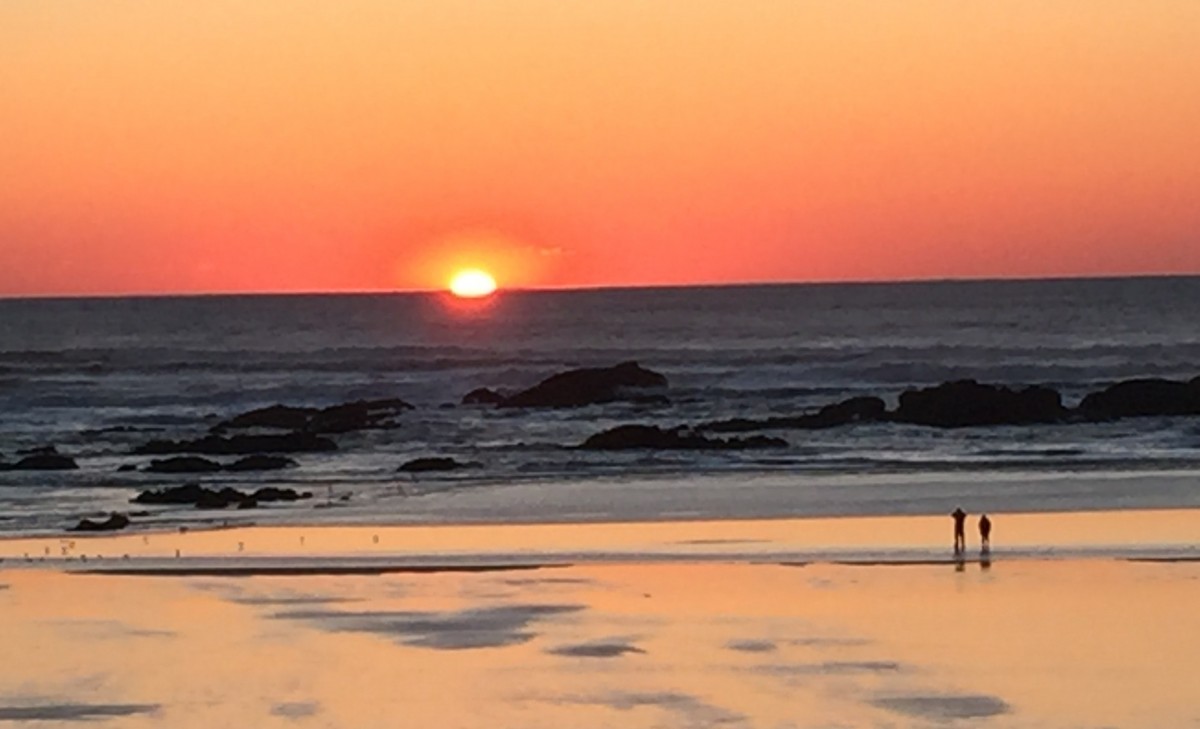
We had a wonderful Thanksgiving week at Kalaloch Lodge on the coast of Washington State’s Olympic Peninsula. I love watching the waves roll in. That was a huge chunk of R & R for me, and I now look forward to getting back to work with renewed vigor in the upcoming week.

Have a great week, everybody!

Notes on the Olympic Peninsula

Mother Nature is making up for last year by providing us with yet another sunny day. Today I had some time to read through the booklet in our cabin about Mount Rainier, Olympic, and North Cascades national and state parks. Here are some of the nuggets of knowledge I picked up.

The western side of the Olympic Mountains receives an average of 140 inches of rain every year. There are three reasons why the area is so wet:

  • Cool ocean currents
  • Prevailing westerly winds
  • The Olympic Mountains

On the Olympic coast, the greatest rainfall occurs during December and January, with daytime temperatures averaging in the 40s.

The top of Mount Olympus receives 200 inches of rain annually, while the town of Sequim (pronouced squim), located on the northeast side of the mountains, receives 16 inches or fewer in a year.

Almost the entire Olympic Peninsula is protected land as part of either Olympic National Park or Olympic National Forest. Highway 101 follows the edges of the peninsula, but there are no roads that cut across the full width of the peninsula. Spur roads off of 101 provide access at several points to interior areas, but the only way to get from one side of the peninsula to the other is by following 101 around. Some areas are closed in winter.

Several tribes have traditional ties to this land: Lower Elwha Klallam, Hoh, Jamestown S’Klallam, Makah, Port Gamble S’Klallam, Quileutae, Quinault, and Skokomish. They originally lived in communal homes called longhouses. They fished and gathered most of their food during the spring and summer. During the winters, which are mild near the coast, the women wove baskets and clothing from red cedar bark. The men carved dugout canoes and made ceremonial items from wood.

In 1788, John Meares, an English sea captain, named Mount Olympus after the mythological home of the Greek gods. Four years later Capt. George Vancouver made the name official when he entered it on his map and referred to the whole mountain range as the Olympic Mountains. Mount Olympus is 7,980 feet high. By comparison, Mount Rainier, in the Cascade Mountain range, is 14,410 feet high.

Throughout the late 19th century pioneers moved into the Olympic peninsula to fish, farm, and cut lumber. In 1885 and 1890, the U.S. Army came through the area to survey and scientifically document the interior. In 1909 President Theodore Roosevelt created Mount Olympus National Monument. In 1938 President Franklin D. Roosevelt signed a bill designating 624,000 acres as Olympic National Park. In 1953 most of the coastal wilderness was added to the park. The 1988 designation of Olympic National Park as a World Heritage Site protects the area by forbidding road building, mining, lumber cutting, hunting, use of off-road motorized vehicles, and other types of development within the designated wilderness area.