Last Week’s Links

The Literature of Elder Care is Often About Shifting Power Dynamics

As people live longer, adults frequently face “elder-care responsibility.” 

“An important facet of these relationships, which often appears in fiction and nonfiction works, is the shifting power dynamic between older adults and their adult children, particularly in the United States and other predominately white Western countries,” writes Ellyn A. Lem. In this article Lem looks at how these relationships play out in literature by Shakespeare, A Thousand Acres by Jane Smiley, Let Me Be Frank with You by Richard Ford, Days of Awe by Lauren Fox, several works of nonfiction, and several films. 

How to Embrace Uncertainty, Even If You’re Not Sure What Will Happen Next

Not only are we dealing with our usual sources of uncertainty, but then there’s the whole global pandemic, where we’re trying to stop the spread of a virus we have never seen in humans before. We’re not just in uncharted waters—we’re scrambling to stay afloat. As it turns out, there are ways to more effectively deal with feelings of uncertainty, and embrace what’s next with some level of confidence (even if it’s very low).

Dr. Elizabeth Yuko, a bioethicist and adjunct professor of ethics at Fordham University, offers “two strategies for handling uncertainty in a healthier way.”

The Museum Where Racist and Oppressive Statues Go to Die

“Germany has found ways to display problematic monuments without elevating them.” Daniela Blei reports on the job of the Citadel Museum in the Berlin suburb of Spandau, which “aims to contextualize the past, putting uncomfortable realities on display in productive, educational, and sometimes challenging ways.”

Whether you are a night owl or early bird may affect how much activity you get during the day

I am definitely a night owl. When I was in college, I discovered that I worked better if I stayed up studying until about 2:00 AM, then slept until about 10:00. Because I went to a huge university with lots of class offerings, I was able to take almost all my classes between 1:00 and 6:00 PM. Unfortunately, after graduating from college, I realized that the rest of the world doesn’t work that way. Very few workplaces accommodate a night owl’s preferred schedule, and once I had a child who had to be gotten up and out for school, any possibility of catering to my own schedule went out the front door.

Because of my own experience, I’ve been interested in relatively recent research into the differences between early birds and night owls. This article reports on various chronotypes, the “master clocks” in our brains that determine how our bodies respond to the time of day. Recent research out of Finland found that “among both men and women, the morning types and many of the day types moved significantly more than the evening types, even when the researchers controlled for people’s health, professions, socioeconomic status and other factors.”

The conclusion: “Overall, the study’s findings suggest that late risers may want to monitor how frequently they move.”

How to not fear your death

Sam Dresser suggests “several philosophically inspired reasons not to be fearful of your own death.” 

In addition to the philosophical insights offered her, the article includes some links and references to use if you want to dig more deeply into this topic. 

One Twitter Account’s Quest to Proofread The New York Times

The former English teacher and copy editor in me could not resist this article. Overall, not just in particular news sources, I’ve been appalled by all the examples I constantly find in publications (both print and digital) that make me groan, “If only you’d had a copy editor take a look at this . . . .”

© 2020 by Mary Daniels Brown

How Colin Kaepernick inspired activism, awareness and Seattle athletes to speak out against racial injustice | The Seattle Times

Four years after San Francisco 49ers quarterback Colin Kaepernick took a knee to protest racial injustice, more athletes — including Sue Bird, Megan Rapinoe and Russell Wilson — are speaking out themselves.

Source: How Colin Kaepernick inspired activism, awareness and Seattle athletes to speak out against racial injustice | The Seattle Times

Birthday at the Zoo

My husband and daughter took me to the zoo yesterday for my birthday. It was the first time we had seen our daughter in 6 months. I felt especially celebrated because Mount Rainier came out splendidly.

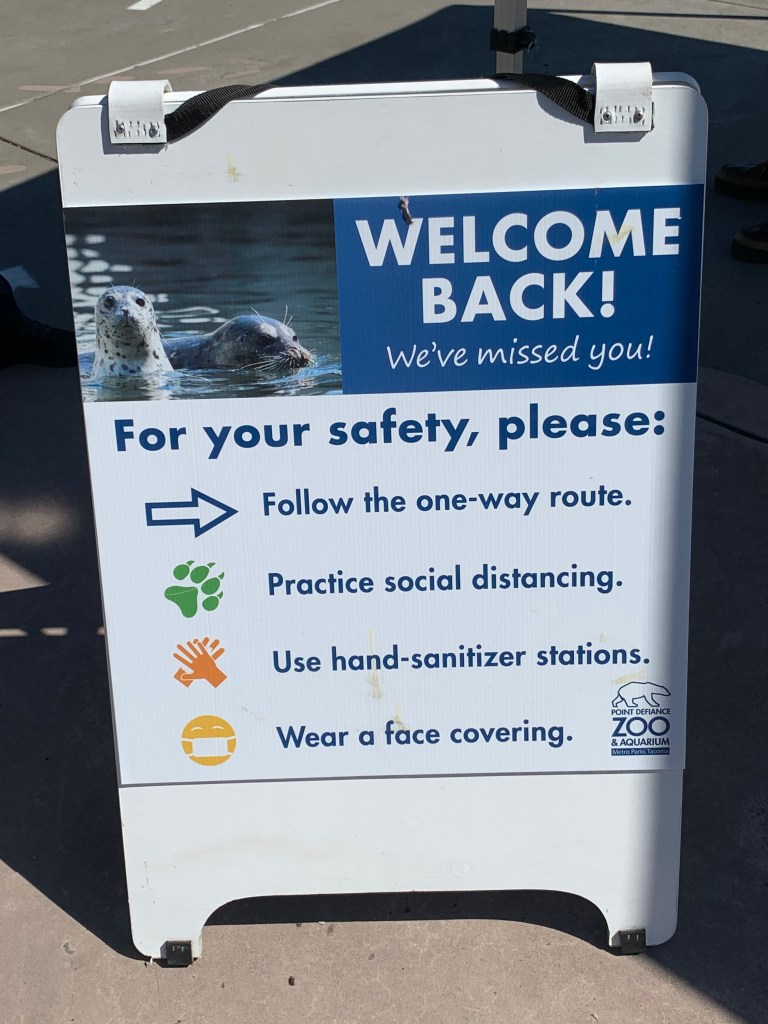
The zoo is now offering timed entrance tickets and has done a good job of adapting to necessary COVID-19 restrictions.

We had a beautiful day for our visit: sunny and clear but not too hot. We got a good look at two of the zoo’s tigers, one lolling in the shade and the other enjoying a catnap in the sun.

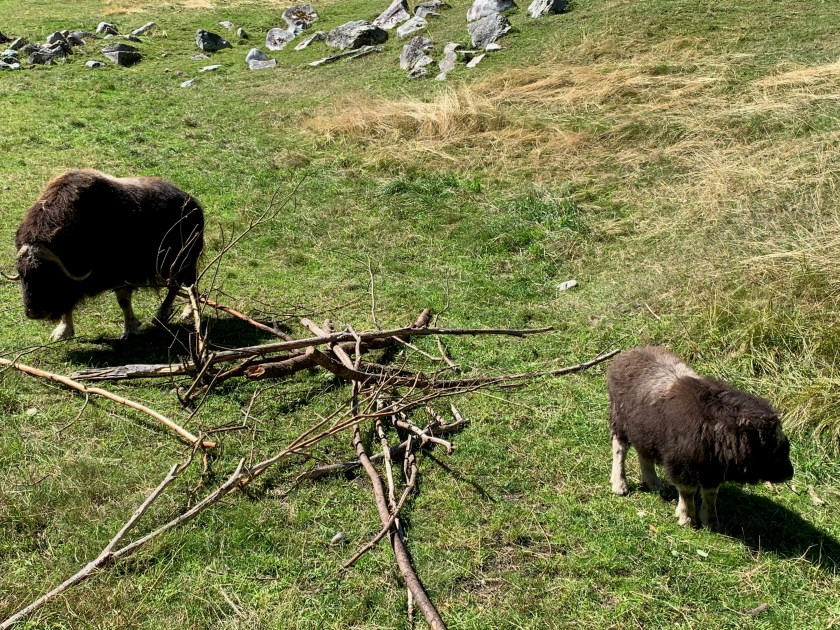
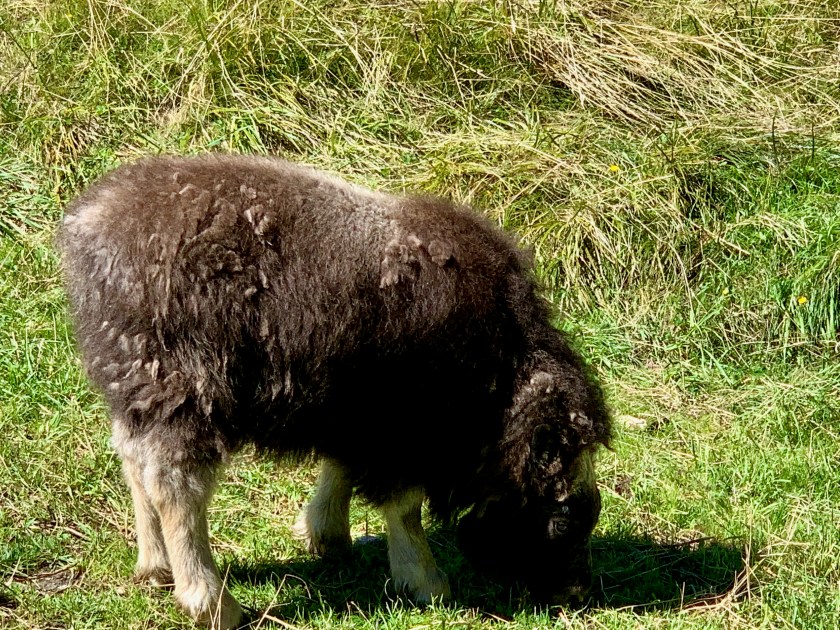
One of the zoo’s biggest attractions right now is Trebek, the muskox calf born last spring. He’s named after Alex Trebek, host of the TV game show Jeopardy, whose favorite animal is the muskox.

You can read more about Trebek and his mother, Charlotte, here.

This was my first visit to the new Pacific Seas Aquarium, which showcases sea animals from the Pacific Ocean area. This building opened late last summer.

I was happy to see lots of families with children enjoying the zoo along with us. Everyone wore their masks and did a good job of maintaining appropriate distancing.

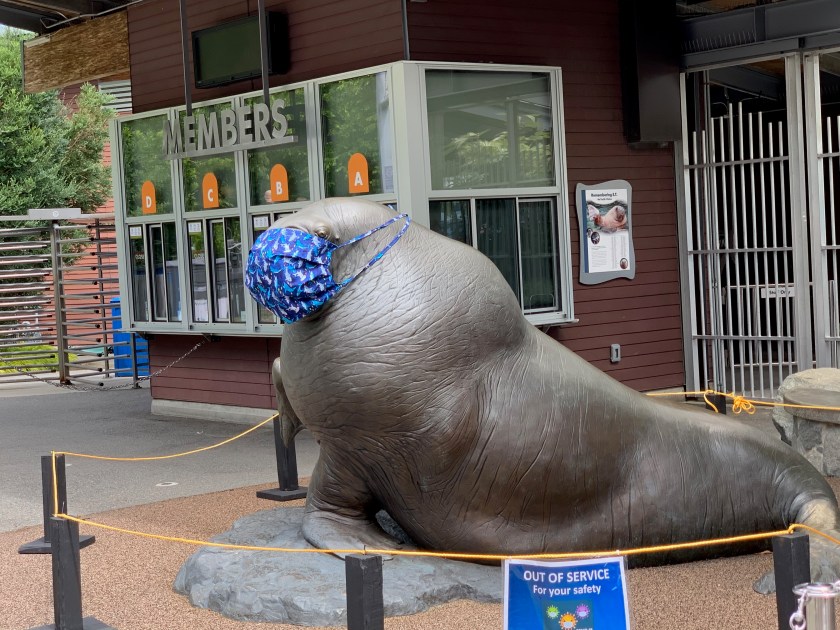
walrus statue wearing mast at zoo entrance

© 2020 by Mary Daniels Brown

Doesn’t this sound like a blog title?

While walking in the park this afternoon, we saw this cargo ship (probably used for transporting grain) waiting out on Puget Sound.

Doesn’t this sound like a nifty title for a blog written by someone in her golden years?

Last Week’s Links

How Solitude Can Help You Regulate Your Mood

Whether we think we needed it or not, the arrival of COVID-19 has given us plenty of time to contemplate the meaning of solitude. Writing for NPR (National Public Radion in the U.S.), Colin Dwyer looks at the findings of recent research on the topic of solitude. 

Dwyer offers four findings from this research:

  1. Solitude is in the mind of the beholder.
  2. We may crave time alone the way we crave time with others.
  3. Don’t expect an epiphany.
  4. Solitude can be a communal exercise.

You Don’t Have to Be Young to Be a Badass Detective

Author Jane Badrock has noticed a fictional marketing niche that she aims to fill: older adult detectives, particular female ones.

“Think of the opportunities! Imagine, even the real-life unsolved crimes that may have happened because nobody suspected the little old lady.”

Brain scientists haven’t been able to find major differences between women’s and men’s brains, despite over a century of searching

brain

I couldn’t resist including this article. The search to explain gender differences by tying them to differences in the anatomy and/or function of various parts of the brain began at the dawn of the discipline of psychology. Here Ari Berkowitz, Presidential Professor of Biology and Director of the Cellular & Behavioral Neurobiology Graduate Program at the University of Oklahoma, concludes:

So it’s not realistic to assume any human brain sex differences are innate. They may also result from learning. People live in a fundamentally gendered culture, in which parenting, education, expectations and opportunities differ based on sex, from birth through adulthood, which inevitably changes the brain.

In other words, gender differences are not biological—that is, inborn—traits but rather social constructs, normative behaviors defined and passed down by societies to tell people how they should live, think, and feel.

The 40 Must-Read Books for Baby Boomers

Lorraine Berry makes “An earnest attempt at an essential library.”

She writes, “I aimed to include those novels rooted in a writer’s emotional honesty in telling true stories about the human condition. Light on classics, the list is weighted toward books published in the past 119 years.”

She adds that we should hurry up and look at the list—before she tweaks it yet again.

How about you? What books would you add or delete from Berry’s list? Remember, you must limit the list to 40 books.

Lifelike robotic pets are helping isolated seniors avoid loneliness

This CNN article looks at test programs that have provided robotic pets to older adults to help ease the loneliness exacerbated by the isolating restrictions of COVID-19. These programs have been conducted in Alabama, Florida, New York, and Pennsylvania.

So far the results look promising, but, at least in Alabama, evaluation of the program will continue over the next year.

© 2020 by Mary Daniels Brown

Last Week’s Links

How to interpret historical analogies

For those of us who’ve lived long enough to see a thing or two:

Historical analogies – basically, the claim that two events or phenomena separated by time, and sometimes also by space, are similar in essential ways – are all around us. ‘History is repeating itself’ is a prominent idea, often phrased as ‘We’ve been here before’ or ‘This feels awfully familiar.’ Given that analogies are not a central feature of historical writing, or even something historians are normally trained to do, it’s worth asking: who makes historical analogies and why? How do historical analogies work? When do they catch on? Why are they so popular? What purpose do they serve? Do they help us better understand the world?

Scientists get closer to blood test for Alzheimer’s disease

An experimental blood test was highly accurate at distinguishing people with Alzheimer’s disease from those without it in several studies, boosting hopes that there soon may be a simple way to help diagnose this most common form of dementia.

We always have to understand that these medical reports are preliminary. Still, it’s comforting to learn that research is progressing.

An Elegy for the Landline in Literature

Many of us are old enough to remember when a phone ringing in the middle of the night indicated that something very bad had happened. Of course, that ringing phone was a landline, the only kind of phone we had back in those days.

“Since its invention, in the nineteenth century, the landline has often been portrayed as sinister—the object through which fate comes to call,” writes Sophie Haigney. She discusses how the landline was used in literature “as an open line of possibility, just waiting to ring,” that has been eliminated by the ubiquitous cell phone.

Seven Mysteries Featuring Standout Seniors as Secondary Characters

Mystery author S.C. Perkins discusses some of her favorite mysteries that feature older adults who are “long on great personalities” as secondary characters: “I’m here to give respect to the elder characters who not only offer the protagonist the benefits of their knowledge learned through a long life, but also possess a sense of humor about the world that comes from having seen it all.”

Senior Citizens Recreate Iconic Music Album Covers While in Quarantine

To lift your spirits, take a look at these recreations of classic music album covers by older adults from senior communities in England.

© 2020 by Mary Daniels Brown