
Last Week’s Links

A man with Alzheimer’s forgot he was married, and fell in love with his wife all over again

A bittersweet story about a man with early-onset Alzheimer’s disease and his wife.

They Didn’t Expect to Retire Early. The Pandemic Changed Their Plans.

“After years in which Americans worked later in life, the latest economic disruption has driven many out of the work force prematurely.”

The New York Times looks at “the millions of Americans who have decided to retire since the pandemic began, part of a surge in early exits from the work force. The trend has broad implications for the labor market and is a sign of how the pandemic has transformed the economic landscape.”

Sufferers of chronic pain have long been told it’s all in their head. We now know that’s wrong

For those of us with this problem, here’s some good news.

Increasingly though, experts are waking up to the idea that chronic pain can occur without any obvious physical injury, or in a completely separate area of the body from the original site of tissue damage. There’s also mounting evidence that seemingly very different pain conditions – chronic headaches, low back pain and jaw pain, say – may share common underlying mechanisms, and that once a person develops one chronic pain condition, they’re predisposed to develop others.

The neuroscience behind why your brain may need time to adjust to ‘un-social distancing’

Kareem Clark, Postdoctoral Associate in Neuroscience at Virginia Tech, looks at a big question for many as we begin to emerge from the COVID-19 pandemic:

if the idea of making small talk at a crowded happy hour sounds terrifying to you, you’re not alone. Nearly half of Americans reported feeling uneasy about returning to in-person interaction regardless of vaccination status.

He explains that our brains need to reset our sense of “social homeostasis – the right balance of social connections.”

The pandemic wrought a new America

CNN finds that we are “heading into a best of times, worst of times summer as the longed-for promise of deliverance from Covid-19 is tempered by spasms of violent crime, economic false starts and unexpected obstacles on the road to freedom.”

© 2021 by Mary Daniels Brown
Last Week’s Links

Her Kind Of Blue: Joni Mitchell’s Masterpiece At 50

Ann Powers reports for NPR on Joni Mitchell’s album Blue, which came out in 1971, with an emphasis on its storytelling:

the creative process is as mundane as it is miraculous. It’s dribs and drabs and then a rush and then back to staring at the ceiling, wondering if the rush will come back. Blue is an album about working through something — a heartache, people say. But it’s just as much a document of the process of sharing that heartache, an inquiry into personal storytelling itself. Until Blue, Mitchell was getting there, but she hadn’t wholly figured out what she alone could say. That’s because what each person alone can say is, in its pure state, incommunicable. Stories are what get left behind as their tellers keep living and evolving. They’re always inconclusive.

The Secrets of ‘Cognitive Super-Agers’

From Jane E. Brody, for The New York Times:

Fewer than 1 percent of Americans reach the age of 100, and new data from the Netherlands indicate that those who achieve that milestone with their mental faculties still intact are likely to remain so for their remaining years, even if their brains are riddled with the plaques and tangles that are the hallmarks of Alzheimer’s disease.

Brody reports on research about how people who are “physically able to reach 100 may also be able to remain mentally healthy.”

10% Of People Will Likely Experience Post-Pandemic Growth—Here’s What It Means

Neuroscientist and psychiatrist Daniel Amen explains that after experiencing trauma, some people develop PTSD (post-traumatic stress disorder) while others exhibit PTG (post-traumatic growth). Since COVID-19 has certainly been a time of trauma, he predicts that “the lucky ones who will experience post-pandemic growth.” 

He offers advice on changes you can make to nurture PTG.

Why Introverts May Find It Hard When Life Returns to Normal

Susan Krauss Whitbourne, Ph.D., considers what post-pandemic life will be like for introverts, most of whom have become comfortable with enforced social isolation. She first looks at personality-based research (most of it conducted on a college campus before the pandemic hit) that found that people tend to choose geographic locations on the basis of their personalities: “Participants higher in extraversion were the ones that researchers encountered in central, less secluded spots on campus. Those high in introversion, by contrast, set themselves up in quieter spaces away from the campus hub.”

On the basis of this research, she encourages introverted people to search for quiet personal spaces where they can seek occasional respite once they begin moving back into society.

Poor sleep linked to dementia and early death, study finds

CNN reports on recent research that found older adults “who have significant difficulty falling asleep and who experience frequent night awakenings” are at increased risk of dementia or earlier-than-normal death. The article ends with some suggestions of how you can reduce your risk by taking steps to avoid sleep deprivation.

Death is Both an Event and a Process

The loss of people we know tends to get more frequent as we get older. Understanding grief, and how it works, can help us get through those hard times. Writer Brandy L. Schillace explains: “Death is not a thing, but things: a process of emotions, states of being, suddenly shifting relationships.” She encourages thinking of grief as “a path, a journey, a process.”

Our need to face death and its associated grieving is more pronounced now, in the time of COVID-19, than usual. This is the first in a series of articles Schillace plans “to try and better understand death not as the end of life, but as part of it — even in these changing and uncertain times.”

© 2021 by Mary Daniels Brown

Last Week’s Links

What is critical race theory, and why do Republicans want to ban it in schools?

I see the term critical race theory in the news a lot, but I didn’t know what it meant. I was therefore grateful to find this article from the Washington Post.

“Critical race theory is an academic framework centered on the idea that racism is systemic, and not just demonstrated by individual people with prejudices,” the article says. But it further points out that, although the term refers to an academic area of study, “its common usage has diverged from its exact meaning.”

Secrets to Better Sleep After Menopause

This article from the AARP’s Ethel newsletter focuses on sleep problems after menopause because: “According to The Study of Women’s Health Across the Nation (SWAN), sleep disturbances range from 16 to 42 percent in premenopausal women and then climb to 35 to 60 percent when we’re postmenopausal.”

If this situation applies to you, read “some recommendations from the sleep experts.”

What Robots Can—and Can’t—Do for the Old and Lonely

“For elderly Americans, social isolation is especially perilous. Will machine companions fill the void?”

The New Yorker reports on a study that uses robotic pets as companions for isolated older adults. 

Yes, this is a real thing. According to the article, “In 2017, the Surgeon General, Vivek Murthy, declared loneliness an ‘epidemic’ among Americans of all ages. . . . Older people are more susceptible to loneliness; forty-three per cent of Americans over sixty identify as lonely.” 

Before you scoff and try to laugh this off, read the article to find out how some study participants feel about their mechanical companions.

The Age of Reopening Anxiety

“What if we’re scared to go back to normal life?”

I’ve been seeing a lot of articles lately about people’s reactions to re-entering society now that vaccines have made possible the reductions in mask-wearing and social-distancing policies. This article reports:

For many, the transitional period has been a little bumpy. A report by the American Psychological Association, published in March, 2021, found that almost half of Americans surveyed felt “uneasy about adjusting to in-person interaction” after the pandemic.

Going beyond ‘back to normal’ – 5 research-based tips for emerging from pandemic life

Bethany Teachman, professor of psychology at the University of Virginia, offers some suggestions from clinical psychological science for those who wish to “choose what to rebuild, what to leave behind and what new paths to try for the first time” as they ease their way into post-pandemic life.

Doctors tell how to make the most of your telehealth visits

A lot of articles deal with what concepts of the “new normal” will emerge as society reopens. Many analyses I’ve read indicate that remote medical consultations may well be one of the features of the pandemic that may stick around. 

Here Julie Appleby of Kaiser Health News offers advice on how to determine if or when telehealth visits meet your needs.

Genealogy Basics: 8 Tips for Tracing Your Family Tree Online

Interest in genealogy boomed during the pandemic. Here are some suggestions for using online resources to trace your family roots.

Can a Smartwatch Save Your Life?

“The advent of wearable devices that monitor our heart rhythms both excites and worries doctors.”

Randi Hutter Epstein, M.D., looks at both the potential benefits and the potential drawbacks of new, wearable health-monitoring devices such as smartwatches.

© 2021 by Mary Daniels Brown

Last Week’s Links

As Lou Gehrig Day nears, here’s what he meant to the fight vs. ALS, and what baseball means to those with it

Amyotrophic lateral sclerosis (ALS), the disease that killed baseball player Lou Gehrig (and is therefore alternatively called Lou Gehrig disease), is a “progressive neurodegenerative disease that affects nerve cells in the brain and spinal cord and is 100% fatal.” Next Wednesday Major League Baseball will celebrate the first of what will become an annual event, Lou Gehrig Day.

ALS advocates hope that this event will increase awareness of the disease, for which there have been very few treatment breakthroughs since Gehrig’s 1939 diagnosis:

As Phil Green, a former University of Washington football player who has lived with ALS since 2018, said in an interview this week, “If Lou Gehrig were diagnosed today, he would have pretty much the identical prognosis that he did 80 years ago. Just think about that. We put men on the moon and rovers on Mars, yet this disease still seems to baffle some of the smartest scientists in the world.”

How to Understand the 1960s in 11 Books

“If you remember the 60s, the saying goes, you weren’t there. And for many of us who lived those turbulent, exciting and wildly different times it’s true,” writes Mike Bond, who graduated from college in 1965. “I was one of the founders of the Resistance [to the Vietnam war], and risked ten years in jail for it, was on the run for several years ducking the dutiful FBI guys who would clump up the stairs to whatever apartment I was crashing in, while its rightful tenant would answer the door and say I wasn’t there.”

Here Bond lists 11 books that had a great influence on his thinking in the ’60s.

Banning My Book Won’t Protect Your Child

When I was in my early 20s, I was in an abusive relationship with another woman. Soon after it ended, I did what I always did when I was heartbroken: I looked for art that spoke to my experience. I was surprised to find shockingly few memoirs of domestic violence or verbal, psychological and emotional abuse in queer relationships. So I wrote into that silence: a memoir, “In the Dream House,” which describes that relationship and my struggle to leave it.

Carmen Maria Machado reacts to the recent attempt by a parent in Leander, Texas, to remove her book and several others from a list of recommended reading in the local high school.

25 Great Writers and Thinkers Weigh In on Books That Matter

“To celebrate the Book Review’s 125th anniversary, we’re dipping into the archives to revisit our most thrilling, memorable and thought-provoking coverage.”

Current writers for The New York Times look back on some of the “robust literary coverage” of the newspaper’s Book Review, including articles by authors such as Vladimir Nabokov, Tennessee Williams, Patricia Highsmith, Eudora Welty, and Langston Hughes.

How Doctors Tell Stories: Writing Through the Practice of Medicine

Writer Leslie Jamison interviews Suzanne Koven, author of Letter to a Young Female Physician: Notes from a Medical Life, a collection of essays. Jamison begins the interview with this question:

I love the ways these essays hold so many aspects of your identity: doctor, daughter, mother, wife, patient, and colleague. We see you as a little girl going to the office of your doctor-father, wanting  “to witness at close range the freedom of men,” and we see you as a panicked mother, riding in an ambulance with your young son after seizures. How did you approach writing about times when various parts of your identity converged or collided?

And Koven replies that writing the book helped her discover that the “various parts of me turned out to be more aligned than I understood.”

‘Take it easy, nothing matters in the end’: William Shatner at 90, on love, loss and Leonard Nimoy

Hadley Freeman describes recently interviewing William Shatner over Zoom: “He certainly sounds like Shatner. But Shatner turned 90 in March, and the man in front of me doesn’t look more than 60, as he bounces about in his seat, twisting to show me the view around him, with the agility of a man two decades younger.”

He’ll always be Captain James T. Kirk to me.

Bob Dylan at 80: in praise of a mighty and unbowed singer-songwriter

“Prolific, resilient and endlessly creative … as Dylan celebrates his 80th birthday, Edward Docx assesses his artistic contribution to the human story”

And look who’s 10 years younger than Shatner and also still going strong.

© 2021 by Mary Daniels Brown

Last Week’s Links

Talking on Zoom could help older people stave off dementia

CNN reports on recent research results:

Talking on video-conference services like Zoom during the coronavirus pandemic has helped older people stave off the effects of dementia, a new study has suggested.

Researchers found that regular communication helps maintain long-term memory, and elderly people who often use online tools showed less decline in memory than those who don’t.

These Farmers Want You to Drink Your Hops and Eat Them Too

“Trashed in the U.S., hop shoots are treasure in parts of Europe.”

Washington State produces lots of hops, the crop that lends much of the bitter taste to beer. In fact, according to this article, “75 percent of the U.S. hops supply is grown in Yakima Valley,” in eastern Washington.

This article presents some entrepreneurs who are exploring ways to use more of the hop plant than the part used in beer brewing.

Mary Beard Keeps History on the Move

“For Beard, change has always been a part of the classics. We need to expose the field’s flaws to learn how we’ve inherited them.”

Since I did my B.A. and M.A. in Latin, I’ve been following the recently publicized issue of universities dissolving their classics departments. Here Katy Waldman profiles British classicist Mary Beard for The New Yorker

Introducing her subject, Waldman writes about how to describe Beard: “‘Classicist’ doesn’t quite capture it. ‘Celebrity historian’ inches closer.” 

The movement to downplay the study of classics centers on the claim that the field embodies an “imperialist mind-set” and “sustains a mythology of whiteness.” But, Waldman writes, “As the field’s most famous practitioner, and a dedicated anti-racist and feminist, Beard takes a middle position: she believes neither that classics deserves a pedestal nor that it must be destroyed.”

Is America a Racist Nation? I Am Sikh and Tired

Vishavjit Singh writes:

My turban and beard have always made me a target of anxiety, stereotyping, or outright racism. Post-9/11, the hate has been taken to a whole new level. Sikhs have been killed, attacked, and verbally abused in a never-ending American saga.

Singh takes a look at some of our inherent biases: “This is not a Black and White problem only. It is an American ailment. It is a human disease.”

They’re Vaccinated and Keeping Their Masks On, Maybe Forever

“Face coverings have been a political flash point for more than a year. But now, the backlash is directed at people who don’t plan to take them off.”

My husband and I have been fully vaccinated since late February. Yet, despite the most recent CDC guidelines, when we went to the farmers’ market yesterday, I put my mask on. 

I’ve decided to continue to wear a mask when I’m in a crowd for quite a while. After being required to do so for more than a year, it’s something I’ve gotten used to doing. I figure that wearing a mask doesn’t hurt me or anyone else, but it does provide an extra bit of protection against any virus particles that might be floating around. My decision has nothing to do with politics. I’m just being as cautious as possible about my own health. 

This article in the New York Times looks at reasons why some people are continuing to mask up.

How About You?

Do you continue to mask up?

© 2021 by Mary Daniels Brown

Last Week’s Links

These people thrived in pandemic isolation — and aren’t ready to return to ‘normal’ socializing

“Living life mostly apart from society — with few if any direct contact-based social, work or school obligations — has been a blessed reprieve for socially anxious people.”

CNN describes people with social anxiety and asks us to “[i]magine you are like them, for a moment.” The article has suggestions on re-entry into society for both people who experience social anxiety and people who will be interacting with them.

Column: I abandoned all my big pandemic projects. Here are 13 lessons I learned instead

Mary McNamara, culture columnist and critic for the Los Angeles Times, writes that she had big plans at the beginning of the pandemic. With refreshing humor she reports that, while those big plans didn’t pan out, she did learn a number of lessons, including “dogs fart all the time” and “I do not love to cook.”

5 Ways to Tap Into Your Smartphone’s Audio Powers

Younger generations seem to have developed great proficiency at typing fast with their thumbs. If you’re more like me and still tap out your text messages and emails on your phone very slowly with one index finger, you might find these directions on how to do more on your phone by voice a big time saver. Learn, among other things, how to dictate a voice memo and send an audio message.

Psychiatric and neurological problems are common in COVID-19’s wake, study finds

Some disturbing news from the Los Angeles Times:

New research highlights COVID-19’s lingering effects on the brain, finding that in the six months after becoming ill, roughly a third of surviving patients were diagnosed with at least one neurological or psychiatric disorder.

The neuropsychiatric ailments that followed COVID-19 ranged widely, from stroke and dementia to anxiety disorders and sleep disturbances. Virtually all were more common among patients who became sick enough to be hospitalized with COVID-19, and the risk was even higher for those admitted to an intensive care unit.

These research findings about the neuropsychiatric aftereffects of a coronavirus infection were published recently in the journal Lancet Psychiatry.

Solutions from Around the World: Tackling Loneliness and Social Isolation During COVID-19

The Commonwealth Fund’s mission is “to promote a high-performing health care system that achieves better access, improved quality, and greater efficiency, particularly for society’s most vulnerable, including low-income people, the uninsured, and people of color.”

This report tackles the issue of loneliness, which has been exacerbated by the global pandemic:

As Americans heed the advice of public health and government officials to remain physically distanced from neighbors, friends, and relatives to fight the coronavirus, another epidemic is exacerbated — social isolation. This can result in loneliness, and the negative consequences can be severe: an increased risk of heart disease, depression, dementia, and even death.

There’s news here about programs enacted by several industrialized countries “to address the problem, especially for elderly people and those with underlying health conditions.”

10 Organizations Connecting Generations During the Pandemic

Encore.org is an organization “founded on the belief that the aging of America isn’t so much a problem to be solved as it is an opportunity to be seized.” Here the organization reports on efforts being made to help with the problems of isolation and loneliness that are affecting young people as well as older adults.

This article offers some specific suggestions for “ways to connect the generations.”

Loneliness won’t end when the pandemic ends

The “loneliness epidemic,” as some experts call it, was a problem well before Covid-19. And while physical reunion is now in sight, it’ll take more than dinner parties to reach the marrow of a complicated and deeply cultural problem.

CNN reports on the need to address the problems of isolation and loneliness even after pandemic restrictions have been lifted.

© 2021 by Mary Daniels Brown

Last Week’s Links . . . And Some Questions for You

Losing a long-term spouse can be deadly, studies show

The recent death of Prince Phillip has raised concern about Queen Elizabeth:

Known as stress-induced cardiomyopathy, “broken heart” syndrome is a documented medical condition.

Another possible complication for people facing bereavement is the widowhood effect: 

The risk of an elderly man or woman dying from any cause increases between 30% and 90% in the first three months after a spouse’s death, then drops to about 15% in the months that follow. The widowhood effect has been documented in all ages and races around the world.

This article from CNN provides advice for people facing bereavement.

He’s a cop. He’s 91. And he has no plans to retire

Here’s another article from CNN. This one profiles L.C. “Buckshot” Smith of Camden, Arkansas. Now 91, Smith has worked in law enforcement for more than 56 years. 

He tried retiring once but “quickly realized he missed the work.”

What happens to our cognition in the darkest depths of winter?

You’ve probably heard of season affective disorder (SAD), a form of depression caused by the reduction of sunlight during the short days of winter. Here Tim Brennan, professor of psychology at the University of Oslo in Norway, discusses both his own and other scientists’ research into the question of what he calls human seasonality, or “the psychological effects of extreme swings in the physical environment.”

“A particular challenge when studying human seasonality is that the widespread belief about mental sluggishness in winter tends unjustifiably to seep into the science,” Brennan writes. However, his research lead him to the conclusion that “there really isn’t evidence of much difference between summer and winter in our thinking, memory and attention.”

Our book critic pays homage to Beverly Cleary, whose characters played a key role in so many of our childhoods

Moira Macdonald, arts critic for the Seattle Times, celebrates the life of children’s author Beverly Cleary, who died recently at the age of 104. “For so many of us, Ramona and Beezus and Henry Huggins and Ellen Tebbits and Otis Spofford were friends, keeping us company during the strange journey of growing up.”

For some Seattle-area residents with COVID vaccines, ‘re-entry anxiety’ is real

Since my husband and I have been “fully vaccinated” for some weeks now, I’ve been watching with interest how people like us are approaching the return to social interaction. In fact, I find the term “fully vaccinated” in itself interesting, since the reality used to be that you were either vaccinated or you weren’t.

Although this article focuses on people in the Seattle area, my guess is that the individuals described here are pretty representative of people of the same demographic everywhere. And I especially resonate with the experience of one woman in the article, who discovered “Reentry anxiety is a real thing.”

How About You?

If you’ve been vaccinated and are returning to society, I’d be interested in hearing what your experience has been. 

  • Are you starting to get back into activities that were suspended during the pandemic? 
  • Do you have concerns about how safe such a return to society is right now?

© 2021 by Mary Daniels Brown

Last Week’s Links

The Power of Flexible Thinking

“Flexible thinking is often referred to as cognitive flexibility. This means an individual is able to adapt to new thinking patterns. These individuals often see more than one solution to any presented problem.”

Flexible thinking can help us adapt to challenges we face as we get older. The article offers some specific approaches to becoming a more flexible thinker, including change your routine: “Introduce new changes as you feel comfortable. Keep challenging yourself.”

Atwood, Grisham among contributors to pandemic novel

e knew it was only a matter of time until we started to see literature arising from the pandemic of the last year. 

“One of the first novels about the pandemic will be a collaborative effort, with Margaret Atwood, John Grisham and Celeste Ng among the writers.” Titled Fourteen Days: An Unauthorized Gathering, the novel will be published by Houghton Mifflin Harcourt Books & Media and will raise funds for the Authors Guild Foundation.

“The story is set on a Manhattan rooftop in 2020 as the virus spreads worldwide and the rich are fleeing the city.”

A year of pandemic life, as told by the things we Googled

In “a story sketched out by a year’s worth of Google searches,” Popular Science examines “some of the prevailing themes that emerged in our collective queries.”

Nearly 50% of people are anxious about getting back to normal, pre-pandemic life — here’s how to cope

“A recent survey from the American Psychological Association found that 49% of adults reported feeling uncomfortable about returning to in-person interactions when the pandemic ends.” 

Here’s some advice on how to cope with continuing anxiety and uncertainty as we all continue to emerge from the depths of the COVID-19 pandemic.

Fully Vaccinated and Time to Party, If You Are 70

“Older people, who represent the vast majority of Americans who are fully vaccinated against the coronavirus, are emerging this spring with the daffodils, tilting their faces to the sunlight outdoors. They are filling restaurants, hugging grandchildren and booking flights.”

Jennifer Steinhauer reports on how older adults, one of the earliest groups to be vaccinated against COVID-19, are leading the trend back into activities that used to be considered part of “normal life.” Steinhauer points out the the demographics of this trend will change as more people become eligible for vaccination.

Study: ‘Persistent’ loneliness in middle age increases dementia risk

Social scientists have long known that loneliness is one of the biggest problems older adults face as their circle of acquaintances and their own mobility decrease. But a new study has found that “People who were ‘persistently lonely’ between ages 45 and 64 had a 91% higher risk for dementia and a 76% higher risk for Alzheimer’s disease compared to people who don’t feel lonely.”

“Although loneliness does not itself have the status of a clinical disease, it is associated with a range of negative health outcomes, including sleep disturbances, depressive symptoms, cognitive impairment and stroke.”

At age 80, Sylvia Byrne Pollack of Seattle will publish her first book of poetry

Don’t you love stories like this? I certainly do!

“Part of the magic of poetry is that, when you write the words, you’re a writer,” Pollack continues. “And once you put them down, they’re not really yours anymore. The reader has to do the other half of the work.”

© 2021 by Mary Daniels Brown

Last Week’s Links

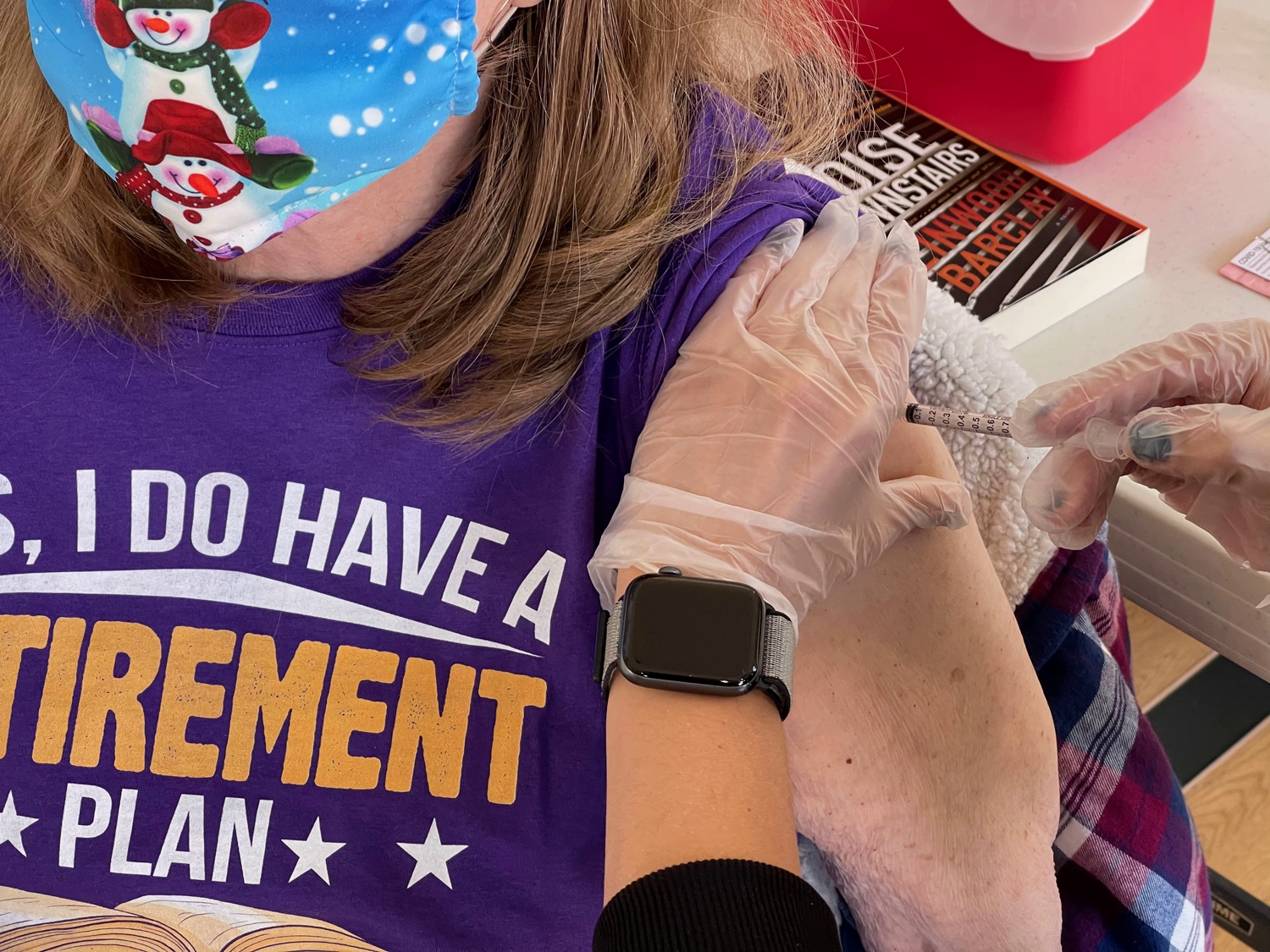
Why are side effects worse after a second dose of COVID-19 vaccine?

I had heard stories about the second dose of COVID-19 vaccine producing more pronounced side effects than the first dose. But I was pleasantly surprised when my second shot produced only a very mildly sore arm for about 24 hours. 

woman receiving vaccination in left arm

As more Americans line up for the COVID-19 vaccine, some are anxious about the second-dose side effects, which tend to be stronger than the first. But experts say that the symptoms, which range from a sore arm to headaches and nausea, are a sign that the second dose is doing its job: turbo-charging the immune system’s response to the initial dose, and thus providing more vigorous and long-lasting protection against the virus.

The fence is uncomfortable, but it affords the best view

Iris Schneideris, professor of psychology at the University of Cologne in Germany, discusses ambivalence, or the presence of conflicting emotions.

“It’s appealing to think about the world in black and white. . . . Although this simple view of our inner lives is tempting, day-to-day experience tells us that reality is more complicated and messy than that; it’s full of contradiction,” she writes. But, as uncomfortable as contradictory emotions may be, “being ambivalent comes with many benefits.”

We humans have dumped on the poor pigeon for too long; it’s high time to admire this fascinating, fast, quirky bird

Ron Judd writes in Pacific NW Magazine that pigeons don’t get anywhere near the love they deserve. Sit back and have a good long look at what Judd sees as the good points of these ubiquitous birds.

Maggots, Rape and Yet Five Stars: How U.S. Ratings of Nursing Homes Mislead the Public

The New York Times takes a deep investigative dive into how care facilities for older adults are rated.

Study: 20% fewer seniors in U.S. had serious vision impairment than in prior decade

Here’s some good news: “About 20% fewer adults age 65 and older in the United States have serious vision impairment compared to the prior decade, according to a study published [recently] by the journal Ophthalmic Epidemiology.”

Study confirms that some people age more slowly

People age at varying rates. This article reports on recent research that “found that by the tender age of 45, people with a faster pace of ‘biological aging’ were more likely to feel, function and look far older than they actually were. And that relative sprint toward old age began in their 20s.”

© 2021 by Mary Daniels Brown

Last Week’s Links

There’s No Real Reason to Eat 3 Meals a Day

“Your weird pandemic eating habits are probably fine.”

Of the many aspects of daily living that the COVID-19 pandemic has rejiggered, eating patterns probably rank high on the list. Amanda Mull, staff writer for The Atlantic, describes how she came up with her notion of Big Meal.

A Model and Her Norman Rockwell Meet Again

“The illustrator’s paintings told his stories. Now a teenage subject reveals her own, 67 years later.”

Here’s an interesting story for those of us who grew up with Norman Rockwell’s covers for The Saturday Evening Post.

They can only hold hands, but for Britain’s elderly, first touch with a relative ‘means everything’

A year of pandemic isolation protocols has left us numb to how this disease has changed our lives. This is a heartwarming story of how people are beginning to get some of their humanity back.

Finding Your Voice After 50

“While many manuscripts worthy of publication land on the desks of 20-something-year-old agents, a great majority are written by women over the age of 50 and targeted to a more mature reader,” writes Heidi McCrary. 

For aspiring writers over 50, McCrary, “a woman 50+ . . . looking forward to the second half of my own story,” has four pieces of advice.

Friends by Robin Dunbar review – how important are your pals?

Rachel Cooke reviews the book Friends by Robin Dunbar, which concludes that “the quality of our relationships determines our health, happiness and chance of a long life.”

Cooke notes, “Dunbar could not have known that his book would be published in a time of such loneliness.” 

Final thoughts

“Do deathbed regrets give us a special insight into what really matters in life? There are good reasons to be sceptical”

Neil Levy, professor of philosophy at Macquarie University in Sydney and senior research fellow at the Uehiro Centre for Practical Ethics at the University of Oxford, examines the concept of deathbed regrets. In order to find out what really matters in life, he says, one method is to ask the dying what they most regret. “There’s very little systematic research on this question, but there’s some unsystematic research,” he writes. 

Read why Levy says, “I’m not convinced that the reported regrets of the dying provide us with reasons to think them valuable.”

© 2021 by Mary Daniels Brown