Lunch Bunch: Chambers Bay Grill

We’ve never been to nearby Chambers Bay Golf Course, though we have seen in on television. When a trip to the Chambers Bay Grill came up on our monthly Lunch Bunch schedule, we welcomed the chance to go see the place for ourselves. A lot of other people had the same idea, as we had a group of 28—enough that we had to use both of Franke Tobey Jones’s busses.

Chambers Bay Grill
6320 Grandview Dr W, University Place, WA 98467
Phone:(253) 460–4653

When our activities director called to ask if the Grill could handle that many, they told her something like “That’s nothing after the U.S. Open.”

My experience, though, was that our large group was a bit too much for them to handle all at once. We took up about two-thirds of the small dining room. My husband and I were at the table whose order was put in last. People at one of our group’s other tables were having their dishes cleared away just as we began receiving our food.

Another woman at my table and I ordered the salmon. It was a nice piece of fish but was overcooked and therefore dry. My husband had the marinated skirt steak, which he said had a good flavor.

I see that others’ experiences also vary widely. Chambers Bay Grill gets the following ratings on major social media sites:

  • 3.5 out of 5 stars on Yelp
  • 4 out of 5 stars on Trip Advisor
  • 2.9 out of 5 stars on Zomato (previously Urban Spoon)
  • 4.6 out of 5 stars on Facebook
  • 6.9 out of 10 stars on Foursquare

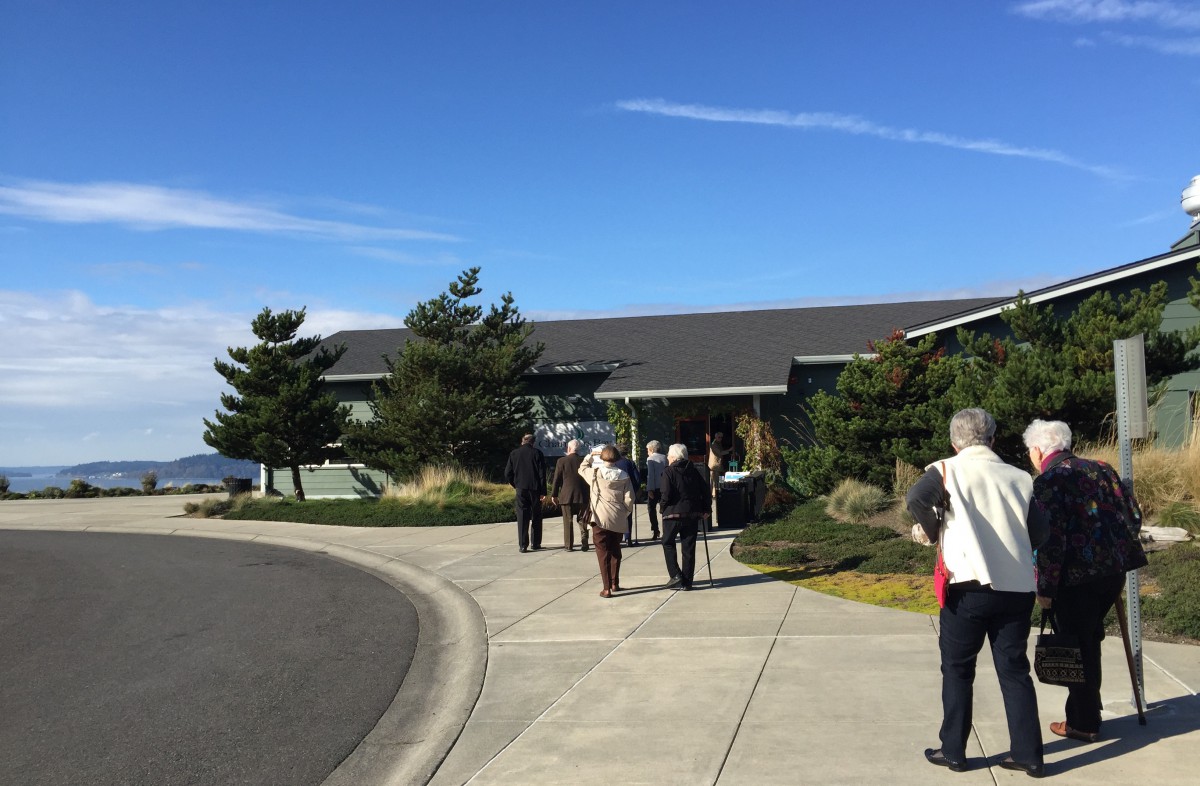
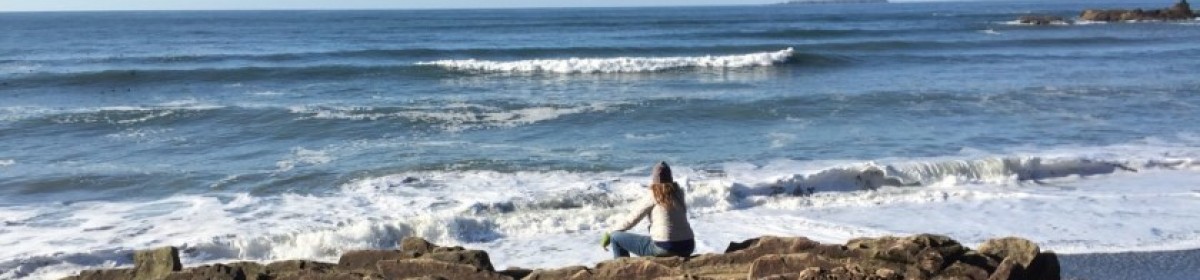
Many people will tell you that you go to Chambers Bay Grill not primarily for the food but for the view. The place is beautiful, as we had seen on the TV broadcast of last summer’s U.S. Open golf tournament. I was hoping to get a few more scenic photos after lunch, but since we were among the last people to finish eating, I didn’t get a chance. The only photo I got was the one at the top of this post, which I took as we arrived. But if you do an internet search for Chambers Bay, you’ll find lots and lots of beautiful photos.

I think my husband and I should return to Chambers Bay Grill on our own sometime to check out both the beautiful view and food that isn’t prepared under such rushed circumstances.

Three Things Thursday

Another Thursday, another edition of Three Things Thursday, the purpose of which is to “share three things from the previous week that made you smile or laugh or appreciate the awesome of your life.”

Three Questions and Answers

1. What’s that bird?

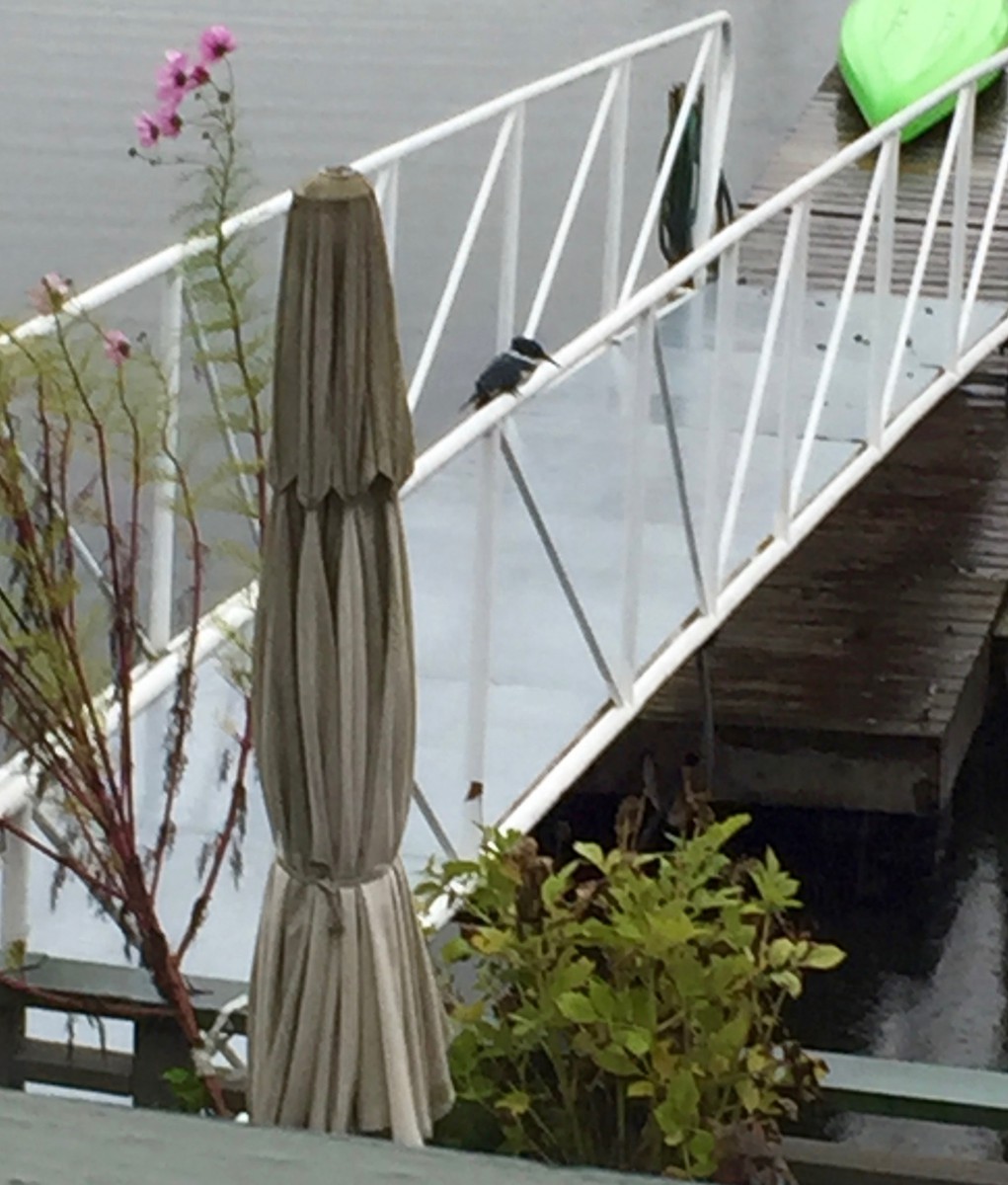
That’s the question we asked our waitress when we saw this bird:

Belted Kingfisher

We had taken the Tacoma Narrows Bridge over to Gig Harbor for a follow-up visit with the eye doctor after my cataract surgery. When we stopped for lunch after the visit, we saw this guy. Soon another bird who looked just like this one appeared as well. They both perched, though not together, where they could watch the water. We assumed they were probably watching for fish to eat.

The waitress didn’t know what kind of bird this was, so when we got home we consulted Birds of the Pacific Northwest Coast by Nancy Baron and John Acorn.

Answer: It’s a belted kingfisher. And yes, they were having lunch, too, watching for fish to dive for.

2. What does that mean?

While watching the belted kingfishers, we spotted this sailboat moored nearby in the marina:

Sailboat Zaftig

When I asked my husband what zaftig means, he checked his phone.

Answer:

adjective, Slang.
1. (of a woman) having a pleasantly plump figure.
2. full-bodied; well-proportioned.

—Source: dictionary.com

3. What WERE they thinking?

That’s what I thought when I saw these bushes for the first time:

hedge bushes

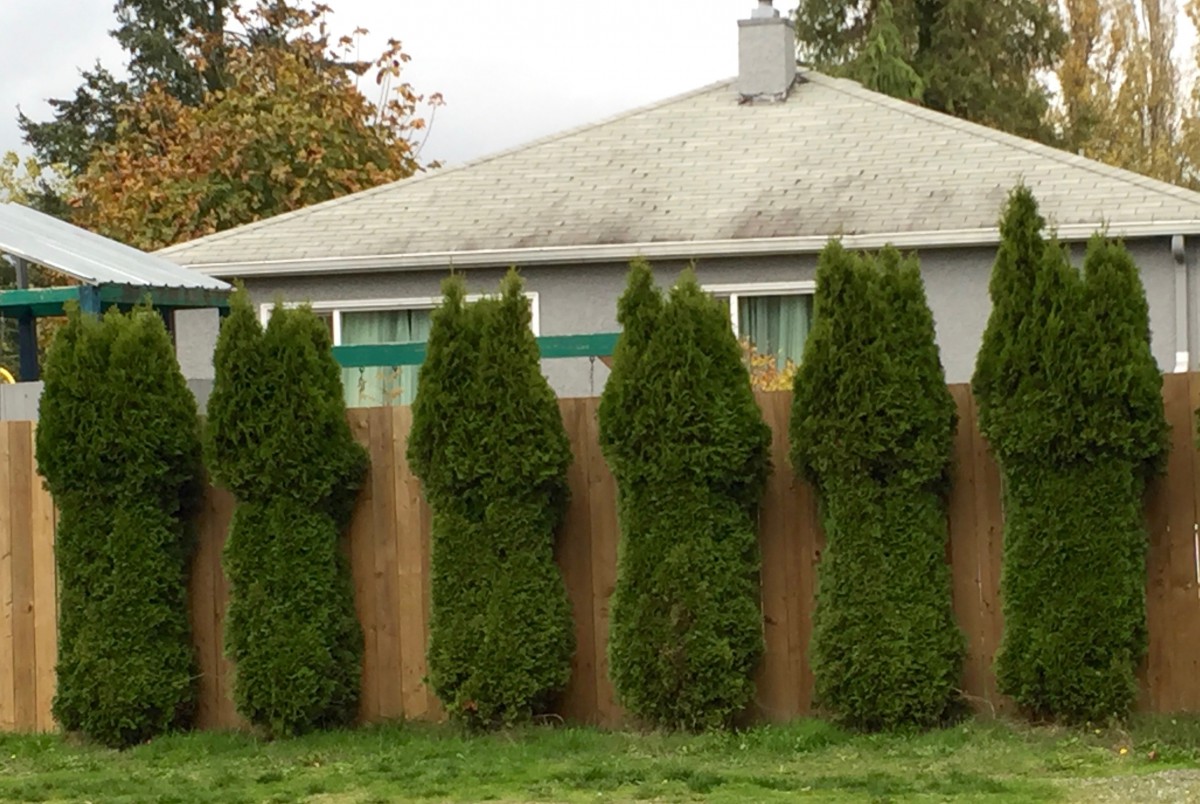
I wondered why anyone would sculpt their bushes into this suggestively phallic shape. When I noticed similarly shaped bushes at other houses, I assumed that the home owners must employ the same landscaping service.

On a recent Franke Tobey Jones outing, I heard a woman on the bus explaining this mystery to her friend.

Answer: The deer, which we have a lot of, eat the bushes. The tops of the bushes are wider because the deer can’t reach that high.

So I was right: The home owners do have the same landscaping service.

Lewis Army Museum

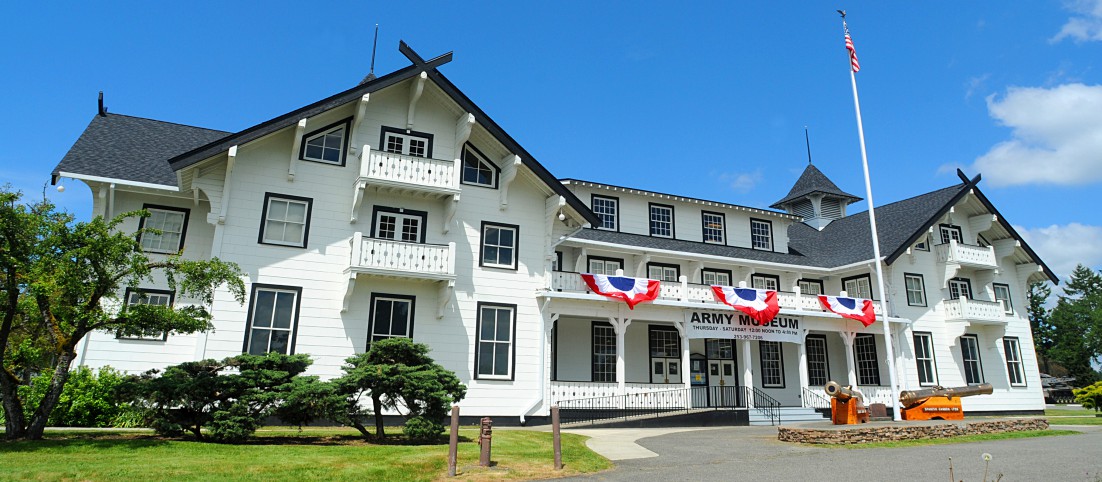
Tacoma has a large military presence in the form of JBLM (Joint Base Lewis-McChord), a combination of the former Army’s Fort Lewis and McChord Air Force Base. Visible from I 5, which runs through JBLM, is the Lewis Army Museum, housed in a distinctive historical building. Every time I drive by the museum I think that we should visit, but we hadn’t yet made it there. So when a Franke Tobey Jones outing to the museum came up, we signed up.

There was so much information at the museum that, to avoid getting overwhelmed, I focused on two areas: military history of the Pacific Northwest and women in the military.

I apologize for the quality of some of the photos here. The artifacts were well lighted, and it was impossible to photograph many of them without the glare of a light off the reflective surface of the protective cases and picture frames.

Click on any photo to see a larger version.

Military History of the Pacific Northwest

A significant part of this history is the Corps of Discovery, also known as the Lewis & Clark expedition (1804–1806). According to a sign at the museum:

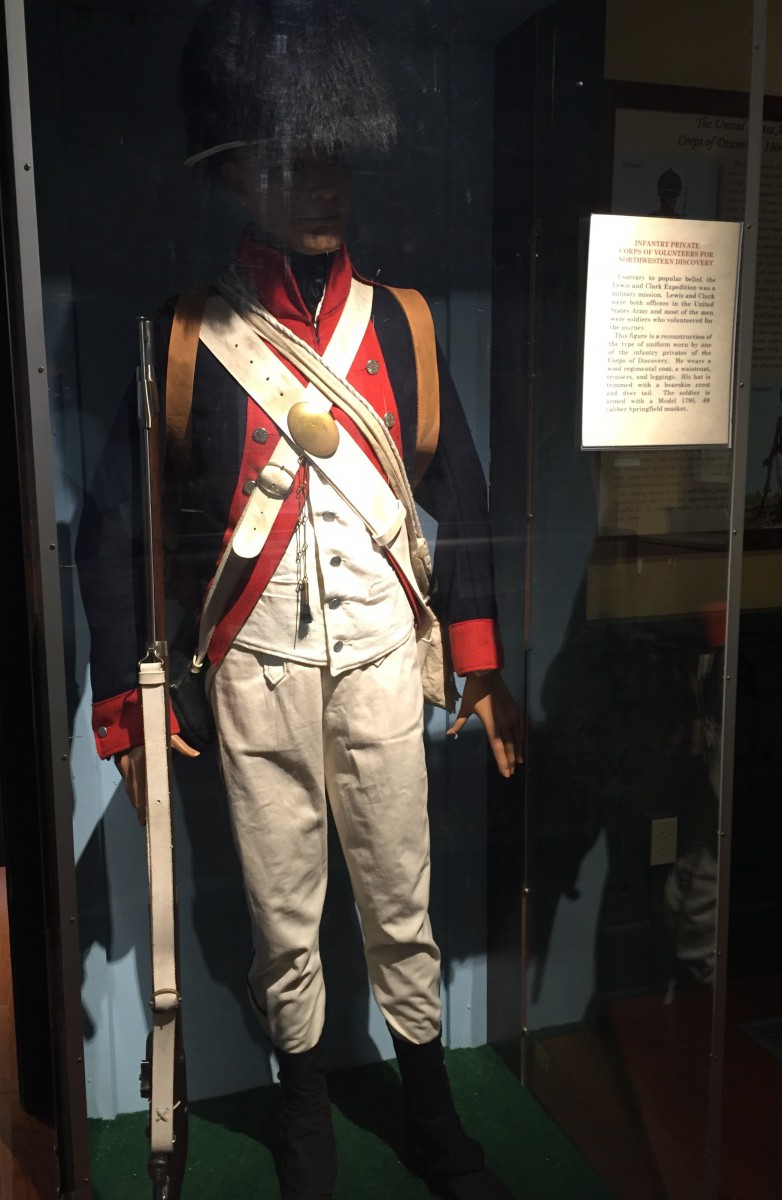
Contrary to popular belief, the Lewis and Clark Expedition was a military mission. Lewis and Clark were both officers in the United States Army and most of the men were soldiers who volunteered for the journey.

The figure in the photo wears a replica of the uniform worn by the infantry privates of the Corps of Discovery:

Replica Uniform: Corps of Discovery

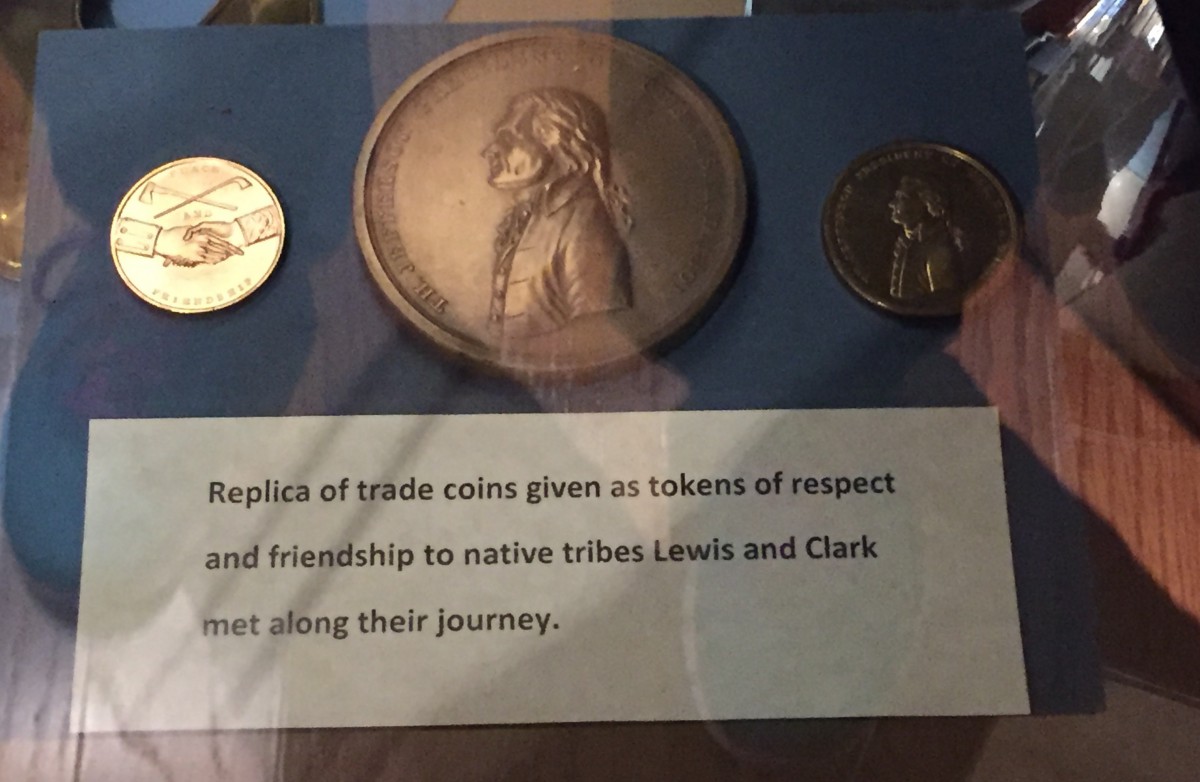
Here are replicas of the trade coins Lewis and Clark exchanged with the Native Americans they met along the way:

Replica trading coins from Lewis & Clark Expedition

In August 1849 the U.S. Army established Fort Steilacoom, a short distance away from current JBLM, at the request of settlers in the Puget Sound region who feared both the Native Americans and the British. The post protected local settlers during the Puget Sound Indian War of 1855–1856. When the Civil War began in 1861, most of the regular troops left Fort Steilacoom and were replaced by volunteers from Washington, Oregon, and California. In 1868 the land was turned over to Washington Territory.

In 1904 the Army held training maneuvers, known as the American Lake Maneuvers, in an area near Tacoma. The maneuvers were so successful that a group of Tacoma businessmen offered to donate 140 square miles of land if the Army would build a permanent installation. On January 6, 1917, Pierce County voters approved a bond to purchase appropriate land. The land had not yet been legally acquired when the United States entered World War I on April 1917. The landowners agreed to let the County “borrow” the land so that building of the military post could proceed. Pierce County officially transferred title to the land to the U.S. government in November 1919.

Construction of the camp, originally known as Camp American Lake, began in July 1917. The name was changed to Camp Lewis to honor Captain Meriwether Lewis later that month.

Circular Emblem: Fort Lewis, WashingtonAfter World War I ended, the number of troops at Camp Lewis began to dwindle. By 1925, Pierce County residents began to feel that the U.S. Army had not kept up its end of the bargain through which it had received the land. Public sentiment developed that the Army should keep up the military installation or return the land. In 1926 Congress approved money for a 10-year building program at Camp Lewis. In 1927 the War Department announced that Camp Lewis would become a permanent installation thereafter designated Fort Lewis.

Today, it’s obvious that the military is a large part of the local economy. But I had no idea that Fort Lewis had started out as a business deal as much as a military one.

History of Women in the Military

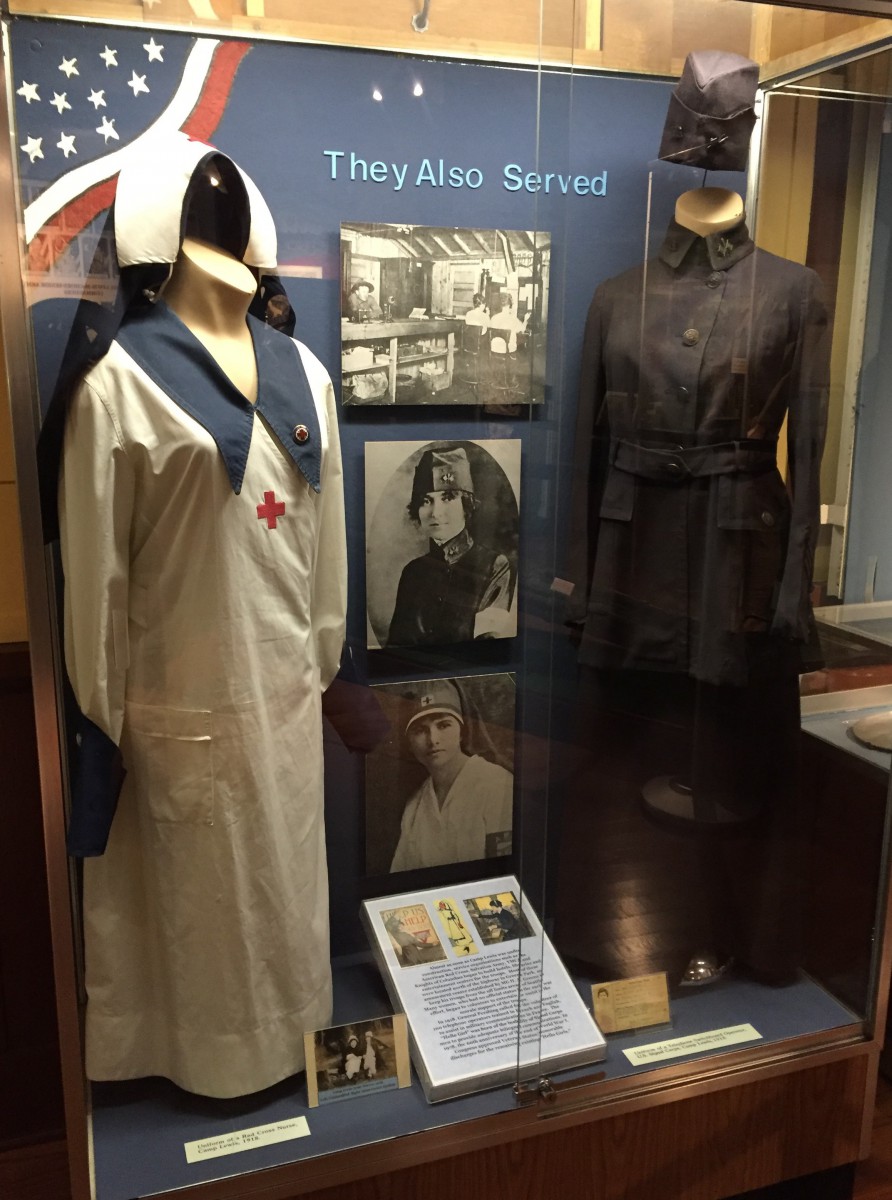
Not surprisingly, the museum contains a lot on the history of women in the military. Here’s a display about women in WW I:

Women in World War I

On the left is a 1918 Red Cross nurse’s uniform from Camp Lewis. On the right is the uniform of a telephone switchboard operator with the U.S. Signal Corps, also from Camp Lewis in 1918.

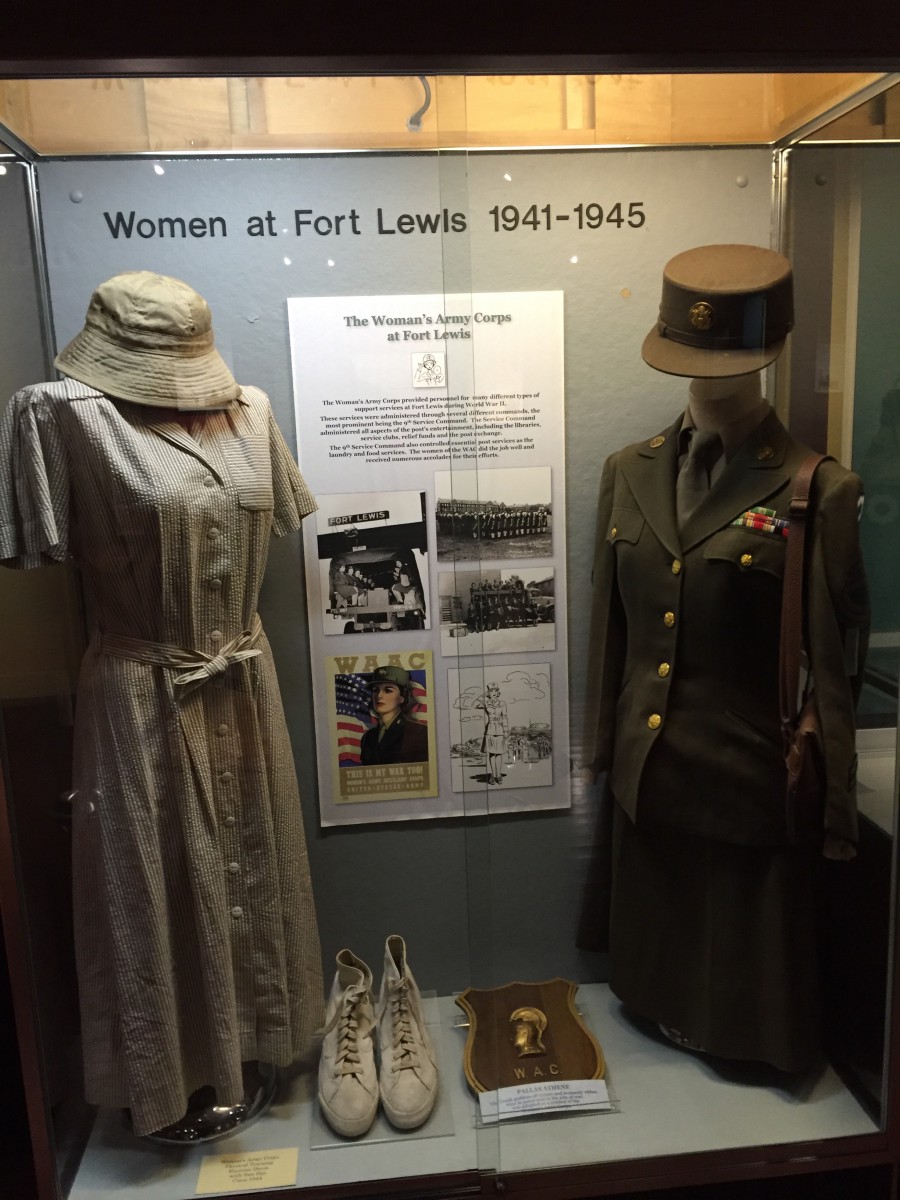
And here’s a display about women at Fort Lewis during WW II:

Women at Fort Lewis 1941-1945

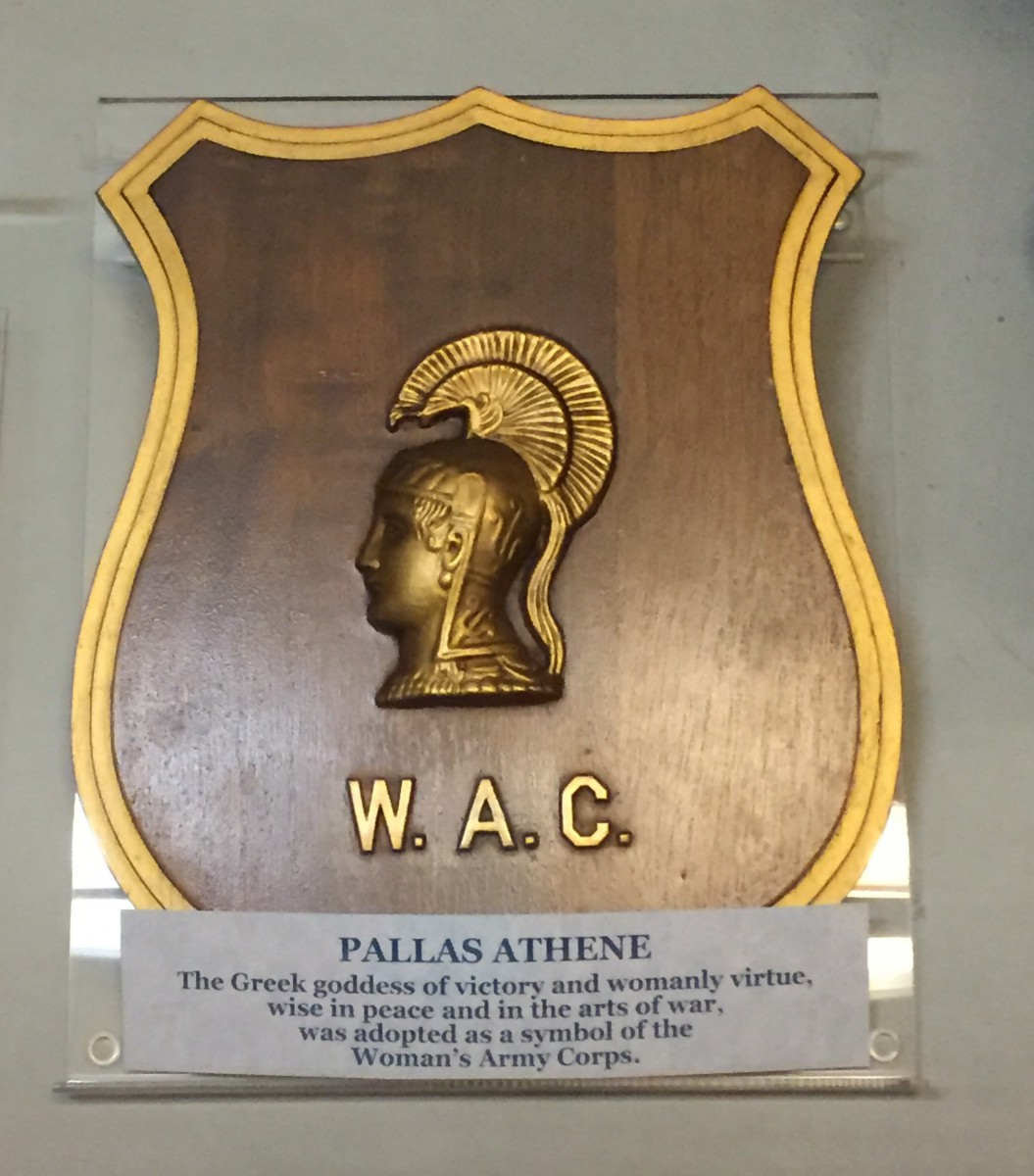
The Woman’s Army Corps (WAC) adopted Pallas Athene, the Greek goddess of victory and womanly virtue, as their emblem:

W.A.C. Crest: Pallas Athene

Here are more photos attesting to women in military history:

scroll divider

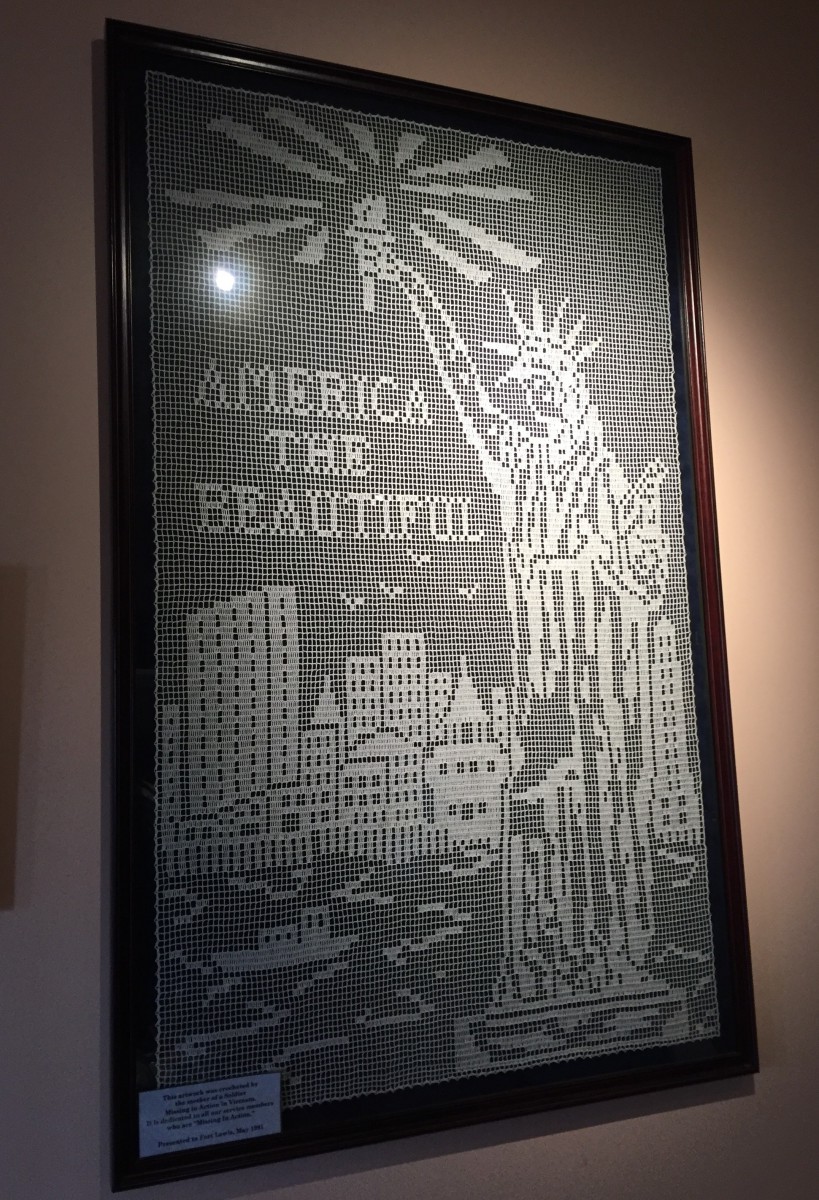
Finally, I cannot leave out this beautiful piece of artwork:

Artwork: Statue of Liberty

The note on the bottom left corner reads as follows:

This artwork was crocheted by the mother of a soldier missing in action in Vietnam. It is decicated to all our service members who are “Missing in Action.”

Presented to Fort Lewis, May 1991

St. Louis’s Gateway Arch

I write a lot on this blog about discovering beautiful and enlightening aspects of my new hometown, Tacoma, WA. But today an article on NPR (National Public Radio) has prompted me to look back on the city where I lived for 42 years, St. Louis, MO.

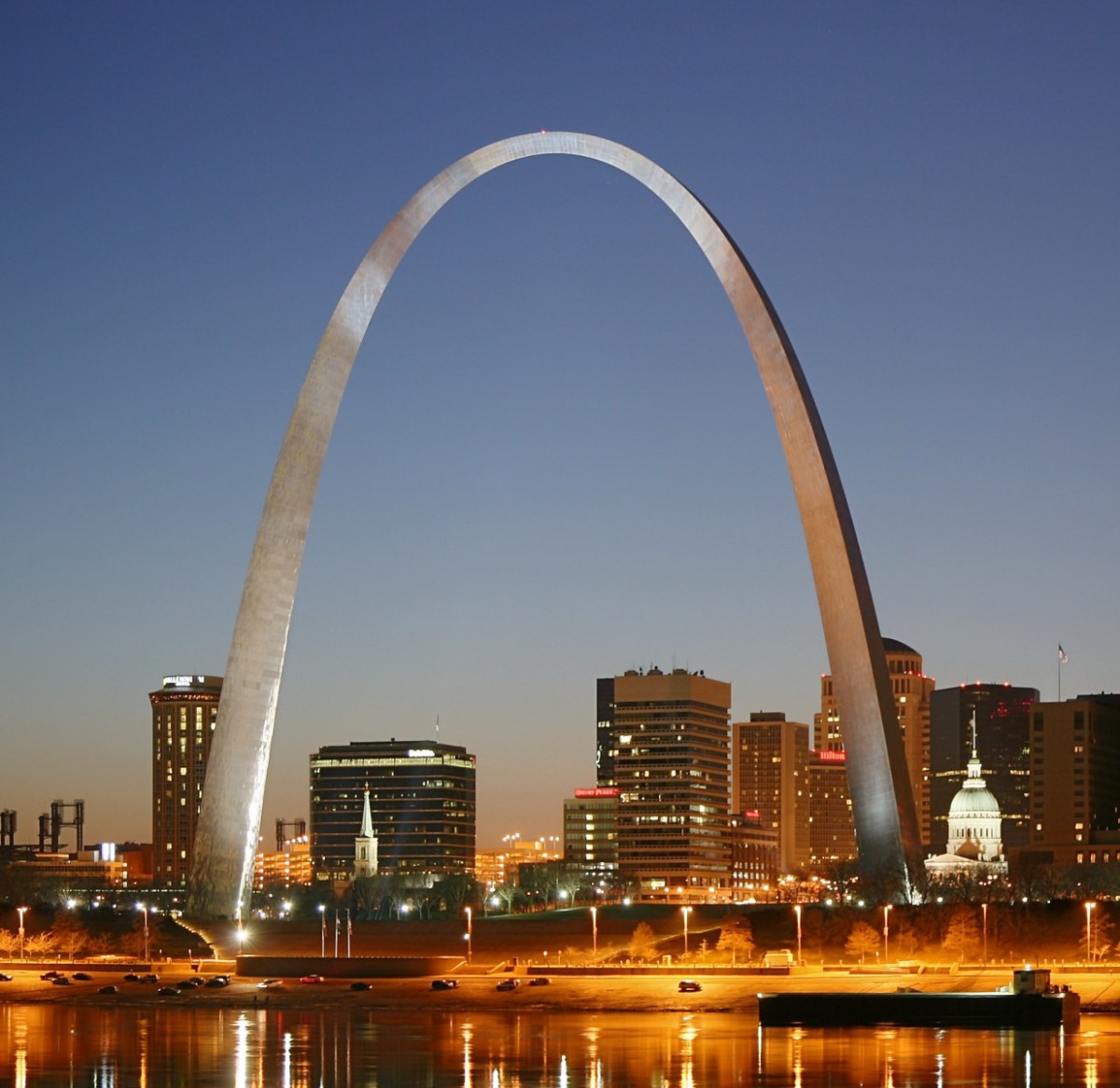
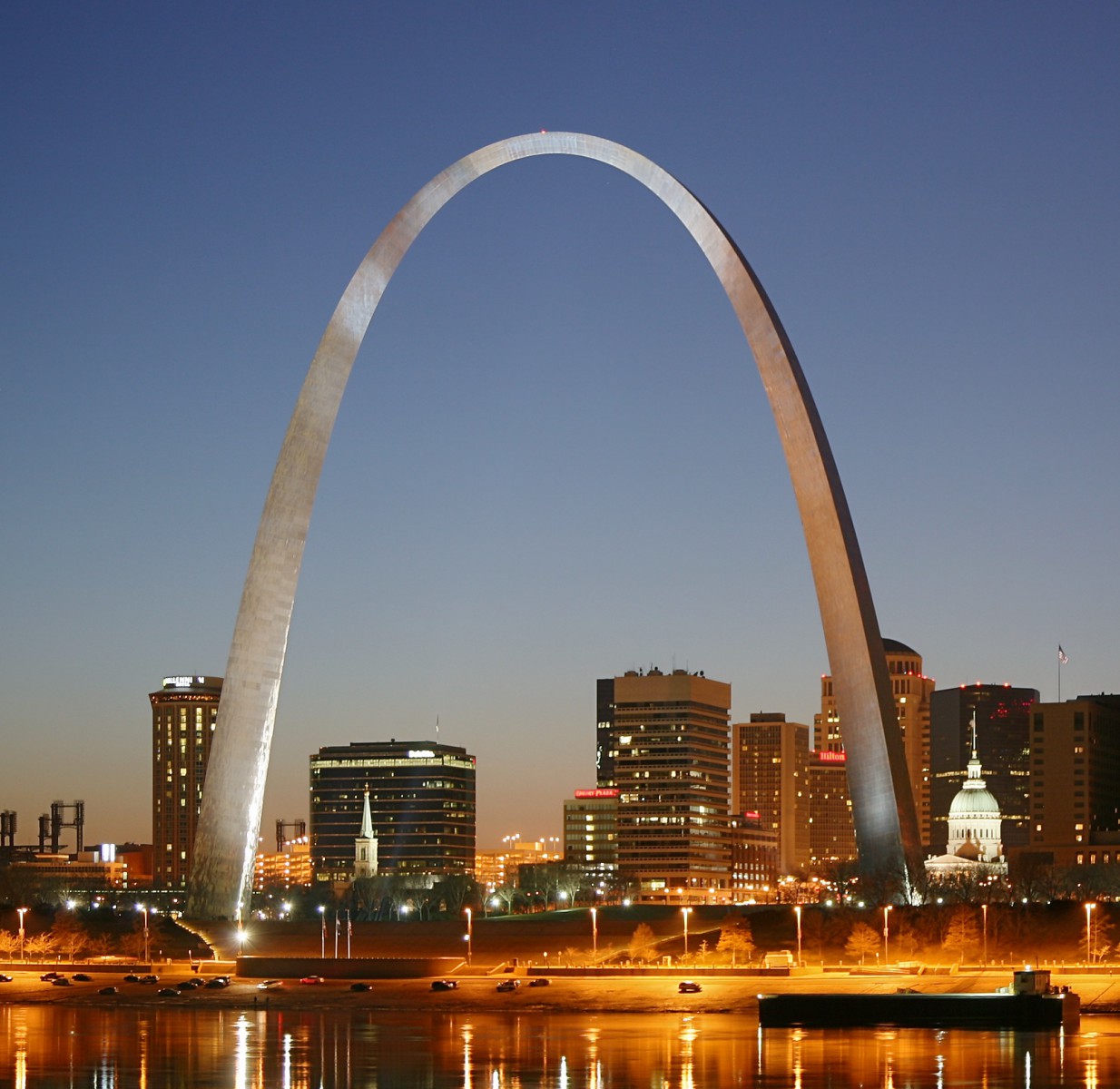
The most iconic St. Louis artifact is the gleaming Gateway Arch, a monument to westward expansion. Whenever we would return from a trip to somewhere east of St. Louis along I 70, I would look for this symbol of home.

When we first moved to St. Louis, I was surprised to learn that a lot of the local people dismissed it as nothing special. This is characteristic of people everywhere: They poo-poo their distinctive landmarks as things designed solely for the amusement of tourists but beneath the consideration of the local inhabitants. But I loved the Arch, this simple yet beautiful shape, from the first moment I saw it.

The stainless-steel clad Gateway Arch sits on the west bank of the Mississippi River near the site of the original settlement of St. Louis. At 630 feet (192 m) tall, it is the tallest monument in the Western Hemisphere. Construction began on the Arch on February 12, 1963, and was completed on October 28, 1965. The monument opened to the public on June 10, 1967. It is the centerpiece of the 91-acre Jefferson National Expansion Memorial, which is maintained by the National Park Service. Underneath the Arch is a museum about westward expansion.

Whenever out-of-town guests came to visit us in St. Louis, we always took them to the Arch. A tram system carries visitors to the top in little cars (that seriously tested my slight claustrophobia) that hold five people. As the cars ascend, they become slightly tilted. Periodically the cars adjust with a distinctive “choonk” sound and forward movement to return to an upright position. I always prepared visitors for this, since it can be a frightening sound and sensation to anyone who isn’t expecting it.

The museum is currently being completely rebuilt. The NPR article As Gateway Arch Turns 50, Its Message Gets Reframed explains how the monument’s message is changing to reflect more accurately how westward expansion occurred:

For all the wonder and appreciation St. Louis’ Gateway Arch monument inspires, some see the message and history of the Arch as divisive.

Here are the key aspects of that divisiveness:

  • the Arch was built to honor St. Louis’ role in westward expansion, a time when Manifest Destiny was used to push Native Americans and Mexicans out of their lands. The museum under the Arch is being redesigned to include that perspective.
  • Racial inequality is another shadow some see cast by the Arch.
  • Many residents of Kansas City, 250 miles west of St. Louis, believe that their city deserves the title of Gateway to the West.

Fifty years after the Arch was built, its anniversary has inspired National Park officials to take a closer look at what the monument represents. When the museum reopens in 2017, it may be known simply as the Arch Museum instead of the Museum of Westward Expansion.

And here it is without its top cut off:

St. Louis Gateway Arch
From Wikipedia Commons

Three Things Thursday

Another fun edition of Three Things Thursday, the purpose of which is to “share three things from the previous week that made you smile or laugh or appreciate the awesome of your life.”

three-things-thursday-participant

Yesterday I had cataract surgery on my right eye. The folks at the eye surgery center had set up a contest that allowed people to vote for their favorite pumpkin creation.

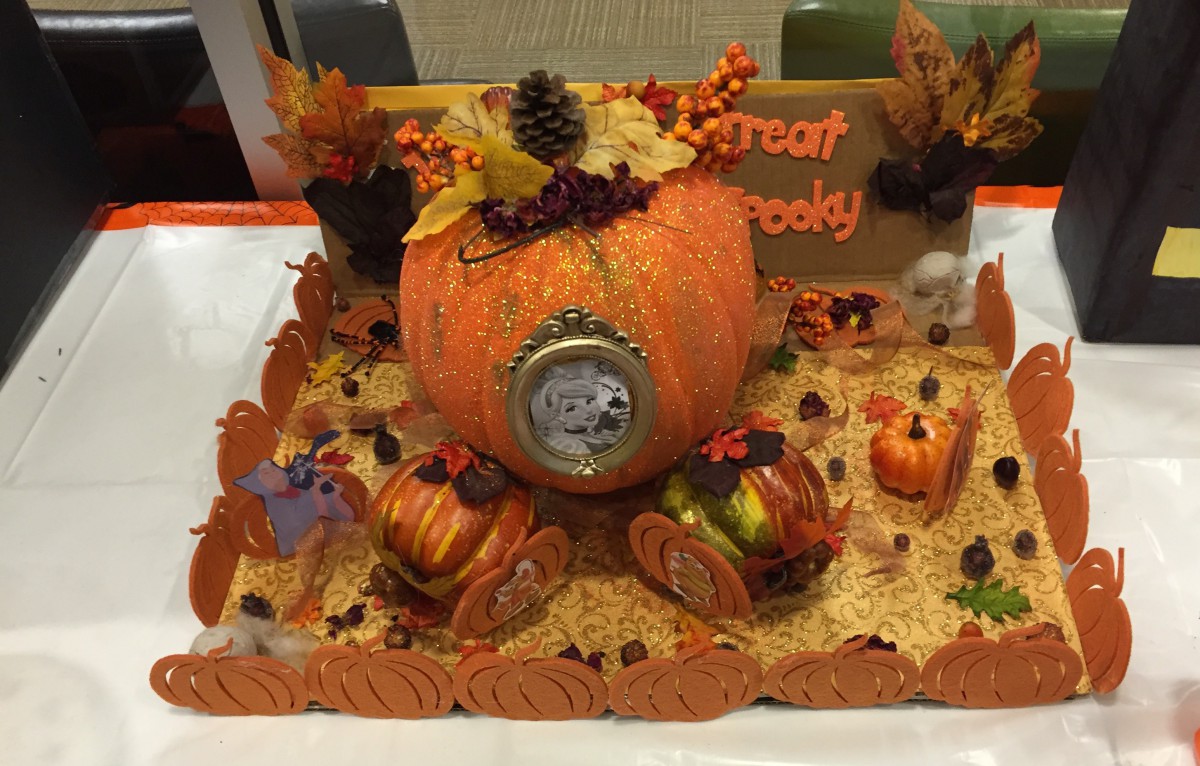
Cinderella’s coach is at the top of this post. Here are three more:

1. Snoopy

I fell in love with this Snoopy, the first of the entries that I saw. The body is a large pumpkin, the paws are two small pumpkins, and the head is a large butternut squash (a pumpkin is technically a squash, so this qualifies) with the stem as the nose.

Pumpkin Snoopy

I never would have thought of using a butternut squash for the head, but once it saw it here, I realized that it is, of course, perfect.

2. Scary Eyeball

I’m not sure if this is supposed to be anything in particular. But it’s definitely an eyeball, and that’s certainly appropriate for an eye clinic.

scary pumpkin eyeball

3. The Stay Puff Marshmallow Man

Do you remember the scene in Ghostbusters when the Dan Ackroyd character can’t control his thoughts and the evil force uses them to create a giant, threatening Stay Puff Marshmallow man? Here he is, in all his evil glory:

Pumpkin Stay Puff Marshmallow Man

I couldn’t decide whether to vote for Snoopy or the Stay Puff Marshmallow man. So my husband and I worked together: I voted for Stay Puff and he voted for Snoopy.

I won’t be going back to the surgery center to see which pumpkin creation won. Actually, I don’t even want to know which one won. I just enjoyed seeing them all.

Happy Halloween, everybody!

Tomorrow is National Cat Day!

Make your preparations early. Tomorrow is National Cat Day:

National Cat Day logo

National Cat Day was founded in 2005 by Pet and Family Lifestyle Expert & Animal Welfare Advocate Colleen Paige to help galvanize the public to recognize the number of cats that need to be rescued each year and also to encourage cat lovers to celebrate the cat(s) in their lives for the unconditional love and companionship they bestow upon us.

The ASPCA (American Society for the Prevention of Cruelty to Animals) estimates that people in the United States own between 74 and 96 million cats. From the very beginning, the internet has been a place where cat lovers post photos of their pets. If you don’t have a cat of your own (what’s wrong with you?), you can find lots of photos on the National Cat Day web site.

But National Cat Day isn’t just about goofy photos. This observance has three serious reasons for existence:

  • to educate people about the number of cats in animal shelters: “Estimates reveal that there are approximately 4 million cats entering shelters every year with 1–2 million being euthanized”
  • to encourage people to “ADOPT….don’t shop” when looking for a pet
  • to advocate for responsible pet ownership by reminding people to spay and neuter their pets
cat sleeping on laptop
Cats are always willing to help you work.

The sponsors of National Cat Day are BLUE Naturally Fresh cat litter and Petco.

Here are a few more web sites to visit for information about pet ownership in the U.S., including information on homeless and unwanted animals, the pet overpopulation crisis, and the importance of spaying and neutering pets:

Notes on Healthy Aging

Graceful Aging Exercises for Everyone

You can’t stop aging, but you can slow down the process with the help of an exercise routine. Even a small amount of activity can help you keep joints mobile, maintain muscle strength, and improve stability. And the best news of all: It’s never too late to start an exercise routine.

The first step in starting an exercise program is to check withy your doctor, who will tell you if there are any activities you should avoid. Certain conditions such as diabetes may also affect the timing of when to take medications and when to exercise.

Begin an exercise program slowly and listen to your body. If a particular exercise is difficult for you or causes you pain, ask your doctor if another exercise might be better for you. And it’s important to start out with a little bit of exercise and gradually increase the amount and intensity.

The easiest exercise to begin with, after checking with your doctor, is walking, which improves cardiovascular fitness, bone strength, and joint mobility. Physiologists recommend aiming for 30 minutes of walking five days a week, but, as with all exercise programs, start with a small amount and gradually build up to longer and more frequent sessions.

In addition to cardiovascular activities such as brisk walking or swimming, a complete exercise program also includes resistance training, such as lifting weights, during two or three of your exercise days each week. These exercises build muscle strength and improve balance, important considerations for avoiding falls.

Tai chi can help build strength, relieve pain

Many senior centers and retirements offer classes in Tai chi, a modified form of an ancient Chinese martial art that emphasizes slow, gentle movements. A recent study published in the British Journal of Sports Medicine found that Tai chi could be an effective exercise suitable for middle-aged and older adults, even those who may have multiple health conditions.

Tai chi is a set of exercises that emphasize breathing control, whole body exercises with bent knees and slow, flowing movements. In addition to strength, it can help to improve posture, balance and concentration, the researchers note.

Hearing Loss Costs Far More Than Ability to Hear

Hearing loss is one of the most common conditions affecting adults, and the most common among older adults. An estimated 30 million to 48 million Americans have hearing loss that significantly diminishes the quality of their lives — academically, professionally and medically as well as socially.

In this article New York Times health writer Jane E. Brody reports that, while one in three people over age 60 has life-diminishing hearing loss, most people wait between five and 15 years to seek help. A large survey by the National Council on the Aging found that those who had hearing aids tended to be more socially active and less depressed, worried, paranoid, or insecure than people without hearing aids.

People without hearing aids also tend to have an increased risk of dementia over those with the devices. Hearing aids may improve cognitive functioning by maintaining auditory input into the brain that are diminished by hearing loss.

Is It Old Age, or A.D.H.D.?

Those of us who grew up in the 1950s and 1960s never heard of ADHD, or attention deficit hyperactivity disorder. While ADHD is nowadays a diagnosis given to children who have trouble paying attention in school, back when we were in school children who struggled were told to settle down, quiet down, or stop daydreaming out the window.

In 2012, in one of the only epidemiological studies done on A.D.H.D. in older adults, a large Dutch population study found the condition in close to 3 percent of people over 60.

Although there’s little data on the prevalence of ADHD in older adults, increased awareness of the condition, now thought to persist throughout one’s lifetime, is bringing more older adults to specialty clinics for diagnosis and treatment.

Dr. [Thomas] Brown [associate director of the Yale Clinic for Attention and Related Disorders at the Yale School of Medicine] said, “Most doctors are not thinking of A.D.H.D. as a characteristic of somebody who is 60 or over.” Hence, the condition may be overlooked in the 80-year-old who has trouble staying engaged at the senior center, despite a lifelong history of inattention. “They figure it’s just cognitive decline from aging” or diagnose depression or anxiety in such patients, which may or may not be the case, he said.

Many older adults who have trouble paying attention or sitting still are thought to have cognitive impairment caused by aging. But if the person has had the same symptoms throughout life, diagnosis and treatment for ADHD may greatly improve their condition.

Three Things Thursday

Thursday is again upon us. Time for another entry of Three Things Thursday, the purpose of which is to “share three things from the previous week that made you smile or laugh or appreciate the awesome of your life.”

Singing Group

Two or three months ago Tacoma Metro Park District put out a notice that they were thinking of starting a singing group for their 50 and Over activities program. I was in one community chorus or another for several years back in St. Louis. After moving to Tacoma I had looked around casually for a singing group but didn’t find anything in my league. What I mean by that is: if the group requires an audition, it’s out of my league.

I finally got word that there was enough interest in the Park District’s group that they were moving ahead. I attended my first meeting on Monday. There were about seven people there, plus two employees of the Park District. One of the women had brought some printouts of popular old songs such as Let Me Call You Sweetheart and Mr. Sandman. We sang through a few of those songs, without accompaniment. There is no money in the budget to hire someone to play the piano, but there may be a possibility of finding a volunteer.

The choruses that I participated in before sang in four-part harmony accompanied by an accomplished pianist. We prepared real music such as Handel’s Messiah, Vivaldi’s Gloria, and an assortment of popular tunes, and we performed twice a year. Therefore, what I found on Monday isn’t exactly what I was expecting. But I’ll give it a few more weeks to develop. As the group’s existence gets publicized more widely, maybe more people will show up and a more formal structure will develop. I don’t play to stay if it remains just a few people getting together once a week to sing old songs without any accompaniment, not even a pitch pipe.

But the experience did remind me how much I enjoyed participating in a community chorus. I should probably start looking again, more seriously this time, for one that’s appropriate for my level.

Return of the Writing Mojo

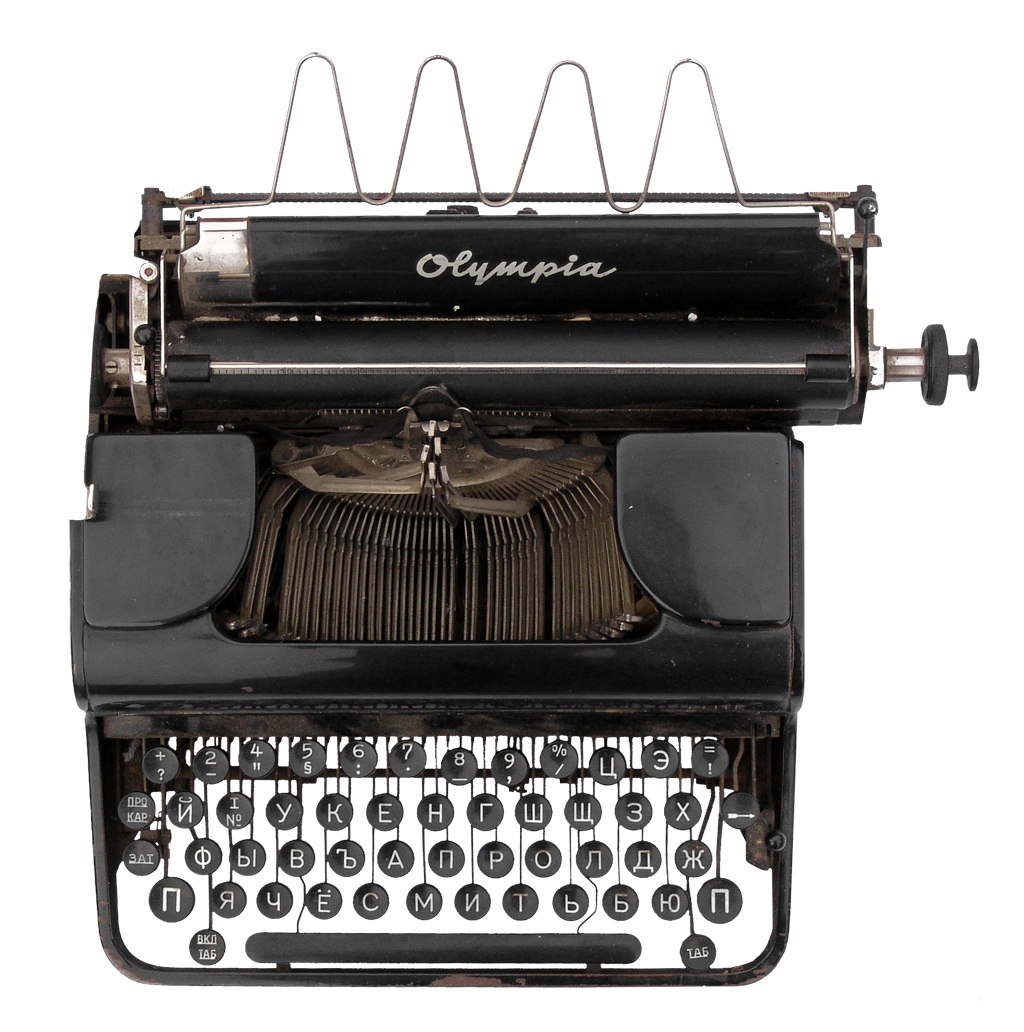
typewriterI’ve been having a hard time with my writing lately. I’ve been at it long enough to know that the creative process ebbs and flows, and a writer has to be prepared to soldier on when the going gets tough and trust that the mojo will return. I’ve been gritting my teeth and continuing to type, even though only pretty pedestrian prose was showing up on my computer screen.

But a couple of days ago, the mojo finally returned. It always shows up in the same way: I wake up at about 4:00 AM just full of ideas. Then, whole passages of perfect prose begin to form themselves inside my head. In the past I’ve told myself that those passages would still be in my head later, then turned over and gone back to sleep. But I’ve learned that the passages will, in fact, not be there later, and I’d better get up right away and write them down before they evaporate.

It’s an exhausting process, but also heavenly.

Play Ball!

It’s my favorite time of the year: baseball playoff season.
St. Louis Cardinals logoMy beloved St. Louis Cardinals had the best record in baseball this season, so they should be in the World Series, right?


Wrong. They came up against their archrivals, the Chicago Cubs, who won the wild card spot. The Cardinals and the Cubs have been playing since 1898, so this rivalry has had lots of time to fester. In a short series, any team might be able to beat any other team. That’s what happened in the best-of-five division series: The Cubs beat the Cardinals. And that’s why they play the games instead of just figuring the whole thing out on paper.

But in the next round, which is a best-of-seven series, the New York Mets swept the Cubs to win the National League pennant. I find some consolation in that, but not much.

The American League is still working on determining who will meet the Mets in the World Series. Right now the Kansas City Royals lead the Toronto Blue Jays by three games to two. If the Royals win tomorrow, they’ll advance to meet the Mets. But if the Blue Jays win tomorrow, there will be a winner-takes-all game on Saturday.

The World Series is an anxious time if your team is playing. But when, like this year for me, your team is not there, the Series takes on a kind of Zen aura. Then I can appreciate the game for its own sake. There’s a purity in being a disinterested observer watching the game unfold, a purity unsullied by the ecstasy of victory or the agony of defeat. Such a moment elevates my appreciation of the essence of the game.

And of course I’m only writing all that purple prose because this year, my team won’t be there.
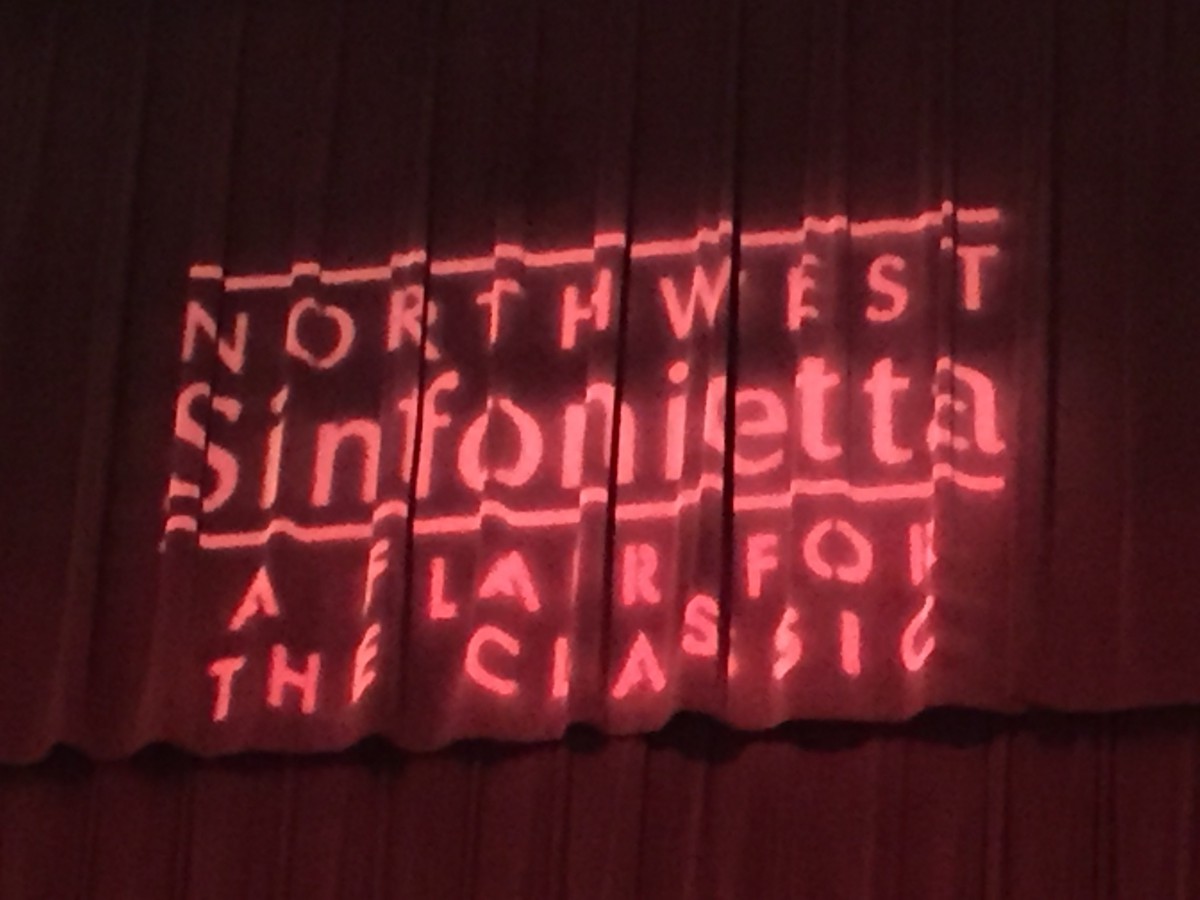
Northwest Sinfonietta

For a small city, Tacoma has a surprisingly vibrant arts scene. In fact, October is Tacoma Arts Month. On Saturday night we attended our first performance by one of the region’s outstanding arts organizations, the Northwest Sinfonietta (NWS).

The NWS originated with a group of musicians who came together for a one-time special concert honoring the 200th anniversary of Mozart’s death in December 1991. It has now grown into a chamber orchestra comprising 35 professional musicians.

What is a chamber orchestra?

Definition: Musical group that is larger than a chamber ensemble but smaller than a full-size orchestra, creating a perfect balance between intimacy and power.

—from the concert program

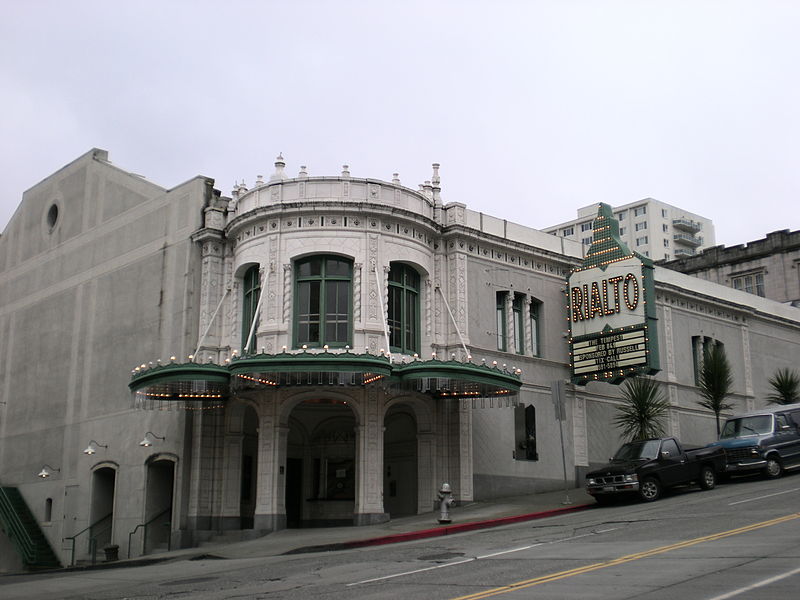
The NWS performs a season of concerts in Seattle, Tacoma, and Puyallup. We attended the performance at downtown Tacoma’s Rialto Theater, one of four venues in the Broadway Center for the Performing Arts.

public domain photo of Rialto Theater from Wikipedia
public domain photo from Wikipedia

The Rialto was built in 1918 as a movie theater. It gradually fell into disrepair but was rehabilitated as a performing arts venue in 1991. It was added to the U.S. National Register of Historic Places in 1992.

On Saturday night we heard the orchestra perform the following pieces:

Music for the Theatre by Aaron Copland (1925)
Piano Concerto No. 20, K. 466, by Mozart (1785)
Symphony No. 8, Op. 93, by Beethoven (composed 1812, premiered 1813)

The Rialto now, since its renovation, has 738 seats. Because the theater and the orchestra are both small, patrons get an intimate, up-close-and-personal experience much different from that of attending a symphony orchestra performance in a large hall. The conductor, David Lockington, increased this personalized feeling when he turned to face the audience and explained the upcoming music before both the Copland and the Beethoven pieces. In all my years of attending symphony performances in St. Louis, Tanglewood (summer home of the Boston Symphony Orchestra), and Seattle, I’ve seen a conductor do that only once.

I’m looking forward to our next two NWS performances, next month and next April.

Three Things Thursday

Once again, it’s time for Three Things Thursday, the purpose of which is to “share three things from the previous week that made you smile or laugh or appreciate the awesome of your life.”

three-things-thursday-participant

It’s Pumpkin Thursday!

It’s fall, or the Season of the Pumpkin.

(Click on any photo for a larger version.)

Awesome Pumpkin #1

Pumpkin Centerpiece

This is the centerpiece from our table at last night’s quarterly dinner for independent-living residents here at Franke Tobey Jones. These dinners are always awesome for two reasons:

(1) They are about the only time when all of us from the three independent-living sections get together. It’s good to see a lot of people I don’t often cross paths with in other activities.

(2) The food is always very good. This time Chef Tim presented us with the following menu:

mixed green salad with berries and raspberry vinegarette dressing

salmon Louie (salmon smothered in crab)

roasted pork loin in mustard sauce

asparagus

couscous with carrot chunks

apple turnovers with optional toppings: caramel, cinnamon whipped cream, and walnuts

Awesome Pumpkin #2

Pumpkin Blackberry Ice Cream

On our trip to Winthrop, WA, we stopped at Sherry’s Sweets downtown for some ice cream. There were so many tempting flavors that I couldn’t pick just one. After much deliberation, I went with two seasonal favorites, pumpkin and wild blackberry. They were so good that I still can’t stop thinking about them.

Awesome Pumpkin #3

Pumpkin Spice Coffee

Yes, it’s time for pumpkin spice coffee once again. I’ll change things up occasionally with a cup of Trader Joe’s pumpkin chai tea.

scroll divider

Until next week, I wish all of you a big dose of awesomeness!