Last Week’s Links

Graeme Edge, Drummer and Co-Founder of the Moody Blues, Dies at 80

“Many of their songs incorporated his spoken-word poetry, making them pioneers in the prog-rock movement of the late-1960s and ’70s.”

The Moody Blues are probably best remembered for “Nights in White Satin” (1967), a darkly ruminative song that ends, in the version included on their album “Days of Future Passed,” with “Late Lament,” written by Mr. Edge and read by the keyboardist Mike Pinder. (It was missing from the shorter version released for radio.)

The New Retirement: How Golden Girls are Redefining the Golden Years

The golden years are getting a makeover. Old-school thinking about retirement is being called out, in many cases led by women who are challenging the status quo. We’re the same women who broke glass ceilings and forged new definitions of work-family balance and partnership. We’re the same women creating new role models as business owners and leaders proving age is not a limiting factor.

Cindy Morgan-Jaffe, “a nationally certified money, life and recovery coach,” explains what the redefinition of retirement by these women will look like.

This tribe helped the Pilgrims survive for their first Thanksgiving. They still regret it 400 years later.

“Long marginalized and misrepresented in U.S. history, the Wampanoags are bracing for the 400th anniversary of the first Pilgrim Thanksgiving in 1621.”

Here’s an illustration of how history has marginalized native peoples and rewritten events to produce a glowing, aggrandizing national narrative.

If history is a guide, schools will start requiring COVID vaccines

An examination of the history of vaccination mandates for schools, in comic form.

The school that pioneered polio shots will give kids the coronavirus vaccine, too

Jackie Lonergan, age 75, recalls when she and other second graders at Franklin Sherman Elementary School in McLean, VA, received their polio shots on April 26, 1954—“the very first children in the country to receive the polio vaccine as part of a massive national trial to test the immunization before offering it to the general public.”

Recently First lady Jill Biden and U.S. Surgeon General Vivek Murthy were at Franklin Sherman “to help launch another mass pediatric vaccination campaign — this one aimed at protecting children ages 5 to 11 from covid-19.”

A Brief History of the Crockpot on its 50th Anniversary

The Rival Crockpot made its debut in 1971 at a housewares show in Chicago.

I’m willing to bet most of us had one of these in our kitchens, and probably many of us still do. But when I searched a couple of sites for free images, the only photos I could find for either “crockpot” or “slow cooker” were pictures on an Insta-Pot. I wish I still had my avocado-green crockpot—trendy at the time—to photograph, but it has been replaced by an Insta-Pot since we moved into a retirement community and had to downsize.

Did Covid Change How We Dream?

“All around the world, the pandemic provoked strange nocturnal visions. Can they help shed light on the age-old question of why we dream at all?”

Brooke Jarvis takes a deep dive into this topic in the New York Times Magazine. You can listen to the article if you’d prefer that to reading.

Follett’s “Never” Shines With the Horrific Brilliance of a Nuclear Bomb

“Now, at age 72, he has given us a book that could be his most important.”

“Follett has updated the nuclear-disaster narrative for these crazier, more complex times. Never should scare the you-know-what out of you,” writes Dennis Hetzel.

© 2021 by Mary Daniels Brown

Last Week’s Links

Medicare Advantage is cheaper for a reason — beware

“There is no clear-cut right or wrong choice. The key is to make an informed choice,” writes Carla Fried. I remember feeling absolutely overwhelmed by having to make the choice when signing up for Medicare (in the U.S.). Here’s some information to help you make an informed choice.

Before signing up for Medicare I took an explanatory class at the local community college. It offered the necessary basic information, including definitions of key terms, to help me understand everything else. But choosing appropriate plans was still an enormous project. I recommend that you look for some classes or workshops at a community college or community center near you and that you take full advantage of your 6-month sign-up period.

How the TV Dinner Revolutionized American Life

I wouldn’t touch one of these now, but I do enjoy reading the history of items like this, which “revolutionized middle-class life in the mid-20th century–especially the lives of the women who were expected to put dinner on the table.”

Can you reduce your Alzheimer’s risk with diet and behavior? It’s not that simple

As with all articles of this type, digest the information but be sure to consult other sources as well, especially your own health-care providers.

‘Vax’ is Oxford English Dictionary publisher’s 2021 Word of the Year

Last week we had Merriam-Webster’s new additions to its dictionary. This month we get the story on the Oxford English Dictionary.

A woman convinced her husband that he had Alzheimer’s. Police say she stole $600,000 from him over time.

I sure hate to see reports of incidents like this, but it’s probably good for us, as well as families and caregivers, to be aware of how this can happen.

Burn, baby, burn: the new science of metabolism

Attach the same caveat—“be sure to consult other sources as well, especially your own health-care providers”—to this as to the previous article about diet. In fact, attach the caveat to the article below as well. 

This is an informative article about how science’s understanding of how metabolism works is evolving, including research published this summer that challenges previously accepted wisdom about how aging affects metabolism.

How to maintain a healthy brain

Kailas Roberts, an Australian psychiatrist and specialist in brain health, has some advice on not only how to avoid dementia, but also “optimising brain function throughout your lifespan.”

Richard M. Ohmann, 90, Dies; Brought Radical Politics to College English

“Inspired by the antiwar movement of the 1960s, he helped transform humanities by making room for subjects like women’s studies and Marxist criticism.”

In December 1968 Richard M. Ohmann orchestrated the passage of antiwar resolutions at the annual conference of the Modern Language Association. “ The very notion that a scholarly organization should take a stand on nonacademic issues was practically unheard-of.”

Ohmann was ahead of his time with insights that are in the news today:

starting in the 1970s, Dr. Ohmann turned his gaze inward, writing a series of books exposing what he saw as the complicity of higher education, and in particular the study of English literature, in the perpetuation of class, gender and racial hierarchies.

© 2021 by Mary Daniels Brown

President Biden Declares November National Native American Heritage Month | Currents

President Joe Biden has issued a proclamation naming November 2021 as National Native American Heritage Month, a time to “celebrate the countless contributions of Native peoples past and present, honor the influence they have had on the advancement of our Nation, and recommit ourselves to upholding trust and treaty responsibilities, strengthening tribal sovereignty, and advancing Tribal self-determination.” He also touted the American Rescue Plan as the most significant funding legislation in U.S.history, and named Friday, November 26, 2021–popularly known as the consumer-driven Black Friday–as Native American Heritage Day.

Source: President Biden Declares November National Native American Heritage Month | Currents

Last Week’s Links

At 91, Clint Eastwood throws a punch and rides a horse in his new movie. And he’s not ready to quit

Eastwood’s first film behind the camera, “Play Misty for Me,” came out half a century ago, and he’s still at it. At age 91, with his new “Cry Macho” set for a Sept. 17 release in theaters and on HBO Max, Eastwood — whose acting credits date to 1955 — is perhaps the oldest American ever to both direct and star in a major motion picture.

Pandemic prompts more teachers to consider early retirement or new career

New research into how the pandemic has affected teachers found that “during the pandemic, teachers became less certain that they would work in the classroom until retirement. In March 2020, 74% of teachers said they expected to work as a teacher until retirement, but the figure fell to 69% in March 2021.”

The researchers discuss how such turnover in the profession can negatively affect students’ success and look at three areas in which teachers need support.

What Is Life?

“An astrobiologist finds the heart of his work in a new novel by Richard Powers.”

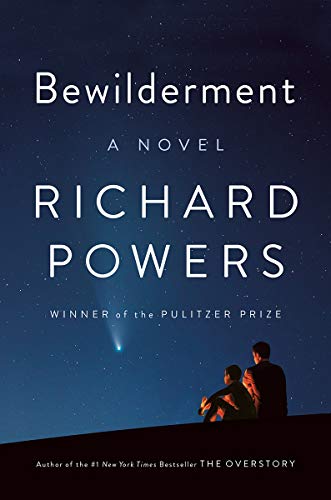
book cover: Bewilderment by Richard Powers

Caleb Scharf, director of astrobiology at Columbia University, writes that the “puzzle of ‘what life really is’ might be the ultimate goal of astrobiology—we don’t just want to know whether or not we’re alone in the universe, we want to understand what we really are.”

Here Scharf describes how “the profoundly interconnected goals of astrobiology form a central theme of Bewilderment, a new novel by Richard Powers.” He describes it as “an immersive and astonishing book, a novel where the state of our world, and others, is a central anxiety for its protagonists.”

Lost perspective? Try this linguistic trick to reset your view

Social psychologist Ariana Orvell, assistant professor of psychology at Bryn Mawr College in Pennsylvania, explains how distanced self-talk, the “process of reflecting on one’s self using parts of speech that are typically used to refer to other people,” can help us align “our thoughts, feelings and behaviour with our goals.”

The most common example of distanced self-talk occurs when we address ourself either by name or in the second person (“you”). This process produces psychological distancing that allows us to change perspective, to “move beyond our default, egocentric perspective, and consider our thoughts and feelings from the stance of a more objective observer.” Such a shift in perspective can help to promote reasoning, to increase willingness to search for compromise, and to recognize the limits of our own knowledge.

‘Imagine’ at 50: Why John Lennon’s ode to humanism still resonates

Sociology professor Phil Zuckerman writes:

As a scholar of secularism and a devout fan of the Beatles, I have always been fascinated by how “Imagine,” perhaps the first and only atheist anthem to be so enormously successful, has come to be so widely embraced in America. After all, the U.S. is a country that has – at least until recently – had a much more religious population than other Western industrialized democracies.

The Roe Baby

“Norma McCorvey, the plaintiff in Roe v. Wade, never had the abortion she was seeking. She gave her baby girl up for adoption, and now that baby is an adult. After decades of keeping her identity a secret, Jane Roe’s child has chosen to talk about her life.”

This deeply moving article by Joshua Prager is adapted from his recently published book The Family Roe: An American Story.

© 2021 by Mary Daniels Brown

Last Week’s Links

Tips for choosing an Airbnb on your next vacation — from a Seattle couple who has stayed in 270 of them

Michael and Debbie Campbell, a retired Seattle couple who call themselves the Senior Nomads, have stayed in more than 270 Airbnbs in 85 countries over the last eight years. Here are their tips for choosing a vacation rental that will meet your needs.

The Strange Language of Diane Williams

book cover: How High? --That High by Diane Williams

“After 30 years of work, some writers grow lazy; Williams has grown more potent, like the venom of certain snakes.”

The 34 short stories of How High?—That High, Williams’s 10th work of fiction, reveal an artist who, at 75, shows no hint of being tamed. But a common subject for Williams—pleasure—may be more complicated now than it was in her earlier books.

Author Hilma Wolitzer lost her husband to COVID-19. So at 91, she wrote a story about it

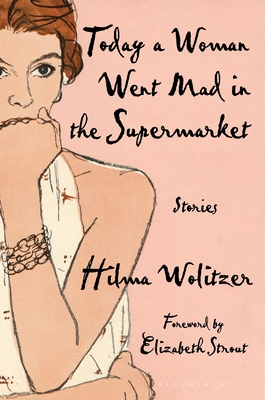
book cover: Today a Woman Went Mad in the Supermarket by Hilma Wolitzer

Meredith Maran interviews Hilma Wolitzer on the publication of Wolitzer’s story collection Today a Woman Went Mad in the Supermarket. Most of the pieces in the collection were first published in magazines in the 1960s and 1970s—all except the last, a reflection on the death from COVID-19 of Morton Wolitzer, her husband of 68 years.

This is the writing of a self-proclaimed late bloomer, bursting with half a life’s worth of observations. “I was raised by my housewife mother to be a housewife,” says Wolitzer now. “I went along with the plan. My writing was a surreptitious ‘hobby,’ something I did in rare moments alone. I took that time-worn advice: ‘Write what you know.’ So my early fiction takes place in the familiar terrain of supermarkets, playgrounds, bedrooms and kitchens.”

The 7 Worst Habits for Your Brain

“Bad choices and everyday missteps could harm your cognition. Here’s how to combat several of them.”

Recommendations from AARP.

A Warning Ignored

“American society did exactly what the Kerner Commission on the urban riots of the mid-1960s advised against, and fifty years later reaped the consequences it predicted.”

The Kerner Commission, created in the summer of 1967 by President Lyndon B. Johnson, reported on numerous incidents of civil unrest in U.S. cities between 1964 and 1967: “the Kerner Report shows that it is possible to be entirely cognizant of history and repeat it anyway.”

Darwin Was a Slacker and You Should Be Too

In this excerpt from his book Rest: Why You Get More Done When You Work Less, Alex Soojung-Kim Pang argues that we should follow the example of history’s great achievers like Charles Dickens, Charles Darwin, and Ingmar Bergman, who spent much of their time “hiking mountains, taking naps, going on walks with friends, or just sitting and thinking.”

Schadenfreude: A psychologist explains why we love to see others fail

The wonderful German word schadenfreude means “taking pleasure in the misfortune of others.” Probably most of us have experienced this emotion, and then immediately felt guilty about it. But, writes neuroscientist Dean Burnett, “Schadenfreude is the result of several deeply-ingrained processes that the human brain spent millions of years evolving.”

US WW II veteran reunites with Italians he saved as children

Here’s another one of those stories that are just so heartwarming that they have to be shared. Martin Adler, a 97-year-old veteran of World War II, was recently reunited with three children from the Italian village of Monterenzio whom he first met in 1944.

An 1870s marriage certificate was hidden behind a picture at a thrift store. Employees set out to find the couple’s family.

And here’s another story that will warm your heart, even if you not into genealogy.

© 2021 by Mary Daniels Brown

Happy 40th Birthday, IBM PC!

Do you remember this?

photo of original IBM PC: keyboard, CPU, and monitor
Photo from Wikipedia Commons

We had one of these in the basement office, which my husband used for his business records. 

Flipboard has assembled a collection of articles about the IBM PC, which was first released on August 12, 1981:

Happy 40th Birthday, IBM PC!

Doesn’t all of this bring back memories? I especially like the article about the earliest software programs and where they are today (nowhere except in our memories) and the piece on the evolution of the early web browsers. We used Netscape and still reminisce fondly about it.

© 2021 by Mary Daniels Brown

On This Day, Aug. 26: 19th Amendment goes into effect – UPI.com

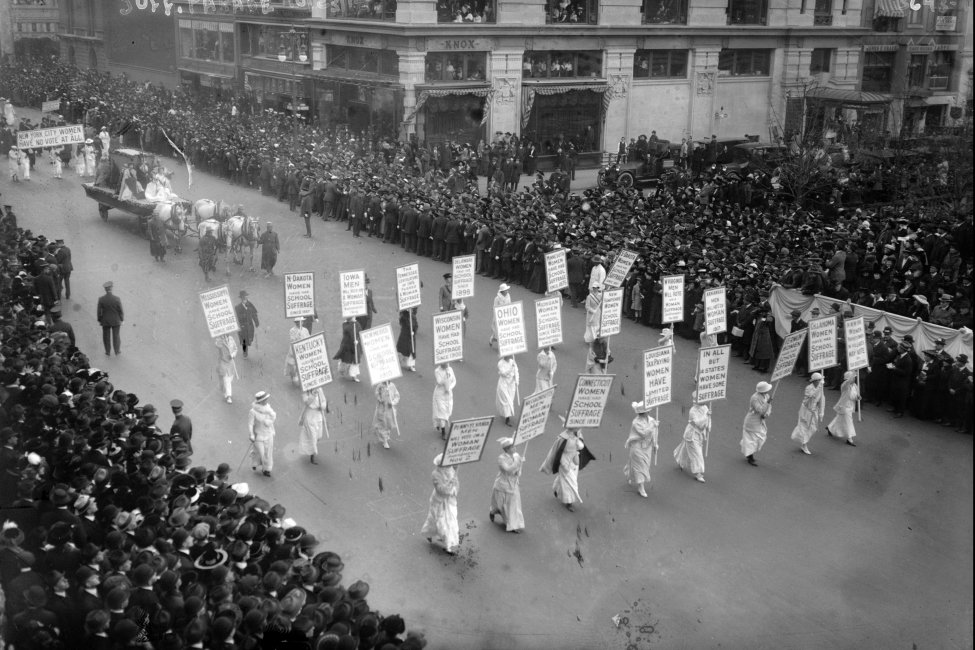
On Aug. 26, 1920, eight days after it was ratified, the 19th Amendment to the U.S. Constitution went into effect — giving women the right to vote.

Source: On This Day, Aug. 26: 19th Amendment goes into effect – UPI.com

Last Week’s Links

Take Control of Your Home Screen

I don’t know about you, but my phone’s home screens have gotten out of control. I know this is mostly my own fault, but it also seems that whenever the phone’s OS upgrades, things get changed and moved around. So when I come across an article like this, I read it carefully.

Former Seattle classmates — friends for nearly a century — reunite in a pandemic

You know I just love stories like this. Eight men, all now 88 or 89 years old, got together for their annual reunion recently. Well, almost-annual reunion, because COVID-19 forced them to miss last year’s get-together.

Beware Free Wi-Fi: Government Urges Workers to Avoid Public Networks

Back when we used to be able to travel, I was always surprised at people who, in a foreign country, said they found a restaurant with free wi-fi so they could check their bank account.

I grew up thinking being Asian detracted from my masculinity. Here’s how America tells me and other Asian American men they’re not attractive

Jade Yamazaki Stewart, an intern at the Seattle Times, writes, “old stereotypes about Asian men persist.” Here he explains how those stereotypes affected him throughout his life and examines how they continue to show up in popular culture.

70 years ago Walter Plywaski fought for atheists’ right to become citizens – here’s why his story is worth remembering

Kristina M. Lee, a Ph.D. candidate in rhetoric at Colorado State University whose area of interest is religious and political rhetoric, tells the story of Walter Plywaski: “Almost 70 years ago, Plywaski fought for the right of atheists to become U.S. citizens – and won.”

Love, courage and solidarity: 20 essential lessons young athletes taught us this summer

I must admit that this year’s Olympics (really last year’s Olympics, as they were referred to as Tokyo 2020) had a surreal feel to them. Everything swirling around the games seemed to have so much more importance than the sporting events themselves. “More than anything, though, this summer has thrown a spotlight on the inspiring and surprising strength and character of young people like never before.”

‘Vaccine passports’ are taking off. How to prove your Covid-19 vaccination status on your phone

Here’s some information that might prove useful as proof of vaccination against COVID-19 “is increasingly becoming a ticket of entry into restaurants, gyms and indoor performances.”

© 2021 by Mary Daniels Brown

Last Week’s Links

Susan Cole, Advocate for Traumatized Children, Dies at 72

Attorney Susan Cole recognized the toll that trauma can take on children:

She began a decades-long examination of the links between education and childhood trauma, using her accumulating experience to identify “broader systemic failures that could not be addressed on a case-by-case basis,” as her husband, David Eisen, put it.

Constant stress and fear were more than just a distraction for students; their effect, she learned, was neurological, activating the fight-or-flight survival instinct permanently.

The 66 Most ’60s Things About 1966

“The year 1966 found America at a crossroads, as the nation faced war abroad and turmoil at home.”

To refresh your memory about this pivotal year in American history, here’s a “look at the music, movies, TV shows, headline-grabbing news stories and pop culture events of 1966.”

TV Viewing Habits in Midlife Could Exacerbate Cognitive Decline

This is probably not the news most of us want to hear after 15 months of sitting on the couch watching TV: “new research shows that middle-aged to older adults reporting high levels of television-viewing experience greater cognitive decline.”

Here are suggestions for changing TV-viewing habits into something that will stimulate the brain:

When looking for something to scratch the TV itch, opt for documentaries on subjects you’re interested in, YouTube videos that teach you something new or game shows that test your knowledge. These provide more stimulation than, say, a reality show or action movie.

The Classicist Who Killed Homer

Most of us learned a long time ago that the Iliad and the Odyssey were originally oral epic poems composed by a blind poet named Homer. Here Adam Kirsch tells the fascinating story of how, in the early 1930s, “a young Harvard professor named Milman Parry published two papers, in the journal Harvard Studies in Classical Philology” that proved that the Homeric epics “were products of an oral tradition, performed by generations of anonymous Greek bards who gradually shaped them into the epics we know today.”

Part of Parry’s research included traveling to remote areas in Yugoslavia to record “local singers, whose improvised songs offered clues about how the Homeric epics might have been performed millennia earlier.”

‘We’re Going to Publish’

“An Oral History of the Pentagon Papers”

“This article is part of a special report on the 50th anniversary of the Pentagon Papers.”

Many People Have a Vivid ‘Mind’s Eye,’ While Others Have None at All

My husband says that he doesn’t have a mind’s eye, that he cannot picture things in his head. 

Here’s a story of scientists studying both ends of the spectrum of the ability to conjure up pictures of objects or people in their imagination. The lack of this ability is called aphantasia, and the condition of experiencing extraordinarily strong mental imagery is called hyperphantasia.

“This is not a disorder as far as I can see,” said Dr. Zeman, a cognitive scientist at the University of Exeter in Britain. “It’s an intriguing variation in human experience.”

© 2021 by Mary Daniels Brown

Last Week’s Links

As Lou Gehrig Day nears, here’s what he meant to the fight vs. ALS, and what baseball means to those with it

Amyotrophic lateral sclerosis (ALS), the disease that killed baseball player Lou Gehrig (and is therefore alternatively called Lou Gehrig disease), is a “progressive neurodegenerative disease that affects nerve cells in the brain and spinal cord and is 100% fatal.” Next Wednesday Major League Baseball will celebrate the first of what will become an annual event, Lou Gehrig Day.

ALS advocates hope that this event will increase awareness of the disease, for which there have been very few treatment breakthroughs since Gehrig’s 1939 diagnosis:

As Phil Green, a former University of Washington football player who has lived with ALS since 2018, said in an interview this week, “If Lou Gehrig were diagnosed today, he would have pretty much the identical prognosis that he did 80 years ago. Just think about that. We put men on the moon and rovers on Mars, yet this disease still seems to baffle some of the smartest scientists in the world.”

How to Understand the 1960s in 11 Books

“If you remember the 60s, the saying goes, you weren’t there. And for many of us who lived those turbulent, exciting and wildly different times it’s true,” writes Mike Bond, who graduated from college in 1965. “I was one of the founders of the Resistance [to the Vietnam war], and risked ten years in jail for it, was on the run for several years ducking the dutiful FBI guys who would clump up the stairs to whatever apartment I was crashing in, while its rightful tenant would answer the door and say I wasn’t there.”

Here Bond lists 11 books that had a great influence on his thinking in the ’60s.

Banning My Book Won’t Protect Your Child

When I was in my early 20s, I was in an abusive relationship with another woman. Soon after it ended, I did what I always did when I was heartbroken: I looked for art that spoke to my experience. I was surprised to find shockingly few memoirs of domestic violence or verbal, psychological and emotional abuse in queer relationships. So I wrote into that silence: a memoir, “In the Dream House,” which describes that relationship and my struggle to leave it.

Carmen Maria Machado reacts to the recent attempt by a parent in Leander, Texas, to remove her book and several others from a list of recommended reading in the local high school.

25 Great Writers and Thinkers Weigh In on Books That Matter

“To celebrate the Book Review’s 125th anniversary, we’re dipping into the archives to revisit our most thrilling, memorable and thought-provoking coverage.”

Current writers for The New York Times look back on some of the “robust literary coverage” of the newspaper’s Book Review, including articles by authors such as Vladimir Nabokov, Tennessee Williams, Patricia Highsmith, Eudora Welty, and Langston Hughes.

How Doctors Tell Stories: Writing Through the Practice of Medicine

Writer Leslie Jamison interviews Suzanne Koven, author of Letter to a Young Female Physician: Notes from a Medical Life, a collection of essays. Jamison begins the interview with this question:

I love the ways these essays hold so many aspects of your identity: doctor, daughter, mother, wife, patient, and colleague. We see you as a little girl going to the office of your doctor-father, wanting  “to witness at close range the freedom of men,” and we see you as a panicked mother, riding in an ambulance with your young son after seizures. How did you approach writing about times when various parts of your identity converged or collided?

And Koven replies that writing the book helped her discover that the “various parts of me turned out to be more aligned than I understood.”

‘Take it easy, nothing matters in the end’: William Shatner at 90, on love, loss and Leonard Nimoy

Hadley Freeman describes recently interviewing William Shatner over Zoom: “He certainly sounds like Shatner. But Shatner turned 90 in March, and the man in front of me doesn’t look more than 60, as he bounces about in his seat, twisting to show me the view around him, with the agility of a man two decades younger.”

He’ll always be Captain James T. Kirk to me.

Bob Dylan at 80: in praise of a mighty and unbowed singer-songwriter

“Prolific, resilient and endlessly creative … as Dylan celebrates his 80th birthday, Edward Docx assesses his artistic contribution to the human story”

And look who’s 10 years younger than Shatner and also still going strong.

© 2021 by Mary Daniels Brown