Last Week’s Links

Cheating, Inc.: How Writing Papers for American College Students Has Become a Lucrative Profession Overseas

In my earlier years I did freelance writing and editing. Scrambling for freelance gigs was a frustrating, humbling, and often thankless task. But one type of writing gig was always on the job boards: writing papers and admission essays for students. The evergreen presence of these jobs meant that, periodically, the question would arise about whether writers could or should accept them. There were always passionate answers on both sides: (1) morality be damned, I’m trying to earn a living, and (2) I may be starving, but my conscience is clear.

Just to be clear, I never took any of these jobs. But one thing I learned from this article surprised me: Many of the people taking paper-writing jobs live abroad, not in the U.S. And many of these college-educated writers make a better living at this job than they’d earn in the profession they had trained for in their country.

People Who Read Before Bed Not Only Sleep Better, But Eat More Healthily and Make More Money

This article is concerned mainly with people who read in bed at night. I have sleep disturbance problems, and people like me are always told not to eat, read, watch TV, knit, or do anything else in bed at night. The idea is to train your brain that when you go to bed, you’re ready to fall asleep. I feel deprived of the great luxury of reading in bed, but, for me, reading in my recliner before getting under the covers will have to suffice. 

But it is good to know that people who read before bed are healthy and wealthy as well as wise.

Is Dying at Home Overrated?

“A palliative care physician struggles with the complex realities of dying at home, and the unintended consequences of making it a societal priority.” 

Unless a family has the significant resources necessary to hire aides or nurses, informal caregivers become responsible for nearly everything — from feeding to bathing to toileting. These tasks often get harder as the dying person weakens. In my experience, most family members want to care for their loved ones at home, but many are unaware of caregiving’s physical and emotional toll.

Dr. Richard Leiter compassionately looks at the multiple aspects of end-of-life care and, on the basis of his own experience, concludes “we need to focus not only on where, but also on how they die.”

Nursing Homes Are a Breeding Ground for a Fatal Fungus

This article examines the potential problems involving “Candida auris, a highly contagious, drug-resistant fungus that has infected nearly 800 people since it arrived in the United States four years ago.” 

Daydreams Shape Your Sense of Self

Psychologist Eve Blouin-Hudon addresses the question “Why is daydreaming so prevalent?” She observes that we often daydream about ourselves, about how we may feel and react in certain situations. Such daydreams contribute to building our life story: “These self-related stories allow people to make sense of who they are and to build their narrative identity—their sense of continuity through time. People need to connect who they believe they are to ongoing experiences.”

© 2019 by Mary Daniels Brown

Last Week’s Links

What Were People Reading in the Summer of ’69?

cover: Valley of the Dolls

We’re seeing a lot of articles this summer about that pivotal summer of 50 years ago. This one informs us that, in 1969, The Love Machine by Jacqueline Susann was the #1 novel, The Godfather by Mario Puzo was #2, Portnoy’s Complaint by Philip Roth was #3, and The Andromeda Strain by Michael Crichton was #4.

Do you remember reading those novels? I don’t think I’ve ever read The Love Machine, although I did read Valley of the Dolls. I do remember reading both The Godfather and Portnoy’s Complaint, both of which I enjoyed but wasn’t particularly affected by. But I vividly remember throwing the hardcover edition of The Andromeda Strain across the room as soon as I finished it because the cop-out ending so infuriated me.

It’s All Greek to You and Me, So What Is It to the Greeks?

In a wide-ranging number of languages, major and minor, from all different branches of the language family tree, there is some version of “It’s Greek to me.” These idioms all seek to describe one person’s failure to understand what the other is trying to say, but in a particular, dismissive way. It’s not just, “Sorry, I can’t understand you.” It’s saying, “The way you’re speaking right now is incomprehensible.” And it specifically compares that incomprehensibility to a particular language, a language agreed upon in that culture to be particularly impenetrable.

A wide-ranging exploration into the many different forms of the idiom “It’s all Greek to me.”

ZERNA SHARP, 91, DIES IN INDIANA; ORIGINATED ‘DICK AND JANE’ TEXTS

cover: Dick and Jane

Last Monday, August 12 (1889), marked the birthday of the woman who developed the Dick and Jane books that many of us learned with in our early school years. This article is a digitized version of The New York Times obituary that marked her 1981 death.

Miss Sharp did not write the books, but worked with an illustrator, Eleanor B. Campbell, and several others to produce the texts. In the books, only one new word was introduced on each page and no individual story introduced more than five new words. The illustrations showed the characters carrying out the action of the words.

Liz Weston column: Will you be a scam artist’s next target?

Since people age 50 and older control 83% of the wealth in the U.S., they are often the target of scammers. Business writer Liz Weston offers some specific suggestions on how to become less susceptible to scammers’ efforts.

Weston advises that, since overconfidence can make us part with our money unwisely, we should get a second opinion on financial decisions “from a trusted adviser or money-smart friend.” She also has some advice on steering clear of romance scams, which loneliness can increase our susceptibility to.

11 Groovy Books That Will Transport You Back to the ‘60s

Since we began with books from the 1960s, it seems right to end with the same topic. This article, as the title suggests, references both books originally from the 1960s—such as Helter Skelter by Vincent Bugliosi, The Graduate by Charles Webb, and Slouching Towards Bethlehem by Joan Didion—and books written later about that era—such as 11/22/63 by Stephen King, The Girls by Emma Cline, and The Road to Woodstock by Michael Lang.

© 2019 by Mary Daniels Brown

Last Week’s Links

On Keeping a Notebook: A Reading List

A lot has been written on the why and how of keeping a notebook or journal. Here writer, editor, and translator Jeanne Bonner explains, “You can always write in a notebook — on a plane, in the car, even while out on a lake in a canoe. It’s almost never a breach of etiquette to pull out a notebook.”

She provides a list of, with links to, eight in-depth articles that “explore the joys of keeping a notebook and the art of writing longhand.”

Study finds guns automatically prime aggressive thoughts — even when wielded by a ‘good guy’

Since the 60s, studies have tested whether the presence of a gun increases measured aggression in participants. The results of these studies have confirmed that the presence of a gun does indeed prime aggressive thoughts, a phenomenon referred to as the “weapons effect.”

This article discusses the results of a recent study published in Social Psychological and Personality Science.

Binge drinking is increasing among seniors, study finds

I unthinkingly associate binge drinking with young adults, so this article caught my eye. 

A report published July 31 in the Journal of the American Geriatrics Society found that more than 10% of people over age 65 engage in binge drinking, defined in the study as consumption of five or more alcoholic drinks at a time. 

Moreover, the study found that such binge drinking among older adults is on the rise. The study’s lead researcher, Dr. Benjamin Han, assistant professor of geriatric medicine at NYU Langone Health in New York City, theorizes that the increase may be occurring because older women are catching up to older men, whose rate of binge drinking remained relatively stable between 2005 and 2014.

Han also says, “‘Many organizations, such as the U.S. National Institute on Alcohol Abuse and Alcoholism [NIAAA], recommend lower drinking levels as people get older or have more chronic diseases.’”

Novels That Explore the 1970s

Over time, I’ve posted a lot of articles, mostly nostalgic, about the 1960s, the decade during which I came of age. But I was a new adult in the following decade, the 1970s, and was therefore continuing my maturing process.

If the ’60s had been a decade in which young people focused their attention on making changes in their society, the ’70s has often been called “the me decade,” as individuals turned their attention inward in hopes of finding peace from outside chaos. The enormous social problems people had protested in the 1960s didn’t disappear, but for a variety of reasons, social issues didn’t seem as compelling to many people as the need to change themselves. Self-help became big business.

Here’s a list of novels set during that time:

  • The Summer of Ellen by Agnete Friis  
  • Daisy Jones & The Six by Taylor Jenkins Reid  
  • Drop City by T.C. Boyle  
  • Beatlebone by Kevin Barry  
  • Surfacing by Margaret Atwood  
  • The Bluest Eye by Toni Morrison  
  • A Brief History of Seven Killings by Marlon James  T
  • he Interestings by Meg Wolitzer  
  • City on Fire by Garth Risk Hallberg  
  • Everything I Never Told You by Celeste Ng  
  • All the Beautiful Girls by Elizabeth J. Church  
  • Motherless Brooklyn by Jonathan Lethem  
  • Unworthy by Antonio Monda  
  • Rusty Brown by Chris Ware  
  • Sons and Daughters of Ease and Plenty by Ramona Ausubel  
  • Hippie by Paulo Coelho

More older adults die from cancer despite high screening rates

A recent report published in CA: A Cancer Journal for Clinicians found that “the fastest-growing age group in the United States, adults older than age 85 have higher incidences and death rates from cancer than those between ages 65 and 84.”

“The purpose of our study was to provide a comprehensive review of cancer in the oldest old using the most up to date national data,” Carol Desantis, a researcher at American Cancer Society and study author, told UPI. “We hope that these data spur additional research on cancer in this vulnerable and rapidly growing population.”

© 2019 by Mary Daniels Brown

Last Week’s Links

Want To Feel Happier Today? Try Talking To A Stranger

I always wear my noise-cancelling headphones on planes, even though I don’t always switch them on. I unabashedly admit that I do this to discourage the person—any person—crushed into the seat next to me from trying to strike up a conversation with me. Many of us also fool around with our phones to avoid actual interaction with people around us in any public place.

But this article might change our behavior, with its discussion of research suggesting that even “seemingly trivial encounters with the minor characters in our lives — the random guy at the dog park or the barista at our local coffee shop — can affect feelings of happiness and human connection on a typical day.”

Why a Thriving Civilization in Malta Collapsed 4,000 Years Ago

When we visited Malta in 2018, we toured the site of an ancient temple that had been discovered and excavated in the late 20th century. Now the site is protected by a canvas awning as excavation continues, but our tour guide told us that her grandmother remembered playing as a child on what was then thought to be just a pile of rocks.

ancient temple, Malta

This article therefore caught my eye. The temple on Malta, among the earliest known free-standing buildings, preceded Stonehenge by about 1,000 years but apparently lasted only about 1,500 years before disappearing. Scientists believe that studying the rise and fall of the early culture on this island nation can help with “understanding change in the wider world.”

Surviving Woodstock

If you happen to have an extra $800 burning a hole in your pocket, “On the fiftieth anniversary of the festival, a thirty-six-hour boxed set reveals some truths behind baby-boomer myths.”

Woodstock almost immediately became a myth. Shortly after the festival, Abbie Hoffman speed-wrote and then published “Woodstock Nation,” giving texture to the idea that those who had been at the event constituted a new generation: “I took a trip to our future. That’s how I saw it. Functional anarchy, primitive tribalism, gathering of the tribes. Right on! What did it all mean? Sheet, what can I say, brother, it blew my mind out.”

Bonus: If you’re looking for information that’s a bit more accessible, Publishers Weekly has you covered with a long list of books celebrating the 50th anniversary of Woodstock.

50 MUST-READ FICTION BOOKS FEATURING OLDER WOMEN

In my other life I blog about books. And as I have gotten older myself, I’ve become interested in how older adults, particularly older women, are portrayed in literature.In my other life I blog about books.

Heather Bottoms had a similar experience when she turned 50 last year and now as she approaches 51. Here she offers a substantial list of novels featuring older women as characters. “The women in these stories range in age from age 50 to 110 and represent a wide variety of experiences, personalities, and genres. All these novels feature older women as crucial characters.”

Although she lists many books that I haven’t read, I heartily second her recommendation of the following books:

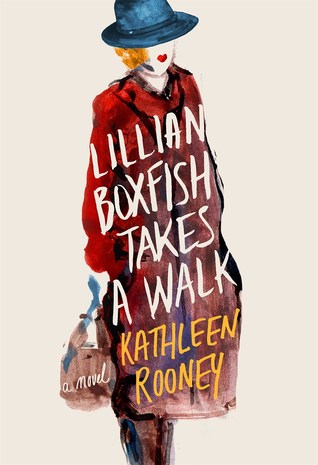
Cover: Lillian Boxfish Takes a Walk
  • The Stone Diaries by Carol Shields  
  • Still Alice by Lisa Genova  
  • Lillian Boxfish Takes a Walk by Kathleen Rooney  
  • Olive Kitteridge by Elizabeth Strout  
  • The Seven Husbands of Evelyn Hugo by Taylor Jenkins Reid  
  • Broken for You by Stephanie Kallos  
  • Breathing Lessons by Anne Tyler

Bonus: Her opening paragraph contains a link to the list she compiled last year around her 50th birthday.

© 2019 by Mary Daniels Brown

Last Week’s Links

Why Creepy Neighbors Are Perfect for Domestic Thrillers

How many times have you read a good thriller or mystery novel involving the new neighbors next door? Novelist Allison Dickson, author of The Other Mrs. Miller, explains why neighbors are such good novelistic material.

the one thing that might make your neighbors more interesting fodder for a thriller than family is that when relations turn sour on the other side of the street or fence, there’s no easy way out. You can usually hang up on problematic family member and ignore their calls for a few days, but the dwelling next door and your new mortal enemy living in it isn’t going anywhere. Whether by lease or mortgage, you’re both invested for the long term and have staked your claim. You have to find a way to resolve things, or risk of becoming a prisoner in your own home.

SLOBS, REJOICE: WHY YOU SHOULDN’T CLEAN YOUR MESSY DESK

I had heard quite a while ago that a messy desk is often a sign of creativity, but it’s always nice to have my excuse for a messy desk reinforced.

Experts say disorder stimulates creativity because physical artifacts can trigger people to draw connections between separate ideas — ones already in your head and seemingly unrelated — to generate novel solutions. It’s a process known as “psychological bricolage,” according to Jeffrey Sanchez-Burks, a professor of management and organizations at the University of Michigan.

Is the Internet Making Writing Better?

As a former English teacher, I was appalled when textspeak such as “where r u?” entered everyday speech. But in this article Katy Waldman reviews Because Internet: Understanding the New Rules of Language by linguist Gretchen McCulloch. 

“It’s only with the rise of the Internet that a truly casual, willfully ephemeral prose has ascended—and become central to daily life,” Waldman writes.

It’s only with the rise of the Internet that a truly casual, willfully ephemeral prose has ascended—and become central to daily life.

And do you know the difference between lol and LOL? It’s a subtle but real difference, according to McCulloch.

Electric Reads Set in the ’60s

For those of us who came of age in the 1960s:

November Road by Lou Berney

In these 16 historical fiction novels set in the ’60s, authors tackle some of the decade’s transformations and predicaments, its quandaries and triumphs. Each read is a great place to begin untangling the decade’s legacy.

I would add to this list November Road by Lou Berney.

ARE YOU CLIMATE HOMESICK? HE’S GOT A WORD FOR THAT

Solastalgia describes the feeling of distress caused by environmental change, and it was coined by Australian environmental philosopher Glenn Albrecht. “It was important to give that feeling a name because it was missing from our language,” Albrecht says from his small farm in Australia’s Hunter Valley region in the eastern state of New South Wales.

Bonus: See also Every Day is Earth Day: 365 Books to Start Your Climate Change Library

© 2019 by Mary Daniels Brown

Last Week’s Links

A sampling of some of the most interesting items that caught my eye over the last week.

KODAK GOT THE DIGITAL PICTURE TOO LITTLE, TOO LATE

Here’s an interesting article on how Kodak, author of all those famous “Kodak moments,” missed the boat by refusing to accept and adapt to the advent of digital photography.

6 EASY HOW-TO COMPUTER BOOKS FOR NEW TECH USERS

Two books on this list are aimed specifically at us older folks:

  • Computers for Seniors: Email, Internet, Photos, and More in 14 Easy Lessons by Chris Ewin, Carrie Ewin, and Cheryl Ewin
  • Computers for Seniors For Dummies by Nancy C. Muir 

Don’t let the title of that second one get your goat. The For Dummies series is well known and even somewhat loved. When you need information on a subject you know absolutely nothing about, the For Dummies guide is often a good place to start.

Study: Retirees lose by taking Social Security at wrong time

Sarah Skidmore Sell reports for The Associated Press on a new study revealing that many older Americans aren’t maximizing their retirement income from Social Security, which “accounts for about one-third of all income annually received by U.S. retirees.” The study concludes that “optimizing Social Security would improve the lives of millions of retirees,” but there is very little information here about how individuals can figure this out for themselves.

HOW SMART TECH IS HELPING DOCTORS BATTLE DEMENTIA

Mention “dementia research” and most people will probably think of scientists looking for biomedical ways to diagnose, treat and eventually cure degenerative brain diseases. But there is also a burgeoning research program that aims to improve care for the increasing numbers of people living with dementia — estimated at 850,000 in the United Kingdom and 50 million worldwide.

Half of women over 40 say older women in fiction are clichés, survey finds

A recent survey by Gransnet, the UK’s biggest social media site for older people, and publisher HQ (HarperCollins) found that 51% of women over 40 “feel older women in fiction books tend to fall into clichéd roles.” Here are some of the most interest findings from the survey:

  • 47% of women over 40 say there are not enough books about middle-aged or older women.
  •  “when older characters do appear in fiction, half of women (50%) say they’ve seen them being portrayed as baffled by smartphones, computers or the internet – and think it’s insulting.”
  • 75% buy their books online.

As a result of the survey findings, Gransnet and HQ are launching a fiction writing competition for women writers over age 40. The article contains more information on both the survey and the writing competition. 

© 2019 by Mary Daniels Brown

Last Week’s Links

Here are some articles that caught my eye over the past several days.

Can We Live Longer but Stay Younger?

Here’s a long though fascinating look at what goes on in the AgeLab, at the Massachusetts Institute of Technology, in Cambridge. Here researchers work not only on adaptive devices to help with the problems of physical aging but also on questions about whether those problems of aging can be biologically controlled.

Thinking About Retirement? Start With A Book

Retirement expert Sara Zeff Geber offers some reading suggestions in this article for Forbes.

How to Get the Best From Your Immune System

Here’s a booster for your immune system: an explanation of how it works and how to take care of it.

Most older adults don’t ask doctors about dementia, survey says

Only 10 percent of people between ages 50 and 64 with a family history of dementia say they have talked to a doctor about preventing memory problems, according to the National Poll on Healthy Aging published Wednesday at the University of Michigan.

How to Revisit the Ghosts of Your Past

We all have moments from our past that gnaw at us — a regret, an unanswered question, an old tragedy. We obsess over these moments when we can’t sleep, or when we need a good cry. But most days, we try to ignore these unwelcome memories, pushing them aside so we can buy groceries or go to work or do new things that we won’t regret. Our poor choices and hurt feelings fade to the background, until another quiet moment beckons them to come pick at us again.


In this way, a single moment can pester us for years and years — unless we return to the past and confront it head on.

Kalila Holt has some advice on how to undertake the process of confronting such moments head on.

Arthritis supplement glucosamine may lower heart disease risk

Finally, some good news:

Glucosamine has long been used as a supplement to help ease the joint pain of arthritis, but new research suggests its anti-inflammatory properties might also lower heart disease risk.

Novel Alzheimer’s drug passes first phase of human testing

And a bit more good news:

A new drug for treating Alzheimer’s disease has successfully passed the first phase of testing in humans. Preclinical studies had already shown that the drug could improve memory and other symptoms of Alzheimer’s disease in older mice.

© 2019 by Mary Daniels Brown

A 2019 Book-Lovers International Travel List | Off the Shelf

At my previous job, I was fortunate enough to travel to international book fairs and visit bookstores. When I travel now for fun, the impulse sticks: find the best local bookstores, and buy at least one book. The list below is based partly on countries I’ve found myself in over the last few years and partly on my destination wish list. Join me in 2019 as I try to discover more foreign authors and beloved books, and hopefully get the opportunity to pack a few bags for some on-site explorations.

Source: A 2019 Book-Lovers International Travel List | Off the Shelf

Last Week’s Links

Writing over 50: A Teacher’s Own Lessons

I’ve worked with a lot of older adults whose retirement has given them the free time to do the writing they’ve always wanted to do, whether they’re interested in life writing (memoir), fiction, or poetry. Here Peter Krass, himself an older writer who has taught online workshops for over–50 writers, explains what he has learned from his students:

my students have shown me that while older writers do face unique challenges, they also possess special strengths. What’s more, these strengths are more than equal to the challenges.

Read here his lists of both common challenges and common strengths his students have taught him. And if you’re interested in writing, let this article encourage you to look for a writing program that fits your requirements.

Retiring Retirement

A growing portion of the elderly look and act anything but.

Linda Marsa reports that, although it’s true the number of over–65 people is increasing, many of those people are still healthy enough to want to continue working.

Americans over age 60 are working longer and participating in the labor force at greater rates, according to a 2016 Brookings Institute report. And not just to beef up the bottom line. A study by Merrill Lynch and Age Wave found that nearly 50 percent of retirees want to continue working in retirement. About a third say it’s because they need the money. Two-thirds, however, say they just want to stay mentally active.

What Books Were Bestsellers the Year You Were Born?

Are you interested in finding out what books were birthed the same year you were? Literary Hub has you covered with these two lists:

I’ve read exactly one of the fiction selections and one of the nonfiction books for my birth year.

8 Old-Lady Novels That Prove Life Doesn’t End at 80

Novelist Heidi Sopinka writes, “older women in literature … arguably represent one of the most underwritten aspects of female experience. Even when they do manage to get into a book, they almost exclusively face sexism for being ‘unlikeable.’”

When “the image of a 92-year-old woman, vital, working, came into [her] head,” Sopinka wrote her début novel, The Dictionary of Animal Languages, around that character. While working on the novel, she “began seeking out an old-lady canon”:

It wasn’t female aging that fascinated me as much as I wanted to swing into the viewpoint of a woman who had lived a long complicated life, deeply occupied by her work. I began to think of my book as a coming-of-death novel… .

Weirdly, the closer I delved into the closed-in days of looming death, the more I learned about living. Still, there is such a fear of female power in our culture that older women are ignored or infantilized, as though they are somehow less complex than us even though they are us, plus time.

Here she offers a list of eight books that are “unafraid to take on the full measure of a woman’s life”:

  • The Stone Angel by Margaret Laurence
  • The Hearing Trumpet by Leonora Carrington
  • Olive Kitteridge by Elizabeth Strout
  • The Little Red Chairs by Edna O’Brien
  • Etta and Otto and Russell and James by Emma Hooper
  • Stet by Diana Athill
  • Destruction of the Father by Louise Bourgeois
  • Writings by Agnes Martin

© 2018 by Mary Daniels Brown

Last Week’s Links

How to enjoy a restaurant meal when you’re on a restricted diet

I was drawn to this article because I’ve developed a sensitivity to gluten. Here Nicole Tsong writes:

Taking out things like sugar, gluten, dairy and soy, in particular, can create new hurdles when eating out. That said, I refuse to be a food hermit. I like to see friends, and enjoy delicious food prepared by someone else.

Here’s her advice on how to accommodate restaurant meals to your needs.

One word of caution here: she’s talking about people who sometimes choose to undergo a dietary cleanse, not people who are actually allergic to certain foods. Her conclusion “if you happen to eat an ingredient you aren’t supposed to, you’ll be fine” pertains to them, not to anyone with a true sensitivity to particular ingredients.

Fruits, Veggies, Orange Juice May Protect Men’s Memory

This short article reports on a study recently published in the journal Neurology that found “higher intakes of total vegetables, total fruits, and fruit juice were each significantly associated with lower odds of moderate or poor SCF [subjective cognitive function]” in men. Just another reminder that we should be sure to eat our fruits and veggies.

It’s Almost 2019. Do You Know Where Your Photos Are?

Do you remember how, back in the days when photos were actual printed things, we used to skimp on taking pictures because of the cost of buying and, even more, processing film? The advent of digital photography means that we now take all photos we want, with the intention of deleting the multitude of bad ones and keeping only the best few. Except that most of us probably never go through and do all that deleting.

And even if we do, there’s still the problem of what to do with all the photos. Over the years many internet companies have come and gone for the purpose of serving as our digital shoe box. This article summarizes the history of sites like Flickr and Yahoo! Photos and offers some current advice on what to do with all the photos we now have on our phones, on thumb drives, and probably in various cloud storage services.

I Wrote an Historical Novel About the JFK Assassination. I Was Shocked By What I Found.

I was in 8th grade math class when the school announced over the PA system that the President had been shot. The assassination of John F. Kennedy is the first significant historical event that I remember. Like most of my generation, I remember where I was and what I was doing when I heard the news.

Lou Berney, author of the recently published novel November Road, details the findings of his research for writing a novel that includes characters of the periphery of the Kennedy assassination. (I have this book on my TBR shelf but haven’t read it yet.) Because there have been thousands of books written about the main characters involved in the assassination—John F. Kennedy, Lee Harvey Oswald, and Jack Ruby—Berney explains, he decided “to steer clear of the main players and focus instead on the edges of the assassination, on characters whose lives are changed, and threatened, by the death of the president.”

The official Warren Commission Report concluded that there was no conspiracy in the Kennedy assassination. Yet many conspiracy theorists believe that the KGB, the mafia, or the CIA—or perhaps all three—was involved. After his research Berney concluded that “the facts themselves are almost as incredible” as the conspiracy theories.

my perspective on my novel was profoundly altered by the discovery of all those secret government schemes and cover-ups, of organized crime woven tightly into the very fabric of American politics, of so many astoundingly colorful characters and a president who was so reckless in his personal life. I opened the door to that world, walked through, and never looked back.

I’ve just mentally moved this novel higher up in my TBR (to be read) queue.

© 2018 by Mary Daniels Brown