Last Week’s Links

Feeling Socially Awkward? Even Extroverts Are a Little Rusty

“Months of limited mingling have made even extremely outgoing people uncomfortable socializing, ‘like awkward eighth graders attending a school dance for the first time.’”

Secular ‘values voters’ are becoming an electoral force in the US – just look closely at 2020’s results

This article takes a look at “one of the largest growing demographics among the U.S. electorate, one that has increased from around 5% of Americans to over 23% in the last 50 years: ‘Nones’ – that is, the nonreligious.”

Where Does Our Consciousness Overlap With an Octopus’s?

Aimee Nezhukumatathil reviews Peter Godfrey-Smith’s book METAZOA: Animal Life and the Birth of the Mind

perhaps the most enthralling part of this book is the author’s experiences diving at famous sites now affectionately called Octopolis and Octlantis, just off the coast of eastern Australia where several octopuses live, hunt, fight and make more octopuses.

It’s an experience that demands we consider the very real possibility that an octopus, an animal already regarded as one of the most complex in the animal kingdom, is a being with multiple selves.

Talking out loud to yourself is a technology for thinking

If, like me, you occasionally realize that you’re talking out loud to yourself, this article will comfort you with its explanation. “Speech is not merely a conduit for the transmission of ideas, a replaceable medium for direct communication, but a generative activity that enhances thinking.”

Lesley Ann Warren Reflects On 35 Years Of ‘Clue’ And A Life-Long Journey In Hollywood

Although this article focuses on Lesley Ann Warren’s more recent career, I remember her best for her role in the old TV show Mission: Impossible.

© 2021 by Mary Daniels Brown

Last Week’s Links

Granny’s on Instagram! In the COVID-19 era, older adults see time differently and are doing better than younger people

Marcia G. Ory, founding director of the Texas A&M Center of Population Health and Aging, has been studying the effects of COVID-19 on the older adult population. Her overall finding: “older adults – despite their awareness of increased risk – are generally not reporting more feelings of anxiety, anger or stress than younger age groups.”

Nikki Giovanni, Finding the Song in the Darkest Days

Now in her late 70s, poet Nikki Giovanni has never stopped writing over “her 52-year career.”

“Her staying power over half a century comes from a stream of acclaimed work, her proclivity for a punishing schedule of tours and readings, and a fearlessness born of not caring what foolish people think.”

2020 wasn’t all bad: Here are 8 small but great things that happened in Seattle

I urge you to look for an article similar to this one in your own local newspaper.

From the Seattle Times: “But at the end of a very overwhelming year, we asked our writers to look back and identify some good things we discovered or experienced within ourselves and our communities in 2020. Here’s what they came up with.”

When Your Dad Falls Apart

Kevin Grant tells the story of his father’s diagnosis of early-onset Alzheimer’s  disease at the age of 58.

Outwitting the Grim Reaper

Kevin Berger reports on an interview with Daniel Levitin, age 62. An emeritus professor of psychology and neuroscience at McGill University, Levitin’s book Successful Aging offers insight into how aging affects our bodies.

Asked why we age, Levitin replies, “We age because there’s been no evolutionary pressure to keep our bodies alive for a long time. I don’t know why that is and I don’t think anybody does.”

© 2020 by Mary Daniels Brown

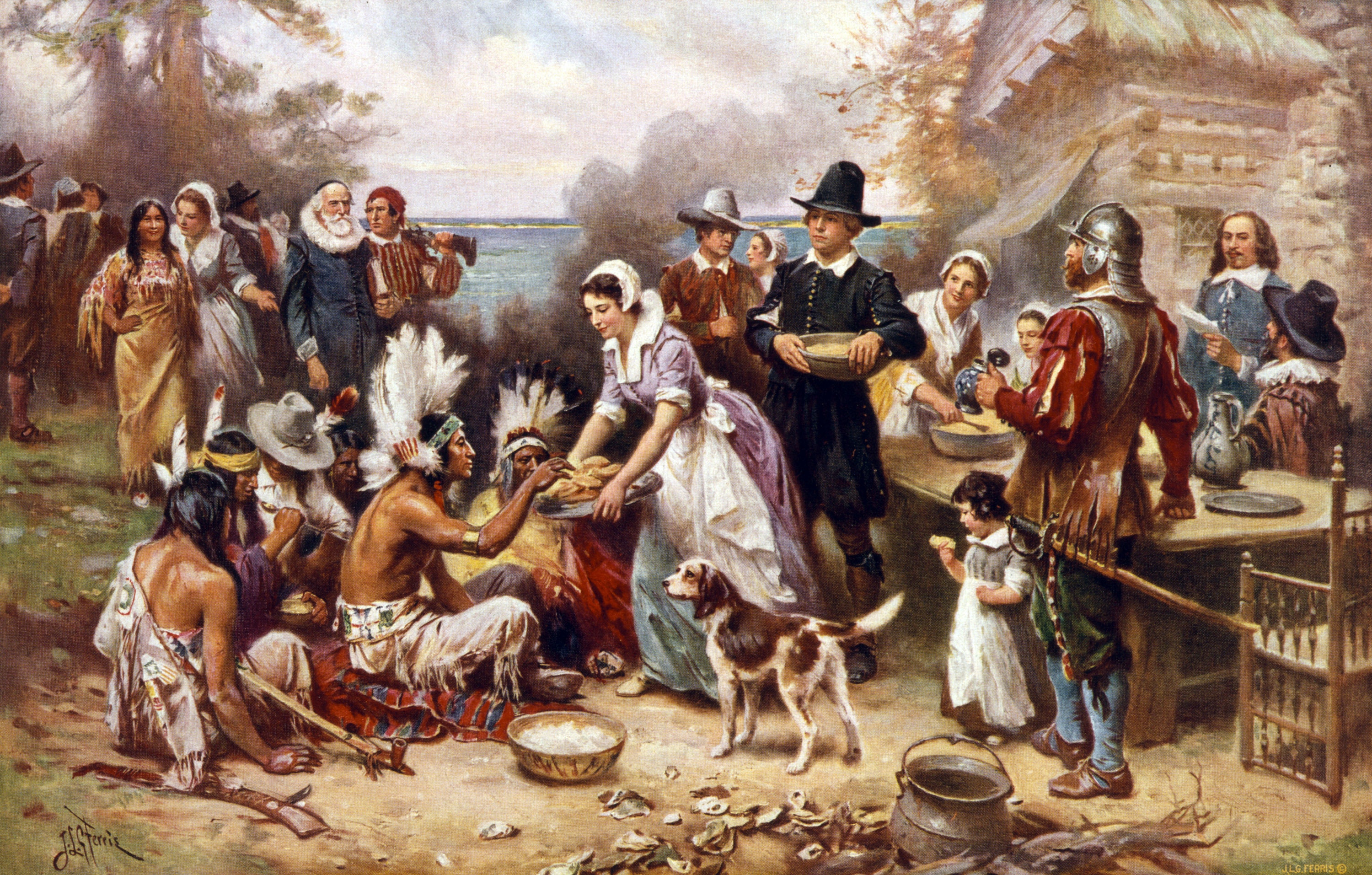
On This Day, Dec. 21: Pilgrims arrive at Plymouth, Mass. – UPI.com

On Dec. 21, 1620, the Pilgrims arrived at Plymouth, Mass., following a 63-day voyage from England aboard the Mayflower.

Source: On This Day, Dec. 21: Pilgrims arrive at Plymouth, Mass. – UPI.com

Where are the voices of indigenous peoples in the Thanksgiving story?

In my research and experience as a teacher educator, I have found social studies curricular materials (textbooks and state standards) routinely place indigenous peoples in a troubling narrative that promotes “Manifest Destiny” – the belief that the creation of the United States and the dominance of white American culture were destined and that the costs to others, especially to indigenous peoples, were justified.

Source: Where are the voices of indigenous peoples in the Thanksgiving story?

Last Week’s Links

How to heal through life writing

“Learning to write about trauma helps you to process the painful experience, and gives you the life skills to overcome it”

When I went back to school for my Ph.D. in psychology, I studied life stories. One aspect of that topic is how writing about negative life experiences can help us overcome the pain, grief, or anger we associate with them. This article offers some advice on how to do that.

A Brief History of the TV Dinner

“Thanksgiving’s most unexpected legacy is heating up again”

If, like me, you grew up in the 1950s and early 1960s, you probably remember Swanson’s TV Dinners. Here’s a brief history of how and why they came into being.

COVID-19 patients are developing ‘brain fog.’ But what does that mean?

I have fibromyalgia. One symptom of this and other autoimmune conditions can be periods of “brain fog,” a fuzzy feeling of being not quite fully present in the world, of being not quite fully in touch with reality. Researchers are now finding that patients who have long-term COVID-19 symptoms sometimes experience this same feeling, a symptom often dismissed by doctors.

for millions of other people with chronic illnesses, some of which seemed to have began with infections, constant brain fog is already their reality. Now, they’re hoping that this global pandemic will draw attention to a condition that has so drastically affected their lives.

 Night Terrors

“The creator of ‘The Twilight Zone’ dramatized isolation and fear but still believed in the best of humanity.”

You remember The Twilight Zone and Rod Serling, right? “The show ran from 1959 to 1964, and by the time it went off the air the phrase ‘twilight zone’ had entered the language as a kind of shorthand for whatever feels eerie or strange.”

Andrew Delbanco discusses The Twilight Man: Rod Serling and the Birth of Television by Koren Shadmi.

Death rates have fallen by 18% for hospitalized COVID–19 patients as treatments improve

It’s hard to find good news amidst rising virus spikes and perilous pandemic predictions, but here’s a little bit. 

He was an American paratrooper. She withstood bombing in England. 75 years later they remember love born in wartime

And here we are back to life stories. I’m always on the lookout for good stories like this one, which appear most often in local publications. The best such stories, like this one, are full of scrapbook memories.

© 2020 by Mary Daniels Brown

Last Week’s Links

This Is Not a Moon Landing. It’s a Murder Hornet Operation.

Click on this link to see the photo, even if you don’t read the article. 

“After an operation that looked like a cross between a lunar landing and a low-budget sci-fi flick, entomologists on Saturday suctioned away the first “murder hornet” nest found in the United States.”

The first nest of the invasive Asian giant hornets was found and destroyed in northern Washington state. It’s an interesting article, with a lot of photos.

How to Improve Your Reading Comprehension As an Adult

Reading comprehension, defined as the “ability to process and retain information from texts,” is something we usually think of as happening to children in their early years of school. But here Christine Ro reports on some recent research into enhancing reading comprehension for adults and offers some suggestions for doing so.

Unsurprisingly, some of her suggestions involve slowing down while reading and actively engaging with the text, for example, by annotating, all examples of slow reading.

As holidays near, the coronavirus is spreading rapidly, putting families in a quandary about celebrations and travel

Amidst all the discussion of pandemic fatigue, many families are wondering if they’ll be able to celebrate together this fall and winter. This article indicates that Barbara Alexander, a physician and the president-elect of the Infectious Diseases Society of America, will not attend the annual Christmas gathering of about 35 people at her parents’ farm this year.

An epidemiologist explains the new CDC guidance on 15 minutes of exposure and what it means for you

“the CDC [Centers for Disease Control and Prevention] is acknowledging that even brief contact can lead to transmission. Specifically, the new guidance suggests that those spending a total of 15 minutes of contact with an infectious person over the course of a 24-hour period should be considered in close contact.”

Here’s some more information if you’re still making up your mind about attending family events this holiday season.

‘Passion and expertise’: UW’s Dr. Vin Gupta shares coronavirus insights with the nation

In normal times, Dr. Vin Gupta would be spending more time with his family and less time on national TV.

But since the world is battling a pandemic — and a flood of conflicting information — pick any weekday and you’ll likely see Gupta, a critical care pulmonologist and an affiliate assistant professor at the University of Washington’s Institute for Health Metrics and Evaluation, on at least one news show on either NBC or MSNBC as a medical contributor.

Many of the first cases of COVID-19 in the U.S. appeared in Washington state. Here’s a profile of a physician from the University of Washington who has emerged as one of the experts seen most often on news coverage of the virus.

“A Sow Killer”: Nursing Home Residents Wither in Isolation Forced by the Virus

One of the worst things about growing old is the social isolation caused by the loss of friends and family members. This year the viral pandemic, with its enforced isolation to suppress the contagion, has been especially hard on older people, particularly those in nursing homes, where strict regulations prohibiting visiting have been necessary to control the spread of the disease.

The article explores how some facilities are addressing the seemingly contradictory requirements for both physical distancing and personal human contact.

Q&A: Did Justin Turner put Dodgers at risk by celebrating their World Series championship?

I always watch the World Series, even when, like this year, none of my favorite teams is one of the last two left standing. But I turned the TV off after the announcement of the Series MVP (Corey Seager of the L.A. Dodgers) and didn’t learn until the next day that Dodgers’ player Justin Turner, who had been pulled late in the final game because of a positive COVID-19 test result, had come out onto the field to celebrate the victory with his teammates.

While I can certainly understand his desire to celebrate, I was incensed and disappointed by his action. In many of the photos he’s not even wearing a mask.

What do you think? 

Should Turner have been allowed to leave the room where he was isolated and mingle with his teammates on the field? 

© 2020 by Mary Daniels Brown

Daylight saving time ends this weekend: Don’t let ‘fall back’ worsen your 2020 depression | The Seattle Times

As we prepare to turn the clocks back an hour on Sunday morning, experts in winter depression say the loss of daylight — just as coronavirus infections start to spike again and election tension comes to a head — could make this an unusually difficult stretch.

Source: Daylight saving time ends this weekend: Don’t let ‘fall back’ worsen your 2020 depression | The Seattle Times

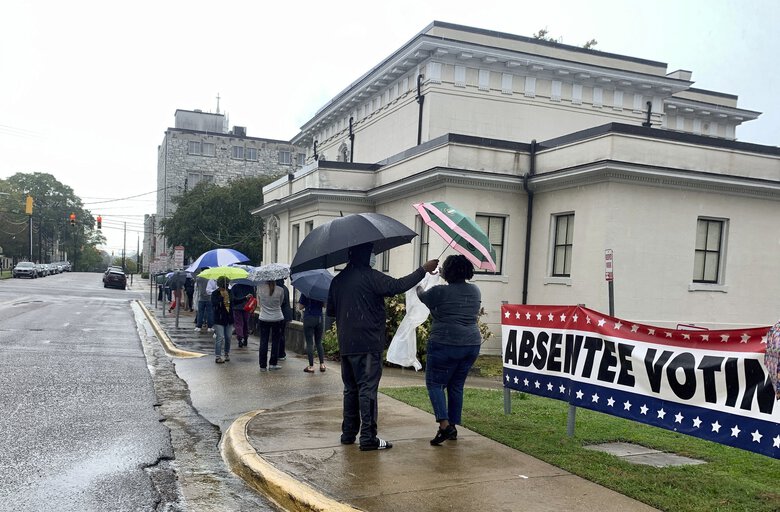
Election stress disorder is a real thing — and lots of us have it 

From Mayo Clinic News Network


Heading into a contentious national election with an ongoing pandemic and racial unrest, many people are experiencing tension and stress.

More than two-thirds, approximately 68%, of American adults say the 2020 U.S. presidential election is a significant source of stress in their lives, according to a recent survey by the American Psychological Association. In comparison, only 52% said the same before the 2016 election.

Source: Election stress disorder is a real thing — and lots of us have it | The Seattle Times

Last Week’s Links

A Massive Earthquake Is Coming to Cascadia—And It Can’t Be Stopped

By almost any measure Cascadia—a term born of the 1970s environmental movement to describe the Pacific Northwest’s geography and cultural identity—is a strange and beautiful place.

But just offshore from the postcard-worthy landscapes is a seismic threat as catastrophic as any on earth.

Yes, there’s a lot of talk around here about “the big one.” This article focuses on four people who are working to understand the CSZ (Cascadia Subduction Zone) and inform the population about what to expect.

50 States, 50 Scares

What’s the scariest novel set in your state? 

For us here in Washington, it’s The Good House by Tananarive Due, a haunted-house tale about “racism, greed, separation and communication breakdowns,” according to this article.

Sick of COVID-19? Here’s why you might have pandemic fatigue

When COVID-19 first hit the U.S., most people were eager to follow the recommended safety guidelines. Fear sparked the hoarding of toilet paper and hand sanitizer. But now that fear has abated, and we’re hearing a lot about pandemic fatigue.

Public health researcher Jay Maddock, professor of public health at Texas A & M University, explains the psychological reasons for pandemic fatigue and offers some tips on protecting both mental and physical health. 

You’re not nuts. This really is a crazy time. Here are a dozen ways to cope

And here’s some more help, from CNN’s Sandee LaMotte, on coping with the current pandemic, which shows no signs of going away any time soon.

Quarantine book club: Reading for mental health in a plague year

Jeannine Hall Gailey, who previously served as the second poet laureate of Redmond, Washington, describes how reading has been a lifeline in helping her cope with the COVID-19 pandemic.

So, can reading really address the state of anger, despair, and confusion so many of us are in? I can only say that books (along with gardening, cats, chocolate, and phone calls with friends) definitely helped me hold on to not only sanity and hope, but also serve as a reminder of why we continue to act to address injustice instead of just saying “that’s the way it’s always been.” Reading also provided a useful context to talk with family and friends who were also experiencing anxiety about politics, race, class, and fear of illness and death. Discussing books — even on social media — seems safer and more enjoyable than merely doomscrolling or rehashing whatever the day’s traumatic news cycle had revealed.

© 2020 by Mary Daniels Brown