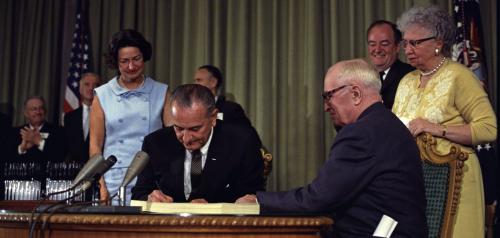
In 1965, President Lyndon B. Johnson signed Medicare into law, dedicating it to former President Harry Truman, who “planted the seeds of compassion.”
Source: On This Day, July 30: Lyndon B. Johnson signs Medicare into law – UPI.com

In 1965, President Lyndon B. Johnson signed Medicare into law, dedicating it to former President Harry Truman, who “planted the seeds of compassion.”
Source: On This Day, July 30: Lyndon B. Johnson signs Medicare into law – UPI.com
I’ve come across lots of interesting stuff lately.
I’m including this article on all my blogs this week because it’s important that everyone with any online presence, no matter how small, read it.
Sometimes a book like this is exactly what we need. From Book Riot’s Heather Bottoms:
When I’m feeling worn down, reading is a much-needed escape and comfort, but I need a book that is less emotionally taxing. I don’t want to be blindsided by a heart-wrenching death, intense family trauma, or weighty subject matter. What I need is a palate cleanser, lighthearted books to help me decompress a bit and provide a happy diversion. Here are some of my favorites. These lighthearted books are charming, soothing, funny, warm-hearted, and just the break you need when life is hard.
I have written before about how I learned to trust my intuition, so this article naturally drew my attention. Judi Ketteler writes:
Suddenly at midlife, the gut instinct I had long relied on to make important life decisions left me. Here’s how I learned to get it back.
Through a combination of research and personal experience, she concludes that intuition depends on context, and she needs to let it catch up with her changed circumstances as she enters a new phase of her life. I find this an encouraging conclusion.
This article caught my eye because very recently this process has produced arrests in two 30-year-old cold murder cases in my hometown of Tacoma, WA. The article provides a much fuller explanation of how DNA databases are used to solve old crimes.
Current tests to detect Alzheimer’s disease rely on measures of verbal memory – the ability to learn and remember verbal information such as stories or grocery lists – which women excel at, and allows them to compensate during the disease’s early stages.
If sleep deprivation puts garbage removal on the fritz, the memory-robbing disease may develop
…
But while the new research is compelling, plenty of gaps remain. There’s not enough evidence yet to know the degree to which sleep might make a difference in the disease, and study results are not consistent.
© 2018 by Mary Daniels Brown
I am so surprised and sorry to see this.
Here’s what I’ve been reading recently around the web.
Here’s yet another reason to get your blood pressure under control: High blood pressure later in life may contribute to blood vessel blockages and tangles linked to Alzheimer’s disease, new research suggests.
Here’s a local take on a national survey from the early 1960s.
More than 400,000 high school students from 1,353 schools across the country participated in Project Talent between 1960 and 1963. About 1,269 of the students were from Puyallup High.
And now, 130 of those students, some no longer living in the United States, were tracked down to take another survey.
This time, the focus is on health.
“There’s a big push to fund Alzheimer’s research,” Project Talent director Susan Lapham said. “Baby Boomers are edging into a time period where Alzheimer’s really becomes an issue.”
What constitutes a good death? While end-of-life care has come a long way, the aims of the medical industry are often in conflict with the wishes of patients.
I’ve never liked the taste of water, so this discussion of what’s in some of the more common substitutes for plain water interested me.
There are so many different ways to hydrate these days — it’s clear we’ve come a long way from watered-down water. If you love fruit flavors and want to try something new, these new beverages can make a great addition to your hydration rotation — just take a few extra seconds to read what’s in the fine print.
While many of us focus primarily on diet and exercise to achieve better health, science suggests that our well-being also is influenced by the company we keep. Researchers have found that certain health behaviors appear to be contagious and that our social networks — in person and online — can influence obesity, anxiety and overall happiness. A recent report found that a person’s exercise routine was strongly influenced by his or her social network.
A look at one of the oldest recorded human ailments.
Given the prevalence of migraines among women, this apparent neglect could be a result of how physicians tend to underrate pain in female patients. It may also reflect the historic – and similarly gendered – associations between migraines and mental illness.
© 2018 by Mary Daniels Brown
I never learned to knit, but those of you who did might be interested in how new technology is advancing this age-old form of producing clothing.
When you think about knitting, you might picture grandmas clicking big wooden needles or something wintery, like a snow-covered lodge. But knitting is everywhere, producing just about everything you put against your skin each day, from socks and t-shirts to hoodies and beanies. And thousands of years after it was first invented, new kinds of knitting are poised to fundamentally change how we think about these “basics,” making our bodies more connected than ever to the computerized world we live in.
Just exactly how big is one serving of pasta or sirloin steak?
Don’t we all remember The Fannie Farmer Cookbook?
She brought a scientific approach to cooking, taught countless women marketable skills and wrote a cookbook that defined American food for the 20th century.
…
Widely credited with inventing the modern recipe, Farmer was the first professional cook to insist that scientific methods and precise measurements — level teaspoons, cups and ounces — produce better food, and also the first to demonstrate that cooking classes could be mass-market entertainment.
© 2018 by Mary Daniels Brown
Here are the articles that caught my eye last week.
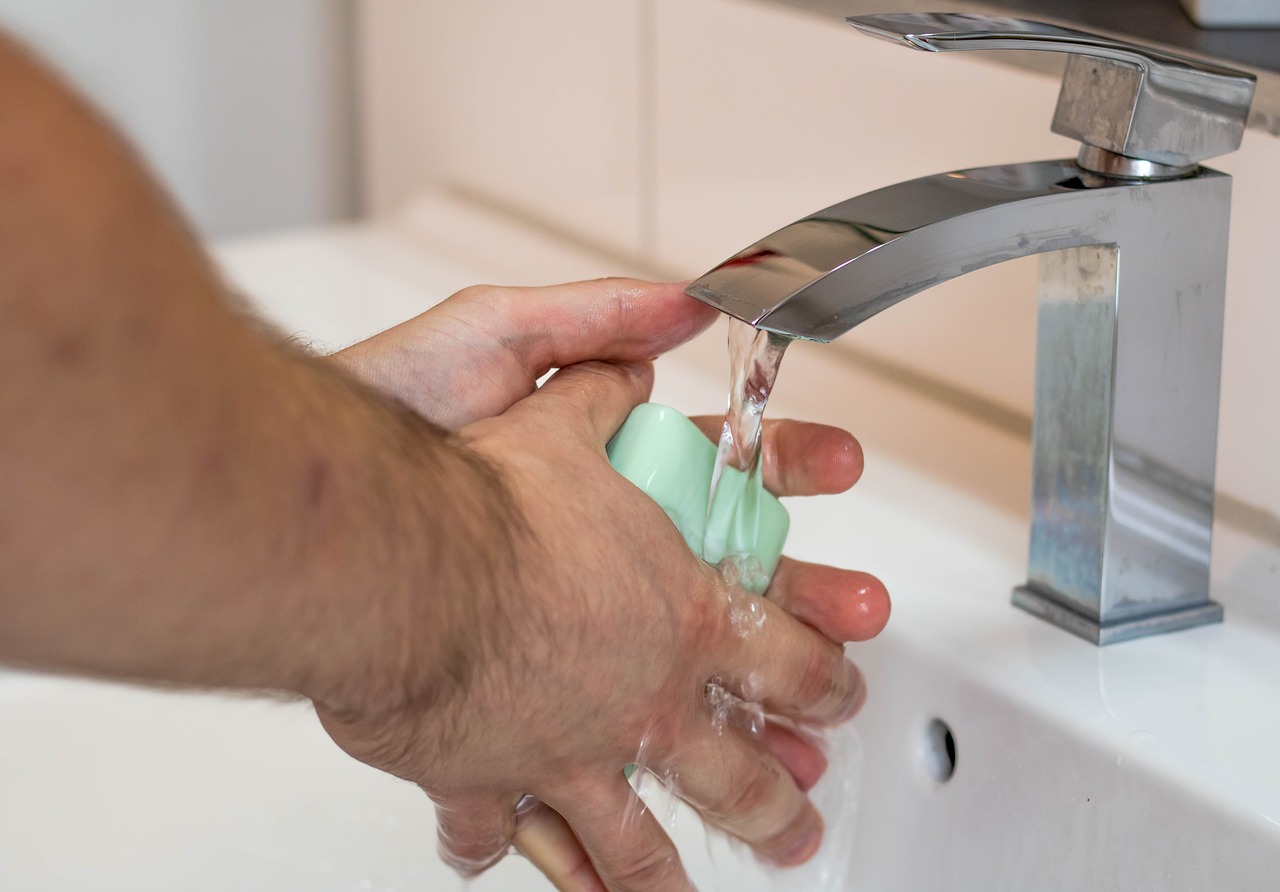
Are you washing your hands long enough?
The study from the US Department of Agriculture shows most consumers failed to wash their hands and rub with soap for 20 seconds. That’s the amount of time recommended by the Centers for Disease Control and Prevention, which says that washing for shorter periods means fewer germs are removed.
On our recent cruise a nasty virus gave many passengers a bad cough and sore throat. The ship’s captain encouraged all of us to wash our hands for the amount of time required to sing Happy Birthday twice.
The most popular American, whose legacy is the primary target of Donald Trump, has, for now, virtually disappeared from public life.
Mind-boggling new research findings:
Death rates in later life flatten out and suggest there may be no fixed limit on human longevity, countering some previous work.
If you sit for six hours a day or more, your risk of dying early jumps 19 percent, compared with people who sit fewer than three hours, an American Cancer Society study suggests.
Could an aspirin a day keep the Alzheimer’s away? If only it were that simple. And yet, new research suggests that there does seem to be some hope that aspirin, one of the most widely used medications in the world, may help to treat some aspects of this devastating brain disease.
As with all such studies, keep in mind that these results are years and years away from any implementation in humans.
A decade-by-decade look at how our appetites may change over time. We need adequate nutrition throughout our lives, but those of us over 60 need also remember:
Food is a social experience, but the loss of a partner or family and eating alone affect the sense of pleasure taken from eating. Other affects of old age, such as swallowing problems, dental issues, reduced taste and smell also interfere with the desire to eat and our rewards from doing so.
© 2018 by Mary Daniels Brown
We can all use some good news in this realm.
Getting cosmetic surgery to look younger says that “looks matter most.” So let’s flip the script. Let’s embrace our wrinkles, like we embrace life stories, and all look older together.

Years’ and years’ worth of data have consistently demonstrated a direct correlation between social isolation and a decrease in both physical and mental health, especially in older adults.
With strong evidence that friendship does, indeed, help save lives and promote health, social workers and researchers wish we could pay more attention to its central role. Activity directors, senior center staff members and family caregivers: Are there better ways to help elders stay in touch with the friends they care about, or meet new ones? We’re all willing to drive relatives to doctors’ appointments; driving them to spend time with friends may matter as much.
The depth to which the level of political and social discourse has sunk in the U.S. has prompted both sides to call for a return to civility. Here’s one writer’s opinion on the topic.
Here are some suggestions on how to deal with the problem of civility in public discourse.
A former Clinton administration official studied how to facilitate more constructive arguments among Americans. These are his conclusions.
For scientists, pain has long presented an intractable problem: it is a physiological process, just like breathing or digestion, and yet it is inherently, stubbornly subjective—only you feel your pain. It is also a notoriously hard experience to convey accurately to others.
A report on scientists’ efforts to find “ways to capture the experience [of pain] in quantifiable, objective data.”
© 2018 by Mary Daniels Brown
The New York Times this week features a discussion of aging in place, the term for adapting an existing home to accommodate changes necessary as its inhabitants get older. This article contains links to related coverage.
Five Books is a website that provides lists of the best books on all kinds of subjects. Recently it published two different lists of the best books on aging.
In The best books on Ageing neuroscientist and science writer Kathleen Taylor presents “the latest science on ageing and the literary works that can give us a clearer picture of what it’s all about.”
Taylor recommends these books:
Taylor’s list surprised me because I expected that a neuroscientist’s choices would be scientific books about the latest developments in understanding Alzheimer’s disease and other organic effects of aging. Here’s what Taylor has to say about her choices:
A lot of the problems that we have with old age when we’re younger are a failure to empathise with older people and to really understand what it feels like to be old—as opposed to what it looks like intellectually. So I’m keen to bring both perspectives in.
I’m not saying that I don’t think the scientific perspective is important, it really is, but I think if you blend that with a more understanding or internal perspective, it can help you understand the person. You can’t really know what it’s like to be old until you’re old but literature can get you a bit closer than, for example, the study of biochemical proteins and what they do in the brain.
I’m so glad to find a scientist who recognizes that some of our most important insights into the human experience come from fiction.
In another article, also titled The best books on Ageing, author Margaret Drabble recommends these five books:
The works by Simone de Beauvoir, Penelope Lively, and Helen Small present social and cultural overviews of aging. Although these books offer insight into the experience of aging, I was most interested in Drabble’s comments on the novels Late Call and Unexpected Lessons in Love as well as her own most recent novel, The Dark Flood Rises, all of which focus on characters experiencing advancing age.
And I particularly like Drabble’s answer the the question of advice on how to age well:
I think learning a new language is good. It’s slightly better for the brain than crossword puzzles, but it also teaches you a new world. I’m learning German poetry with a PhD student. We don’t do language—I don’t want to go shopping in Germany—but we read poems together, and that has given me great joy. It’s like entering into a new world that I knew was there but had never had the time or inclination to enter.
© 2017 by Mary Daniels Brown
Thanks to Natalie for hosting Three Things Thursday, “three things big or small, that have made you happy this week.”
We recently took our annual trip to the Washington State Fair. There’s always a lot to see there. Here are three things that especially struck my fancy.
A large Sasquatch guarded the wood carvers’ tent.

And there was the required animal wisdom that we’ve come to enjoy:

And the state fair wouldn’t be complete without a beautiful, lounging pig:

What made you happy this week?
© 2017 by Mary Daniels Brown


 Retreading for Retirement