Saint Nicholas stands just inside the entrance to the main building here at our retirement community, Franke Tobey Jones, to greet visitors.
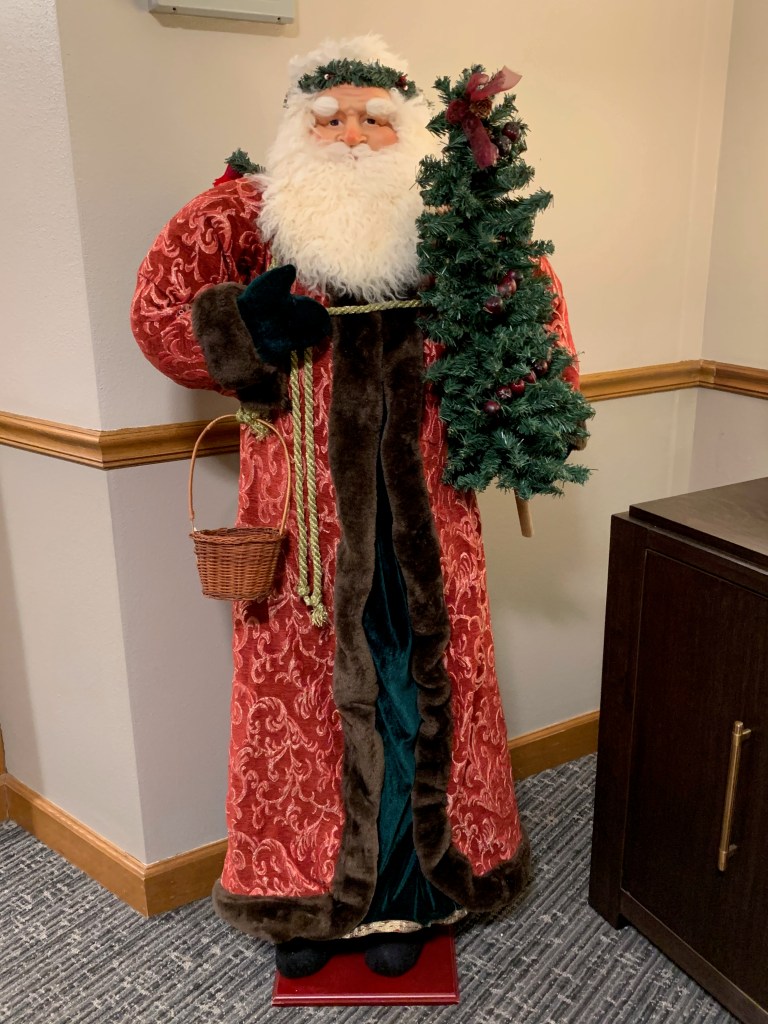

Saint Nicholas stands just inside the entrance to the main building here at our retirement community, Franke Tobey Jones, to greet visitors.
. . . for holiday decorations. Yesterday we had lunch with Rudolph the Shark at a restaurant along the waterfront here in Tacoma, WA USA.

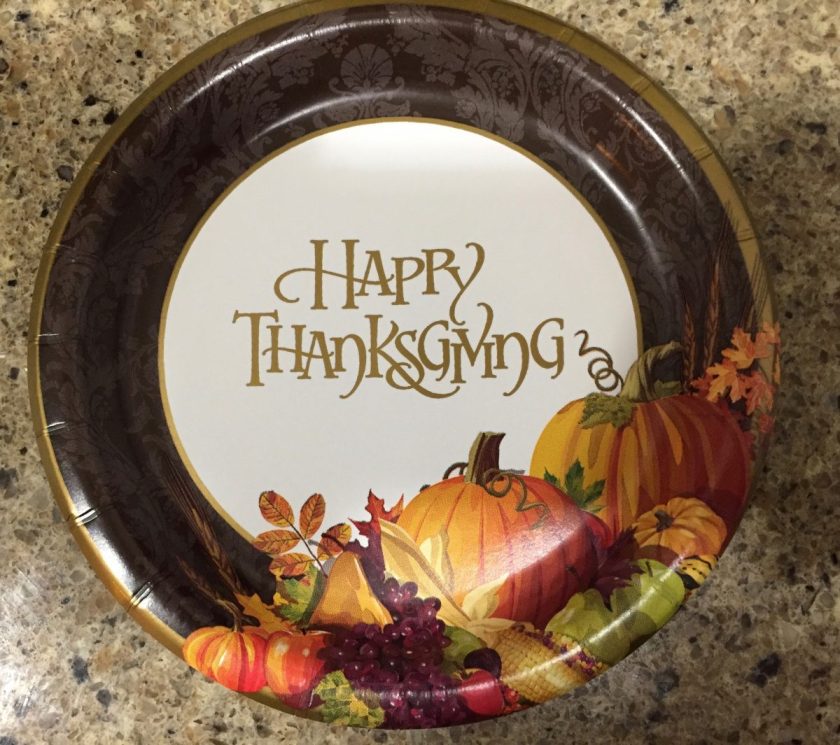
And here’s something for you to read: From Zeus to Williams-Sonoma: The History of the Cornucopia
Jihyun Lee, associate professor in the School of Education at the University of New South Wales in Australia, reports on her research into students’ attitudes toward school:
My research has found that there is in fact no relationship between how well students do academically and what their attitude toward schooling actually is. A student doesn’t need to be passionate about school to be academically successful.
Lee continues: “research shows that students’ self-belief in their own problem-solving abilities is far more important than their perception of school itself.” She sees this as a problem because, she says, “Formal institutions [such as schools] shape the lives of a citizenry. They need to be upheld, bettered and strengthened.”
Her solution to this problem? “Adults responsible for making decisions about schooling need to be more cognisant about the long-term influences that the school experience can exert on students’ attitudes and beliefs. . . . Whether students are able to see the link between their present and future may have critical consequences for society.”
“Readers share poignant stories of the pain and comfort that food can bring after a loved one dies.”
After The Times published a Food article about how mealtimes can be difficult for widows (a gender-neutral term that bereavement counselors now use), hundreds of readers described the heartbreak and joy that food and cooking can bring after losing a partner.
Here’s news from the U.S. Centers for Disease Control and Prevention (the CDC):
Traumatic experiences in childhood can do lifelong harm to physical and mental health, education and work, the U.S. Centers for Disease Control and Prevention says.
Preventing traumatic childhood experiences — such as abuse, seeing violence or substance abuse in the home, or having a parent in jail — could reduce many problems later on, according to the CDC.
These later problems include suicide; chronic illnesses such as heart and respiratory diseases, cancer, and diabetes; and risky health behaviors such as substance abuse. “The CDC has several efforts to prevent childhood trauma and reduce the harmful effects of such experiences.”
Lesley Stahl praises Gail Collins’s new book No Stopping Us Now: The Adventures of Older Women in American History:
So imagine a book about “non-young” women, written by Collins with her signature droll sensibility. “No Stopping Us Now” is a chronicle of the herky-jerky nature of older women’s journey to progress in the United States over the years. It’s eye-opening, brimming with new information and, as you’d expect from Collins, a lot of fun.
Maria Russo reports on “the excellent new grandparent-centric picture books surging into bookstores and libraries [that] come from creators who grew up in other cultures.” The reason for this “may be because Americans are still catching up to Europeans — and to children — when it comes to realizing that older bodies can still be vital and attractive. And we can only hope the reverence and tenderness toward elderly people found in Asian cultures takes root here, too.”
Russo offers specific examples of the books she’s talking about here, in case you want some suggestions for upcoming holiday gifts.
I include this one because we sometimes need a bit of levity.
© 2019 by Mary Daniels Brown
Here’s a report on recent research suggesting that controlling blood sugar levels “might help lower your risk of developing Alzheimer’s disease.”
And here’s another report on research. The results of personality tests given to 82,232 teenagers in 1960 were compared with Medicare diagnoses of dementia from 2011 to 2013. Researchers “found that high extroversion, an energetic disposition, calmness and maturity were associated with a lower risk of dementia an average of 54 years later, though the association did not hold for students with low socioeconomic status.”
But the lead researcher emphasizes, “‘our findings are suggestive, and we don’t want to draw strong conclusions about causation.’”
Meet Stevie, a robot from the Robotics and Innovation Lab at Trinity College, Dublin, who lives with the residents of a retirement home for military officers and their spouses just outside of Washington, DC. The purpose of the collaboration is to see if AI (artificial intelligence) can help support human care workers in caring for people 65 and older, “the fastest-growing age demographic in the US.”
Here’s something to think about:
One can be outraged by the seemingly unfair treatment older workers receive. But are we each without ageist bias? The fact is we can be our own worst enemy when we adopt these assumptions as our truth. While we can’t change how others think, we can certainly tackle our own deeply held beliefs about aging that sabotage our financial future and well-being.
Born on October 29, 1969, the Internet is now 50 years old. Here are two articles about that milestone.
50 years ago today, the internet was born in Room 3420
The Internet came into existence in response to the Soviet Union’s launch of Sputnik 1 in October 1957. Chagrined that the USSR had beaten the U.S. in the space race, President Eisenhower formed the Advanced Research Projects Agency (ARPA) within the Department of Defense to promote study of science, technology, engineering, and math in U.S. universities and research labs. The need for separate terminals in each place of study led researchers to conceptualize ARPANET, a system that would allow each research lab to communicate with any or all others.
Welcome to Year 50 of the Information Age
Adam Rogers, reporting for Wired, a publication that came into existence to cover the digital world, remembers (and links to) the article he wrote 25 years ago marking the Internet’s 25th birthday.
And he laments that the Internet’s 50th birthday “marks not only the internet’s decrepitude but also my own.”
© 2019 by Mary Daniels Brown

Here’s an interesting look at the notions of chronological (actual) age and subjective age (how old you feel). Some people say they feel either younger or older than they are. But others feel that even asking the question “How old do you feel?” plays into cultural stereotypical notions of aging as decline.
How old do you feel? Or do you resist being classified by your age?
I was taken aback when I saw this article because I thought trans fats had been banned from foods here in the U.S. But here’s the truth:
Most trans fats were banned in the United States last year. But foods with less than a half-gram of trans fats can be labeled as containing zero, so some foods still contain them.
And according to recent study results from Japan: “After adjusting for other dementia risk factors — such as high blood pressure, diabetes and smoking — the researchers concluded that compared to study participants with the lowest levels of trans fats, dementia risk was 52 percent more likely among those with the highest levels.”
But if foods containing small amounts of trans fats can list their trans fat content as 0 (zero), how are we to avoid consuming them? The article contains at the end a link to the American Heart Association page on trans fats that has some information on what to look for on a product’s ingredient list that may suggest it contains trans fats.
When I saw Amazon Prime Video’s recent announcement for a new series called Modern Love, I didn’t know that Modern Love is a series of personal essays The New York Times has been publishing for 15 years.
This article contains links to the original essays on which the eight episodes of the Amazon series are based.
DNA analysis has propelled a lot of news stories lately, from identifying possible suspects for previously unsolved crimes to reunions of long-lost or never known relatives. This article from The Associated Press relates one of the latter, a meeting of half-brothers who look alike and are both police officers in Florida.
Were you as intrigued as I was with the recent news story about the world’s longest flight, a 10,100-mile, 19.5-hour Qantas Airways flight from New York to Sydney, Australia? Because Qantas hopes to begin offering this flight commercially within the next few years, they sent along a number of people to monitor passengers’ experiences.
In this article for Bloombert Angus Whitley details his trip and the measures taken to help minimize “its inevitable downside: Soul-crushing, body-buckling jet lag.”
© 2019 by Mary Daniels Brown
“About 1 in 4 adults age 65 and older is now in the workforce. That number is expected to increase, making it the fastest-growing group of workers in the country.”
This article from National Public Radio (NPR) looks at why so many older adults continue to work after age 65.
Clayton Dalton, a medical resident at the Massachusetts General Hospital in Boston, reports on results of study out of UCLA that suggest lifestyle changes may be more important than medication in treating Alzheimer’s disease.
the researchers used a protocol consisting of a variety of different lifestyle modifications to optimise metabolic parameters – such as inflammation and insulin resistance – that are associated with Alzheimer’s disease. Participants were counselled to change their diet (a lot of veggies), exercise, develop techniques for stress management, and improve their sleep, among other interventions. The most common ‘side effect’ was weight loss.
Dalton points out that the study was small. As with all medical research, further study is necessary to replicate and strengthen findings. Still, he concludes, “it’s time to start taking these approaches much more seriously. The prevalence of Alzheimer’s disease is expected to triple over the next three decades, to nearly 14 million in the United States alone.”
Check out this interesting article from Atlas Obscura for photos and discussion of the state of dentistry when Jane Austen wrote this letter to her sister in 1813. “At the time Austen penned the letter, dentistry was still painfully unstandardized. Treatments varied widely, and troublesome teeth were often yanked out by people from all sorts of professions.”
Deborah Barfield Berry explains “My search was sparked by an assignment from USA TODAY to write about a family in Hampton, Virginia, who believes its members are descended from the first Africans brought to the English colonies in 1619. If their claim is true, they are connected to a founding American family, heirs of a legacy history has ignored.” The family name is Tucker, and Berry knew that her grandmother’s last name was Tucker and that she was from a place near Hampton, Virginia. So Berry thought, “What if, in this world of six degrees of separation, I was related to the family I was writing about?”
“Ajeet Sodhi, MD, a neurologist and the director of neurocritical care at the California Institute of Neuroscience, shares the habits and activities he does to promote and improve brain function every single day.”
© 2019 by Mary Daniels Brown
The growing number of older people entering assisted living facilities is spawning an accompanying fear of elder abuse:
More and more states are passing laws and introducing regulations requiring nursing homes to let relatives set up webcams in the private rooms of elderly family members. Until 2014, only three states — Texas, New Mexico and Washington — had laws on such cameras in assisted living facilities. But over the past five years, five more states — Illinois, Louisiana, Utah, Oklahoma and Virginia — have introduced statutes.
But the use of such cameras raise a whole menu of privacy concerns:
These are significant questions that will have to be addressed in efforts to balance safety concerns with privacy issues.
School budget cuts inevitably lead to reductions in support staff such as school librarians:
Between 2009 and 2016, more than 9,000 full-time equivalent school library positions were eliminated in the U.S., according to the National Center for Education Statistics. That’s about a 15 percent reduction in the country’s total number of school librarian positions. What’s at risk, advocates say, is not just children’s access to books, but also the development of their research skills, digital literacy, and critical thinking.
This article about the em dash—“possibly the most adaptable and intuitive punctuation mark there is”—just warms this former college composition teacher’s heart.
David Deming, director of the Malcolm Wiener Center for Social Policy at the Harvard Kennedy School, argues in The New York Times that, over time, liberal arts majors earn salaries comparable to their peers with scientific degrees.
Most humans find intense pleasure in stories about universal themes of love, death, adventure, family conflict, justice, and triumph over adversity.
That may help explain why, when stories are done well, we love them so much. Just as artificial sweeteners fool our minds into thinking we’re eating sugar, stories—even weird ones like Alice’s Adventures in Wonderland—take advantage of our natural tendency to want to learn about real people, and how to treat them.
© 2019 by Mary Daniels Brown
In my earlier years I did freelance writing and editing. Scrambling for freelance gigs was a frustrating, humbling, and often thankless task. But one type of writing gig was always on the job boards: writing papers and admission essays for students. The evergreen presence of these jobs meant that, periodically, the question would arise about whether writers could or should accept them. There were always passionate answers on both sides: (1) morality be damned, I’m trying to earn a living, and (2) I may be starving, but my conscience is clear.
Just to be clear, I never took any of these jobs. But one thing I learned from this article surprised me: Many of the people taking paper-writing jobs live abroad, not in the U.S. And many of these college-educated writers make a better living at this job than they’d earn in the profession they had trained for in their country.
This article is concerned mainly with people who read in bed at night. I have sleep disturbance problems, and people like me are always told not to eat, read, watch TV, knit, or do anything else in bed at night. The idea is to train your brain that when you go to bed, you’re ready to fall asleep. I feel deprived of the great luxury of reading in bed, but, for me, reading in my recliner before getting under the covers will have to suffice.
But it is good to know that people who read before bed are healthy and wealthy as well as wise.
“A palliative care physician struggles with the complex realities of dying at home, and the unintended consequences of making it a societal priority.”
Unless a family has the significant resources necessary to hire aides or nurses, informal caregivers become responsible for nearly everything — from feeding to bathing to toileting. These tasks often get harder as the dying person weakens. In my experience, most family members want to care for their loved ones at home, but many are unaware of caregiving’s physical and emotional toll.
Dr. Richard Leiter compassionately looks at the multiple aspects of end-of-life care and, on the basis of his own experience, concludes “we need to focus not only on where, but also on how they die.”
This article examines the potential problems involving “Candida auris, a highly contagious, drug-resistant fungus that has infected nearly 800 people since it arrived in the United States four years ago.”
Psychologist Eve Blouin-Hudon addresses the question “Why is daydreaming so prevalent?” She observes that we often daydream about ourselves, about how we may feel and react in certain situations. Such daydreams contribute to building our life story: “These self-related stories allow people to make sense of who they are and to build their narrative identity—their sense of continuity through time. People need to connect who they believe they are to ongoing experiences.”
© 2019 by Mary Daniels Brown

 Retreading for Retirement