

Researchers at Washington University in St. Louis have developed a chemical compound that can detect Alzheimer’s disease at an earlier stage than can current methods approved by the U.S. Food and Drug Administration (FDA).
“Ideally, we’d like to look at patients with very mild symptoms who are negative for Alzheimer’s by PET scan to see if we can identify them using Fluselenamyl,” Sharma said. “One day, we may be able to use Fluselenamyl as part of a screening test to identify segments of the population that are going to be at risk for development of Alzheimer’s disease. That’s the long-term goal.”
New research conducted on women over 65 has found that those who drank the equivalent of two to three 8-ounce cups of coffee a day showed a 36% decline in dementia risk over those who did not consume that much caffeine. The amount of caffeine studied equals that in five to 8 8-ounce cups of tea or seven to eight 12-ounce cans of cola.
Said Professor Ira Driscoll, lead author of the study:
“The mounting evidence of caffeine consumption as a potentially protective factor against cognitive impairment is exciting given that caffeine is also an easily modifiable dietary factor with very few contraindications.
The study followed 6,467 postmenopausal women for about 10 years.
Ben Wedeman reports for CNN on residents of Acciaroli, Italy, south of Naples. According to city mayor Stefano Pisani, one-tenth of the population is 100 years old or older. A study is currently under way to examine possible reasons for the residents’ longevity:
The elderly inhabitants of Acciaroli and the hilly coastal areas surrounding it are the subject of a study being conducted jointly by Rome’s La Sapienza University and the University of California-San Diego.
Researchers are investigating 300 local centenarians, trying to understand why people here live so long, and have such low rates of heart disease and Alzheimer’s disease.
Among the things they plan to look into is whether the high concentrations of rosemary in the diet, and lots of walking through the mountains nearby have a positive impact on longevity.
But this article is no stuffy academic treatise. Read it for some of the circumstances to which the town’s inhabitants attribute their long life, including sex, meat, and ice cream.
A reporter for my hometown newspaper, The News Tribune (Tacoma, WA), has some advice for older adults who are awakening to the realization that exercise is a necessity for healthy aging. The reporter asked Todd Dail, fitness director at a 55-and-older community, for some pointers:
“A friend of mine, a physical therapist, says, ‘Motion is lotion,’ ” Dail said. “And it’s true. The more you move, the more you lubricate your joints, and it starts to feel good again.”
There are some pointers here on how to decide what kind of exercise might be right for you, where to find classses, and how to evaluate if a particular class is right for you.
© 2016 by Mary Daniels Brown

No matter how many times his teammates said it, Kyle Schwarber had a hard time believing it. Through all the hours of rehab, all the months spent away from the field, the rest of the Chicago Cubs kept telling him he would be back for the World Series.
Source: World Series: Chicago Cubs’ Kyle Schwarber shocks even himself – UPI.com
I’ve always been a baseball fan, and I’ve had three favorite teams in my lifetime: the Boston Red Sox, the St. Louis Cardinals, and the Seattle Mariners. Since none of my favorite teams is in the World Series, I’m able to enjoy the pure spectacle.
But Kyle Schwarber’s story is one that should please everybody, regardless of where one’s baseball heart lies.
On October 26, 1924, a film crew headed by famed Hollywood director Cecil B. DeMille (1881-1959) is forced off Mount Rainier’s Nisqually Glacier when blizzard conditions overtake the company. DeMille is shooting on location for the film The Golden Bed (Paramount, 1925), with Mount Rainier standing in for the Swiss Alps.
Thanks to Nerd in the Brain for the weekly challenge Three Things Thursday:
three things that make me smile: an exercise in gratitude – feel free to steal this idea with wild abandon and fill your blog with the happy

Most people think of January 1st as the start of the new year, but fall has always signified the new year for me. Perhaps this is because, as a kid, I couldn’t wait to go back to school. I think this is why I love fall so much, even after being out of school for many, many years.
However, over my adult years I’ve discovered additional reasons for loving the return of fall weather. Here are three of them.
(Click on any photo to see a larger version.)
(1) Rutting Season
After many visits to Northwest Trek, I know that fall is rutting season for deer, moose, caribou, and elk. I’ve written before about the many deer who roam through our neighborhood. Most of them are females, but recently this young buck dropped by. This is the time of year when the males rub the soft velvet off of their antlers to get to the harder substance underneath that will allow them to spar with other males to assert their dominance. This young man used a bush in our back yard for that purpose.

After he finished rubbing his antlers against the bush, he urinated to mark his territory. He probably didn’t need to do that because we haven’t seen any other males around. But wait—maybe the reason we haven’t seen any other bucks is that he has marked his territory and the others are therefore avoiding our back yard.
(2) This!

(3) Playoff Baseball
I grew up a baseball fan, and for a true fan the World Series is ultimate baseball. It used to be that, shortly after the regular season ended, the teams with the best record in the National League and the American League battled each other in the World Series to claim the title of champion. Over the years that process has been expanded, and now there are wild-card play-in games followed by two league division series finally followed by the World Series. Baseball doesn’t get any better than this!
 I was a Boston Red Sox fan for the first 22 years of my life. Then we lived in St. Louis for 42 years, where I of course became a Cardinals fan. Now that we’ve moved to Tacoma, WA, I’m proud to be a fan of my new home town team, the Seattle Mariners. Some years at this time my loyalties are sorely tested of two of these three teams face off. But this year the only one of my teams that made the postseason is the Red Sox, so I can unequivocally root for them throughout.
Play ball!
© 2016 by Mary Daniels Brown
Here’s a look at older adults “undertaking rigorous training and testing themselves in competitions”:
At the last National Senior Games, held in Minneapolis, nearly 10,000 participants competed in 19 sports — not just swimming and running but also little-known contests like pickleball and retirement standards like shuffleboard. The first National Senior Games nearly 30 years ago drew 2,500 contestants.
Marc T. Riker, chief executive of the National Senior Games Association, “estimates that 200,000 older athletes compete in these organized games at the local, state and national levels.”
Although not specifically aimed at older adults, this article addresses an issue many people are likely to face in their later years. Previous research has suggested that most people, about 60%, return to their previous work, daily routines, and prior state of contentment within a few months to a year after the death of a spouse.
But new research is calling this global assessment inadequate to describe the aftermath of spousal loss for many if not most people, suggesting a need for more effective and specific ways to help them return to their prior state of well-being. Someone who ranks high in life satisfaction may nonetheless be having considerable difficulty in other domains that can diminish quality of life, like maintaining a satisfying social life, performing well at work or knowing who can help when needed.
This new research found the factors that contributed most to resilience were “remaining socially connected and engaged in the usual activities of everyday life and knowing where they could turn for help and comfort and receiving support when they needed it.”
As we get older, our brains gets slower at certain tasks—but that just means we need to work smarter.
New research from Germany suggests that our brains are able to compensate for the effects of aging by paying more attention and by suppressing information that’s irrelevant to completing a given task.
Scientists now know that the part of the brain concerned with executive functioning (what we typically call “growing up”) continues to develop into at least the early 20s. Therefore, high school sweethearts do a lot of their growing up together. In this article several couples whose relationship began in high school discuss how they met the challenges of growing up together and how their partnership continues to thrive today.
© 2016 by Mary Daniels Brown
Thanks to Nerd in the Brain for the weekly challenge Three Things Thursday:
three things that make me smile: an exercise in gratitude – feel free to steal this idea with wild abandon and fill your blog with the happy
Recently a group of us from Franke Tobey Jones spent the day at the Washington State Fair. Last week I featured three things that amused me. This week I feature three giants from the exhibit Discover the Dinosaurs.
(Click on any photo to see a larger version.)
(1) Allosaurus

Allosaurus, meaning Different Lizard, was a powerful predator that walked on two powerful legs, had a strong, S-shaped neck, and had vertebrae that were different from those of other dinosaurs (hence its name).
Allosaurus was 28 feet long and 16 feet high. It weighed 1,500–2,500 pounds and ate meat.
(2) Struthiomimus

As with other ornithomimids, Struthiomimus had a small, slender head on a long neck. Its tail was probably used for balance when running at high speeds of 30–50 mph. It had a straight-edged beak which has lead to suspicion that this dinosaur was an omnivore.
Struthiomimus was 14 feet long and 5 feet high. It weighed about 330 pounds and perhaps ate both meat and plants.
(3) Dilophosaurus

There is no evidence to support Dilophosaurus could spit, or that it had a neck frill, as seen in Jurassic Park.
After the model was made for this exhibit, new scientific evidence came to light strongly suggesting that Dilophosaurus did not have a neck frill. It was too late to remake the exhibit, but the signage included the update.
Dilophosaurus was 20 feet long and 5 feet high. It weighed 650–1,000 pounds.
© 2016 by Mary Daniels Brown
The federal agency that controls more than $1 trillion in Medicare and Medicaid funding has moved to prevent nursing homes from forcing claims of elder abuse, sexual harassment and even wrongful death into the private system of justice known as arbitration.
An agency within the Health and Human Services Department on Wednesday issued a rule that bars any nursing home that receives federal funding from requiring that its residents resolve any disputes in arbitration, instead of court.
The rule, which would affect nursing homes with 1.5 million residents, promises to deliver major new protections.
Source: U.S. Just Made It a Lot Less Difficult to Sue Nursing Homes – The New York Times
Thanks to Nerd in the Brain for the weekly challenge Three Things Thursday:
three things that make me smile: an exercise in gratitude – feel free to steal this idea with wild abandon and fill your blog with the happy
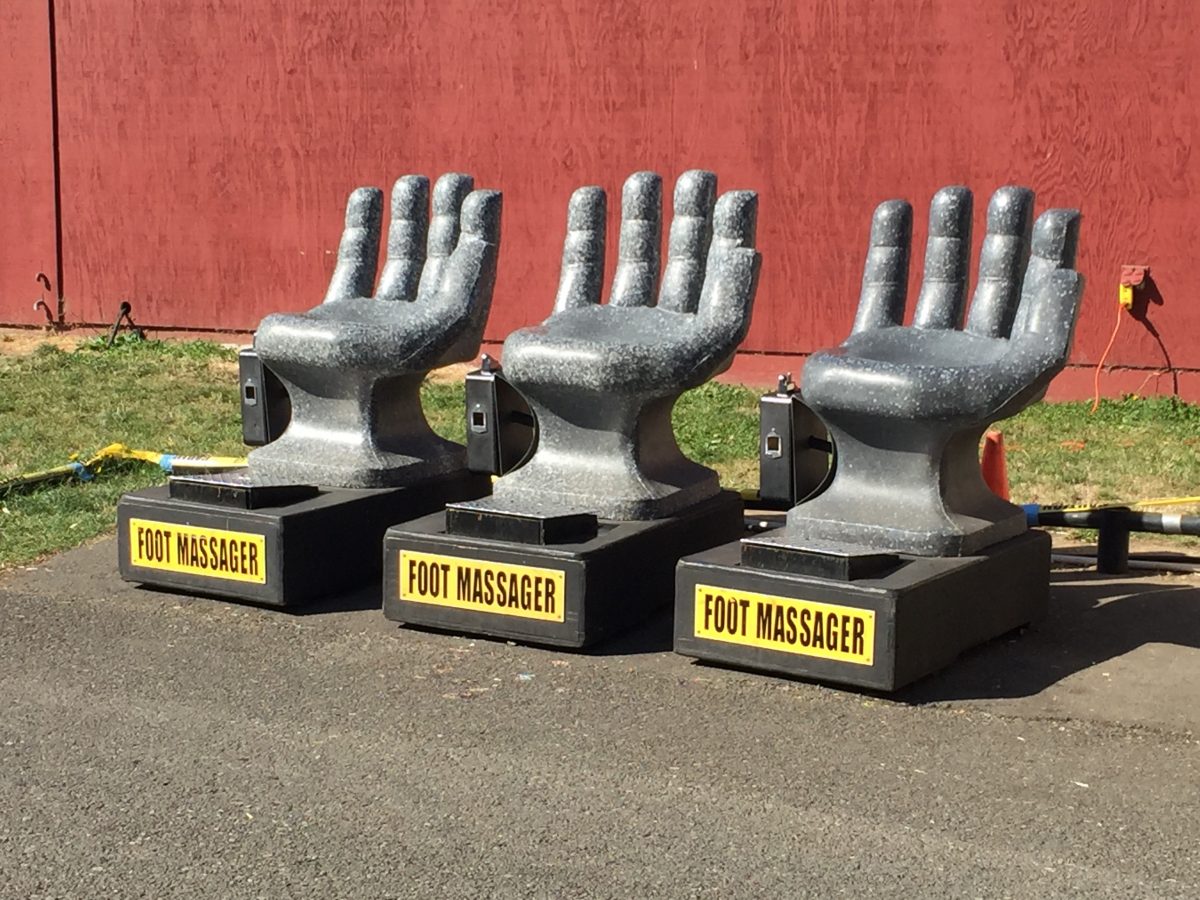
Recently a group of us from Franke Tobey Jones spent the day at the Washington State Fair. There’s so much to see there that it’s hard to decide what to feature, but here are three things that amused me (click on any photo to see a larger version):


© 2016 by Mary Daniels Brown
Many older Americans want to start a business but find they lack certain skills, and sometimes also the confidence to try something new. In response, more organizations focused on training entrepreneurs are targeting baby boomers.
A look at programs across the U.S. that help older adults start their own businesses.
I had never heard the term elder orphan before I came across this article and had no idea what it might mean.
An elder orphan has no adult children, spouse or companion to rely on for company, assistance or input. About 29 percent (13.3 million) of noninstitutionalized older persons live alone. The majority of those are women (9.2 million, vs. 4.1 million men).
Carol Marak, who describes herself as an elder orphan, writes about why we need more services for people like herself who have no family to help them make crucial life decisions as they age. Marak started the Elder Orphan Facebook Page “designed for individuals over the age of 55 who live without a spouse and adult children to look after us as we grow older.”
Jane Brody, age 75, writes that even though she eats a balanced diet, she’s considering taking a vitamin B12 supplement. As people age, she says, their ability to absorb B12 from dietary sources may diminish:
“Depression, dementia and mental impairment are often associated with” a deficiency of B12 and its companion B vitamin folate, “especially in the elderly,” Dr. Rajaprabhakaran Rajarethinam, a psychiatrist at Wayne State University School of Medicine, has written.
Others besides people over age 50 who may have a B12 deficiency include vegetarians and vegans who eat little or no animal protein, people with stomach or small-intestine disorders like celiac disease or Crohn’s disease, people whose digestive systems have been surgically altered for medical reasons, and chronic uses of proton-pump inhibitors to control acid reflux. A blood test can measure one’s level of B12.
© 2016 by Mary Daniels Brown





 Retreading for Retirement