
We Are Boosterized!

Matt Fuchs takes a look at “recent research [that] points to interventions in diet, exercise and mental outlook that could slow down aging and age-related diseases – without risky biohacks such as unproven gene therapies.”
The story of Hugh Brown of Australia, who “made a hole-in-one on the 161-yard par-3 hole, just two months shy of his 100th birthday.”
In my search for literature that presents older adult characters, particularly older women, who often feel themselves becoming invisible in a culture that fetishizes and focuses on youth, I came upon this list. Amy Lee Lillard presents “seven books [that] celebrate the older woman that defies logic and bias. They won’t go quietly into oblivion. They won’t disappear, and in fact, insist on being seen. Even if that involves letting their anger out. Even if it involves violence.”
Some—or perhaps all—of these books may not be your reading cup of tea, but I feel validated just knowing that some authors are still treating older women like functioning adults.
I live in a retirement community, and one topic of conversation that has come up quite a few times is “Nobody complained about their kids getting polio shots at school back in the 1950s.”
Here James Colgrove, professor of sociomedical sciences at Mailman School of Public Health of Columbia University, discusses how times are now different: “As a public health historian who studies the evolution of vaccination policies, I see stark differences between the current debates over COVID-19 vaccination and the public response to previous mandates.”
If, like me, you’re a long-time baseball fan, you’ll probably appreciate this story involving the Atlanta Braves as much as I did. It’s about a lot more than just baseball.
“How one of the Beatles’ greatest songs came to be.”
An informative reminiscence by Paul McCartney.
“The assumption that all older people are frail and helpless is a common, incorrect stereotype.”
Judith Graham of Kaiser Health News reports on “ageism in health care settings, a long-standing problem that’s getting new attention during the Covid-19 pandemic, which has killed more than half a million Americans age 65 and older.”
© 2021 by Mary Daniels Brown
Eastwood’s first film behind the camera, “Play Misty for Me,” came out half a century ago, and he’s still at it. At age 91, with his new “Cry Macho” set for a Sept. 17 release in theaters and on HBO Max, Eastwood — whose acting credits date to 1955 — is perhaps the oldest American ever to both direct and star in a major motion picture.
New research into how the pandemic has affected teachers found that “during the pandemic, teachers became less certain that they would work in the classroom until retirement. In March 2020, 74% of teachers said they expected to work as a teacher until retirement, but the figure fell to 69% in March 2021.”
The researchers discuss how such turnover in the profession can negatively affect students’ success and look at three areas in which teachers need support.
“An astrobiologist finds the heart of his work in a new novel by Richard Powers.”
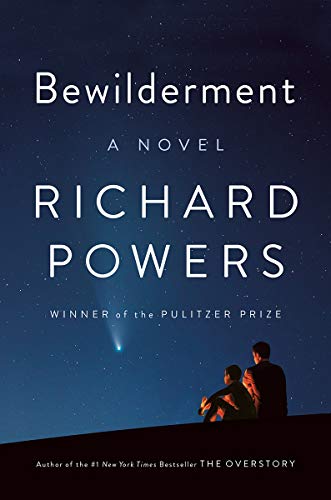
Caleb Scharf, director of astrobiology at Columbia University, writes that the “puzzle of ‘what life really is’ might be the ultimate goal of astrobiology—we don’t just want to know whether or not we’re alone in the universe, we want to understand what we really are.”
Here Scharf describes how “the profoundly interconnected goals of astrobiology form a central theme of Bewilderment, a new novel by Richard Powers.” He describes it as “an immersive and astonishing book, a novel where the state of our world, and others, is a central anxiety for its protagonists.”
Social psychologist Ariana Orvell, assistant professor of psychology at Bryn Mawr College in Pennsylvania, explains how distanced self-talk, the “process of reflecting on one’s self using parts of speech that are typically used to refer to other people,” can help us align “our thoughts, feelings and behaviour with our goals.”
The most common example of distanced self-talk occurs when we address ourself either by name or in the second person (“you”). This process produces psychological distancing that allows us to change perspective, to “move beyond our default, egocentric perspective, and consider our thoughts and feelings from the stance of a more objective observer.” Such a shift in perspective can help to promote reasoning, to increase willingness to search for compromise, and to recognize the limits of our own knowledge.
Sociology professor Phil Zuckerman writes:
As a scholar of secularism and a devout fan of the Beatles, I have always been fascinated by how “Imagine,” perhaps the first and only atheist anthem to be so enormously successful, has come to be so widely embraced in America. After all, the U.S. is a country that has – at least until recently – had a much more religious population than other Western industrialized democracies.
“Norma McCorvey, the plaintiff in Roe v. Wade, never had the abortion she was seeking. She gave her baby girl up for adoption, and now that baby is an adult. After decades of keeping her identity a secret, Jane Roe’s child has chosen to talk about her life.”
This deeply moving article by Joshua Prager is adapted from his recently published book The Family Roe: An American Story.
© 2021 by Mary Daniels Brown
“The internet has been around for long enough — and shifted so drastically in that time — that it’s really easy to get nostalgic for past versions of online life.”
“In the United States and elsewhere, public health and medical care are largely separate enterprises. Costa Rica shows the benefits of integrating the two—it spends less than we do on health care and gets better results.”
A portrait of “Edith Murway-Traina, who is heaving around major poundage at the age of 100—making her a Guinness World Record holder for being the oldest known competitive female powerlifter in the world.”
Grace B. McGowan, a PhD Candidate in American Studies at Boston University, celebrates the return of Black women to “the classical tradition, a style rooted in the aesthetics of ancient Greece and Rome.” McGowan writes that artists like Lizzo and Cardi B are “adding their own twist” to this tradition.
I periodically dream about losing my teeth, forgetting to go to class for an entire semester, or being unprepared for an exam. Here a professor of psychiatry and a doctoral candidate in neuroscience from the University of Montreal discuss recurrent dream motifs and their possible meanings.
Jane Trombley, a Baby Boomer herself, laments, “I don’t see enough of my peers initiating the conversation. And that’s a drag. Millennials and everyone else need to hear much of what Boomers have to say.”
She ends with a challenge: “Over to you, Boomers.”
So, whadda ya say?
In October 2019, a month or so before Covid-19 began to spread from the industrial Chinese city of Wuhan, Steven Taylor, an Australian psychologist at the University of British Columbia in Vancouver, published what would turn out to be a remarkably prophetic book, The Psychology of Pandemics.
The Guardian reports on Taylor’s psychological approach to understanding pandemics in general and, specifically, the current state of world affairs surrounding COVID-19.
Lorraine Duffy Merkl basks in the freedom that being in her 60s offers: “We can finally let go of the please-like-me baggage and secrets that have been weighing us down, as well as the insecurities based on what others think of us, and realize what really matters is being ourselves and letting the chips fall.”
© 2021 by Mary Daniels Brown
Generally accepted wisdom about metabolism and weight gain used to tell us that people began to put on weight in middle age as their metabolism slowed down. But new research suggests that we need to rethink that hypothesis.
“By combining efforts from a half dozen labs collected over 40 years, [investigators] had sufficient information to ask general questions about changes in metabolism over a lifetime.” As for metabolism in middle age and after: “From age 20 to 60, it holds steady,” and “after age 60, it declines by about 0.7 percent a year.”
“With infections increasing once more, and hospitalization rising among older adults, health experts offer a timely warning: a coronavirus infection can look different in older patients.”

“Today, as humans continue to lust after any number of material and immaterial objects, scientists are researching radical life extension technology like never before. Amazing, right? Let’s see. Read on to learn about the great, the weird and the downright costly behind our quest for eternal existence.”
The usual caution pertains here: Be careful what you wish for.
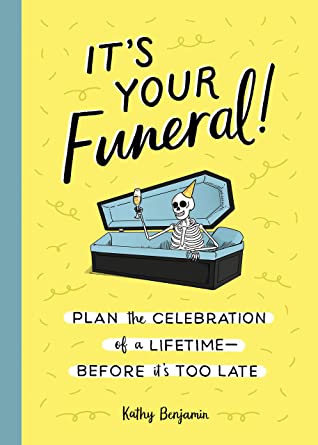
Gevera Bert Piedmont—who apparently hasn’t taken to heart the previous article—begins this book review with the statement “— sorry to break it to you — everyone is going to die.” The book under review is It’s Your Funeral! by Kathy Benjamin. The book’s subtitle is “Plan the celebration of a lifetime—before it’s too late.”
“If that sounds sad and depressing, I assure you, it is not,” Piedmont continues. “Benjamin makes it entertaining, educational and even funny at times.” She says the book contains a section where readers can “make notes on how they want to handle their own demise.”
Everything I’ve been reading about the surging delta variant of COVID-19 suggests that we’re having to revise our earlier hope that we were emerging from the pandemic. If you’re experiencing anxious thoughts, licensed clinical social worker Hilary Jacobs Hendel has some advice for self-care.
Please do not hesitate to seek professional help if anxiety begins to overwhelm you.
Admission: I don’t listen to podcasts. If I’m going to spend time listening to something, it’s going to be an audiobook.
So I haven’t listened to this podcast. However, the subject may interest you. I’m pretty sure you can listen right from this webpage, without having to download anything.
Critical race theory continues to be a hot news topic. Here’s a succinct explanation of what it is, how it developed, and how the term is currently being used “as a Procrustean epithet that can be made to fit any argument.”
© 2021 by Mary Daniels Brown
I don’t know about you, but my phone’s home screens have gotten out of control. I know this is mostly my own fault, but it also seems that whenever the phone’s OS upgrades, things get changed and moved around. So when I come across an article like this, I read it carefully.
You know I just love stories like this. Eight men, all now 88 or 89 years old, got together for their annual reunion recently. Well, almost-annual reunion, because COVID-19 forced them to miss last year’s get-together.
Back when we used to be able to travel, I was always surprised at people who, in a foreign country, said they found a restaurant with free wi-fi so they could check their bank account.
Jade Yamazaki Stewart, an intern at the Seattle Times, writes, “old stereotypes about Asian men persist.” Here he explains how those stereotypes affected him throughout his life and examines how they continue to show up in popular culture.
Kristina M. Lee, a Ph.D. candidate in rhetoric at Colorado State University whose area of interest is religious and political rhetoric, tells the story of Walter Plywaski: “Almost 70 years ago, Plywaski fought for the right of atheists to become U.S. citizens – and won.”
I must admit that this year’s Olympics (really last year’s Olympics, as they were referred to as Tokyo 2020) had a surreal feel to them. Everything swirling around the games seemed to have so much more importance than the sporting events themselves. “More than anything, though, this summer has thrown a spotlight on the inspiring and surprising strength and character of young people like never before.”
Here’s some information that might prove useful as proof of vaccination against COVID-19 “is increasingly becoming a ticket of entry into restaurants, gyms and indoor performances.”
© 2021 by Mary Daniels Brown
“From Billy Joel’s inability to resist a good Beethoven melody to Lady Gaga’s sampling of rhapsodic violin solos, here are the greatest examples of classical samples in pop.”
Be sure to turn on your computer’s sound! And keep it on for the next piece as well.
“Alec Baldwin chooses Tchaikovsky. Darryl Pinckney picks Mahler. And more sweeping, powerful music.”
The New York Times here aims to help people “to love symphonies, the sweeping musical statements at the foundation of the orchestral repertory.”
According to the Alzheimer’s Association, more than 6 million Americans of all ages are living with Alzheimer’s; 1 in 3 seniors die having been diagnosed with some form of dementia or Alzheimer’s. But these conditions are not exactly the same. Here’s why.
Dementia is a broad term referring to “a decline in mental ability as a result of damaged brain cells.” Dementia can be caused by many conditions, one of which is Alzheimer’s disease. “It may not seem like an important distinction, but treatments for one type of dementia and Alzheimer’s can vary.”
Sandee LaMotte interviews psychologist Deirdre Barrett for CNN. Barrett has been collecting stories of “our dreams and nightmares since the virus shut down our lives. Many of our night visions revolved around the fear of death, as our subconscious ruminated on the very real threat of Covid-19. Other dreams cast the virus as an invasive predator, often an insect.”
Read Barrett’s analysis of how dreams provide insight into our pandemic lives and how dreams have changed since mid-December 2019, “when it was announced the vaccines were highly effective and were being given emergency use approval.”
Naomi Ishisaka, a columnist for the Seattle Times, asks, “If the pandemic is a portal, what will the new world on the other side look like?”
She asked readers what changes made over the last 16 months they would like to keep “to make a more equitable, just and sustainable world.” Here are some of the answers in the areas of education, availability of virtual activities, work, and cultural and social changes.
© 2021 by Mary Daniels Brown
A bittersweet story about a man with early-onset Alzheimer’s disease and his wife.
“After years in which Americans worked later in life, the latest economic disruption has driven many out of the work force prematurely.”
The New York Times looks at “the millions of Americans who have decided to retire since the pandemic began, part of a surge in early exits from the work force. The trend has broad implications for the labor market and is a sign of how the pandemic has transformed the economic landscape.”
For those of us with this problem, here’s some good news.
Increasingly though, experts are waking up to the idea that chronic pain can occur without any obvious physical injury, or in a completely separate area of the body from the original site of tissue damage. There’s also mounting evidence that seemingly very different pain conditions – chronic headaches, low back pain and jaw pain, say – may share common underlying mechanisms, and that once a person develops one chronic pain condition, they’re predisposed to develop others.
Kareem Clark, Postdoctoral Associate in Neuroscience at Virginia Tech, looks at a big question for many as we begin to emerge from the COVID-19 pandemic:
if the idea of making small talk at a crowded happy hour sounds terrifying to you, you’re not alone. Nearly half of Americans reported feeling uneasy about returning to in-person interaction regardless of vaccination status.
He explains that our brains need to reset our sense of “social homeostasis – the right balance of social connections.”
CNN finds that we are “heading into a best of times, worst of times summer as the longed-for promise of deliverance from Covid-19 is tempered by spasms of violent crime, economic false starts and unexpected obstacles on the road to freedom.”
© 2021 by Mary Daniels Brown
Ann Powers reports for NPR on Joni Mitchell’s album Blue, which came out in 1971, with an emphasis on its storytelling:
the creative process is as mundane as it is miraculous. It’s dribs and drabs and then a rush and then back to staring at the ceiling, wondering if the rush will come back. Blue is an album about working through something — a heartache, people say. But it’s just as much a document of the process of sharing that heartache, an inquiry into personal storytelling itself. Until Blue, Mitchell was getting there, but she hadn’t wholly figured out what she alone could say. That’s because what each person alone can say is, in its pure state, incommunicable. Stories are what get left behind as their tellers keep living and evolving. They’re always inconclusive.
From Jane E. Brody, for The New York Times:
Fewer than 1 percent of Americans reach the age of 100, and new data from the Netherlands indicate that those who achieve that milestone with their mental faculties still intact are likely to remain so for their remaining years, even if their brains are riddled with the plaques and tangles that are the hallmarks of Alzheimer’s disease.
Brody reports on research about how people who are “physically able to reach 100 may also be able to remain mentally healthy.”
Neuroscientist and psychiatrist Daniel Amen explains that after experiencing trauma, some people develop PTSD (post-traumatic stress disorder) while others exhibit PTG (post-traumatic growth). Since COVID-19 has certainly been a time of trauma, he predicts that “the lucky ones who will experience post-pandemic growth.”
He offers advice on changes you can make to nurture PTG.
Susan Krauss Whitbourne, Ph.D., considers what post-pandemic life will be like for introverts, most of whom have become comfortable with enforced social isolation. She first looks at personality-based research (most of it conducted on a college campus before the pandemic hit) that found that people tend to choose geographic locations on the basis of their personalities: “Participants higher in extraversion were the ones that researchers encountered in central, less secluded spots on campus. Those high in introversion, by contrast, set themselves up in quieter spaces away from the campus hub.”
On the basis of this research, she encourages introverted people to search for quiet personal spaces where they can seek occasional respite once they begin moving back into society.
CNN reports on recent research that found older adults “who have significant difficulty falling asleep and who experience frequent night awakenings” are at increased risk of dementia or earlier-than-normal death. The article ends with some suggestions of how you can reduce your risk by taking steps to avoid sleep deprivation.
The loss of people we know tends to get more frequent as we get older. Understanding grief, and how it works, can help us get through those hard times. Writer Brandy L. Schillace explains: “Death is not a thing, but things: a process of emotions, states of being, suddenly shifting relationships.” She encourages thinking of grief as “a path, a journey, a process.”
Our need to face death and its associated grieving is more pronounced now, in the time of COVID-19, than usual. This is the first in a series of articles Schillace plans “to try and better understand death not as the end of life, but as part of it — even in these changing and uncertain times.”
© 2021 by Mary Daniels Brown
I see the term critical race theory in the news a lot, but I didn’t know what it meant. I was therefore grateful to find this article from the Washington Post.
“Critical race theory is an academic framework centered on the idea that racism is systemic, and not just demonstrated by individual people with prejudices,” the article says. But it further points out that, although the term refers to an academic area of study, “its common usage has diverged from its exact meaning.”
This article from the AARP’s Ethel newsletter focuses on sleep problems after menopause because: “According to The Study of Women’s Health Across the Nation (SWAN), sleep disturbances range from 16 to 42 percent in premenopausal women and then climb to 35 to 60 percent when we’re postmenopausal.”
If this situation applies to you, read “some recommendations from the sleep experts.”
“For elderly Americans, social isolation is especially perilous. Will machine companions fill the void?”
The New Yorker reports on a study that uses robotic pets as companions for isolated older adults.
Yes, this is a real thing. According to the article, “In 2017, the Surgeon General, Vivek Murthy, declared loneliness an ‘epidemic’ among Americans of all ages. . . . Older people are more susceptible to loneliness; forty-three per cent of Americans over sixty identify as lonely.”
Before you scoff and try to laugh this off, read the article to find out how some study participants feel about their mechanical companions.
“What if we’re scared to go back to normal life?”
I’ve been seeing a lot of articles lately about people’s reactions to re-entering society now that vaccines have made possible the reductions in mask-wearing and social-distancing policies. This article reports:
For many, the transitional period has been a little bumpy. A report by the American Psychological Association, published in March, 2021, found that almost half of Americans surveyed felt “uneasy about adjusting to in-person interaction” after the pandemic.
Bethany Teachman, professor of psychology at the University of Virginia, offers some suggestions from clinical psychological science for those who wish to “choose what to rebuild, what to leave behind and what new paths to try for the first time” as they ease their way into post-pandemic life.
A lot of articles deal with what concepts of the “new normal” will emerge as society reopens. Many analyses I’ve read indicate that remote medical consultations may well be one of the features of the pandemic that may stick around.
Here Julie Appleby of Kaiser Health News offers advice on how to determine if or when telehealth visits meet your needs.
Interest in genealogy boomed during the pandemic. Here are some suggestions for using online resources to trace your family roots.
“The advent of wearable devices that monitor our heart rhythms both excites and worries doctors.”
Randi Hutter Epstein, M.D., looks at both the potential benefits and the potential drawbacks of new, wearable health-monitoring devices such as smartwatches.
© 2021 by Mary Daniels Brown

 Retreading for Retirement