Last Week’s Links

This French Pianist Has Been Playing For 102 Years And Just Released A New Album

Eleanor Beardsley visits with French pianist Colette Maze.

Maze, born on June 16, 1914, says her mother was severe and unloving. So she turned to music for the affection she lacked at home.

“I always preferred composers who gave me tenderness,” she says. “Like [Robert] Schumann and [Claude] Debussy. Music is an affective language, a poetic language. In music there is everything — nature, emotion, love, revolt, dreams; it’s like a spiritual food.”

At 101, she’s still hauling lobsters with no plans to stop

“The oldest lobster fisher in the state and possibly the oldest one in the world, [Virginia] Oliver still faithfully tends to her traps off Rockland, Maine, with her 78-year-old son Max.”

I have a personal interest in this story. My in-laws grew up in Rockland, Maine. If they were alive today, they’d be 107 and 108. I wonder if they would have known Virginia Oliver.

Why You Need to Forget Stuff

“Forgetting names and faces can be annoying—but it’s critical for our brains to function at their best, a new book argues.”

We joke, and then worry, when we notice ourselves beginning to forget names and such things. This article discusses a new book, Forgetting: The Benefits of Not Remembering, by Scott Small, “who studies and treats Alzheimer’s disease at Columbia University.” Small believes that “some amount of forgetfulness is critical for our minds and relationships to function at their best.”

For older adults, isolation can lead to overwhelming loneliness

Researchers have known for quite some time now that older adults are vulnerable to loneliness as their contact with family and friends decreases because of deaths and their own diminishing mobility. This problem was heightened during pandemic isolation:

The effects of social isolation during the pandemic have hit all ages — some studies, for example, show teens have fared worse than other groups — but older adults already were a population vulnerable to loneliness. And for many, the pandemic was the first time they felt deep, sustained loneliness. It’s a feeling that can impact physical health, creating greater risk for some illnesses and hospitalizations; and mental health, potentially exacerbating symptoms of or leading to clinical disorders such as depression.

Here’s a report from The Mental Health Project, a Seattle Times initiative focused on covering mental and behavioral health issues. 

At risk of dementia? Brain scan shows when you might develop symptoms, study says

This article reports on research published recently in the journal Neurology that may help “researchers determine an estimated timeline of symptom onset” of dementia. 

While some people may not want to know when they’ll start to forget friends’ names or have difficulty calculating change at the grocery store, others, particularly those with genetic predispositions for dementia, could benefit from having time to prepare for the inevitable changes.

What Your Poop Can Tell You About Your Health

Even before I got to be one myself, I noticed that older adults sometimes seem obsessed with the state of their intestines. So OK, I’m just putting this article out there.

© 2021 by Mary Daniels Brown

Last Week’s Links

Psychologists say a good life doesn’t have to be happy, or even meaningful

A recent article published in the American Psychological Association’s Psychological Review suggests that living a good life needn’t focus on purpose or happiness. According to the two authors of the article, a good life can be one that’s “psychologically rich,” a phrase that they define as one characterized by “interesting experiences in which novelty and/or complexity are accompanied by profound changes in perspective.” Further, “an experience doesn’t have to be fun in order to qualify as psychologically enriching. It might even be a hardship.”

The Heartbreak Key

Here’s a fascinating article on how we interpret or feel music—and why popular musicians tend to avoid the key of D minor.

German composer Christian Schubart “was a forefather of musical category creation: In his 1784 essay “A History of Key Characteristics in the 18th and Early 19th Centuries,” he balanced a study of the harpsichord with insights from literature and psychology to match all 24 major and minor musical keys to different auditory personalities.” 

11 Romances Featuring Older Couples

BookBub has some recommendations of books in the category it calls “seasoned romance.” I admit I haven’t read any of these books, but if you’re looking for a book featuring older adults finding love, there may be something here for you.

Here’s Where Our Minds Sharpen in Old Age

We usually think of aging as a time of declining memory, producing those “senior moments” that seem to befall all of us, at least occasionally. This article reports on new research published in Nature Human Behavior suggesting “that many things improve with age, including some cognitive aspects that had previously been thought to get worse.”

Jane Fonda’s blog is one of the internet’s greatest treasures

“We are barely worthy of such incredible content.”

Nicole Gallucci writes that Jane Fonda began blogging in 2009 and continues today, at age 83.

Since celebrities often avoid publicly wading into politics and sharing opinions on real societal issues, it’s refreshing to see Fonda use her blog to inform readers about pressing social and environmental justice problems. And while she nails serious, impactful content, she also strikes a remarkable balance by peppering in light and playful posts.

Social media’s 70-and-up ‘grandfluencers’ are debunking aging myths

Apparently Jane Fonda isn’t the only older social media star. Lianne Italie’s article in the Los Angeles Times reports on the “growing number of “grandfluencers,” folks 70 and older who have amassed substantial followings on social media with the help of decades-younger fans.”

© 2021 by Mary Daniels Brown

Last Week’s Links

9 websites that will bring you back to the old internet

“The internet has been around for long enough — and shifted so drastically in that time — that it’s really easy to get nostalgic for past versions of online life.”

Costa Ricans Live Longer Than Us. What’s the Secret?

“In the United States and elsewhere, public health and medical care are largely separate enterprises. Costa Rica shows the benefits of integrating the two—it spends less than we do on health care and gets better results.”

Raw Granny Power: 100-Year-Old Woman Is the World’s Oldest Female Powerlifter

A portrait of “Edith Murway-Traina, who is heaving around major poundage at the age of 100—making her a Guinness World Record holder for being the oldest known competitive female powerlifter in the world.”

In ‘Rumors,’ Lizzo and Cardi B pull from the ancient Greeks, putting a new twist on an old tradition

Grace B. McGowan, a PhD Candidate in American Studies at Boston University, celebrates the return of Black women to “the classical tradition, a style rooted in the aesthetics of ancient Greece and Rome.” McGowan writes that artists like Lizzo and Cardi B are “adding their own twist” to this tradition.

Being chased, losing your teeth or falling down? What science says about recurring dreams

I periodically dream about losing my teeth, forgetting to go to class for an entire semester, or being unprepared for an exam. Here a professor of psychiatry and a doctoral candidate in neuroscience from the University of Montreal discuss recurrent dream motifs and their possible meanings.

Baby Boomer Bloggers: Are you out there?

Jane Trombley, a Baby Boomer herself, laments, “I don’t see enough of my peers initiating the conversation. And that’s a drag. Millennials and everyone else need to hear much of what Boomers have to say.”

She ends with a challenge: “Over to you, Boomers.”

So, whadda ya say?

‘No one wanted to read’ his book on pandemic psychology – then Covid hit

In October 2019, a month or so before Covid-19 began to spread from the industrial Chinese city of Wuhan, Steven Taylor, an Australian psychologist at the University of British Columbia in Vancouver, published what would turn out to be a remarkably prophetic book, The Psychology of Pandemics.

The Guardian reports on Taylor’s psychological approach to understanding pandemics in general and, specifically, the current state of world affairs surrounding COVID-19.

The Best Part of Being 60-Something

Lorraine Duffy Merkl basks in the freedom that being in her 60s offers: “We can finally let go of the please-like-me baggage and secrets that have been weighing us down, as well as the insecurities based on what others think of us, and realize what really matters is being ourselves and letting the chips fall.”

© 2021 by Mary Daniels Brown

Last Week’s Links

What We Think We Know About Metabolism May Be Wrong

Generally accepted wisdom about metabolism and weight gain used to tell us that people began to put on weight in middle age as their metabolism slowed down. But new research suggests that we need to rethink that hypothesis. 

“By combining efforts from a half dozen labs collected over 40 years, [investigators] had sufficient information to ask general questions about changes in metabolism over a lifetime.” As for metabolism in middle age and after: “From age 20 to 60, it holds steady,” and “after age 60, it declines by about 0.7 percent a year.”

For Seniors Especially, Covid Can Be Stealthy

“With infections increasing once more, and hospitalization rising among older adults, health experts offer a timely warning: a coronavirus infection can look different in older patients.”

WHAT DOES IT MEAN TO LIVE FOREVER?

“Today, as humans continue to lust after any number of material and immaterial objects, scientists are researching radical life extension technology like never before. Amazing, right? Let’s see. Read on to learn about the great, the weird and the downright costly behind our quest for eternal existence.”

The usual caution pertains here: Be careful what you wish for.

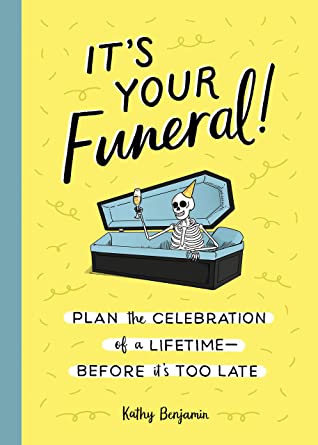
“It’s Your Funeral!” So Throw Yourself the Best Going-Away Party Ever

book cover: It's Your Funeral! Plan the Celebration of a Lifetime--Before it's too Late

Gevera Bert Piedmont—who apparently hasn’t taken to heart the previous article—begins this book review with the statement “— sorry to break it to you — everyone is going to die.” The book under review is It’s Your Funeral! by Kathy Benjamin. The book’s subtitle is “Plan the celebration of a lifetime—before it’s too late.”

“If that sounds sad and depressing, I assure you, it is not,” Piedmont continues. “Benjamin makes it entertaining, educational and even funny at times.” She says the book contains a section where readers can “make notes on how they want to handle their own demise.”

4 Simple Phrases to Stop Anxious Thoughts

Everything I’ve been reading about the surging delta variant of COVID-19 suggests that we’re having to revise our earlier hope that we were emerging from the pandemic. If you’re experiencing anxious thoughts, licensed clinical social worker Hilary Jacobs Hendel has some advice for self-care.

Please do not hesitate to seek professional help if anxiety begins to overwhelm you.

Podcast: Traveling While Aging

Admission: I don’t listen to podcasts. If I’m going to spend time listening to something, it’s going to be an audiobook.

So I haven’t listened to this podcast. However, the subject may interest you. I’m pretty sure you can listen right from this webpage, without having to download anything.

Critical Race Theory

Critical race theory continues to be a hot news topic. Here’s a succinct explanation of what it is, how it developed, and how the term is currently being used “as a Procrustean epithet that can be made to fit any argument.”

© 2021 by Mary Daniels Brown

Last Week’s Links

After a Hard Youth, Mom Found Beauty in Making Art

“Here’s proof that it’s never too late for dreams to be realized.”

Candy Schulman recalls how her mother, a self-educated traditional 1950s housewife, “discovered her true talent in her 60s, leaving behind a permanent vision for the next two generations.”

At an extraordinary Olympics, acts of kindness abound

The only Olympic sport I truly enjoy watching is swimming. Other than that, more than the medal counts I care about the kindness counts:

A surfer jumping in to translate for the rival who’d just beaten him. High-jumping friends agreeing to share a gold medal rather than move to a tiebreaker. Two runners falling in a tangle of legs, then helping each other to the finish line.

The Surprising Benefits of Talking to Strangers

In the past decade and a half, professors have begun to wonder if interacting with strangers could be good for us too: not as a replacement for close relationships, but as a complement to them. The results of that research have been striking. Again and again, studies have shown that talking with strangers can make us happier, more connected to our communities, me

My Phone Doesn’t Realize My Mother Is Dead

Karolina Waclawiak expresses an understandable ambivalence over the painful memories and emotions that her phone’s algorithms churn up when they bring up her past photos. Waclawiak’s thoughts move beyond the case of her mother’s death to incorporate all the jumbled emotions we all felt over the past 18 months or so.

Who Invented the Pencil?

Here’s the answer to a question I didn’t know I needed answered until I saw this article: “According to NPR, a Swiss naturalist named Conrad Gessner created the first depiction of a pencil in 1565.”

‘Grandmother, Where’d You Get So Smart?’ ‘Living, Baby. Living.’

“A woman with little formal education taught her granddaughter an important lesson.”

Mandy Shunnarah marvels over how quickly and confidently her grandmother from rural Alabama, without a college education, continued throughout her life to conquer the daily newspaper’s crossword puzzles.

Nervous about getting back out there and making new friends? Here are some tips

The pandemic not only kept us from interacting with family and friends; it downright made us afraid to do so. Now that our world is beginning to open up once again, “how do you overcome these anxieties, get back out there and make new friends?”

Madalyn Amato, an intern at the Los Angeles Times, consulted some experts and offers their advice.

© 2021 by Mary Daniels Brown

Last Week’s Links

Rewriting My Mother’s Legacy of ‘Skinny Is Beautiful’

Lori S. Marks asks, “How do you learn to love your body when your mother hated her own? How do you gain a clear perception of yourself when your very thin mother studied herself in the hall mirror sideways several times a day?”

And perhaps even more important: “How do you value yourself outside of a number on the scale when your mother routinely weighed you, starting in early childhood, and that number dictated whether she was pleased with you? Or in my young mind, whether she loved me?”

Read how Marks has broken this pattern in raising her three daughters.

When Americans recall their roots, they open up to immigration

Four professors of political science and one of social science report on their research: “Our research suggests that reminding Americans of where they came from . . . creates empathy for immigrants, generating more favorable attitudes toward immigration.”

It seems so obvious. 

Mirrors Tell the Truth, but Not the Whole Story

“To take myself seriously as a writer, I had to embrace my age”

When she was younger, poet, novelist, short story writer, and essayist Stephanie Gangi thought of her writing as a hobby. Now she’s in her 60s and has embraced writing: “First novel at 60, forthcoming novel at 65, third in the works.” She now accepts that writing is no longer a hobby: “It is what I do and who I am.”

The result is that “In my work, my women think a lot about how to age gracefully even as they learn to recognize themselves in their new old faces.”

Casual relationships matter for older adults

Family relationships are important for everyone. But casual relationships are also important.

These relationships with people we hardly know or know only superficially are called “weak ties” — a broad and amorphous group that can include your neighbors, your pharmacist, members of your book group or fellow volunteers at a nearby school.

This CNN article reports that “Multiple studies have found that older adults with a broad array of “weak” as well as “close” ties enjoy better physical and psychological well-being and live longer than people with narrower, less diverse social networks.”

Why Older Women Are Opting for Longer Hair

“The shift signifies something larger than just a beauty trend.”

The pandemic kept us from visiting the hair salon. The result was that a lot of women, including us older ones, ended up with hair a lot longer than it had been in many years. Ann Zimmerman reports that many women who rediscovered the long hair of their youth and young adulthood “liked what they saw, [and] they decided to keep it that way.” 

Zimmerman writes, “the pandemic and a burgeoning new take on what aging means to a generation of women who have been pioneers in everything they have done has given them license to experiment.” Although she focuses on hair length here, I’ve talked with many women (I live in a retirement community) who stopped coloring their hair during the pandemic and have decided to continue to wear their gray hair proudly.

© 2021 by Mary Daniels Brown

Last Week’s Links

A man with Alzheimer’s forgot he was married, and fell in love with his wife all over again

A bittersweet story about a man with early-onset Alzheimer’s disease and his wife.

They Didn’t Expect to Retire Early. The Pandemic Changed Their Plans.

“After years in which Americans worked later in life, the latest economic disruption has driven many out of the work force prematurely.”

The New York Times looks at “the millions of Americans who have decided to retire since the pandemic began, part of a surge in early exits from the work force. The trend has broad implications for the labor market and is a sign of how the pandemic has transformed the economic landscape.”

Sufferers of chronic pain have long been told it’s all in their head. We now know that’s wrong

For those of us with this problem, here’s some good news.

Increasingly though, experts are waking up to the idea that chronic pain can occur without any obvious physical injury, or in a completely separate area of the body from the original site of tissue damage. There’s also mounting evidence that seemingly very different pain conditions – chronic headaches, low back pain and jaw pain, say – may share common underlying mechanisms, and that once a person develops one chronic pain condition, they’re predisposed to develop others.

The neuroscience behind why your brain may need time to adjust to ‘un-social distancing’

Kareem Clark, Postdoctoral Associate in Neuroscience at Virginia Tech, looks at a big question for many as we begin to emerge from the COVID-19 pandemic:

if the idea of making small talk at a crowded happy hour sounds terrifying to you, you’re not alone. Nearly half of Americans reported feeling uneasy about returning to in-person interaction regardless of vaccination status.

He explains that our brains need to reset our sense of “social homeostasis – the right balance of social connections.”

The pandemic wrought a new America

CNN finds that we are “heading into a best of times, worst of times summer as the longed-for promise of deliverance from Covid-19 is tempered by spasms of violent crime, economic false starts and unexpected obstacles on the road to freedom.”

© 2021 by Mary Daniels Brown

Last Week’s Links

Her Kind Of Blue: Joni Mitchell’s Masterpiece At 50

Ann Powers reports for NPR on Joni Mitchell’s album Blue, which came out in 1971, with an emphasis on its storytelling:

the creative process is as mundane as it is miraculous. It’s dribs and drabs and then a rush and then back to staring at the ceiling, wondering if the rush will come back. Blue is an album about working through something — a heartache, people say. But it’s just as much a document of the process of sharing that heartache, an inquiry into personal storytelling itself. Until Blue, Mitchell was getting there, but she hadn’t wholly figured out what she alone could say. That’s because what each person alone can say is, in its pure state, incommunicable. Stories are what get left behind as their tellers keep living and evolving. They’re always inconclusive.

The Secrets of ‘Cognitive Super-Agers’

From Jane E. Brody, for The New York Times:

Fewer than 1 percent of Americans reach the age of 100, and new data from the Netherlands indicate that those who achieve that milestone with their mental faculties still intact are likely to remain so for their remaining years, even if their brains are riddled with the plaques and tangles that are the hallmarks of Alzheimer’s disease.

Brody reports on research about how people who are “physically able to reach 100 may also be able to remain mentally healthy.”

10% Of People Will Likely Experience Post-Pandemic Growth—Here’s What It Means

Neuroscientist and psychiatrist Daniel Amen explains that after experiencing trauma, some people develop PTSD (post-traumatic stress disorder) while others exhibit PTG (post-traumatic growth). Since COVID-19 has certainly been a time of trauma, he predicts that “the lucky ones who will experience post-pandemic growth.” 

He offers advice on changes you can make to nurture PTG.

Why Introverts May Find It Hard When Life Returns to Normal

Susan Krauss Whitbourne, Ph.D., considers what post-pandemic life will be like for introverts, most of whom have become comfortable with enforced social isolation. She first looks at personality-based research (most of it conducted on a college campus before the pandemic hit) that found that people tend to choose geographic locations on the basis of their personalities: “Participants higher in extraversion were the ones that researchers encountered in central, less secluded spots on campus. Those high in introversion, by contrast, set themselves up in quieter spaces away from the campus hub.”

On the basis of this research, she encourages introverted people to search for quiet personal spaces where they can seek occasional respite once they begin moving back into society.

Poor sleep linked to dementia and early death, study finds

CNN reports on recent research that found older adults “who have significant difficulty falling asleep and who experience frequent night awakenings” are at increased risk of dementia or earlier-than-normal death. The article ends with some suggestions of how you can reduce your risk by taking steps to avoid sleep deprivation.

Death is Both an Event and a Process

The loss of people we know tends to get more frequent as we get older. Understanding grief, and how it works, can help us get through those hard times. Writer Brandy L. Schillace explains: “Death is not a thing, but things: a process of emotions, states of being, suddenly shifting relationships.” She encourages thinking of grief as “a path, a journey, a process.”

Our need to face death and its associated grieving is more pronounced now, in the time of COVID-19, than usual. This is the first in a series of articles Schillace plans “to try and better understand death not as the end of life, but as part of it — even in these changing and uncertain times.”

© 2021 by Mary Daniels Brown

Last Week’s Links

As Lou Gehrig Day nears, here’s what he meant to the fight vs. ALS, and what baseball means to those with it

Amyotrophic lateral sclerosis (ALS), the disease that killed baseball player Lou Gehrig (and is therefore alternatively called Lou Gehrig disease), is a “progressive neurodegenerative disease that affects nerve cells in the brain and spinal cord and is 100% fatal.” Next Wednesday Major League Baseball will celebrate the first of what will become an annual event, Lou Gehrig Day.

ALS advocates hope that this event will increase awareness of the disease, for which there have been very few treatment breakthroughs since Gehrig’s 1939 diagnosis:

As Phil Green, a former University of Washington football player who has lived with ALS since 2018, said in an interview this week, “If Lou Gehrig were diagnosed today, he would have pretty much the identical prognosis that he did 80 years ago. Just think about that. We put men on the moon and rovers on Mars, yet this disease still seems to baffle some of the smartest scientists in the world.”

How to Understand the 1960s in 11 Books

“If you remember the 60s, the saying goes, you weren’t there. And for many of us who lived those turbulent, exciting and wildly different times it’s true,” writes Mike Bond, who graduated from college in 1965. “I was one of the founders of the Resistance [to the Vietnam war], and risked ten years in jail for it, was on the run for several years ducking the dutiful FBI guys who would clump up the stairs to whatever apartment I was crashing in, while its rightful tenant would answer the door and say I wasn’t there.”

Here Bond lists 11 books that had a great influence on his thinking in the ’60s.

Banning My Book Won’t Protect Your Child

When I was in my early 20s, I was in an abusive relationship with another woman. Soon after it ended, I did what I always did when I was heartbroken: I looked for art that spoke to my experience. I was surprised to find shockingly few memoirs of domestic violence or verbal, psychological and emotional abuse in queer relationships. So I wrote into that silence: a memoir, “In the Dream House,” which describes that relationship and my struggle to leave it.

Carmen Maria Machado reacts to the recent attempt by a parent in Leander, Texas, to remove her book and several others from a list of recommended reading in the local high school.

25 Great Writers and Thinkers Weigh In on Books That Matter

“To celebrate the Book Review’s 125th anniversary, we’re dipping into the archives to revisit our most thrilling, memorable and thought-provoking coverage.”

Current writers for The New York Times look back on some of the “robust literary coverage” of the newspaper’s Book Review, including articles by authors such as Vladimir Nabokov, Tennessee Williams, Patricia Highsmith, Eudora Welty, and Langston Hughes.

How Doctors Tell Stories: Writing Through the Practice of Medicine

Writer Leslie Jamison interviews Suzanne Koven, author of Letter to a Young Female Physician: Notes from a Medical Life, a collection of essays. Jamison begins the interview with this question:

I love the ways these essays hold so many aspects of your identity: doctor, daughter, mother, wife, patient, and colleague. We see you as a little girl going to the office of your doctor-father, wanting  “to witness at close range the freedom of men,” and we see you as a panicked mother, riding in an ambulance with your young son after seizures. How did you approach writing about times when various parts of your identity converged or collided?

And Koven replies that writing the book helped her discover that the “various parts of me turned out to be more aligned than I understood.”

‘Take it easy, nothing matters in the end’: William Shatner at 90, on love, loss and Leonard Nimoy

Hadley Freeman describes recently interviewing William Shatner over Zoom: “He certainly sounds like Shatner. But Shatner turned 90 in March, and the man in front of me doesn’t look more than 60, as he bounces about in his seat, twisting to show me the view around him, with the agility of a man two decades younger.”

He’ll always be Captain James T. Kirk to me.

Bob Dylan at 80: in praise of a mighty and unbowed singer-songwriter

“Prolific, resilient and endlessly creative … as Dylan celebrates his 80th birthday, Edward Docx assesses his artistic contribution to the human story”

And look who’s 10 years younger than Shatner and also still going strong.

© 2021 by Mary Daniels Brown

Last Week’s Links

Talking on Zoom could help older people stave off dementia

CNN reports on recent research results:

Talking on video-conference services like Zoom during the coronavirus pandemic has helped older people stave off the effects of dementia, a new study has suggested.

Researchers found that regular communication helps maintain long-term memory, and elderly people who often use online tools showed less decline in memory than those who don’t.

These Farmers Want You to Drink Your Hops and Eat Them Too

“Trashed in the U.S., hop shoots are treasure in parts of Europe.”

Washington State produces lots of hops, the crop that lends much of the bitter taste to beer. In fact, according to this article, “75 percent of the U.S. hops supply is grown in Yakima Valley,” in eastern Washington.

This article presents some entrepreneurs who are exploring ways to use more of the hop plant than the part used in beer brewing.

Mary Beard Keeps History on the Move

“For Beard, change has always been a part of the classics. We need to expose the field’s flaws to learn how we’ve inherited them.”

Since I did my B.A. and M.A. in Latin, I’ve been following the recently publicized issue of universities dissolving their classics departments. Here Katy Waldman profiles British classicist Mary Beard for The New Yorker

Introducing her subject, Waldman writes about how to describe Beard: “‘Classicist’ doesn’t quite capture it. ‘Celebrity historian’ inches closer.” 

The movement to downplay the study of classics centers on the claim that the field embodies an “imperialist mind-set” and “sustains a mythology of whiteness.” But, Waldman writes, “As the field’s most famous practitioner, and a dedicated anti-racist and feminist, Beard takes a middle position: she believes neither that classics deserves a pedestal nor that it must be destroyed.”

Is America a Racist Nation? I Am Sikh and Tired

Vishavjit Singh writes:

My turban and beard have always made me a target of anxiety, stereotyping, or outright racism. Post-9/11, the hate has been taken to a whole new level. Sikhs have been killed, attacked, and verbally abused in a never-ending American saga.

Singh takes a look at some of our inherent biases: “This is not a Black and White problem only. It is an American ailment. It is a human disease.”

They’re Vaccinated and Keeping Their Masks On, Maybe Forever

“Face coverings have been a political flash point for more than a year. But now, the backlash is directed at people who don’t plan to take them off.”

My husband and I have been fully vaccinated since late February. Yet, despite the most recent CDC guidelines, when we went to the farmers’ market yesterday, I put my mask on. 

I’ve decided to continue to wear a mask when I’m in a crowd for quite a while. After being required to do so for more than a year, it’s something I’ve gotten used to doing. I figure that wearing a mask doesn’t hurt me or anyone else, but it does provide an extra bit of protection against any virus particles that might be floating around. My decision has nothing to do with politics. I’m just being as cautious as possible about my own health. 

This article in the New York Times looks at reasons why some people are continuing to mask up.

How About You?

Do you continue to mask up?

© 2021 by Mary Daniels Brown